Tyne felt her heart sink to the top of her loafers. “So what’s to be done?” She heard Millie sigh. “We’ll do the best we can, that’s all. I’ll be there whenever they need me, you can rest assured of that. And Jeff Milligan won’t get away with any of his nonsense when I’m around.” Hearing the old feistiness in her aunt’s voice, Tyne almost laughed. But she sobered quickly. She knew what had to be done. Why had she asked? A fleeting vision of the future made her weak in the knees as she saw herself, a few years down the road, as another Miss Stevenson. Nevertheless, her voice was clear and firm. “I’m coming home to stay, Aunt Millie. I’ll be on the bus tomorrow afternoon.”
three Three hundred and thirty years before zero the Great Hellene Conquering General of Globalization discovers the concept and gloriously carries the glorious message to the Heraclean Steale and beyond. The conquered wrongly explained the message of peace into “Tyrannic Empire” a small child in the suburb of the Ideal City thinks of perhaps the march of ideas may create the wrong precedent and suddenly against that concept they start a war: dragons, Jedi, Valkyries, Stymphalian Birds, Craken, Vampires, chivalrous Knights, Lilliputians, Mermaids, Condors, Orcs and a blind witch from Bulgaria and with twelve different bites they degrade: the invention of flexible boycott
Susan The nipple of the southern wind wedges its pleat between the lips of the virgin yet to be kissed and the innocence of the first night draws a breath of relief as the cherry blossoms mourn for the death of Madame Butterfly while the young samurai scribes his funereal three-verse poem black claws holding onto flesh and torn muscles as Susan’s lips lock with mine the torn hearts sigh when endless black hides behind the trivial and the momentary
the good life of the gentry kept her there, an eccentric about whom stories would be told long after her name was forgotten. Her son Finn, her fifth of six children, inherited his mother’s love of the mountains and the sea. The sea, however, is faithless and fickle and given to unpredictable outbursts of savagely bad temper. One Friday in January 1854, a large fishing fleet set sail from Carraghlin harbour in fine, sunny conditions. But some hours later those benign conditions changed dramatically, the tranquil sea turned tempestuous, and the fleet was storm-tossed in gales and driving snow. Thirty-six Carraghlin fishermen perished. Among them were Finn MacLir’s twin brothers. The date was Friday, the thirteenth. That same year, 1854, Finn himself was a sailor on board the tea clipper, Gypsy Lady. Having crossed the South China Sea from the ancient walled city of Fuzhou with a full load of the first tea of the season, the clipper ship caught fire on the thirtieth of May in the Sunda Strait, off the coast of Indonesia. Aware that his crew were unable to control the raging fire, the captain took the decision to sink the fast, sleek ship. Some of the crew, including Finn MacLir, scuttled her by cutting holes on the waterline, and she sank in seventy-three feet of water. Finn swashed through a life of Conradian adventures till 1880. Then the Land League, a political organisation founded in County Mayo in 1878 with the aim of helping poor tenant farmers to win back “the land of Ireland for the people of Ireland,” embarked on a campaign of violence across the ravaged countryside. The principal aim of the Land League was to abolish landlordism in Ireland so as to enable tenant farmers to own the land they worked on. So began the so-called Land War. Tenants refused to pay their rents, resisted evictions, attacked land agents. English-owned farms were burned, animals killed or maimed, haystacks set ablaze, the English owners set on like curs. The land-owning MacLir family, close friends of the land-usurping Hamiltons, was targeted. In one bleak October night old Brigadier Richard Hamilton was brutally butchered in his bed, and Finn’s father and older brother were locked in the barn behind their large house, and the hay-filled barn was set on fire. Bullets from the hill above kept any would-be rescuers away until the blazing barn collapsed in on itself and on the two hapless men within. When his father and brother were murdered during the Land War disturbances, and both his sisters had married and moved to England with their husbands, Finn MacLir returned to Corrymore and took over the farm. He stayed on in the village, out of defiance, according to some;
After many postponements of our dreams I’d always think of a smelting, knowledgeable furnace with thousands of workers cleaning its teeth, feeding it steel and coal. A smelting furnace that will smoke as much as we haven’t smoked the last few years, that won’t cut its cigarettes in half that won’t stop its craving half way that will produce enough rebar to tie together all the great scaffolds that will reach up to the sky.
Goal Goal was to set them free to liberate them from houses from peaceful bucolic songs from Saturday matinees from solemn saunter in the parks from silent high-noon meditating our moto was to free them from themselves general said whimsically and thousands of bombs fell with unprecedented accuracy replacement order emailed to bomb factory, machines in overdrive calibrating new models, new explosive might our moto was to liberate them from their despicable peace
The Favour of Alexander Valas Ah, I am not upset that a wheel of my chariot is broken, and that I lost this silly race. With good wines and amid beautiful roses I’ll spend the night. Antioch is mine. I am the most glorified young man. I am Valas’s weakness, his adorable one. Tomorrow, you will see, they will say that the race was unfair. (But if I were inelegant and if I had secretly ordered it, the flatterers would have declared me winner, along with my crippled chariot.)
Shrug He sleeved his cold hands shrugged his shoulders didn’t see the prism bent by leaden clouds cursed for his bad luck pointed to dark glass of his room resembling empty sockets of his skull two different fates hover one for him the one for others staggering on flagstones considering café garbage bin pile behind the pub
“Well, don’t make it. There’s no need. Ariana is a woman I enjoy being with, and that’s that.” “I can’t believe you’ve gotten yourself involved with someone and are even bringing her to the house and…” She left the sentence unfinished. Eteo felt hot and flushed at hearing these words. “You might have thought of that before you left.” There was silence for several seconds. Eteo listened to her rapid breathing, expecting the other shoe to fall at any moment. Finally he said, “I’ve got to go, Roula. I’m very busy.” “Don’t go, wait,” she pleaded. “You are not serious about this woman, are you? In any case, you shouldn’t have her around my sons.” “As I said, Roula, where I have her is none of your business. You have no right to tell me who I can bring to the house.” “Oh God, have you forgotten all the years we lived together? How could you?” “You’re the one who left. Now leave me alone,” Eteo said and put the phone down. Now he really needed to relax, but his mind wouldn’t let him. He turned toward the eastern horizon again, feeling as gloomy as the cloudy sky. His reflection in the glass looked as sullen as the darkening horizon. His bitter thoughts were interrupted by Helena buzzing to let him know Bernard was there to see him. “Hello, Bernard. What brings you here?” Eteo asked as the shaggy-haired man strode into the office “Your associate,” Bernard barked without any preamble. “I see a dead market, and I wonder what kind of hole I’ve gotten myself into with your help.” “What do you mean? You made a deal with him and he looked after you. Why are you complaining to me?” “I placed those shares because he gave me his word that he’s got the well. I only hope he hasn’t double-crossed me. If he lied to me, he can kiss his market goodbye for a long time.” “I can’t say one way or the other, Bernard. He told me the hole is…
But David, there’s another thing and it’s a real mystery.” She described the telegram that had been sent from Kazan. “That was a dreadful day trying to avoid Chopyk’s sheep herding efforts, trying to see the Gorky Museum and not think about Paul, all at the same time. Did you…?” But David was shaking his head. Jennifer felt a wave of fear again. “You were one of the few who broke away from the group so I thought it must have been you trying to surprise me. Please tell me it’s not someone else trying to pull a fast one. ” “I didn’t send any telegram. If you think about it, it would have to be someone who knew Volodya’s address—and knew the code words.” “No, it didn’t have the code words in it. He thought I’d forgotten them and came anyway.” “Natasha? She would have quick access to telegrams…she knew his address from the telegram he sent you…” “Natasha—it has to be her.” Jennifer was stunned. “But why? I don’t get it. You know I suspected her back when the other telegram came in. She’s from Leningrad, you know, and they might have known one another while he worked for Intourist.” “I’ve thought there’s more to her than what we’re seeing. That’s gotta be it, but you won’t get a chance to ask her because we’re trying to avoid her like the plague right now.” David began to sort through the closet for the jacket and shoes. “Do you know if she caught up to us here at the hotel?” “Oh, for sure, but I don’t think she knows what rooms we’re in. If you hadn’t told me your room number, I’m sure I couldn’t have got it from the desk clerk. They seemed terminally uninterested.” “Listen, why don’t you ask Volodya if he knows Natasha? Let’s sleep on this matter,” he yawned politely, “and get you-know-who fixed up with clothes in the morning.” But when she returned to her room, Volodya had fallen into a deep sleep sprawled across the utilitarian single bed. His pack was open, contents spilled onto the floor, with his clothes hanging neatly on the racks. Coaching would have to wait.







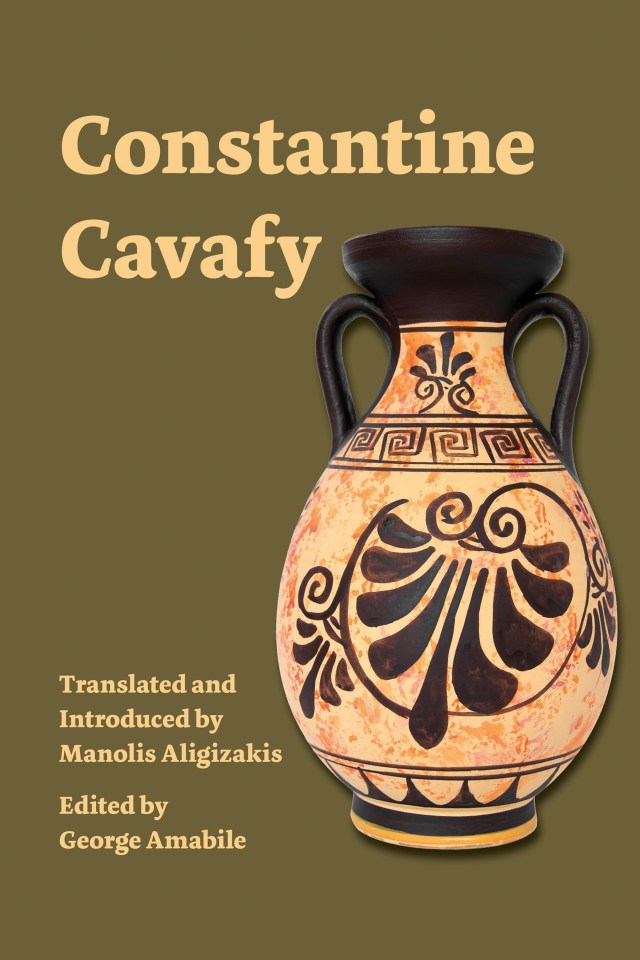



 Manolis Aligizakis