
Behind our Eyes Behind our eyes, silent and crouched, we look at the world out there like through the skylight of a prison. Behind our eyes, we make secret plans we aim and fire as if behind embrasures and when evening comes like we do with windows we hastily pull the curtains and turn on the lights.
“Why?” “A painting that is given is all but worthless. It’ll be up in the attic or down in the basement before you know it. A painting must always be well paid for and it will be up above the mantel quicker than you can snap your fingers – and it will stay there. And another thing you need to know – you never give wealth a gift. It’s one of the ‘middle classes’ really bad habits.” When Ken walked into the gallery in Kelowna, Jack Hamilton took him into the back office and handed him an envelope. “I see you keep very fancy company,” he said. Ken tore it open. The premier had written that he would be delighted to visit the gallery the next morning at eight. At seven-fifty, Jack staggered down the steps from the apartment above the gallery, in his rumpled pyjamas, unlocked the front door to let Ken in, and shuffled back up the stairs. At eight sharp, a chauffeur driven car pulled up, and Bennett stepped out. He gave Ken a hearty handshake, sat down at a small table near the front of the gallery and asked to hear stories of the Arctic. “I thought you were just going up there for a month or two, but you seem to have gotten yourself lost up there.” “In a way, I did,” Ken replied. “It’s a long story.” “I want to hear it.” He told the Premier about his adventures and the atrocious conditions the people lived with. He talked about the famine and the disease, and the autocratic rule of the church, the RCMP, and the Hudson’s Bay Company. When he finished, he asked if there was anything the Premier could do to help the people up there. Bennett stood. “Let’s see your paintings,” he said. They walked through the gallery. “What do the red dots signify?” Bennett asked. “It means they’re sold.” “It looks like they’re all sold.” “Yes, they are.” “You must be doing very well.” “Yes I am – I’m very lucky.” “I’d say there’s more than luck involved. I know nothing about art but I do like what you’re doing, especially that one,” pointing to a landscape of rolling grasslands. “I’d be interested in owning that one.” “I’m sorry,” Ken said. “I’m afraid the entire exhibit was sold before it got here.” He led him into the back office where three paintings leaned against the wall. “These are not sold,” he said. Bennett pointed to one of the high plateau on the Douglas Lake Ranch. “I like that one. Where is that?”
Dancers Black dancers arced sprang and after picking their shoes they left in hushed tones so they didn’t wake old man front row lost in dreams of a lavish dance hall chandeliers and many fit scantily-clad girls smiling jewel eyed their breasts nodding persuasive firm contours swell desire tease out his hand before black dancers wheeled just before he fell into divine sleep
ROSTOV-NA-DONU, JULY 13, 1974 The Canadian student tour group were old hands at Soviet travel by the time their plane left Leningrad bound for Rostov-na-Donu in the Ukraine. The usual plump stewardesses, more relaxed on this domestic flight, handed out the usual sticky candy. The students played the now familiar game of who had the functioning seatbelts. David had no seatbelt, and he threatened to hang on to Paul’s leg for the duration of the flight should they meet turbulence. Despite the gloom of parting from Volodya, Jennifer’s spirits lifted slightly. The plane was full of Ukrainians returning home—women in harem pants, swarthy men with metallic, toothy grins carrying bundles, carpets and, in one case, something alive in a cage that screeched at intervals. The passengers moved around the plane freely, paying no attention to the attendant yelling at them. Jennifer wasn’t the only one who was mourning the loss of a friend in Leningrad. Ted had ended his stay there at a party with students from the institute. He had met them on the street, and over some powerful moonshine liquor they had discoursed heavily on the problems of the cold war and had resolved to bring peace to their various countries. Unfortunately, Ted couldn’t quite recall how they had proposed achieving this lofty aim. Lona had also found some friends in Moscow, it seemed, and was only now telling the group about them. Jennifer wondered if Lona would have admitted the liaison if she had not been spotted outside the hotel with a group of sharp and eager young men whom everyone suspected of being some kind of confidence tricksters. If anyone can take care of herself, it’s Lona, thought Jennifer, and she wondered if Lona’s swains had asked her to help them leave the country. Then, in an attempt to shake off…
Balance The apple was red and luscious virginal mouth not yet kissed like the soft-white poem whisper from my beloved’s lips pen writing the limpid, bluish song thought of death dangles equilibrium
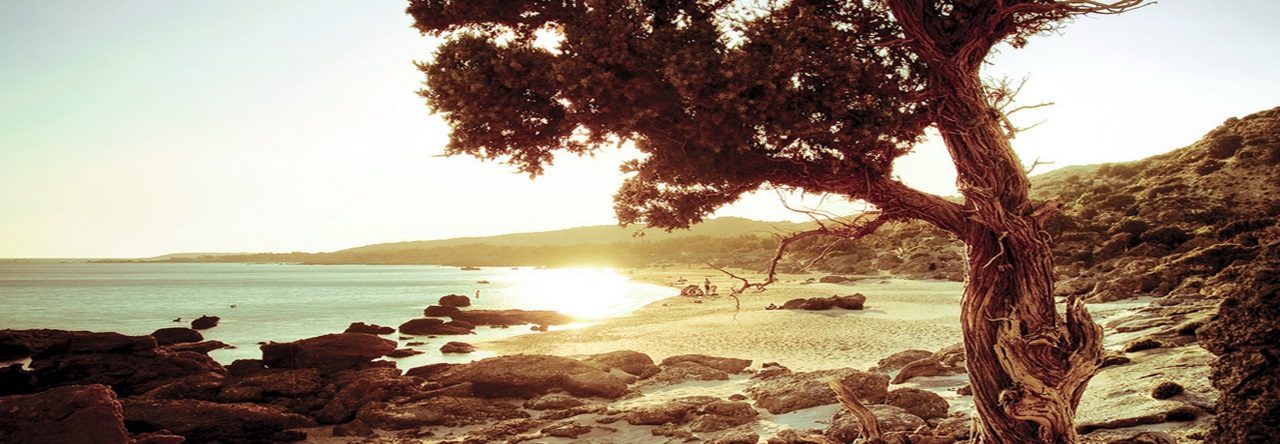
IX The harbour is old, I can not wait any longer neither for the friend who left for the island with the pines nor for the friend who left for the island with the plane trees nor for the friend who left for the open sea. I caress the rusted cannons, I caress the oars that my body will be reborn and decide. The sails only give off the smell of the other storm’s salinity. If I decided to remain alone, I seek the solitude, not this kind of waiting the shattering of my soul on the horizon these lines, these colours, this silence. Stars of the night return me to Odysseus and his anticipation of the dead among the asphodels. When we moored over here among the asphodels we hoped to find the glen that saw the wounded Adonis.
Discarded Items Years and years he collected other people’s discarded stuff, undoubtedly useless to them although perhaps useful to someone else, time and again, he has pondered on this, Thomas, the retired garbage collector, who hasn’t heard any news from his son for the last three years and he knows one day he won’t be able to care for himself anymore, when that day arrives, as it always does, they will discard him in the big bin along with the garbage of the old folks’ home which has been his home now, just to be collected by the lonely and the dedicated mega garbage collector the Almighty Thanatos with his big sickle the unerring cleaner of our fair earth old Thomas too did as he was told, he too followed the societal rules, he too led the life of the donkey, with his short rope tied to a stick in the ground he too never found the strength to stand up and throw a pebble to dare disturb the calm lake waters.
GYPSY Hellenes, chasers of Christians polytheists, leftover relics selected and accounted, you followers of the Nazarene populace guided by priests shout, burn with light, curse oh you, all idolaters. None of you and none other even the most wisest and honorable will ever keep the sunlight bestowed unto you by its rays. In the dark depths of the ocean live some huge cetaceans beyond the light of day, and they see while the sun doesn’t touch them, their bodies do produce their own sun phosphorescence is their foggy sun that spreads a dreamy gleam in the dark depths of the ocean you too live like cetaceans.
Modesty I don’t want anyone to feel the beauty I hide inside me no one can come near it without hurting it. I have a bloomed lily inside me without any shadow on its face it has never longed for lust nor ever anyone has kissed it. I have inside me a rose that balances on its own flame and as a holocaust it keeps silent and blesses. I have inside me an ambivalent daisy with its ever agreeing heart that sways in its loneliness and adorns its own beauty and I have other symbols flowers and others that intoxicate yet the most delicate ones bloom only in their imagination. The beauty I hide inside me no one ever will feel if one hurts it a fool he’d be and he won’t even regret it.