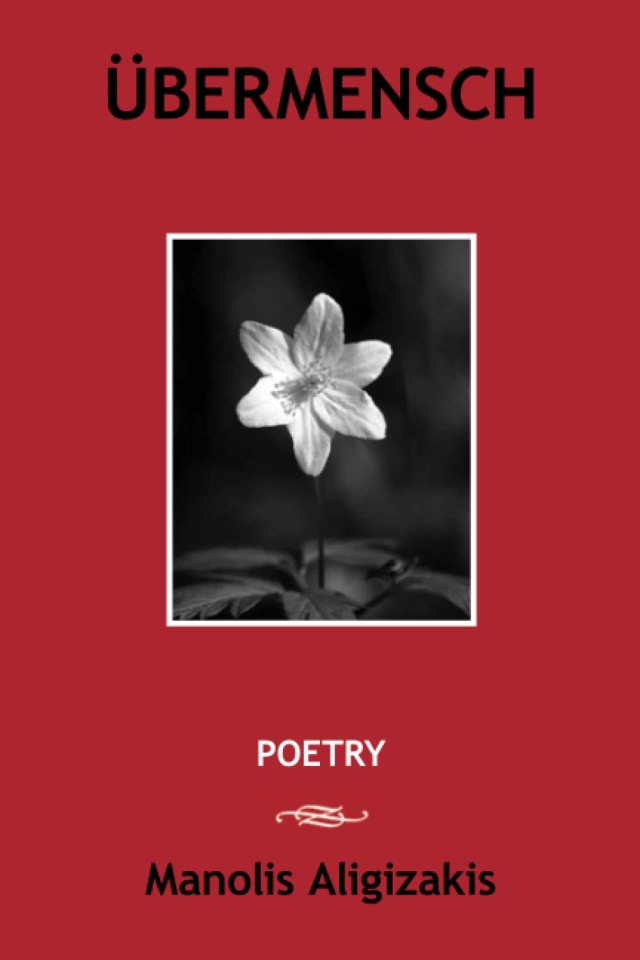
Teacher It was a foggy day when, like students, we entered the school; found the teacher writing on the board something narrating a familiar fable which we found tasteless. The teacher welcomed us, especially the initiate, who always inspired admiration with His graceful persona, His stature and it was as if He led us to a garden full of bloomed flowers, playful butterflies hanging from threads of air, colorful spring, and the teacher repeated to his students, ‘attention children attention, it isn’t often that we have such a special visitor’, Übermensch laughed and obviously pleased He said: ‘these students are tomorrow’s Übermenschen.’
The Statue Which statue hides in the marble? Which arm holds, in the unknown future, the chisel that is ready to give birth to it? Which time uterus, which lust prepare the unexpected flowering that comes amid pains? Which not-moulded hammer strikes the sound of pulse who’s the sleepy night guard who will open the museum? Which memory, which descendant turns his arm toward the statue who dictates the dead person’s arm sleeping in the marble? Which unknown, future hand will then become chisel to chisel it?
What If What if you stopped staring out from the blue window reversed your sight path and from the balcony gaped at house’s innards spied into secret space of summer sofa no need to whisper for pillow or reddish throw while loving on the bare tiles dawn lights a candle in front of the saint’s lean icon what if you with void eyes saw green raw forms red layered forest and in the chiaroscuro of first light you gazed without gazing?
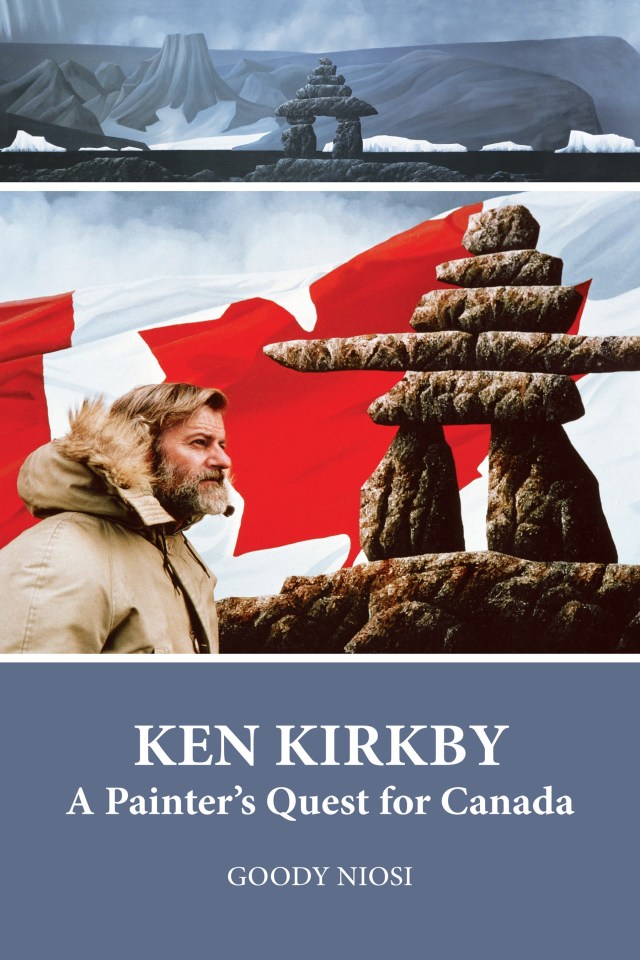
Ken called and told the story of Isumataq. He offered a painting for the paper, clinching the deal by telling them that everyone involved in the project would very likely win an award and be exposed in some way to massive media coverage. He also threw in some dubious oratory that was so over the top that many people laughed. “Don’t worry about this moment,” he said. “One day you’ll be in paradise with me.” If they snickered behind his back, he didn’t care because by the time he was done he had bartered for every service he needed – ninety thousand dollars worth. His friends called the money he had used to pay for the brochure “Ken dollars” and it was a term that stuck. Elias Vanvakis, another of the young professionals who was a successful insurance broker, commissioned a small pencil drawing of an Inukshuk. “I’ll give it to you,” Ken said. “No, I want to buy it.” “Why would you want to buy it?” “You’re painting the largest Inukshuk – I want the smallest,” he said. Ken pocketed the five hundred dollars Elias offered and drew an Inukshuk, which he handed to him. A few weeks later, on Ken’s forty-fifth birthday, Elias presented him with a small jeweller’s box. Inside was a small gold pin, a perfect replica of the pencil drawing. Ken pinned it to his shirt. Minutes later he was struck by an idea. A larger version of the pin was exactly what the front cover of the brochure needed – but not in gold paint of even gold leaf – a pure gold Inukshuk. The pin inspired yet another idea. The nation’s highest honour for its citizens was The Order of Canada. He wanted something even more prestigious – an honour that was almost impossible to receive – The Order of the Inukshuk. He ordered a dozen more from the jeweller who had designed it. Whenever someone asked about the pin, he smiled and inferred that it was special and only a chosen few would ever have the honour of receiving one. To Rocco he said, “Anyone who buys a ten thousand dollar painting, gets one.” Ken was invited to the Columbus Centre again to give the keynote speech at a dinner honouring Premier Peterson. At the end of the speech he was to give him a painting of an Inukshuk. But instead of doing a simple presentation, he told the story of the Order of the Inukshuk – that the pin was the result of a visionary flood of alcohol consumed in the land of the midnight sun on June 21, the longest day of the year. He explained that they were almost impossible to get and only a few very special people would ever be aware of The Order of the Inukshuk. “They come to certain people who are magic,” he said. “They come to people like me. Everyone else has to fight for them.”
The Next Table He must be barely twenty-two years old. And yet I am certain that the same number of years ago, I enjoyed this same body. It is not an erotic flush at all. And it was just a little while ago that I entered the casino, So, I didn’t have time to drink much. I enjoyed this same body. And if I don’t remember where, my forgetfulness means nothing. Ah, see, now that he sits at the next table I know every move he makes and under his clothes, naked, I see again the limbs I loved.
Cookie The way you held the cookie property yours, not anyone else’s mouth demanding candy sweetness eyes laughing at the craving of your appetite wanting lips to join yours with an erotic kiss, visceral power undulating in your body, which wishes you had your candy there, kissing your hot lips, touching your secret contours, making you passionate love and you said, once in love forever in love
Arrogant and stupid, that’s what I was. And being what I was, I failed to stop the last great war. I hesitated. I waited too long. One night I was startled awake by drums in the small hours before dawn. Indians used hollow tree trunks that were remarkably loud, hitting them with sticks of about the length and diameter of a forearm. The women started a hellish racket that would have awakened Lazarus. I went outside and found the fires blazing and a sizable group of women walking rhythmically about in single file, each with a hand on the shoulder of the next in the firelight. Some men stood while their women painted their bodies with crushed onoto seeds mixed with ashes and adorned them with feathers. Others were ready and gathering their weapons. There was tension in the air. I made my way through the confusion in search of someone who could explain what was happening. I went to Guacaipuro’s hut and saw him standing very still at the entrance, his gaze lost in the distance. Beside him, Baruta, painted and feathered, waited unobtrusively. Someone tapped me on the arm. Pariamanaco was breathing fast, a stern expression on his boyish face. “What’s happening?” I asked him. “War.” “Who? Where?” I asked. “The city they founded.” “Santiago de León de Caracas?” He shrugged, curving the corners of his mouth. Those words meant nothing to his ears. “I must talk to your uncle.” “He ordered to be left alone. He doesn’t want to talk. All caciques will bring their men. They will meet at Maracapana. It is too late for talk.” “Maracapana?” He shrugged. He didn’t know where that was. He had never been more than a few miles from the confines of the village. Gaucaipuro stood while Urquía ceremoniously placed a jaguar’s
“For both of us, of course. And for Michael and Mother Ross.” They had been standing in the main street. Now they began to walk slowly down the hill towards the square. Caitlin felt easier when Padraig could not look into her eyes and read the secrets there. “Caitlin, I do not believe you can answer for your father anymore,” Padraig said. “A rift has opened between Finn MacLir and me that will be difficult to close. I was once like a son to him. I am a stranger now. And the love we used to share is all on my side.” “Padraig, please don’t say that. Finn MacLir could never disown you. He’s not a vindictive man.” “He’s a proud man. With a hatred of religion,” Padraig argued. “I represent religion. I preach the truth of God that Finn despises. As he denies God, he denies me. As he despises the truth of God he despises me.” “You are taking everything much too personally, Padraig.” Caitlin felt herself becoming angry with the priest. She thought he was being unreasonable. “My father doesn’t despise you. He loves you, Padraig. In many ways he still regards you as the son he never had. You even more than Michael. There was a bond between you and my father that is still as strong as ever. He admires your achievement, Padraig. He gives you full credit for everything you have done. But he is disappointed that you chose to be a priest. You could have been a doctor, a lawyer, an accountant. You could have gone into any of a dozen different professions. But you entered the priesthood and you can’t expect a man like my father to be pleased about that.” “I did not choose the priesthood, Caitlin,” Padraig said. “God chose me to be a priest. He has work for me to do. And I believe that part of that work is to save the soul of Finn MacLir. God sent Finn to save my life for Him. In return I must save the eternal life of Finn MacLir. God wants him, Caitlin. God is the good shepherd fretting over the loss of one sheep. He has sent me home here to bring that lost sheep to the fold.” Padraig grew excited. “That is my mission, Caitlin. To bring Finn MacLir to accept Christianity. And not Finn alone. I am hoping that you too will reaffirm your faith in God. You must, Caitlin. You cannot continue to live in darkness, in hopelessness.” A fanatic gleam shone in Padraig’s wild, dark eyes. “Could that be what is troubling you?” They stopped again in the village square. Caitlin realised that she was standing in Padraig’s shadow. It was a normal shadow, elongated by the lowering sun, but not monstrous, not threatening. Out of the shadow truth had come.
The next morning the sun has risen ten feet above the horizon when Emily opens her eyes and sees Talal standing on the balcony, listening to the birds in the trees and shrubs in the grounds below. The sun is very bright, and she has to cover her eyes for a while until she gets used to the brilliance. The sky is blue and clear; she gets up and walks to the door and hugs him from behind. “You are up, sweetie; slept okay?” “Yes, my love, I slept well. I’m thinking of my family; we are going to visit them soon. I wonder how they’ll look after seven years. I wonder whether they will recognize me. I feel so much apprehension and such a strong feeling of anticipation to see them.” “Oh, Talal. Of course, they’ll recognize you! What a thing to say.” He turns and hugs her; they kiss and it seems as if the birds in the shrubs and trees sound louder than before. “It’s so bright,” she says, cuddling in his arms like a little chick under the wings of her mother. “Welcome to Iraq, my love. This is the brightness we fall in love with until there comes a time when one wishes some clouds would come and relieve us of it. When we go to the water I assure you that that is going to be the best experience you’ll ever have.” “Scuba diving?” “I can’t promise you scuba diving.However, I promise you a very pleasant day.” Emily notices another separate building to the left and asks, “What’s that building used for, Talal?” “That is the maids’ quarters and perhaps the guards’.” The villa sits on a huge portion of land located in the northern part of Baghdad in an exclusive area, with many villa-style homes for the most affluent of Iraq. Ibrahim and Mara have been living here for over thirty years; they built it during the Saddam years. Their day unfolds slowly and lazily, exactly as they feel after the long trip. All the beautiful, different images have gradually unfolded since the previous afternoon when they landed in Bagdhad. Emily absorbs everything deep into her memory, knowing well these images will stay with her for the rest of her life. Yet, something inside tells her she will come again to this country and that the next time it will be for a longer period. And that somehow makes her feel okay; it doesn’t upset her as it would have at the beginning of her relationship with Talal. She is, after all, prepared to go to the end of the earth with this man, and even if at some time they part, and a younger woman steals him from her embrace, he’ll remain with her forever as a sweet memory, exactly as all these beautiful images that are unfolding before her.
The beds resembled some strange metal plants rooted in the floor and lower, in the foundations of the house, in the rocks and soil, even deeper, in the center of the earth — strange plants, horrible suckling plants: if you lie down, they suck your blood out, your sleep and dream; they leave behind only a diaphanous skin, a rind in the shape of your body, yet emptiness remains in the rind without your skeleton — a diaphanous shell that is inflated by the breath of the following desire, second and third time — how many times? Then again emptiness, until, one night, the rind levitates, takes the position of the ancient, hanged man or that of the crystal chandelier, which in a flashlight all its lights in the darkness, beyond exhaustion, regret, forgiveness, emptiness, then, what was tiredness, or failure? What is death when the chandelier shines in the middle of the night, proving with all its lights and with each one of them separately, the most clear, the vaguest certainty, the most indisputable and incomprehensible value? Yet the beds remain empty and undone, and people don’t have anywhere to lie down after work. They hesitate to go out to the light again, to saunter under the trees because light prefers washed shirts and polished shoes, it prefers warm bread and kiss and song and holiday. And these people don’t have them.




 Manolis Aligizakis