The Circle

excerpt

BEVAN LONGHORN is in his office Monday morning, his desk covered in
paperwork that he has to get through before the day is over. His personnel have
just adjusted to Matthew Roberts’s absence and Bevan has been left with only two
middle managers to handle the work of three. He considers promoting one officer
to Matthew’s post, but there are twenty-odd people to choose from, all qualified for
the position. Bevan must give it more serious consideration.
He wants to make major changes to the structure of the office, but he has to
fight with the rest of the brass, particularly the ones well-connected with the
administration and the state department. He cannot put up any longer with the
way things are done and the way things they produce are used by the hawks in
higher places.
He has his own circle of people who would agree with him on certain
things; it would just be a matter of rallying the troops. His friend Jerry
Wolverton is the best example. He retired as a three- star general and left the
army seven years ago with pride and a sense of accomplishment after working
in Iraq for five and a half years, in charge of the reconstruction of public
projects that accommodated all Iraqi government personnel of various
departments. Jeremiah Wolverton got his extra star and a very good severance
package, and although retired, can still pull a lot of strings both in the state
department and within the ranks of the army.
Bevan decides to call him.
“Hello, Bevan, my old friend. Are you still in service?” Jerry jokes when he
hears who’s calling him.
“Of course I’m still in service. We cannot all retire at the same time; the army
wouldn’t know what to do without us”
“You’re right about that, my good, old friend; what makes you remember
me? Trouble?”
It’s Bevan’s turn to laugh at the general’s comment.
“No, no trouble at all; just the need to say hi to my good friend and see what
he’s up to these days.”
“Well, I’m doing okay. I play the odd golf game here and there, I walk a lot,
still take holidays with the old woman; other than that, nothing much.

https://draft2digital.com/book/3562817

https://www.amazon.com/dp/0978186524

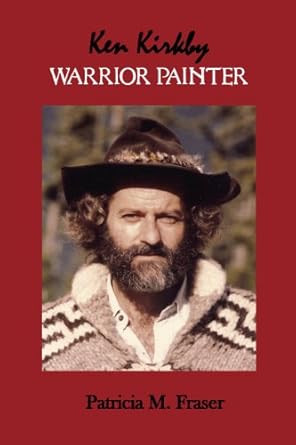
Ken Kirkby

excerpt

It was years later that I actually saw the book itself. I felt such
specialness to share this history with my grandfather who was a giant
of a man, loved by many and respected by all.
According to the National Geographic magazine, (Vol. 167, No. 3,
March 1985) Dr. Robert Paul Jordan confirms that the Viking traders known
as the Rus created Russia’s “first organized state and gave their name to a
future empire.” And the story that Ken learned as a wide-eyed boy seems to
support that claim.
As his maternal grandfather told the story, and as Ken passed it on to
his own son—who, at this point, is the last of the Kirkby line—the tale of
Rurik of the Rus goes like this:
Rurik was the eldest son and he chose to become a sailor, an adventurer
and an explorer. Like the Norwegians, the Danes were Vikings—an Old
Danish word which means ‘to dip your oar’ or in our terms, ‘traveller’.
Norwegians became known as the Norse, and Danes, the Rus.
Occupants of the Scandinavian countries realised early that to split the
farms into small holdings for their sons would make the land useless. So,
in order to preserve that livelihood, only one would inherit the land and
the others had to make their fortune elsewhere. The sea was the obvious
alternative. Through dint of need, the majority of them became mariners
and shipbuilders. They were a strong and courageous people and became
the Masters of the Seas as traders and mercenaries. The majority were
literate and highly industrious.
Those who became mercenary soldiers, a reputable occupation of the
day, were known also for their ferocity. They returned from the Middle East
with the knowledge of metalworking and equipped with this expertise, they
produced exceptionally fine swords and weaponry. This proved to be a great
advantage. A fierce minority banded together to form raiding parties and
this resulted in the Viking reputation for rape, slaughter and pillage.
Much like the dream of the Arctic that drew his future and distant
relation to northern Canada, Rurik also had a powerful dream of a vast
land beyond the ice; a land shaped by three great rivers. He was determined
to sail to that land one day. Rurik was an able navigator and commander
of several ships, and eventually he and his fellow mariners set out on a
long and arduous journey that took them east and north through the Arctic

https://draft2digital.com/book/3562902

https://www.amazon.com/dp/B00CB8W4CG

Ken Kirkby, A Painter’s Quest for Canada

excerpt

The media continued to be fascinated by him, the way an audience is
mesmerized by a performer who embarrasses himself inadvertently, on
a talk show. Ken had stepped so far outside the boundaries, had put on
a show so over the top, right down to the Inuksuit painted on the streets,
that the media haunted his studio just to see what would happen next. Ken
continued to feed them quotable lines that seemed to come effortlessly to
his lips, but that he had, in fact, been practising for months and years.
But, tidbits wouldn’t feed them forever. Eventually they would want to
stop nibbling and indulge in another meal – and the next banquet would
have to be bigger and better than the last.
He met Salvador Grimaldi for lunch again at Boccacio Restaurant, in the
Columbus Centre, and once again the architect came bounding into the
room, perfectly dressed in understated, expensive clothing, his eyes sparkling,
and his smile spreading goodwill around the room. Ken had a plan.
He told him that his next project had to be an even larger success than
the last, and described the two immense paintings he was currently working
on: one was a sixteen by sixteen foot canvas, featuring an Inukshuk set
against an enormous white cloud, that was intended for the Reichmanns.
Why the Reichmanns? Salvador asked.
“They are a very prominent family which the media and the public
have become very interested in,” Ken said. “They’re secretive and almost
impossible to approach. I’ve been studying them, and the information is
very sparse. I know they spent time in Valencia after leaving Eastern Europe,
and then they spent time in Morocco, and then from Morocco they
moved to Toronto: they started a tile business that immediately turned
into a raging success. Then, they went into high-end real estate development,
in which they have achieved even greater success. They are an
intriguing family – and just what I need. I need a Lorenzo de Medici.”
“I want to get to a place where other people cannot go. I want to sell
a painting to a man who doesn’t buy paintings and see it hung in the
foyer of the tallest building in the British Commonwealth – and have that
become a media event – even though they don’t like the media, that is
what I am after. What do you know about the Reichmanns that you feel
comfortable passing on to me? I get the idea you’re pretty close to them.”
Salvador allowed that he was close to Albert Reichmann, who preferred
to be called Mr. Albert. He had done his corporate landscaping and was
currently working on his personal property. “He’s a prince,” Salvador said.
“A merchant prince. He is a man of many talents, and I find it interesting
that you would have, instinctively, known that.’
Ken took Salvador to the studio to see the Reichmann and Yellowknife
Airport paintings, in progress. When he unlocked the door and switched
on the bank of lights, Salvador froze. The larger painting was nearing
completion while the other was only half finished.

https://draft2digital.com/book/3562830

https://www.amazon.com/dp/0981073573

Ken Kirkby, A Painter’s Quest for Canada

excerpt

assion doesn’t come from this generation.”
“I was. I was raised in an ancient place by somewhat ancient people.”
“So, what do you propose I do?”
“I propose you find out whether I am telling you the truth.”
As he and Rocco left, Ken turned and said, “By the way, I think the gallery
should be called The Joseph D. Carrier Gallery.”
Carrier smiled. “Of course.”
Once work on the gallery began, Ken and Carrier met frequently. When
Carrier discovered that Ken’s paternal grandmother, Constanze Inocente,
was from Genoa, he declared that the connection made Ken Italian, and a
member of the community. With Carrier’s urging, Ken joined the Canadian
Italian Business and Professional Association, a dynamic and diverse
group that included doctors, lawyers, carpenters, and bricklayers.
As opening night of the Carrier Gallery approached, Ken suggested a
show of his Arctic paintings, on a massive scale.
“You haven’t sold any and you want to start off with a huge explosion?
Rocco asked. “What if it fails?”
“You’re sounding like my mother. What if…”
“I love the idea, but what a risk!”
“When you jump off a cliff, make sure you do it head first. Be honourable.
Do it big.”
What about the cost?” Rocco asked. “Who will pay for it?”
“All we have to do is commit to the vision and the rest will follow.”
Ken rented the warehouse next door to the framing factory, a space
large enough for his Arctic paintings. He painted the ceiling black, the
walls white, and the floor battleship gray. Then, he went to work on the
giant paintings. Rocco focused on the show. They needed a sponsor, Ken
said. The show had to be unique. Canadians didn’t care about the Arctic
so everything about it had to be special.
“If Canadians don’t care, why are we doing this?” Rocco asked.
“Because this story has to be told,” Ken said, explaining that the entire
saga had begun on a beach in Portugal. And that’s when it struck him –
Portugal would be their sponsor.
He wrote a letter to Dr. Antonio Tanger Correia, the Portuguese Consul
General.
Correia called. “Mr. Kirkby. As if you had to explain yourself! What a
delight to get your letter. We must have lunch!”
They met for a lunch that extended into dinner. Ken explained that he
wanted the invitations for the exhibition to come from the Portuguese
people, meaning the Consul General and the Portuguese Ambassador to
Canada. “I’m not asking for money,” he said. “I simply want you to issue
the invitations.”

https://www.amazon.com/dp/0981073573

Ken Kirkby, A Painter’s Quest for Canada

excerpt

When they immigrated to Canada, and settled in Toronto, they founded
a tile company and then became real estate developers. Their flagship
building was First Canadian Place, the tallest building in the Commonwealth.
Ken talked about them and gnawed on the information he had
like a dog on a marrow bone.
“Forget about them and come into business with me,” Henri said.
“Why try to sell paintings to people who don’t buy paintings?”
Ken finally looked at the books, which revealed that the frame factory
was struggling to stay alive.
“You can buy half,” Henri offered.
“Why would I buy half of a sinking ship?” Ken asked. But, he agreed
to become a partner. Perhaps, it would be a good idea to be seen as a
businessman instead of an artist. He might be viewed with more respect
and given more credibility. He would buy his half with orders for frames.
Henri agreed to build Ken a studio across the top of the factory.
Within six months, Ken had paid off the fifteen thousand dollars he
owed and moved into his new studio where he began work on two large
Arctic paintings – one for First Canadian Place, measuring sixteen by
sixteen feet, and one measuring slightly less, for the new international
airport planned for Yellowknife.
Marsha said, “You have no money and you’re going to create two giant
paintings that no one wants to buy. It makes no sense!”
It made sense to him, even though he had no explanation to give. He had
learned to listen to his inner voice, and it was telling him to paint the canvases.
Nobody’s doubts could stop him. He was going to show the world!
The new studio was too small for the massive paintings and so were all
the conventional canvases. He joined four lengthened panels with invisible
seams by bevelling the wood, squeezing the stretchers together with
clamps and creating knife-edges that melded together. Through painstaking
experimentation with a torque wrench, Vise-Grips and a canvas
stretcher he created a unique design that produced perfect tension on
every square inch of canvas. When the tension was perfect, he hosed the
canvas down to shrink it. One of his first canvases exploded, and one flew
off spinning like a propeller, but he finally got it right and made a sixteen
by sixteen and a twelve by fourteen foot canvas.
He was still mystified by his inability to sell paintings of the Arctic.
One day, while he was driving on Steeles Road near the Allen Expressway
a question leapt into his mind. “If you were limited to one image – one
object from all your experiences in the Arctic, and that was all you were
allowed to portray, what would it be?”
Inukshuk!
Ken was stopped at a red light. The light turned green…

https://www.amazon.com/dp/0981073573

Blood, Feathers and Holy Men

excerpt

Finten took the potion, looked at it and handed it back without
even tasting.
“What is this vile green stuff? It’s going to make me retch again.”
“It’s allium and mint. Drink it. You’ll feel better.”
“Garlic juice! If it kills me, I’ll be relieved.”
Finten closed his eyes and quickly drained the cup. He took a deep breath, then
another. Slowly, the nausea passed.
“Ah, my dear, good friend. Thank you. Thank you. Bless you, Brother. Now look
after your patient, Father Gofraidh.”
Rordan moved toward the old man but Gofraidh motioned him away. Rordan
sat and closed his eyes to the impending headache that always came in stressful
situations.
As the sky grew dark, the wind intensified to gale force. The sea roiled and heaved.
Mountains of angry water tossed the small craft dizzily through the air to the top of
a white-capped wave.
Brother Ailan cried out above the howling wind, “Holy Mother of God.”
Father Finten completed the prayer, “Ora pro nobis.” A reflex bred out of habit.
“Lord, save us,” the usually jovial Ailan whispered as the cauldron shifted, the lid
popped off, and the hapless cook grabbed to rescue a chunk of peat. “Ouch! Damn!”
The tiny craft slipped back, down, down, down. A fountain of icy water washed
over the six miserable monks, huddled together, holding on to the shifting struts.
Leather bulged and snapped against bleeding fingers.
Brother Ailan struggled to unstop a bag of whale oil to pour the contents on the
frothy waves. The bag slipped from his grasp. Putrid smelling oil ran over his feet
into the bottom of the boat and sloshed over Rordan’s and Finten’s feet. “Merda!”
Shit! Rordan swore. Father Finten didn’t even look up.
Once more, Ailan lifted the bag over the side. A wave crashed in, spreading more
oil in the currach than on the waters. While he struggled to return the remaining
whale oil to its storage under the floorboards, Brother Ailan watched a wall of water
crash in to knock the lid from his peat cauldron once more and swamp the smouldering
contents with a mighty hiss.
The shape of the boat seemed to change with each twist and turn. Like a struggling
sheep nipped in shearing, the currach pranced, kicked, and butted with creaks
and groans. The wind howled like demons in agony.
Each time a wave broke against the bow, a torrent of spray swamped the boat. The
Brothers bailed for their lives with buckets and cooking pots.
Father Gofraidh lay half submerged by water in the bottom of the currach. The
old man held a crucifix firmly in his left hand while his right held desperately to the
seat above him.
Mountains of water marched, threatened, marched on. The wind tore the tops
off the waves. Sleet drove horizontally, caking hair and clothing in dripping slush.
Brother Rordan, to stem his own fear, chanted, shakily at first then with increasing
gusto,“Salve, Regina, Mater misericordiae.” Hail, holy Queen, Mother of Mercy.
His voice rose above the wind and waves as though the angels sang. The wind paused
to listen. For an instant, there was calm. Then, a mountain of dark green water rose
above the tiny craft and the miserable mortals were about to be flattened by one giant
slap. Miraculously, the currach glided slowly up the sheer wall.

https://www.amazon.com/dp/1926763106

Swamped

excerpt

The law firms made a ton of money

too, charging the shell company thousands of dollars in fees, and the
brokerage and the accounting firms got their share filing all the financial
statements. Yes, the shell game meant a lot of money for
downtown Vancouver, and everyone knew it, even the regulators,
who had never wanted to shut the game down completely. It was only
pressure from the newspapers and the George Gains type of reporters
that made them squeeze the practice occasionally, just tightly enough
to ease the pressure without ending the game.
Every time the regulators changed something, the brokers only
had to modify their model to accommodate the change, nothing
more. When Eteo became a broker, the minimum seed stock price
was ten cents and the minimum price of prospectus shares was fifteen,
but later these were raised to twenty five cents for seed stock
and forty cents for prospectus shares. The shell companies were put
together in the same way. Only the numbers were different and the
commission rates changed. The creation of shell companies of course
depended a lot on the business cycle. In good times a lot of new companies
were listed while in rough times only a few went through.
Everything depended on the investing mood of the public, nothing
else.
Preoccupied with these thoughts, Eteo drove to Horseshoe Bay,
parked his Jaguar, and walked into the lounge of Sewell’s to find
Robert already waiting. Robert O’Leary, an Irish-Canadian, also lived
in North Vancouver, in fact at the top of Lonsdale Avenue in a thirtyyear-
old house with the most beautiful views of downtown Vancouver.
He was married to Donna and they had two daughters. Robert,
originally from Saskatchewan, had grown up in Vancouver and had
spent most of his career working for Kodak, but with the invention
of digital cameras he had found himself in an industry that was
quickly going down the drain. Rather than wait to be laid off, he had
taken early retirement, with a golden handshake, and started getting
involved in VSE deals, slowly in the beginning and more daringly as
they days went by and as he learned the tricks an investor should
know.
“Hello Eteo. How have you been?” Robert called out as soon as
Eteo stepped through the door.

https://www.amazon.com/dp/B08WP3LMPX

Ken Kirkby, A Painter’s Quest for Canada

excerpt

There is a deep hunger to have the sunshine of their former
homes, and of their great-grandparents’ former homes. There are these
stories that persist about how wonderful life was, and how sunny it was,
and how warm it was. But, with the exception of this little coastal strip,
this is a very cold country. You’re trying to give paintings of vast, distant
places that are freezing cold, to Canadians. Why would anyone, with the
psyche I’ve described, even think of buying one? They won’t even come
out to look at them.”
“Well, Jesus!”
“Go ahead – break my argument.”
“What else about these paintings then?
“One word – pretty. The Canadian art scene is almost non-existent,
but what passes for imagery in the public mind at large is pretty. Doreen!
Doreen! Bring some magazines!”
Fraser grabbed the top one, from the stack Doreen delivered, and
opened it at random. He turned two pages and pointed. “Look – here’s an
ad – it’s perfect. Isn’t that a pretty photograph? Do you notice that it has
a white, sandy beach, a scantily clad couple, and palm trees? People work
very, very hard to make money, so they can save some up and go to that
place – and it’s very pretty. That’s what is in their minds. You and I are the
children and grandchildren of peasants, and we have their tastes.”
Fraser reached into his pack of cigarettes, pulled out a fresh one, and lit
it from the butt that had almost burned down to his fingertips.
“It’s taken Europe an eon to get to its appreciation of art. You’re expecting
too much, too quickly.”
“But, if we don’t push we won’t get anywhere,” Ken said.
“It’s not just a matter of pushing the public. We have to find individuals
who will get behind this. It’s not just good old Alex and Ken who are
going to go and foist this on the country. It’s a much bigger story.”
Ken left the gallery deep in thought. Yes, there was truth in what Fraser
had said but it wasn’t the whole truth. Canada was ready for his paintings.
The Group of Seven was proof. Fraser thought they were rubbish too. If
he wanted to tell his story through his paintings, it wouldn’t be with Alex
Fraser by his side.
Unexpectedly, Ken received a letter from his Aunt Vicki in Madrid. She
had taken the photographs he had sent her, of his latest paintings, and
shown them to a popular gallery owner who wanted to exhibit them.
He tapped the note against his desk, read it again, and picked up a
pen. He wrote a letter to Mr. McEachern, the Minister of Foreign Affairs,
describing his good fortune in coming to Canada, and telling him how
he had arrived in this country. He wrote about his art and said that he
wished to go back to Europe for an exhibition in Madrid.

https://www.amazon.com/dp/0981073573

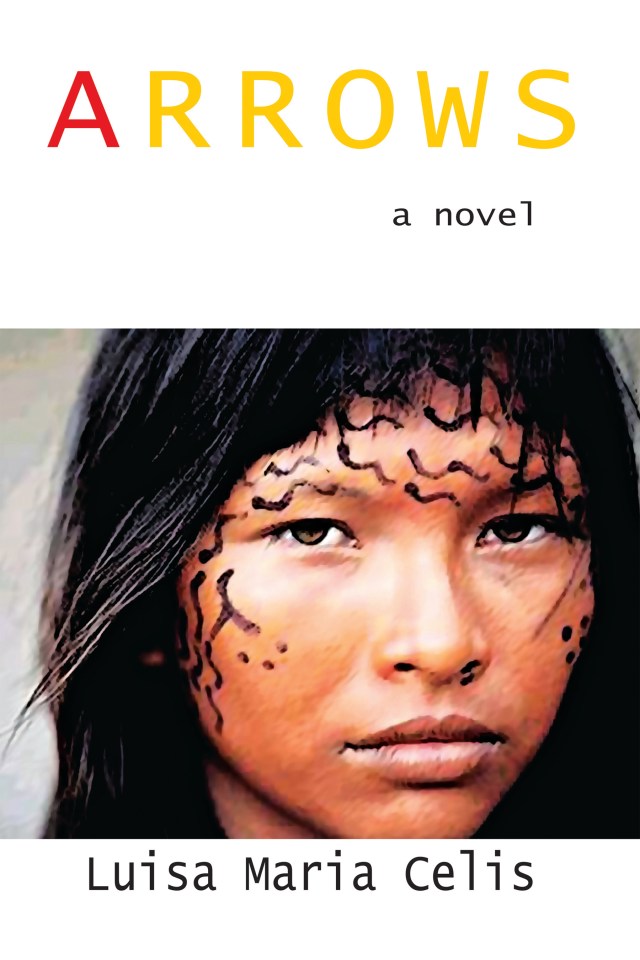
Arrows

excerpt

We followed the river until it converged with the same river
Guaire which ran the length of the valley.
We were one mile from our destination.
We crossed the Guaire from south to north, following the path of
those who had survived one of the two previous expeditions that
had made it this far. The Guaire was not deep, but, having lived all
my life near rivers, I knew how mighty it could become with the
proper amount of rain.
Soon after, we crossed a creek called Catuche, along which
soursop trees grew by the hundreds, hence the creek’s name, which
in Carib meant soursop. Tamanoa brought me one of its fruits and
ripped it open beforemyeyes. It was white, succulent and aromatic.
As the sun descended, the deep green of the cordillera mingled
now with soft blues and yellows. We had turned north and were
ascending the slope of the piedmont when Losada’s voice
resoundingly gave the order to stop. We had finally reached a
destination: the charred remains of what had been the settlement of
San Francisco, half-buried in the vegetation.
Francisco Fajardo had fled the settlement five years ago when he
knew the reinforcements he had pleaded for had been wiped out by
the Arbaco Indians of Terepaima. After painful losses, Fajardo had
divided his forces into two and fled in canoes and pirogues.
It was eerie being in that deserted place. The air smelled strongly
of rain, damp earth and plants. The howling monkeys, chachalacas,
parrots—they were all quiet. That night, as a full moon shone
through thick clouds, the ubiquitous night-song of frogs and
crickets was overridden by the deafening buzz of cicadas.
Losada paced nearly beyond range of the firelight, five strides to
the right, five to the left, hand combing his beard and moustache,
eyes fixed on the ground before him, his grizzled hair reflecting the
silvery moonlight. He anxiously awaited the return of the troupe led
by Diego de Paradas, who finally arrived after midnight, looking
seriously bedraggled.
“What happened?” asked Losada.
Diego de Paradas was wounded. Pánfilo spoke for him.

https://www.amazon.com/dp/0981073522

Jazz with Ella

excerpt

ROSTOV-NA-DONU, JULY 13, 1974
The Canadian student tour group were old hands at Soviet travel by the time their plane left Leningrad bound for Rostov-na-Donu in the Ukraine. The usual plump stewardesses, more relaxed on this domestic flight, handed out the usual sticky candy. The students played the now familiar game of who had the functioning seatbelts. David had no seatbelt, and he threatened to hang on to Paul’s leg for the duration of the flight should they meet turbulence.
Despite the gloom of parting from Volodya, Jennifer’s spirits lifted slightly. The plane was full of Ukrainians returning home—women in harem pants, swarthy men with metallic, toothy grins carrying bundles, carpets and, in one case, something alive in a cage that screeched at intervals. The passengers moved around the plane freely, paying no attention to the attendant yelling at them.
Jennifer wasn’t the only one who was mourning the loss of a friend in Leningrad. Ted had ended his stay there at a party with students from the institute. He had met them on the street, and over some powerful moonshine liquor they had discoursed heavily on the problems of the cold war and had resolved to bring peace to their various countries. Unfortunately, Ted couldn’t quite recall how they had proposed achieving this lofty aim. Lona had also found some friends in Moscow, it seemed, and was only now telling the group about them. Jennifer wondered if Lona would have admitted the liaison if she had not been spotted outside the hotel with a group of sharp and eager young men whom everyone suspected of being some kind of confidence tricksters. If anyone can take care of herself, it’s Lona, thought Jennifer, and she wondered if Lona’s swains had asked her to help them leave the country. Then, in an attempt to shake off…

https://www.amazon.com/dp/1926763246