THIS IS DEEP MEMORY. Childhood. The South Beach summer house on Staten Island. Late light fades from the sky, the window, the upstairs bedroom where Rick lies under a cool sheet, watching the stars come out, listening to silence. Slowly, as his mind opens, the heavy stillness after rain dissolves into small sounds. A breeze sweeps through the willow and sighs off over the glassy skritch of crickets, tree frogs like a troop of wet grace notes, the faint hiss of traffic on wet pavement from Hyland Boulevard, and beyond that, far away, but close, too, like the pulse of a double bass, the sea builds to a rush and subsides, again, and again, with a soft crash that makes him think of God and time without end. Then, below the open window, it begins. Tentative chords from his father’s guitar. Three clear notes. A fourth. A fifth. A melody takes shape, picked up by his uncle Vincenzo’s mandolin. It’s lazy at first, until his mother’s clear soprano joins the strings. A male voice comes under it, then another, and a song rises to full strength, steered off and back by the wind. He smiles to himself. It’s what he was waiting for. He rides that comfort into dreams. Rick sits at the oval table in the kitchen with his colouring book. He is trying to keep the slippery crayon tips inside the lines. At the other end, his father and his uncle Vincenzo are playing a game called briscola. They study their cards then slap them down hard enough to make them bounce off the coarse grain of the wood. Sometimes they shout at each other, but he knows it’s for fun and their raised voices pass over him without breaking his concentration. As he works, he can hear his grandfather, Arsenio, talking back to the radio in the front room where his wife, Theresa, argues good-naturedly
And it was my soul’s most precious land somewhere there at the Balkans somewhere there at Rhodope. Punished by the people here I’ve come to you, oh virgin forests, embrace me and listen to my soul-violin. And the trees told me: we know of you, but your soul doesn’t like the soft words and fresh dew which drips like honey from our leaves and always talks to the shepherds, the frontiersmen, the couples with their kisses. Yet our branches, flowers and fruit, our fragrance and our birds exhume words as if from our sunless depths and these words are only heard by those who know how to read the secrets
…after chores and supper, for a few hours of fun. When the moon illuminated the snow on crisp, clear nights we would run and play and wrestle on the snow banks, or in the straw piles created by the threshing crew. After getting our fill of the night air it would be time to thaw out with hot chocolate and finish the evening off with a game of cards. And then the walk home to be in by ten o’clock and to bed. This too was an experience in the winter. After our second house was built our bedroom was the attic itself, unheated except for whatever warmth found its way up the narrow stairway. So the first one in warmed up the bed and resisted sharing the heat with whoever was to share that bed.We slept in pairs, compatibility being established by various methods including by dictates from the parents—when all else failed. And it failed often. Scraps broke out on minimum provocation and disagreements could last an hour, a day or weeks. Piling into a cold bed with a brother who was after your hide was risky business. You were as likely as not welcomed by a smelly fart which stopped you from getting your face under the covers to take advantage of body heat. Instead it was necessary to tuck the feather tick tightly under the chin to prevent any vapours from escaping upward, at the same time to gently lift the edge of the tick with a foot to provide an outlet for the smell. And no touching or bedlam would break loose and one or the other would be downstairs pleading his case in long johns before the court of last resort, mother, to be specific.Mother’s justice was gentle enough and, by comparison with Pop’s justice, downright benevolent. Pop would resolve our disagreements by following a policy of no-fault resolution or, to put it more accurately, all fault resolution whereby we were all equally guilty and therefore all received equal punishment. It worked. We usually went to mother to be the mediator. At least with her we were given a chance to develop our case. There were many things one could not do in our attic bedroom. One could not take a glass of water up to the bedside; it froze by morning.One could not kick off the covers; one froze by morning.
Starbucks The laptop is on the table steamy non-fat latte brings to your mind inspiration of your young lover who comes to flood your imagination and the poem rises from the sweetness of the coffee to swirl over the coffee table as if you hit the keys of a piano as if directing a new crescendo over your lover’s fiery body exquisite paean that dominates your verses and you imagine honey dripping from her lips that you dream to taste soon
Pip: Manolis Aligizakis has been quietly building one of the more unusual literary archives on the internet — translations, original poetry, fiction spanning centuries and continents, all landing on the same site like it's nothing.
Mara: vequinox is behind all of it, and today we're covering the range: modern Greek poetry in translation, a wide stretch of literary fiction and drama, and poems that sit at the intersection of love and loss.
Pip: Let's start with the poetry.
Voices From Modern Greek Poetry
Mara: The question this cluster of posts raises is what modern Greek poetry is actually doing — what it reaches for, and what it refuses to let go of. The anchor here is Katerina Anghelaki Rooke's "Unexpected Development."
Pip: She sets it up plainly: "It was when words overflowed / images flew like wild birds / that refused to feed on words / even if they were hungry for them."
Mara: That tension — images that won't submit to language even when they need it — runs through the whole collection. Anghelaki Rooke is mapping a kind of loss that precedes grief.
Pip: Antony Fostieris takes a harder geometric line in his selected poems: a snake eating its tail, beginning collapsing into end, the body always absent. Tasos Livaditis, longlisted for the 2023 Griffin Poetry Prize, closes his poem "Coincidences" on the line "music in the beyond / that seeks what poetry silences on earth" — which is either profound or a very elegant shrug.
Mara: Nikos Engonopoulos writes about Georg Trakl — a poet who "never agreed with them" and whose only longing, once he understood what it meant to be alive, was to escape. Yannis Ritsos, the Neo-Hellene Poets anthology, Hours of the Stars, Orange, Ugga, and Troglodytes all appear here too, each finding a different pressure point between the lyric and the world pressing in on it.
Pip: Fiction carries some of that same weight — let's go there.
Literary Fiction And Drama Across Time And Place
Mara: What this range of fiction shares is an interest in pressure — the moment a situation tips, when a character can no longer hold the ordinary shape of their life. Straits and Turns is the anchor, and it earns it.
Pip: The excerpt follows a couple and their dog Elvis through a cancer diagnosis and a slow, careful goodbye. The prose doesn't reach for drama; it just watches. "Two days went by. The situation worsened. They called the vet, who suggested that perhaps the cancer metastasized from his bladder to his bones, as it was statistically the case in most of these dogs."
Mara: What that sentence does is hold clinical language right next to love, and the gap between them is where the whole excerpt lives. The decision not to pursue chemotherapy, the daily medication ritual, the final day when Elvis doesn't touch his food — it's a portrait of grief that arrives before the loss does.
Pip: Jazz with Ella moves in a completely different register — Cold War tension, a border crossing, a woman watching a man she's trying to protect navigate an interrogation line. The stakes are geopolitical, but the writing keeps its eye on the human pulse of the scene.
Mara: Fury of the Wind is quieter — a community fair, a husband and wife negotiating small social obligations, the ordinary friction of a marriage visible in a single exchange about who covers the preserves booth.
Pip: Redemption takes a young man named Hermes Dragakis back to his village with a diploma and a scholarship to Canada, and the scene where the mayor tries to understand what an economist actually does is somehow both funny and genuinely moving.
Mara: In Turbulent Times goes somewhere more intimate — an Irish drama of paternity, secrecy, and a woman who tells a man quietly, "You let me down, but I forgive you."
Pip: Wellspring of Love watches a woman named Tyne move through her sleeping children at night — each child rendered in a sentence, the accumulated tenderness of a parent who has already known loss. Blood, Feathers and Holy Men puts a monk named Rordan in early medieval Ireland, furious that the Church buries medical knowledge while people die of infected throats. He's not wrong, which makes it worse.
Mara: Arrows delivers its moment in a single blackout — a priest counting the dead, touching foreheads, finding one name missing. Savages and Beasts opens on a murder inside a residential institution and the slow, formal way the news spreads through the building. In the Quiet After Slaughter follows a bush pilot whose final chapter is written in retrospect, quietly. The Unquiet Land gives us Caitlin and Michael on a clifftop after something has broken, and Caitlin describing a dream of the sea gone still and black "the way the world will look when it's ended and we've all gone."
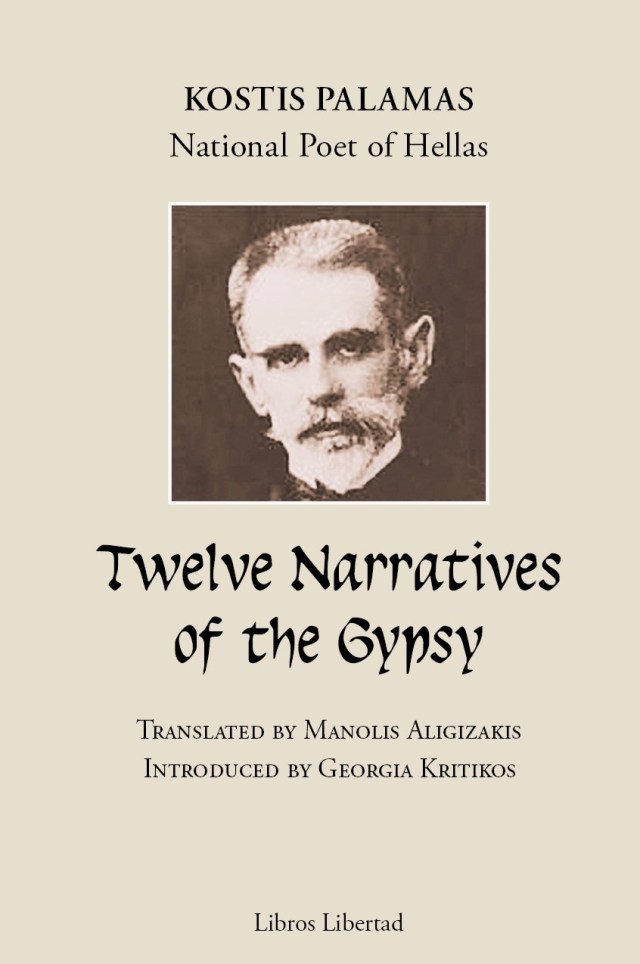
Pip: Poodie James puts a police chief in a room full of political pressure, defending a hobo from a sabotage charge with nothing but logic and a flat refusal to perform certainty he doesn't have. Twelve Narratives of the Gypsy and Marginal round out the theme — the first a lyric sequence of departure and transformation, the second a short, still poem about absence that ends on silence mimicking footsteps. And Ubermensch contributes a poem called "Funeral" — a poet buried while the hawk watches and the wine flows and someone begs for two bits at the edge of the scene.
Mara: The emotional through-line from fiction into poetry is loss — anticipated, survived, or simply witnessed. That's where the next segment lives.
Poems Of Love And Loss
Mara: The question here is what poetry does with grief that prose can't — how it compresses the experience until the image does the work the argument refuses to do. Yannis Ritsos anchors it.
Pip: The poem is called "The Dead House," and Ritsos doesn't soften it: "Soon the marbles sweated out blood again. The cleaners left too. They deserted us; so, we forgot about everything too: sweeping, mopping, dusting and the marble kept on sweating out more and more blood."
Mara: What that gets the reader is abandonment rendered as a physical law — the house bleeds no matter who tries to clean it, and eventually everyone stops trying, including the people who live there.
Pip: Antony Fostieris in his selected poems makes the same point through pure geometry — the circular trap where every beginning joins the end. Tasos Livaditis, the Griffin longlisted volume, closes on "music in the beyond / that seeks what poetry silences on earth." And Troglodytes frames the young poet standing against bigotry, recording grace — which is its own kind of elegy for what keeps getting buried.
Mara: Grief and witness, across every form the site carries.
Pip: What stays with me is how much of this — the poetry, the fiction, the elegies — is about things that refuse to be cleaned up. Blood in the marble. A dog that won't eat. A monk who can't make the Church listen.
Mara: Persistence against forgetting. That's the thread. More of it next time.