…housewives and excited children. After checking off the names of volunteers who manned each booth, he moved on to the next. Few of the women had time for more than a glance and a nod in his direction, but preparations appeared to be progressing well. As he approached the bake sale table, an annual endeavour of the Anglican Church ladies group, he spotted his wife working at the table with Mrs. Carson and Mrs. McKinnon. But before he could greet them he heard his name called. Will turned to see Mrs. Draper, a director’s wife, hurrying towards him. “Oh, Mr. Andrews,” she said breathlessly, “I’ve been looking all over for you. Janet Peterson was supposed to be helping me with the preserves booth but her husband just told me she’s sick and won’t be here.” Beads of perspiration from her forehead were sliding down each side of her moon-shaped face. “I can’t handle it on my own, there’s so much coming in, and that judge from Bradshaw doesn’t know what she’s doing.” “All right,” Will said, “you go back to the booth and I’ll send someone over.” Muriel Draper extracted a crumpled handkerchief from the puffed sleeve of her cotton dress. She mopped her face, muttering as she turned away, “And it’s already so hot. I don’t know how we’ll survive in this building all day.” Will thought if Mrs. Draper calmed down she wouldn’t feel the heat so much. As he turned back to the bake table, he wondered idly how poor Charlie Draper could stand his wife’s whining day after day. “Molly,” he said, after nodding briefly to his wife’s companions, “will you go over to the preserves section and help Mrs. Draper? Her partner isn’t coming and she’s snowed under. You know how excited she gets.” Molly gave him a sour look. “Really, Will, can’t you find someone else? You know I’m needed at this table to help with pricing and sales.” “I’ll find someone else to come here then,” Will said firmly, “but there’s no one else who knows how to arrange exhibits like you do.” Mrs. Andrews, not in the least mollified by his compliment, shrugged her shoulders irritably, picked up her purse from under…
Additions to the Void High up in the sky, deep in the soil the wise men-kids of astral mistakes sorrowful for their reasons saunter in the heaviness of what they believed in libraries-flashes of infinity ephemeral reflective habitations clouds that flow the whole cosmos an addition of emptiness an anarchic escape. Tomorrow always existed riding a horse imagination of a word in the cracks of the mind.
Tasos Livaditis was a man and a poet who knew how to be likable. Not only because he was handsome both in his youth and later on in his senior years, not because he was the center of attention in various gatherings of his days, but also because of his poetry. But why was it so? His creative life could be easily divided into three periods, first being the period of beliefs, second the period of the crisis and third the period of recovery and in all three periods Tasos Livaditis was a very likable man to everyone he met, dealt with, associated with, made friends with, shared his hours in exile with. And Livaditis was a likeable man also because of his goals. During the first period, his goal was the struggle, something that spoke on behalf of everyone and also talked of a better future. In the second period, he tried to conceal the crisis he faced and kept away from his poetry by turning his attention to the people around him. During the third period of his creative life, his most important, if you like, he’s the poet everyone liked because of his ability to select the unexpected. Evident in the first book of this period, when he dealt with the issue of defeat, he encountered: He kneeled and laid his forehead on the floor. It was a difficult time. When he got up, his embarrassed face that we all knew well had stayed there on the planks like a useless inverted helmet. The same man returned home without face — like God That like God and the face on the planks are the unexpected images that put this poet apart from others. Tasos Livaditis could minimize his importance, to lessen the size of his stature, to present himself as haunted, as prey, as one who is punished; he never liked the pompous and unnecessary verbalisms:
For years, I’ve prepared myself for that big moment the miracle of the century, on the other hand you must admit I’m one of a kind in my field. But, God, what happened, who betrayed me, where they find all the proof? The procedure was quick. The district attorney, to the point, “Are you him?” he asked me, “him,” I answered is there any worse charge? ~ Kostas Kouloufakos
Ecce Homo Here, the martyr opens his heart, here he transcends his bodily borders and as if grasping onto a thin thread, he unfolds his life, turn by turn, and fight after fight, he opens his diaphanous heart and spreads his creative stamina over the mediocrity of contemporary society hoping for a reaction, for a word of acknowledgement from someone, for a comment about his insatiable wish to change, to transform, to mediate between the abundant animals around him and the eternal source from which he drew his images, alas, to receive no answer, no comment, nothing is for him other than merciless silence which confronts the man, only to leave him, forever battling himself and the braggarts who encircled him, leaving no escape, but silence into which he dwelt for the rest of his life
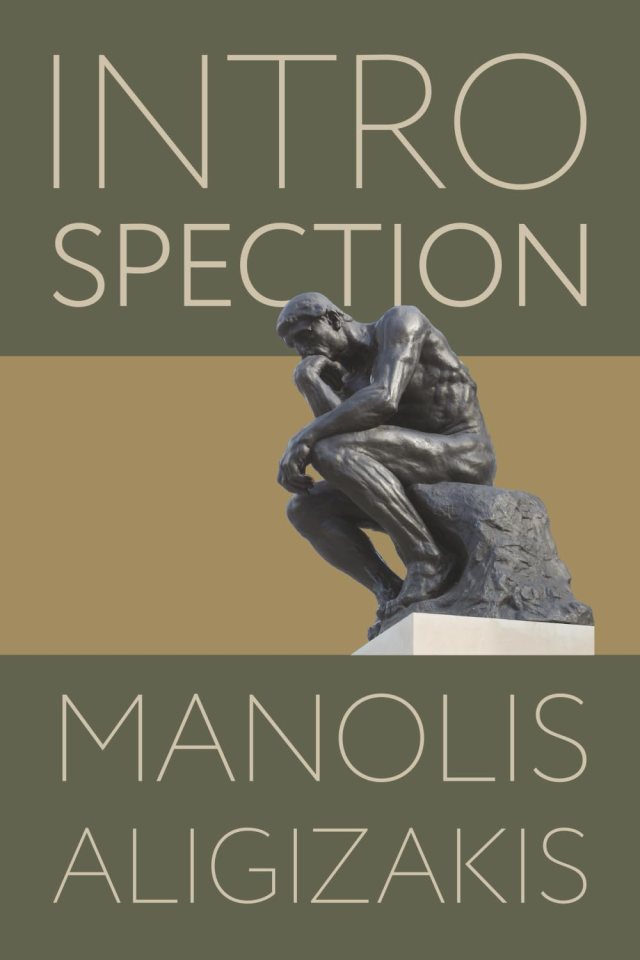
Pip: Manolis Aligizakis publishes the kind of site where you can move from a Cretan Renaissance epic to a teenager breaking his ankle during an accidental wrestling match with an older girl — and somehow both feel like they belong.
Mara: vequinox has been putting out a steady run of posts that touch on modern Greek poetry, the textures of desire and longing, rural and domestic life, and the weight of historical conflict. Let's start with the poetry.
Voices from the Greek Tradition
Pip: What this cluster of posts is doing is presenting modern Greek poetry as a living tradition — not a museum piece, but a body of work that moves between sensuality, political witness, and lyric restraint.
Mara: The post titled "Wheat Ears" anchors that range cleanly. The poem opens on a heat wave and builds toward pure physical longing: "come close to me, I beg you / let me touch your skin / the day is fiery / and unbearable like / the body's conflagration."
Pip: That last word — conflagration — does a lot of work. The body isn't just warm; it's an event. The poem earns that escalation.
Mara: The anthology post, "Neo-Hellene Poets," shows the other register entirely — a poem called "Kiss" that ends, "My soul that never learned to kiss / then knows immaculate ecstasy." Longing held at a distance, not consummated.
Pip: And then Yannis Ritsos, in "Poems Volume VI," goes somewhere stranger — a fox in a chicken pen, old men lying on yard tiles, a thin woman threading a ring of smoke as "the only one who believed him." Ritsos makes the surreal feel like documentary.
Mara: The Constantine Cavafy post gives you the political register — a poem about Alexander Jannaeus and Alexandra, Jewish monarchs who are "equal to the Seleucids in every way," the irony landing quietly in that final line.
Pip: Cavafy's irony is so dry it practically needs a humidity warning.
Mara: "Kariotakis-Polydouri, The Tragic Love Story" contributes a poem called "Modesty" — interior beauty as something fragile and untouchable, "a rose that balances on its own flame." Titos Patrikios, in his "Selected Poems," cuts even shorter: the speaker says experience earns him the right to go crazy, but he won't, because that would be a concession. And "Impulses" closes the range with imagistic compression — grief and erosion rendered through silver clouds and a carved heart.
Mara: All of it maps a tradition that moves fluidly between the erotic, the civic, and the elegiac — which is exactly the territory the next segment enters from a different angle.
The Body Remembers
Pip: Desire in this group of posts is rarely clean — it arrives tangled with anxiety, absence, and the particular ache of things that almost happened or already ended.
Mara: The excerpt from "Small Change" puts you directly inside a charged, disorienting encounter. The narrator, a boy, wrestles an older girl on a deserted street; they fall, and the prose captures the collision of arousal and confusion precisely: "her face looked shocked and she tried to twist away and we fell, and my ankle caught on the curb and she landed on top of me, both of us breathing hard, and I heard a dull crack, and a stab of pain like an electric current that shot up my left leg."
Pip: The body keeps score — and here the score is a broken ankle and a girl sprinting away down the street.
Mara: What the passage gets right is the simultaneity: wonder and pain and panic arriving in the same breath, no clean separation between them.
Pip: The poem "Message," from the "Medusa" post, is the compressed version of that same dynamic — someone sending a text three times, editing it, not knowing the person they're reaching for has already fallen asleep holding someone else's laughter.
Mara: "HEAR ME OUT" works in the same emotional space but from further along the timeline — a speaker alone in winter, pulling out fleece bed-sheets from a former shared life. The post reads: "Last night I went to bed in those fleece sheets after a long time I discovered something of our smell has remained in the fabric."
Pip: Scent as the last archive. That detail is doing real work.
Mara: "Blood, Feathers and Holy Men" takes a longer route to the same territory — Rordan and Ula, a medieval Irish monk and a Native woman, building toward love through shared song, each afraid to speak first. The restraint there mirrors the Kariotakis poems from the previous segment.
Mara: "Cloe and Alexandra" asks where poets go at night and answers in images — bloodied hands, a bandage over the heart, a swan writing its last verse. And "Wellspring of Love" grounds desire in the domestic and the anxious — a woman gardening before a prairie storm, worrying about the people she loves, trusting a child to be responsible.
Pip: From wrestling matches to fleece sheets to medieval monks — desire here keeps finding new containers. What the rural posts do is give those containers a landscape.
Land, Kin, and the Work of Staying
Pip: This segment is about what it costs and what it means to be rooted somewhere — a farm, a country hospital, a village, a horse arena — and what happens when those roots are tested or handed on.
Mara: The "Still Waters" excerpt sets the tone. A nurse named Tyne is being walked through an unfinished country hospital, and the exchange lands a quiet irony: when she questions the windows in the operating room, the doctor grins and says, "An air-conditioned operating room, of course." The passage ends on her honest uncertainty — "it would certainly take some getting used to."
Pip: A surgical suite with opening windows in a prairie winter. Rustic is one word for it.
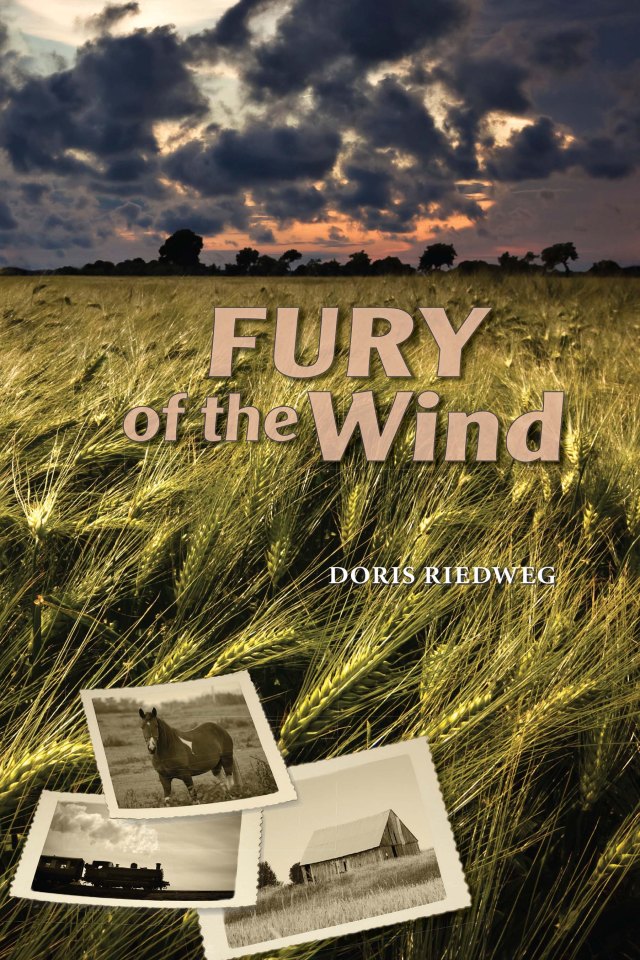
Mara: "Fury of the Wind" gives you the farm side of that same world — a Scottish family's homestead passed through three generations, a daughter-in-law who has "become a regular country girl" with garden produce and homemade bread, planning for the fall fair months in advance. The continuity there is deliberate and warm.
Mara: "He Rode Tall" moves into the horse arena — a competition scene where a young rider named Tanya finishes Reserve World Champion, and the emotional peak is the older horseman Joel leaning over to whisper two words: "She's yours." The filly, the title, the whole arc handed forward.
Pip: That handoff is the whole story in two words.
Mara: "The Circle" widens the geography — phone calls coordinating airport pickups, a sick uncle in Iraq who can't speak freely over the phone, families dispersed but still pulling toward each other. The domestic instinct travels.
Mara: "Ken Kirkby, A Painter's Quest for Canada" takes rootedness into the Arctic — Kirkby describing the tundra as a place of simultaneous sensory deprivation and overload, where "the prairies by comparison are claustrophobic." "Straits and Turns" grounds things differently, in the very specific worry of a pet's health — a dog named Elvis, bladder stones, a second veterinary opinion. And "The Unquiet Land" puts a young Irish farmhand in front of a girl who hires him partly because his uncle is known to her family, the connection between land and kin made literal in a handshake over yellow-man candy.
Pip: Roots and conflict are harder to separate than the segment headings suggest — which is exactly where the next posts go.
History as Wound and Ceremony
Pip: The posts here are about conflict that has been institutionalized — turned into parade, into poem, into the long aftermath of war — and what it means to live inside that.
Mara: "In Turbulent Times" opens on the Twelfth of July in Belfast — the Orange parades, the bunting, the elaborate banners. The post quotes the poet Louis MacNeice on "the voodoo of the Orange bands / Drawing an iron net through darkest Ulster." A Protestant character named Robert Hanlon, married to a Catholic, simply leaves the city every year to escape it.
Pip: An iron net drawn through a province, and the most honest response is to go find a quiet field.
Mara: "In the Quiet After Slaughter" puts you in a different kind of threat — a Yukon bar, a one-eyed man with a machete, a protagonist who talks his way out by claiming to be someone useful. The violence is immediate and physical, not ceremonial.
Mara: "Hours of the Stars" pulls back to the lyric register — a poem that opens "After the death of authority / we waited for the king's celebrations / messengers of the lost war." The weight of collective defeat carried in the body, wrapped "like an ivy." "Erotokritos" reaches further back still — the scholarly post traces the Cretan Renaissance epic to refugees fleeing the Ottoman fall of Crete, a poem preserved and carried by people in flight. And "Wheat Ears" contributes a poem called "Visitor" — an unknown soldier who arrives in a small town, touches one woman's life, and is found dead in the street the next morning, his name never spoken.
Pip: History here keeps finding the same shape: ceremony over wounds that haven't closed.
Mara: What holds all of this together is the insistence that the personal and the historical are the same material — a broken ankle and a battle, a fleece sheet and a refugee poem.
Pip: Next time, presumably, more of the same — which is to say, more of everything.