Cretan Canadian Poet, Author, Translator, Publisher
Author: vequinox
BIOGRAPHY
Manolis (Emmanuel Aligizakis) is a Greek-Canadian poet and author. He was recently appointed an honorary instructor and fellow of the International Arts Academy, and awarded a Master’s for the Arts in Literature. He is recognized for his ability to convey images and thoughts in a rich and evocative way that tugs at something deep within the reader. Born in the village of Kolibari on the island of Crete in 1947, he moved with his family at a young age to Thessaloniki and then to Athens, where he received his Bachelor of Arts in Political Sciences from the Panteion University of Athens. After graduation, he served in the armed forces for two years and emigrated to Vancouver in 1973, where he worked as an iron worker, train labourer, taxi driver, and stock broker, and studied English Literature at Simon Fraser University. He has written three novels and numerous collections of poetry, which are steadily being released as published works. His articles, poems and short stories in both Greek and English have appeared in various magazines and newspapers in Canada, United States, Sweden, Hungary, Slovakia, Romania, Australia, and Greece. His poetry has been translated into Spanish, Romanian, Swedish, German, Hungarian languages and has been published in book form or in magazines in various countries. He now lives in White Rock, where he spends his time writing, gardening, traveling, and heading Libros Libertad, an unorthodox and independent publishing company which he founded in 2006 with the mission of publishing literary books. His translation book “George Seferis-Collected Poems” was shortlisted for the Greek National Literary Awards the highest literary recognition of Greece.
Distinguished Awards
Winner of the Dr. Asha Bhargava Memorial Award, Writers International Network Canada, 2014
“George Seferis-Collected Poems” translated by Manolis, shortlisted for the Greek National Literary Awards, translation category.
1st International Poetry Prize for his translation of “George Seferis-Collected Poems”, 2013
Master of the Arts in Literature, International Arts Academy, 2013
1st Prize for poetry, 7th Volos poetry Competition, 2012
Honorary instructor and fellow, International Arts Academy, 2012
2nd Prize for short story, Interartia festival, 2012
2nd Prize for Poetry, Interartia Festival, 2012
2nd Prize for poetry, Interartia Festival, 2011
3rd prize for short stories, Interartia Festival, 2011
Books by Manolis
Autumn Leaves, poetry, Ekstasis Editions, 2014
Übermensch/Υπεράνθρωπος, poetry, Ekstasis Editions, 2013
Mythography, paintings and poetry, Libros Libertad, 2012
Nostos and Algos, poetry, Ekstasis Editions, 2012
Vortex, poetry, Libros Libertad, 2011
The Circle, novel, Libros Libertad, 2011
Vernal Equinox, poetry, Ekstasis Editions, 2011
Opera Bufa, poetry, Libros Libertad, 2010
Vespers, poetry by Manolis paintings by Ken Kirkby, Libros Libertad, 2010
Triptych, poetry, Ekstasis Editions, 2010
Nuances, poetry, Ekstasis Editions, 2009
Rendition, poetry, Libros Libertad, 2009
Impulses, poetry, Libros Libertad, 2009
Troglodytes, poetry, Libros Libertad, 2008
Petros Spathis, novel, Libros Libertad, 2008
El Greco, poetry, Libros Libertad, 2007
Path of Thorns, poetry, Libros Libertad, 2006
Footprints in Sandstone, poetry, Authorhouse, Bloomington, Indiana, 2006
The Orphans - an Anthology, poetry, Authorhouse, Bloomington, Indiana, 2005
Translations by Manolis
Idolaters, a novel by Joanna Frangia, Libros Libertad, 2014
Tasos Livaditis-Selected Poems, Libros Libertad, 2014
Yannis Ritsos-Selected Poems, Ekstasis Editions, 2013
Cloe and Alexandra-Selected Poems, Libros Libertad, 2013
George Seferis-Collected Poems, Libros Libertad, 2012
Yannis Ritsos-Poems, Libros Libertad, 2010
Constantine P. Cafavy - Poems, Libros Libertad, 2008
Cavafy-Selected Poems, Ekstasis Editions, 2011
Books in other languages
Eszmelet, (Hungarian), poetry by Manolis Aligizakis, translated into Hungarian by Karoly Csiby, AB-ART, Bratislava, Slovakia, 2014
Hierodoules, (Greek), poetry, Sexpirikon, Salonica, Greece, 2014
Yperanthropos,(Greek), poetry, ENEKEN Publications, Salonica, Greece, 2014
Übermensch (German), poetry by Manolis Aligizakis, translated into German by Eniko Thiele Csekei, WINDROSE, Austria, 2014
Nostos si Algos, (Romanian) poetry by Manolis Aligizakis, translated into Romanian by Lucia Gorea, DELLART, Cluj-Napoca, Romania, 2013
Tolmires Anatasis, (Greek) poetry, GAVRIILIDIS EDITIONS, Athens, Greece, 2013
Filloroes, (Greek ) poetry, ENEKEN PUBLICATIONS, Thessaloniki, Greece, 2013
Earini Isimeria, (Greek) poetry, ENEKEN PUBLICATIONS, Thessaloniki, Greece, 2011
Stratis o Roukounas, (Greek) novel, MAVRIDIS EDITIONS, Athens, Greece, 1981
Magazines
Canadian Fiction Magazine—Victoria, BC
Pacific Rim Review of Books—Victoria, BC
Canadian Poetry Review—Victoria, BC
Monday Poem, Leaf Press-Lantzville, BC
The Broadkill Review, Milton, Delaware
Ekeken, Thessaloniki, Greece
Envolimon, Beotia, Greece
Annual Literary Review, Athens, Greece
Stigmes, Crete, Greece
Apodimi Krites, Crete, Greece
Patris, Crete, Greece
Nyxta-Mera, Chania, Greece
Wallflowers, Thessaloniki, Greece
Diasporic Literature Spot, Melbourne, Australia
Black Sheep Dances, California, USA
Diasporic Literature Magazine, Melbourne, Australia
Spotlight on the Arts, Surrey, BC
Barnwood, International Poetry Magazine, Seattle, USA
Unrorean, University of Maine, Farmington, Maine, USA
Vakhikon, Athens, Greece
Paremvasi, Kozani, Greece
Szoros Ko, Bratislava, Slovakia
Mediterranean Poetry, Sweden
Apostaktirio, Athens, Greece
Life and Art, Athens, Greece
Logos and Images, Athens, Greece
Contemporary Writers and Thinkers, Athens, Greece
Palinodiae, Athens, Greece
Royal City Poet’s Anthology, 2013, New Westminster, BC, Canada
To parathyro, Paris, France
Ragazine C.C, New Jersey
Artenistas, Athens Greece
Deucalion the Thessalos, Greece.
Literary Lectern, Athens, Greece
Homo Universalis, Athens Greece
Aspen How indifferent the shadows rise defining depth of self worth the aspen holds light at her straight trunk and behind an apparition pale knight rests his head under his left arm smiling with the aspen’s apathy in sentiment for spring and subtlety of autumn sighs princess weaves a kerchief to garland his neck while they ready to behead him for courting a tall shadow
HONEY, BE TODAY My blood is heavier in the evening, my eyes are blurred in the still air and the torches went out, it’s late, the gong has fallen silent. I’ve forgotten the air and the bread, pagan-eyed black sun… Honey, be today I’m without tomorrow the earth collapses along with the wells.
Lightness Endless voyages purposeful in search of perfection eternal flame sauntering upon lips red and promiscuous upon blades of grass fresh and resisting upright upon soil drenched in hatred and struggle one flag forever fluttering in air thinned by lightness or air thick in volcano ash falling on annulled borders nations erased from the map nations flying the colorless flag of unity listen to this tune for a while you said touching my lips with your pointer and I let my body relax under the spell of your Paradisiacal touch
A grainy monochrome archive snapshot: Nick, in tiny heptagonal smoked glasses, poses proudly under a giant pop art sign. Pauline, his smiling fellow- conspirator, is putting up a poster inside the sunlit shop window. Lucas suddenly feels wildly protective towards these funny silly people—and simultaneously enraged. All that rich energy. How could they blow it? What went wrong? Outside there’s a distant rumble. The picture wobbles for an instant, as if there’s a glitch in the power supply, the sudden gust of breeze smells oddly saline—Abbotsburton is miles from the coast—but Lucas mustn’t lose anything, even the pontifications of the commentary. “. . . less than a decade later was permanently hospitalised. How did Pauline’s nightmare begin?” His mother’s face fills the screen, against a background of bookshelves. She’s backlit, face in shadow, but he can discern her sharp nose, firm lips, large anxious eyes. Her chin was more cleary defined then. And she’s wearing one of those red t-shirts with a message. She’s staring through the screen, waiting for the right words to form. Lucas can confirm now that he was, indeed, almost there himself, off-camera, in his little bedroom at the end of the corridor, Uncle Larry minding him, and special new cars and trains to play with. This has always been puzzle corner, this dazzling fragment of memory. How old was he? He’d blundered into the beginning of the shoot, had flinched from the heat of the lights, had walked right into the anxious squint of the cameraman, until women with smooth voices and clipboards had steered him back, promising sweeties, better than grown-ups’ boring chat. No sweeties for him now. He pauses the tape for a second, kneels with his face only inches from the curve of the screen. He has to go through with this ritual, there’s no going back . . . Playback. Yes, that’s her voice, bright, edgy, slightly nasal, like a soprano sax, solo: “It’s hard to pin-point the beginning of the end . . . Nick had always been a little obsessive, a bit impulsive, his moods swung on a big pendulum, as it were. You had to anticipate the motion. Either I was a fairy princess or a hag fit to die in a garbage bin. In the first few years I was mostly the do-good fairy on the Christmas tree, as long as I stayed in the confines of that role it was fine . . . And believe it or not, I think I wanted to please . . .” She’s almost managing a bitter smile, as the take fades. This nuance matters to Lucas but the presenter, off-screen, brisk as a toothpaste advert, has left the rest of it on a cutting-room floor and sticks to the rhetoric of his script. “Did Pauline recognise those all-important early warning signs of mental disorder?” Pauline leans forward into the camera. It’s confession time.
The Devil Speaks “The angel doesn’t know anything of his beauty I only I who betrayed my nature, my first angelic nature, may adore it now. I, the whole of me, can fit in it and tasting regret in the kisses I can dream, I can fall in love with the denied.”
VIII What time before dawn I dream that I reach the precipice and I fall, fall without my body? All deaths are staged here by people the breath of leaves is heard new birds replace yesterday’s just to sing with one flutter, one soul. Where am I at that moment the only important moment that underlines the great adventure? Where am I when they take away from me one spring every night and I don’t touch the womb that gives birth to the butterfly that dries up? Ages! All ages are poor and the age of eighteen is dimply lit by the other miracle; ages don’t taste darkness enough and they don’t count the value of the body the infinite nature of the body. And innocence, like blindness and the old fool saints fly a kite up in the air. At that time when the poets match innocence with a wolf that moment, known only to the body that writhes, growls the sleepy sky turns dark I and you too die a thousand times before dawn.
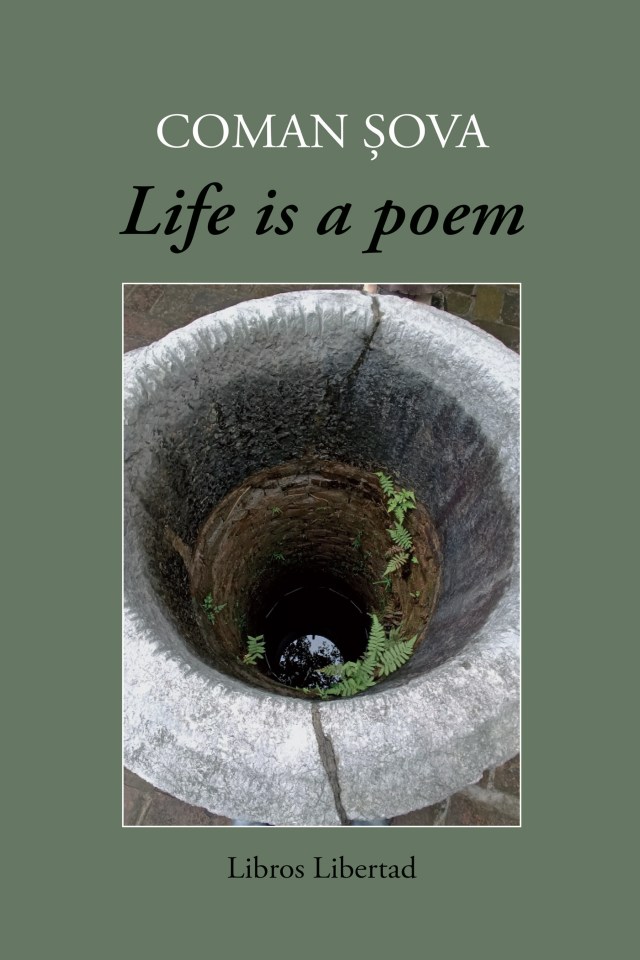
Water Well Water-well springs to the foreground, the matador’s blood decorates the goring horns of the bull and another opulent song dances on the white petals of the gardenia flower: save this moment before the irresistible Hades walks your way —You need to dig the garden, but you watch TV all day long I drink the traditional bitter coffee while you lie in the coffin like a definition of exactly the opposite you ought to be, yet when my time arrives to fit in the width and length of the same casket, you won’t be here to drink my bitter coffee —You remember when you went hunting and the car engine froze on you? The hoarfrost of April is still around when the heartless Hades pierces my heart, the first swallows dance in the air, and my mother covers the Easter eggs under the kitchen towel, hiding them from my eyes —Get up and take the garbage to the sidewalk, you lazy bum And I beg Hades to bring you back to me, my beloved, as his sardonic laughter becomes a macabre omen, and in the form of a song, he whispers —Since I’ve left you alone, your other half, I need to take: to balance the universe
“Have you talked to Ibrahim?” “Yes, I spoke to him this morning. He sends you his greetings and says he would like to see you soon, also. He says he understands. You and my uncle obviously go back a long way if you talk to each other in your secret code.” Bevan laughs at his comment, “We don’t talk in code, however, you are right, Ibrahim and I go back a long way. You have to understand, Hakim. I owe a lot to Ibrahim; he’s been my guardian angel, having helped me a number of times over the years and the last time was just a little too close.” “When was the last time, Admiral?” “Please call me Bevan. Admiral is too official and it’s not my style. Bevan is good enough. The last time was during the war with Iran. I was there for a while providing intelligence liaison within certain army units. Once, while traveling, I was abducted and held in a dark place for two and a half weeks by a group of fanatics with no specific affiliation or demands; poor guys didn’t know what they wanted to accomplish, if anything. They kept me imprisoned until your uncle discovered my tracks and got me out; don’t ask me how. Maybe he paid a ransom or maybe he used other means, who knows? He never told me how he did it, although I’ve asked him a number of times. The result is I’m alive today, thanks to Ibrahim. There were a lot of beheadings in those days, as you probably know.” Hakim sees another side of his uncle that he was not aware of until now. The Admiral continues. “He knows what I do, where I am, where I come from, and everything else and I know a lot more than what you think you know about Ibrahim. It’s a two-way street; he trusts me with everything and I trust him the same way, 100 percent.” “What would you like me to do or tell him?” Hakim asks. “Only do as he tells you, nothing else,” Bevan says, looking into the young man’s eyes. “That’s no problem. Am I going to see you again, Bevan, before you go?” “No, I don’t think so; however, if you ever need me, you know how to find me.” “Yes, I know. By the way, perhaps it would be nice for you to come and visit at some time after I move into my new apartment. That will be around the end of October; better yet, I’m planning to have a housewarming party when I move in. I’ll call you to come and have a drink with us; is that okay?” Bevan smiles, “I’ll be very happy to do so, Hakim. Please call and let me know when.”
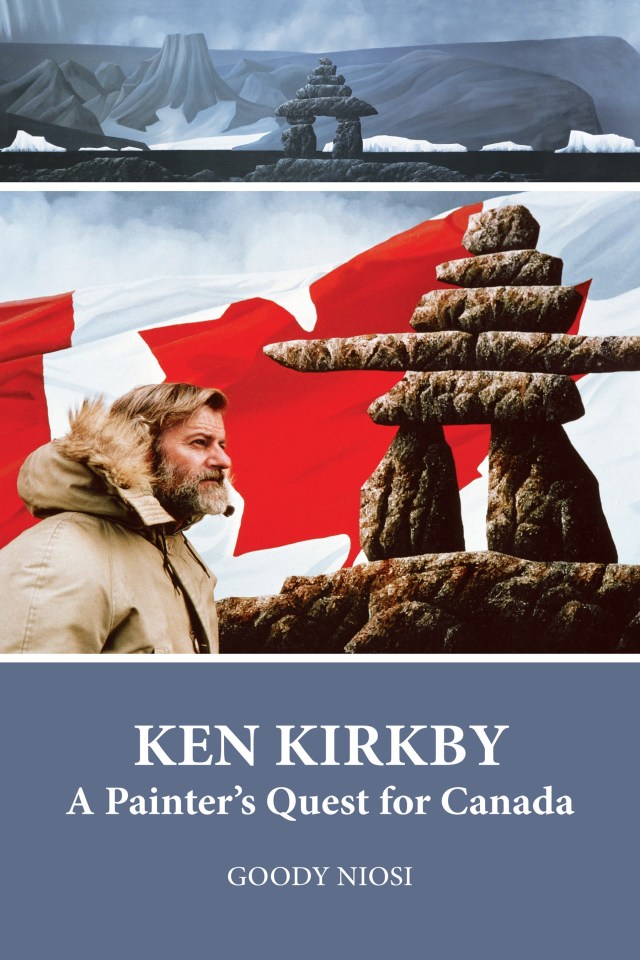
The media continued to be fascinated by him, the way an audience is mesmerized by a performer who embarrasses himself inadvertently, on a talk show. Ken had stepped so far outside the boundaries, had put on a show so over the top, right down to the Inuksuit painted on the streets, that the media haunted his studio just to see what would happen next. Ken continued to feed them quotable lines that seemed to come effortlessly to his lips, but that he had, in fact, been practising for months and years. But, tidbits wouldn’t feed them forever. Eventually they would want to stop nibbling and indulge in another meal – and the next banquet would have to be bigger and better than the last. He met Salvador Grimaldi for lunch again at Boccacio Restaurant, in the Columbus Centre, and once again the architect came bounding into the room, perfectly dressed in understated, expensive clothing, his eyes sparkling, and his smile spreading goodwill around the room. Ken had a plan. He told him that his next project had to be an even larger success than the last, and described the two immense paintings he was currently working on: one was a sixteen by sixteen foot canvas, featuring an Inukshuk set against an enormous white cloud, that was intended for the Reichmanns. Why the Reichmanns? Salvador asked. “They are a very prominent family which the media and the public have become very interested in,” Ken said. “They’re secretive and almost impossible to approach. I’ve been studying them, and the information is very sparse. I know they spent time in Valencia after leaving Eastern Europe, and then they spent time in Morocco, and then from Morocco they moved to Toronto: they started a tile business that immediately turned into a raging success. Then, they went into high-end real estate development, in which they have achieved even greater success. They are an intriguing family – and just what I need. I need a Lorenzo de Medici.” “I want to get to a place where other people cannot go. I want to sell a painting to a man who doesn’t buy paintings and see it hung in the foyer of the tallest building in the British Commonwealth – and have that become a media event – even though they don’t like the media, that is what I am after. What do you know about the Reichmanns that you feel comfortable passing on to me? I get the idea you’re pretty close to them.” Salvador allowed that he was close to Albert Reichmann, who preferred to be called Mr. Albert. He had done his corporate landscaping and was currently working on his personal property. “He’s a prince,” Salvador said. “A merchant prince. He is a man of many talents, and I find it interesting that you would have, instinctively, known that.’ Ken took Salvador to the studio to see the Reichmann and Yellowknife Airport paintings, in progress. When he unlocked the door and switched on the bank of lights, Salvador froze. The larger painting was nearing completion while the other was only half finished.
He couldn’t believe the noise. What was that sound? Looking at the clock he saw it was five a.m. Usually at this time, Joel was awoken to the serenading of his feathered friends, but this noise was different. This was not bird calls but cow calls. Mooing! “Hell!” Joel thought as he jumped into his jeans and raced to look out the kitchen window. Sure enough, Buck Smith’s herd of about 300 head of cows and calves were practically trampling each other to get at the small stream that wandered through the meadow. These cows weren’t just starved, they were thirsty as all get-out; his bet was that they were out of water in their own pasture. Jumping to the phone, he called Smith’s place. A very sleepy sounding Tyler, Smith’s hired hand, answered the phone. He promised to be over to help out in a hurry. Joel hadn’t said anything about the water to Tyler. He wanted proof first. In this part of the country, to let your stock go without water was a serious offense against everything that a rancher stood for. As he headed down the hall of the house, Tanya stuck her head out of her bedroom door and asked what was happening. Joel briefly filled her in on the details and asked her to get dressed and have the horses ready to ride when he got back. There wasn’t much he could do about moving the cattle out of his meadow until they were ready to, and until he had the manpower to do it. But right now, he had something else to do. He called for Harry who was now standing outside of the caboose, looking at all of the commotion.






 Manolis Aligizakis