Cretan Canadian Poet, Author, Translator, Publisher
Author: vequinox
BIOGRAPHY
Manolis (Emmanuel Aligizakis) is a Greek-Canadian poet and author. He was recently appointed an honorary instructor and fellow of the International Arts Academy, and awarded a Master’s for the Arts in Literature. He is recognized for his ability to convey images and thoughts in a rich and evocative way that tugs at something deep within the reader. Born in the village of Kolibari on the island of Crete in 1947, he moved with his family at a young age to Thessaloniki and then to Athens, where he received his Bachelor of Arts in Political Sciences from the Panteion University of Athens. After graduation, he served in the armed forces for two years and emigrated to Vancouver in 1973, where he worked as an iron worker, train labourer, taxi driver, and stock broker, and studied English Literature at Simon Fraser University. He has written three novels and numerous collections of poetry, which are steadily being released as published works. His articles, poems and short stories in both Greek and English have appeared in various magazines and newspapers in Canada, United States, Sweden, Hungary, Slovakia, Romania, Australia, and Greece. His poetry has been translated into Spanish, Romanian, Swedish, German, Hungarian languages and has been published in book form or in magazines in various countries. He now lives in White Rock, where he spends his time writing, gardening, traveling, and heading Libros Libertad, an unorthodox and independent publishing company which he founded in 2006 with the mission of publishing literary books. His translation book “George Seferis-Collected Poems” was shortlisted for the Greek National Literary Awards the highest literary recognition of Greece.
Distinguished Awards
Winner of the Dr. Asha Bhargava Memorial Award, Writers International Network Canada, 2014
“George Seferis-Collected Poems” translated by Manolis, shortlisted for the Greek National Literary Awards, translation category.
1st International Poetry Prize for his translation of “George Seferis-Collected Poems”, 2013
Master of the Arts in Literature, International Arts Academy, 2013
1st Prize for poetry, 7th Volos poetry Competition, 2012
Honorary instructor and fellow, International Arts Academy, 2012
2nd Prize for short story, Interartia festival, 2012
2nd Prize for Poetry, Interartia Festival, 2012
2nd Prize for poetry, Interartia Festival, 2011
3rd prize for short stories, Interartia Festival, 2011
Books by Manolis
Autumn Leaves, poetry, Ekstasis Editions, 2014
Übermensch/Υπεράνθρωπος, poetry, Ekstasis Editions, 2013
Mythography, paintings and poetry, Libros Libertad, 2012
Nostos and Algos, poetry, Ekstasis Editions, 2012
Vortex, poetry, Libros Libertad, 2011
The Circle, novel, Libros Libertad, 2011
Vernal Equinox, poetry, Ekstasis Editions, 2011
Opera Bufa, poetry, Libros Libertad, 2010
Vespers, poetry by Manolis paintings by Ken Kirkby, Libros Libertad, 2010
Triptych, poetry, Ekstasis Editions, 2010
Nuances, poetry, Ekstasis Editions, 2009
Rendition, poetry, Libros Libertad, 2009
Impulses, poetry, Libros Libertad, 2009
Troglodytes, poetry, Libros Libertad, 2008
Petros Spathis, novel, Libros Libertad, 2008
El Greco, poetry, Libros Libertad, 2007
Path of Thorns, poetry, Libros Libertad, 2006
Footprints in Sandstone, poetry, Authorhouse, Bloomington, Indiana, 2006
The Orphans - an Anthology, poetry, Authorhouse, Bloomington, Indiana, 2005
Translations by Manolis
Idolaters, a novel by Joanna Frangia, Libros Libertad, 2014
Tasos Livaditis-Selected Poems, Libros Libertad, 2014
Yannis Ritsos-Selected Poems, Ekstasis Editions, 2013
Cloe and Alexandra-Selected Poems, Libros Libertad, 2013
George Seferis-Collected Poems, Libros Libertad, 2012
Yannis Ritsos-Poems, Libros Libertad, 2010
Constantine P. Cafavy - Poems, Libros Libertad, 2008
Cavafy-Selected Poems, Ekstasis Editions, 2011
Books in other languages
Eszmelet, (Hungarian), poetry by Manolis Aligizakis, translated into Hungarian by Karoly Csiby, AB-ART, Bratislava, Slovakia, 2014
Hierodoules, (Greek), poetry, Sexpirikon, Salonica, Greece, 2014
Yperanthropos,(Greek), poetry, ENEKEN Publications, Salonica, Greece, 2014
Übermensch (German), poetry by Manolis Aligizakis, translated into German by Eniko Thiele Csekei, WINDROSE, Austria, 2014
Nostos si Algos, (Romanian) poetry by Manolis Aligizakis, translated into Romanian by Lucia Gorea, DELLART, Cluj-Napoca, Romania, 2013
Tolmires Anatasis, (Greek) poetry, GAVRIILIDIS EDITIONS, Athens, Greece, 2013
Filloroes, (Greek ) poetry, ENEKEN PUBLICATIONS, Thessaloniki, Greece, 2013
Earini Isimeria, (Greek) poetry, ENEKEN PUBLICATIONS, Thessaloniki, Greece, 2011
Stratis o Roukounas, (Greek) novel, MAVRIDIS EDITIONS, Athens, Greece, 1981
Magazines
Canadian Fiction Magazine—Victoria, BC
Pacific Rim Review of Books—Victoria, BC
Canadian Poetry Review—Victoria, BC
Monday Poem, Leaf Press-Lantzville, BC
The Broadkill Review, Milton, Delaware
Ekeken, Thessaloniki, Greece
Envolimon, Beotia, Greece
Annual Literary Review, Athens, Greece
Stigmes, Crete, Greece
Apodimi Krites, Crete, Greece
Patris, Crete, Greece
Nyxta-Mera, Chania, Greece
Wallflowers, Thessaloniki, Greece
Diasporic Literature Spot, Melbourne, Australia
Black Sheep Dances, California, USA
Diasporic Literature Magazine, Melbourne, Australia
Spotlight on the Arts, Surrey, BC
Barnwood, International Poetry Magazine, Seattle, USA
Unrorean, University of Maine, Farmington, Maine, USA
Vakhikon, Athens, Greece
Paremvasi, Kozani, Greece
Szoros Ko, Bratislava, Slovakia
Mediterranean Poetry, Sweden
Apostaktirio, Athens, Greece
Life and Art, Athens, Greece
Logos and Images, Athens, Greece
Contemporary Writers and Thinkers, Athens, Greece
Palinodiae, Athens, Greece
Royal City Poet’s Anthology, 2013, New Westminster, BC, Canada
To parathyro, Paris, France
Ragazine C.C, New Jersey
Artenistas, Athens Greece
Deucalion the Thessalos, Greece.
Literary Lectern, Athens, Greece
Homo Universalis, Athens Greece
Spring Night He lights the lamp. He wants to do something. He can’t. The moon shines outside; horses are there and two boats with guitars. The oarsman must be wearing the yellow shirt of the dead man. The night is enclosed in distorting mirrors, the face is ballooned, cut into pieces, melts, and slips into the thick green waters along with the caterpillars. He is not the one who laughs inside the water well
Visit All night long, sleepless, you promised to go visit. He looked so frail like a wilted red carnation. White walls, immaculate mirror completely silent hadn’t seen death yet as he pulled his hand from yours like a spoiled child keeping his toy to himself. You promised not to cry as he let his last breath to float freely in the void your tears dripped regret you didn’t have the courage to hold his hand and tell him that you miss him.
For the Shop He wrapped them carefully, tidily in green priceless silk. Roses of rubies, lilies of pearls, violets of amethyst. He values them as evidence of his desire, his vision, not as he saw them in nature and studied them. He will leave them in the safe, examples of his courageous and skillful work. When a customer comes into the store, he takes from their cases other things to sell—superb jewels— bracelets, chains, necklaces, and rings.
town and the prospects. He listened carefully to the details of the planning. The enthusiasm of his own replies still rang in Jeremy’s mind. “Dad, the state is only 13 years old. There’s opportunity everywhere. East of the mountains, they’re bringing water to the land. It’s going to bloom and it’s going to make people rich. It’s in the center of the state, on the river, on the railroad that runs east and west. They’re already shipping apples to Chicago and back east. They’ll need a good newspaper. A paper can make a difference in how that valley develops. The man who owns that paper will be an influence.” “And Winifred? Is it right to take your young wife away from all she’s known, into a wilderness?” “It is not a wilderness.” Jeremy reached into his breast pocket for a post card and handed it to his father. Zeb Stone studied the scene: A few buildings, a handful of carriages, a line of poles, the blurred image of a man striding across a dirt street that stretched into an infinity of sagebrush and bare hills. He looked up and contemplated the club’s spread of gardens, fairways and trees. Jeremy was determined to go west with or without his father’s approval, but he ached for the endorsement. The perspiration and the dread accumulated as he waited. The severity of the look his father turned on him, his relief when a trace of a smile appeared and his father offered to help with finances; it was all as clear as the day it happened. “As it is, sir, I’m going to use your money” Jeremy told him. “I haven’t touched the trust fund since I turned 21. I’ll take money from that and my savings and, if need be, Win will chip in from her inheritance. We want to do this on our own.” “If you ever decide to go back into banking, tell me,” Zeb Stone said. “A growing town will need a good bank.” Jeremy never dreamed that 25 years later he would turn his newspaper over to his wife and plunge fully into banking. Winifred had turned out to be as good a publisher as he was, and a better, tougher editor. He had stayed out of the paper’s business since
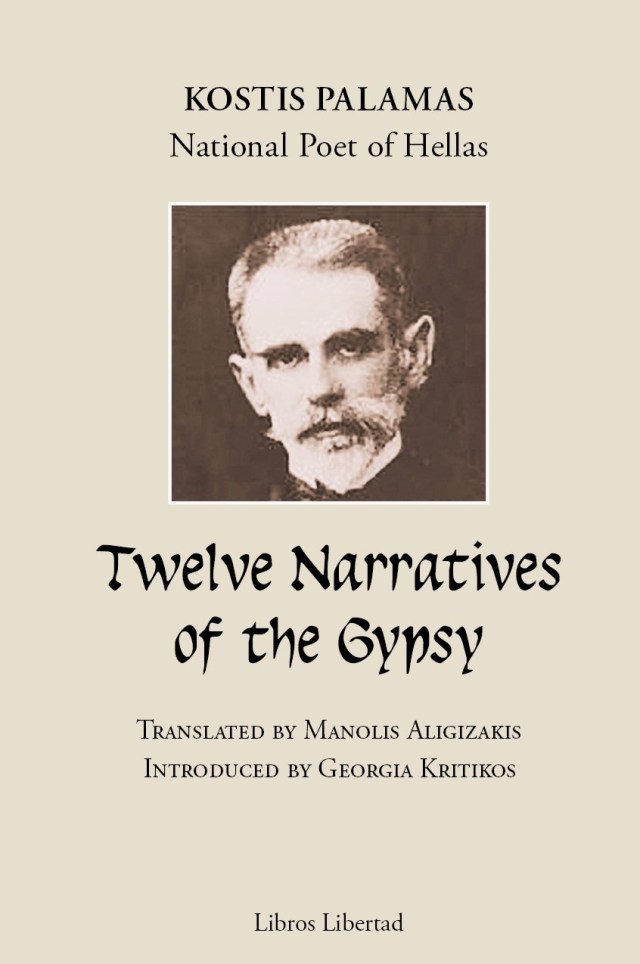
and if you told us that we’d return to our lively starting point that has no borders and all are mixed up in it, the mountains, verdure, all gigantic and tied together by certain magical powers, your first motherland awaits for you to give you an unexpected glory that bestowed unto wise men, and heroes, oh tent people, it will set the throne of Maharaja for you and it’ll place in front of you, the lotus flowers adorned along with all the holy prophets and ascetics. We’d then shout at you: we don’t want you to ruin our festival; we celebrate the breaking of the chains of whatever kind, of diamonds or gold; we’re the delivered ones. Wail and wail to all motherlands! And if we have tumbled down to depths unknown that no other race ever descended time will come when we’ll ascend to immeasurable heights onto the gleaming heavens; we’re the race who are meant to erase the concept of a motherland, the precious maya of Brahman the race of which hands weave the joy of gods and mortals, its miracle its best surprising deed. The whole world is a gypsy, that sits on a throne and using his hammer and violin, creates the flawless Ideal; universe turns into an orchard and a May festival for our only motherland: earth.
VI Come, my sweet, sit next to me and let us remember of the struggle and the revolution we didn’t start let’s talk of the world we didn’t change and for the heroes who lost their lives let us recount all the excuses we presented about all of us who never became heroes let’s talk of the insignificant toil and let’s remember the new world we have never fought to create come, let’s sing in one voice for all the incidentals who didn’t have the courage to raise a flag or any banner and for all of us who never made it to the borders, who didn’t get injured and who never breathed the choking air of the hutment.
The big city clocks tremble pushing time masons step down from the scaffolds and march the city street workers put their spades on their shoulders and march on peace peace Walls, houses, train stations stare, with surprise, at this dark crowd that shakes the world to get reborn they come from mines, ditches, sewers, from the depth of time riding the bulldozers; listen to them: their wheels struggle like the breath of history. Villagers grab their sickles and march on the wind buzzes amid the wheat ears, calves play in the yards wood pieces and spades sway in the wind and the roads echo the hurrahs of many people we are coming step aside we descent like an avalanche that becomes bigger as it rolls down a superb warmth from a thousand breaths in the churches candles melt to their ends the sky dome jolts from the strong heartbeats we are coming from afar we are headed far away we’ve walked in mud and blood we’ve walked over the bones of our children we’ve walked for years to reach here faces marked by the acidity and clever cuts of the future hands that play with hammers and the fate of the world peace
Petty Officer Joseph Ignatius Carney sat in an empty compartment, staring out sadly at the green and yellow countryside of England. The train chugged through it noisily and slowly. It looked so peaceful. Who could have believed that the country was at war, that it had just been fighting for its very survival like a fish on a hook? Now the worst was over and the battle for Britain won. But the battle for Europe was not going well. The German army had pushed into Yugoslavia and Greece. Yugoslavia had surrendered, and the future for Greece looked grim. Here in England all of that was a world away. Cows lazily grazed the fresh spring grass. New-born lambs on new-found, nimble legs scampered after shaggy ewes. The first crops were growing in the ploughed fields, and women, girls, young boys, and old men joined farmers in waging their own war against the invidious invasion of weeds. In the few orchards that the train chugged by, the apple and the cherry trees were dressed in blossom like lovely, young spring brides. The April sun was warm, and the faces that turned to watch the train pass noisily by were tanned already. So few were young men’s faces. Many were the so-called Land Girls, thousands of them, recruited from the city to boost farm production to thwart the German blockade of imports brought to the country by sea. Barmaids, waitresses, maids, hairdressers and others working in urban female occupations proved themselves tougher in the fields than the sceptical farmers had imagined. They worked fifty hours a week in summer, forty-eight in winter, ploughing fields, driving tractors, making hay. They undertook the full rigours of harvesting, threshing, and thatching. They also reclaimed land, worked in orchards and market gardens, and though they had to steel themselves to do it, they caught rats as well. As for the men, most of England’s farming labourers were far from their fields and pastures. In other fields their tired, tense faces, rank on rank, were shaded only by their gun-barrels. They were strained and stressed and drained of colour. Or smashed to gory pulp. Or still, limestone grey, like the faces in church effigies, turned towards the blue sky, their eyes closed in the unsought peace of death.
Hermes Early in the morning Hermes helped me discover why I was different from the statue, tasting as I was like the abalone. Individualization incarnation and shiny pebbles by the shore naked Korae with the sweetness of fresh grapes during a summer hespera purple colored sighs and the lone martyr who I became I felt indisposed to uphold blasphemies of the pious thus annulling their advice and turning inward to my roots the depth of my path I discerned reaching my catharsis that the north wind bestowed unto my body but not before I defended the patriot ground, with my armor: exquisite gardenia aroma gills of fishes full of bubbles and small sponges that I pulled from the bottom of the sea another way to cleanse the moral impurities of my soul
Warriors Come in Many Shapes “We all grow up with the weight of history on us. Our ancestors dwell in the attics of our brains as they do in the spiraling chains of knowledge hidden in every cell of our bodies.” (Shirley Abbott, Writer) ~~ Ken Kirkby inherited genes from a thousand years of determined and intelligent men and the clever women who worked beside them. In each generation, the face of the world inhabited by his ancestors was left improved. If he feels some pressure to leave his own imprint on his world, he chooses to do so by inspiring others as he has been inspired; by restoring what has been spoiled and by righting what is wrong. Justice is an important word in his vocabulary. His father, Ken Kirkby, Sr. turned his back on both a fortune and his influential British steel family as a young man. He left his assured place in Britain to make a successful life in Australia and eventually returned to England with a reputation for a sound ability to turn failing companies into profitable ventures. With World War II on the horizon, he was seconded by Winston Churchill’s team to transform the venerable but struggling Rover Motor Company into an efficient, profit-making war machine. In 1938, he met and married Ken’s mother, Louise May Chesney. Her father was a respected Spanish industrialist whose family traced their roots back to Rurik of the Rus, a Dane whose history was recorded in written form in 746 AD. Ken was born in 1940 and his sister three years later. The Kirkby and Chesney families left recession strapped Britain for Spain in 1946 and the Kirkby family ultimately settled in the Portuguese village of Parede, a coastal village south of Lisbon. Their neighbours were diplomats or professional elite, but Ken’s father preferred to do his own gardening and knew the children of all his employees by their first names. Ken’s childhood was unorthodox by any measure. Their family home on the Avenue of Princes welcomed many of the brightest minds of the European world at the time, but he ran barefoot with the Gypsy kids, bartered his drawings in the marketplace and escaped his mother’s restrictions





 Manolis Aligizakis