Cretan Canadian Poet, Author, Translator, Publisher
Author: vequinox
BIOGRAPHY
Manolis (Emmanuel Aligizakis) is a Greek-Canadian poet and author. He was recently appointed an honorary instructor and fellow of the International Arts Academy, and awarded a Master’s for the Arts in Literature. He is recognized for his ability to convey images and thoughts in a rich and evocative way that tugs at something deep within the reader. Born in the village of Kolibari on the island of Crete in 1947, he moved with his family at a young age to Thessaloniki and then to Athens, where he received his Bachelor of Arts in Political Sciences from the Panteion University of Athens. After graduation, he served in the armed forces for two years and emigrated to Vancouver in 1973, where he worked as an iron worker, train labourer, taxi driver, and stock broker, and studied English Literature at Simon Fraser University. He has written three novels and numerous collections of poetry, which are steadily being released as published works. His articles, poems and short stories in both Greek and English have appeared in various magazines and newspapers in Canada, United States, Sweden, Hungary, Slovakia, Romania, Australia, and Greece. His poetry has been translated into Spanish, Romanian, Swedish, German, Hungarian languages and has been published in book form or in magazines in various countries. He now lives in White Rock, where he spends his time writing, gardening, traveling, and heading Libros Libertad, an unorthodox and independent publishing company which he founded in 2006 with the mission of publishing literary books. His translation book “George Seferis-Collected Poems” was shortlisted for the Greek National Literary Awards the highest literary recognition of Greece.
Distinguished Awards
Winner of the Dr. Asha Bhargava Memorial Award, Writers International Network Canada, 2014
“George Seferis-Collected Poems” translated by Manolis, shortlisted for the Greek National Literary Awards, translation category.
1st International Poetry Prize for his translation of “George Seferis-Collected Poems”, 2013
Master of the Arts in Literature, International Arts Academy, 2013
1st Prize for poetry, 7th Volos poetry Competition, 2012
Honorary instructor and fellow, International Arts Academy, 2012
2nd Prize for short story, Interartia festival, 2012
2nd Prize for Poetry, Interartia Festival, 2012
2nd Prize for poetry, Interartia Festival, 2011
3rd prize for short stories, Interartia Festival, 2011
Books by Manolis
Autumn Leaves, poetry, Ekstasis Editions, 2014
Übermensch/Υπεράνθρωπος, poetry, Ekstasis Editions, 2013
Mythography, paintings and poetry, Libros Libertad, 2012
Nostos and Algos, poetry, Ekstasis Editions, 2012
Vortex, poetry, Libros Libertad, 2011
The Circle, novel, Libros Libertad, 2011
Vernal Equinox, poetry, Ekstasis Editions, 2011
Opera Bufa, poetry, Libros Libertad, 2010
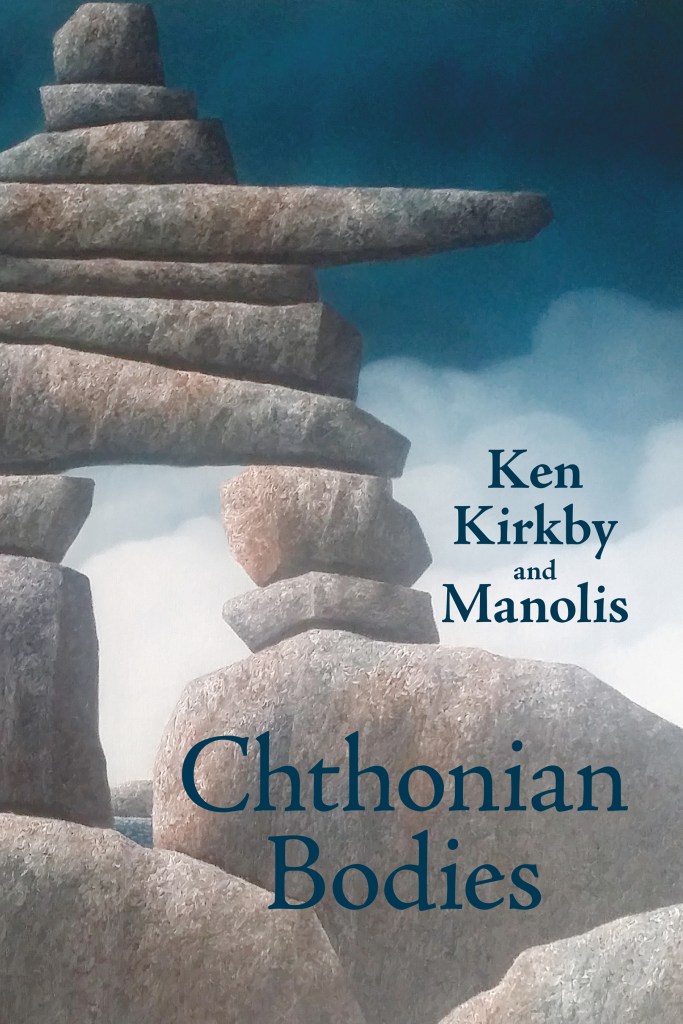
Vespers, poetry by Manolis paintings by Ken Kirkby, Libros Libertad, 2010
Triptych, poetry, Ekstasis Editions, 2010
Nuances, poetry, Ekstasis Editions, 2009
Rendition, poetry, Libros Libertad, 2009
Impulses, poetry, Libros Libertad, 2009
Troglodytes, poetry, Libros Libertad, 2008
Petros Spathis, novel, Libros Libertad, 2008
El Greco, poetry, Libros Libertad, 2007
Path of Thorns, poetry, Libros Libertad, 2006
Footprints in Sandstone, poetry, Authorhouse, Bloomington, Indiana, 2006
The Orphans - an Anthology, poetry, Authorhouse, Bloomington, Indiana, 2005
Translations by Manolis
Idolaters, a novel by Joanna Frangia, Libros Libertad, 2014
Tasos Livaditis-Selected Poems, Libros Libertad, 2014
Yannis Ritsos-Selected Poems, Ekstasis Editions, 2013
Cloe and Alexandra-Selected Poems, Libros Libertad, 2013
George Seferis-Collected Poems, Libros Libertad, 2012
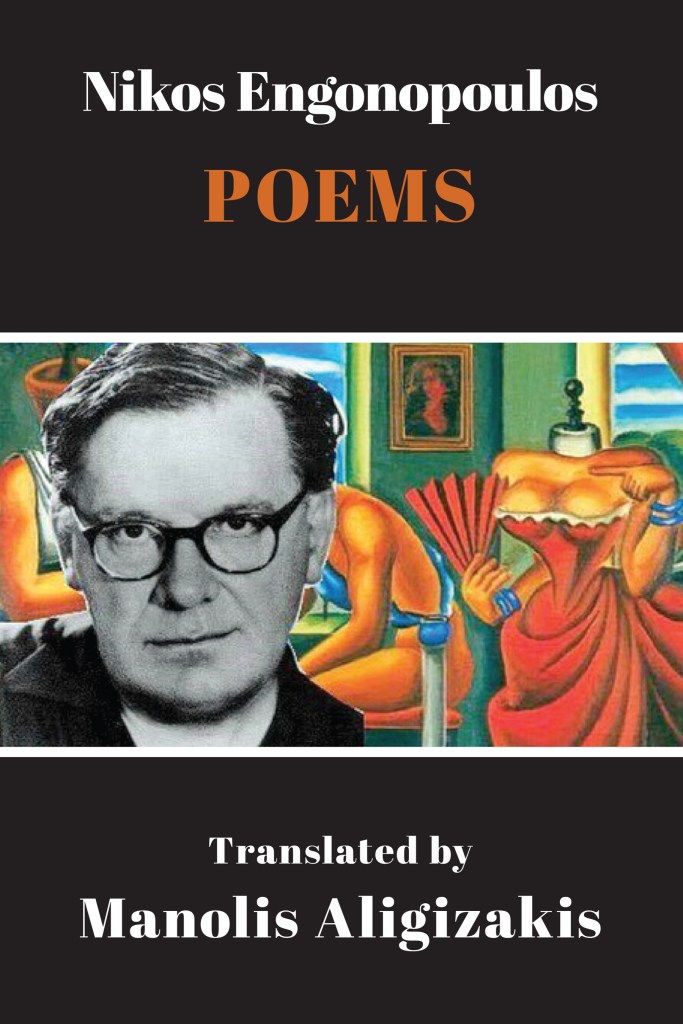
Yannis Ritsos-Poems, Libros Libertad, 2010
Constantine P. Cafavy - Poems, Libros Libertad, 2008
Cavafy-Selected Poems, Ekstasis Editions, 2011
Books in other languages
Eszmelet, (Hungarian), poetry by Manolis Aligizakis, translated into Hungarian by Karoly Csiby, AB-ART, Bratislava, Slovakia, 2014
Hierodoules, (Greek), poetry, Sexpirikon, Salonica, Greece, 2014
Yperanthropos,(Greek), poetry, ENEKEN Publications, Salonica, Greece, 2014
Übermensch (German), poetry by Manolis Aligizakis, translated into German by Eniko Thiele Csekei, WINDROSE, Austria, 2014
Nostos si Algos, (Romanian) poetry by Manolis Aligizakis, translated into Romanian by Lucia Gorea, DELLART, Cluj-Napoca, Romania, 2013
Tolmires Anatasis, (Greek) poetry, GAVRIILIDIS EDITIONS, Athens, Greece, 2013
Filloroes, (Greek ) poetry, ENEKEN PUBLICATIONS, Thessaloniki, Greece, 2013
Earini Isimeria, (Greek) poetry, ENEKEN PUBLICATIONS, Thessaloniki, Greece, 2011
Stratis o Roukounas, (Greek) novel, MAVRIDIS EDITIONS, Athens, Greece, 1981
Magazines
Canadian Fiction Magazine—Victoria, BC
Pacific Rim Review of Books—Victoria, BC
Canadian Poetry Review—Victoria, BC
Monday Poem, Leaf Press-Lantzville, BC
The Broadkill Review, Milton, Delaware
Ekeken, Thessaloniki, Greece
Envolimon, Beotia, Greece
Annual Literary Review, Athens, Greece
Stigmes, Crete, Greece
Apodimi Krites, Crete, Greece
Patris, Crete, Greece
Nyxta-Mera, Chania, Greece
Wallflowers, Thessaloniki, Greece
Diasporic Literature Spot, Melbourne, Australia
Black Sheep Dances, California, USA
Diasporic Literature Magazine, Melbourne, Australia
Spotlight on the Arts, Surrey, BC
Barnwood, International Poetry Magazine, Seattle, USA
Unrorean, University of Maine, Farmington, Maine, USA
Vakhikon, Athens, Greece
Paremvasi, Kozani, Greece
Szoros Ko, Bratislava, Slovakia
Mediterranean Poetry, Sweden
Apostaktirio, Athens, Greece
Life and Art, Athens, Greece
Logos and Images, Athens, Greece
Contemporary Writers and Thinkers, Athens, Greece
Palinodiae, Athens, Greece
Royal City Poet’s Anthology, 2013, New Westminster, BC, Canada
To parathyro, Paris, France
Ragazine C.C, New Jersey
Artenistas, Athens Greece
Deucalion the Thessalos, Greece.
Literary Lectern, Athens, Greece
Homo Universalis, Athens Greece
The Hand For Andreas Embirikos beautiful net that the girl weaved the girl-master as she stood by the window in Nafplion beautiful net hospitable like benevolent god strong like the white piano keys of joy beautiful net she painted with the colour of her eyes and scented with the aroma of her long hair the girl that stood by the window of Nafplion beautiful net beautiful girl a beautiful window that shone in the Nafplion night a beautiful window that cried out a beautiful girl who lighted beautiful among the colours of Nafplion a beautiful net around my neck was girl with your beautiful hair as you comped it by the window in the light beautiful night in your glance was the girl we loved crazy in love naked, naked crazy in love in the net of Nafplion
in the far corner of the bed. Her breath spent, Rachael grew still, and Lyssa released her wrists. Without a word she turned away, walked quietly around the bed and, falling to the floor, gathered the doll into her arms. There she sat and rocked back and forth until both cousins quieted and lay still. Her grief too deep for tears, Rachael lay down on the cold floor. And with the mutilated doll clasped tightly against her chest, she silently made her plans. “It’s been a good Christmas, sweetie,” Tyne said as she snuggled against Morley on their way home from his parents’ farm. “Our first one as an old married couple. Imagine that.” Morley chuckled and took his right hand off the steering wheel to put his arm around her shoulders. “Who’s old? Do you feel old?” Tyne smiled in the darkness. “Not with you around, husband.” For several minutes they drove in silence, a deep peace enveloping Tyne as she relived the highlights of the day. Her first Christmas off duty for several years was in itself cause enough for rejoicing. But the best part had been her dad’s hospitality towards Morley. She had first noticed his change in attitude when the family had gathered at the farm for dinner in the fall, and she silently thanked God for bringing it about. Jeff Milligan had sat with Morley and Jeremy in the living room on Maple Avenue today, and willingly joined in the conversation. In the kitchen, she had been helping her mother and Aunt Millie clean up the remains of breakfast and begin preparations for dinner. She smiled now, remembering how her aunt, dishtowel in hand, had stood by the door to the living room and listened for a few moments to the amiable conversation between the three men. Returning to the counter, Millie had picked up a plate and said to her sister-in-law, “I don’t know what you’re putting in my brother’s tea, Emily, but whatever it is, please keep on doing it.” Tyne’s mother had stifled a laugh, and said in her usual reserved way, “Now, now, Millie ….”
Hypnotic My sacred pebbles I sacrifice and my golden sand I offer you, oh, Great Spirit of man and beast who make their nights peaceful and grace their days with struggle trying to define their passing through this life until they come again to mark my sand with their soles and use their pebbles to skip onto my surface
Today is one of those times. After school, the two sides gather in the school yard and make all the customary arrangements: putting goal “posts” in place, deciding who will play what positions, and drawing straws to see who has the ball first. Then the game commences. On this day, they play for half an hour and are tied two goals apiece before all hell breaks loose when Nicolas scores a goal the other side calls “out,” and Nicolas and his team insist it was a fair goal and the other team shouts in unison, “Asshole,” which is all the trigger Nicolas needs to land a couple of good blows with his fists on the two nearest kids on the other team, and then they all take part in their ritual and fight, and not even a sudden shower of rain can stop the upper village kids fighting their age mates from the lower village until three or four from each side have bleeding noses and bruised arms and faces. Nicolas of course is the keenest fighter on the upper village side, and he manages to inflict most of the damage on the enemy until everyone has had enough of fighting and the two teams go their separate ways They may be tired of fighting, but their blood is still boiling, and this is why, when far away from the school grounds, the upper village kids turn at the side of the hill, from where they cannot be seen from the school anymore, take off their shoes and socks, lie down on the wet soil, and give the lower village kids their open hands and toes. This is their fiercest act of defiance. It is the height of ridicule in this part of the world to be shown the open palm of another and especially when even the toes and soles of the feet take part in the insult. Afterwards, in their respective houses, the children from both sides have to contend with their mothers’ angry questions: “what has happened to you?” and “who have you been fighting?” and “why have you got into another fight?” and “how many times have I told you not to do this?” These are questions they have all heard many times but that never stop them from repeating their ritual. On another day the boys go hunting, all geared up and ready. It is the middle of July, as hot on Crete as it is every July, and they leave
Finten took the potion, looked at it and handed it back without even tasting. “What is this vile green stuff? It’s going to make me retch again.” “It’s allium and mint. Drink it. You’ll feel better.” “Garlic juice! If it kills me, I’ll be relieved.” Finten closed his eyes and quickly drained the cup. He took a deep breath, then another. Slowly, the nausea passed. “Ah, my dear, good friend. Thank you. Thank you. Bless you, Brother. Now look after your patient, Father Gofraidh.” Rordan moved toward the old man but Gofraidh motioned him away. Rordan sat and closed his eyes to the impending headache that always came in stressful situations. As the sky grew dark, the wind intensified to gale force. The sea roiled and heaved. Mountains of angry water tossed the small craft dizzily through the air to the top of a white-capped wave. Brother Ailan cried out above the howling wind, “Holy Mother of God.” Father Finten completed the prayer, “Ora pro nobis.” A reflex bred out of habit. “Lord, save us,” the usually jovial Ailan whispered as the cauldron shifted, the lid popped off, and the hapless cook grabbed to rescue a chunk of peat. “Ouch! Damn!” The tiny craft slipped back, down, down, down. A fountain of icy water washed over the six miserable monks, huddled together, holding on to the shifting struts. Leather bulged and snapped against bleeding fingers. Brother Ailan struggled to unstop a bag of whale oil to pour the contents on the frothy waves. The bag slipped from his grasp. Putrid smelling oil ran over his feet into the bottom of the boat and sloshed over Rordan’s and Finten’s feet. “Merda!” Shit! Rordan swore. Father Finten didn’t even look up. Once more, Ailan lifted the bag over the side. A wave crashed in, spreading more oil in the currach than on the waters. While he struggled to return the remaining whale oil to its storage under the floorboards, Brother Ailan watched a wall of water crash in to knock the lid from his peat cauldron once more and swamp the smouldering contents with a mighty hiss. The shape of the boat seemed to change with each twist and turn. Like a struggling sheep nipped in shearing, the currach pranced, kicked, and butted with creaks and groans. The wind howled like demons in agony. Each time a wave broke against the bow, a torrent of spray swamped the boat. The Brothers bailed for their lives with buckets and cooking pots. Father Gofraidh lay half submerged by water in the bottom of the currach. The old man held a crucifix firmly in his left hand while his right held desperately to the seat above him. Mountains of water marched, threatened, marched on. The wind tore the tops off the waves. Sleet drove horizontally, caking hair and clothing in dripping slush. Brother Rordan, to stem his own fear, chanted, shakily at first then with increasing gusto,“Salve, Regina, Mater misericordiae.” Hail, holy Queen, Mother of Mercy. His voice rose above the wind and waves as though the angels sang. The wind paused to listen. For an instant, there was calm. Then, a mountain of dark green water rose above the tiny craft and the miserable mortals were about to be flattened by one giant slap. Miraculously, the currach glided slowly up the sheer wall.
Innosence or Recantation That I may have you as my banner, grace of my dove on my dark path opposite the black clocked raven a shield to fence my sin. That evil won’t be my lot that I may remain with no light like the ancient lyre player I know you return: last angel with a branch of an olive tree.
Verse Nothing mattered anymore the years felt heavy upon his shoulders and absence oversaw from high up on its throne the absurd descending the smooth hill slope and his emotions that were rekindled in the loneliness of the desert where he dwelt crafting exquisite verse with images for the seven stanzas of this poem
night beyond the window. But tonight was different. Tonight the heavy, unmoving air grew stagnant; it weighed upon the room unstirred by old Finn’s gusty tales. Tonight the old sailor’s verbal gales had died to barely audible sighs. Finn appeared to be unaware of the deepening depression that had settled over the homecoming party. His mind was on the day many years ago when he first saw Padraig: a skinny boy in short pants, writhing on the cobbles of a market square, foaming at the mouth like a rabid dog. Never would he forget the sight. The crowd pushed back, staring in ignorance and horror at the boy’s convulsions. Two mongrel pups snapped at his legs and arms, and a sheepdog snarled and barked, its vicious teeth bared as if ready to rush in and chomp them into the boy’s neck. “The whelp with the trousers isn’t putting up much of a fight,” someone said, and the crowd started to laugh. Ignorance and horror relaxed into mirth. “I wonder what he’d do with a bitch in heat,” said another. Finn waded through the crowd as through a field of barley, pushing the people aside in anger. He burst into the clearing where the boy was lying still now, his face in the muck that covered the cobbles of The Square. Finn kicked the sheepdog hard; it ran off into the crowd with a howl of pain. The pups pranced around him, yelping still, as Finn knelt down, rolled the boy over and picked him up in his arms. “I spit on you all,” he shouted to the crowd and carried the boy away down the sloping street to where his fishing boat was tied in the harbour. Now the Devil’s child, his own adopted son, was home again, a priest. “I hoped to make a man of you, Padraig.” Finn was rising out of his reverie. “And I made a monk. Well, I suppose that’s not a bad accomplishment, considering what I had to work with. Come now, gentlemen, let’s not look as if we’re at a Presbyterian wake. Let’s drink. Let’s eat.” He turned towards the door that led into the kitchen. “Caitie! Jinnie! Bring us some supper. We’re half a dozen hungry men in here.” Supper revived the company. Even Clifford forgot his headache and his queasy stomach. He enjoyed the food, the conversation, the dark red wine that everyone started drinking again in large measures. The more they drank, the more convivial they became. Only Finn MacLir seemed more subdued than usual. “We had many more people here to welcome you last night, Padraig.” Slattery’s purple face was taking on a crimson cast like a spectacular sunset.
Train A rattling train, full of passengers traveling to their death passes through my mind. Christ stands in the front wagon and reads his metaphysical poems to them and you who I’ve come to know and you, who I never met, have your frightened eyes glued on the windowpanes and you, oh cursed world of mine, coal, coal to be burnt in the bowels of earth. And, high up, the night resembles the Epitahpios cubicle.





 Manolis Aligizakis