Cretan Canadian Poet, Author, Translator, Publisher
Author: vequinox
BIOGRAPHY
Manolis (Emmanuel Aligizakis) is a Greek-Canadian poet and author. He was recently appointed an honorary instructor and fellow of the International Arts Academy, and awarded a Master’s for the Arts in Literature. He is recognized for his ability to convey images and thoughts in a rich and evocative way that tugs at something deep within the reader. Born in the village of Kolibari on the island of Crete in 1947, he moved with his family at a young age to Thessaloniki and then to Athens, where he received his Bachelor of Arts in Political Sciences from the Panteion University of Athens. After graduation, he served in the armed forces for two years and emigrated to Vancouver in 1973, where he worked as an iron worker, train labourer, taxi driver, and stock broker, and studied English Literature at Simon Fraser University. He has written three novels and numerous collections of poetry, which are steadily being released as published works. His articles, poems and short stories in both Greek and English have appeared in various magazines and newspapers in Canada, United States, Sweden, Hungary, Slovakia, Romania, Australia, and Greece. His poetry has been translated into Spanish, Romanian, Swedish, German, Hungarian languages and has been published in book form or in magazines in various countries. He now lives in White Rock, where he spends his time writing, gardening, traveling, and heading Libros Libertad, an unorthodox and independent publishing company which he founded in 2006 with the mission of publishing literary books. His translation book “George Seferis-Collected Poems” was shortlisted for the Greek National Literary Awards the highest literary recognition of Greece.
Distinguished Awards
Winner of the Dr. Asha Bhargava Memorial Award, Writers International Network Canada, 2014
“George Seferis-Collected Poems” translated by Manolis, shortlisted for the Greek National Literary Awards, translation category.
1st International Poetry Prize for his translation of “George Seferis-Collected Poems”, 2013
Master of the Arts in Literature, International Arts Academy, 2013
1st Prize for poetry, 7th Volos poetry Competition, 2012
Honorary instructor and fellow, International Arts Academy, 2012
2nd Prize for short story, Interartia festival, 2012
2nd Prize for Poetry, Interartia Festival, 2012
2nd Prize for poetry, Interartia Festival, 2011
3rd prize for short stories, Interartia Festival, 2011
Books by Manolis
Autumn Leaves, poetry, Ekstasis Editions, 2014
Übermensch/Υπεράνθρωπος, poetry, Ekstasis Editions, 2013
Mythography, paintings and poetry, Libros Libertad, 2012
Nostos and Algos, poetry, Ekstasis Editions, 2012
Vortex, poetry, Libros Libertad, 2011
The Circle, novel, Libros Libertad, 2011
Vernal Equinox, poetry, Ekstasis Editions, 2011
Opera Bufa, poetry, Libros Libertad, 2010
Vespers, poetry by Manolis paintings by Ken Kirkby, Libros Libertad, 2010
Triptych, poetry, Ekstasis Editions, 2010
Nuances, poetry, Ekstasis Editions, 2009
Rendition, poetry, Libros Libertad, 2009
Impulses, poetry, Libros Libertad, 2009
Troglodytes, poetry, Libros Libertad, 2008
Petros Spathis, novel, Libros Libertad, 2008
El Greco, poetry, Libros Libertad, 2007
Path of Thorns, poetry, Libros Libertad, 2006
Footprints in Sandstone, poetry, Authorhouse, Bloomington, Indiana, 2006
The Orphans - an Anthology, poetry, Authorhouse, Bloomington, Indiana, 2005
Translations by Manolis
Idolaters, a novel by Joanna Frangia, Libros Libertad, 2014
Tasos Livaditis-Selected Poems, Libros Libertad, 2014
Yannis Ritsos-Selected Poems, Ekstasis Editions, 2013
Cloe and Alexandra-Selected Poems, Libros Libertad, 2013
George Seferis-Collected Poems, Libros Libertad, 2012
Yannis Ritsos-Poems, Libros Libertad, 2010
Constantine P. Cafavy - Poems, Libros Libertad, 2008
Cavafy-Selected Poems, Ekstasis Editions, 2011
Books in other languages
Eszmelet, (Hungarian), poetry by Manolis Aligizakis, translated into Hungarian by Karoly Csiby, AB-ART, Bratislava, Slovakia, 2014
Hierodoules, (Greek), poetry, Sexpirikon, Salonica, Greece, 2014
Yperanthropos,(Greek), poetry, ENEKEN Publications, Salonica, Greece, 2014
Übermensch (German), poetry by Manolis Aligizakis, translated into German by Eniko Thiele Csekei, WINDROSE, Austria, 2014
Nostos si Algos, (Romanian) poetry by Manolis Aligizakis, translated into Romanian by Lucia Gorea, DELLART, Cluj-Napoca, Romania, 2013
Tolmires Anatasis, (Greek) poetry, GAVRIILIDIS EDITIONS, Athens, Greece, 2013
Filloroes, (Greek ) poetry, ENEKEN PUBLICATIONS, Thessaloniki, Greece, 2013
Earini Isimeria, (Greek) poetry, ENEKEN PUBLICATIONS, Thessaloniki, Greece, 2011
Stratis o Roukounas, (Greek) novel, MAVRIDIS EDITIONS, Athens, Greece, 1981
Magazines
Canadian Fiction Magazine—Victoria, BC
Pacific Rim Review of Books—Victoria, BC
Canadian Poetry Review—Victoria, BC
Monday Poem, Leaf Press-Lantzville, BC
The Broadkill Review, Milton, Delaware
Ekeken, Thessaloniki, Greece
Envolimon, Beotia, Greece
Annual Literary Review, Athens, Greece
Stigmes, Crete, Greece
Apodimi Krites, Crete, Greece
Patris, Crete, Greece
Nyxta-Mera, Chania, Greece
Wallflowers, Thessaloniki, Greece
Diasporic Literature Spot, Melbourne, Australia
Black Sheep Dances, California, USA
Diasporic Literature Magazine, Melbourne, Australia
Spotlight on the Arts, Surrey, BC
Barnwood, International Poetry Magazine, Seattle, USA
Unrorean, University of Maine, Farmington, Maine, USA
Vakhikon, Athens, Greece
Paremvasi, Kozani, Greece
Szoros Ko, Bratislava, Slovakia
Mediterranean Poetry, Sweden
Apostaktirio, Athens, Greece
Life and Art, Athens, Greece
Logos and Images, Athens, Greece
Contemporary Writers and Thinkers, Athens, Greece
Palinodiae, Athens, Greece
Royal City Poet’s Anthology, 2013, New Westminster, BC, Canada
To parathyro, Paris, France
Ragazine C.C, New Jersey
Artenistas, Athens Greece
Deucalion the Thessalos, Greece.
Literary Lectern, Athens, Greece
Homo Universalis, Athens Greece
Methodical He kept his dreams ambitiously hidden in his heart he placed hope in monotony in a separate crystalline vase and at the time of the shortest shadows he walked to the shore to breathed in all he could of the endless blue and after on his irises he painted the beautiful little cove the houses, the gleaming, whitewashed chapel he blessed them all with the aroma of oregano he changed his clothes and tightly in his palm, he kept a shiny coin for the lone ferryman who would take him across. https://www.amazon.com/dp/1926763750
He sat on the stool by the front yard; his hands, so clumsy, had already overtaken us “someday they will demolish the house” he says to me “and they’ll discover it.” And every so often, at the far end of the room, someone wrapped a bed-sheet around himself; it was the time he escaped until the bed-sheet fell empty on the floor and we had a friend forever. In the stations the immigrants were lined and, hiding inside their their overcoats, they waited for the voyage like a dog on its death bed. And uncle Elias, our rich relative, years after his death, still stood on the sidewalk; however he didn’t turn to look at us, “uncle” I said “since you knew, why you came back?”, “I can’t fall asleep” he says to me “I still have to lose some more.” I tried to leave but I met the deaf boy on the side street; he was leaning on the wall and he was crying and now there was a small lit chapel on the wall while snow fell outside and passersby drowned in their words.
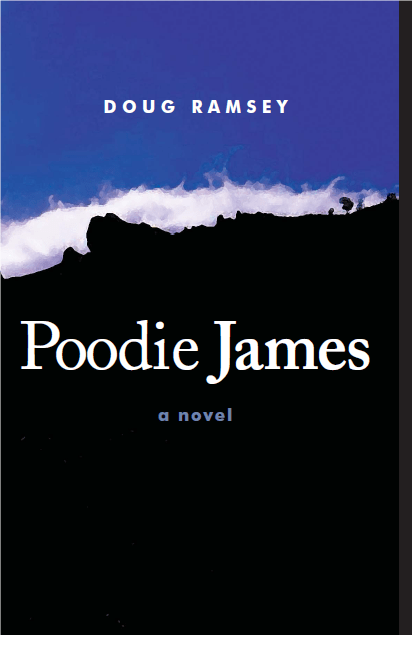
heat of friction on his backside, and his spine raked over the door jamb. He tried to raise up, but they jerked him backward down the step and onto the ground. The clubbing began. He wrapped his arms around his head and tucked into a ball.Two of them straightened his body by pulling his hands and feet while the biggest man alternated kicks with blows from a length of wood. The clubs and boots battered his arms and legs, his torso, his shoulders. The pain was like fire on his skin. The ache went to the center of his bones. They let him go, then knocked him off his feet when he got up, laughing at his contortions when he twisted and thrashed to evade their clubs.They were killing him, he thought.He was going to die. Suddenly, the big man was on his back and Engine Fred was on top of him with a forearm bearing down on his windpipe. Poodie sat up and saw the other two running down the lane. His head throbbed. Three more hobos came down along the path from the jungle. The man on the ground got an arm free, knocked Engine Fred off balance and was up and running away. He disappeared into the orchard, headed toward the river. Two of the hobos ran after him, but came back shaking their heads. It all happened in the space of a few minutes. The Thorps slept through it, but Engine Fred told Poodie that he heard a scream. Poodie didn’t know that he was capable of screaming. Dan Thorp called the police the next morning. By then, the hobos had hopped a freight. Poodie could not identify the thugs. The bruises on his face and body took weeks to heal. Thorp put a lock on the cabin door. The attack was the worst thing that had happened to Poodie since his mother died. He lived it over in his dreams night after night for months. Years later, he still awakened in fear that the men would come back. Alice Moore looked up to see Poodie James’s face floating just above surface of the checkout desk, a stack of books next to it. She had never seen that face without a smile. She looked at the books; Howard Carter’s The Discovery of the Tomb of Tutankhamen, three books about whales, a collection of de Maupassant stories.
Microscope-Telescope Rotten old age and dust ministers the gothic room of Faust in the lilies a bite of dew studies the galaxy’s litany beyond the flow of the Ocean a planet dies as if a pomegranate bursts
The Unlearned The yearning of man to exist somewhere else detecting the paths of his death he discovers a complex soul with many bottoms the labyrinth he seeks transcends him light refracts and detaches in its primeval conviction as I keep away from the roaring eons I want to be near something that stirs in silence for this, tonight, I’ll read to you about the stars old hand-writings of eternity shepherds of ancient meanings that widen the warmth of wisdom a wanderer trapped in the enigma I know nothing is content only approaches to the unlearned between life and death
Birthmarks Old Galanos looks at the endless blue sea through the cafe window he gazes at the open gulf and recalls his barber life: what he has learned from the details of each villager’s hair he has cut for many years, familiar as he was with every contour, each strange dip, mole, birthmark, and of course Demetre’s crazy head, the man who took part in every demonstration, back in the 70ies during the hippy movement, a flower child of that era with a ponytail only Galanos was allowed to trim and he recalls, as his glance melts in the sunny immenseness, that he too was meant to be included in the unwritten history of the village after all, he too did what he was told: to be a family man, to obey the law, to be humble and servile the simple village barber who now questions why he didn’t dare unchain himself from the daily gear and unshackled and free like a smile he could get the courage to fly up on the endless sky like an eagle. Suddenly a few tears appear in his eyes and trembling like his heart they roll down his cheeks as the barber brought his hand there so the other customers of the café wouldn’t notice his sentimentality, his emotion since he too spent his life just to remain there like a rock, a gravestone upon which they’d write that he too wrote his story in the unwritten logs of the merciless time.
amazement, our eyes locked often, for my face was in darkness and my eyes half-closed. She somehow sensed my gaze. My heart rushed a little every time, as if some strange and invigorating connection had established itself between us. The men had been tied around a tree, including the boy who had fought to free Apacuana. I wondered who he was, likely her brother. Losada, along with Gregorio and Pánfilo, had entertained himself in pacifying the Indian boy, but the youth’s courageous rejection of every kindness didn’t amuse Losada long, and he had ordered him tied up with the men. My head throbbed. I was feverish again. I lay with my back to the fire, concentrating on the frogs and crickets singing their night song, hoping their music could distract me from my growing queasiness. The fire crackled as sap pockets exploded, sending fiery dots into the sky. The moon was full, though there were some clouds. I was still learning to read the signs of the sky in this new land. The rainy time had just begun, and I was surprised at how suddenly the water poured from the heavens and, just as suddenly, stopped and the skies cleared. My head felt ready to burst. I put a hand to my head. A moan of agony and desperation stuck in my throat, and I sat up, closing my eyes and swaying with dizziness. My breathing had gone from heavy and deep to shallow and fast. I crawled on all fours to the nearest tree and puked bile that made me shudder with its bitterness. I had nothing in my stomach in the way of food. A temporary moment of relief came over me, and I sat with my back against the trunk, blinking owlishly, until I remembered Apacuana again. What would become of her? A head popped up in front of me, silhouetted against the fire. It was Tamanoa. “What is the matter?” he asked. “You are sick again!” “I’ll be all right in the morning. Don’t worry, I know these pains. I get them occasionally.” “What pains? Where does it hurt?”
It was to one of these, the park on Mamaev Hill, scene of a prolonged battle, that the combined tour group, accompanied by Natasha, arrived by bus. This time Natasha was quiet; there was no need for her to whip up enthusiasm. The spectacle of Mother Russia—a behemoth of a statue brandishing her sword and poised on the hill overlooking the city—excited the visitors. “That’s got to be taller than the Statue of Liberty,” exclaimed one of the Americans to Jennifer as they shuffled along with crowds of Russians winding their way through a memorial park up to the statue’s base. “It’s really impressive.” She smiled. “It’s a commemoration of a siege that no one here has forgotten; nothing could be too big or too dramatic for that.” So far the Americans had not admitted that anything about the Soviet Union was bigger or better than the good old US of A. This was a first, she reflected. “Where are you from?” the man asked her, and when she replied, he nodded. “Y’know, that’s near Seattle where I’m from,” he said. “I’m Bert, by the way.” He extended his hand and Jennifer introduced herself. “You Canadians know all about Russia, don’t you?” Although she began to protest, he continued. “See, we weren’t told much before we came. I don’t know if you’ve heard of the cold war… yes? Well, it’s pretty hard to visit this country right now without everyone at home thinking we’re reds. We’re probably being investigated by the CIA for even coming here.” “Wow, that’s frightening,” Jennifer said, amused at his naïveté—an attitude she might have shared just a few short weeks ago. Little does he know that he’s probably being investigated by the KGB at the same time. “You know, the people in our group just want to find out more about the real Russia,” Bert went on. “We don’t want to believe everything we read in the papers about the ‘evil commies.’ You think that way too, don’tcha?” Jennifer nodded agreement. “This is all real swell,” he continued, marvelling at the faces of warriors etched in marble around him. The slowly moving line of visitors advanced up the hill towards the statue and then indoors into a tomb-like memorial chamber at the top of the hill. Once inside, an illuminated path spiralled downward around the chamber, and they gazed at the names of the fallen soldiers and citizens inscribed on every available inch of the walls. Jennifer noticed that Bert had tears in his eyes. “It’s very moving,” he told her. “All these people…” He shook his head. “It makes you think about the ugliness of war.
too, charging the shell company thousands of dollars in fees, and the brokerage and the accounting firms got their share filing all the financial statements. Yes, the shell game meant a lot of money for downtown Vancouver, and everyone knew it, even the regulators, who had never wanted to shut the game down completely. It was only pressure from the newspapers and the George Gains type of reporters that made them squeeze the practice occasionally, just tightly enough to ease the pressure without ending the game. Every time the regulators changed something, the brokers only had to modify their model to accommodate the change, nothing more. When Eteo became a broker, the minimum seed stock price was ten cents and the minimum price of prospectus shares was fifteen, but later these were raised to twenty five cents for seed stock and forty cents for prospectus shares. The shell companies were put together in the same way. Only the numbers were different and the commission rates changed. The creation of shell companies of course depended a lot on the business cycle. In good times a lot of new companies were listed while in rough times only a few went through. Everything depended on the investing mood of the public, nothing else. Preoccupied with these thoughts, Eteo drove to Horseshoe Bay, parked his Jaguar, and walked into the lounge of Sewell’s to find Robert already waiting. Robert O’Leary, an Irish-Canadian, also lived in North Vancouver, in fact at the top of Lonsdale Avenue in a thirtyyear- old house with the most beautiful views of downtown Vancouver. He was married to Donna and they had two daughters. Robert, originally from Saskatchewan, had grown up in Vancouver and had spent most of his career working for Kodak, but with the invention of digital cameras he had found himself in an industry that was quickly going down the drain. Rather than wait to be laid off, he had taken early retirement, with a golden handshake, and started getting involved in VSE deals, slowly in the beginning and more daringly as they days went by and as he learned the tricks an investor should know. “Hello Eteo. How have you been?” Robert called out as soon as Eteo stepped through the door.
From where she sat in the corner of the sofa, Rachael could watch Bobby and Freddy playing on the kitchen floor with Bobby’s dump truck. They filled it with Freddy’s new building blocks, then drove their load to another part of the room, and dumped it before returning to the original site for more. Rachael did not spend all her time watching the boys, however. Every few seconds she would look down into the pretty face of her Shirley Temple doll. Not once since morning had she let the doll out of her sight – not even when she had to help with the dishes after the Christmas dinner, or when she had to sweep the kitchen floor. She had sat Shirley up in a chair where she could see her all the time. She knew Aunt Ruby had been impatient with her, but she hadn’t scolded. It was Christmas, after all, and Aunt Ruby had been extra nice today. Rachael wished she could have said the same for Lyssa. The older girl had taunted her every chance she got, sneering that Rachael was too old to play with dolls, calling Shirley ugly, and once even, trying to pull the curly hair as she passed by. Rachael had snatched the doll out of her reach just in time. Lark, on the other hand, loved Shirley almost as much as Rachael did, so the younger girl had been allowed to hold and cuddle her whenever she wanted. In return, Lark had told Rachael she could wear









 Manolis Aligizakis