Cretan Canadian Poet, Author, Translator, Publisher
Author: vequinox
BIOGRAPHY
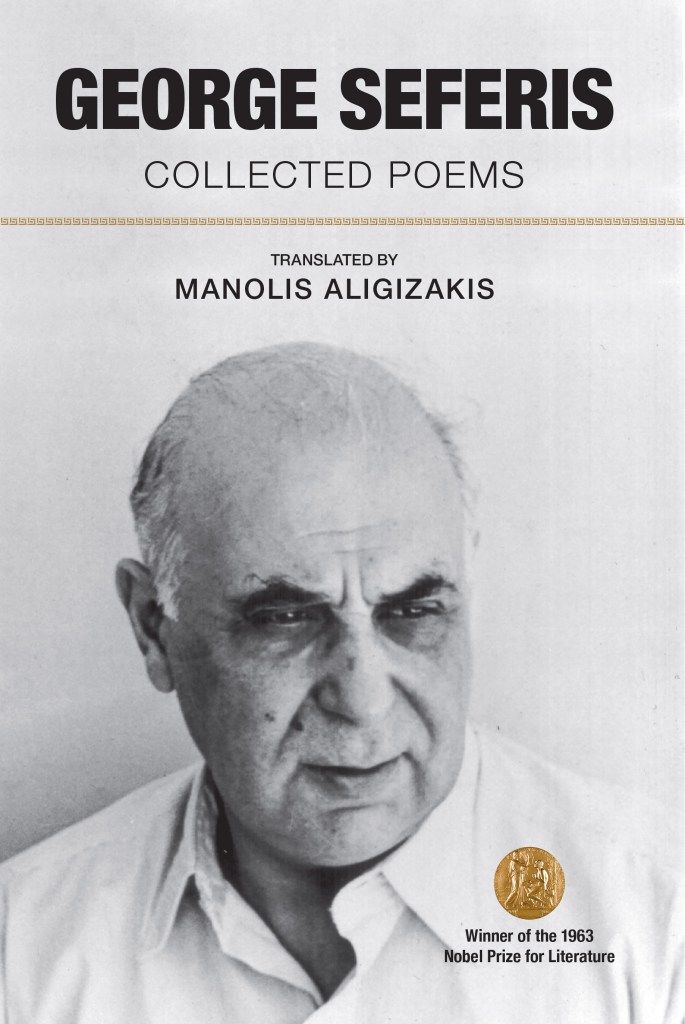
Manolis (Emmanuel Aligizakis) is a Greek-Canadian poet and author. He was recently appointed an honorary instructor and fellow of the International Arts Academy, and awarded a Master’s for the Arts in Literature. He is recognized for his ability to convey images and thoughts in a rich and evocative way that tugs at something deep within the reader. Born in the village of Kolibari on the island of Crete in 1947, he moved with his family at a young age to Thessaloniki and then to Athens, where he received his Bachelor of Arts in Political Sciences from the Panteion University of Athens. After graduation, he served in the armed forces for two years and emigrated to Vancouver in 1973, where he worked as an iron worker, train labourer, taxi driver, and stock broker, and studied English Literature at Simon Fraser University. He has written three novels and numerous collections of poetry, which are steadily being released as published works. His articles, poems and short stories in both Greek and English have appeared in various magazines and newspapers in Canada, United States, Sweden, Hungary, Slovakia, Romania, Australia, and Greece. His poetry has been translated into Spanish, Romanian, Swedish, German, Hungarian languages and has been published in book form or in magazines in various countries. He now lives in White Rock, where he spends his time writing, gardening, traveling, and heading Libros Libertad, an unorthodox and independent publishing company which he founded in 2006 with the mission of publishing literary books. His translation book “George Seferis-Collected Poems” was shortlisted for the Greek National Literary Awards the highest literary recognition of Greece.
Distinguished Awards
Winner of the Dr. Asha Bhargava Memorial Award, Writers International Network Canada, 2014
“George Seferis-Collected Poems” translated by Manolis, shortlisted for the Greek National Literary Awards, translation category.
1st International Poetry Prize for his translation of “George Seferis-Collected Poems”, 2013
Master of the Arts in Literature, International Arts Academy, 2013
1st Prize for poetry, 7th Volos poetry Competition, 2012
Honorary instructor and fellow, International Arts Academy, 2012
2nd Prize for short story, Interartia festival, 2012
2nd Prize for Poetry, Interartia Festival, 2012
2nd Prize for poetry, Interartia Festival, 2011
3rd prize for short stories, Interartia Festival, 2011
Books by Manolis
Autumn Leaves, poetry, Ekstasis Editions, 2014
Übermensch/Υπεράνθρωπος, poetry, Ekstasis Editions, 2013
Mythography, paintings and poetry, Libros Libertad, 2012
Nostos and Algos, poetry, Ekstasis Editions, 2012
Vortex, poetry, Libros Libertad, 2011
The Circle, novel, Libros Libertad, 2011
Vernal Equinox, poetry, Ekstasis Editions, 2011
Opera Bufa, poetry, Libros Libertad, 2010
Vespers, poetry by Manolis paintings by Ken Kirkby, Libros Libertad, 2010
Triptych, poetry, Ekstasis Editions, 2010
Nuances, poetry, Ekstasis Editions, 2009
Rendition, poetry, Libros Libertad, 2009
Impulses, poetry, Libros Libertad, 2009
Troglodytes, poetry, Libros Libertad, 2008
Petros Spathis, novel, Libros Libertad, 2008
El Greco, poetry, Libros Libertad, 2007
Path of Thorns, poetry, Libros Libertad, 2006
Footprints in Sandstone, poetry, Authorhouse, Bloomington, Indiana, 2006
The Orphans - an Anthology, poetry, Authorhouse, Bloomington, Indiana, 2005
Translations by Manolis
Idolaters, a novel by Joanna Frangia, Libros Libertad, 2014
Tasos Livaditis-Selected Poems, Libros Libertad, 2014
Yannis Ritsos-Selected Poems, Ekstasis Editions, 2013
Cloe and Alexandra-Selected Poems, Libros Libertad, 2013
George Seferis-Collected Poems, Libros Libertad, 2012
Yannis Ritsos-Poems, Libros Libertad, 2010
Constantine P. Cafavy - Poems, Libros Libertad, 2008
Cavafy-Selected Poems, Ekstasis Editions, 2011
Books in other languages
Eszmelet, (Hungarian), poetry by Manolis Aligizakis, translated into Hungarian by Karoly Csiby, AB-ART, Bratislava, Slovakia, 2014
Hierodoules, (Greek), poetry, Sexpirikon, Salonica, Greece, 2014
Yperanthropos,(Greek), poetry, ENEKEN Publications, Salonica, Greece, 2014
Übermensch (German), poetry by Manolis Aligizakis, translated into German by Eniko Thiele Csekei, WINDROSE, Austria, 2014
Nostos si Algos, (Romanian) poetry by Manolis Aligizakis, translated into Romanian by Lucia Gorea, DELLART, Cluj-Napoca, Romania, 2013
Tolmires Anatasis, (Greek) poetry, GAVRIILIDIS EDITIONS, Athens, Greece, 2013
Filloroes, (Greek ) poetry, ENEKEN PUBLICATIONS, Thessaloniki, Greece, 2013
Earini Isimeria, (Greek) poetry, ENEKEN PUBLICATIONS, Thessaloniki, Greece, 2011
Stratis o Roukounas, (Greek) novel, MAVRIDIS EDITIONS, Athens, Greece, 1981
Magazines
Canadian Fiction Magazine—Victoria, BC
Pacific Rim Review of Books—Victoria, BC
Canadian Poetry Review—Victoria, BC
Monday Poem, Leaf Press-Lantzville, BC
The Broadkill Review, Milton, Delaware
Ekeken, Thessaloniki, Greece
Envolimon, Beotia, Greece
Annual Literary Review, Athens, Greece
Stigmes, Crete, Greece
Apodimi Krites, Crete, Greece
Patris, Crete, Greece
Nyxta-Mera, Chania, Greece
Wallflowers, Thessaloniki, Greece
Diasporic Literature Spot, Melbourne, Australia
Black Sheep Dances, California, USA
Diasporic Literature Magazine, Melbourne, Australia
Spotlight on the Arts, Surrey, BC
Barnwood, International Poetry Magazine, Seattle, USA
Unrorean, University of Maine, Farmington, Maine, USA
Vakhikon, Athens, Greece
Paremvasi, Kozani, Greece
Szoros Ko, Bratislava, Slovakia
Mediterranean Poetry, Sweden
Apostaktirio, Athens, Greece
Life and Art, Athens, Greece
Logos and Images, Athens, Greece
Contemporary Writers and Thinkers, Athens, Greece
Palinodiae, Athens, Greece
Royal City Poet’s Anthology, 2013, New Westminster, BC, Canada
To parathyro, Paris, France
Ragazine C.C, New Jersey
Artenistas, Athens Greece
Deucalion the Thessalos, Greece.
Literary Lectern, Athens, Greece
Homo Universalis, Athens Greece
MAYBE MAYBE … Children’s war is a game, kids’ buletts are just words! The wounded are those who sit on the bench and laugh, lame little clowns. Rejoice, the children say, live, the children say play, the children say, stubbornly for millennia maybe, maybe …
HAKIM ISONHISWAY to the Sheraton Hotel to meet his uncle so they can go together to the medical center. He’s worried about what they will find out, but he doesn’t want this to show. He wants to be courageous and strong for his uncle. They arrive by limousine and a specialist meets them in a consultation room. He confirms what’s already known about the tumor in Ibrahim’s liver. He indicates it’s a very small-sized malignancy. At this stage, it’s unclear what type of cancer it is, but he confirms that the tumor is a new type they don’t know very much about. Therefore, it would be inappropriate for him to tell Ibrahim with any certainty that it will respond positively to the new chemotherapy. For that reason, he’ll start Ibrahim on a light dose. The specialist has arranged for Ibrahim to be admitted to a private clinic where the medication is to be administered, and he’ll be monitored twenty-four hours a day. The specialist stops briefly, but continues to look at Ibrahim and Hakim to ensure that, so far, everything is understood. Then he carries on. “If we see that the drug doesn’t produce any adverse effects, the second dose, and the third and fourth, can be given orally in the form of a pill that you can take on your own, in the comfort of your own home. However, the first time the drug is administered, we would like to monitor you very closely at the clinic. I’ll leave you alone for a few minutes to absorb what I’ve told you. Then I’ll return with further instructions.” He gets up and the other two follow him out of the consultation room. Hakim turns and gazes him. Ibrahim is pale and shaken. This is the first time Hakim sees his uncle with fear in his eyes. The pride and gracefulness that he possessed are gone. A layer of fear has taken over like a black shroud covering the old man’s eyes. “I wouldn’t worry they do miracles with medicine these days.” Hakim says trying to relieve his uncle’s gloom. “I guess so,” his uncle nods in agreement. “But, it means I cannot go home yet.” “When were you planning to go home?” “As soon as I’m done with these guys dear boy; Mara is most anxious for me to get home; however, now she has to wait for a few more days.” “You have to be here for only one or two more days so they can see …
Paris Oh Paris, it was time when I scattered my dreams in your dark mornings and now I leave you taking with me the sorrowful joy that I love you. The Mediterranean delicate siren that flows around our ship with all its frothy lilies now takes me away from you but we shall meet again in the future when light will come carefully to open my eyes before the gleaming blue day that helps me live with your memory and then its islands will charge Athens, I know, isn’t far behind and they’ll stand and fight my sinful love for you, oh Paris, and they will wish me to forget how sweetly I gave you my soul not longing to meet anyone when I aimlessly saunter in your streets
Jeff’s lean face took on a scowl, but his eyes twinkled. “I’ll thank you not to malign my good old Chevy, young lady. Sure, I still have it. It’s safe and sound in the shed in the back yard.” Tyne groaned. “I might have known.” Jeff’s long, slender body reclined against the back of his swivel desk chair. “So what brings you here? Have you been to see your mother?” “Yes, I just left her. Aunt Millie was there, so we had a good visit. And as for what brings me here – Morley and I would like you all to come to dinner on Sunday evening.” For just a moment, Jeff looked at her, then he swung his chair towards his typewriter at the side of his desk, and began to hit the keyboard with one determined finger. Tyne took a deep breath. “Will you come, Dad?” “I thought you have dinner at noon on the farm,” he said without looking at her. “We usually do. But we’ll have a light meal after church, and dinner in the evening.” The typewriter keys flew over the page in the carriage, surprisingly fast for one finger typing. Tyne waited. Finally, her dad turned to face her. “I don’t know if I can make it … deadline, you know.” Tyne tried to keep the exasperation out of her voice. “It’s Sunday, Dad. The paper doesn’t come out until Wednesday.” She sat forward. “Look, you’ve been out to the farm only once, and that was just after we were married to bring some of my things. Morley and I have been to see you and Mom several times. Just for a change, I’d like to cook dinner for my family.” She sat back in her chair, and said quietly, “You’re part of my family.” Jeff drew his lips together in a tight line. “Have you asked your mother?” “Yes I did. She’d like to come but she said she’d leave it up to you.” As always, Tyne thought. In that respect Emily Milligan had not changed. Jeff nodded. “I’ll think about it. Your mother will call you tomorrow.” He turned back to his typewriter.
“Leave me alone, will you?” he scowled. But I wanted to make peace with him. “I mean it, Gregorio. You need a bleeding to drain all those bad humours and grudges. Hombre! I saw you in battle; if I hadn’t been so busy running, I would have stayed put to watch you. What shooting and fighting! You are a born conquistador. From now on, it will be quite comforting to have you around.” I uncorked a flask of marigold oil. Gregorio chortled at last. He took a gulp from the mug he was holding. “I saw you, too,” he said, “running like a hare.” “Little wonder! I have never been so frightened in my life!” Gregorio and Benjamin laughed. Perhaps I was more useful to them as feckless character, someone to jeer at. “Why, you don’t want to go to heaven, Friar?” Benjamin taunted. “I know I am but a sinner,” I smiled. “But I could use a bit more time before God blows out my candle. I’m hoping to find some way to skip purgatory.” “Trying to become a saint, are you?” Gregorio said. “Become a martyr, then. That will do, won’t it?” “That would be an improvement, no doubt. I’ve been thinking about it. Perhaps one of these days someone will favour my aspirations.” Gregorio swatted at a hornet that came too close. “We’re going to make it, I think,” Gregorio said. “Losada knows what he is doing. You can see it in his face. I’m convinced he knows how the bastards think. He has lots of experience. But, if you ask me, Francisco Infante is the better of the two.” Losada struck me as a man of principle whereas Francisco Infante impressed me as a schemer, someone who would rather run things for himself, so I decided not to respond to the bait. It was odd for me to sometimes feel so close to Gregorio and Benjamin, and yet at the same time I sensed their camaraderie was fickle, transitory. For them, the New World was strictly a land of opportunity, and the state of their souls was a distant second. Were they ever my friends? Or did they even want to be?
Continuum Unclasped, it falls buzzing like a wasp in a clean jar unclasped from the underbelly of the airplane The bomb falls wirelessly sending a message to a computer that switches into replacement mode factory on alert for a spent bomb button pushed, memory card awakes to build the replacement absurd absence of sanity
Writer’s Night What is a writers‘ night like? Where does the bus leave from which takes us on the road? And when we get to one of them, will he let us in or not when we ring the bell? Should we bring wine or is the writer not allowed to drink, should we bring music, cigarettes, anything, can we take a picture of him with the smoke billowing in his place, as he paces up and down like a caged lion? Should we bring a book for him to sign, should we bring our own, signed for him or would that be a provocation? Where is the bus leaving from? Perhaps an omnibus, the wrong chariot? Where are the writers, and where is the night that leads us to them?
V We didn’t know them deep inside it was hope that said we had met them in early childhood. Perhaps we had seen them twice and then they went to the ships cargoes of coal, cargoes of crops and our friends vanished beyond the ocean forever. Daybreak finds us beside the tired lamp drawing on paper, awkwardly, painfully ships, mermaids or conches; at dusk we go down the river because it shows us the way to the sea and we spend our nights in cellars smelling of tar. Our friends have left us perhaps we never saw them, perhaps we encountered them when sleep still brought us very close to the breathing wave perhaps we search for them because we search for the other life, beyond the statues.
The Commission For years he counts infinitesimal differences that always leave room for his profit, slight gains perhaps incalculable for most people though very important to the money changer, way of life for the expelled from the Temple in the ancient days which he recalls as re-counts and estimates his gain, old Benjamin, sitting on his stool with a bowl full of gold and silver coins from various countries, he calculates his potential profit and contemplates the time when he’d go along with his loot which perhaps might buy him a better spot in Paradise. Old Benjamin had also missed the point of why he lived his life to just do as expected as he was taught by his wise teachers and you said, he too got caught in the trap of money he too remained an insignificant peon among the innumerable others.
As a child, I first met you on an uphill Phanari side street. A hanging lamp in the Byzantine Temple lit your kind face. Were you, I wonder, one of the myriad faces that Constantine Palaiologos assumed and left behind? Boyaca, Ayacucho, bright and eternal concepts. I was there. We had passed through there to the old borders. Far behind, they had started the fires in Leskovik. During the night, the army climbed up toward the battle from where familiar sounds were heard. Next to it, going down, endless busses carried the wounded. Don’t let anyone get disturbed. Down there is the lake. They’ll pass through here, behind the cane fields. The roads were compromised: work and glory to Hormovitis, who is famous for such things. The whistle is heard. To your positions, march! Come, dismount the horses. Put the cannons in their positions, get a towel, clean the bores, light fuses, hold them tight. The cannon balls are to the right. Vras! Vras, fire, in Albanian: Bolivar!








 Manolis Aligizakis