…honour due to the ancient beauty and I asked the primeval wisdom about the absurd way of modern life and I was told by the eternal soul of the immortals that consumerism had taken modern life in its grip and I noticed the empty glances of the young women and men that only knew of lust and sexual pleasure then I realized the destiny of the anchorite was meant for me, and I asked whether in a future time, the ancient beauty could be restored, and the virgin of the Parthenon shed tears seeing the tourists flocking like harpies and inauspicious signs of modern life that I searched without finding any resolution nor catharsis among the yellow-haired tourists. Without fear, I asked the ancient beauty but I received no answer to please my soul.
The bottle had been opened but little drunk from it. “As you can see, I haven’t been overindulging.” He pulled the cork out of the neck, poured two glasses and handed one to Caitlin. “Thank you, Padraig.” As Caitlin placed the glass of wine on the table beside her, she noticed an old, soiled envelope. “This is addressed to my father,” she said, turning to look at Padraig. “Yes, your father gave it to me when I left Corrymore to go to university.” “You’ve kept it all this time?” Caitlin idly picked up the envelope. “Yes. Seven years I’ve had it. You can read the letter if you wish.” “No, not if it’s personal.” “No, it is nothing private or secret that you have no right to read. It is addressed to your father after all, not to me.” Padraig took the envelope from Caitlin, removed the letter from inside and unfolded it. “It makes for rather disturbing reading though.” Intrigued, Caitlin accepted the letter from Padraig and started to read with difficulty the untidy scrawl in which the letter was written. It was dated “Kyle of Lochalsh, Ross and Cromarty, Scotland, 11th March, 1902.” Caitlin turned to the last of the letter’s several pages; it was signed by Dr. Hamish Graham. Dear Mr MacLir, Thank you for your letter of 2nd ult. I apologise for my tardy reply but my practice has been busy of late, as is not unusual at this time of year. You requested any information I might have concerning the boy Padraig, over and above what little I was able to communicate to you during our brief meeting in November. You tell me that you have formally adopted Padraig as your son, so I can appreciate your desire to learn more about the laddie. However, until the month of July, 1899, we knew very little, not even his surname which he refused to divulge for fear, I believe, of being returned to the care of his uncle from which he and his mother had been so cruelly expelled. That part of Padraig’s unhappy history you are already familiar with. What transpired in the month of July following Padraig’s arrival in Kyle was a disturbing court case in which a farm labourer from a community twelve statute miles from Plockton, a man of well-established bad character, was tried and convicted to hang for the brutal rape and strangulation of a vagrant woman who had been given permission to sleep in the hay in a barn belonging to this man’s employer. At the rapist’s trial, about which I read in several newspapers, both local and national, it was revealed that the woman’s father, the Rev. Magnus MacArtan,
the day passes the hour passes society laughs the excuses are retained yet, the one who committed the crime and went to sleep didn’t sense that dawn came and he woke up and walked about in the horrible darkness of death (his mouth is already full of dirt) and of the one who lied and acted unjustly and slapped they will pay for it and their children will do so too up to the fifth generation there is God hearts and kidneys are examined and next to the crippled justice of man the Fury hides nested deep in the guilty man merciless and unforgiving who doesn’t care about officialities and titles that good life brings but in God’s name, it doesn’t care and it punishes harshly the brainless and timid who commit
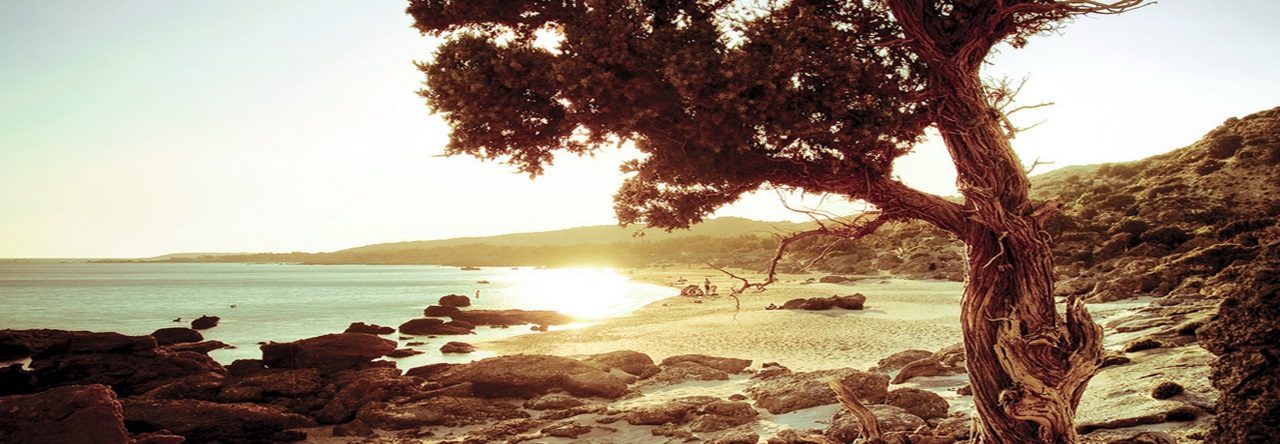
Heat Wave Soft island hills lapping on sea froth cicadas fire up their endless arias come close to me, you said, stand before me like Hermes a naked graceful cypress so that I’ll keep you in my eyes for the long winter days when we’ll be apart moments I’ll yearn for your warmth do come to me, I beg you let me touch your skin the day is fiery and unbearable like the body’s conflagration
The Initiate The initiate dressed in white always dwells in caves and the oleanders behind him will turn red the pebbles will be sprinkled with holy rain and the whole gorge that follows. I also go near with my serpent-self the estuary of passion. my soles, the last lovers, carry me lightly as if I had no heaviness in my consciousness. The one who attracts me stops, thin, dressed in white and having a ponytail; he smells a strong odor like devil rosemary while he exhumes the beautiful fragrance of a dead angel. The leafage of the carob-tree hides something quivering and invisible felt only by that quivering and invisible sense that we have inside us. The initiate is very thin; his pants only balloon a little in the front and a little in the back while airy flesh fills his shirt. The sponsor of earth lowered me, with the unanswered questions in my tongue, to a cave that instead of a mouth had a hole in the sky. Under it stood the provider of the inconceivable who milked the light-blue with his palms turned upwards. He stirred a little; was perhaps the unforeseen from above that pushed him or the earth, slave of precision that shook him from his foundations?
Locked Door The Saturday is bitter in the neighborhood evening when the street organ player turns the corner and some music notes are left in the mud of the road, like the wet wooden shoes along the narrow pathway between the migrant shacks. The hours of the evening are counted by that old watch we had placed in the chest of the dead woman with her leftover woolen cloths. At midnight the alarm woke us up playing its familiar rough music — it was like a child buried alive who was hitting the sealed casket with his small hands. When we were children the candles with the purple ribbons and gold letters scared us a lot; for this we were so sad when evening came because the sun-downs, seen from the balcony of our house in the island, looked like purple ribbons. And we were afraid of sleep since we felt that someone locked us up and we didn’t have keys. And if they would forget to open for us and if we couldn’t talk like the old woman Raken? However we listened to the adults talking at the dining room and a ribbon of light from the lamp had fallen under the door. Then we weren’t afraid. Now the mayor, they said, went to present the keys of the city. Don’t expect anyone to open anymore. Now you have to take care of it alone. We have to break down the door. We’ll manage it, because our love is stronger than our loneliness.
Twilight If I wasted my life, it was because I was a different age from the correct one, and now I’m confused; I don’t know whether I’m at the end or the beginning, whether I have to leave or return, which path to follow and where to go. After all, evening has come and the dogs bark, stopping the passersby at the borders of the unsaid.
PARROT As soon as he could say good evening the parrot suddenly announced: I’m the wisest, I speak Greek, what am I doing here? He dresses in his finest green and to a birds’ symposium goes to share his wisdom there, and standing in his sternest posture coughs a bit, then looks afar and says to them good evening. His words were much admired, so learned a bird he seemed: they said: no wiser bird there is than he who speaks the tongue of men! Perhaps from India he arrived with many a book along with him. He must have talked to many sages to learn their bookish tongue. Oh, educated parrot, give us please the honor of a few more words. And so the parrot coughs, and coughs once more, and says good evening.
Without pushing their luck any further, they went to the café and had a soothing bowl of chicken soup, then said goodbye to the casino hall and went up to their room to rest. In the morning Eteo phoned home to see how the boys were doing. Jonathan assured him they were all fine. Then he called Logan at the office and got an update on the market, after which, satisfied that everything was under control, he went downstairs with Ariana. They strolled from one casino to the other for most of the day, stopping here and there to gamble for a while, taking a break for coffee and then for lunch, relaxing by the pool for an hour or so, and then gambling some more in the afternoon. For Eteo the most enjoyable thing about Las Vegas was the chance to observe other people and their interactions and reactions to all the sights and sounds of the place. He loved to just look around him while Ariana played her slot machines in whichever casino they went to. On Friday night they went to the famous KA show at the MGM Grand. It was the most elaborate and amazing show either of them had ever seen. The story line was a simple fairy tale, but the presentation was spectacular, mainly for its technological innovations and the gymnastics of the actors. What impressed Ariana and Eteo the most was when the stage turned completely vertical, huge levers and axles moving it slowly from horizontal to vertical while the actors continued to perform their elaborate choreography standing on arrows shot on the stage. It was a combination of artistry, acrobatics, and athleticism all at the same time and to a musical score that was a phenomenal combination of modern and classic mixes that created a unique atmosphere. As they left, Eteo could not resist buying a CD of the music to enjoy at home. There were thousands of visitors in Las Vegas, and everywhere they went they were always among crowds of people coming and going, laughing and drinking, partying and teasing drinking and eating as they walked, as they sat on a barstool right on the strip, as they entered one hotel, or as they exited from another. People drank and partied everywhere: in the streets, the hallways of the hotels, the casinos, the restaurants, the bars, the blackjack tables, the baccarat hall.
And if someone happened to saunter on the opposite hill with the thorns when the sun goes down and everything is pale, vague and violet when they all seem to be lost and at the same time approachable, that lonely passerby who saunters on the hill looks calm and likable like one who could feel sympathetic towards us, even the hill looks serene at the same height as our window, so much so that if one turns this way to look at the cypresses, it seems that in more steps he could pass by our terrace, enter our room like an old familiar friend, and, I think he could also ask for a brush to dust off his shoes. Yet the man vanishes behind the hill and the contour of the mountain remains opposite our window like silent forgiveness, along with the sad, calm sunset that fades amid the shadows. And don’t think that we have adapted but what are you doing? Everyone has deserted us; we have deserted everyone too. We’ve established an almost just balance without reciprocal enmity, regret, and sadness of course, how else could it be?





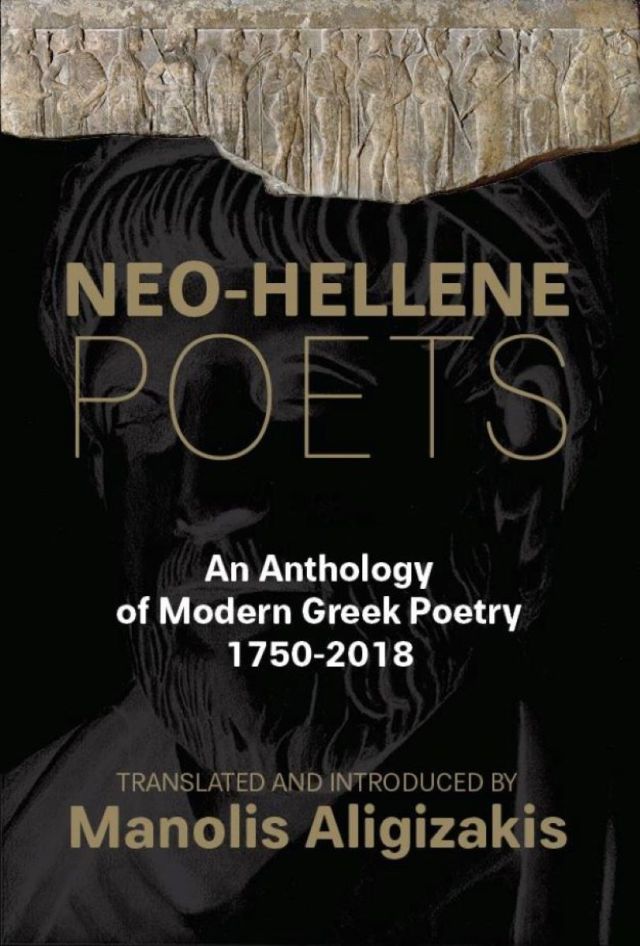


 Manolis Aligizakis