
Unfinished Odyssey The underground wind blows my mind will be an unapproachable loneliness the tree leaves imprison reflections from the moment I disembark there is a sadness in chaos unfinished Odyssey looks at the eons’ decadence the universal poets have for some time died inside the words that constantly change their meaning the world isn’t always the same with the one that revolves it looks through depths and fools us.
Accentuation Over the meaning of a syllable voice thunderous and persistent description of sacred things bowing to no one condoning no murder brandishing no sabre only abundant benevolence spiritual festivity of free men and land welcoming friend and foe reverence to ancestral gods need for food, yearning for peace longing for the igloo’s warmth equanimity, cross unwanted just one thought: stand unfettered, men of this land and live forever
“Sit with me here on this bench,” he said, taking her hand gently. “You asked to know about me and my family. So look around you. Except for my mother and aunt, most of my family are here. My father fought the fascists—just outside of the city. He wasn’t a brave man. He had no choice. To serve in the army was better than dying in Leningrad.” “And your mother?” “She survived the siege. She had no food except the ration. She didn’t get skinny though. She puffed up, she told me, her legs swollen—and her face, too—with disease.” At that moment, Jennifer could feel a disease working through her own body in sympathy, a horrible nausea, her head heavy, her arms like lead, then only emptiness. Volodya went on: “That first winter, 1941, she told me that many people froze to death on the streets. Those who survived were too weak to bury the others. So they just stepped over the dead on their way to stand in the food lines.” “But she lived?” “Somehow she lived. When the city was liberated, my father returned and nursed her back to health. He had an army ration; it was only a little more food than the usual ration. He died two years after I was born in 1947. He had been wounded in the chest. He couldn’t breathe.” “That’s ghastly. So your mother had to raise you by herself?” “Yes, she and her sister. But I don’t tell you for pity. This is what I want to tell you.” He stood up. “Look around here—at this memorial. All the memorials around town are built in honour of our glorious fallen comrades. So many memorials for the dead.” Jennifer had a glimmer of understanding now. She shook off the nausea. “A few years ago I looked at how my mother was living—how damp is her apartment, how she still stands in line for food, and I decide to write to Comrade Brezhnev. I asked him how come so many things are done for the dead and so little for the living.” Jennifer shifted uneasily. “Soon two special men came to my mother’s door. You know what this means, special men?” “KGB,” she whispered. “Yes, they question my mother. What is her son doing? Does he make trouble? The neighbours see these men come to the apartment.
in Washington, D.C. pushed President Roosevelt for the appropriations that got the dam started. Everyone who grew apples knew that Winifred Stone and The Daily Dispatch pushed the senators. The barrel of his chest straining the buttons of his faded Hawaiian shirt, his frayed khaki shorts held up by an Army surplus webbed belt, Poodie made his rounds, adding bottles and old newspapers to the stock in his wagon. He was trying to think of a way to make the mayor like him. Most people were friendly. Some ignored him or looked away embarrassed, worried that he would approach and ask for something, but Pete Torgerson yelled at him. Nearly everyone knew about his deafness, knew he lived in a shack down by the river. A few encouraged him to pick up bottles and papers from back porches or corners of sheds. Poodie moved along, his wagon following like a dog on a leash. The mailmen and garbage collectors knew the town no better than he did. He pulled his wagon the length and breadth of the town, making side trips into alleys, retrieving bundles of papers, rummaging through garbage cans for bottles. When the wagon was full to the top of its stakes, he hauled it below the tracks to a rusting tin shed in a field between a foundry and a freight warehouse. He watched a dusty old man box the bottles, weigh the papers on his iron scale and count out a handful of change from the coin purse he extracted from the pocket of his leather apron.
Past Looking back I wonder why everything I left without any effort to change them remained as beautiful as nature had crafted them. Who was I, after all who once wished to shift the balance of the universe by changing the depth of the beautiful cove of a woman’s body and the length of a man’s penis without the Grand Master’s plan?
The night before he asked the old man to give him a ride home but he had said he would stay put and spent the night there. There wasn’t anything he had to do at his apartment, he was just fine to spend his night there. And there was where Anton found him; numb, exhausted, hardly breathing. Anton knelt close to the old man. “What is it?” “I don’t feel well.” “Want me to do something?” Anton asked while he went to the sink and got some water. He gave it to the Irish man who took a sip. “This is the second time you have such an incident in two weeks,” Anton said, “we better get you to the hospital let the doctors look at you.” Dylan didn’t say anything. Anton left him and ran upstairs to the Father Nicolas’ office. This early in the morning, no one had gone to their offices yet; he ran upstairs to their sleeping quarters. He knocked at Father Nicolas’ door. Father Nicolas opened; he saw the panic in Anton’s face; he was informed of Dylan’s health issue; he assured Anton to look for Father Jerome and the nurses and advised him to go attend to Dylan which Anton agreed and ran downstairs as fast he could. The old man wasn’t any better. Anton sat next to him and tried to calm him down. “These smokes of yours; two weeks ago you promised to slow down, remember? The cigarettes kill people, everyone knows that,” Anton underscored, Dylan didn’t say a word. He just stirred his body around when at that moment Father Jerome, Father Nicolas, Sister Gladys, Mary and Sister Anna came in. Father Jerome looked at Dylan carefully as if examining him, a short examination …
Later that night she moved to Gregorio’s side, like a dog seeking warmth on a cold night. Benjamin raised himself on one elbow and tapped me on the shoulder. “A man is fire, a woman, pitch; comes the devil and blows!” he said, winking at me. He lay down again with the satisfaction of one who has delivered an important piece of information, and within moments, he was snoring away peacefully. I could hear Gregorio and Josefa conversing in whispers, and the nagging worry about his possible secret religion made me vow to find her a chaperone the very next day, lest things between them should go too fast. She had no one to look after her reputation but me.
Indians say vultures take messages to God. Not for the last time, I wondered whether they took souls, too. On the day we faced Guacaipuro’s hosts conspicuously waiting for us, several vultures circled high overhead, barely visible through the thin fog dissipating rapidly in the first rays of sun. Having seen them eating carrion, I was disinclined to hold them in high regard—their presence was ominous. We stood overlooking a valley and a river named San Pedro. We were high in the mountains, and the air was pleasantly cool, like an early spring dawn in Andalusia. “May God be with you. In nomine Patris, et Filii, et Spiritus Sancti. Amen.” The men rose, for they had knelt to receive my blessing. No chanting this time. Gregorio and Benjamin stood closest to me. Josefa watched from a few paces behind, her face sallow. Gregorio went to her and took her hands. She broke her silence with violent sobs, and Gregorio lent her his shoulder and his worn handkerchief. I realized how little I knew about women. She cuddled against him as she had done with me after she had killed that young Indian. Gregorio took her demeanor as a token of her regard for him.
Flame Moth plays with the flame of the candle his fingers touch her fiery skin game of entering and exiting begins body heat-trapping The unsuspected visitors as the enamoured moth dances with the flame And he feathery blows onto her feminine lips captivating moments The light breeze enters to erase the mark that his tongue left onto her clit
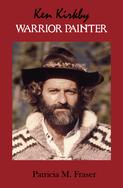
With the Group of Seven paintings as a template, he taught himself to paint again, working only on southern landscapes. He took several to the owner of The Golden Key Gallery who placed one in the window and sold it within two days. More sold during the next few months, but then the gallery owner sold his business and Ken was once again without an outlet. Still, he persisted and one day, while sketching the bent shapes of driftwood, in the dunes near the airport, it occurred to him that he could make a profit from the abundance of wood on the beach. He purchased a pickup truck and two chain saws, cut up the wood, wrapped velvet ribbons around the most attractive pieces, and attached a card with his telephone number. He left the wood on the front steps of the city’s grand homes and within days, the orders came in. While he delivered and stacked the firewood, he told the homeowners his stories of the Arctic, and when they asked about his paintings, he would display the canvases he carried in the cab of his truck. The Arctic paintings didn’t sell but the southern landscapes were a hit. He taught himself to become a storyteller, rehearsing every anecdote he had, practising his tone, volume, order of words and, most importantly, his choice of words. Where was the power of the story? His clients listened, but showed little interest, so he made a list of every service club in the city. Would they like a guest speaker at their next meeting? Yes, they would like to hear about the Arctic, and so, Ken did the rounds. Each audience contained a handful of people who showed mild interest – the rest were bored, and often antagonistic. Sometimes he was heckled, and a red tide of anger would creep up from his chest to flush his neck and cheeks. Once someone shouted that he, and the rest of the people there, resented an immigrant telling Canadians how to live in their country and run their lives. “That is hardly what I am doing,” Ken retorted. “I intend no disrespect. I am simply here bringing information from a faraway place.” His words dropped like ragged bits of paper to lie discarded on the floor. Perhaps his stories were so outside the experience of most Canadians that they seemed like tall tales – unlikely and unbelievable. There had to be a better way to tell people about the Arctic but what was it? His father told him that he was involving himself in matters that were none of his business. He was not a citizen of Canada and until he was, he should keep his opinions to himself. He responded that he was only doing what he had learned at his father’s knee, in Portugal. He reminded his father that Ken Sr. had not been a citizen of Portugal and yet he had become deeply involved in the affairs of that country and had worked hard to help the people. The Inuit were human beings in great distress, he said, and he was trying to help.
“Good morning,” Tanya chirped as Joel turned in his sleeping bag. She was standing on the ground beside the truck, her sleeping bag unused. “Morning,” grumbled Joel. “I took care of the chores already,” she said. “The horses are fed and the stalls are cleaned. Are you ready for a cup of coffee?” “Sure. Just give me a couple of minutes to get into my jeans,” Joel replied. Tanya ducked around the corner of the truck and Joel scrambled into his Wranglers. Once Joel and Tanya had found their way to the canteen and were sitting at a table sipping on their morning java, Joel couldn’t help himself and had to ask, “So where did you end up last night?” He hated himself for asking, like he was her father, but like a run-away horse he just couldn’t hold himself back. “We got back around eleven and I went by the trailer to let you know that I was going to stay with the girls, they were good enough to invite me to bunk down in their trailer. You were already sound asleep and it didn’t make sense to wake you. I have to tell you, it really wasn’t too hard of a decision—a hay mattress in the back of a truck or a real mattress and running water, including a shower, in a travel trailer. Sorry Joel, the girls won that one hands down.” “I guess it isn’t any of my business. I shouldn’t have even asked. Sorry about that.”