Bodies extremely tired bent, cut in half souls deserted them, walk alone on the grass slowly, open books laid the bodies lied down, crunched distorted and they appear at the far end holding roses and with the dream and passion they go dust to dust the bodies become yet far in the horizon, like suns the souls go down dressed in sky or like simple smiles on lips
“High school days, right? Bunch of guys all pull up at the stop light, jump out of the car, run around, jump back in again in different seats.” Jennifer continued to shake her head. She felt as if it was frozen in the position. Lona stared as if she were seeing Hank for the first time. “We do the same…” finished Hank, as if the point was obvious. “The same what…?” Maria and Jennifer asked simultaneously. “Get off the boat, mill around, come back in again, confusing the count. Chinese fire drill. Make crowds of people milling around, so that no one can take roll call.” The ensuing silence was probably one of Jennifer’s lowest moments. So this was the adolescent prank on which two lives depended. Not only would it have to do the job, but she realized that she was grateful for any plan at all. MORNING JULY 20, 1974 Sergey Ivanovich, the machinist from Novizavod, had sat in the Kazan airport all morning. You never knew how long you might wait for a flight, or even if there was any point in waiting, he thought. And even after you were allowed on the plane, they might bump you so that your seat could go to some senior bureaucrat who had only just wheeled up in a sleek black car. He badly wanted to visit his sister in Moscow. That’s all. But they didn’t give much respect to people like him with their simple needs. In fact, he had already been told that the flight was fully booked, but he had not given up because, long ago, he had acquired those most valuable aids to survival in the modern Soviet Union: friends who did favours. This particular friend was part of the airport administration. That the friend had first listened to Sergey’s tale and then had produced an extensive shopping list for the Moscow stores was not unusual. Sergey had simply tucked the list away, along with the five other shopping lists from neighbours and family, and had promised to do his best. The friend had also slipped him some crumpled bills in a foreign currency, acquired from international visitors at Kazan Airport. This was fine, too. Sergey was not even sure what type of currency it was, but he had tucked it away in an inside pocket. If he could locate a buyer—a friendly tourist—to go to the deluxe Beriyozhka, the foreign currency store in Moscow, and purchase some of the rarer commodities, he would be a winner.
Love and geraniums will bloom again in small windows by the shore and a young Jesus will come take us by the hand where we’ll play under the lilacs until twilight with storks sea breezes and sun And when evening comes we shall jump in the white caiques and with the nets of sad biblical fishermen we shall catch a watery moon to lie down peacefully with it so that it lights our sleep with silent angels who haven’t yet learned to laugh or cry but to only smile in the dream of the unborn Creation Islands with trees silent during evening vespers where peaceful doves fall silent there we fall silent gathering the day’s roses while the evening shadow falls on white paper where we incise life next to the seashore We won’t read what we wrote We shall raise our eyes yearning for the galaxy’s waterfall behind the almond tree of a white cloud lingering above the sea The time without hours and repentance has arrived again Azure echo of the light water foggy walk of fishermen on sand
In the moldy garden water reflows from the stony mouth of Poseidon and the undefeated frog gives birth to its new generation over the solemn fossils. Ah, yes sweetness unexpectedly overflows the same way the fountain rises again among its watery suns while my soul, an unprepared squirrel, shades itself with its tail. And as the park becomes slowly alive and the owls stir in their dark offices and the thunderous water dances over the silent rocks of the closed house like a stately residence, my life turns alive again by the talkative waters you pour in my mouth.
VIII Here they are again the two houses we looked at while we listened to music. They leaned on each other like two friends who met after a long separation and were in a hurry to tell it all before they separate again.
In a clear-cut case, the leader of free world said either with us or against us* underlining the war might stored in dark warehouses housing his selected war toys. On the faraway land, opponents blinked their eyes before the economic slavery of the multinationals The devastation of bombs falling smartly to flatten his land a clear-cut case, the leader of free world said Either with us or against us
“What are you going to do?” “If the railroad says there was sabotage, I’ll have my people run a full investigation.” “If they don’t?” “I’ll give the mayor my report.” “And?” Spanger grinned. “Thanks for your help, Paul. See you in court. Or somewhere.” As he passed the checkers players, the old cackler was eyeing his partner across the board. Piles of broken ties, twisted rails and fragments of the blasted tank car bordered Gellardy’s orchard. A section gang was tamping new ties into place. The smell of creosote was heavy in the air. Spanger saw the locomotive upright on the track near the hobo jungle, a section of its cab wall bowed out, a sheet of steel dangling from it. The crane, engine roaring and cables screeching, was beginning to ease the distorted chassis of the tank car out of the depression alongside the track. Spanger walked toward a half dozen men who stood watching. He recognized all but one. As two of them greeted him and moved aside to make room, he saw Poodie James. Poodie looked up and made glottal sounds of greeting. The chief looked from Poodie’s eager face to the blackenedwreckage and back again. “It’s good to see you safe and sound today, Mr. James,” he said. The inspector introduced himself as Lawrence Hall. Spanger made small talk with the group of railroaders, then took the man from Spokane aside. “What have you found so far, Mr. Hall?” “I’ve found a mess, Chief. There are no orderly derailments. I’ll tell you, though, the fire department here did everything right and kept this from becoming a first class disaster. Worst thing, of course, is that we lost a good man. First death in a wreck since I’ve been with the company. The coroner did an autopsy this afternoon at my request and found that Mo d’Aleppo’s heart gave out. Massive failure. I guess the crash triggered it. He’d had a couple of mild …
Rassan points as they pass an inspiring, colossal structure, “There is our new parliament building; it’s only four years old.” “It looks like quite a bit has been accomplished in the years I have been away,” Talal comments. “Yes, it has; the only place that still lags behind is the eastern part of the city. That area will take the longest; that is where the poorest people live. It’s always the same, Talal; they’re the ones who wait the longest. The rest of the city is not too bad. One can say life is getting back to normal; after all, the war ended some years ago.” Emily listens, eager to hear as much about this fascinating place as she can. They arrive at Ibrahim’s at 5:15 p.m. a servant opens the doors of the car after Rassan drives through the big iron gates. They get out, and Talal signals to Emily not to worry about her things, as the servants look after those. They enter the foyer and Emily is left with her mouth half open at the size and grandeur of the mansion. Ibrahim with his wife Mara come to greet them. “Welcome! Welcome to Baghdad,” Ibrahim says, after he kisses Emily’s hand. “This is Mara, my wife. Mara, this is Emily Roberts from Los Angeles; her daughter Jennifer is our son’s sweetheart.” The two women hug and exchange pleasant words. “Welcome to our humble home,” Mara says to Emily, who is in awe at the magnificence surrounding her. Ibrahim hugs Talal and they exchange kisses, as is customary. “Welcome, my dear Talal; howwas your trip?How is my Hakim?” “He’s fine, dear uncle. He sends you and Mara his greetings, hugs and lots of kisses; he’s doing very well. He’s excited about the company he’s taking control of.” Talal gives a brief summary. Emily, who’s hearing for the first time about the control of Hakim’s company, turns to Talal with questioning eyes; he signals her to let it be for now. Mara wants to take them to their room to freshen up and rest for a while before dinner; her servant has already taken their bags upstairs. Rassan says goodbye for now and leaves. Talal stays with Ibrahim as he knows the old man will want to ask more questions, things about Los Angeles and Hakim. They go to the study and Talal relays the message from Bevan and all the other news Hakim wants his uncle to hear. Talal asks, “How are you doing with your health, my dear uncle?” “I’m doing very well, my dear boy. The medication seems to work well, and I haven’t sufferred from any adverse side-effects. Only time will tell how effective the medication is. It’s in the hands of Allah; his wish will take care of me.”
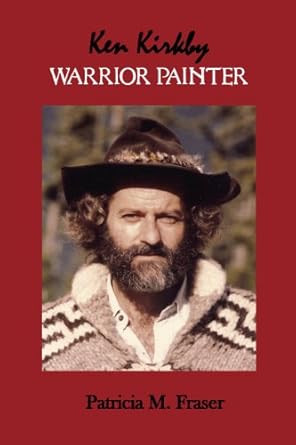
years old, they were taken south and lost to their families as they were given an education that could not be applied to their northern way of life. The soft voice of the Grandmother ended the story by saying, “Perhaps it would be good to have Isumataq.” Isumataq, Ken learned, also meant many things—big, or spokesperson— but the most accurate definition seemed to be “an object or a person in whose presence wisdom might reveal itself.” This was the exact point at which he discovered the meaning of his life in Canada—the unknown purpose for which he’d embarked on this mysterious and gruelling quest. The idea that wisdom was a thing that existed on its own and could only show its value if one was prepared to allow that to happen, was electrifying. I felt a driving urgency to gather as much information as possible—a burning need to disseminate that knowledge to those who could not otherwise experience it for themselves. I had a definable purpose. The time came when the Grandmother took Ken aside. She sat on the floor in front of him and pronounced, “In our mind you are Inuk. You are learning our language and eating our food and you are a part of us. Our wish is that you will stay with us, but you tell us that you have to go back to your world, and that is as it must be. It is our wish that you tell the people in your world of the many things you have seen—all of the things you know.” And that was when Ken made the promise to the Grandmother that would shape, drive and guide him for the next thirty plus years of his life. I felt I was equipped with the knowledge of something unique. The spirit of Isumataq had become a living thing in my heart! And as an artist I had absorbed stunning material at the cellular level. It would never leave me. By his own calculations, Ken spent thirty-one years, several million dollars, ended a marriage and lost numerous friends to his fixation on keeping his promise to bring the story of the desperate plight of these indigenous peoples to the 90% of Canadians who lived, totally unaware, in the southern portion of the nation.
There is a route scheduled by an unknown desire to walk on the stretched rope of existence I must define chaos in space-time, establish the cosmic entropy and the light of love sunken in the shadow of my inexistent before something is missing before I’m ready a crusader of nothing I investigate the eons and the fleshless that lurks in matter the tide of life under the soil the migrating swallow in the eyes of the sad woman they don’t all know how to transform their heart into a sunny day among the icebergs what do I do here in the room of delusions in this cemetery of dreams part of myself already belongs to infinity my soul slowly discards the body it has been some time since I started to forget and to be forgotten








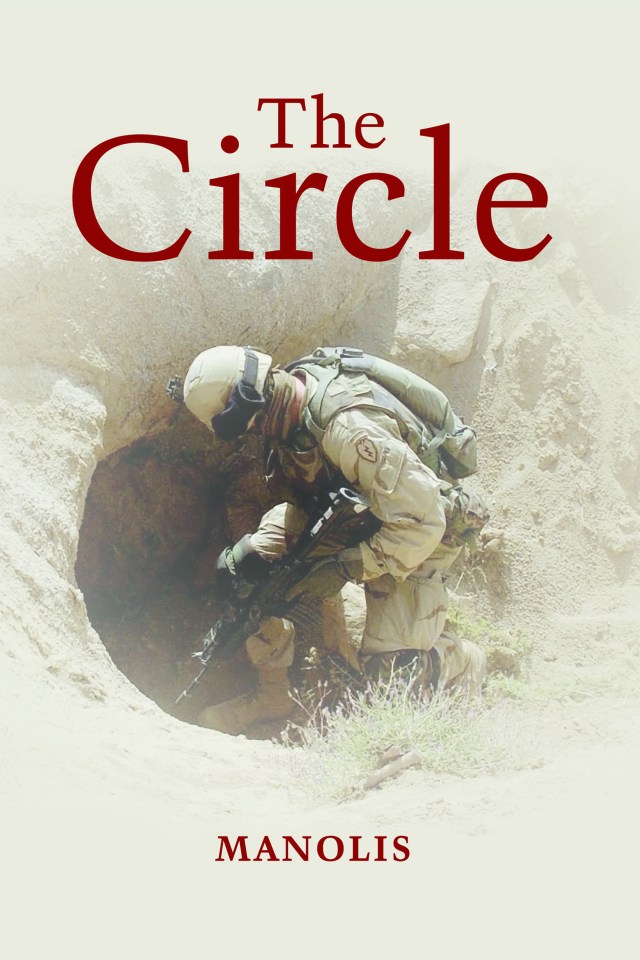

 Manolis Aligizakis