touched her hand a bit more to signal to her he was aware and delightened by her smile. The rest of their meal went quietly and with an extra carefree manner while Father Thomas kept a good eye on everything that was taking place in the eating area. The food was consumed. The kids would be led to their dorms. Mary said to Anton, “Wait for me; I’ll be back in ten minutes or so.” Anton nodded his head and after supper he walked to the kitchen where he found Migizi working on the cauldrons as usually. He was a smiling, happy boy, when Anton faced him and asked. “I see you on duty again. When will you start behaving so you wouldn’t have to do this?” “Never,” the youth said and kept wiping the big cauldron with both his hands. Then George called him to the side and put a plateful of food in front of the boy. A chicken thigh, cooked in the oven with three roasted potatoes which the youth truly devoured. Soon after Mary returned and joined Anton. They got the plate with a piece of apple pie George had ready for them. They stood by the counter and with two forks they shared the apple pie: one bite each and a good laughter after each bite. Anton’s body was clearly touching the side of Mary’s body to which she responded by pushing him a bit just to show to him that she enjoyed touching him as much as he liked touching her. George the cook didn’t miss a thing of all the interaction between the young secretary and the young caretaker; he too smiled with joy seeing sweetness blooming even here between these walls that have kept so many ugly secrets, yes beauty could be found anywhere, even in the dark bowels of the Kamloops Indian Residential School. Time passed quickly as it always does when two people enjoy themselves.
Things have changed; these days they didn’t kill, they only pointed at you with the finger it was enough. Then, they make a circle that always becomes smaller; they slowly get closer you retreat against the wall, until in desperation you, alone, open a hole to hide into it. When the circle was cleared, another respectable, lovable man stood in its place.
Mistral It swirls with mysticism, around the plane tree bore the playful Mistral exhuming its secret cadence smooth visitor on fiery skin taking what isn’t his desire like a sin written with stark red letters and the wind keeps on swirling as though trying to conceal your blushing, that I see you naked on your towel next to the whoosh of the wave plane tree still at the mercy of Mistral serpent that swirls around the trunk promising eternity through the lines of this poem
Party My friends invited me to a party I won’t turn them down. I’ll go to forget. I’ll wear my red dress and I’ll envy my beauty the corpse I carry inside me I’ll affectionately take along. I’ll be joyous and secretive, I, the messenger of Hades my moribund friends won’t get drunk though they’ll drink a lot I’ll stand next to them, a beautiful curse, they won’t suspect me then they’ll ask me to sing a song perhaps hoping for an ochre joy though my song will be so real that suddenly they’ll turn silent.
Erotic Fecundity In the harbours of the world with each sailing the eternal man on deck simultaneously a baby and an old man doesn’t know which route to choose defenceless heart in the crypts of seasons on the dock, unfamiliar faces pass on invisible rails the shadow of the happy child at the far end of the quay an imaginary figure who I embraced eons ago postponed encounter of souls imprisoned in differing destinies. Why am I here and not somewhere else? Have I existed? Do I exist? Am I one of my concepts sprung out of a dream? Wind the first word God uttered wind the birth and death wind the wisdom the unexpected signal of erotic fecundity on the first day of creation.
Pilgrimage I went to my family’s home a pilgrimage to the place I once existed a baby in the arms of the saintly mother I found four walls defining the length and width of the small space in the embrace of the infinite my first cry I discovered between two rocks to the west where the wind incised unerasable marks and in the vague darkness of the corner where my crib sat and I spoke time is tough in the embrace of timelessness I went to my family’s home a pilgrimage to the space where I took my first steps a baby the lone window to the north tightly shut the lone door leaned to the east as if wishing to open towards the path I was meant to follow and I spoke Oh god, so simple is the world so simple is life Oh god, clearly defined is my path to greatness
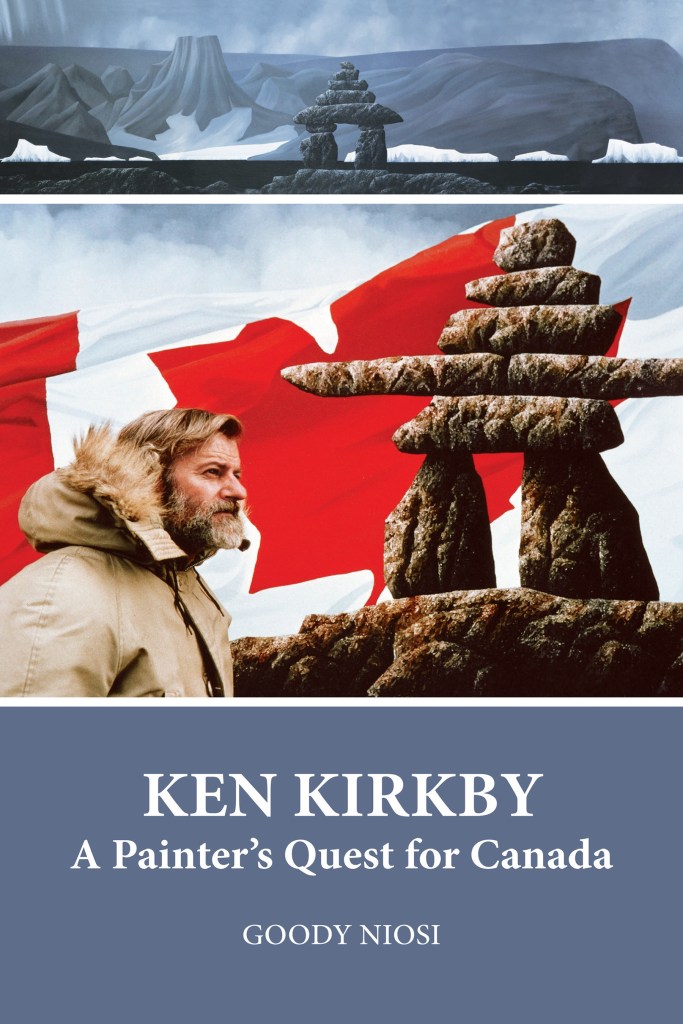
Then he reached to the side, and turned on the tap of the small bar sink, and filled a pitcher with water. Lastly, he opened another cupboard, lifted down two tumblers, poured a goodly measure of whiskey into both, and splashed water into the glasses. “This is how you and I are going to do business,” he said. “We’re going to drink.” ‘In the middle of the day?” Ken asked. “What’s that got to do with anything? We’re going to drink.” “Why do we have to drink?” Ken eyed the whiskey with revulsion. “My guess is it’s to do with, ‘get a man drunk and you’ll find out who he is.’” “Who told you that?” “My father.” “I’d like to meet your father.” He took a large swallow. “So, tell me about yourself.” Ken told his story, while he watched Fraser drink until the bottle was empty. He drank a bottle every day, he said, and he was as proud of that as the fact that he was a one match a day man. He struck a match in the morning to light his first cigarette, and every subsequent cigarette, for the rest of the day, was lit from the stub of the last. “It takes discipline to do that.” “I want you to come to the gallery two or three days a week. I want to hear your story. I want you to tell me your feelings, your thoughts, your understanding of the universe – everything. I want to listen to you. I want to hear you.” For several weeks, Ken visited and talked, while Fraser downed a bottle of rye and smoked an eternal chain of cigarettes. “You have a passion that is white-hot and I love it,” he said. “We have all these artists around, and they’re all limp. I want to see a man with a paintbrush in one hand and a sword in the other. That’s you.” One day, Ken asked Fraser why he never saw the paintings he sold to him. “Where do you put them?” “I’ve sold them.” “All of them?” Yes, all of them.” “Oh my gosh. Well, that’s terrific.” “You look surprised.” “I am.” “That’s not a very nice thing to say to me. Of course, they’re sold. So, bring me some more. Go and paint.” “There’s a limit to my speed.” “I’m sure there is and I want to find it. I suspect the faster you paint the better you get. You’re thinking too much. Don’t think. Painting isn’t about thinking. This is not an intellectual exercise.
Tell him I promise his village won’t be damaged, nor his fields touched. Tell him.” Losada dismounted and the others followed suit, but he stopped them with a gesture of his hand. “Infante, Ávila, Galeas, Maldonado, Pedro and Rodrigo Ponce, Gregorio de la Parra, with me. Ten harquebusiers and ten pikemen, come forward as well. Carlos.” He snapped his fingers, then turned to me. “Friar Salvador, if you please, come with me. The rest of you, stay where you are, don’t let your guard down. It wouldn’t be the first time they welcome and then betray and kill. Keep an eye on your surroundings. At the first sign of trouble, Juan Suárez, sound the charge. All of you! Diego de Paradas will command in my absence. Camacho! You are second. Good luck and may God be with us.” “Harquebusiers, check your priming!” yelled Diego de Paradas. Losada put a hand on the hilt of his sword at his hip, as if to reassure himself. Behind him, the harquebusiers grabbed their powder flasks and rammed the charges down the muzzles. A flock of parrots cawed overhead. “Take good account of everything, Friar Salvador,” said Losada. “I have a mind to have you write a record of this expedition.” Recording the expedition would be considered a great honour and a great responsibility. I nodded. But I knew immediately it would be impossible to record the truth. I admired the orderly arrangement of the village. The streets were smooth under my feet, the houses skilfully made. Earthen pots steamed over the embers of fires; hammocks were neatly distributed; baskets and heads of plantain hung from the wooden structures. Strings of yarn were stretched over primitive looms. On the sloping thatched roofs, dozens of round cassava cakes dried in the sun. Human and animal skulls and bones hanging among the baskets and plantains reminded me of macabre tales of cannibalism. The Indians stepped aside as we entered the village. They stared at my feet and then at the rest of me, for I was the only barefooted Spaniard, let alone one wearing a frock.







 Manolis Aligizakis