Podcast Episode: Greek Poetry And Fiction

Pip: Manolis Aligizakis has assembled a catalog that moves from ancient Greek shores to Canadian prairie schools to a Moscow hotel hallway — and somehow it all holds together.

Mara: vequinox brings it together across poetry translations, novels, and short fiction — territory we'll cover through modern Greek verse, prose excerpts, and the themes of love, memory, and identity that run underneath all of it.

Pip: Let's start with the poetry.

Voices Across the Greek Tradition

Mara: This segment is about what it means to translate a literary tradition — to carry voices like Cavafy, Ritsos, Engonopoulos, and others across languages without losing what makes them cut.

Pip: And Cavafy cuts immediately. The setup in "The City" is a man planning his escape — new land, new sea, fresh start — and then the poem turns on him completely.

Mara: The turn is the whole poem. "New lands you will not find, you will not find other seas. The city will follow you. You will return to the same streets. You will age in the same neighbourhoods, and in these same houses, you will turn gray."

Pip: So the upshot is that geography is not the problem. The self is the problem — and it travels with you, luggage you cannot check.

Mara: Engonopoulos makes a different kind of claim in "Nikos Engonopoulos – Poems." His "Angry Poem About the Occupation" turns elegy into defiance — workers dropping their tools, fists raised, a martyred figure walking the earth pale-lipped but beloved.

Mara: Ritsos appears across multiple volumes here. "Yannis Ritsos – Poems, Volume II" gives us a boatman striding into a harbor at dawn, the sun rising like a woman's wet hair curled around cranes — sensory and grounded. "Volume V" and "Volume VI" are quieter, more unsettled.

Pip: "Kariotakis-Polydouri, The Tragic Love Story" brings the biographical weight — two poets whose lives ended badly, rendered here in verse about a woman at a piano, butterflies leaving through a window.

Mara: "Tasos Livaditis – Selected Poems," "Katerina Anghelaki Rooke – Selected Poems," "Hours of the Stars," and "Troglodytes" fill out the range — from Livaditis's compressed night imagery to Anghelaki Rooke's half-words and olive tree shapes. "Neo-Hellene Poets" and "Orange" and "Mythography" sit alongside them as further evidence of how wide this tradition runs.

Pip: From classical echoes to prairie roads — the fiction covers different ground entirely.

Prose Across Borders and Generations

Mara: The fiction here spans continents and registers — from a child's first bus ride in wartime Canada to a Moscow reunion to a painter's Arctic trek — and the question running through all of it is how people find their footing in unfamiliar places.

Pip: "Water in the Wilderness" opens that question gently. A woman named Tyne has been living on hospital food, and her friend Moe has kept a phone call from her on purpose.

Mara: The reason matters: "Moe smiled. 'Morley is awake and asking for you.' Tyne let her breath out on a deep sigh, sat back and covered her face with her hands. 'Thank you, God, thank you,' she whispered, then shot out of her chair and ran to get her coat."

Pip: Relief as a physical event — breath, hands, running. The excerpt earns it without explaining it.

Mara: "The Qliphoth" operates in a completely different register — adult, raw, interior. "In Turbulent Times" follows Ian, a man trailing a woman named Nora through a coastal Irish hotel, his knees literally trembling at the bar. "Redemption" gives us a young man leaving home for Vancouver, his father crying openly at the table.

Pip: "Wellspring of Love" brings back Rachael, older now, stuck on a dusty highway while her cousin heads west — and "Water in the Wilderness" shows us Rachael younger, boarding that bus for the first time, shuddering at its size.

Mara: "Jazz with Ella" lands its protagonist in a Moscow hotel corridor and delivers the line "We are your family" to a woman who was certain she had no family there. "Ken Kirkby: A Painter's Quest for Canada" documents a real exhibition at Parliament — a painting one hundred and fifty-two feet long, twenty years in the making.

Pip: "Small Change" puts a boy in a Pennsylvania classroom trying to locate his immortal soul while Sister Assunta slaps a pointer against her palm. "Prairie Roots" is lunch-hour softball and girls comparing notes in the willows. "Wheat Ears" and "Cloe and Alexandra" round out the set — one a memory of Cretan youth, the other a poem built around a denial: it wasn't me in that yellow cab, it wasn't snowing, I have no hair.

Mara: What ties them together is the texture of ordinary life under pressure — the meals, the car keys, the Scotch ordered twice.

Pip: And underneath the prose, there's a question the poetry keeps asking too — about where you belong and what you carry.

The Self That Cannot Escape Itself

Mara: Love, memory, and identity keep circling the same problem across these works: the past is not behind you, it is inside you, and it shapes every attempt to move forward.

Pip: Cavafy says it flat out. "As you have wasted your life here, in this small corner, you wasted it in the whole world." There is no smaller indictment.

Mara: Ritsos in "Yannis Ritsos – Poems, Volume V" reaches for the same idea differently — a man who keeps a small mirror in his pocket because it's the one fixed point when everything else shifts without warning.

Mara: "Kariotakis-Polydouri" holds memory as tenderness — butterflies always flying out through the window. "Mythography" turns inward to still water and a fir tree asking the night for wisdom. "Introspection" names it directly: practicing a religion on the longing for the past.

Pip: "Orange" answers that longing with the wind's reply — your sunshine hides in your heart. "Hours of the Stars" writes love onto the mountain tops of memory. "Katerina Anghelaki Rooke" and "Troglodytes" close the circle — half-words left behind, and a young poet begging the Muses to free him from his own imposed fears.

Mara: The pattern holds: escape is not the remedy. The work is staying present to what you carry.


Pip: A city that follows you, a mirror in your pocket, a bus you board for the first time — it's all the same question dressed differently.

Mara: Where you are, and what you brought with you. More from this site next time.

Small Change

Excerpt

Rick looked disconsolately through the second-storey classroom
window at sheets of freezing rain, the weathered fence of the Pennsylvania
Railroad coal yard and the blackened struts of the steel bridge that
shuddered ever so slightly when a train passed over it, then back at Sister
Assunta who was preaching, again, about The Immortal Soul as she paced
back and forth in front of the blackboard behind her desk, slapping the
pointer against her palm like a riding crop.
“Pagans!” she was saying, “You were all born pagans and you must
be taught to fear (her pointer hissed and snapped loudly against the desk
blotter) the power of Almighty God.”
Silence. Some of them lowered their heads to avoid her stare. But
Rick was puzzled. That kind old man who lived forever in the sky was
merciful and just. He was love itself.
Why should anyone be afraid of him?
He raised his hand. Forty-two pairs of eyes swung toward the front of the
room, afraid for him, but excited by the drama that might be about to
unfold. Sister Assunta merely glared and went on pacing, her voice hoarse
with a nearly demonic fierceness. Rick took his arm carefully out of the air.
“Daily, you neglect your immortal souls. They may already
be lost
to eternal damnation.” She stopped precisely behind her desk chair, her
florid minutely wrinkled skin drawn into a tight smile.
Rick tried to look inside himself. There wasn’t much light. After
a while he became concerned. Where was his immortal soul, anyway, why
couldn’t he find it? Then something
round and flat like a communion
wafer came into focus. It was tilted, like the head of a snare drum, and it
was so clean it glowed. He began to understand. When you did bad stuff,
soot fell on it out of the dark, then, if you confessed and said five Hail Marys,

five our fathers, and an act of contrition, an invisible power swept
it clean again. And immediately, almost automatically, his pubescent mind
reached for what he knew to be forbidden.
The kids called her The Beauty Queen. Her dad owned the bar and
grill at the corner of Monmouth and Fifth. She spent a lot of time with
her followers in the extra lot next to her house her grandparents
had made
into a large garden surrounded
by hedges, and dotted with trees. When
she came out for a walk, all the guys stopped what they were doing and
watched her tight pedal pushers, her graceful careless moves…

https://www.amazon.com/dp/1926763157

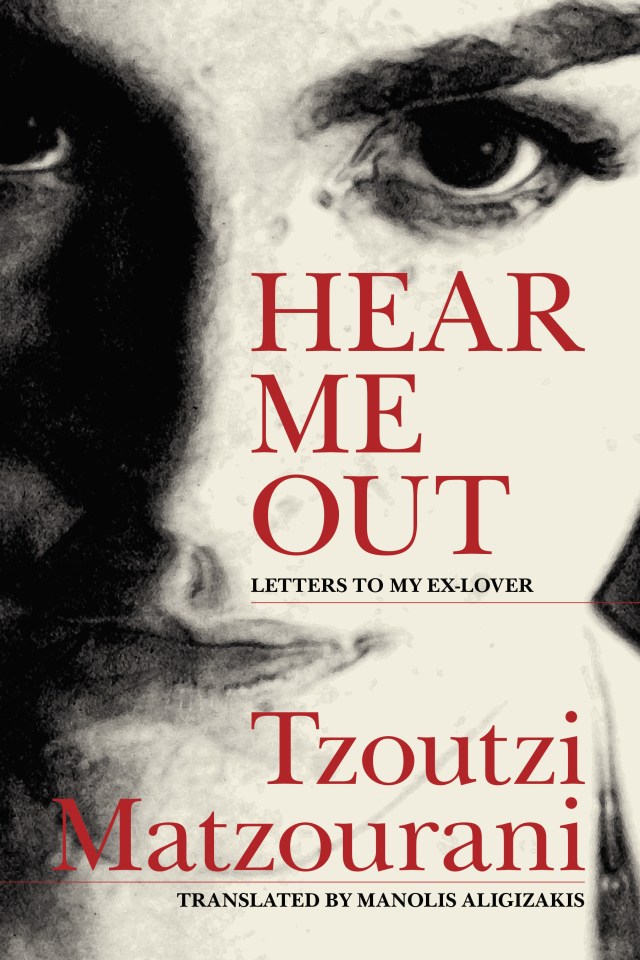
HEAR ME OUT

The Lost 1%
Finally you turned me into yourself, my love!
Or perhaps I’ve been this way all along unable to answer the same way when they tell me “I love you”. Unable to say, “me too…”, or “I also love you.”
The phrase almost reaches my lips but is not stated.
To observe other men with that sad and full of agony glance, the one I noticed in your eyes for a long time, and not being able to answer.
Now I can understand what you felt.
I feel the same way.
Now, I know what it means for the other person to expect something from your lips and you unable to utter a word.
And it is not that you don’t love the person, it’s not that you don’t care for them.
The opposite, you care and you hurt more so. But that 1 % that is missing, that you miss and without it the word isn’t said.
That 1 % you know you won’t ever find.
That, as if you came faulty out of the factory and you miss something, what you’ll never acquire and as a result you’ll never be able to give it to anyone.
And you’ll remain like Sisyphus to go up and down the mountain with the weight of love on your back, forever searching to unload it and to offer it somewhere.
70
But there will never be anyone to lighten up your load no one will ever walk along with you up the mountain and no one will ever give you a hand just to stop you from slipping down the slope.
Because simply you can’t grasp onto anybody’s hand you can’t grasp onto anything.

https://draft2digital.com/book/3562946

https://www.amazon.com/dp/1926763807

The Incidentals (review)

The Dignity of Lives Deemed Incidental

The postman in Mail moves from house to house carrying news of marriages, births, and children living far away. For everyone else, he is the bearer of messages, while tears run down his face because he too waits for a letter that never arrives.

Here lies one of Aligizakis’s strongest poetic gifts: his ability to create an entire human destiny from a few concrete gestures.

He does not write psychological portraits in the conventional sense. Of many of his characters we know almost nothing. We are given an occupation, a gesture, a memory, an object.

The rest is accomplished by metaphor. The net becomes a trap. The rope becomes a life.

Bookkeeping becomes an account with death.

The felling of a tree becomes an image of our own disappearance. The letter becomes a metaphor for absence. The shoe becomes the sign that, for a little while longer, we may still walk upon the earth.

This poetic world is at once archaic and contemporary. Hades and Thanatos move naturally through gas stations, diners, hospitals, stock-market screens, garages, and Canadian immigration offices. For Aligizakis, Greek mythology is not museum material but a still-living language through which human finitude can be expressed.

The immigrant is therefore a particularly significant figure. In Immigrant, the protagonist leaves his homeland to begin a new life on the other side of the planet. He promises his youth and productive years to the new country in exchange for security—but the poem’s ruthless conclusion suggests that in doing so he has, in a sense, sold himself “for a few dollars more.”

This experience carries particular resonance in the work of a poet whose own biography has been shaped by emigration. Yet Aligizakis does not write autobiographical complaint. Migration becomes another model of the human condition: we all make exchanges with the world. We give time for money, freedom for security, dreams for predictability. The only question is whether we are aware of the contract we have signed.

The Incidentals is not a comfortable book. Nor does it wish to be.

It is often rough, grotesque, ironic, sometimes sarcastic. It refuses to beautify the body, old age, labour, or death. Aligizakis occasionally uses brutal language to awaken the reader from precisely the complacency he wishes to attack.

Yet beneath this harshness lies an unusual humanism.

Because if these people were truly incidental, no poems would be written about them.

Poetry itself refutes the title.

The moment the poet writes about Gladys, Mathew, Stefan, Benjamin, Galanos, or the nameless postman, he abolishes their insignificance. He lifts them out of the anonymous mass of time. Society may have counted them as numbers, but poetry gives them names, faces, stories, and deaths.

This is perhaps the most beautiful ethical gesture of the volume. Poetry cannot defeat death.

But it can defeat oblivion—if only for the duration of a poem.

Manolis Aligizakis’s The Incidentals is therefore far more than a collection of poems about ordinary people. It is at once a modern dance of death, a social diagnosis, a sequence of philosophical parables, and an ironic catalogue of human existence. The volume asks how many people live out their lives without ever daring to move away from the stake to which an invisible rope has tied them.

And it asks an even more difficult question: how long is the rope on which we ourselves live?

The poet cannot answer that question for us.

Perhaps this is precisely the point at which the stories of the  „incidentals” cease to be the stories of others. And ours begins.

Balázs F. Attila

poet, writer, editor

https://draft2digital.com/book/3745812#print

https://www.amazon.com/dp/1926763637

Podcast Episode: Modern Greek Poetry And Memory

Pip: Manolis Aligizakis — translator, poet, publisher, and apparently a one-person archive of everything Greek literature has ever felt about mortality, love, and the road.

Mara: vequinox has been busy. Today we're moving through modern Greek poetry in translation, then into myth and mortality, and finally into fiction and travel narratives that cross borders both literal and historical.

Pip: Let's start with the poets.

Voices Across the Aegean: Modern Greek Poetry in Translation

Mara: The throughline across these translations is a question: what survives when a poem crosses languages? The Cavafy post gives us one answer through the myth of Achilles and a god who betrays his own prophecy.

Pip: And Cavafy frames it with Plato first, which is a move — citing the Republic to set up a poem about divine bad faith. The quote lands hard: "Yet, he, himself… who sang the hymn… he killed my son."

Mara: That line is Thetis speaking. Apollo sang paeans at her wedding foretelling her son's long life, and then personally went to Troy and killed Achilles. The prophecy and the killing share the same mouth.

Pip: Which is either theology or the oldest recorded case of a conflict of interest.

Mara: The Yannis Ritsos volumes — both Volume V and Volume VI — push into similar territory from a different angle. Volume V gives us the evening star as an eraser moving back and forth over a mistake that never quite disappears, birth and death as a rhythm rather than a sequence.

Mara: Volume VI's "Same Word" watches language itself tremble under its own unfamiliar meaning, like a nerve that shivers and bursts. Ritsos keeps returning to the threshold between sense and silence.

Pip: Tasos Livaditis takes that threshold into a tavern. The bouzouki player in Volume II swears every day he'll turn his life around, and every night the world deepens and pulls him back through the door.

Mara: George Seferis in the Collected Poems gives us crickets ticking out of rhythm, a house full of them, and the line "we don't even whisper, because the machine is speeding before horror and contempt." The anthology Neo-Hellene Poets lands a parable about a bird that can learn every sweet song except the words "I love you."

Pip: Katerina Anghelaki Rooke's Selected Poems counts time differently: "I count time with what I've lived and what is forthcoming that resembles the incomparable end. Only, look, the craft and the fisherman can't be separated from the blue."

Mara: Titos Patrikios in Selected Poems is more pointed — "Economic Development" watches emigration and foreign investment rise together while newspapers announce cultural ideals are being maintained. And Nuances holds the sharpest compression: a poem called "Repetitions" that names peace as something a sword erases.

Pip: Red in Black steps outside Greece entirely, finding illumination in Craiova, Romania, through Brancusi sculptures — the Blind Boy and The Kiss — connecting Greek poetic consciousness to Romanian artistic space. That range from Cavafy's Troy to a Romanian museum is the real scope of this project.

Mara: From mythic time to the present tense — which is exactly where the next set of poems lives.

Eros, Entropy, and the Weight of Ending

Pip: This cluster asks what myth and love actually cost — not in the abstract, but in the body, in the moment, in the interruption.

Mara: Medusa opens with a poem called "Gravestone" where Eros descends to a melancholic youth and a widow turns in the moonlight, and then the poem pivots without warning: "Nothing matters more than the armchair craving my body as the widow craves her late husband."

Pip: The domestic interruptions — the faucet, the table, the wife demanding full attention — aren't a joke at the poem's expense. They're the actual argument: desire and the ordinary are not separate territories.

Mara: Entropy's "Eternal Cycle" strips that argument to its bones — earth aging, returning its shine, then embracing each thing on its path toward what it always longed for. Wheat Ears traces the same arc through a single memory: beauty glimpsed through a window, understood only later when years have become dry leaves on a sidewalk.

Pip: Rendition and Life is a Poem hold the stranger registers — one a requiem tracking dawn through alcohol and fear, the other a surrealist marketplace where oaks erect monuments and white rabbits somersault on floating meadows. Hours of the Stars closes it with a prologue about those who never let their glance reach the light, and the chaste people who do.

Mara: That tension between those who see and those who can't — it runs through the fiction too.

Roads Taken Hard: Fiction and Travel Across Borders

Pip: The fiction here is about people in motion — and motion that doesn't stop even when it probably should.

Mara: Ugga frames that with unusual economy: "For the light to change the production must pause and the pause must be produced methodically." Four lines that describe filmmaking and also, quietly, everything else.

Pip: In Turbulent Times gives us Ian Anderson driving furiously south from Lisburn, cursing his own idea the entire way, and not stopping. The road is "drunken," the steering wheel swung "in fury, like a ship's skipper in a storm."

Mara: The rationing detail grounds it precisely in postwar Northern Ireland — no meal over five shillings, no more than three courses, restaurants exempt and resented for it. The historical texture is load-bearing.

Pip: Straits and Turns puts a mechanic behind a fogged window in a Vancouver train yard, rain dripping steadily, "poetically, he'd say." The Circle moves between Baghdad and a new apartment, a move organized with pizzas and a reserved elevator and a view west toward the Pacific.

Mara: Blood, Feathers and Holy Men is the furthest journey — Irish monks in North America, a guide warning that the trip takes five or six seasons and that stragglers get left behind. And Jazz with Ella lands in Moscow, a Canadian teacher stepping onto Soviet soil and remembering Churchill: "a riddle wrapped in a mystery inside an enigma."

Pip: She suspected it was hyperbole. Then she stepped off the plane.


Mara: What holds all of this together is the act of crossing — languages, borders, centuries, the distance between a prophecy and its betrayal.

Pip: Next time, we'll see where that crossing takes us.

Podcast Episode: Poetry, Memory, And Exile

Pip: Manolis Aligizakis has built something unusual here — a publishing project that reaches across Greek modernism, Canadian wilderness fiction, and the body's most private reckonings, all without losing the thread.

Mara: vequinox brings all of it together on this site — poetry in translation, prose fiction, landscape verse, and work that sits right at the edge of desire and survival. Let's start with the Greek poets and what exile actually costs.

Greek Poetry And Exile

Pip: The question running through these translations is what happens to a person when society decides they no longer belong — whether that exile is political, psychological, or simply the condition of seeing clearly.

Mara: Tasos Livaditis puts it with terrible precision: "Things have changed; these days, they don't kill. They only point at you with the finger; it is enough. Then, they make a circle that always becomes smaller; they slowly get closer you retreat against the wall, until in desperation you, alone, open a hole to hide in it."

Pip: So the modern machinery of exclusion doesn't need violence — the circle itself is the punishment. Shrinking space does the work that a bullet used to do.

Mara: Yannis Ritsos works the same territory across two volumes here. In the Exile Diaries poem from Volume III, a woman lighting a heater in the cold becomes the whole landscape: "the wind took her place in the room." Volume IV's "Unacceptable" shows a man who discovers some final truth and goes silent — and is convicted unanimously for that silence.

Pip: Silence as a verdict. That's a neat trick the powerful have always loved.

Mara: Antony Fostieris frames it inward — "Behind our eyes, silent and crouched, we look at the world out there like through the skylight of a prison." And Titos Patrikios, in "Movie Theater," finds a strange truce: torturer and tortured sitting together in the dark, briefly unknown to each other, briefly friends.

Pip: Two hours of cinema as the only available ceasefire.

Mara: Katerina Anghelaki Rooke's poem watches a worm destroy the September harvest and ends simply: "oh Greece, the next morning I found you changed." Kariotakis and Polydouri give us verses described as blood and heart given away like tears. And the collection "Entropy" reaches for something longer — an eternal Odyssey made of "sails, sphinxes and shipwrecks."

Mara: The review of "Introspection" calls all of this a deliberate strategy: "the inward gaze does not lead to withdrawal or passivity — the inner depths become the place from which the confrontation with the world begins."

Pip: Introspection as a launching pad, not a hiding place. That tension between turning inward and turning outward runs straight into the work on desire.

Desire, Body, And Intimacy

Pip: These pieces ask what the body wants when the world outside it has become unbearable — and whether that wanting is survival or its opposite.

Mara: "HEAR ME OUT" answers that directly. The narrator in the tub watches the water turn pink and thinks: "I was again in the same spot, wrapped in my old warmth. And the foolish people who said, 'It's too late for her, unfortunately…' What 'too late?' For me, everything was just starting."

Pip: A return to the womb framed as a beginning. That is one of the more devastating reversals in any of this material.

Mara: "Twelve Narratives of the Gypsy" places desire in a completely different register — elemental, uncontained, bodies by a river's edge "yearning for erotic apexes." "Orange" is sharper and more compressed: a "brazen thief that leads my mind to an erotic voyage." And "Ugga" strips it to the bone — breast, pen, milk, ink, the acts of suckling and writing placed in the same short breath.

Pip: Eros and language as the same bodily function. Honestly, not the worst theory of poetry.

Mara: "Chthonian Bodies" and "Wellspring of Love" pull toward tenderness and community — people sheltering each other, coffee on the stove, the small negotiations of care. The body here is less a site of crisis and more a place where ordinary life quietly insists on continuing.

Pip: From the tub to the kitchen table — and somehow both feel like resistance. The fictional lives in this work carry the same weight.

Fictional Lives And Moral Reckonings

Pip: The prose fiction here keeps returning to a single question: what do you do with a father, a priest, a painter, a spy — someone whose life demands a reckoning you are not prepared to give?

Mara: "Ken Kirkby: A Painter's Quest for Canada" opens that reckoning in the wilderness. The excerpt describes a night under the northern lights: "It was as if we were laying on the floor of a cathedral the size of the universe. The earth was no longer an issue — we weren't even part of the planet. I can see how religions began."

Pip: A man who locks himself in a studio for seven months to finish a painting after an experience like that — that's not dedication, that's a response to having seen something you can't unfold into ordinary language.

Mara: "He Rode Tall" puts a son back at his estranged father's grave on the prairie and lands on something quieter but just as large: "Joel recognized that your dad is always your dad. No matter what." The bitterness is still there; so is the prayer.

Pip: Grief and grievance occupying exactly the same space. That's the whole novel in one sentence.

Mara: "The Unquiet Land" takes the reckoning into the church. Padraig, a priest whose past the village has never accepted, stands at the sacristy door knowing the congregation at the wedding ahead of him would come "their long knives drawn, their wild teeth gleaming like the fangs of wolves." The community's memory is longer than his redemption.

Pip: A priest haunted by his own congregation. That is a specific and very old kind of loneliness.

Mara: "Small Change" gives us Rick, a boy who out-argues a nun about the nature of sin and voluntary participation, and simply quits. "The Circle" follows a spy arranging his own exit, weighing contingencies over breakfast at the Sheraton. "Fury of the Wind" slows everything down to a saddle, a jar of cream, a kiss on a cheek — Ben's first gift to Sarah, now something she intends to keep.

Pip: A saddle cream on a windowsill as the axis of a relationship. Fiction earns its keep in the small things.

Mara: "Water in the Wilderness" holds the same domestic scale — Tyne waking to sleet, the smell of coffee, a friend who took a leave of absence just to sit nearby. Loyalty measured in presence, not in words.

Pip: All of these characters are navigating what they owe each other — and the landscape outside keeps pressing in on that question.

Nature, Weather, And Landscape

Pip: The natural world in this work is never just backdrop — it watches, it judges, and occasionally it outlasts everyone in the scene.

Mara: "Vespers" makes that explicit: "Ethereal spruce stands guarding our home secrets without her armour having lonely eyes, an assuming smile between arthritic limbs as if to remind me of duties that one performs without being asked, without being paid."

Pip: A tree with arthritic limbs and a sense of duty. Nature as the only reliable volunteer.

Mara: "Mythography" follows a creek answering the river rocks — it is going to the great Ocean, to melt and become "a whiff of air pasted on an autumn day, turning to a wish in the heart of a young lover." And "Wheat Ears" brings the landscape indoors, to a graveside: a dead cousin who seems ready to rise and sit by the sidewalk, and the living person balancing on a tightrope, naked from the waist down, trying to understand what the dead require.

Pip: The creek knows where it's going. The living, considerably less so.


Mara: What holds all of this together is the idea that looking inward and looking outward are the same motion — the exile, the body, the grave on the prairie, the spruce in the yard.

Pip: Poetry as homeland. That phrase from the Introspection review keeps coming back. Next time, we find out what else this site considers home.

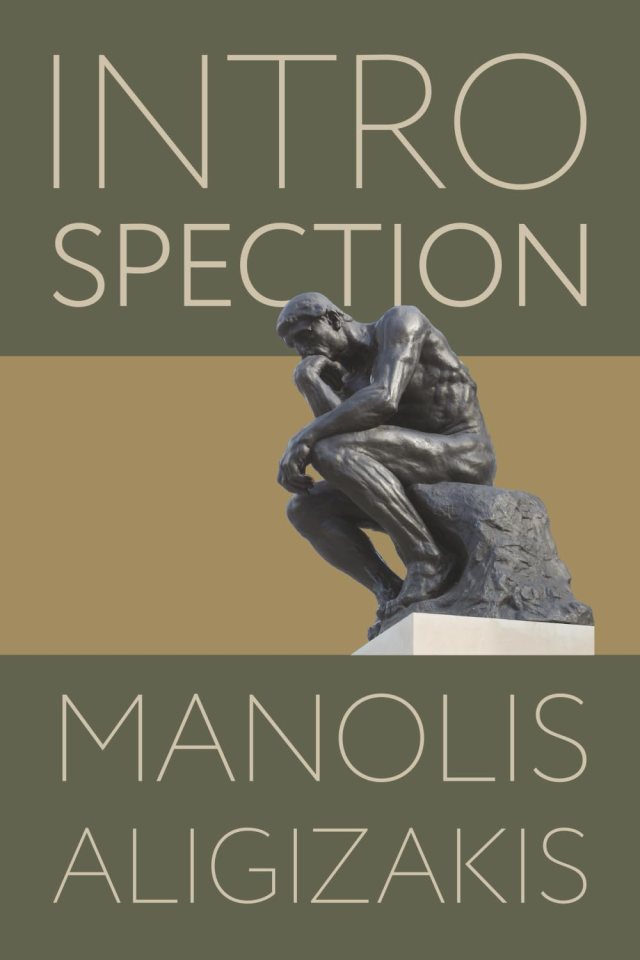
Introspection

REVIEW

Poetry as a Return to Origins and a Form of Resistance

By Attila Balazs

…One of the volume’s significant achievements lies in its capacity to unite seemingly incompatible registers. Mythology, philosophy, eroticism, biography, personal history, and social criticism coexist in expansive, discursive poetry that at times approaches the prose poem. The language moves from solemnity to sarcasm, from prayer to invective, and from contemplation to revolt.

Images often accumulate with torrential force. The poet does not always seek classical clarity, but rather intensity. He constructs through associations, returns, repetitions, and contrasts. Light and darkness, flesh and pneuma, humility and pride, logic and madness, life and death define one another.

Madness occupies a privileged place within this poetic system. It may represent suffering and psychological rupture, but also freedom from the logic of a diseased world. The madman possesses the right to speak the truth that rational people avoid. The poet and the philosopher stand at the margins of society precisely because they see what others refuse to see.

From here arises the ambivalence of the title Introspection. The inward gaze does not lead to withdrawal or passivity. On the contrary, the inner depths become the place from which the confrontation with the world begins. The self descends into its own viscera, into memory, desire, and the abyss, only to return to the surface with images and truths it offers to others.

Introspection thus becomes a form of responsibility. To know oneself means to know one’s roots, wounds, desires, and contradictions. It also means understanding that individual experience is not isolated, but belongs to a shared history and a common humanity.

The poetry of Manolis Aligizakis is a poetry of deliberate excess. It does not fear great words: destiny, eternity, truth, freedom, immortality, beauty. In an age in which such notions are often viewed with suspicion, the poet recovers them and restores their gravity. He still believes in art’s capacity to change the human being, defend dignity, and save something from death.

At the centre of the volume lies a paradox: the human being is mortal, yet consciousness aspires to immortality; man is fragile, yet dreams of the Overman; he is alone, yet speaks in the name of all humanity. From this contradiction arises the energy of the poems.

Introspection may be read as a symbolic autobiography, a modern epic, a philosophical meditation, or a testimony to the condition of the creator. All these readings are possible because the volume refuses to remain within a single genre or a single era.

Aligizakis constructs his own mythology from fragments of the Greek world, family memory, the experience of exile, and the great questions of European philosophy. Within this mythology, the poet is simultaneously child, lover, fighter, recluse, prophet, and martyr.

At the end of the book, the feeling remains that poetry is his true homeland. It is the place where the past may be revived, where the dead may be summoned back, where love may suspend time, and where the human being may transcend his limits for a moment.

Through creation, the poet does not definitively defeat death, but he refuses to grant it the final word. His traces remain imprinted in language, like the footsteps of his ancestors in the native soil. And the journey from Alpha to Omega does not end, but is transformed into a new beginning.

This is perhaps the true meaning of introspection for Manolis Aligizakis: not an enclosure within the self, but a descent into the depths of being to discover a light that may be brought to the surface and shared with others. A fragile and dangerous light, capable of burning, but also of guiding. A light that bears the name of poetry.

https://draft2digital.com/book/4118210#print

https://www.amazon.com/dp/1926763777

Straits and Turns

Phaedra

…what beautiful mound hidden under that skimpy bathing suit she
wore, the Muse of my day with her flowing brunette hair, her balanced
curves, her excellent sized breasts, her exquisite buttocks which she
moved in an erotic way unparalleled to any I had ever seen and trust me
I’ve seen many, far too many to know the beauty from the average and
even more so from the unworthy of my glance and this ethereal beauty
walked as if floating over the smooth sand just as my dream of touching
those exquisite curves brought me to heavens. Indeed, the ancient
Muses were there interacting and playing with her, and I couldn’t see
any difference between today’s earthly Muse and the Ancient ones,
and here she was turned towards me when, suddenly, our glances met.
She sensed that, behind my sunglasses, my eyes were fixated on her
ethereal saunter, and she remained focused on me for more than ten
seconds: the first acknowledgement.
Yes, I was looking at her, and she knew it, and that was enough
for the game of love to be played when she went back to her chair and,
turning it to the sunshine, she lay her calligraphic body onto the multicoloured
towel and gazed at the open water of the quiet and serene
cove. I let myself travel along with her glance. I marvelled at the natural
beauty of the cove with lapping waves and its whooshing breeze,
while I didn’t hesitate to imagine this day’s wonder in the body of the
tourist. In her early thirties she represented the female queen of the
beach, yes, there were others too, some very pretty as well, yet this
one was the special one of who one with exquisite taste, like myself,
could easily get himself loose in the imaginary game two people play
when the chance arises and this were my thoughts when suddenly the
Ammoudara Aphrodite turned her body to her stomach letting the
bright sunshine play with her back, from the top of her head to the
very lustful buttocks and legs of hers, indeed it was that moment that
she stared towards where I was sitting and realizing I was still with her
she fixated her glance towards me. I raised my hand and lowered my
sunglasses a bit, and seeing her from the top of my glasses, I smiled
a full smile at her, to which, to my utter surprise, she also lowered
her sunglasses and stared at me from the top of hers.

https://draft2digital.com/book/4250839#print

https://www.amazon.com/dp/1926763866

Podcast Episode: Modern Greek Poetry And Fiction

Pip: Manolis Aligizakis has assembled a catalog that moves from ancient Greek anguish to Canadian prairie winters to stock market schemes — which is either a literary festival or a very ambitious reading list, depending on your weekend.

Mara: vequinox brings all of it together on this site — translations of modern Greek poetry, original verse on love and desire, and a run of novels spanning hardship across continents and generations. Let's start with the poetry coming out of Greece.

Voices From Modern Greece

Pip: The modern Greek poets gathered here are working a particular problem — how do you hold loss, resistance, and beauty in the same breath without one canceling the others out.

Mara: The Yannis Ritsos volume sets the tone early. The poem "The Inexpressible" builds toward this image: "the blind musician, tired, goes back up. He puts his violin case on the chair. He opens it; two of the three glasses are in it. They are shining and whole."

Pip: So the broken things you carried out in guilt come back intact — the poem turns on that reversal, the indestructibility of what you thought you'd lost for good.

Mara: Constantine Cavafy's "Che Fece … Il Gran Rifiuto" works a related tension — the great No that is right and still burdens its speaker for life. Nikos Engonopoulos in "Goalpost" pushes into civic dread, asking whether the Sunday bells will be followed by hymns or machine guns.

Pip: Engonopoulos lands the ambiguity without resolving it, which is its own kind of answer.

Mara: Tasos Livaditis in "Simple Talk" insists on plainness as survival — speaking, loving, dying "in a simple way." George Seferis in "The Shape of Fate" asks who orders destruction from behind, and Titos Patrikios watches a man of creative mind reduced to counting whether his wages last the month.

Mara: Antony Fostieris names "certain pain" that strikes the empty heart beyond all desire. The Neo-Hellene anthology and the Troglodytes collection round out the range, from birch-forest dawn to an invocation of the Goddess to purge the ego entirely.

Pip: Ten poets, one through-line: the thing that survives is rarely the thing you expected to keep.

Mara: The love poems take that survivorship somewhere more intimate — let's move there now.

Love At Both Edges

Pip: The love and desire poems here are not soft — they treat longing as a force with weight and consequence, something closer to weather than to sentiment.

Mara: "The Incidentals" opens the territory directly: "the seething angst of lust demands her body's contours and dark caves on the altar of Aphrodite deserving unemotional dedication, like any archon sitting up high, like any God jealous or self-absorbed and relaxed."

Pip: Desire framed as liturgy — the body as offering, the worshipper as functionary. That's a cold altar.

Mara: "Hear Me Out" pulls in the opposite direction emotionally but lands in the same isolation: two people on parallel paths going opposite directions, past the point where they first met, with only the roundness of the earth as any possible reunion.

Mara: "Wheat Ears" compresses the whole arc into image — "two bodies defining the shape of a monad," synthesis as astronomical and emotional at once. "Rendition" closes it with a line that strips possession entirely: "Of all you have amassed, none is yours."

Pip: Love, desire, and ultimately the inventory comes up empty. The novels take that emptiness and put it in a house with bad insulation — let's go there.

Novels Of Endurance And Reckoning

Pip: The fiction here keeps returning to people held in place by circumstance — weather, pregnancy, poverty, complicity — and asking what they do with the time they cannot escape.

Mara: "Fury of the Wind" makes that literal. Sarah, isolated on a prairie homestead through a brutal winter, moves house plants to the kitchen table each night to keep them from freezing, writes letters that take weeks to arrive, and waits. The passage reads: "she missed the companionship of others, especially Penny. What would she give to be able to sit down to a cup of tea in Penny's cheerful kitchen?"

Pip: A cup of tea as the full measure of what isolation costs. That's a precise kind of grief.

Mara: "The Unquiet Land" puts a different kind of waiting at its center — Mother Ross, who knows Caitlin is pregnant before the wedding, removes her own mother's ring from her finger and gives it to Michael for the ceremony. She hears Caitlin sobbing upstairs and swallows her own agony whole.

Pip: Respectability as ransom, as Mother Ross calls it — and she's already paid her installment.

Mara: "Water in the Wilderness" moves the tension into a seedy hotel corridor, Tyne's knees going weak as she waits for a deteriorated Corky Conrad to open his door. "Prairie Roots" grounds everything in the farming community's frank hierarchy — survival first, schooling second, and a father who insisted otherwise.

Mara: "Jazz with Ella" sends Jennifer onto a plane into a storm, retreating into questions about why she was chosen over Paul for a Soviet Union language tour, and what it cost her in salary to say yes. "Introspection" and "Hours of the Stars" work in verse — the first building toward "the final, greatest monad," the second catching grandparents' long faces at a christening where the names chosen feel like paganism to them.

Pip: Naming a child wrong, apparently, is its own form of hardship.

Mara: "In the Quiet After Slaughter" and "Poodie James" both circle institutions — policing and journalism respectively — where the people inside them are just competent enough to see the problem and just constrained enough to struggle with what to do about it. And "Swamped" drops into the financial world, where Eteo watches Platinum stock move and starts making his list of who gets rewarded.

Pip: Every novel here is about someone watching a system from just inside or just outside it, trying to figure out the angle of least damage.

Mara: Which is, when you step back, exactly what the Greek poets were doing too — just with fewer stock tickers.


Pip: The thread running through all of it is endurance — the blind musician climbing back upstairs, Sarah moving the geraniums, Cavafy's speaker living with the right No.

Mara: And the question underneath: what holds its shape when everything else breaks. More of that in the next episode.