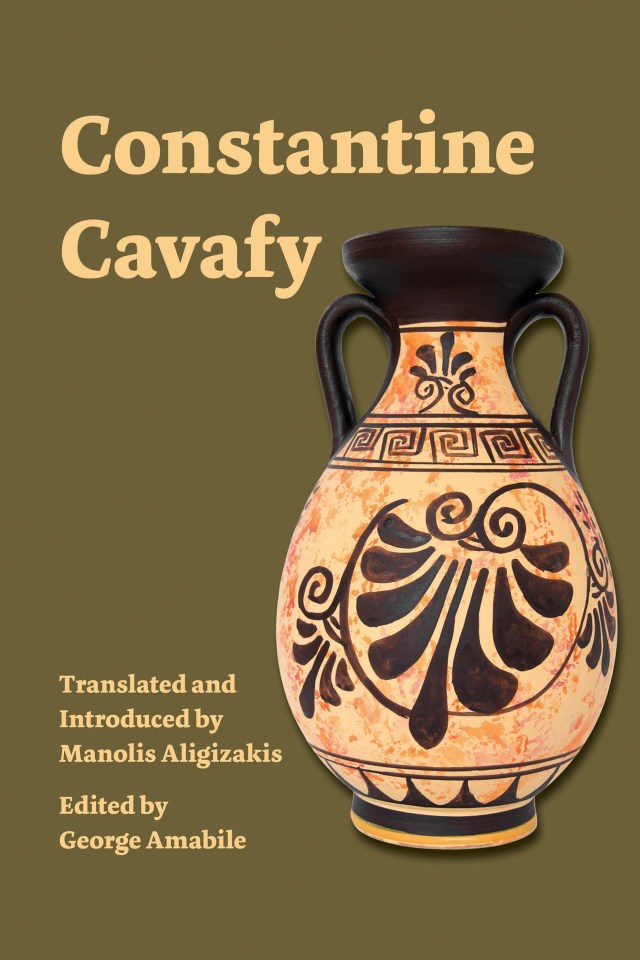
Orofernis He who is handsome, and his delicate face is smiling on the four-drachma coin, is Orofernis, son of Ariarathis. As a child, they ousted him from Cappadocia, out of his father’s magnificent palace and sent him to grow up in Ionia, to be forgotten among strangers. Oh, those beautiful Ionian nights when fearlessly, and clearly in a Hellenic way, he got to know the fullness of carnal pleasure. In his heart, always an Asian. But in his manners and in his speech, Greek, dressed up in turquoise, in a Greek chiton his body fragrant with jasmine, among the handsome Ionian youths, the most handsome, the most ideal. Later, when the Syrians entered Cappadocia, and made him a king, he dedicated himself and his monarchy to enjoy a new pleasure every day, to greedily gather gold and silver, and to delight, and to boast, watching his riches piling and shining. As for the care of the place, and governing, he had no idea what was happening around him. The Cappadocians quickly removed him. And he ended up in Syria, in the palace of Demetrios, where he lazed around partying. One day, though, his great idleness was interrupted by unusual thoughts. He remembered that from his mother, Antiochida and from the old Stratoniki, he was connected to the crown of Syria, almost a Seleucid. For a while, he got out of the lust and drunkenness, and ineptly, and half dazed he felt a longing to scheme something, to do something, to plan something, but he failed miserably and got worn out. His end was written somewhere, but got lost, or perhaps history passed it by, and rightfully so, not bothering to record such a paltry event. He who on the four-drachma coin left the charm of his beautiful youth, the light of his youthful beauty, an aesthetic memory of that Ionian boy, is Orofernis, son of Ariarathis.
…unimaginable—slipped like a cold draft between the ancient walls, disturbing the settled kingdom of silence scented with incense, centuries- old furniture, glue and leather-bound books, and reached us, first-year theology students, whom the authorities had ordered—for the first time in the country’s history—to report for shortened military service. Standing there, looking at one another in confusion, with bitterness thickening inside us, we felt that a new will, a new blind and impersonal force, was sliding into our lives. We packed. Then each of us set out for home by bus, train, whatever he could find, so that the next day he could report to the draft board corresponding to his place of residence. There we underwent the examinations. Naked, we had to stand before the officers seated at a long table and the military doctor, who declared every recruit fit for service. Afterwards, hundreds of young men lined up in the courtyard, waiting for their names to be called and for the slip of paper to be placed into their hands, before setting off toward the station with their wooden suitcases under the supervision of a corporal. I was sent to Sfântu Gheorghe. The barracks we entered resembled nothing I had known before. There was no sense of home within it, but neither was there outright cruelty—something even worse filled the place: walls built out of a peculiar indifference, a world in which suffering was not punishment, but a natural condition. The company assembled from Orthodox, Catholic and Protestant seminarians seemed like some grotesque metaphor, as though the many stories, ideas and hopes hidden behind different religions had all been stripped bare at once, only to freeze together into a single common experience: subjugation. Among the officers there were some who treated the whole thing as an amusing game; for others it seemed almost a ceremonial duty to show us—those who spoke about God, prayed to Him, followed His commandments—what it was like when not heaven commanded, but they did. And we, who until then had believed the suffering of the body to be only temporary, now discovered that the suffering of the soul was far slower, far more insidious and enduring.
Eteocles’s pocket is full of stones and on his back he carries a hunter’s bag with food for later. Anthony carries an empty hunter’s bag for what they might get today. In ten minutes they are away from the houses and under the protection of the olive trees. Here the morning sounds are different: muffled echoes from the rustle of the breeze in the tree branches and cries of the occasional startled bird as it flies from the trees or the osier bushes they pass here and there. The morning star is slowly fading and the first rays of sunlight are not far off now. Irma plunges into the thickets of osiers or bunches of cane fields trying to spring a rabbit from these property dividers that make a good hiding place for rabbits. Anthony loads his shotgun and nods to Eteocles to be vigilant and to watch the dog closely. They both know that, when Irma gets agitated and wags her tail, these are the signs that a rabbit is close. Eteocles stops and Anthony moves forward ten steps, enough to give him the openness of the field in case he has to shoot. A few minutes later Irma begins wagging her tail excitedly. Anthony encourages her with a familiar call, “Eheheheheh…Irma…” and the eager dog intensifies her search around an osier bush when, suddenly, a rabbit is spooked and dashes out of the bush to Anthony’s left. He follows the animal for a second or two with the barrel of the gun and then fires. The rabbit seems to jump in the air before falling on the ground dead. A delighted Irma runs and grabs the animal in her jaws, then brings it back to her master and proudly stands in front of him with the limp body in her teeth. Anthony takes the rabbit out of the dog’s mouth and weighs it in his hand. It’s still small, a yearling, but a good start to the day nevertheless. They already have their first catch and it isn’t even full daylight yet. Excited with this early success, they carry on walking among the olive trees. the light rustle of the leaves and the chirping of the awakening birds create a natural symphony conducted by an invisible maestro. Eteocles tunes his ears to the avian arias, eager to identify one close enough to try a shot.
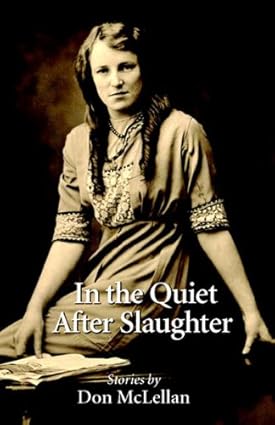
– Ed wins again, someone hissed, he dies. – Ladies and gentlemen, O’Donnell began, reaching inside the oil can . . . Members crossed fingers and nibbled hangnails. They squeezed crosses, mouthed prayers, stroked lucky charms. – The winner of the Spring Festival draw this year is . . . My friend says it was so quiet inside Ed’s garage that night you could hear air escaping a radial. For the winner of the Dodge Car Club draw the experience was everything the previous attendees had said it would be. Five leggy beauties piled into the vehicle for the languorous cruise along the parade route. Miss Brake & Muffler was instantly besotted with the club’s appreciative representative. Later that same evening, the smoke from the barbecue pits dissipating, the last notes from the bandstand fading, the couple took a spin up Little Mountain. There, under a draping laurel vine, the beauty queen shared with the lucky draw winner the qualities that had earned her that esteemed title. Alas, it was the club’s final involvement with the festival. Ed’s garage, encouraged by the cumulative efforts of termites, flopped over on its side one gusty afternoon. Adulthood beckoning, the membership soon disbanded. Because he didn’t know what else to do, Ed applied to the military. Because its brass couldn’t convince anyone else to sign up, he was accepted. As for the Dodge, the central character in this story, it vanished as mysteriously as it had appeared. I didn’t see much of O’Donnell afterwards. Sgt. McManus retired to a place not unlike the lake of his imaginings. On torpid summer afternoons, his rowboat drifting in the afternoon breeze, he often wondered about that car and the ruffians who deified it. McManus went on to an old folks’ home and then a grave without learning more. Years later a police museum was built at the rear of the station house. A call went out for exhibits. McManus’s widow was invited to submit items of interest. She donated her late husband’s many citations, his oft-used hickory stick and, because he always wrote everything down at the end of each shift, his logbooks. They hadn’t been opened in decades.
Albert Einstein may be the most recognizable of the great men associated with this level of scientific achievement. Every school child can quote the famed formula E=mc2 but many are not aware that the 1921 Nobel Prize for Physics was awarded to Einstein for his work on photo electric effect. The Awards Council deemed his Theory of Relativity “too controversial.” To compound the matter, movies and the entertainment world of the day parodied this brand of science as comic caricatures and undoubtedly evil geniuses. Like Einstein, they often had halos of wild hair and spoke with foreign accents. Since those early days, quantum mechanics has infiltrated other scientific disciplines such as chemistry, electronics, and information science. Theories have been revised, quantified and reformulated, so unless you have a passion for the journey, it is difficult to keep up. Even the language tends to mislead us into thinking this is so vast as to be unimaginable. You might note how the public attitude towards quantum mechanics has been skewed. Take the phrase quantum leap; in common usage this refers to a very large jump between things. In fact, the actual meaning of quantum leap is a shift from the tiniest thing to the very next tiniest thing—in other words, it is the tiniest leap that is possible in reality. The absolute opposite of popular understanding. All quantum means is the specification of a quantity, whether it deals with energy or physical phenomena. Another anomaly that always makes me laugh is the idea that all this started with a Big Bang. What a strange name to give to the origin of our world. We conveniently forget that there can be no sound without atmosphere. Therefore, to be accurate, no atmosphere—no bang. Logically, it must have started with a ‘Big Nothing.’ The problem is that the so-called beginning wasn’t even the beginning, because gravity already existed. It is far less spectacular in these terms—an example of how words are corrupted in use. ~~ In 1922, the year following Einstein’s award, Niels Bohr received the Nobel Prize for Physics for his work on the structure of atoms. There was collegial disagreement between the two scientists…
Pip: Manolis Aligizakis's site this week is running at full capacity — Greek myth, prairie crows, frozen train bells, and at least one dolphin swimming through time.
Mara: vequinox has been publishing across a wide range, and today we're moving through modern Greek poetry and translation, prose excerpts from fiction and memoir, and writing that puts landscape and labor front and center.
Pip: Let's start with the poetry.
Greek Voices, Ancient Echoes
Mara: The question running through this cluster of posts is what Greek poetry — ancient myth, modern grief, translated voices — actually does to a reader when it lands in English.
Pip: The post on Vernal Equinox sets the stakes quietly. The speaker imagines a reunion at a plaza statue, and the whole poem turns on readiness: "holding a book in my left hand and a carnation in the other just in case you come looking to stir my emotions just in case you come yearning for kisses like that cold October morning we separated."
Mara: So the upshot is that the poem holds two timelines at once — the separation and the imagined return — and the carnation is both hopeful and defensive. That tension is the whole poem.
Pip: The Cloe and Alexandra post does something similar with closure. The speaker locks up the poems, demands back a kiss key, notes the museum is closed on Fridays — and a dolphin earring, hung on the ear eons ago, drowns in tears never shed. Grief rendered as bureaucratic inventory.
Mara: The Tasos Livaditis translation frames mortality differently. The prose poem called Daily Use ends: "I opened the door and followed my path. And at night, at dinner, in horror, I listened as they narrated their stories, which, in a way, silenced the dark, remote outside — there, where we had lived."
Pip: Livaditis makes the ordinary genuinely unsettling. The host hides, the doorbell rings, and survival looks a lot like just keeping your balance against the table.
Mara: Yannis Ritsos, in the Volume V post, works the same territory through objects — an ashtray, a hanger, cologne in a barber shop — and a woman who scratches a mandarin and then simply vanishes. Memory fails to anchor things to places.
Pip: And then the Entropy post asks what to do with Odysseus now — "conscious of a tribe that commits suicide as it stands and listens to the echo of oars on the horizon." Which is a question that does not have a comfortable answer.
Mara: Titos Patrikios, in the Crossroads post, puts the same fracture into a friendship: paths that once ran together now "rise like wild horses," and the speaker grieves a common tongue lost forever. The Hours of the Stars post goes the other direction — sensory, almost ecstatic, nymphs singing by water springs, the Zodiac aroused, Hypnos laid to sleep in open palms.
Pip: Constantine Cavafy's post gives us a king declaring Alexandria the center of the Panhellenic world in every word and every art — confident, a little absurd, entirely convincing. Nostos and Algos asks why the gardenia sighed and the clock went silent, and gets no answer, which is the answer.
Mara: Antony Fostieris frames emotion as infrastructure — "the wire that reaches the heart of the void" — and armies moving through heavenly spaces. Nikos Engonopoulos assembles Ottoman benefactors, Italian collaborators, sixteenth-century French poets, and the monk who discovered gunpowder into one gloriously unruly stanza. Medusa drops the mythological register entirely for a citizen on a couch, beer belly out, fingers on an Enter button, boom.
Pip: And the POETS Day post on Oscar Wilde rounds out the week's range — from ancient Ithaca to Victorian wit in one scroll.
Mara: What holds all of it together is translation as an act of preservation — and the prose excerpts this week make a similar argument about memory and form.
Prose, Memory, And The Self On The Page
Pip: This segment is about what prose does when it gets personal — memoir shading into fiction, characters discovering themselves through other people, and the question of whether a self can be written into existence.
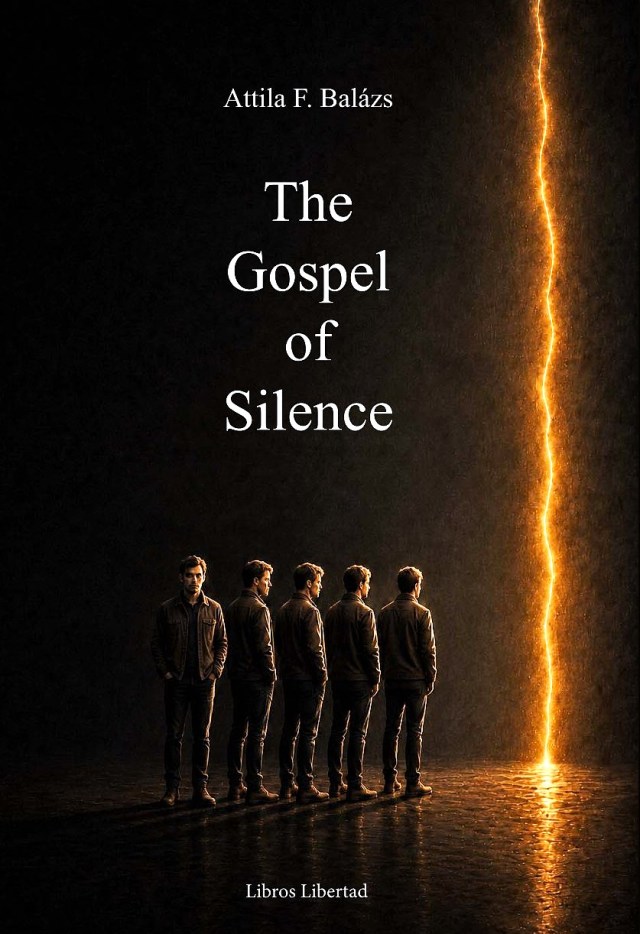
Mara: The Gospel of Silence puts it directly. The narrator, finding his footing in a dormitory school, writes to survive: "I tried fitting words together so they might express me, preserve me. My young literature teacher read and evaluated my writings in her apartment; the situation was at once embarrassing and liberating. It was as though the boundaries between text and life had blurred."
Pip: So literature stops being curriculum and becomes something you live inside. That's the real claim of the excerpt — not that writing is therapeutic, but that it's constitutive.
Mara: In Turbulent Times works the same boundary between role and person, but through attraction. Nora and Ian circle each other across a bar counter, and a colleague delivers the verdict plainly: "Heart, soul, and body, she's all yours." Ian catches the words "some time again" and holds them like something precious.
Pip: Redemption follows Hermes through immigrant life in Canada, where the local warmth surprises him — people talk to you on buses without caring who you are or what you're wearing, and he writes home with such enthusiasm he asks Magda whether she could see herself living there with him.
Mara: Blood, Feathers and Holy Men takes the widest geographic and cultural scope — Norse settlers, Mandan storytelling, a winter cave, a monk who hates carved figures and endures the cold only under protest. The community holds together through craft and story rather than doctrine.
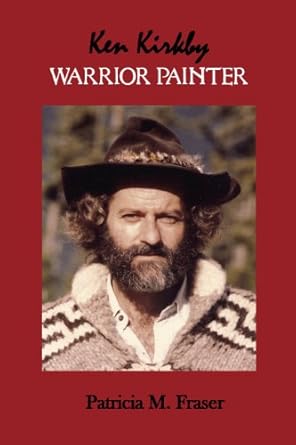
Pip: Ken Kirkby, Warrior Painter offers a different kind of self-construction — the artist deploying a Rain Man ruse to deflect unwanted attention, then losing his cover, and concluding that what's missing from most self-assessment is a sense of humor.
Mara: And the Essay on the Structure of the Human Imaginative makes the philosophical case underneath all of it: the human mind creates ex nihilo, just as God did, and the new worlds built by science and technology carry their own kind of truth — though whether that truth can replace ontological truth remains, as the excerpt puts it, "highly debatable."
Pip: From the self preserved in a school dormitory to the world created from nothing — the scale shifts, but the argument stays the same. Which is also, in a way, what the landscape writing is doing.
Work, Ground, And What Stays
Pip: This segment is about labor in physical places — what bodies do in cold yards and prairie woodlots, and what that work leaves behind.
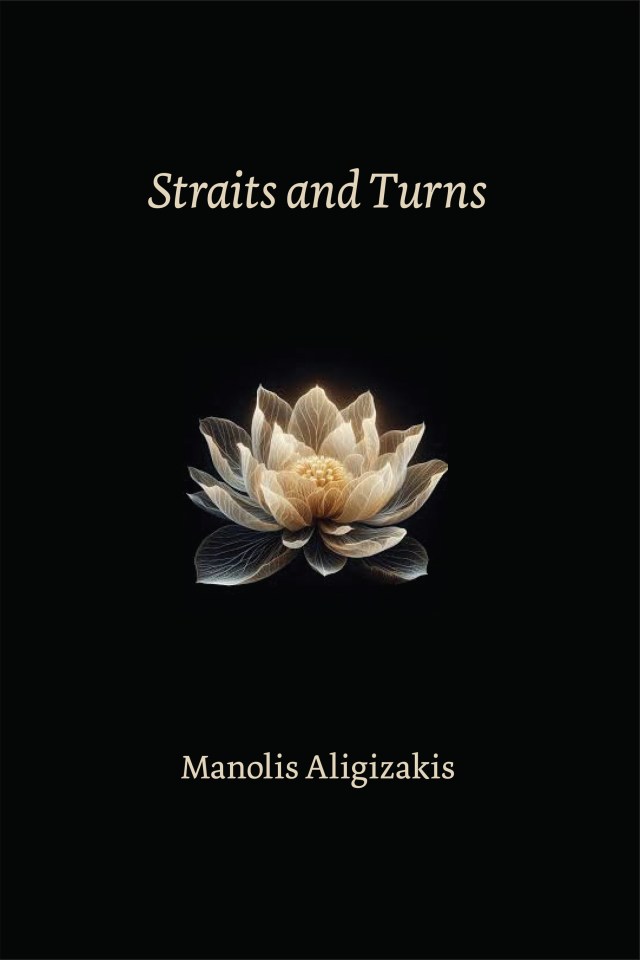
Mara: Straits and Turns anchors the segment in a rail yard on a freezing night. The bell won't sound because the air pipe has frozen, and the crew works through it: "Darkness had covered the yard like a shroud, and poetic images came into Mike's mind, which he promised himself that he'd write some time later."
Pip: He files the poetry away for later and keeps washing the engines. That's the whole economy of the scene — work first, meaning later, maybe.
Mara: Prairie Roots puts the same energy into springtime crow-nest raiding on a farm — organized, purposeful, and genuinely joyful. The excerpt notes that low wet spots meant rubber boots, and stopping to hunt tadpoles, and "all these things added to the joy of being young and alive."
Pip: Ugga compresses the same ground into verse: "someone squares three stones, two down, one up, to steady it" — and inside that act, the first Mason is born, the first window to the future.
Mara: Twelve Narratives of the Gypsy frames the craftsman as someone who cannot help making the wrong thing beautifully — crowns for palaces that no longer exist, always missing a name. And The Long Road follows a worm across brown leaves, brainless yet wise enough to crawl on his skin and declare the rules of life.
Pip: From frozen bell to fat worm — the ground keeps producing its own argument.
Mara: The thread across all of it is preservation — words that keep a self intact, translations that carry a voice across languages, labor that leaves something behind even when the bell won't ring.
Pip: Next time, we'll see what else the ground turns up.
…and Mike ran to change two switches and guide the engines to the appropriate spot. The other two, Giovanni and Johnny, went to the area of the fuel pumps and the pit, where they checked the underbelly of the engines while Mike filled the tanks with fuel. Scotty checked all levers and pressures as the others got busy doing their jobs. Mile noticed that a light snow started falling and a light breeze perked up, spreading a chill in the air. The bodies felt the cold, and the exposure to the frost was getting into them. Darkness had covered the yard like a shroud, and poetic images came into Mike’s mind, which he promised himself that he’d write some time later. Giovanni and Johnny finished their inspection, and after Mike finished his job, the engines were driven back outside the old shack for the rest of the work. Mike started washing the outside of the engines, and the mechanic and his helper did their part of the maintenance. All men worked for an hour and a half until the engines were ready to be taken away. They all had an hour to relax and wait for the new crew. They sat inside the shack when, from inside the cabin, Scotty yelled, “The darn bell isn’t working.” Johnny, with his cigarette hanging off his mouth, climbed up to the top of the engine to check the bell. Surely nothing looked different than any other time, yet the bell was silent when Scotty turned the proper switch on. The bell was needed each time the engines came to a station and was part of the general function. However, tonight, the chill in the air had frozen the air in the air pipe, which surely couldn’t activate the bell. Giovanni also climbed up, and both men struck the air pipe with their hammers, hoping that they would help the air flow, but to no avail. “The air pipe is frozen,” Giovanni diagnosed, and the boss said, “Why don’t you try to warm it up with a couple of flares…” Surely Mike ran to the shop and brought a bag with half a dozen flares. In the meantime, Giovanni and Johnny climbed down and chatted with Scotty inside the cabin.
…the pharmacist — to her name-day celebration, and alongside the many exquisite dishes she played the piano beautifully. She also took in her two sisters, who passed the time with card games and reading. I found the endless solitaire and other card games played for hours beside tables laden with pastries and tea — in winter in the parlor, in summer on the terrace — unbearably boring. Between the identical walls of the dormitory rooms I learned to pay attention to others and to myself, to write amid silence and noise alike. I tried fitting words together so they might express me, preserve me. My young literature teacher read and evaluated my writings in her apartment; the situation was at once embarrassing and liberating. It was as though the boundaries between text and life had blurred. That was the first time I understood literature was not merely abstract curriculum but could become an intimate bodily experience as well. I founded a literary circle attended not only by students but by teachers too. We did not merely dissect our own writings; we immersed ourselves in literary history and theory, argued, doubted, reread everything that until then had seemed certain. Meanwhile I danced in a folk-dance ensemble wearing traditional costume, and played bass guitar in a successful pop band where rhythm held us together even when direction often remained uncertain. And like local stars entertaining the student audience, we enjoyed the special attention of girls, which manifested itself sometimes in shy smiles, sometimes in stolen glances, sometimes in laughter too loud to be natural, and although we accepted this innocent admiration with confident ease, in truth all of us longed for the same thing: that one day someone might notice not merely the role in us, but the human being as well. Even then the prankster in me resurfaced. Back then there were no text messages, no instant communication; communication possessed its own slow, paper-scented magic. At the Ditrău grammar school — I do not know whether such a thing existed elsewhere — there operated a peculiar institution called Flash Mail.
The car, a 1953 Cadillac convertible, stood in front of the Tournquists’ house. Red and shiny, it had gleaming white wall tires. Tyne had not seen it there on any of her previous visits. As Cam drew his Buick alongside, she said, “Your parents must have visitors.” “I don’t think so, honey. There’s no car here except what belongs to the family.” “Oh, did they get a new ….” She stopped, realization dawning. “Oh no, Cam, it can’t be … not mine.” Stunned, she remained seated until he came around to open her door. “I’ll let them tell you.” Cam helped her out, and led her up the front steps. At the top, she put her hand on the wrought iron rail and turned to look back. “Oh, my goodness,” she murmured. The car was indeed hers, Arthur Tournquist informed her a few minutes later. “But, I can’t let you … really, it’s too much ….” “Tyne, will you please stop mumbling and accept our gift graciously?” Arthur smiled at her, but Tyne sensed his impatience. What did one do in a situation like this? She didn’t want to refuse a gift. On the other hand, this gift was much too extravagant, the most she had hoped for being a second-hand older model something. She had no idea what she had expected, because she knew little about cars. But this … even if she was to be their daughter-in-law, she could not accept a gift like this. And that’s just the point, she thought. If Cam and I were already married, it might be a different matter. They could have waited … they should have waited. She thought about Moe and the humble little television set from her future in-laws. She would give anything to be able to trade places with Moe right now, or at least be able to trade gifts. Since that was impossible, she craved the next best thing – to call Aunt Millie and ask her advice.
Pip: Manolis Aligizakis has assembled a site where Greek modernism, prairie crime fiction, and erotic lyric poetry share the same address — which is either an act of radical curation or a very ambitious filing system.
Mara: vequinox is behind all of it — translations, original poems, fiction excerpts, and critical reviews — and today we're moving through Greek poetry and myth, literary fiction and crime, and the territory of love, loss, and desire. Let's start with the poetry.
Greek Poetry, Myth, and the Weight of Small Images
Pip: The question this cluster of work keeps pressing is what a short poem can actually hold — whether compression is a limitation or its own kind of argument.
Mara: The AI review of Yannis Ritsos, Poems, Volume I, sets this up directly. Looking at the poem "Doxology," it finds that "the compactness prevents the relation from settling into a straightforward moral. Praise may suggest endurance, dependence, helplessness, or an affirmation made despite injury."
Pip: So the short poem isn't a reduced version of something larger — it's a form that keeps meaning genuinely open rather than resolving it into comfort.
Mara: That's exactly the review's claim. The man resembling a dusty, leafless tree, the sun that has burned him remaining beyond burning — the review argues the restraint lets the asymmetry between human vulnerability and solar power stay visible rather than collapse into consolation. "Memory" and "Winter is Approaching" work the same way, using domestic objects — a father's silence, a repurposed hat, a stored collar — to carry psychological weight without fixing their meaning.
Pip: Objects that survive their original use and acquire something stranger. That's also what Yannis Ritsos, Poems, Volume VI does with "Transmutation" — chairs rearranged after a funeral, a lit match that suddenly reflects back at you.
Mara: The Katerina Anghelaki Rooke selection gives Penelope a voice that does something similar — holding absence as a discipline. The Kariotakis-Polydouri tragic love story frames escape as transformation into "golden dust in the air." Cavafy's "Ithaca" makes the journey itself the point, not the destination.
Pip: And George Seferis folds political urgency right into elegy — "Sensual Elpinor" cuts between a grieving woman and a radio bulletin about war, with cyclamens and pine needles running through both.
Mara: Miltos Sachtouris in the Collected Poems takes that further — beauty sprinkled over ugliness, a voice stolen, a severed head floating downstream with closed eyelids. Nikos Engonopoulos frames the poet-figure Belisarius as someone called upon in crisis and then forgotten. Nostos and Algos, Introspection, Second Advent of Zeus, Entropy, and Ugga all extend this — myth as a structure for thinking about origin, exile, and what gets inherited.
Pip: And then An Essay on the Structure of the Human Imaginative steps back to ask what the faculty behind all this image-making actually is — Aristotle couldn't define it, Kant got close but missed it.
Mara: The Nuances review ties it together: the collection's most persuasive poems are those where "a particular object or scene" carries the argument — a doll with a missing arm, a rusted bicycle, a coffee cup. The Qliphoth takes a different angle, using letters and occult ritual to approach the same threshold between perception and the inexplicable.
Pip: From poems about what objects remember, let's move to fiction about what people do when their world falls apart.
Literary Fiction and the Pressure of Ordinary Lives
Pip: The fiction here keeps returning to a specific kind of crisis — the moment when an ordered life suddenly has no floor under it.
Mara: Jazz with Ella sets up a different register first: a group of travelers on a cultural tour, conversation about Cold War exchanges, Russian language lessons, the texture of being young and curious in a politically charged world. One character explains, "Learning by talking is the best way. That's why I didn't pack my Ozhegov."
Pip: Easy and social on the surface — but the other fiction excerpts don't stay there.
Mara: Straits and Turns goes somewhere much darker. A man's marriage ends in a single morning, and the excerpt traces exactly how a structured identity — a CIA agent's code, his protocol — becomes the mechanism of his destruction rather than his rescue. Poodie James works at a quieter pitch: a police lieutenant weighing whether to run for mayor after a death reshapes a small town's politics. Fury of the Wind grounds itself in the Canadian prairies, in schoolhouse registers and farming families and the slow inheritance of values across generations. The Unquiet Land puts economic pressure at the center — fishermen who can't sell their catch, fishmongers charging prices the catch can't justify. Ken Kirkby, Warrior Painter brings in a nonfiction register: a painter who discovers his missing work displayed in a stranger's home, sold by a gallery that never paid him.
Pip: Which is, in its way, the same structural collapse — an arrangement that was supposed to hold, and didn't. Now for the work that lives closest to the body.
Love, Loss, and What the Body Carries Forward
Mara: This segment's question is what desire and loss actually do to a person — whether they diminish or, strangely, clarify.
Pip: Straits and Turns makes the stakes immediate. The collapse of a marriage doesn't just unsettle a man — it dismantles the entire system of meaning he'd built around himself. Loss here isn't elegiac; it's structural failure.
Mara: Katerina Anghelaki Rooke's Penelope offers something harder to categorize. She says of forgetting: "my only reward is that I finally understand what's human presence what's absence or how the ego functions in such desolation." That's not consolation — it's knowledge purchased at cost.
Pip: And then Triptych and Second Advent of Zeus come at desire from the body outward — touch and arousal as their own form of location, a way of knowing where you are.
Mara: Kariotakis-Polydouri frames escape from grief as dissolution — becoming golden dust, entering an unfamiliar land where darkness doesn't exist. Miltos Sachtouris in the Collected Poems shows the cost of that dissolution: beauty sprinkled over ugliness, a voice stolen, silence where song used to be. George Seferis holds the elegiac and the erotic together — a woman who has lost her light, the blind man still singing.
Pip: What stays with me is how consistently the site treats compression as a form of honesty — the short poem, the telling object, the moment of collapse that says more than the explanation would.
Mara: And how the same pressure shows up across every register — lyric, fiction, elegy. Next time, we'll see what else is accumulating on the site.