Podcast Episode: Poetry, Place, And Human Frailty

Pip: Manolis Aligizakis runs a site where ancient Greek verse, Irish family secrets, and Soviet farm life share the same address — and somehow that feels completely reasonable.

Mara: vequinox has been busy. Today we're moving through Greek poetry and translation, crime and family fiction, art and memory, and a jazz-inflected novel set between two very different worlds.

Pip: Let's start with the poetry.

Greek Verse Across Centuries

Mara: The posts here are doing something specific: bringing Greek voices — classical, modern, and original — into English, and asking what survives the crossing.

Pip: The poem "Troglodytes" makes the stakes plain from the first image: "the modern shaman's imposing figure with the glittering tiara always commands him to kneel, his slavery is a smooth curse he cannot escape."

Mara: So the troglodyte is not a relic — he is anyone still kneeling before spectacle dressed as authority. The poem argues that the costume changes; the command does not.

Mara: The translations of Yannis Ritsos, Nikos Engonopoulos, and Tasos Livaditis extend that argument across different registers — Ritsos lyrical and rural, Engonopoulos urban and restless, Livaditis brutal and spare. The anthology "Neo-Hellene Poets" and the Kariotakis-Polydouri volume show how wide that tradition runs.

Pip: "Entropy" and "Chthonian Bodies" are original work sitting alongside those translations — which is either an act of confidence or an open invitation to compare notes.

Mara: "Red in Black" and "Medusa" round out the range, moving from quiet metro-car intimacy to a poem that weaves erotic longing and domestic interruption into the same breath. The translation project and the original work are in genuine conversation here.

Crime, Family, and the Weight of Consequence

Mara: The fiction collected here keeps returning to one question: what do people do when a secret arrives and demands an answer right now?

Pip: "Straits and Turns" opens with George walking alone through the Bulgarian mountains toward something — the excerpt is all forward motion, all deliberate distance covered, one careful camp made in the dark.

Mara: The prose earns its patience. "He put his backpack against the boulder and gathered a bunch of leaves from a tree, which he used to make a makeshift bed onto which he laid his sleeping bag." Every detail is functional, which makes the isolation feel real rather than atmospheric.

Pip: That's a man who has thought through exactly how far he needs to get from wherever he started.

Mara: "In Turbulent Times" puts the secret right on the kitchen table — literally a birth certificate, no letter, just a name where it should not be. Caitlin's voice stays calm and controlled even as everything shifts: "May to February is nine months, Michael."

Pip: Calm is the most devastating register for that line.

Mara: "The Unquiet Land" works in a similar key — a witness who almost certainly knows who beat the priest, and decides, quietly, that he will not say so. Community loyalty and personal feeling outrun the facts.

Pip: "The Circle" pulls back to San Francisco, two old colleagues in a twenty-year-old Chevy Impala negotiating what retirement means when your whole identity is the job.

Mara: "Swamped" moves into financial territory — stock tips passed in hallways, lunch invitations with unstated agendas, the low hum of a world where every conversation is also a transaction.

Pip: "In the Quiet After Slaughter" is the sharpest tonal shift — a childhood narrated with the flat precision of someone who learned early to read a room and trust nothing.

Mara: "Water in the Wilderness" and "Prairie Roots" anchor the domestic end of the range — a girl who decides she does not deserve kindness, and a Saskatchewan winter where the horses were always fed before the family sat down. "Small Change" closes the loop with something warmer: a ukelele passed down through grief, summers on the farm, a family that keeps showing up.

Pip: The fiction here spans continents and decades, but the engine is always the same — someone knowing something they have to decide what to do with.

Mara: Which is also, in a different key, what the poems are about. Let's move to the work that holds art and memory together.

Cities, Canvas, and the Accountant's Ledger

Mara: This segment asks what art preserves — and what it cannot.

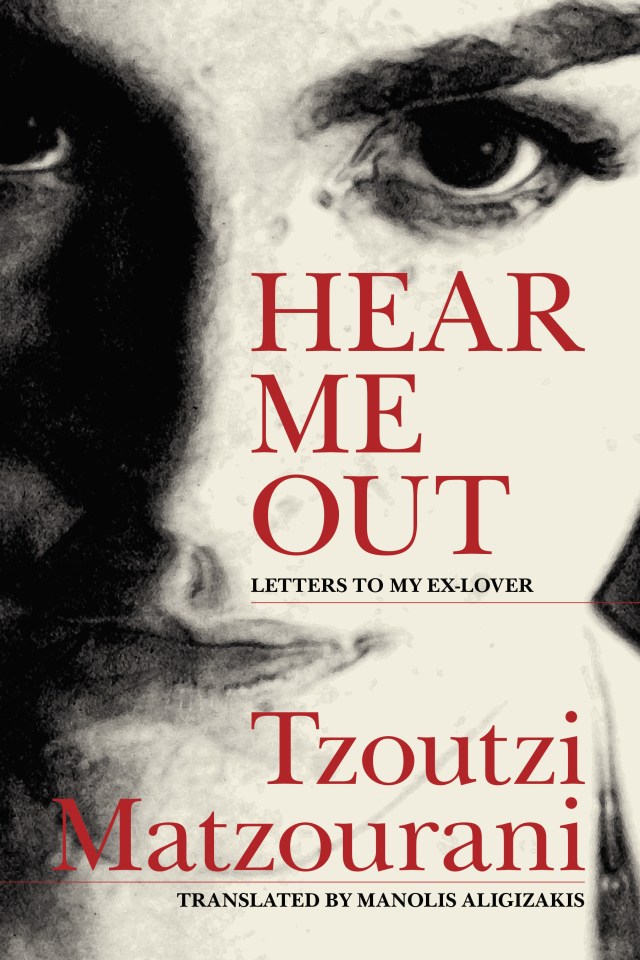
Pip: "Hear Me Out" builds its answer slowly: "All the cities are the same at dawn; they're all alike you told me once and I didn't believe you."

Mara: The poem earns that return. By the end the speaker has lived enough departures to know the other person was right, and the recognition lands as loss, not wisdom.

Pip: "Ken Kirkby, A Painter's Quest for Canada" takes the canvas into the tundra — literally, since Kirkby ends up pushing a boat through a freezing river for four days with no tent poles and mushroom soup.

Mara: "Blood, Feathers and Holy Men" and "The Incidentals" complete the picture — the first a healing ceremony where old grief and new arrivals find common ground, the second a poem about an accountant whose entire life was other people's numbers and whose funeral drew almost no one.

Pip: Art and memory, it turns out, are what fill the space the numbers leave behind.

Mara: Speaking of filling space — the last post is set to music.

Pavel, Vera, and the Long Way to a Passport

Mara: "Jazz with Ella" lands in Soviet agricultural life, which is not where the title points — but the novel earns the contrast.

Pip: Pavel is a man with plans for sunflower-field picnics and a growing competence with a broken-down motorcycle, living entirely outside the system that made him: "he lamented all the years spent in studying academic subjects without getting a good grounding in what every adolescent learned while growing up: working on the family car."

Mara: The upshot is a man rebuilding himself from practical knowledge up, while the larger problem — no papers, no passport, winter coming — waits just outside the frame.

Pip: Bureaucracy as dramatic tension. The oldest jazz structure there is.


Mara: From troglodytes kneeling before tiaras to Pavel fixing a motorcycle in the provinces — the through line is people navigating systems that were not built for them.

Pip: And finding, occasionally, a ukelele or a sunflower field or a line of poetry that makes it bearable. More from this site next time.

Hear Me Out

All Cities are the Same at Dawn
“All the cities are the same at dawn; they’re all alike” you told me once and I didn’t believe you.
When day break arrives to their beds they all sigh the same way. And the night lovers whisper things or embrace each other before they get up and at the first light walk away with heavy footsteps.
They wear clothes half undone some inn their underarm when they kiss a soft silent kiss not to awaken the one sleeping next door.
And the door closes behind them most carefully, silently.
The car is turned on, a sound that seems very loud in the quietness of the night and even the gas petal seems to be half asleep and heavy from being asleep or exhausted from making love all night.
And the home they return to is always empty and cold.
Only the blackbirds chirp in the garden.
Half of the sky is lit and the day commences when you enter the shower to let the water run over it and take away the breaths and sweat of the night.
All cities are the same you told me once and I didn’t believe you.
Because I saw you leaving and I still wanted you in my bed, to take you in my arms, to breathe your breath one more time and to go back to my dreams.
And you kissed me softly and closed the door behind you.
How long has since gone?
I don’t remember.
How many times I closed the door behind me after I kissed someone softly on the cheek and whispered good night?
How many empty streets have I driven to reach home?
You were so right!
All the cities of the world are alike at dawn…they all sigh, they toss and turn in bed, some empty and others full of the all night long lovemaking.
Each day break one door closes slowly and one other opens and welcomes the loneliness of the traveller.
Only blackbirds chirp in the garden always the same way like the day break.
People change.
Some leave others come. What difference does it make in which city you are?

https://draft2digital.com/book/3562946

https://www.amazon.com/dp/1926763807

Podcast Episode: Greek Poetry And Fiction

Pip: Manolis Aligizakis has been quietly building one of the more unusual literary archives on the internet — translations, original poetry, fiction spanning centuries and continents, all landing on the same site like it's nothing.

Mara: vequinox is behind all of it, and today we're covering the range: modern Greek poetry in translation, a wide stretch of literary fiction and drama, and poems that sit at the intersection of love and loss.

Pip: Let's start with the poetry.

Voices From Modern Greek Poetry

Mara: The question this cluster of posts raises is what modern Greek poetry is actually doing — what it reaches for, and what it refuses to let go of. The anchor here is Katerina Anghelaki Rooke's "Unexpected Development."

Pip: She sets it up plainly: "It was when words overflowed / images flew like wild birds / that refused to feed on words / even if they were hungry for them."

Mara: That tension — images that won't submit to language even when they need it — runs through the whole collection. Anghelaki Rooke is mapping a kind of loss that precedes grief.

Pip: Antony Fostieris takes a harder geometric line in his selected poems: a snake eating its tail, beginning collapsing into end, the body always absent. Tasos Livaditis, longlisted for the 2023 Griffin Poetry Prize, closes his poem "Coincidences" on the line "music in the beyond / that seeks what poetry silences on earth" — which is either profound or a very elegant shrug.

Mara: Nikos Engonopoulos writes about Georg Trakl — a poet who "never agreed with them" and whose only longing, once he understood what it meant to be alive, was to escape. Yannis Ritsos, the Neo-Hellene Poets anthology, Hours of the Stars, Orange, Ugga, and Troglodytes all appear here too, each finding a different pressure point between the lyric and the world pressing in on it.

Pip: Fiction carries some of that same weight — let's go there.

Literary Fiction And Drama Across Time And Place

Mara: What this range of fiction shares is an interest in pressure — the moment a situation tips, when a character can no longer hold the ordinary shape of their life. Straits and Turns is the anchor, and it earns it.

Pip: The excerpt follows a couple and their dog Elvis through a cancer diagnosis and a slow, careful goodbye. The prose doesn't reach for drama; it just watches. "Two days went by. The situation worsened. They called the vet, who suggested that perhaps the cancer metastasized from his bladder to his bones, as it was statistically the case in most of these dogs."

Mara: What that sentence does is hold clinical language right next to love, and the gap between them is where the whole excerpt lives. The decision not to pursue chemotherapy, the daily medication ritual, the final day when Elvis doesn't touch his food — it's a portrait of grief that arrives before the loss does.

Pip: Jazz with Ella moves in a completely different register — Cold War tension, a border crossing, a woman watching a man she's trying to protect navigate an interrogation line. The stakes are geopolitical, but the writing keeps its eye on the human pulse of the scene.

Mara: Fury of the Wind is quieter — a community fair, a husband and wife negotiating small social obligations, the ordinary friction of a marriage visible in a single exchange about who covers the preserves booth.

Pip: Redemption takes a young man named Hermes Dragakis back to his village with a diploma and a scholarship to Canada, and the scene where the mayor tries to understand what an economist actually does is somehow both funny and genuinely moving.

Mara: In Turbulent Times goes somewhere more intimate — an Irish drama of paternity, secrecy, and a woman who tells a man quietly, "You let me down, but I forgive you."

Pip: Wellspring of Love watches a woman named Tyne move through her sleeping children at night — each child rendered in a sentence, the accumulated tenderness of a parent who has already known loss. Blood, Feathers and Holy Men puts a monk named Rordan in early medieval Ireland, furious that the Church buries medical knowledge while people die of infected throats. He's not wrong, which makes it worse.

Mara: Arrows delivers its moment in a single blackout — a priest counting the dead, touching foreheads, finding one name missing. Savages and Beasts opens on a murder inside a residential institution and the slow, formal way the news spreads through the building. In the Quiet After Slaughter follows a bush pilot whose final chapter is written in retrospect, quietly. The Unquiet Land gives us Caitlin and Michael on a clifftop after something has broken, and Caitlin describing a dream of the sea gone still and black "the way the world will look when it's ended and we've all gone."

Pip: Poodie James puts a police chief in a room full of political pressure, defending a hobo from a sabotage charge with nothing but logic and a flat refusal to perform certainty he doesn't have. Twelve Narratives of the Gypsy and Marginal round out the theme — the first a lyric sequence of departure and transformation, the second a short, still poem about absence that ends on silence mimicking footsteps. And Ubermensch contributes a poem called "Funeral" — a poet buried while the hawk watches and the wine flows and someone begs for two bits at the edge of the scene.

Mara: The emotional through-line from fiction into poetry is loss — anticipated, survived, or simply witnessed. That's where the next segment lives.

Poems Of Love And Loss

Mara: The question here is what poetry does with grief that prose can't — how it compresses the experience until the image does the work the argument refuses to do. Yannis Ritsos anchors it.

Pip: The poem is called "The Dead House," and Ritsos doesn't soften it: "Soon the marbles sweated out blood again. The cleaners left too. They deserted us; so, we forgot about everything too: sweeping, mopping, dusting and the marble kept on sweating out more and more blood."

Mara: What that gets the reader is abandonment rendered as a physical law — the house bleeds no matter who tries to clean it, and eventually everyone stops trying, including the people who live there.

Pip: Antony Fostieris in his selected poems makes the same point through pure geometry — the circular trap where every beginning joins the end. Tasos Livaditis, the Griffin longlisted volume, closes on "music in the beyond / that seeks what poetry silences on earth." And Troglodytes frames the young poet standing against bigotry, recording grace — which is its own kind of elegy for what keeps getting buried.

Mara: Grief and witness, across every form the site carries.


Pip: What stays with me is how much of this — the poetry, the fiction, the elegies — is about things that refuse to be cleaned up. Blood in the marble. A dog that won't eat. A monk who can't make the Church listen.

Mara: Persistence against forgetting. That's the thread. More of it next time.

Podcast Episode: Modern Greek Poetry And Fiction

Pip: Manolis Aligizakis publishes the way some people breathe — steadily, in verse and prose, across centuries of Greek tradition and continents of lived experience, and apparently without pause.

Mara: That range is exactly what this episode covers. vequinox brings us poetry rooted in the Modern Greek tradition, fiction set in the rhythms of family and rural life, and prose that tracks what happens when people collide with systems, borders, and each other.

Pip: Let's start with the poetry.

Voices Out of the Greek Tradition

Mara: The Modern Greek poetry segment raises a real question: what does it mean to translate and present a tradition this deep — from ancient myth to twentieth-century masters — and keep it alive on the page?

Pip: The excerpt from Twelve Narratives of the Gypsy puts that question in mythic terms. The setup is a figure who outlasts every riddler sent to challenge her: "all the mouths which uttered the riddles were swallowed by the hungry Hades and she walked over their bodies."

Mara: So survival here is the answer to every riddle. The Sphinx-like figure doesn't solve the questions — she simply endures them, which is its own kind of mastery.

Pip: The Yannis Ritsos volumes — both Volume V and Volume VI — work in that same register of weight and endurance. Volume VI's "The Sick Man" watches darkness move toward naked figures and statues until it "lights the whole house" and transforms ordinary objects into something luminous. Volume V gives us a messenger announcing victory amid thousands of deaths, the king returning with "a wound between his eyes" through which death itself could see.

Mara: Introspection closes on a similar note of earned return — "from which I have come and to which I'll ultimately arrive at my destined hour." And the anthology Neo-Hellene Poets anchors that continuity in something smaller: a poplar tree that once answered laughter and now answers only tears.

Pip: Antony Fostieris offers the most compressed version of this whole project — a poem that defines a poem as simply "rhythmically contemplating emotion." Three words doing the work of a manifesto.

Mara: Opera Bufa, Nikos Engonopoulos, Orange, Entropy, Medusa, Yannis Ritsos Volume II, Tasos Livaditis, Cloe and Alexandra, Troglodytes, Wheat Ears — all of them circle the same territory: desire, mortality, the weight of history pressing into the present moment.

Pip: Which is also, it turns out, the territory of the fiction — just told in longer sentences.

Seasons, Soil, and the People Who Stay

Mara: The fiction gathered here under family and rural life isn't nostalgic so much as precise — these posts ask what it costs to belong somewhere, and what it feels like when belonging is about to change.

Pip: Still Waters sets that up in a single anxious domestic moment. Tyne has just accepted a marriage proposal, and the evening should be simple joy — but the excerpt catches her mid-hesitation: "I'm tired, that's all. Tomorrow, I'll be fine. Just let me go to bed now, and I'll be fresh as a daisy to take Cam to church tomorrow."

Mara: The gap between what she says and what she feels is where the whole novel lives. She watches her father take Cam's arm through the doorway and thinks "no more worries" — but the narration keeps undercutting her.

Pip: He Rode Tall trades domestic interiors for the arena. Joel and Tanya are in the finals, twenty horses, thousands watching, and the warm-up pen is almost meditative — he doesn't want nerves to make him overwork his horse before the performance even starts.

Mara: Swamped goes further back — two boys in a Cretan summer, watering tomato rows by hand, stealing a watermelon from a neighboring field, counting swims at the end of each day. Anthony selects the ripest melon by the sound it makes when tapped.

Pip: Prairie Roots does the same work in a Canadian winter register — stubble turned over, fences repaired, straw hauled to the barn, the first snow arriving before every chore is finished.

Mara: Jazz with Ella shifts the stakes entirely. The rural quiet is gone — the scene is an airport, a man named Volodya terrified at a security line, his companions forming a quiet circle around him. The question "what are they looking for" carries a completely different weight here than it does in a tomato field.

Pip: And then there's Wheat Ears, which compresses all of this into a short poem about a person who keeps urging change while never leaving the recliner.

Mara: The tension between staying and moving runs through every one of these — which is also what the next set of posts is made of.

When the System Pushes Back

Mara: The fiction in this segment puts characters directly against institutions, communities, and the small frictions that reveal larger fault lines — the question is how people hold themselves together when the pressure is social and the rules keep shifting.

Pip: In Turbulent Times sets that up through what isn't said. Caitlin learns that Connie has stayed behind at the cottage after Robert left, and Michael never mentioned it. The scene plays out in careful domestic choreography: "If Caitlin had had any suspicions about Michael and Connie Hanlon, remembering how Connie had come on to him in the square in Corrymore on Tuesday, she did not show them."

Mara: The restraint is the point. The whole excerpt is about watching and not speaking, suspecting and not asking — the farmhouse kitchen as a pressure vessel.

Pip: Small Change runs a different kind of social friction — street-level, adolescent, transactional. A kid who gets straight A's in a neighborhood of C-minuses rents out a Stilson wrench to Paulie, the local legend, for a buck an hour or any fraction thereof.

Mara: The negotiation is sharp and funny, but the stakes are real — belonging in that world means knowing how to do business without losing standing on either side.

Pip: Straits and Turns moves that immigrant-workplace dynamic into a Vancouver factory, where Mike writes a poem on folded toilet paper while waiting for Luigi to finish his shift tasks, and the Italian-Greek solidarity is summarized in a single phrase: "una fatcha una ratsa."

Mara: The Qliphoth takes the friction into something stranger — Lucas, trapped in what reads like a nightmare transit terminal, punches an iron pillar to test whether the world is real, and the guards and bystanders laugh in unison while a security conference crackles around him.

Pip: All four of these are about the same thing: what a person does when the system looks back and doesn't recognize them.


Mara: From mythic riddles to tomato fields to airport security lines — the thread connecting all of it is people trying to locate themselves inside something larger.

Pip: And the poetry keeps asking whether language is the map or the territory. Next time, we'll see where that question leads.

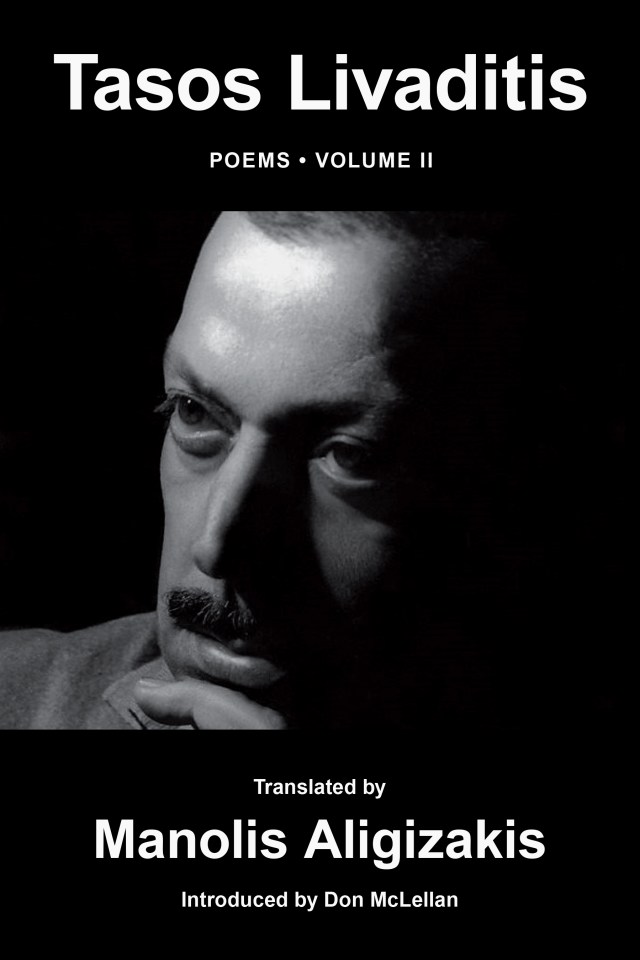
Tasos Livaditis – Poems, Volume II

Long-listed for the 2023 Griffin Poetry Awards

DEVIL WITH THE CANDLE STICK

“One day you will remember of me”, he said “but you won’t
be able to cry;”
what did he mean and what was the meaning of words?
Women stood at the crossroad, dark faced, holding the
half open pomegranate
like thousand faces of nothing. The prostitute, returning
home, went to the kitchen and warmed the food and I,
hell, failed between two evening songs.
When Rosa had a john she used to place a carton on
the corner so the memory of her father wouldn’t see her;
someone, with an axe, came out in the night and started
striking blindly.
The whole city was panicking, searches, interrogations,
occasionally someone would come, kneel before the icons
and confess to everything
since the beginning of the world — thus perhaps seeking
a purpose or two lines in the newspaper and a small
rose at the edge of the road;
the stupid child would go by and pick the rose, he’d look
at it and then as if
he understood something he’d leave it in its place and only
the gambler could guess that movement such as those that
save you.
Thus one by one they all got lost and I was the only survivor
playing, at the critical moment, with the fringes
of the tablecloth.
I truly wonder why all these since one can be lost with
a lot less things.
I remember one who’s hunger pushed him to desire a street
organ, which he sat down and ate, there, at the corner
only spitting out the crutch of the soldier, and the fat ugly
woman had revealed her big breasts over the balcony
“don’t feel sorry for me” she said “I’m very clever” and
she was staring at the end of the road;
then we sat on the grass of the dark cemetery and helped
the dead child.

https://draft2digital.com/book/4051627

https://www.amazon.com/dp/1926763564

Nikos Engonopoulos – Poems

Reality
The ship entered the αρεα of the thick fog. A bell
echoes desperately at prow: the route is full of
innumerable dangers now. On the bridge, however,
the sleepless and bewildered captain watches and
drives the ship safely. The captain … his eyes, his
glance. Yes, indeed, his glance is everything, like
now that his glance, straight, strong, mercilessly
pierces through the thick layers of grey pleats of fog
and inside the dark paths of the human psyche, into
the dark sanctuary of Fate, it calms the wildest and
roughest seas, it enters and stands like a guard into
the hovel of the poor fisherman, it saunters tenderly
around the anchors, the sleeping baby, the spread nets
and finally, it comes, settles and serenely rests, next
to the quiet light of the lamp. Certainly, the captain’s
profession isn’t captain. He has different choices,
different longings, and specialties. Different things
attract him and in different things he’s involved. Yet,
when the ship is in danger, they all run to him, who
although they don’t see him as a man, they allot to him
and he accepts the responsibility of many souls. He,
who has no joy but knows of it, who isn’t free, yet
yearns for freedom and struggles while he hopes.
Let it be known: if the Fates never visited his baby
cradle, Fates, Witches and pure Fairies would come
next to his deathbed. The figurehead of the ship
knows all this and loves him. She’s, his lover. This
wild and hot girl with her undone black hair, fiery
red lips and the light-blue belt goes and finds him
secretly every night and they make love ‘together’
and chit-chat erotically for hours. One moonlit night:
“Don’t forget me”, she says to him, “because I’ll die”
One day when he was in a thick forest, rain caught up
with him. He sheltered himself in the tree hollow and
waited. The rain intensified. Among all the rain he
noticed a few tree trunks burned by the fires of
wayfarers and many pinecones scattered around the soil.
Another time, a summer noon, he stood by a water well.
Further away was a tower. A girl came, like Rebeckah
to get some water. She puts the pitcher down, goes close
to him, uncovers her voluptuous breasts and says, “Don’t
touch them, they are roses and drop their petals; only
caress them” Then again, “No, do as you wish with them,
they are yours, my sweet man, I gift them to you.” This
woman, who he fell in love with passionately, one night as
the winds were blowing, he waited for her and he saw
her going down to the harbour. She ran and cried along
the deserted quay. She had tied her raincoat around her
waist with a leather strap and the strong wind sometimes
glued it on her body and other times it whipped her apron
wildly and took away along with her voice, her long
hair too.

https://draft2digital.com/book/3744799

https://www.amazon.com/dp/1926763734

Nikos Engonopoulos – Poems

Fellow Traveller in Melancholy
As she realized how much my tragic love for her overtook my heart, she invited me, among the ruins of the London Tower, for a cup of tea from the same hands, named by the killers of her lovers, depending on the season, sometimes “shovels”, other times “shiners”. She accompanied her offer with the only word she had kept inside her for years like something precious, she said, more than her life, like a secret gift of her breasts in the tempest of my lust. I raised my eyes and looked, as an unexpected shiver shook my body: she was naked before the year’s fountain, the fans of a nighty fire sprouted out of her belly and the wall was splattered with blood. I felt that the famous, “better tomorrow” had arrived, was a present reality. It was obvious that everything from the past was already erased, the nightmare of the tropics and the harbour had already vanished. I was a gigantic red eagle that saw, from a young age, the closing eyes of the opposite sun. She was the big, dark forest spread among the chandeliers, the chest and the big hallway mirror used for official palace events. Her thought was crown, her glance renaissance, her glance a beak. Her name was Rodamne. She had lived in faraway lands from where she had come to meet me. I told her I freaked out, thinking we hadn’t met earlier. How could she have, via the measure of the beautiful woman she was, replaced her eyes with two green Egyptian scarabs and she didn’t see me when I passed her? She had probably cut her long hair short so that the words that escaped from my mouth were one cathedral church built, for the only purpose of executing at the site and a specific moment, the unknown archbishop, and seller of small items, from an irregular Mexican squad. She didn’t talk, she didn’t stir, she only took in her embrace the flowers that decorated the room and scattered them in the fresh ravines, in orchards with the delayed hunter, at the foothills of the Memories Mountains. The candles burned joyously on the graceful bronze candelabras and the song she sang teary-eyed had the same meaning with the phrase “time for Shaba” in the Hebrew neighbourhoods of Thessaly cities.

https://www.amazon.com/dp/1926763734

Nikos Engonopoulos – Poems

Dyadic Automation
Careful! Cover yourselves! Be careful! The blowing winds have already brought the mysterious messages to our ears. Everything around us is just another threat. There wasn’t any neighbourhood not blanketed by fear, each object hides a soul inside it. Come, let’s go. The time is now. The rusty weathercock calls us wildly in the night. The draw-well stopped and the blind horses became one with the begonia flowers. Let’s go, march! To go far away to Galvana. The saviour plank is hidden from the wind harbour of forgetfulness, peace is there. Sacrificial victims of love, ascetic wanderers of the night, proud dawn walkers light up the sea lamp. Whoever has the strength, whose heart truly dares, let him come. But let us not delay in futile reviews of the past. The time is uncertain. The roads aren’t safe at all and the flood drenched many places. The Caryatid girls have crowded erotically the dark ditches, the lustful maidens of our erotic years. Their famous smile flew away and now it blooms in some abandoned islands. The thunderbolt shows us the way. Let’s go! To the Lycaonian Galvana, there we shall rest. After our kind foreheads are decorated with rose flowers, we offer the libations due to the birds. There, in the graceful wooden temples of the old capital, we shall slaughter the young bull and a fiery column will spring out from its shed blood. There, wrapped around phallic banners, girls are more beautiful than sudden conclusions of dynamite. There lives the Hellene Pantelas among the wild Soudanese. The flowers there are wise and sunlit leftovers of dead beauties. The tears of the shark and the enigmatic prayer of Zacharia are useless there along with the frosty embrace of the penguin.
The erotic spasms of the last emperors and their fiery tears belong to the same person. The offer of the boatswain to the footprints of the hypotenuse of anomalous attractions is accompanied by the angelic harp, and our imposing stature means the spread of freedom and the longing for freedom all over the globe.

https://www.amazon.com/dp/1926763734