The Trumpet Always shining, clean, dusted, polished trumpet with which he called the reveille in special gusto and as solemnly and as officially he called the raising and lowering of the flag daily events he took part in, the sound of trumpet was sometimes sweet and joyous that his comrades admired and always praised although this morning’s sound apocalyptic, sorrowful, and pensive like a eulogy since the trumpeter received a letter from home which informing him that his beloved Maro got engaged to the fat wallet of a successful merchant, Maro couldn’t wait for him, she had to look after her future, painful thoughts which came to his mind and reflected in the trumpet’s pensive mood this morning that the trumpet mourned today that nature turned yellow and the trumpeter felt like a fish out of water, he who, like most others, gave so much importance to what his parents and society had taught him.
His mother’s elderly cousin and his wife were the last in the succession of foster parents. They resigned themselves to raising the boy in their drafty little house at the water’s edge. Then illness sent the old man to his bed. In a panic, his wife arranged for Peter to enter the state school for the deaf, a collection of brick buildings in the fog on a bluff at the edge of a forest of dripping firs and sodden undergrowth. In seven years at the school, Poodie learned to read lips and use sign language. He studied Latin and French and spent hours each week in the library. He learned shoe repair, leather working, carpentry and printing. He swam on the school’s team, stroking endless laps up and down the big pool in the natatorium. He was one of the happiest children ever to have lived at the school, and one of the most independent, so hard-headed that he countered all efforts to channel him into a vocation. Other students went off to jobs in shoe shops, apprenticed themselves to carpenters, found work with printers. After he was graduated, Poodie used part of his stipend to buy a ticket east to the dry side of the state, fleeing the drizzle and mist. The train came out of the mountains into the valley lying in the spring sun under apple blossoms as under a snowfall. The river ran broad and gleaming past the town. He turned to the other passengers, laughing and pointing out the window. “He must be home,” he saw a woman say. “Home,” he repeated, the only word they could understand in his stream of sounds as he got off at the depot. He walked around the town with his canvas suitcase, smiling at everyone he met. Home, he thought, home. Poodie slept on a bench in the depot. After three nights, the station master gave him a note. He would have to stay somewhere else, it wasn’t a hotel. Struggling through the scrawl of Poodie’s reply, the station master saw that he had nowhere to go and only a little money for food. “Home now,” the note said. “This is my place now,” it said, and “Need work.” “Ruthie,” the station master’s brother said to his wife that evening, “that young fella out there is Poodie James.
They walked back into the emergency waiting room. Nothing was different in there. They walked into the hallway and reached the area where Dylan was kept. The attending nurse told them to stay only for a few minutes since the patient was due for a few tests. They nodded their understanding. Dylan was breathing a bit easier since they had hooked him on an oxygen tube. Upon seeing them he smiled. “They’ll do a few tests soon, and then I’ll go back home,” he mentioned. “We’ll wait to see the results of the tests,” Anton said. A few minutes later the nurse came back and told them to leave. They walked out to the grounds again. They found a bench where they sat. A multitude of birds were flying from tree to tree from branch to branch making their presence known with their fluttering and with their chirping. Time passed with the bird chirps and the flying from branch to branch, Anton and Mary enjoyed their morning as they sat for a while, chit-chatted for a while, walked around for a while, until an hour later they went inside to check on the old man. He wasn’t in his partition, obviously having a test. They walked to the waiting room again. Mary used the public telephone and informed Sister Gladys about the progress they had made up to that time. She told her that soon as they’d know the results from the test she will inform Sister Gladys and then they’ll return to the School. Sister Gladys understood and said there was no rush for them to return before they would be informed about the issues pertaining to Dylan. One hour later the doctor came to the reception area and called them. “Based on your description of his symptoms, his own narrative we suspected a heart attack in fact his oxygen level
Gown Your gown touches the ground the outline of your body visible deliciously ethereal the breeze voraciously besieges your legs dictating their every move and I want to build a church to match your angelic shape and to erect an altar atop the inviting space designed by your thighs and as a point of reverence for the upcoming generations I’ll place an icon high up where the anger subsides and your mound stands unerring judge of both the dead and the alive
And so I prayed. To deny myself at that point meant quelling the abhorrence I felt toward my countrymen and replacing it with love. I needed to clean the crystal ofmysoul of all intention, so that the pure light of God could shine through me, like the sun through a window into a dark room. I tried, I really did. But when I descended into the valley, carrying my little medicine chest under my arm, in case I should find a moribund Christian to whom I could offer spiritual comfort, the expanse of unnecessary death and pain sickened me. “Are you a Christian?” I asked of those who could still talk, mostly Indians. A few spat at me, others looked beyond me. I was amazed to find only two Spaniards, two harquebusiers who must have fallen during the first round of arrows. It pained me to simply pass by most men, but my desire to help someone and offer him absolution of his sins before he died kept me going, though I was sadly aware of all the souls that would not be saved. “Are you a Christian?” I kept asking. I found a young native man whom I recognized as one of our party. He had received several blows from macanas: his head was cracked open and his entrails had spilled onto the ground. Iridescent flies feasted on the pool of gore underneath him. He nodded, shivering and bathed in sweat. “Are you? Good,” I said, regretting the word ‘good’ as soon as it left my mouth. My hands trembled as I opened the chest and extracted the ampulla containing the oleum infirmorum. “Can you talk?” He nodded and moaned horribly, his eyes wandering aimlessly. He made a convulsive attempt at confession, and I absolved him forthwith, giving him the viaticum and anointing his eyelids, saying, “Through this holy unction and His own most tender mercy may the Lord pardon thee whatever sins or faults thou hast committed by sight,” and repeating it with his ears, nostrils, lips, hands, feet and loins. I raised my head and saw Pánfilo checking on the dead with his harquebus hanging from his shoulder and his dagger at the ready.
While he studied, he periodically found himself distracted by the thought of the one art gallery in Vancouver he had not approached with his paintings – the Alex Fraser Gallery. Stories of Alex Fraser, and his treatment of artists in his London and Vancouver galleries, had circulated through the art community for years. Ken was angry with himself. He was rarely afraid of anyone and had met no one in Canada yet who had intimidated him. Alex Fraser’s reputation did. He had heard that the man was irascible – so what? He had heard he was powerful. Was it in his power to judge his work? What if he found it wanting? The only thing worse than his fear was the prospect of his disappointment in himself if he refused to face it, so one day he screwed up his courage, loaded his truck with paintings, and drove to 41st Avenue near Boulevard in Kerrisdale. He walked into the gallery, where an attractive middle-aged woman asked if she could help him. “Yes, I’m here to see Mr. Fraser if he’s about.” “Mr. Fraser doesn’t see people without an appointment.” “Oh, that’s a shame. I’m here and I have some paintings. Please, can you ask if he’ll see me?” She smiled and walked into a back room. A few minutes later, a small man with slicked-back hair and icy, blue-green eyes walked out. He was dressed in a perfectly fitted gray pinstriped suit, with knife pleats in the trousers and shoes that shone like mirrors. Exhaling a great puff of smoke, he lowered himself into a big armchair, and placed two packages of Players unfiltered cigarettes and an ashtray on the little gate-legged table beside it. Taking a fresh cigarette from one of the packages, he lit it from the one in his yellowed fingers, and crushed the stub in the ashtray. Turning to the woman who had followed him out of the back room he called, “Doreen! Doreen, I want you to tell the young man about manners. Ask him does he understand the meaning of manners?” “Mr. Fraser would like to know if you understand the meaning of manners,” she said, turning to Ken. “Indeed I do,” Ken said. “And I apologize for coming in without an appointment but I was nervous and I managed to screw up all my courage to come in – and here I am.” “Doreen! Doreen, tell him he is quite right to be nervous in approaching me. Ask him what it is that he wants.” “I have some paintings and would like to show them to Mr. Fraser.” “Tell the young man that I can’t bloody see his paintings, anywhere. Where are his paintings?”
Midnight Incessantly I define beauty within a boy’s missing tooth or a girl’s laughter painted on a canvas of miracles staring far to the horizon where epochs originated in blue and the twelfth hour resurrects lascivious intensity rocks in a delicate sway of palm tree sympathies dwelling in the center of its valley murmurs vanishing as some lustful night mesmerizes with imagined touch of orchid lips whipping the back of a bearded youth and I hammer the lone nail on the wall for the expected frame of this painting that I hope to finish standing on a promontory though He pretends to aspire to something as He throws down the next unwanted flattened breast of the old woman and the wilting penis of the old man to complement the stamina of luscious hours between a war and an unwanted peace the absurdity of orphaned limbs crying and staring into the gleam of my sunlit verses or their sharpened blades naked melody of two notes or two deflated breasts as a limp penis turns asking ‘why?’ and the chanting Eucharist irreverent and spiteful seethes: who cares?
He needed to dismantle the walls that kept others out. He needed to use words to heal rather than hurt. If he was able to accomplish these three objectives the new Joel Hooper would appear, he thought; or, maybe the real Joel Hooper would surface for the first time. Whatever it was, it would be quite a transformation. After a light lunch and some very thorough horse grooming, Tanya and Joel saddled up their mounts and led them to the warm-up arena. Over the last few months, Joel had been reminded that saddling up was much more than simply throwing a saddle on the back of the horse. First, Joel brushed the buckskin. For the show, Tanya had told him to pay special attention to brushing the gorgeous black mane and tail of the buckskin gelding. Then, he placed a riding pad on the horse’s backs, and over that, a show blanket. It was only then that the saddle was placed on the horse’s back. Next came the boots, not Joel’s but the horse’s. First, Joel placed the bell boots on the front feet of the horse to protect the coronary band, just above the hoof. Then he added the splint boots above each of the bell boots. Splints boots were intended to protect the area between the knee and the ankle. Moving to the rear of the gelding, Joel fastened the skid boots to protect the horse’s fetlocks from burning as they come in contact with the ground during the sliding stops. It was only once that the pads, blankets, boots, and saddles were in place that Joel loosened the halter and gently positioned the bit in the buckskin’s mouth and quietly moved the bridle into position. Joel had been wearing his spurs for most of the morning. He had come to love the sound of the rowels jingling as he walked. Despite his early years on the ranch, Joel had adopted an urban attitude toward spurs, seeing them as something that was harsh and unnecessary. It was once he had returned to the ranch and worked the horses with Harry that he quickly came around to the reality that spurs weren’t the weapons as others had seen them. Rather than weapons, the spurs were tools, and the last thing he would want to do was aggressively spur a horse.
It Was a Beuatiful Night The beautiful night reflected in your eyes and in your songs, that sweet night in your old songs night full of stars, exotic night. The only love in your loneliness so beautiful so evocative became passion in your heart in the loneliness of your heart. Ah, your old songs which sobbed ineffably sweet modestly hid they talked of it. Ah, your old songs sad like secrets of love like sad silent flowers.
Hallway Seemingly dim hallway indiscernible time at the far side of darkness the clock screams something you don’t hear meaninglessness vague faith you carry as if to guide your steps to the light though you only need to open your eyes wide and face it which will be your greatest achievement







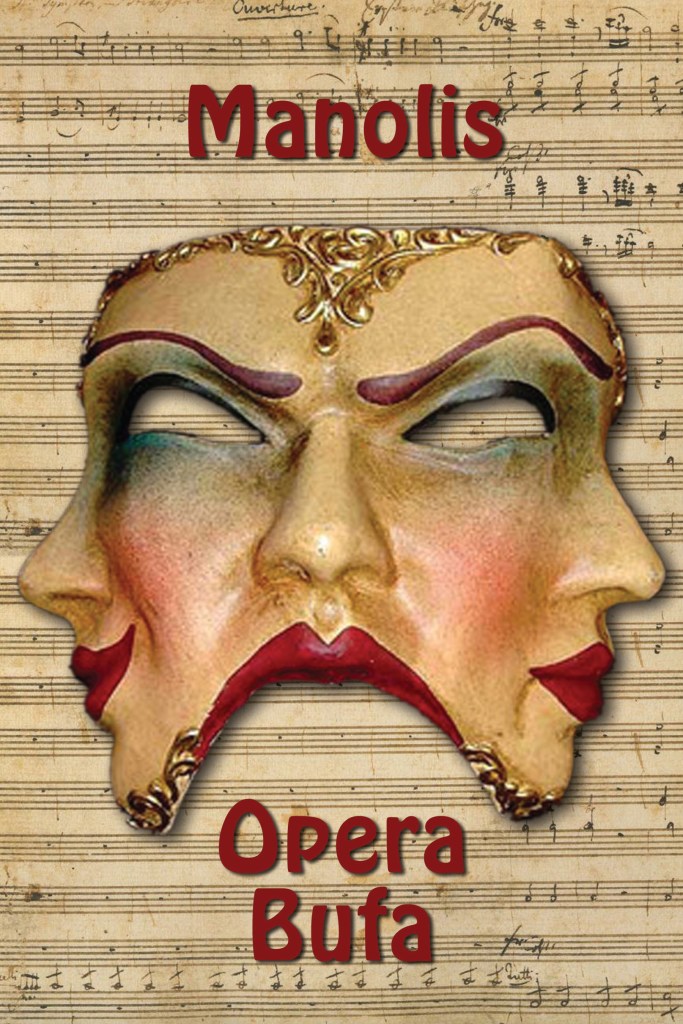



 Manolis Aligizakis