
Cells
Like the cells of each body
that die and in darkness
they float and talk
cells of an undefined wholeness, we
die without noticing or understanding
while wholeness lives
in our death
moves and breathes
eternal youth of an odyssey.

Cells
Like the cells of each body
that die and in darkness
they float and talk
cells of an undefined wholeness, we
die without noticing or understanding
while wholeness lives
in our death
moves and breathes
eternal youth of an odyssey.

Excerpt
Stout reached for the sugar. “You don’t want to mess with this
son. I’m a powerful man around here.”
“Yes,” Pease said, “So is the mayor. This thing is no longer a
secret, Mr. Stout.”
Stout breathed as if stirring his coffee was a workout. He plied
the spoon with concentration, looking into the cup.
“Why should I believe you?” he said, working more sugar into
his coffee, lifting his eyes toward Pease without raising his head.
Pease thought he had the aspect of a dog deciding whether to bite a
stranger or submit to him. “How do I know Torgerson talked
about this?”
“What did Pearson tell you?”
“Pearson’s scared.”
“It must be an uncomfortable feeling.”
“Look, Ned, I was born in this town, lived here all my life. I’ve
been on the council for nine years, done good work in the community.
I’m not saying anything one way or the other, but don’t you
think all this stuff from the past, whatever it is, just oughta stay in
the past?”
Pease watched the big man wipe his spoon with a paper napkin
and take a tentative sip from his cup. Perspiration was forming just
below Stout’s hairline. Pease said nothing. The silence lasted nine
or ten seconds.
“You can do a story without using names,” Stout said.
“Not this one, councilman. I have the names.”
“And names make news, right? Maybe that’s the trouble with
news.”
“Could be.”
“Where’s all this going to lead, anyway? What does it matter?”
Stout said.
“It matters, councilman.”
“Does Winifred Stone know about this? I know the Stones,
know them very well.”
The dog is growling, Pease thought.
Long-listed for the 2023 Griffin Poetry Awards
…as if all gestures existed in a different world
and the distant memory of them reached here
and it’s strange how untrue the most real things
look sometimes
ah mother when you gave birth to me
you should had given birth to a rock
as now that I have grown
please count all my struggles
and her voice resembled the night, when one walks
alone and only the frost of the unstoppable winter
comes to meet him
and the lights mark the length of an unknown road.
And no one waits for you. And you wait for no one.
For a moment the man stood on the first step before
he climbed up;
he resembled a deserted mausoleum of a hero who
was once loved, believed in, praised with song
and frightened
until what ripens the wheat ears and wilts Eros
and crowns patience
and as a guide of the universe leads each of us to
our proper place,
time, the just time suddenly undressed him of all
his glory and grace, songs and fright
and threw him in the middle of contempt, all alone
and crashed and miserable
and totally humane.
Pip: Manolis Aligizakis has assembled a catalog that moves from ancient Greek shores to Canadian prairie schools to a Moscow hotel hallway — and somehow it all holds together.
Mara: vequinox brings it together across poetry translations, novels, and short fiction — territory we'll cover through modern Greek verse, prose excerpts, and the themes of love, memory, and identity that run underneath all of it.
Pip: Let's start with the poetry.
Mara: This segment is about what it means to translate a literary tradition — to carry voices like Cavafy, Ritsos, Engonopoulos, and others across languages without losing what makes them cut.
Pip: And Cavafy cuts immediately. The setup in "The City" is a man planning his escape — new land, new sea, fresh start — and then the poem turns on him completely.
Mara: The turn is the whole poem. "New lands you will not find, you will not find other seas. The city will follow you. You will return to the same streets. You will age in the same neighbourhoods, and in these same houses, you will turn gray."
Pip: So the upshot is that geography is not the problem. The self is the problem — and it travels with you, luggage you cannot check.
Mara: Engonopoulos makes a different kind of claim in "Nikos Engonopoulos – Poems." His "Angry Poem About the Occupation" turns elegy into defiance — workers dropping their tools, fists raised, a martyred figure walking the earth pale-lipped but beloved.
Mara: Ritsos appears across multiple volumes here. "Yannis Ritsos – Poems, Volume II" gives us a boatman striding into a harbor at dawn, the sun rising like a woman's wet hair curled around cranes — sensory and grounded. "Volume V" and "Volume VI" are quieter, more unsettled.
Pip: "Kariotakis-Polydouri, The Tragic Love Story" brings the biographical weight — two poets whose lives ended badly, rendered here in verse about a woman at a piano, butterflies leaving through a window.
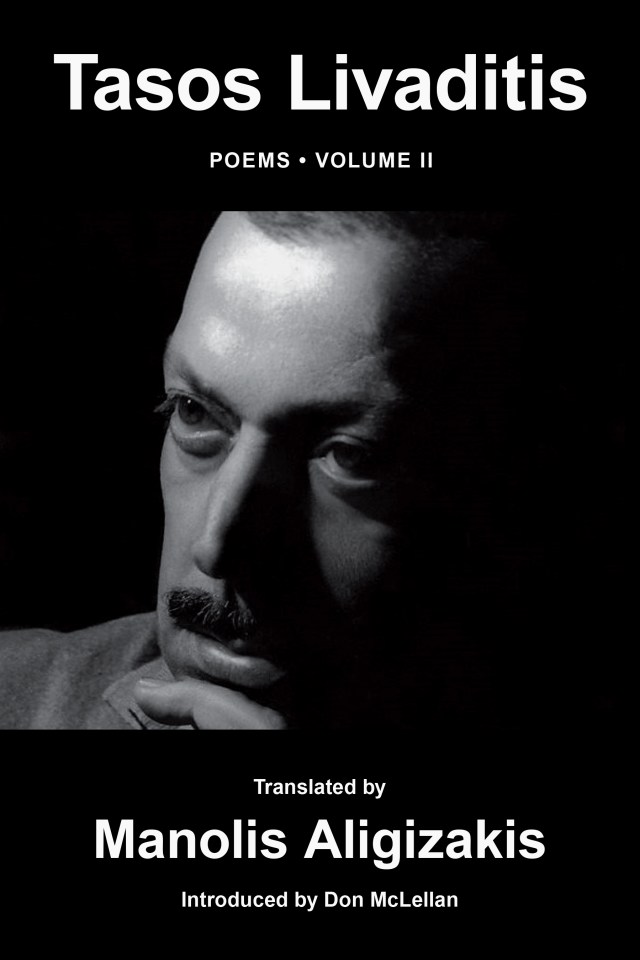
Mara: "Tasos Livaditis – Selected Poems," "Katerina Anghelaki Rooke – Selected Poems," "Hours of the Stars," and "Troglodytes" fill out the range — from Livaditis's compressed night imagery to Anghelaki Rooke's half-words and olive tree shapes. "Neo-Hellene Poets" and "Orange" and "Mythography" sit alongside them as further evidence of how wide this tradition runs.
Pip: From classical echoes to prairie roads — the fiction covers different ground entirely.
Mara: The fiction here spans continents and registers — from a child's first bus ride in wartime Canada to a Moscow reunion to a painter's Arctic trek — and the question running through all of it is how people find their footing in unfamiliar places.
Pip: "Water in the Wilderness" opens that question gently. A woman named Tyne has been living on hospital food, and her friend Moe has kept a phone call from her on purpose.
Mara: The reason matters: "Moe smiled. 'Morley is awake and asking for you.' Tyne let her breath out on a deep sigh, sat back and covered her face with her hands. 'Thank you, God, thank you,' she whispered, then shot out of her chair and ran to get her coat."
Pip: Relief as a physical event — breath, hands, running. The excerpt earns it without explaining it.
Mara: "The Qliphoth" operates in a completely different register — adult, raw, interior. "In Turbulent Times" follows Ian, a man trailing a woman named Nora through a coastal Irish hotel, his knees literally trembling at the bar. "Redemption" gives us a young man leaving home for Vancouver, his father crying openly at the table.
Pip: "Wellspring of Love" brings back Rachael, older now, stuck on a dusty highway while her cousin heads west — and "Water in the Wilderness" shows us Rachael younger, boarding that bus for the first time, shuddering at its size.
Mara: "Jazz with Ella" lands its protagonist in a Moscow hotel corridor and delivers the line "We are your family" to a woman who was certain she had no family there. "Ken Kirkby: A Painter's Quest for Canada" documents a real exhibition at Parliament — a painting one hundred and fifty-two feet long, twenty years in the making.
Pip: "Small Change" puts a boy in a Pennsylvania classroom trying to locate his immortal soul while Sister Assunta slaps a pointer against her palm. "Prairie Roots" is lunch-hour softball and girls comparing notes in the willows. "Wheat Ears" and "Cloe and Alexandra" round out the set — one a memory of Cretan youth, the other a poem built around a denial: it wasn't me in that yellow cab, it wasn't snowing, I have no hair.
Mara: What ties them together is the texture of ordinary life under pressure — the meals, the car keys, the Scotch ordered twice.
Pip: And underneath the prose, there's a question the poetry keeps asking too — about where you belong and what you carry.
Mara: Love, memory, and identity keep circling the same problem across these works: the past is not behind you, it is inside you, and it shapes every attempt to move forward.
Pip: Cavafy says it flat out. "As you have wasted your life here, in this small corner, you wasted it in the whole world." There is no smaller indictment.
Mara: Ritsos in "Yannis Ritsos – Poems, Volume V" reaches for the same idea differently — a man who keeps a small mirror in his pocket because it's the one fixed point when everything else shifts without warning.
Mara: "Kariotakis-Polydouri" holds memory as tenderness — butterflies always flying out through the window. "Mythography" turns inward to still water and a fir tree asking the night for wisdom. "Introspection" names it directly: practicing a religion on the longing for the past.
Pip: "Orange" answers that longing with the wind's reply — your sunshine hides in your heart. "Hours of the Stars" writes love onto the mountain tops of memory. "Katerina Anghelaki Rooke" and "Troglodytes" close the circle — half-words left behind, and a young poet begging the Muses to free him from his own imposed fears.
Mara: The pattern holds: escape is not the remedy. The work is staying present to what you carry.
Pip: A city that follows you, a mirror in your pocket, a bus you board for the first time — it's all the same question dressed differently.
Mara: Where you are, and what you brought with you. More from this site next time.

