Northern Halo
Before your enigmatic manner
I adjust the red chiton and
the crown of thorns on your hair
I raise your fortitude straight to the sky
this April and I salute
ecce homo

Northern Halo
Before your enigmatic manner
I adjust the red chiton and
the crown of thorns on your hair
I raise your fortitude straight to the sky
this April and I salute
ecce homo

A Slice of Moon With Watermelon Fragrance
It always appears early, when it’s the new moon.
Stars hadn’t yet appeared and the moon, just a little slice!
One could discern the rest of its body around, as if in fog, as if a body hidden behind a curtain, you see it mostly in your imagination, yet you know it is there, a real, alive moon that you will be able to touch in a few days.
And you’re happy to wait, to long for it and imagine it.
There was a moist anticipation in the air and the breeze, consistent as it was, from the south and pierced your bones and the old wounds in a sweet kind of way.
My dry lips till had the taste of the watermelon we ate at lunch time and now, evening already, my glance was glued high up in the sky.
And that moon, a watermelon slice, I ate earlier in the day and had thrown the leftover into the garbage bin.
A small, tiny, lighted and persistent moon telling me that summer was just beginning and the watermelon will last for a long time.
Excerpt
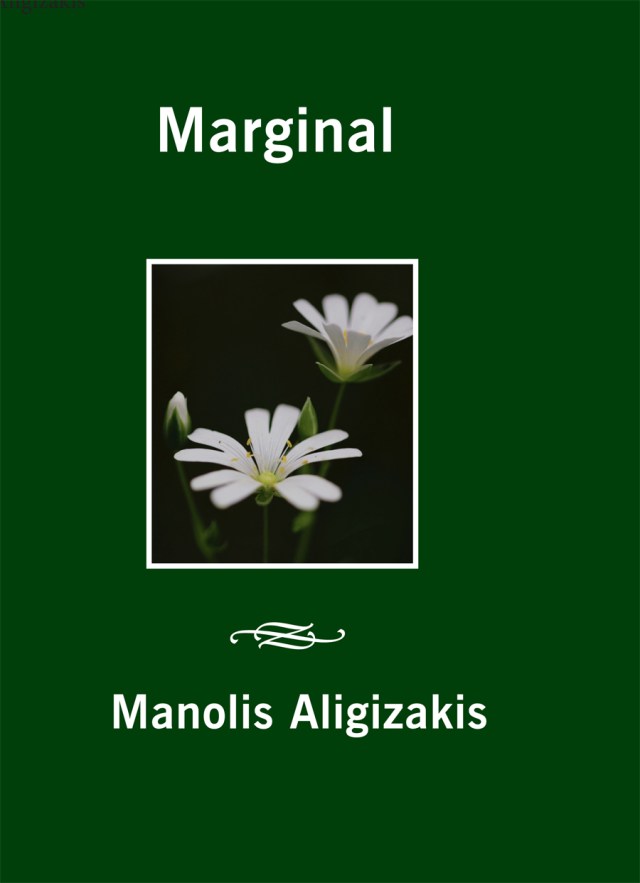
At the Margins of Existence: Love, Exile and Mortality in Marginal
This seasonal structure is fundamental. Autumn and winter repeatedly signify ageing, loneliness and approaching death; spring signals erotic renewal, resurrection and possibility. This poet’s universe therefore remains tragic without becoming nihilistic. The later sequence “Longing,” consisting of fourteen numbered poems, concentrates these concerns into a more intimate and meditative form. Its recurring invitation “Come, sit next to me” changes the relationship between the poet and the addressee. The voice becomes conversational, almost testamentary. The speaker wishes to remember love, political dreams, failures, friends, unnamed victims, forgotten workers, soldiers and the people whose history exists outside its official narrative. Here the connection with The Incidentals becomes explicit. One poem recalls the revolution that was never begun and the world that was never changed, then sings for those “incidentals” who never raised banners or became heroes. Another goes further and demands that these anonymous people finally be made heroic, because they lived so that others could receive glory.
This is perhaps one of the most important developments in Aligizakis’s recent poetry. The marginal and the incidental become related categories. Both designate those excluded from the centre of historical narration. Poetry becomes an act of restitution: it gives them the page they were denied. Stylistically, Marginal moves between short lyrical poems and expansive free-verse meditations. Aligizakis often relies on accumulation rather than conventional narrative development. Image follows image through associative logic: flower, flesh, sunbeam, mythological figure, household object, political allusion, death, memory. Punctuation is frequently minimized, creating long currents of thought in which perception seems to precede grammatical organization. At its strongest, this technique creates remarkable fluidity. The poems appear to move as memory itself moves—suddenly, irrationally, sensually. A flower may open onto childhood; a body onto mythology; a window onto mortality; an abandoned house onto the mystery of origin.
“Pilgrimage” is among the volume’s finest examples. The speaker returns to the family home, not simply as a visitor but as someone searching for the place where his existence began. Four walls, rocks, wind, the location of the childhood crib and the orientation of the door become coordinates of personal mythology. The house is a finite space placed inside infinity. Biography becomes metaphysics. This exploration continues in “Wisdom of the Nude,” where the abandoned family home becomes associated with an abandoned body, and absence itself becomes a form of knowledge. Such poems reveal Aligizakis at his most compelling: personal memory is neither memoir nor nostalgia but material for ontological inquiry. The volume is not without excess. Aligizakis frequently returns to the same constellation of images—flowers, irises, Eros, death, light, statues, female beauty, loneliness, ancient Greek mythology—and some poems state philosophically what their imagery has already conveyed more effectively. Erotic rhetoric can likewise become so insistent that individual images lose some of their uniqueness. Yet repetition in Marginal also functions almost musically. These motifs return like themes in a long composition, altered slightly by age, memory and context. And repetition is appropriate to a book about ageing.
The older consciousness does not simply advance. It circles. It revisits. It asks again. It remembers differently. The final movement of Longing therefore offers an appropriate culmination. The lovers sit together at dawn and look toward the first rays of light. Their love becomes “blessing,” “endurance,” and “eternity,” and the concluding vision imagines them giving birth metaphorically to a new generation of immortals. This is not naïve immortality. Aligizakis knows too much about death for that. The immortality envisioned by Marginal is the human refusal to let death possess the whole meaning of life.
We die, but we have loved. We disappear, but someone remembers our voice. The homeland changes, but the landscape survives in language. The house becomes empty, but the first cry of the child remains somewhere between its walls. The lover vanishes, but her shadow continues to occupy the arms of memory. The immigrant may remain marginal, yet the very margin from which he speaks allows him to see what those standing comfortably at the centre often cannot. And perhaps this is the central achievement of Marginal. Manolis Aligizakis transforms marginality from a condition of deprivation into a privileged poetic perspective. From the edge, the structures of the centre become visible. From exile, homeland can be questioned. From old age, youth can be understood differently. From loneliness, love acquires its full weight. From the proximity of death, the body becomes luminous. Marginal is therefore a book of boundaries, but also of their transgression. Its poetry continually inhabits the narrow strip between the temporary and the eternal. And in that uncertain territory, among flowers, bodies, memories, myths, empty rooms and returning light, the poet finds what poetry has always sought: not an escape from mortality, but a language capable of standing before it.
 Manolis Aligizakis