Il Pagliaccio With his pink face, his tardy pants, his perennially smiling lips, the pagliaccio* runs to the stage drawing an imaginary circle in front of kids who laugh especially when he pulls a kerchief out of his pocket, a green kerchief with no end and after he pulls three meters of endless fabric and focusing on the faces of the children the pagliaccio gets ready for his next act: he takes off his hat and turning it upside down he puts his hand in it and after three abracadabra he raises a snow-white rabbit in the air to the yelling and laughing kids as the pagliaccio, as happy as ever with his performance, disappears behind the big red curtain not forgetting his duty to the man, he once was, one who could reach the stars, who could transcend the flesh and touch the eternal, which, alas, he never did.
Chapter Eight The ringing of the alarm clock awakened Tyne. She opened her eyes to glare at the offending timepiece on the desk across the room. To heck with it. She closed her eyes and snuggled again into her pillow. Moe bounced from her bed and grabbed the clock to shut it off. “Come on, sleepyhead. Get out of that sack. Don’t you know what day this is?” Tyne forced her eyes open. Moe, standing in the middle of the room in her short nightshirt, stretched and yawned. “How can you sleep this morning? We’ve been waiting three years for this day.” She walked to the door to turn on the ceiling light. Tyne blinked and pulled the sheet up to shield her eyes from the sudden brightness. “What day … oh yeah, so it is. Our last day of training.” “You don’t sound very excited.” Moe grabbed her dressing gown from the chair and shrugged into it. “Believe it or not, I feel a little sad.” “Oh come on, Moon River. What’s to be sad about? We’ll still be at the Holy Cross if that’s what’s worrying you, and you’ll be doing what you like best – helping to cut people up.” Tyne got up, walked to the dresser and began to brush her hair. “I didn’t tell Curly when I saw her yesterday that I’m going to be working in surgery. I thought it would be like rubbing salt into the wound.” “That was good of you, but she’ll find out sooner or later. How’s she doing, anyway?” Tyne reached for her dressing gown. “Okay, I suppose.”
THE SEAGULLS FROM TRANSYLVANIA This thorough country called nature Lost breath of the heaven’s dragons And from the wide waters of the sea deep from the very beginnings, Even before the old Pannonian Sea Added its extensions here, Yes, this tenacious natural amphitheatre, Full of thick forests, Still silencing the Romans’ language, This Transylvania is Both the mountain shuddering with memory And the fairy tale of the eyes suggesting the morning, And especially the mild anxiety of some seagulls, By their generations’ adage, Becoming smaller and more grey than their ancestors, Living signs of the millennia, Of the seas fatally squeezed into rivers, In whose name there is a constant whisper: The Someş, the Mureş, the Criş, the Criş, the Criş5 … How could I not have recognized, Even if I had not known what they were, The thin quest of these Transylvanian seagulls
Gravely questioning the waves of my Criş River And floating almost weightlessly, As the poplar’s seeds fall; Who can know if the absolute Is not the forgotten song Of the Transylvanian seagull?
Tenth Canto I discover eloquence in ash falling like opened wishes of thirsty lips and marking my share of urgency I retract the curtain to reveal an orchestra and chorus harmonies in celestial reverb with the dynamism of a faceless entity that dresses itself in crimson riding greed on some apocalyptic horse carrying conversion coercion assimilation proselytizing consequence of infidels the necessity of martyrdom which started in primeval depths of Miseria Dura the end justifying any means with colorful insignia of archons and beacons of lords and crests flying high potent cross banners unfolding speed to deep grooves and flattening the firm virgin’s breast the zealot’s façade transforms into wrinkled face of the moon over me standing on the steep-cut road indifferent to his imminent demise I witness a beheading and everything shifts right powered by a limited company acting as if controlling infinite growth as if reaching no end as the wise dandelion retains bitterness for blood virulence spread on faith’s path unflinching curtain asks the same question and the off-tune chorus answers: I can do better
She’s proud of her body and doesn’t hesitate to show it off. She takes her seat and orders a glass of red wine, as well. When seated and relaxed, she looks at Emily. Suddenly, she brings her hand to her mouth and says, “Oh, my God, what is it? Tell me it isn’t—Emily, what’s going on?” Emily leans a bit closer. “What is it? I’m just a happy woman. That’s all.” “Who is he? Tell me, I know there’s someone. Just tell me who he is!” Emily laughs at her, and admits, “Yes, there is someone. I’m crazy, Cathy! I’m crazy to feel this way at my age. I’m crazy, you can say that!” “Oh no, love, I don’t think you’re crazy at all. Just take a deep breath, and tell me all about it.” Emily sips her wine and talks slowly, as if afraid of people in the restaurant hearing her talk, or as if she is afraid Matthew will hear from where he is. She’s almost whispering and Cathy has to lean in close to understand her. At one point, Cathy interrupts her and says, “My dear Emily, I have been wondering for a long time when this moment would come. You know, with Matt always so busy working and out of town. I’m proud of you. Life is for everyone, you know? We all deserve a share in the sun. The question, of course, is when are you going to tell Matt? Oh yes, one more question. You lucky girl, a thirty-something-year-old? Is that Talal’s age?” Emily laughs again and they both sip their wine. They have ordered salads and when the waiter serves them they begin eating with relish. As they eat, Cathy asks, “I suppose no one knows so far? Does Jennifer know?” “No, no one knows other than you. You must keep it from Bob. I don’t really know which way things are going to go or which direction I’m going to take right now.” Cathy leans closer to her, “There is only oneway to go in things like this, darling, and that is the way of the heart. Don’t let fear lead you to failure; don’t fail me and don’t fail yourself. Unless you want to regret it later. One fine day, you’ll wake up with tears in your eyes and ask the terrible question in front of the mirror.” “What do you mean? What question?” “The question that says, ‘how stupid was I not to take the chance when I had it?’ That’s the question, darling. You see, by that time it’s too darn late, even to cry about it.” Emily looks at her and admits Cathy has a good point. Deep in her heart, she already knows what she wants to do, yet the fear is there, staring at her with a sardonic smile. Thinking about it makes her spine squirm. How is she going to find the courage to do what she wants?
“We can’t go back.” Bobby pulled away from her. “Why can’t we? I want to go.” “Because they don’t want us, that’s why.” He looked up, cherub cheeks turning red, big brown eyes full of fire. “Who said so? I don’t believe you.” Rachael turned on him, her voice rising. “Aunt Ruby said so. She said Auntie Tyne didn’t want us, and was going to send us away. That’s why Auntie Ruby took us in.” Bobby kicked out at her. “I don’t believe you, Rachael; that’s not true. Auntie Tyne did so want us.” “She didn’t, Bobby, and neither did Uncle Morley. And Aunt Ruby says we’re not to call them aunt and uncle anymore, because they’re not related to us.” Bobby’s eyes opened wide as he looked at her. “What are we s’posed to call them?” “We have to call them Mr. Cresswell and Mrs. Cresswell.” Defiance written all over his small face, Bobby leapt off the bed and stood there glaring at her, “No, I don’t want to. I won’t, Rachael. You can’t make me.” Rachael took a deep breath. She felt helpless and frustrated, at a loss to know how to deal with Bobby’s sudden rebellion. She would soon be eight years old, and should be big enough to protect him and make him feel better. But she didn’t know how. She didn’t know if she even believed her aunt, but she had to go along with what the woman said for Bobby’s sake, and her own. Somehow she had to convince Bobby to calm down and not get either of them into trouble. She reached out and pulled him back onto the bed. “Maybe what Aunt Ruby says isn’t true, Bobby. Let’s just forget it. Why don’t you go play with Freddie now until bedtime?” Bobby’s lower lip stuck out, and Rachael could see that he was trying hard not to cry. “Don’t want to play with Freddie. I want to go to bed now.” Rachael hesitated. She didn’t know if he should go into the boys’ bedroom right away because Ronald had been sent there …
I The lucidity of rose petals suffuses as the wind ripples and caresses the dunes of praying sunlit trees dressed in their primeval innocence and abundant feeblemindedness as the creeks lovingly murmur songs to one another and Heaven whispers lullabies to virgins not yet kissed other than in dreams, when one buries his forefathers under the big oak at the forlorn edge of the village abiding with nature’s peace commanding the birth and death in one breath, all creatures crawl eastward, life lingers in light the greater the number of peaceful days the higher the oak of death irresistibly climbs and the first ode swings in transparency.
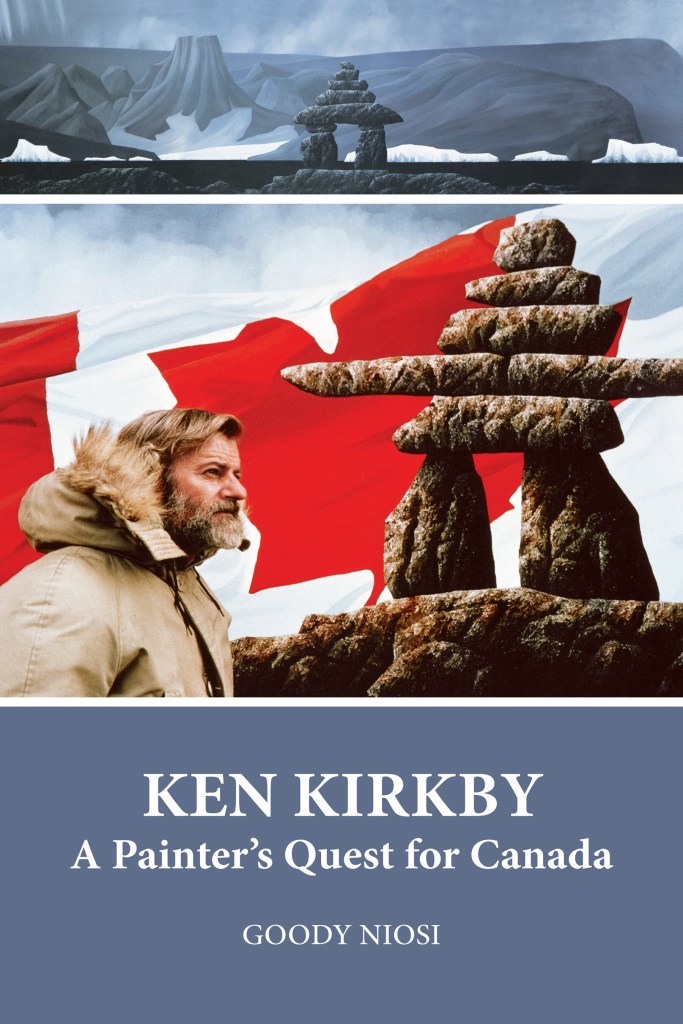
Ken closed his eyes, his lids like coarse sandpaper scraping against his eyeballs. Opening them was worse. The woman tied a piece of soft hide over his eyes and all he could do was bear the agony and wait. For days, he travelled as a blind man, in pain and nauseated from the gentle rocking of the sleigh. When the pain eased, he took off the hide, and the old woman gave him a pair of goggles with a small slit, explaining that he would have to carve them to fit his face. He carved with great care so they barely touched his skin. Close contact would freeze them to his pores. They had been travelling a long time, when a golden glow appeared on the horizon. As they drew nearer, the golden fire resolved into a large group of igloos. The dogs heralded their approach, and people streamed out of the igloos to welcome them. The first questions were about food. The caribou had not crossed their path this season. Did the new people have caribou? Yes, they had much caribou and it would be shared. A feast was prepared for the newcomers, who entered the largest igloo in the centre of the village. In the anteroom, they took off their parkas and beat them vigorously before entering the main room, where layers of caribou hides were spread on ice benches that circled the room. Kidney shaped seal oil lamps provided warmth and light. When they had eaten and told stories, people dispersed to their own igloos. Ken and his people crawled under many layers of hides and slept. The old woman had told the people that Ken was a quiet Kabluna. “He is a friend,” she had said. “He is now Inuk.” The next morning while the men built igloos, Ken pulled out his roll of sketch paper and drew them, as they searched for the right sort of snow by poking deep into it with a knife or a long sharpened piece of bone. When they found the right spot, they drew a circle and began cutting out uniform chunks of hard-packed snow, beginning at what would become the entrance. They lifted the blocks into place, bevelling the edges, and chinking the spaces between with loose snow. Ken was invited to accompany the men on the next hunt. For the Inuit, hunting is the essence of life. The animals must be revered and not offended. Kablunat don’t understand this, the old woman told him, but Ken was now Inuk – no longer a Kablunat. She convinced the hunters that Ken was an exception. They set off onto the frozen sea that was covered with a thin layer of transparent ice that moved in front of the sled teams like a rubbery wave. Underneath them, thousands of air bubbles bounced and rolled. When they spotted a seal in the water beneath them they searched for the beast’s breathing hole and waited. When the seal was forced up to gasp for air one of the men heaved a long spear and the water stained crimson.
As she and Michael drove down Fourth Avenue in the beater car they had just bought at a used car lot and had not yet fully paid for, she fell in love with the area. It was August under a cloudless sky and her window was rolled down. Chestnut trees hung over the street. A man in a bright serape and sandals was juggling vinyl pins in front of a health food store. Another man was handing out copies of what appeared to be the local newspaper, The Georgia Straight. Music blared from speakers in a record shop. Crowds of tanned young people roamed the streets carrying radios and backpacks. No one seemed in a hurry and everyone smiled. “Peace, peace,” one man called out to her holding up his fingers in a V as they drove by. “Let’s live here, Michael, not in the student apartments. They’re so god awful concrete and gloomy.” As usual, Michael’s reply was brief. “Maybe.” He’ll come around as soon as he lives in Vancouver a while, she thought. Maybe he and Paul will become friends. But that faint hope, borne briefly as they got out of the car and entered Paul’s building, was quickly dashed. “Isn’t this great?” Paul said right away, hugging her and spreading his arms wide to take in the wicker chairs, battered sofa, tiny kitchen and a balcony with a glorious view of the ocean. “It reminds me of California, you know, where I grew up. I love it here.” He seemed so relaxed, so laid back, as they said out in Vancouver. He shook hands warmly with Michael who returned the handshake but stared at him as if he were a lab specimen. “It’s great to see you here, finally, Jennifer. And Michael, too. Let me show you around.” They examined some of Paul’s nicer possessions including a collection of Russian literature and a brightly polished samovar, with Jennifer ooohing and aahing periodically. “We’re quite close to the Russian community centre here,” he told them. “It’s cool to visit.” “It’s perfect,” she cried. “Isn’t it, Michael?” Paul relaxed. “Just about. The only thing that would make my life complete here would be a girlfriend. Sue and I broke up.” Immediately Michael’s expression changed from one of puzzlement to repugnance. He began to bristle, Jennifer thought later. It had to be jealousy. But why? Paul had always been her good friend. Michael knew that, accepted it, or so he had said. Men, she thought with exasperation.
Taxi I caught the taxi driver’s glance falling on us, questioning we didn’t look as relatives and I winked at you to pay attention to his glance and you detected his light smile as if he was saying lucky man and since you got the meaning of his smile you turned and gave me your most promiscuous kiss and the brakes weren’t heard albeit the echoes of the city and the sigh of the driver who could have given all he had to trade his place with mine








 Manolis Aligizakis