Monotony One monotonous day is followed by another identical monotonous day. The same things will happen, they will happen again— the same moments will find us and leave us. A month goes by and brings another month. It’s easy to see what’s coming next; those boring things from the day before. Till tomorrow doesn’t feel like tomorrow at all.
Sixth Canto The promontory under my feet shudders as my brush hits a reverberating stroke on my diaphanous canvas of fate while the golden steel controls all past and future height and depth of tender life and its hardest rigidity as the bottom line rises to a penultimate element of importance nothing stands in front of it no one will stem its future flow nothing will ever stand as an impediment to dark eyes and their thoughts inventing as if gifted from heaven the first ever organized corporation under patronage of the teenage church devising means and plans for conquering the cosmos through sharpness of the double ax or sword or sulfur of the bomb conventional or atomic phosphoring fear schemes world-over like a bread slice buttered by movement of the knife in gluttony’s tenacious hand covering inside and out of power lust appetite for pleasure through darkness tingling pockets of masters grasping for purer rarer more as wheat fields ask the finest question when the cicadas and I answer from the olive grove: we can do better
She felt Morley give her hand an extra squeeze to bring her attention to the scene before her. People were coming out of the church, laughing and talking, wishing each other a merry Christmas. Among them, almost at the bottom of the steps, she saw her mother and dad. Tyne drew in her breath and waited. Her mother looked in their direction, and her eyes grew large with disbelief. Then she turned to speak to her husband. Jeff swung around. In the light from the doorway Tyne saw his expression change from surprise to displeasure. Then he walked away from his wife and came towards them. Tyne let Morley’s hand go, and took a couple of steps to meet her father. “Hello, Dad. Merry Christmas.” She lifted her face for his kiss. It landed, cold and stiff, on her cheek. “What are you doing here, Tyne? We didn’t know you were coming home.” He glanced at Morley who had moved to her side. “We would have met you at the bus depot, you know. You didn’t have to bring Morley in from the farm. I’m sure he has better things to do on Christmas Eve.” “Not at all, sir,” Morley said. “I was only too happy to come. And I’m pleased Tyne invited me to church with her.” Jeff cleared his throat but did not reply. He turned back to his daughter. “Well, I see you’re not afraid of being snowed in, after all. I only hope, for your sake, that you don’t have to miss any days of your training this close to the end.” “I’m sure it will be all right, Dad,” Tyne murmured as she turned to hug her mother who appeared bewildered and anxious. Tyne felt her mother’s anxiety, and understood. All her married life, Emily Milligan had lived in her husband’s shadow, obeying him, pleasing him, keeping the peace within the family as far as it was in her power to do so. Tyne knew that whatever her mother said to discourage her daughter’s relationship with Morley was only a reflection of her husband’s feelings. She said what she knew he would want her to say, and felt about it the way she perceived her husband to feel. Tyne hugged her mother hard as tears stung her eyes. Oh, Mom, I don’t want to bring you grief. Please try to understand, and be strong for my sake.
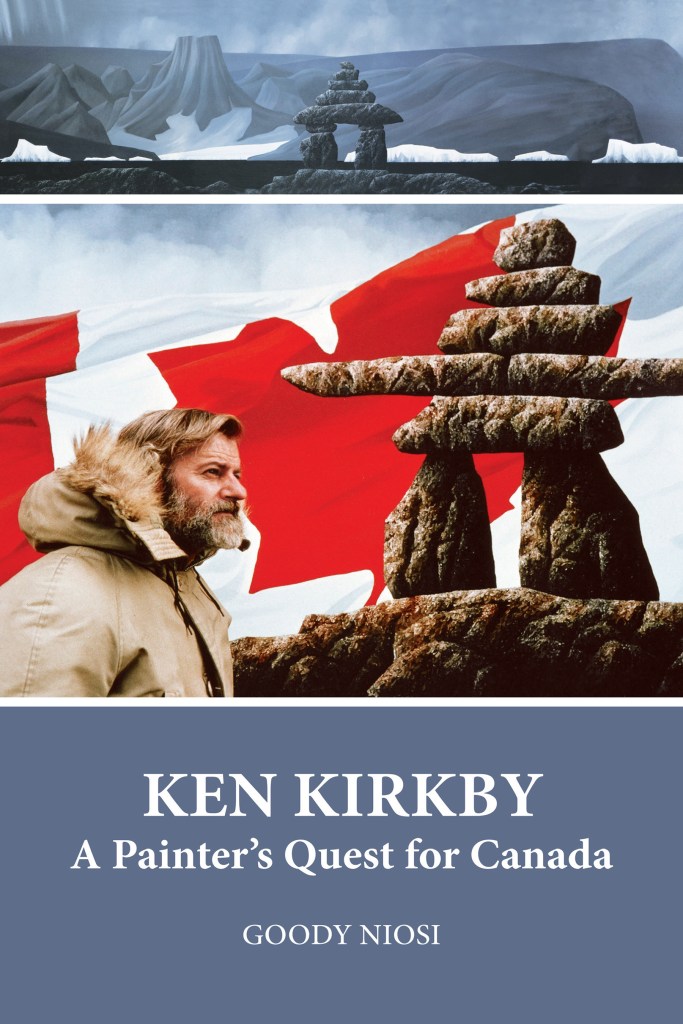
One day the dogs heralded the arrival of a new family. They staggered into camp with barely enough dogs to pull the sleighs. The animals’ ribs stood out through their fur, and they lay down exhausted, their eyes glazed. The people had to be helped from their sleds. Inside the big igloo, they explained that they had come from far away and had left most of their people behind. They had not found caribou this season and had run out of food. They had no seal oil for heat. They were dying. One young man’s toes were badly frostbitten. The elders determined that they would have to be removed to prevent gangrene, a common condition in the North where blood circulation to the extremities slowed. There was no hospital – not even a doctor. The old woman said she would select the person to perform the operation, but the young man said he would do it himself. The old woman stopped Ken as he turned to leave. “No,” she said. “Kabluna wants to go everywhere and experience everything. This is part of everything.” The young man honed a knife and with immense concentration and deliberation, selected the correct place to amputate the toes. One by one, he sawed through flesh, sinew, and bone. He did not complain, cry, or moan, taking the same impassive, measured care that he would if he had been skinning an animal. It shocked me. How can someone do that in that way and not fall into paroxysms of agony? And I knew I had something to learn. I had to investigate what pain was and how it was dealt with. I knew these people were not superhuman but their understanding of humanness was very different from mine and it probably came from eons of living in that environment. These things set me on a very different track in my own head. They led me to deal with our concepts of possible/impossible, difficult/not difficult and so on. Nature is neither good nor bad. Nature is neither kind nor unkind. Nature simply is. Possible and impossible are things of the imagination – just as the pain is in our imagination. And seeing as we don’t know enough to make these judgments, we shouldn’t even consider worrying about them. If there is something in you to be done that is powerful then you set about doing it and you take out all the imaginings of the dark monsters you might meet on the road ahead. They may, in fact, never materialize. These concepts were the golden door through which I walked toward a completely different understanding, an understanding that has made it much more difficult for me to live in our culture. A council was held to decide the fate of those who had been left behind to starve to death. Four dog sleighs were loaded with food, blankets, and other necessities, and when it seemed that Ken was to be left behind…
Veteran Paul has left one leg in the dusty road of Falluza improvised explosive device they said when he walked his patrol April of 2004, deserted road toothless sculls of houses with no curtains merciless sunshine entered from each direction conflagrating the internal void of hovel and warring man Paul limbs step by step never got used to crutches defense contractors annual earnings report: shares soared to new heights
Thursday morning Los Angeles opens her eyes, staring at the sun rising steadily on the eastern horizon, gifting the city with warmth and joy. Even the homeless smile this morning knowing it will be easier to locate food in the restaurant garbage bin or the neighborhood pub garbage; there’s always something edible there. The smog overarches the city touching the taller buildings, sitting lazily on top of the high-rises. Rush hour is beginning and traffic increases with bottlenecks in main arteries. One can hear the morning sounds of the commercial, business center as people slowly reach to their destinations, stores open their doors and customers rush in. Ibrahim Hazim Mahdi sips his morning coffee and reads the latest news. He’s pleased with the way his day went yesterday; he felt pride with Hakim next to him all along. Sometimes, he remembers having asked Allah why he wasn’t gifted with a son of his own, yet that was years ago. These days he takes what comes his way as a gift from the Almighty because he knows the days of each are counted first by Him and next by His people. Ibrahim knows deep in his heart that Hakim is going to do just fine with the money that he’s leaving for him. He also knows that Hakim will take good care of his Auntie Mara, as long as Allah choses to keep her in this world. Despite all these positive thoughts there still lingers an unexplained anxiety which has taken hold of his mind and makes his heart ache; yet he cannot find the reason for it. He wonders why he feels this now, after has taken care of everything. The phone rings and he answers to a girl’s voice. “Good morning, I’m calling from the medical center. Mr. Mahdi, please.” “This is Ibrahim Mahdi.” “Sir, I need to arrange an appointment for you with the specialist who examined you. He has the results from your tests. What would be the best time for you later today?” “Any time is fine, young lady.” “Alright then, is one in the afternoon okay?” “Yes, that will be fine; I’ll be there at one.”
It’s early evening in Baghdad, and Ibrahim decides to call Mara. He dials his number at home. The maid gets the phone and calls his wife. “Hello,” he says, “how are you? I haven’t talked to you for two days.” He hears Mara weeping on the other end and asks, “Why are you crying, my beloved? I’ll be home in a couple of days. Is everything alright?” “Yes, everything is alright,” she manages to say while sobbing. “Are you really on your way home soon?” She doubts him.
Through the smoke I made out the hem of her dress some distance away. She was kneeling beside an inert body, which was pierced by an arrow through the thigh and another in the chest. It was her husband. Out of the corner of my eye, I saw a near-naked man running. The smoke partially hid him, but I saw he was tall, with strands of black hair pasted to his chest by sweat and speed and others floating over his shoulders. Funny, I thought, I have not seen that kind of long loincloth before. Then I realized he was charging toward Josefa. He bore a belligerent expression, and there was blood on his naked chest under his quiver’s band. A pang of fear hit me like a bucket of cold water. Surely he wouldn’t kill a woman, would he? We were both closing in on Josefa and her dead husband but from different directions. I was closer than he was. Josefa looked up at the Indian, open-mouthed and white as the ghost she was in danger of becoming. I sprinted toward her, heart throbbing, and tore the buckler from her dead husband’s grasp. There was a serviceable harquebus lying at his side and the sheathed dagger at his belt but I didn’t want to use any potentially lethal weapon. I squared my shoulders and braced myself for whatever might come. It was God’s choice to see us through or not. I raised the small shield on my forearm as I had seen others do. His bare feet landed underneath the buckler, and he delivered a savage blow that shocked its way up my arm, pushing me back, the clang resonating in my ears. He held his arm high, ready to deliver another blow. I was crouching, peering over the buckler. Josefa yelped. I charged and overthrew him, grunting like a beast. He fell but was on his feet before I knew it, the hellish macana still in his grasp. His eyes leered at me from his horribly painted face. I could feel his anger, his pride, his hate, but there was a fortitude that sent a chill down my spine. He turned and swung at my belly, but I leapt backwards as the macana came within inches. “Run!” I shouted.
Leaves Green leaves of courage brown leaves of frustration their endless endurance against decay that settles each autumn as we stand by the tree roots listening to secrets told in sunbeams or moonless nights and silence still controls forgotten thoughts begotten aspirations while leaves don’t bother with systemic schemes rules of engagement and thoughts residing in analyzing minds
and nations and borders and other similar things that don’t inspire but because they both always stood alone, free, great, brave and strong throughout the eons. And now, I despair that even today no one ever understood me, but what am I saying, nobody wished to understand me. Certainly, the same luck might be applied to the words about Bolivar which I’ll repeat tomorrow about Androutsos? Besides, it isn’t easy, to sense the importance of faces such as Androutsos and Bolivar Similar symbols. But let us pass quickly: no, in the name of God, not any emotions, exaggerations and despairs. Indifferent, my voice was meant for the eons. (In the near or distant future, in a few or many years, perhaps the day after tomorrow or the day after that, until the hour when the Earth will start flowing empty, useless and dead in space, new people will wake up, with mathematical accuracy, during the wild nights, on their beds, they might shed tears on their pillows and wondered who I was, thinking that I existed once, what words I said, and hymns I sang. And the huge waves that each evening splash onto the seven shores of Hydra and the wild rocks and the high mountain from which the storm charges down endlessly, tirelessly, they shall call my name).
Parasites The big rivers of the world swallow the little ones my mind travels to the bloodied dreams of creeks to bloomed shadows unexpressed souls poems that weren’t finished here where everything changes the immutable parasites lurk they erotically wrap themselves around innocence declaring the coming of loneliness




 Manolis Aligizakis