And Once More About Love Of the sun’s blinking this summer night when chilling shadows entwine together over Hargita the sky spreads out in quietness to make love in a mellow myth the stars, insomniacs thatblink like tiny animals my fingers gallop on your pulsing neck I avoid your fragile bones and linger at the camp of your innocence in your closed eyelids dreams squeeze kiss my sad face to heal this body that clings to yours this hand that draws you this is not me – keep on dreaming about me!
The Mood of a Day We plainly saw that not a soul lived in that fated vessel! • EDGAR ALLAN POE The mood of a day we lived ten years ago in a foreign land the ether of an ancient moment that grew wings and flew away like the Lord’s angel the voice of a woman forgotten with so much prudence and so much pain an inconsolable end, a September setting made of marble. New houses dusty clinics eruptive windows coffin maker’s shops… Has anyone thought of what the sensitive drug store owner endures on duty all night long? The room is in a mesh: drawers windows doors with gaping mouths like wild animals a pissed off man reads the cards, searches, reads the stars, seeks. He worries: if they knock at the door who will open it? If he opens a book whom is he to look at? If he opens his soul who will look? Chain Where is love that with a single stroke cuts time in two and dumbs it? Only words and gestures. An unvarying monologue before a mirror under a wrinkle The boredom spreads like an ink mark on a handkerchief They all died in the ship, but the ship follows the route it started from the harbor. How the captain’s nails grew…and the boatswain who had three girlfriends in every port unshaven. The sea swells slowly, the riggings fill with pride and the day becomes mild. Three dolphins appearing black, shine, the mermaid smiles and a forgotten seaman riding the yardarm waves.
Chapter Six With Christmas only three weeks away, every student nurse at the Holy Cross waited impatiently to find out what hours she would be working over the holidays. A few would have enough days off to go home, even if they lived some distance away. Others would be on duty throughout the season. Tyne hoped for three days off to make it worthwhile to take the bus home to Emblem. Morley had offered to come to Calgary to get her, but she did not think he should leave his farm and the livestock. His father had not been well, and Morley had more than enough to do with his own farm and his daily trips to look after his parents’ place. Tyne had not been home for Christmas since beginning her nurses’ training. In many ways she did not mind. She counted it a blessing to be able to make the day as pleasant as possible for her patients although at times she found it heartrending, especially on the children’s ward. But the Christmas she had spent on Maternity was one she would never forget. The joy of the new mothers made her own heart joyful, and in each little occupant of the nursery she saw the baby Jesus. Even if she could not get home to Emblem, Tyne would have a Christmas dinner. Moe’s parents were coming from Lethbridge to spend the holidays with Moe’s older, married sister. The sister had promised to plan her dinner around whatever hours the two nurses were off duty, providing they worked the same shift. Tyne was surprised not to have received an invitation from the Shaughnessys as she had for the previous two years. They had not invited her or Moe to their home since Carol Ann left the hospital
Chapter IV Eteo’s eyes were fixed on two small perch feeding on the barnacles around a dock pile. The water was so clear he could see them biting the barnacles and twisting their bodies to pull off the prey. Nature and its wonders, Eteo thought, smiling in appreciation. Then he felt the vibration of the phone in his pocket. “Hello, Eteo.” Susan’s voice made him feel warm and eager. “How’s my sweet Susan?” “I’m good, and you?” “Excellent. See you later tonight?” “Yes, come by the house around seven.” “Sending you a sweet kiss until later” “Back at you the same way.” Susan’s voice sounded as melodic as ever, and Eteo wished he was with her at this moment to give her that kiss in real. After taking care of dinner for the boys, Eteo dressed carefully and drove to the east side of Burnaby where Susan lived. She opened the door and hugged him when he stepped inside. Their lips locked in a long kiss. He admired her smiling face and exquisite makeup.
III I saunter around this city with such curiosity. Serenity reigned in my heart indeed I was singing between my teeth, a song from my childhood. The men I met were very tall and wore long foustanellas* down to the ground. Their walk was slow, graceful, I’d say, as it is usually in the East. Some others wore caps on their grey heads and others large, tragic women’s hats with feathers. However, suddenly, an inexplicable sadness covered my heart. These people didn’t have any eyes. I paid attention to them: their glances had already worried me. The fear stopped me for a while and rendered me motionless and silent. When I managed to stir somewhat and run after them I finally realized that they’d vanish once they reached the corner like a dream. They’d vanish to reappear on the other corner from where they came to continue their despicable saunter, unaffectedly. There was no doubt anymore. A horrible scam was put together for me. I understood I was the victim of a terrible trap. Then, as I realized the seriousness of my mistake, I sat down and cried bitterly.
brush not ten feet beside him. In an instant, he realized that, with the wind blowing away from them, the deer didn’t hear or smell the horse and rider headed their direction. No sooner had the deer fled in a scurry of dirt and brush than the buckskin jumped, nearly out of his skin. One moment Joel was sitting solidly on the back of the buckskin and the next they were both ten feet to the right, with Joel experiencing a launch akin to take-off on a NASA space mission. With a power that he could hardly imagine possible, the young horse had rocketed forward, leaving Joel behind. In actual fact, it would have been better if he did get left behind, but Joel’s left boot stuck in the stirrup. And with the force of the jump, his boot had slipped through the stirrup. Now he was being dragged at breakneck speed across the rock-strewn hillside. His foot was supposed to slip out of the boot and free him from danger but what was supposed to happen just didn’t. Spooked by the deer, the buckskin gelding blasted up and out of the coulee, racing to the barn. Joel knew that this couldn’t last for long. There were just too many boulders between there and the barn, and the odds that he would hit at least one were pretty good unless he did something in a hurry as he bounced along on his back, dragged by the horse and only inches from the pounding hooves. In a flash, Joel imagined his exposed cranium hitting a granite boulder at twenty-five miles per hour. With one cry he asked, pleaded, begged, and commanded the horse to stop with a desperate “Whoa!” As a boy, his dad had told Joel that anyone could stop a horse, sooner or later, by pulling back on the reins, but his dad showed him an unusual technique—dropping the reins to the horse’s neck and asking it to whoa. Right here, right now, he was glad that he had worked so hard with the gelding on exactly this maneuver. But practicing in the round pen and the arena was one thing; Joel was about to discover how effective his training would be in the wide-open space of the pasture.
The day of our departure came too soon. Entire families gathered at the plaza to bid farewell to their most respectable sons. After a year of preparation, don Diego de Losada had managed to convince one hundred and fifty men to take their chances with him. No small achievement, considering their prospects for survival. Our expedition was bound for the province of Caracas—where the town of San Francisco had briefly existed—and we were destined to rebuild it in the name of Our Lord Jesus Christ for our most gracious king, His Sanctified Catholic Majesty, Don Felipe II. Less than five men out of each of the previous two expeditions into the area had been left alive to tell the tale. I had heard stories about battles, about how I would be lucky to be killed at once. Cannibals liked to tie a Christian to a tree while they danced in circles, possessed by the devil, chopping pieces out of him every time they came about, cooking his parts under his nose or even eating them raw, shooting arrows at him until his blood had drained, blood they would collect in little bowls and drink as they danced, smearing it on their bodies, spitting it on the ground. One chief in particular, Guacaipuro, who commanded the Indian forces of the valley of Caracas, put the fear of God into Spanish and tame Indians alike, for it was said he had no mercy for either. All of the other chiefs pledged their allegiance to him. On the land of one of these, the settlement of San Francisco had been established almost a decade ago, but Guacaipuro had burned it to ashes. It was to that place we were heading. Dressed in their feathered morions, coats of mail and cloaks, twenty men on horseback under don Francisco Ponce’s command melted stoically like butter in the sun, to be accompanied by fifty harquebusiers with their pouches heavy with stone munitions, eighty men on foot, eight hundred servants, two hundred beasts of burden, several thousand pigs, four thousand sheep—all intended to secure the beginnings of a new city.

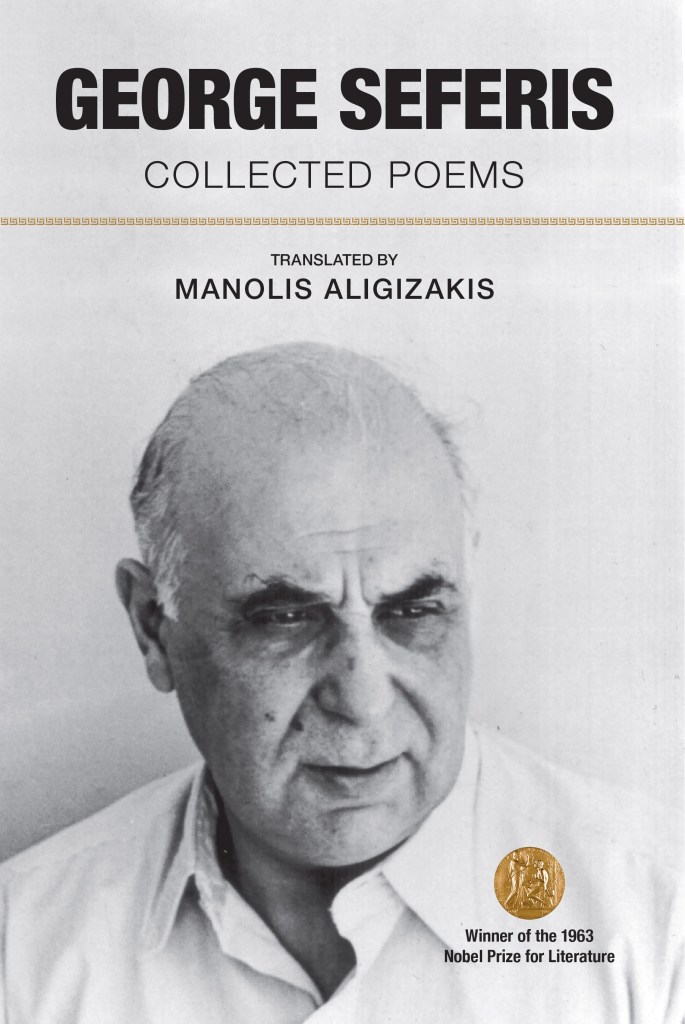






 Manolis Aligizakis