The Club Winter began. It rained constantly. This was the regular Vancouver weather: rain and rain again, and when one surely suffered from boredom, it rained some more. It only took a few minutes for one to get drenched. Just like today, when he was at the train yard on Drake Street, where they maintained the train engines of the Canadian Pacific Railway Company, one of the biggest in Canada. It was so quiet that one could only hear the mechanics’ voices in the shop. The labourers outside were performing their duties to prepare the engines for another day before they would leave to pull the passenger train carrying passengers or the freight train carrying goods across this great land called Canada. These yard engines also needed their regular maintenance and there were times when one of those was parked on a line, waiting for its turn to get into the shop; and while the engine was waiting to get inside and get repaired the engine was on, burning fuel for hours on since as one mechanic put it once, it was better to have the engine running rather than risk of the engine being unable to start once shut off. Mike was standing behind the fogged-up window and looked at the yard where the rain kept on dripping, steadily, quietly, poetically, he’d say, creating a sound, subdued sound, almost melodic, a sound of this world, a song one would sing, as the lone mechanic at the coffee house looked into the pages of a Penthouse magazine with the beautiful female bodies, almost naked, and his saliva was dripping out of his mouth. They had nothing to do for a while, until the three engines that pulled the passenger train arrived to get serviced…
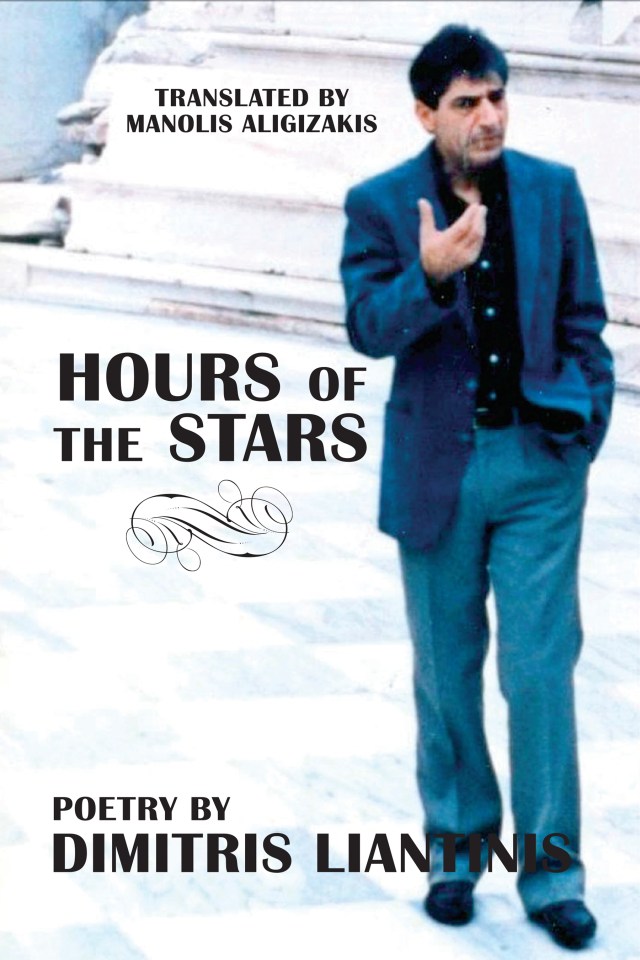
…Only that the fools don’t sense you the unjust and the dedicated to hatred never let their tumbled glance reach you their infected breath the cactuses of their hands the spider webs of their minds. Your chaste people welcome the foreigner when silently they drink the mouth of the sea and eat along with the months they touch your chlamys in the blowing out of the lightning and their hands, petrified does, show you. Familiar unknown. Liantinis yet hasn’t said his meaning and his explanation of truth, the last word of GEMMA. At some time the fingers of time will laugh with the lot of unsubstantiated and foolish reports written and said about his life, about our common path and his final course of action. However even then nothing will be changed.
~ Nikolitsa Georgopoulos-Liantinis, Kifisia, 1st of June 2006
Same Word The word that returns, multiplied, encouraged, and identical trembling as it wonders about its always unfamiliar meaning like the fragile nerve that constantly shivers and bursts under the eye of the beautiful woman, while her eyelids, long and curly, are fixated on the invisible, to stop a further movement. Then the voice of the young milkman is heard by the garden door. Everything is as natural as they are sad like their sudden shadow that spread comfortably in the air, and shrank, thickened, dark, narrow shadow, glued onto the metal wall, on the inside part of the safe.
Gravestone Eros descends to cheer the melancholic youth who sits on the gravestone as if seeking his death in the whirl of love, while the widow tosses and turns in the pangs of the tormenting moon — You haven’t put the barbecue away when you plan to do it, at midnight? Echoes of voices from the city arouse the widow’s sexuality, dressing her skin in the whiteness of the jasmine flowers. Never close your eyes in front of the most desperate death, don’t ever close your eyes in front of the most deplorable killing — I want you to tighten the screw of this faucet the water splashes all over my sink Nothing matters more than the armchair craving my body as the widow craves her late husband — I want you to polish the dining room table and chairs: hear me? I had in mind to write a poem when suddenly my wife, a new Armageddon demanded her share of my time —I want you to sit here and look straight into my eyes all day long!
Pip: Manolis Aligizakis has built something unusual here — a publishing project that reaches across Greek modernism, Canadian wilderness fiction, and the body's most private reckonings, all without losing the thread.
Mara: vequinox brings all of it together on this site — poetry in translation, prose fiction, landscape verse, and work that sits right at the edge of desire and survival. Let's start with the Greek poets and what exile actually costs.
Greek Poetry And Exile
Pip: The question running through these translations is what happens to a person when society decides they no longer belong — whether that exile is political, psychological, or simply the condition of seeing clearly.
Mara: Tasos Livaditis puts it with terrible precision: "Things have changed; these days, they don't kill. They only point at you with the finger; it is enough. Then, they make a circle that always becomes smaller; they slowly get closer you retreat against the wall, until in desperation you, alone, open a hole to hide in it."
Pip: So the modern machinery of exclusion doesn't need violence — the circle itself is the punishment. Shrinking space does the work that a bullet used to do.
Mara: Yannis Ritsos works the same territory across two volumes here. In the Exile Diaries poem from Volume III, a woman lighting a heater in the cold becomes the whole landscape: "the wind took her place in the room." Volume IV's "Unacceptable" shows a man who discovers some final truth and goes silent — and is convicted unanimously for that silence.
Pip: Silence as a verdict. That's a neat trick the powerful have always loved.
Mara: Antony Fostieris frames it inward — "Behind our eyes, silent and crouched, we look at the world out there like through the skylight of a prison." And Titos Patrikios, in "Movie Theater," finds a strange truce: torturer and tortured sitting together in the dark, briefly unknown to each other, briefly friends.
Pip: Two hours of cinema as the only available ceasefire.
Mara: Katerina Anghelaki Rooke's poem watches a worm destroy the September harvest and ends simply: "oh Greece, the next morning I found you changed." Kariotakis and Polydouri give us verses described as blood and heart given away like tears. And the collection "Entropy" reaches for something longer — an eternal Odyssey made of "sails, sphinxes and shipwrecks."
Mara: The review of "Introspection" calls all of this a deliberate strategy: "the inward gaze does not lead to withdrawal or passivity — the inner depths become the place from which the confrontation with the world begins."
Pip: Introspection as a launching pad, not a hiding place. That tension between turning inward and turning outward runs straight into the work on desire.
Desire, Body, And Intimacy
Pip: These pieces ask what the body wants when the world outside it has become unbearable — and whether that wanting is survival or its opposite.
Mara: "HEAR ME OUT" answers that directly. The narrator in the tub watches the water turn pink and thinks: "I was again in the same spot, wrapped in my old warmth. And the foolish people who said, 'It's too late for her, unfortunately…' What 'too late?' For me, everything was just starting."
Pip: A return to the womb framed as a beginning. That is one of the more devastating reversals in any of this material.
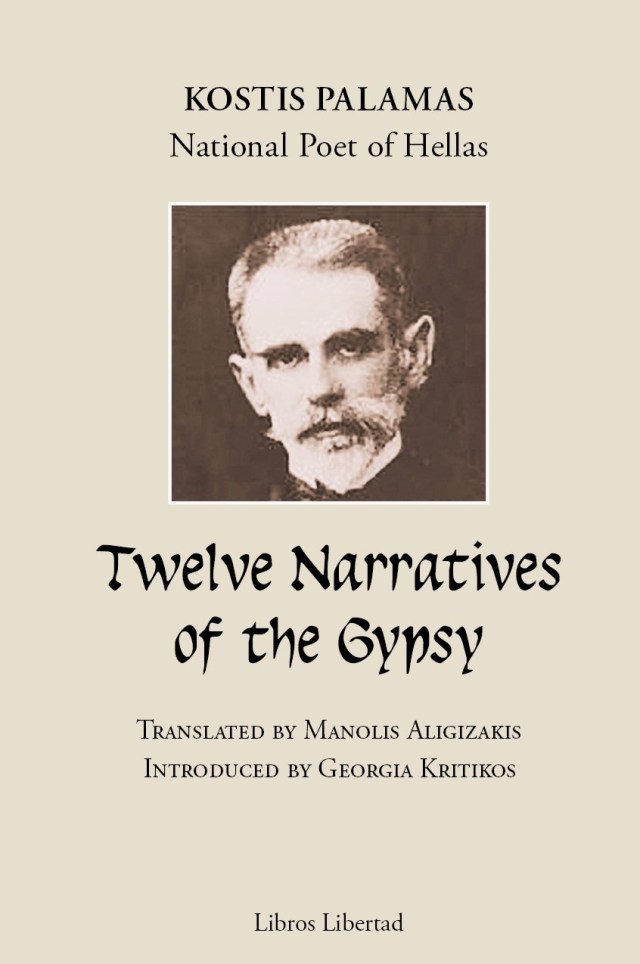
Mara: "Twelve Narratives of the Gypsy" places desire in a completely different register — elemental, uncontained, bodies by a river's edge "yearning for erotic apexes." "Orange" is sharper and more compressed: a "brazen thief that leads my mind to an erotic voyage." And "Ugga" strips it to the bone — breast, pen, milk, ink, the acts of suckling and writing placed in the same short breath.
Pip: Eros and language as the same bodily function. Honestly, not the worst theory of poetry.
Mara: "Chthonian Bodies" and "Wellspring of Love" pull toward tenderness and community — people sheltering each other, coffee on the stove, the small negotiations of care. The body here is less a site of crisis and more a place where ordinary life quietly insists on continuing.
Pip: From the tub to the kitchen table — and somehow both feel like resistance. The fictional lives in this work carry the same weight.
Fictional Lives And Moral Reckonings
Pip: The prose fiction here keeps returning to a single question: what do you do with a father, a priest, a painter, a spy — someone whose life demands a reckoning you are not prepared to give?
Mara: "Ken Kirkby: A Painter's Quest for Canada" opens that reckoning in the wilderness. The excerpt describes a night under the northern lights: "It was as if we were laying on the floor of a cathedral the size of the universe. The earth was no longer an issue — we weren't even part of the planet. I can see how religions began."
Pip: A man who locks himself in a studio for seven months to finish a painting after an experience like that — that's not dedication, that's a response to having seen something you can't unfold into ordinary language.
Mara: "He Rode Tall" puts a son back at his estranged father's grave on the prairie and lands on something quieter but just as large: "Joel recognized that your dad is always your dad. No matter what." The bitterness is still there; so is the prayer.
Pip: Grief and grievance occupying exactly the same space. That's the whole novel in one sentence.
Mara: "The Unquiet Land" takes the reckoning into the church. Padraig, a priest whose past the village has never accepted, stands at the sacristy door knowing the congregation at the wedding ahead of him would come "their long knives drawn, their wild teeth gleaming like the fangs of wolves." The community's memory is longer than his redemption.
Pip: A priest haunted by his own congregation. That is a specific and very old kind of loneliness.
Mara: "Small Change" gives us Rick, a boy who out-argues a nun about the nature of sin and voluntary participation, and simply quits. "The Circle" follows a spy arranging his own exit, weighing contingencies over breakfast at the Sheraton. "Fury of the Wind" slows everything down to a saddle, a jar of cream, a kiss on a cheek — Ben's first gift to Sarah, now something she intends to keep.
Pip: A saddle cream on a windowsill as the axis of a relationship. Fiction earns its keep in the small things.
Mara: "Water in the Wilderness" holds the same domestic scale — Tyne waking to sleet, the smell of coffee, a friend who took a leave of absence just to sit nearby. Loyalty measured in presence, not in words.
Pip: All of these characters are navigating what they owe each other — and the landscape outside keeps pressing in on that question.
Nature, Weather, And Landscape
Pip: The natural world in this work is never just backdrop — it watches, it judges, and occasionally it outlasts everyone in the scene.
Mara: "Vespers" makes that explicit: "Ethereal spruce stands guarding our home secrets without her armour having lonely eyes, an assuming smile between arthritic limbs as if to remind me of duties that one performs without being asked, without being paid."
Pip: A tree with arthritic limbs and a sense of duty. Nature as the only reliable volunteer.
Mara: "Mythography" follows a creek answering the river rocks — it is going to the great Ocean, to melt and become "a whiff of air pasted on an autumn day, turning to a wish in the heart of a young lover." And "Wheat Ears" brings the landscape indoors, to a graveside: a dead cousin who seems ready to rise and sit by the sidewalk, and the living person balancing on a tightrope, naked from the waist down, trying to understand what the dead require.
Pip: The creek knows where it's going. The living, considerably less so.
Mara: What holds all of this together is the idea that looking inward and looking outward are the same motion — the exile, the body, the grave on the prairie, the spruce in the yard.
Pip: Poetry as homeland. That phrase from the Introspection review keeps coming back. Next time, we find out what else this site considers home.
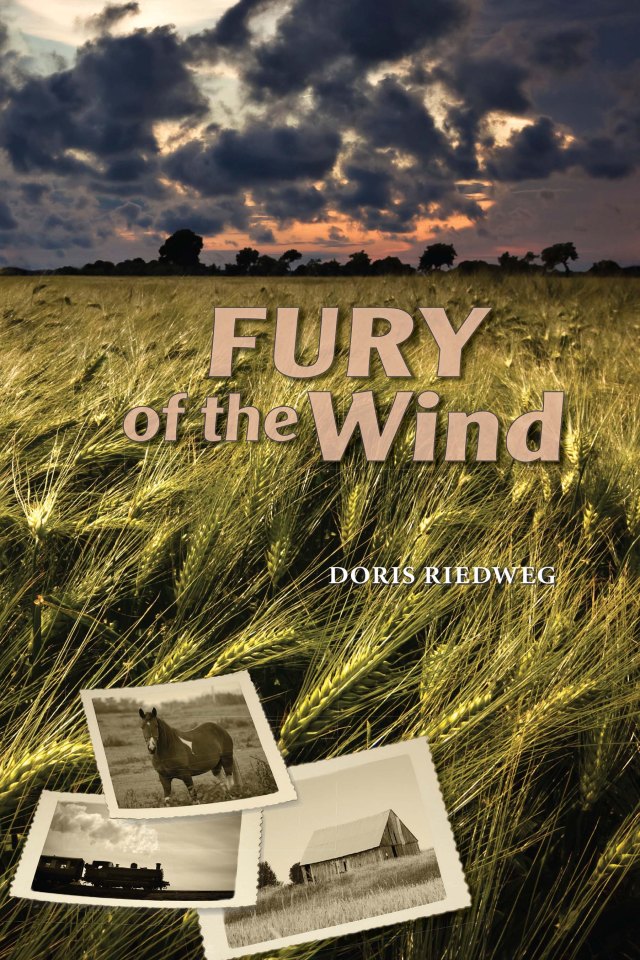
His face relaxed, but it took him several moments to answer. “Naw, it’s okay. I don’t know why I was saving it, but now you’ve seen it you may as well use it.” “Oh, thank you, Ben.” Sarah bent and kissed his cheek and, with a light step, she went into the kitchen. “The saddle cream is on the window sill,” he called after her. “I found it on the floor. Guess Flicka knocked it down.” Sarah smiled. She would need it now more than ever. She intended to take very good care of that saddle, Ben’s first gift to her.
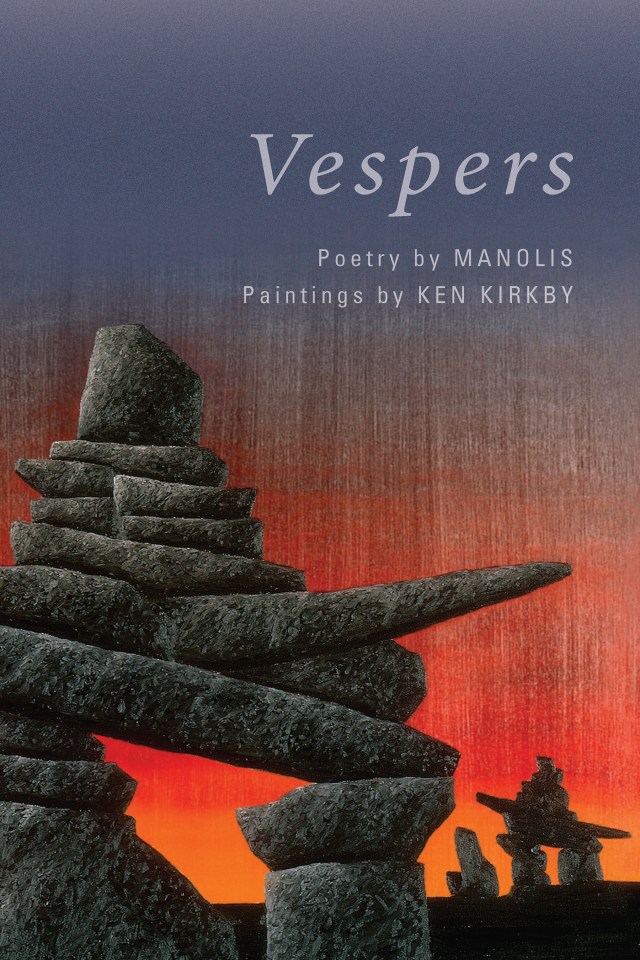
Guard Ethereal spruce stands guarding our home secrets without her armour having lonely eyes, an assuming smile between arthritic limbs as if to remind me of duties that one performs without being asked, without being paid, yet nature has a way of sharing her wisdom to the open-minded leaving the blind to stay blind until his or her depth also comes to conceive of greatness its meaning by one’s own eyes, by one’s heart
Pigsty Things have changed; these days, they don’t kill. They only point at you with the finger; it is enough. Then, they make a circle that always becomes smaller; they slowly get closer you retreat against the wall, until in desperation you, alone, open a hole to hide in it. When the circle was cleared, another respectable, lovable man stood in its place.
Pink The arm water in the filled tub turned slowly pink. Blood flowed in the water, creating a warm sensation around my body. I wasn’t cold; I didn’t feel anything at all. I listened to the soft music coming from the room, and as I was dipped in the tub I saw the water changing colour, turning into deep red. And I felt sleepy, and I let myself be carried away by the soft music and the warmth of the water and I felt more and more sleepy. I closed my eyes. Listened to the music and to my heartbeats being slower and weaker from before as my strength left me and I was wrapped by the warm water like being in a pink cloud. And I felt, lighter and lighter… As if I had no weight, no body, nor soul. And I was sleepy. Finally I wanted to sleep, to sleep. “Leave me alone,” I said to those who tried to wake me up, “leave me alone” And I was lost in the pink cloud in the warmth of the uterus that had nourished me and then suddenly had thrown me out there into the cold and gray world. I wasn’t told about this. Nine months it had allowed me to believe that it was to be the same all along a pink bubble gum with the taste of strawberry and warmth that wrapped me and protected me. But I was fooled! Now I was again in the same spot, wrapped in my old warmth. And the foolish people who said, “It’s too late for her, unfortunately…” What “too late?” For me, everything was just starting.
And others, as of unquenched thirst, victims of insatiable fairies, stood by the river’s edge as if forever rooted and yearning for erotic apexes with their palms and other times with their mouths they bend down to the ground. And others just out of their sleep as if tied in their sleep, you could say they were coupling wherever they happened to be onto the barren breast of the earth or on the softest grass and they had bulrush branches laid as beds and rocks for pillows; and they were by the river’s edge and in shores and in trenches as if embalmed bodies as if undissolved corpses delivered of their passions…