“She is a real renaissance mistress.” Then the sirens blew for an air raid warning, bringing me back to monstrous cramps and headache. Can you explain this apparition? Is it a pure elemental? A form from naid or dryad realms? Am I alone in encountering such phenomena ? I feel exhausted and confused by experiences like these but I know I must persist. My growing sense of isolation is compounded by my social situation. As a Scholarship boy from a Cardiff grammar school I find it hard to fit into this genial squirearchy of rugby players and would-be lawyers, whose rituals revolve around sconces of beer and Bump Suppers. The few apologists for the Left have a totally sentimental notion of ‘working-class life’ in industrial areas. I have refused to be their mascot. My tutors change constantly. I am anxious to serve my country but I’m told my medical history (TB and a childhood head injury that sometimes affects my vision) may well have grounded my dreams of flying; although I expect call-up papers at any time. In the meantime, it seems more important to raise one’s whole Being to the Gods than to tinker away with essays about the Scottish Chaucerians or the influence of Trollope. Your Brazen Head society sounds most attractive and it would be a great privilege to attend the next meeting. I could volunteer a paper on the Enochian Magic of Dr. John Dee, but feel I am indeed ready to go beyond academic research into collective working of rites. I think you would find me an eager pupil. Yours most sincerely in the fellowship of The Gods, Richard Firestone. (There are gaps, lacunae, broken spaces, and now the God of the Gaps is laughing at me, and I forget how many letters there were at this stage. I have a confused vision of a huge alcoved reception room, black walls, indigo recesses, old women in ratty furs natter coldly, a spider crawls down the chandelier, but it’s going too fast, I can’t get it down, I keep missing it, have to go on, on, into the summer of ’43 . . . )
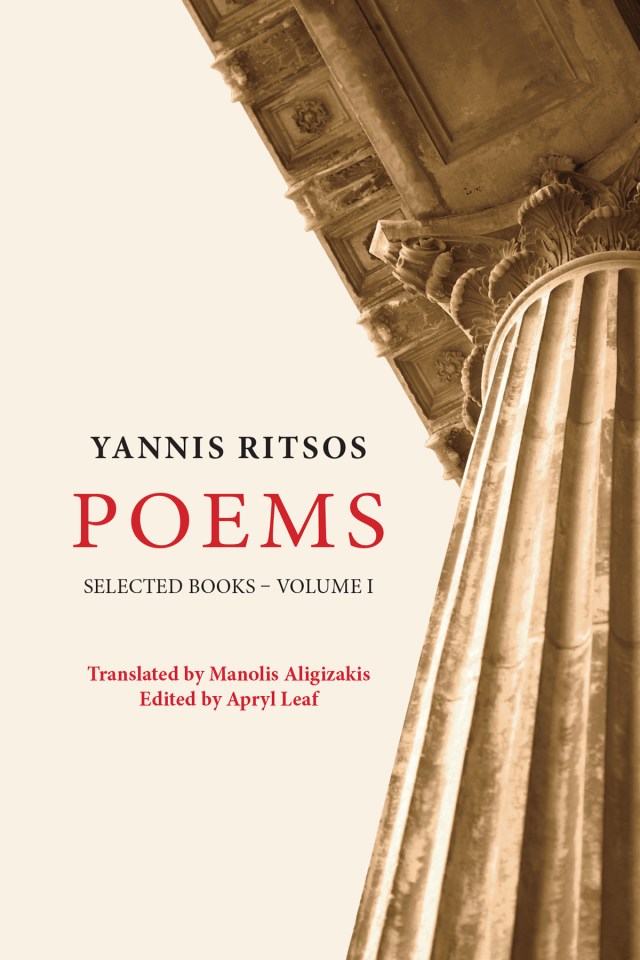
In Notes on the Margins of Time, the short poem does not merely reduce the scale of the longer lyric. It changes the reader’s experience of implication. “Doxology” concentrates its action into the relation between a damaged human figure and the sun he praises (93). The man resembles a dusty, leafless tree; the sun that has burned him remains beyond burning. The compactness prevents the relation from settling into a straightforward moral. Praise may suggest endurance, dependence, helplessness, or an affirmation made despite injury. The English is strongest in its refusal to explain which response should dominate.
The repeated tree establishes the man’s exposure before the final contrast arrives. The poem’s restraint matters more than any single ornamental effect. Its language lets the asymmetry between human vulnerability and the sun’s power remain visible. A more elaborately lyrical translation could easily turn that asymmetry into consolation. Here, the starkness permits a harder reading: praise does not prove that suffering has been reconciled with justice. It shows a human response whose dignity and difficulty cannot be separated.
“Hour of Song,” printed on the same page, similarly finds expression at a moment of deprivation rather than abundance. Wine and fruit are present when singing is forgotten; separation supplies the occasion on which song becomes necessary. The poem reverses the expectation that fullness generates art and loss merely silences it. Its short lines make that reversal almost ceremonially plain. Manolis’s uncluttered diction allows the relation between the two moments to remain the main event. The poem needs no explanation of why people sing; its arrangement of circumstances performs the explanation.
Elsewhere, the domestic image carries a more troubling psychological charge. In “Memory,” a father returns without greeting his family, while the others remain absorbed in their own relations (98). The child’s perception is organized by the father’s silence, the window, the storm, and the cross-shaped mark disclosed by lightning. What might have remained a minor household omission becomes a retrospective scene of separation. The poem is not simply remembering an event. It is showing how an event acquires meaning when remembered, and how the child’s image persists beyond the occasion that produced it.
This is an important test of English syntax. The delayed and repeated references to the father create a hesitation appropriate to recollection, yet some constructions are cumbersome enough to slow comprehension unnecessarily. The reader can distinguish that grammatical friction from the productive uncertainty of the image itself. What the window-cross signifies may remain open; who has failed to notice a greeting should be clear. The distinction matters because the poem’s emotional force depends on ordinary actions being apprehensible before their meanings become strange.
“Winter is Approaching” offers another powerful transformation of the domestic (97). A former hat becomes a place for chickens’ eggs, while a father’s stored collar helps define the coming cold. These objects have survived their original occasions of use, acquiring new functions or retaining an unsettling remnant of an old one. The trees’ association with mothballs brings seasonal change into the atmosphere of storage and inheritance. Such images demonstrate why Ritsos’s objects should not be reduced to emblems with fixed meanings. Their force comes from displaced use, touch, and memory.
The English miniatures are often successful precisely because they preserve this practical identity of things. A hat remains a hat even while it becomes a nest; a collar remains a piece of clothing even while it carries paternal distance. The material object is not discarded once the metaphor has been understood. Manolis’s plain nouns help maintain the double attention that these poems require. The reader must see both what an object is and what a particular history has made it capable of suggesting.
(If you like poetry of this kind, you may find more about this great poet in the following links)
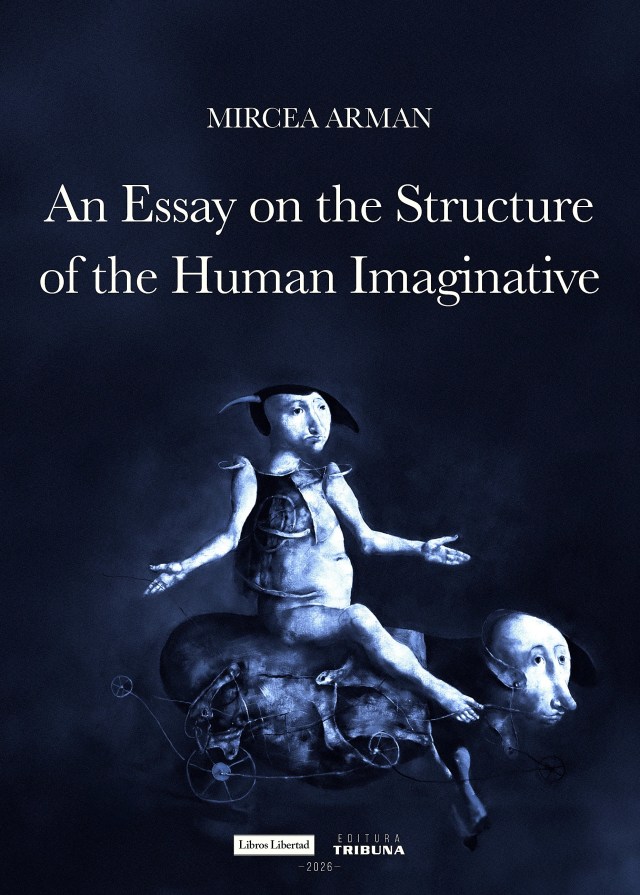
Of course, there is here a certain approximation of the concept of the Imaginative, a concept that Aristotle was unable to define in all its complexity. For this reason, the Stagirite appeals to a Prime Mover of divine origin. Time and space, as conceived in Hellenic philosophy and throughout the philosophical tradition up to Kant, were understood as factual, material elements. This made it impossible to comprehend the purely subjective re-creation of the world and the a priori forms of pure sensibility–namely, time and space as they are presented in the Critique of Pure Reason. The Imaginative, as the essential human faculty through which man re-creates the world out of pure transcendentality, could not be defined in that age, and Kant himself, together with those who followed him, failed to grasp this meaning. Within the Imaginative are encompassed both the human being and the world, together with everything that has been, is, or will be produced, both in the spiritual sense–which is primary–and in the material sense, which follows as a consequence of this Imaginative creation. Jules Verne’s submarines, computers, and smartphones are all fruits of this rational capacity of the Imaginative, which becomes reality and creates out of nothing. Nothingness–not as an object, but as an essential attribute of pure subjectivity–creates reality. This creation is rational, because the human intellect is capable of thinking only in terms of categories and reason. Kant’s philosophy merely raises the question of the possibility of a priori synthetic judgments. Yet the connection established by the possibility of synthesizing judgments that are independent of experience is attributed to a synthetic capacity of the inner sense residing within self-consciousness. Here lies the key to Kant’s philosophy, which maintains that thought is a concrete a priori…
Dangle An erect nipple dangles over my lips a game like tease or please, now you touch me now you don’t an unspoiled breast flashes the night sky playing with my flesh as a star loosens its footing now you see me now you don’t My descent is revealed