They eyed her curiously, some shyly, some brazenly, but few of them responded to her welcoming smile. Most of the boys, she realized, were gathered in their cloak room, reluctant to come out until the last minute. At nine o’clock she rang the brass bell sharply, and watched as five of them sauntered out with a great show of nonchalance. One little black-haired boy was already at his desk. Consulting the register, she decided that this must be Tommy Tippitt, the lone student in the second grade. Two other children named Tippitt responded to the roll call, one a girl in grade four, the other a boy in grade five. The girl, Annabelle, had the black hair and dark eyes of her younger brother, but the older boy’s complexion was lighter, his hair medium brown. Whenever Sarah looked at him, she found him staring at her with an insolent smirk. None of the children, except Joel Johnson whom she knew to be Arnold’s youngest child, were dressed well. But the Tippitt children were the most ragged of the lot. The dress code for the school appeared to be patched overalls for the boys and threadbare skirts with blouses or sweaters for the girls, but the Tippitt children’s clothes were not patched and, Sarah suspected, seldom washed. At noon, when all the students sat at their desks to eat their packed lunches, she couldn’t help but notice that the only item the Tippitt children pulled from their lard pails, which served as lunch boxes, was a single jam sandwich. Guiltily, she ate her own sandwiches and cookies. But she could not bring herself to eat, in front of them, one of the apples she had purchased the previous week from Mr. Stratton’s store. To Sarah’s surprise the day passed quickly. No sooner had she resumed afternoon lessons than the time came to dismiss. The older students slammed their books into their desk drawers in a disorderly mess then raced for the cloak rooms and the outside door. Tomorrow, Sarah told herself, she would give a few instructions on decorum. She had just finished helping the last grade one girl – little Alice Schroader – with her boots and mittens, when the door opened and Arnold Johnson walked in. He waited until Sarah had seen Alice and her two friends safely outside to where an older brother waited with a horse and cutter.
…(Thus like another spirit the most glorious soul trapped in the body’s narrow prison glass in the endless sea of thought wretched and winged it lives as in the motherland an abyss like an abyss too.) Teach me how to read secrets of the far and beyond in the school of your embrace in the sweetness of your kiss everything around calls you omniscient and wise only one thing you’re missing here, we together, the ONE!
Cenotaph For an ever-short moment I give life to my dream like mouth-to-mouth breaths before mind arranges today’s plan for washing and a visit to the cenotaph before the agitating need rising to find my sun place I give a new life to my dream as I take charge of duties endeavours moulded by routine life dares to stand unfettered in the window unruffled smiling affectionately at the blushing light
Pip: Manolis Aligizakis's site this week is running a quiet argument that poetry, fiction, and philosophy are all doing the same job — asking what survives when things fall apart.
Mara: vequinox has been busy. The posts cover Greek poetry in translation, the ache of desire and memory, and fiction that puts ordinary people inside systems that grind them down. Let's start with the translation work, because that's where the argument begins.
Greek Poetry, Translation, And The Limits Of Language
Pip: The core tension here is whether a poem can cross a language and still be the same poem — and what it means when the crossing leaves marks.
Mara: The AI review of Entropy frames it directly: "The translation's occasional friction can also suit a poet concerned with language that fails, changes or cannot fully carry an experience."
Pip: So the awkwardness isn't necessarily a flaw — it might be the point. A poet writing about entropy and dissolution probably doesn't want frictionless English.
Mara: That's the argument the review makes. It also notes the book lacks Greek originals alongside the English, which matters because sound and rhythm aren't decoration — they're the work itself. Readers can't check what they're receiving against what was sent.
Pip: The Antony Fostieris review lands in the same territory. Images like "black words suspended from a ceiling" survive the crossing with force, but the review asks the same unanswerable question: is the strangeness the poet's or the translator's?
Mara: Fostieris himself addresses this in an interview included in the volume. He describes translation and tradition as part of poetry's shared language, and prefers chronological presentation because it shows motifs in their "metamorphoses." The sequence of the book is itself an argument.
Pip: The Opera Bufa review adds a different angle — a poet building a theatrical cosmos out of Hours and Cantos, where a photograph pulled from a wallet can collapse the whole cosmic machinery into private grief.
Mara: And the Essay on the Structure of the Human Imaginative reaches back further, arguing that Greek anthropomorphism was inverted — the gods weren't made in the human image; the vigorous human body appeared as an image of divinity. That reframes everything the poets are doing with myth.
Pip: Cavafy's "Herod of Attica," Katerina Anghelaki-Rooke swimming toward death as a necklace of unimaginable value, Yannis Ritsos across two volumes — the site is assembling a kind of chorus, each voice asking what the body and the word can hold before they dissolve.
Mara: Ritsos's "Holiday" ends with masks that "vanished like the smoke of the last cigarette" the moment the milkman's voice arrives. The ordinary world cancels the performance. That image keeps returning across these posts in different forms.
Pip: Which is maybe the translation problem stated differently — some things only exist in the moment they're made, and the copy is always a little haunted.
Mara: From the cosmos and the word, the posts move somewhere more intimate — desire, longing, and what the body remembers.
Desire, Memory, And What The Body Holds
Pip: The Love, Loss, and Longing posts are less interested in grief as an event than in the texture of wanting — the way it lives in small sensory details.
Mara: Nostos and Algos puts it plainly: "the cricket insists to mimic your moans comparing it to that foggy light that stays quite erotically trapped between your legs."
Pip: The erotic and the elegiac are the same gesture here — desire recorded so precisely it already sounds like memory.
Mara: Orange catches a different register: a glance across a restaurant, legs crossed almost indifferently, a smile that pretends not to notice. Kariotakis-Polydouri gives the same longing a historical weight — two poets whose love story ended in tragedy, rendered in an evening poem where a train from a foreign land carries vanished dreams. Miltos Sachtouris's litany of neglected things — "the kiss that got sick," "the wound that shivered" — extends that into something almost liturgical. Marginal, Triptych, and Chthonian Bodies all circle the same territory: the self measured against what it cannot hold.
Pip: And from longing, the fiction asks what happens when the systems surrounding people are just as indifferent as loss.
Fiction, Systems, And The People Inside Them
Pip: The fiction here keeps placing ordinary people inside structures — bureaucratic, financial, political — and watching what the structure does to them.
Mara: Jazz with Ella sets the tone. A Soviet jazz musician named Volodya pulls a clipped magazine photograph of Ella Fitzgerald from his wallet and tells an American woman: "Some day I will go to America and meet Ella Feetzgerald." He adds, "The great Soviet state in its glory has given me another profession."
Pip: That line does a lot of work. The irony is his, not the narrator's — a musician who can't be a musician, carrying a folded dream in his pocket.
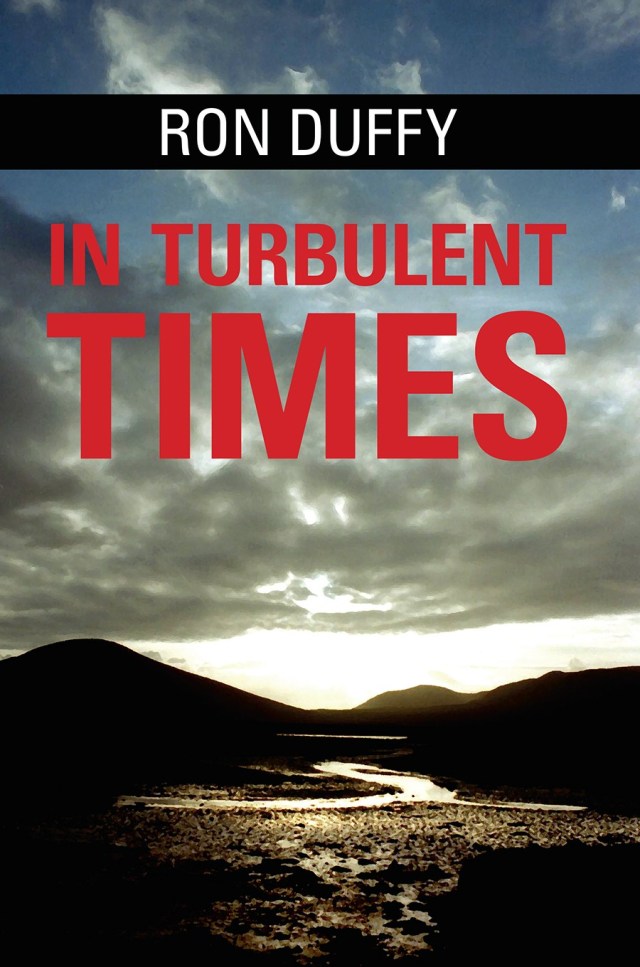
Mara: Swamped moves into financial markets, where share allocations and crossed warrants are the language of intimacy — a broker's phone calls to his girlfriend and his clients blur into the same transaction. In Turbulent Times places its characters in Belfast, where a casual waiting-room conversation about a sacked worker quietly maps the community fault lines beneath the small talk.
Pip: The Circle is the darkest of these. A man named Bevan writes two farewell letters before what the excerpt makes clear is a planned act of institutional exposure — he's breaking something from the inside, and the letters are the only record.
Mara: Ken Kirkby: Warrior Painter is a slight departure — a biographical portrait of a painter whose inner life runs on quantum mechanics and international correspondence, a man who built his own system entirely outside institutional credentialing.
Pip: Which puts him in the same position as Volodya, really. The dream is real; the official profession is the joke.
Mara: What holds all of this together is the same question the Entropy review names — the human urge to find connection within dissolution.
Pip: Poetry, fiction, biography — different forms, same argument. Next time, we'll see what else the site is building toward.
Bevan Longhorn is in his office and it’s the time of day when he usually leaves and goes to his place for the evening. But today, he doesn’t rush out and Dorothy comes to his door wondering what still keeps him there. She observes him for a good moment and thinks he resembles someone trying to locate something that refuses to be found. She says, “Are you staying for a while, Bevan? Do you need anything else from me? If you don’t, I think it’s time for me to leave.” He looks at the clock on the wall and agrees she should go. No, he doesn’t need anything from her; what he wants to do he has to do alone. “You can go, Dorothy; I don’t need anything else, thank you.” “Good night, then. I’ll see you tomorrow.” “Good night, Dorothy.” His mind takes him to the Saturday night party at Hakim’s. He wonders whether they’ll have what he wants, but he doesn’t want to call anybody at this time of the day and from this office. He’ll find out soon enough when he meets them; no need for panic at this time.He begins writing a letter to his sister Evelyn. Dear Evelyn, By the time you read these lines everything will be history. I ask for your forgiveness what I have decided to do and for not having been courageous enough to share it with you when I saw you last. After all, I’m not going to get the chance to retire with you and William in San Francisco. I have no regrets regarding my career and the way my life has unfolded throughout the years. It is, after all, the result of decisions I made myself. The only thing I regret is the way I chose to act, although I hope to affect a change in the ways this agency conducts itself and does business in future. I love taking the opportunity to change things; I hate the means I have chosen to make my point. Please forgive me for this. I love you, as always, your brother, Bevan. He seals the letter, writes his sister’s address on the envelope, and puts it in his briefcase. Then he writes a second letter to his buddy Jerry. My dearest Jerry, You are the only one who I can trust with this last word, since by the time you read this, all has taken place. I made my choice, I made my point. Jerry, ‘The Circle’, is broken. I have broken the base for all the wrong decisions the agency has made…
Polytomous Joyous dawn colorful and bright I salute you polytomous grass veins forging through soil hardened by time’s patient and immortal rigidity I still think of the underworld chthonian base of every spec celebrating above ground the first sun rays clinging to deities under the surface who we revere and how can we think of dusk at the time of dawn unless we contemplate thanatos in the youth of life both sunlit and dark pleats of the forever
Some of the others at school referred to Nick as Horse, but only when he wasn’t around to hear them. Nick was saying that he intended to marry Cocoa, but that she was an American. Before he could sponsor her for citizenship he had to prove his ability to support a dependent. Day jobs at the Labour Exchange didn’t bring in enough, and there wasn’t much demand elsewhere for high school dropouts like us. – Immigration says I have to have some savings. No bank account, no wedding. – Bureaucrats! I commiserated. – Bureau-what? – Motherfuckers, Nick. There was a record snowfall that November. We weren’t getting out much at the Labour Exchange and my friend was concerned about how little he’d been able to save. We were waiting for the call one afternoon, Nick whittling a whale, when the idea came to him: McDuff Snow Removal Inc. He figured to fatten his bank account shovelling walks. – What’s with the Inc.? – Sounds good. Official-like. – I’m impressed. Need a partner? We started knocking on doors along my street that same night. Neighbours felt sorry for us and tipped generously. Those who recognized Nick from the sports pages, or who knew our families, were an easy sell. You can always count on folks to get soft-headed at Christmas. But there were hundreds of homes in Renfrew Heights; most people didn’t know us.We were strangers pounding on their doors, solicitors with snow shovels. But even they paid their frostbitten help well. One housewife emptied her purse and said she’d give us more if we came back in a day or two. Another lady gave us $10 and a Christmas cake wrapped in tinfoil. Some old guy matched that amount and tossed in winter gloves for the both of us. He made them himself in a basement workshop. We had a late dinner at my house, Campbell’s Vegetable Soup Supreme, with plenty of crackers and tea. Mom dried our new gloves over the furnace.
And this little turn was already a great displacement, and certainly, almost a momentary freedom. Maria agreed as she passed the shadowy hallway, holding a glass water jar, as if she held an ancient moon for those who felt thirsty during the night; and the door handles were gleaming. Thus, time would pass until evening came when the rain would stop, the sun, deep bloodied, shone for the last time. At that time George appeared by the iron gate of the garden, son of Uncle Lampis, not a ghost of him, George in his whole body with the thick, muddied shoes, with a basket over his left arm and a bag on his right full of spinach, celery, and carrots. The children ran to the windows behind the curtains George, George, they yelled. Uncle John brought his finger to his lips, in a reproachful manner. No one uttered a word. In that silence inside the house the loud metallic arm of the weathervane was heard outside. Then George’s steps as he was leaving. However, he had come. The children had something to remember just before they went to bed, even after they fell asleep — a long summer and George, naked behind the oleanders, and running to the river, then the hunter’s leather bag with the seven killed wild doves hanging off his wet thigh. Uncle Lampis had secured two carrots on his forehead like two orange horns behind the blackberry bushes, and he hid it from us.
V Come, give me your hand and let us go for a walk under the moonlight until the Morning Star announces the sunlit dawn when you and I will welcome the first gleam and from the distant hillside we’ll smell the aromatic thyme come, let me relate to you about the voice of the young construction worker, faraway at the dusty site, who, alone and lonely worked that morning just as the rooster had called the day to attention, and he broke the loneliness of his heart with his honeyed voice your beautiful, blue eyes come, sit next to me, and let us get lost in the reverence of his melodic voice
‘Dr Hamilton. He asked me to come for a consultation.’ ‘Nothing wrong, I hope.’ ‘No. Nothing. Just routine. More like research for Dr Hamilton. How is the family?’ ‘We’re all here now, so we are. My Da manages Dogan’s pub on the Falls Road. Many of his old Republican cronies are still on the go and they all hang out in Dogan’s. Still the same Flynn Casey. Never changes.’ ‘I hope he behaves himself.’ ‘Well, you know my Da.’ ‘How is he, Dermot?’ ‘Fine, so he is. Fit and well and strong as a horse.’ ‘And Maire’s mother came to live with you after Ignatius died. How is Violet?’ ‘She’s going, Nora.’ Dermot became obviously emotional, almost close to tears. ‘She has breast cancer. Doctor says she could pass on any time now. Terrible sad, so it is.’ ‘Oh poor Violet. How’s Maire taking it?’ ‘Fairly well. She’s had time to get used to it, so she has. Like the rest of us. But it’s hard, Nora. It’s the waiting that’s an awful strain. Y’ know. Violet has been like a mother to me. The mother I never had. Or don’t remember.’ ‘Oh Dermot, it must be awful. My heart goes out to you.’ Ian returned from the hall. He was surprised to see Nora talking to a stranger. ‘Ian,’ Nora explained, ‘this is my cousin, Dermot Casey. Dermot, this is Ian Anderson. Ian is a cousin of Dr Hamilton’s wife.’ ‘Ian Anderson,’ Dermot repeated, shaking Ian’s hand. ‘You’re not the builder, are you?’ ‘Yes, I’m the builder.’ It was the first time Ian had been recognised as such. He was flattered. ‘Well how’s that then? A friend of mine works for you, Mr Anderson.’ ‘Really? What’s his name?’ ‘Pearse. Andy Pearse.’ ‘He used to work for me.’ ‘Left?’ ‘Sacked. He wasn’t very dependable.’ Dermot made a wry face. ‘Doesn’t sound like Andy to me, so it doesn’t. One of the best workers I ever knew. Worked too hard, I used to think. Oh well, poor old Andy. Back in the dole queue.’