I kept on closing to the reef helped by the waters with their light-blue blouses that had painted on them the cypresses from the cemetery on the opposite shore. The beautiful temptation had overtaken me: to not ever return again to close the underwater cycle around my neck, necklace of unimaginable value. As I swam farther out I slowly ripped the fabric of the sea I kicked down loves that surfaced I kicked them back to their weedy beds. Then I questioned myself if I had truly desired those acceptable shapes of the desirable, something between the subjected body and the empty talk. Eros is the only godly glance that might fall on us the unbelievers, I would say. Yet, look, how the sea with the blue eyelids arouses me now I’m lasciviously scared and I float on ditch water not knowing where it takes me because I walk on the invisible side of lust: death.
Humour is an intrinsic part of Ken’s make-up but if you want to scratch the surface of the real Kirkby, you need to have an elastic mind. His secret life, as he refers to it, revolves around more complex thinking than the average person is prepared to enter into. Quantum mechanics is not a subject he expounds on readily because, aware as he is that he doesn’t fit into the comfortable mould most of us consider to be normal, and because he doesn’t enjoy one-sided conversations all that much, there are only a few special and close friends that are privy to discussions on what is broadly termed quantum theory. I find it curious that this subject is a puzzle that people run from. I’ve tried to fathom why they find it so irritating, and this is what I have come up with. We’ve been trained so thoroughly to believe that certain things are the property of ‘special’ people—the elite, the priests, geniuses, the scientists—and unless you are credentialed you do not even have the right to talk about those things. We bump into this in attitude at every turn of life—before people allow themselves to listen, they ask, “What training do you have in this subject?” Why should testimonials matter if you have an intelligent thought that merits discussion? Because you can’t explain in medical terms exactly how your brain works, does that mean you should not have one? The mental acuity required to follow the intricate pathways of this thinking process brings Ken enormous pleasure. As his own dad did, Ken corresponds internationally with stimulating and enquiring thinkers. But that, too, had to be sidelined while he put the shattered pieces of his life…
Lonely Lonely hair dances in a serene rhythm on my middle finger seeking anonymously to hide in spasmodic breaths of moist air under your bed sheet and the cricket insists to mimic your moans comparing it to that foggy light that stays quite erotically trapped between your legs and you say touch me now, touch me here where my blood shivers with delight
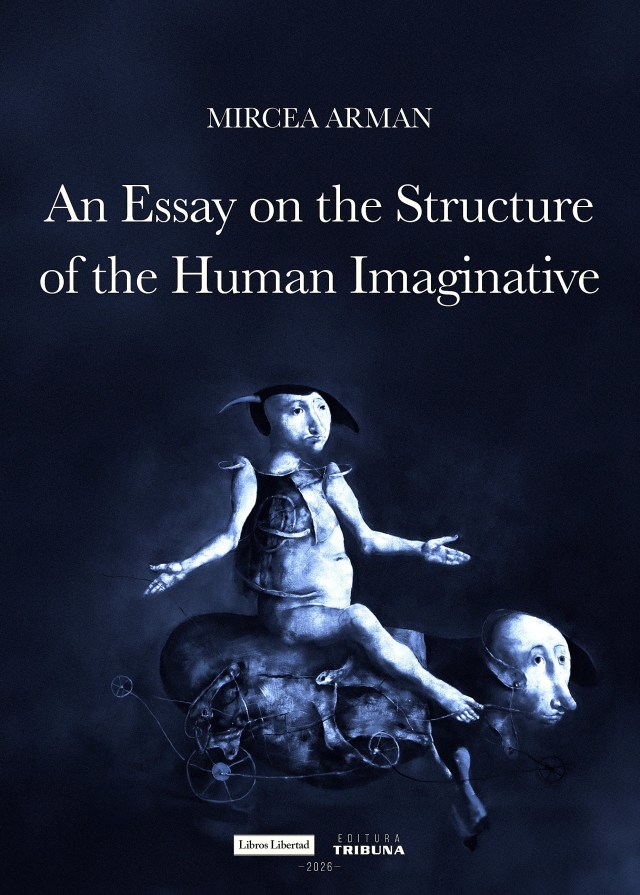
Regardless of how events actually unfolded in the sanctuary of Delphi, it is certain that this solar cult of Apollo had an immense influence on the formation of the Greek poietic Imaginative. In this respect, Nietzsche’s study of the problem has remained definitive down to the present day. On the other hand, returning to the thread of our discussion, scholars of the stature of Murray or Bowra consider that the socalled Homeric religion was by no means a religion in the proper sense, since the true religious belief of the Greeks prior to the 4th century BCE has nothing in common with the luminous forms of Olympus. Thus, Bowra emphasises that the anthropomorphic aspect of this system, developed by the Homeric individual Imaginative, has no connection with the actual religion and morality of Greek society of that time. In this way, the view of those who claim that there existed a profoundly anthropomorphic religion of the ancient Greeks–a position with which we have already disagreed from the outset–proves to be a profound error. Likewise, taking into account the research of Dodds and others, we shall attempt to remove another persistent prejudice concerning the Greek religion and the Greek human being: namely, their supposed extreme and exclusive rationality. But what does the term anthropomorphism actually mean with respect to the Greek poietic Imaginative in its representation of the gods? It does not mean, in any case, that the gods were conceived and represented according to the image of human beings. On the contrary, the situation is reversed: the vigor and freshness of the youthful human body appeared as an image of divinity.
“Gennadi is crazy about music. He wants to talk to you about American rock bands. Dmitri doesn’t like music. He likes nothing but his dinner—and his vodka.” The young men laughed loudly. “I like jazz music,” he went on switching easily to English. “May I ask you something most wonderful?” “Yes, you may,” she said, laughing. She was prepared for the usual questions that, to date, all the Soviets had asked: Where did you learn Russian? Do you have children? Where do you work? How much do you earn? But Volodya surprised her. As they passed a stone bench, he stopped, sat down and pulled something from his pocket. The other two men came closer to see, smiling at Jennifer and suddenly shy. Volodya flipped open a wallet and pulled out a photograph. “Look here. Do you know who that is?” Jennifer took the photo and examined it. It had been clipped from a magazine and had obviously been folded and re-folded before finding its present home. The wide flat nose and plain features were unmistakable. “It’s Ella Fitzgerald, the jazz singer.” “Yes, yes, Ella Feetzgerald.” Volodya sucked in his breath dramatically. “Some day I will go to America and meet Ella Feetzgerald.” “Why her?” Jennifer asked. “Do you like her music?” “Yes, I am jazz musician. Of course, I don’t play all the time. The great Soviet state in its glory has given me another profession.…” Gennadi broke into the conversation after picking up the one word of interest—music. He looked Jennifer in the eyes and asked earnestly, “Maybe you can send me rock records when you return. Please, do you know any of these bands?” And he began to reel off names that he had memorized in English: Deep Purple, Blood Sweat and Tears, 1910 Fruitgum Company. Jennifer recognized them as pop groups and not her thing, but she promised to look into it. Bored with this conversation, Volodya got up from his stone bench to walk again, and the little group immediately moved with him. Just as if they had not been interrupted, he began to tell her about how he made his living—though he dismissed the employment as contemptible. He had once worked for Intourist, he said proudly, spoke English and Japanese fluently, and had spent two years during the height of the cold war escorting elderly American tourists, handing out badly written pamphlets praising Lenin and explaining how communism had helped build art galleries and museums.
At the Restaurant You walked by me sweet breeze of flowing hair light scent of your aroma bounced between our eyes that met midway; you saw me clinking to my mate before I tasted my wine and wanting to claim part of that charm, you crossed your legs almost indifferently under the table to reveal the line that controls the eyes of men I smiled absentmindedly towards you and you pretended you didn’t notice, though almost innocently you played the game of Eros and when the nightmare will wake you up you’ll take a deep breath and smiling, you will think: ‘I provoked the glance of that middle-aged man’s didn’t I?’
Evening The children who play in the spring dusk far away echo — the breeze whispers and remains in the lips of the rose petals the open windows that breathe the hour my vacant room — a train coming from a foreign land my vanished dreams chime of bells that fades, evening that descends onto the city — onto the faces of people, into the mirror of the sky in all my life right now.
VI The neglected is the crucified soldier the neglected one is the clock that stopped the neglected one is the little branch that caught fire the neglected one is the needle that broke the neglected one is the bloomed Epitaphios the neglected one is the hand which aimed the neglected one is the wound that shivered the neglected one is the kiss that got sick the neglected one is the knife that missed its target the neglected one is the mud which dried the neglected one is the fever that went down
Store Window You grasp the unthinkable from the gap behind your forehead or sunny meadow and by inverting it acquire some spasm of logic unexpected for that place and point the thought of my existence staring from the store window and discovering loneliness without the phantom of her or something she relates to your idol craves some discussion as the unthinkable turns to solid unused space between your temples and unspent wisdom to flashy glitter in the glass of a grocery store window
Aligizakis’s English translation makes the book available as an extensive, chronological encounter, and many images retain memorable force: the ant’s winter seeds, the black words suspended from a ceiling, the gear glimpsed at the edge of vision. The translation also preserves the poems’ shifts between colloquial speech, philosophical reflection, biblical language, and abrupt surrealism. At points, however, English syntax feels stiff or opaque, and some collocations sound unusual enough to distract from the image. That texture can make the reader pause productively, but it can also blur whether a phrase’s strangeness is deliberate or translational. Without comparing the Greek originals, one cannot confidently assign those effects to either poet or translator. The introduction’s account of Fostieris’s rhythmic and linguistic range is useful, though its sweeping critical language is less persuasive than the poems themselves. The interview is more illuminating: Fostieris describes translation and tradition as part of poetry’s shared language, and prefers chronological presentation because it shows motifs in their “metamorphoses.” The book’s sequence bears out that claim. For English-language readers, this volume offers more than an introduction to a contemporary Greek poet; it offers a sustained encounter with a poetic intelligence that distrusts easy oppositions. Fostieris’s poems are not transparent meditations: they invite rereading, and their occasional obscurity belongs partly to a project that questions how words and concepts mediate experience. Yet their questions travel. What does memory preserve? Can thought touch the world without remaking it? What does poetry do with the knowledge that bodies and words decay? Across five decades, Fostieris answers not with doctrine but with images that keep changing their terms. This selection’s strongest achievement is to make that change visible. Its long voyage moves toward no final shore, but teaches the reader to notice the seconds, bodies, voices, and vanishing meanings encountered along the way.