A Slice of Moon With Watermelon Fragrance It always appears early, when it’s the new moon. Stars hadn’t yet appeared and the moon, just a little slice! One could discern the rest of its body around, as if in fog, as if a body hidden behind a curtain, you see it mostly in your imagination, yet you know it is there, a real, alive moon that you will be able to touch in a few days. And you’re happy to wait, to long for it and imagine it. There was a moist anticipation in the air and the breeze, consistent as it was, from the south and pierced your bones and the old wounds in a sweet kind of way. My dry lips till had the taste of the watermelon we ate at lunch time and now, evening already, my glance was glued high up in the sky. And that moon, a watermelon slice, I ate earlier in the day and had thrown the leftover into the garbage bin. A small, tiny, lighted and persistent moon telling me that summer was just beginning and the watermelon will last for a long time.
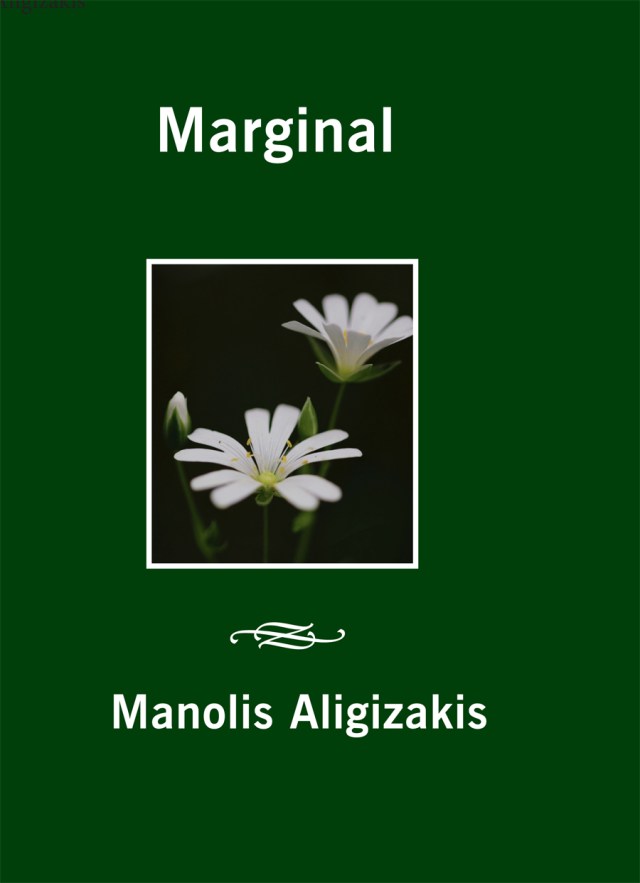
At the Margins of Existence: Love, Exile and Mortality in Marginal
This seasonal structure is fundamental. Autumn and winter repeatedly signify ageing, loneliness and approaching death; spring signals erotic renewal, resurrection and possibility. This poet’s universe therefore remains tragic without becoming nihilistic. The later sequence “Longing,” consisting of fourteen numbered poems, concentrates these concerns into a more intimate and meditative form. Its recurring invitation “Come, sit next to me” changes the relationship between the poet and the addressee. The voice becomes conversational, almost testamentary. The speaker wishes to remember love, political dreams, failures, friends, unnamed victims, forgotten workers, soldiers and the people whose history exists outside its official narrative. Here the connection with The Incidentals becomes explicit. One poem recalls the revolution that was never begun and the world that was never changed, then sings for those “incidentals” who never raised banners or became heroes. Another goes further and demands that these anonymous people finally be made heroic, because they lived so that others could receive glory.
This is perhaps one of the most important developments in Aligizakis’s recent poetry. The marginal and the incidental become related categories. Both designate those excluded from the centre of historical narration. Poetry becomes an act of restitution: it gives them the page they were denied. Stylistically, Marginal moves between short lyrical poems and expansive free-verse meditations. Aligizakis often relies on accumulation rather than conventional narrative development. Image follows image through associative logic: flower, flesh, sunbeam, mythological figure, household object, political allusion, death, memory. Punctuation is frequently minimized, creating long currents of thought in which perception seems to precede grammatical organization. At its strongest, this technique creates remarkable fluidity. The poems appear to move as memory itself moves—suddenly, irrationally, sensually. A flower may open onto childhood; a body onto mythology; a window onto mortality; an abandoned house onto the mystery of origin.
“Pilgrimage” is among the volume’s finest examples. The speaker returns to the family home, not simply as a visitor but as someone searching for the place where his existence began. Four walls, rocks, wind, the location of the childhood crib and the orientation of the door become coordinates of personal mythology. The house is a finite space placed inside infinity. Biography becomes metaphysics. This exploration continues in “Wisdom of the Nude,” where the abandoned family home becomes associated with an abandoned body, and absence itself becomes a form of knowledge. Such poems reveal Aligizakis at his most compelling: personal memory is neither memoir nor nostalgia but material for ontological inquiry. The volume is not without excess. Aligizakis frequently returns to the same constellation of images—flowers, irises, Eros, death, light, statues, female beauty, loneliness, ancient Greek mythology—and some poems state philosophically what their imagery has already conveyed more effectively. Erotic rhetoric can likewise become so insistent that individual images lose some of their uniqueness. Yet repetition in Marginal also functions almost musically. These motifs return like themes in a long composition, altered slightly by age, memory and context. And repetition is appropriate to a book about ageing.
The older consciousness does not simply advance. It circles. It revisits. It asks again. It remembers differently. The final movement of Longing therefore offers an appropriate culmination. The lovers sit together at dawn and look toward the first rays of light. Their love becomes “blessing,” “endurance,” and “eternity,” and the concluding vision imagines them giving birth metaphorically to a new generation of immortals. This is not naïve immortality. Aligizakis knows too much about death for that. The immortality envisioned by Marginal is the human refusal to let death possess the whole meaning of life.
We die, but we have loved. We disappear, but someone remembers our voice. The homeland changes, but the landscape survives in language. The house becomes empty, but the first cry of the child remains somewhere between its walls. The lover vanishes, but her shadow continues to occupy the arms of memory. The immigrant may remain marginal, yet the very margin from which he speaks allows him to see what those standing comfortably at the centre often cannot. And perhaps this is the central achievement of Marginal. Manolis Aligizakis transforms marginality from a condition of deprivation into a privileged poetic perspective. From the edge, the structures of the centre become visible. From exile, homeland can be questioned. From old age, youth can be understood differently. From loneliness, love acquires its full weight. From the proximity of death, the body becomes luminous. Marginal is therefore a book of boundaries, but also of their transgression. Its poetry continually inhabits the narrow strip between the temporary and the eternal. And in that uncertain territory, among flowers, bodies, memories, myths, empty rooms and returning light, the poet finds what poetry has always sought: not an escape from mortality, but a language capable of standing before it.
HARVEST OF THE GRAPES excerpt The grapevine blooms and spreads its vines over the bulrushes and cypress branches in riverbeds and in crevasses full of rocks it spreads its fragrance with every stirring of the air, as on the hillsides, mountains and the plains great swarms of bees rouse from their hives to drink the vine’s ethereal smells and forage on its pistils full of nectar and spread the news in buzzing eulogies. Girls of the village start their day, following nature’s wisdom to their orchards and their groves, on mountains and plains, with baskets, joyful and with songs. The gathering and harvesting begin, and the countryside awakens to their sweat and girlish scents and every grapevine row as if arising from the earth brings forth new chthonian fairies…
Three Poems About Sorrow I The spider and my life but an erotic summary sorrow of the leaf small organism of nothing. In each of my corners a trapped lion a desperate ant an extreme shadow of light and I’m even grayer than yesterday. I sweeten time with a childish Heaven till the day one day that I’ll find courage in death.
…whatever it takes to reach that point. He wants to make sure Emily understands that right now he has to play along and do as Hakim says. The old man and Talal’s promise to him hold him to that resolve; he has to follow this path for a while yet, but things are going to change soon. Things will change as soon as they get to Iraq and Talal has his own personal group of men to work with. “No Emily, no, he answers her, but leave that to me for now. However, I promise you that over there we’ll be respected by a lot of people. We’ll be listened to a lot more than we are here; we’re going to be treated like royalty when we are there, and you’ll be next to me when I command a lot of people to do as I please, you’ll see. Leave this to me; our time is on its way. I won’t have to obey Hakim or do whatever he wants me to do every time.” Emily gets up and puts her robe on, feeling somewhat skeptical and disheartened. From one point of view, she understands Talal has to do things for Hakim; he has promised that to Ibrahim and a man’s promise is like gold when the man is a man, as this man is in her eyes. However, she would like him to have some independence and do as he pleases. She doesn’t know how to address this at this time, so she leaves it alone for now. But, she is sure of one thing—Talal is her man and her man won’t be a follower the way Matthew was his entire life. Talal kisses her at the door and leaves. He meets Hakim at the park entrance; finds him agitated and asks why. “What is it? You look upset.” “Ibrahim is not well. I’m afraid I may have to go for a while. It all depends on how his biopsies turn out. I’ll find out soon.What’s new with you?” “Ahmed has got the package; I’ll bring it for the Admiral on Saturday.” “Excellent; what else do you know?” “Nothing much. We need George Pappas to show up and list the house; have you talked to him?” Hakim takes his mobile phone and dials George’s number. “George, this is Hakim; I have some more business for you. Jennifer’s mother wants to list her house for sale; can you go by there tonight and get the paperwork done?” George agrees. “It’s done; seven o’clock at Emily’s house.” Hakim is pleased. “Good, now we can start getting ready to go. I’m going to let go of a few shares in the next couple of days to finance our next trip.” Talal says. “Just give it a few days. I had a conversation with my broker in New York and he’s looking for a potential buyer. If we are lucky, we may see the price of stock improve a lot in a short while.”
Pip: Manolis Aligizakis runs a site where Greek modernist poetry, frontier fiction, and poems about desire share the same digital neighborhood — which is either a very ambitious curatorial vision or the world's most eclectic bookshelf.
Mara: vequinox has been posting across all of that territory this week — translations of major Greek poets, a wide range of fiction excerpts, and poetry collections that sit somewhere between the surreal and the visceral. Let's start with the Greek poetry translations.
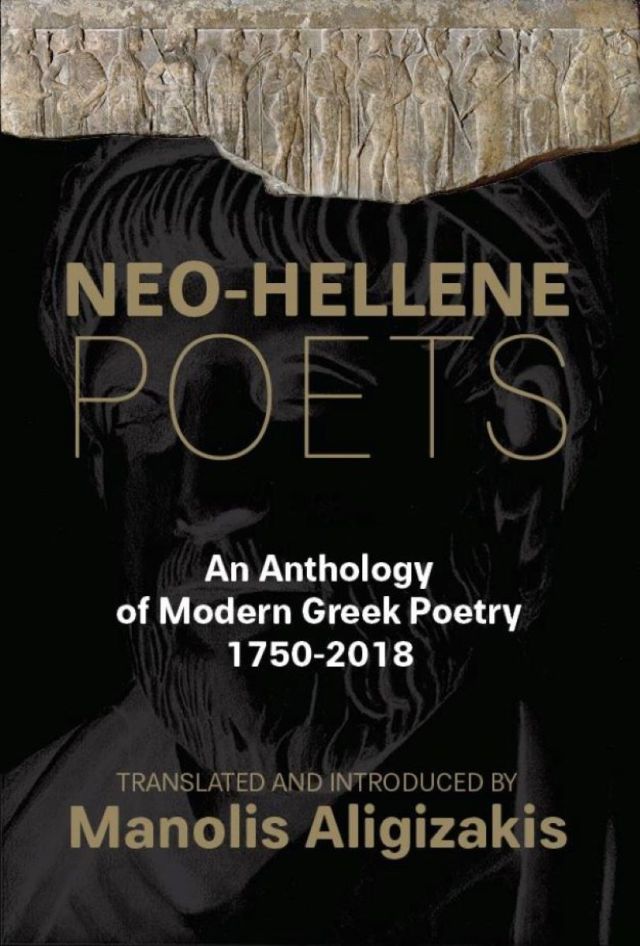
Greek Poets, Translated and Alive
Pip: The question underneath all these translations is whether a poem can survive the crossing — from modern Greek into English, from one cultural world into another, without losing whatever made it matter in the first place.
Mara: The Tasos Livaditis volume, long-listed for the 2023 Griffin Poetry Prize, gives you a direct answer in the verse itself: "and it's strange how untrue the most real things look sometimes — ah mother when you gave birth to me you should had given birth to a rock."
Pip: That line does something interesting — it frames grief as a structural flaw in the person, not a wound from outside. The rock wouldn't feel any of this. The human does, and that's the problem.
Mara: The Yannis Ritsos volumes — both Volume IV and Volume V — push into similar territory from different angles. The Volume IV poem "Method of Optimism" describes a man whose face stays sunlit even as everything around him is almost black, furniture, faces, time, windows. Volume V is starker: "Come on, let's finish it, he said, continuance is boring."
Pip: Ritsos apparently had no patience for the long goodbye.
Mara: Titos Patrikios takes a different approach in his Selected Poems — the poem "Monument" builds an image of everyday inertia, "without a bang, without pleasure, with inert touch deep in your viscera," which is a very specific kind of monument to build.
Pip: The Nikos Engonopoulos collection moves through myth and desire, tracing a line from ancient phallic dances to "these black eyes that look at me." And the George Seferis Collected Poems lands somewhere more desolate — "High mountains, you can't hear us! Help! Help!" — a cry that expects no answer.
Mara: What holds all of these together is the translation work itself, carrying voices across decades and languages. That same labor of rendering inner life legible shows up differently in the fiction excerpts.
Fiction's Pressures: Family, Land, and Conflict
Pip: The fiction this week keeps returning to one question — what happens when the world outside a family is in crisis and the world inside it is already broken?
Mara: The excerpt from He Rode Tall sets the frame clearly: seventeen-year-old Joel is riding the high ridges on July 20, 1969, and the narration notes that "the Circle H was not a healthy place for this seventeen-year-old boy to be; and really, not a healthy place for anyone, and certainly not a place with a future."
Pip: That date is doing quiet work. The moon landing is happening on a radio somewhere while this kid is counting cattle and absorbing his father's cruelty. History as backdrop to a family that has no room for it.
Mara: Jazz with Ella moves the coordinates entirely — Moscow, a young woman named Jennifer discovering she has family in the Soviet Union, and a conversation that keeps circling a family accident nobody names directly. She says, "Everything about my family is to do with the accident." And then she decides to send a telegram rather than call, because withholding, as the narrator puts it, ran in the family.
Pip: Withholding as inheritance. That is a very compact way to describe a very large problem.
Mara: In Turbulent Times and The Unquiet Land both place their characters inside Irish political fractures — the latter featuring a long pub argument about partition, two nations, two parliaments, and a Council of Ireland that one character calls "two sham parliaments and a Council that can't raise a single tax." The tension is constitutional, but it's also personal.
Pip: Wellspring of Love and Water in the Wilderness share a quieter register — a nurse named Tyne appears in both, at a patient's bedside in one, tending her aunt in the other, prayer and practicality running side by side.
Mara: Blood, Feathers and Holy Men takes the widest historical lens — a traveling company of Norse, Irish, and Indigenous characters crossing a continent, with a Mandan chief named Fire Maker telling stories by campfire, and a monk determined to make converts.
Pip: Poodie James and Straits and Turns close out the range — one a tense small-town confrontation between a reporter and a sweating councilman who would very much like the past to stay in the past, the other a Greek-diaspora social scene where desire and social performance are basically the same activity.
Mara: Across all of it, characters are navigating what they've inherited — land, silence, conflict, family damage. The poetry collections make that inheritance lyric rather than narrative.
Desire, Dread, and the Surreal Interior
Pip: The poetry here isn't interested in resolved emotion — it's interested in the moment before resolution, or the moment when resolution turns out to be impossible.
Mara: The Gospel of Silence opens this territory with a prose-poem voice that is unusually direct: "For a long time, I believed one stays alive by understanding everything. Now I know there are things one must simply endure, survive."
Pip: That's a significant revision to make about your own operating assumptions. And the childhood scenes that follow — ice cracking underfoot, wading into black marsh water, counting leeches as proof of having gone somewhere forbidden — all enact it physically.
Mara: Medusa frames desire as interruption — grand mythic language about "an apocalyptic prophecy" and "the parabolic myth of my oppressed life" cut through by italicized domestic voices: "Get up and help me do the dishes." The sublime and the mundane are arguing in the same stanza.
Pip: The mundane wins on points, as it usually does.
Mara: Nuances and Impulses work in shorter, more compressed registers — whispered desire in the first, dancers and an old man lost in reverie in the second. Twelve Narratives of the Gypsy gives the speaker a different kind of motion: "I was a river passer, a mule rider, an engraving on the rock — mule and man, the same flesh."
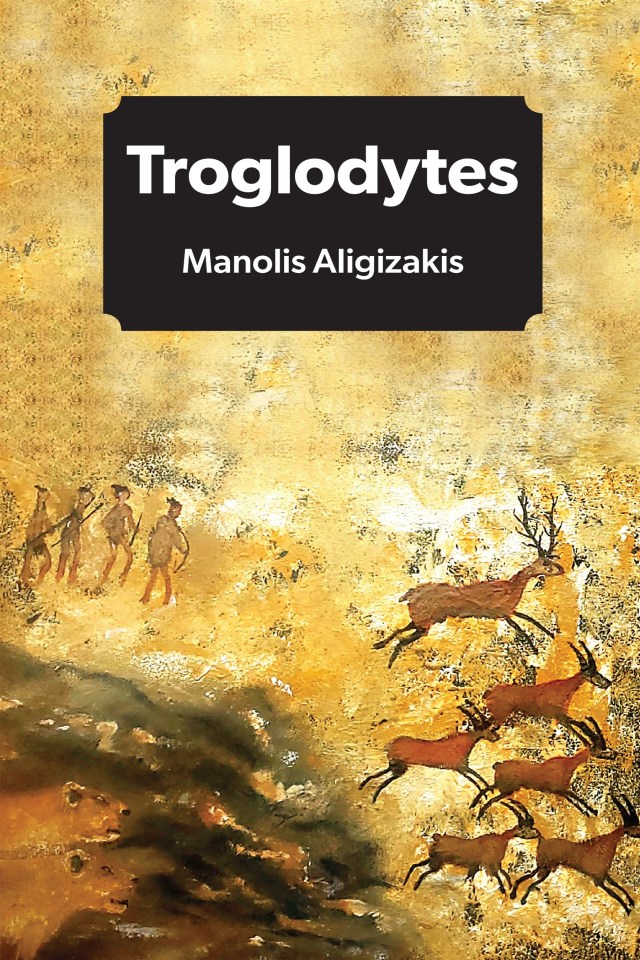
Pip: Entropy, Troglodytes, and Ugga push toward something more abstract — cells dying without noticing, troglodytes dividing the first earthly ownership while fireflies drift through cave air, and a sequence of compressed philosophical fragments about thought, logos, and the concept of the infinite reduced to "tiny concept for first-grade school."
Mara: What runs through all of it is a refusal to separate the body from the idea — desire is always also dread, survival is always also endurance, and the inner life keeps finding the outer world waiting for it.
Pip: Greek modernism, frontier families, diaspora parties, ice cracking under children's feet — it's a wide map.
Mara: What connects it is the pressure of inheritance — what gets passed down, what gets translated, what gets endured. More of that territory next time.
Hastily Come on, let’s finish it, he said, continuance is boring. Movements, words, repetitions, and ballooned flags by the fans. You’ll see it at the end of the festivity. Further on, the dusty tail of the night is among the thorns and he stands by the door and scratches his ear with a match.
Dione men long for beauty women constantly offer it we know this we the descendants of the Marathon fighters so, there is no reason for a woman’s year and other such foolish acts and masquerading of the feminists from the Glory to the Virgin Fighter to the Cretan mantinades to the Alphabet of Love from the legendary phallic dances of the ancients to the these black eyes that look at me please lower them, my light… they convince everyone about the truth of the above with words and deeds we all compose bright bouquets and endlessly offer them to women
“Come sit down, Tyne.” Millie spoke from her recliner chair in the living room. “You’ve been running around all day after everyone, not the least me. I’m afraid I’m making a lot of work by coming here.” Tyne paused beside her aunt’s chair and placed a bottle of pain relievers on a small table close to the older woman’s hand. “Nonsense, Auntie, you are not making a lot of work for me. And whatever extra I need to do for you is a joy.” She smiled as she picked up the half empty water glass from the table. “Anyway, you’re a much better patient than many I’ve had over the years.” Millie snorted. “Like Arthur Tournquist for example?” Tyne chuckled, remembering the irascible patient she had met during her third year in training at the Holy Cross. “Yes, especially Arthur, bless his big heart. But not all of my difficult patients became dear friends like Arthur.” She started to turn away with the water glass, but Millie put a hand on her arm. “The water is fine, dear girl, just leave it. It won’t hurt me to drink tepid water with my pills. “Now, come sit and talk a while – or would you like to go somewhere quiet to read?” Tyne put the glass on the table and sat in the loveseat across from Millie. “Did you say somewhere quiet? In this house? Actually, this is the quietest room in the house because I gave strict orders it’s out of bounds while you’re sitting up.”
IV Uniformity appears as the troglodyte receives darkness soluble shivering like a leaf blown by the wind to every corner of the cave and blackening his mind; two cows drinking water, raise their eyes to stare at the sharp blade of the butcher and the insatiable teeth of hunger, while the first earthly ownership, dangling residential, first subdivision of the troglodytes appears as he puts aside leftover meat. Fireflies slide in mid-air embalming the unction of disease a hard day’s hunt justified, first harkening bank, virgin new concept and tomorrow’s multinational a swath commences, and the fourth hymn as lightning divides the sky plowing a bright course when here springs forth the menace of death