Podcast Episode: Greek Poetry And Fiction

Pip: Manolis Aligizakis has assembled a catalog that moves from ancient Greek shores to Canadian prairie schools to a Moscow hotel hallway — and somehow it all holds together.

Mara: vequinox brings it together across poetry translations, novels, and short fiction — territory we'll cover through modern Greek verse, prose excerpts, and the themes of love, memory, and identity that run underneath all of it.

Pip: Let's start with the poetry.

Voices Across the Greek Tradition

Mara: This segment is about what it means to translate a literary tradition — to carry voices like Cavafy, Ritsos, Engonopoulos, and others across languages without losing what makes them cut.

Pip: And Cavafy cuts immediately. The setup in "The City" is a man planning his escape — new land, new sea, fresh start — and then the poem turns on him completely.

Mara: The turn is the whole poem. "New lands you will not find, you will not find other seas. The city will follow you. You will return to the same streets. You will age in the same neighbourhoods, and in these same houses, you will turn gray."

Pip: So the upshot is that geography is not the problem. The self is the problem — and it travels with you, luggage you cannot check.

Mara: Engonopoulos makes a different kind of claim in "Nikos Engonopoulos – Poems." His "Angry Poem About the Occupation" turns elegy into defiance — workers dropping their tools, fists raised, a martyred figure walking the earth pale-lipped but beloved.

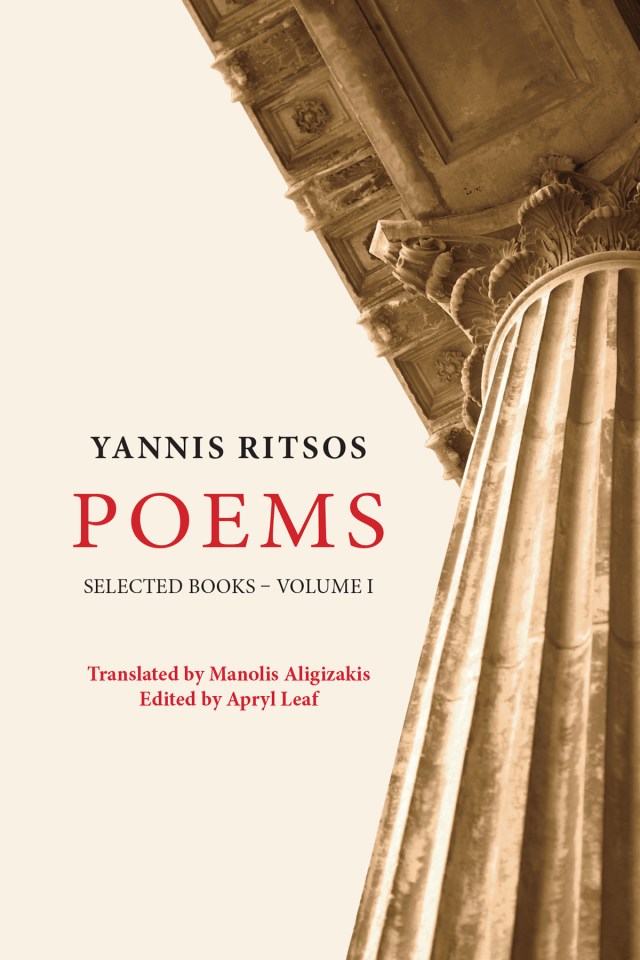
Mara: Ritsos appears across multiple volumes here. "Yannis Ritsos – Poems, Volume II" gives us a boatman striding into a harbor at dawn, the sun rising like a woman's wet hair curled around cranes — sensory and grounded. "Volume V" and "Volume VI" are quieter, more unsettled.

Pip: "Kariotakis-Polydouri, The Tragic Love Story" brings the biographical weight — two poets whose lives ended badly, rendered here in verse about a woman at a piano, butterflies leaving through a window.

Mara: "Tasos Livaditis – Selected Poems," "Katerina Anghelaki Rooke – Selected Poems," "Hours of the Stars," and "Troglodytes" fill out the range — from Livaditis's compressed night imagery to Anghelaki Rooke's half-words and olive tree shapes. "Neo-Hellene Poets" and "Orange" and "Mythography" sit alongside them as further evidence of how wide this tradition runs.

Pip: From classical echoes to prairie roads — the fiction covers different ground entirely.

Prose Across Borders and Generations

Mara: The fiction here spans continents and registers — from a child's first bus ride in wartime Canada to a Moscow reunion to a painter's Arctic trek — and the question running through all of it is how people find their footing in unfamiliar places.

Pip: "Water in the Wilderness" opens that question gently. A woman named Tyne has been living on hospital food, and her friend Moe has kept a phone call from her on purpose.

Mara: The reason matters: "Moe smiled. 'Morley is awake and asking for you.' Tyne let her breath out on a deep sigh, sat back and covered her face with her hands. 'Thank you, God, thank you,' she whispered, then shot out of her chair and ran to get her coat."

Pip: Relief as a physical event — breath, hands, running. The excerpt earns it without explaining it.

Mara: "The Qliphoth" operates in a completely different register — adult, raw, interior. "In Turbulent Times" follows Ian, a man trailing a woman named Nora through a coastal Irish hotel, his knees literally trembling at the bar. "Redemption" gives us a young man leaving home for Vancouver, his father crying openly at the table.

Pip: "Wellspring of Love" brings back Rachael, older now, stuck on a dusty highway while her cousin heads west — and "Water in the Wilderness" shows us Rachael younger, boarding that bus for the first time, shuddering at its size.

Mara: "Jazz with Ella" lands its protagonist in a Moscow hotel corridor and delivers the line "We are your family" to a woman who was certain she had no family there. "Ken Kirkby: A Painter's Quest for Canada" documents a real exhibition at Parliament — a painting one hundred and fifty-two feet long, twenty years in the making.

Pip: "Small Change" puts a boy in a Pennsylvania classroom trying to locate his immortal soul while Sister Assunta slaps a pointer against her palm. "Prairie Roots" is lunch-hour softball and girls comparing notes in the willows. "Wheat Ears" and "Cloe and Alexandra" round out the set — one a memory of Cretan youth, the other a poem built around a denial: it wasn't me in that yellow cab, it wasn't snowing, I have no hair.

Mara: What ties them together is the texture of ordinary life under pressure — the meals, the car keys, the Scotch ordered twice.

Pip: And underneath the prose, there's a question the poetry keeps asking too — about where you belong and what you carry.

The Self That Cannot Escape Itself

Mara: Love, memory, and identity keep circling the same problem across these works: the past is not behind you, it is inside you, and it shapes every attempt to move forward.

Pip: Cavafy says it flat out. "As you have wasted your life here, in this small corner, you wasted it in the whole world." There is no smaller indictment.

Mara: Ritsos in "Yannis Ritsos – Poems, Volume V" reaches for the same idea differently — a man who keeps a small mirror in his pocket because it's the one fixed point when everything else shifts without warning.

Mara: "Kariotakis-Polydouri" holds memory as tenderness — butterflies always flying out through the window. "Mythography" turns inward to still water and a fir tree asking the night for wisdom. "Introspection" names it directly: practicing a religion on the longing for the past.

Pip: "Orange" answers that longing with the wind's reply — your sunshine hides in your heart. "Hours of the Stars" writes love onto the mountain tops of memory. "Katerina Anghelaki Rooke" and "Troglodytes" close the circle — half-words left behind, and a young poet begging the Muses to free him from his own imposed fears.

Mara: The pattern holds: escape is not the remedy. The work is staying present to what you carry.


Pip: A city that follows you, a mirror in your pocket, a bus you board for the first time — it's all the same question dressed differently.

Mara: Where you are, and what you brought with you. More from this site next time.

Podcast Episode: Greek Poetry And Human Struggle

Pip: Manolis Aligizakis has spent a career writing about people the world files under "miscellaneous" — and vequinox has been keeping up.

Mara: That's the thread running through this episode: Greek poetry and its modern resonances, love and faith tested in quiet rooms, conflict and exile, and a critical look at what it means to write about ordinary lives with extraordinary attention.

Pip: Let's start with the poetry itself — ancient voices, contemporary weight.

Greek Voices, Modern Weight

Mara: The question here is what Greek poetry actually does when it moves through the modern world — whether it stays monument or becomes something you can touch.

Pip: George Seferis, translated and presented here, sets the coordinates early. The poem positions us collectively: "We are all like the Dead Sea, many fathoms lower than the surface of the Aegean."

Mara: That image does real work. The Dead Sea passage isn't elegy for a place — it's a diagnosis of emotional deadness, where "heart and thought congeal in salt." Seferis is naming a condition, not a geography.

Pip: Yannis Ritsos in Romiosini measures anguish against a wild mallow's knot and courage in the eyes of a shoeless child holding a flag — that's not metaphor reaching for effect, it's metaphor doing the only honest work available. Titos Patrikios in Selected Poems and Antony Fostieris in Selected Poems carry the same weight: fathers known too late, moons that swell and shatter. Constantine Cavafy's satrapy asks what you trade when you stop reaching for the laurels.

Mara: Nikos Engonopoulos and Wheat Ears round out the range — from cosmopolitan irony to daffodils insisting on blooming through leaden, death-filled days. And Ugga lands the quietest claim of all: "for the light to change, we must feel the loss of darkness in transactions." Entropy and Triptych both circle that same idea — transformation costs something, and the cost is felt in the body, in the chapel, in the shared candle.

Pip: From the weight of history to the weight of a single room — the next territory is love and what it asks of people.

Love, Faith, And What They Ask

Mara: The posts here sit with intimacy in its most pressured forms — a wedding interrupted by illness, a love that cannot quite complete itself, desire that circles back to anxiety.

Pip: The Unquiet Land anchors the segment. A priest steadies a congregation while a man named Padraig recovers in the sacristy, and when he's asked if Mass was said for him, he says: "I did, Padraig. And the wedding? It went very well. Ah, that's good." Then he lowers his eyes and says he never could have done it.

Mara: What that exchange captures is faith as practical care — the priest stepping in, the doctor promising to apologize to the family, Padraig asking not about himself but about the couple. Dignity held together by people covering for each other.

Pip: Hear Me Out turns the register entirely. It's a meditation on that missing one percent — the fraction that stops the words "I love you" from completing themselves. "You'll remain like Sisyphus to go up and down the mountain with the weight of love on your back, forever searching to unload it." That's not self-pity; it's a structural description of a particular kind of loneliness.

Mara: Water in the Wilderness moves through a different kind of relief — someone waking, someone running for her coat, a child on her first bus ride being told to watch for deer. Small mercies assembling into something that holds. Cloe and Alexandra brings a fairy-tale sharpness: a hunter shoots an arrow at a princess because he feared she would pierce his heart first — obedience and self-protection dressed as accident.

Pip: And then The Qliphoth arrives, which is a different temperature entirely — raw physical intimacy followed immediately by the anxiety that trails it, the replay of warnings she tries to suppress. Control claimed and then quietly questioned.

Mara: Redemption sits underneath all of these — two characters debating whether inherited belief can ever be honestly evaluated, whether tradition is a gift or a constraint. The same question the other posts are living out in different registers.

Pip: From what we inherit to what we survive — conflict and exile are next.

Conflict, Exile, And What Remains

Mara: This segment asks what displacement actually looks like from inside — not as history but as the specific texture of a life interrupted.

Pip: The Circle opens it with a phone call from Los Angeles to Baghdad. Hakim learns his uncle has two tumors — liver, pancreas — and the novel renders the weight of that news through a detail: he walks to the balcony and looks at the clouds covering Los Angeles, "in the same way that they cover his heart."

Mara: Distance is the condition. Straits and Turns gives us Mike, humiliated by a small workplace error, walking home with his head down — and then laughing at himself with his family. Marginal's caricature figure arrives "hiding the packaged freedom silently in his pockets," and the speaker finds redemption not in confronting him but in bending to smell a jasmine flower on a dusty sidewalk.

Pip: Twelve Narratives of the Gypsy and Rendition press further into rootlessness — the gypsy standing "like a fresh branch of a not pruned, ageless, fruitless tree," alone on a black mule, trying to discover who he is. Rendition puts innocent blood and irony on the same menu board.

Mara: Which brings us to the question of what poetry does with all of this — and one critic has a precise answer.

Writing The Incidental Into Permanence

Mara: The Incidentals gets a full critical reading here, and the central claim is ethical as much as literary.

Pip: The reviewer, Balázs F. Attila, puts it plainly: "The moment the poet writes about Gladys, Mathew, Stefan, Benjamin, Galanos, or the nameless postman, he abolishes their insignificance."

Mara: The upshot is that poetry here functions as counter-archive. The postman who carries everyone else's news while waiting for a letter that never comes — that figure is rescued from anonymity by the act of being named in a poem. The net, the rope, the shoe: objects that become the whole shape of a life.

Pip: The review also notes that Hades and Thanatos move through gas stations and Canadian immigration offices — mythology as living language, not museum display. That's the formal argument for why the Greek poetry segment and this one belong in the same episode.

Mara: And the question the review leaves open is the one that makes it stick: how long is the rope on which we ourselves live?


Pip: Dead Seas, jasmine flowers on dusty sidewalks, a postman waiting for a letter — the scale keeps shifting but the question stays the same.

Mara: Whether the rope is long enough, and whether we've noticed we're on one.

Pip: More to come.

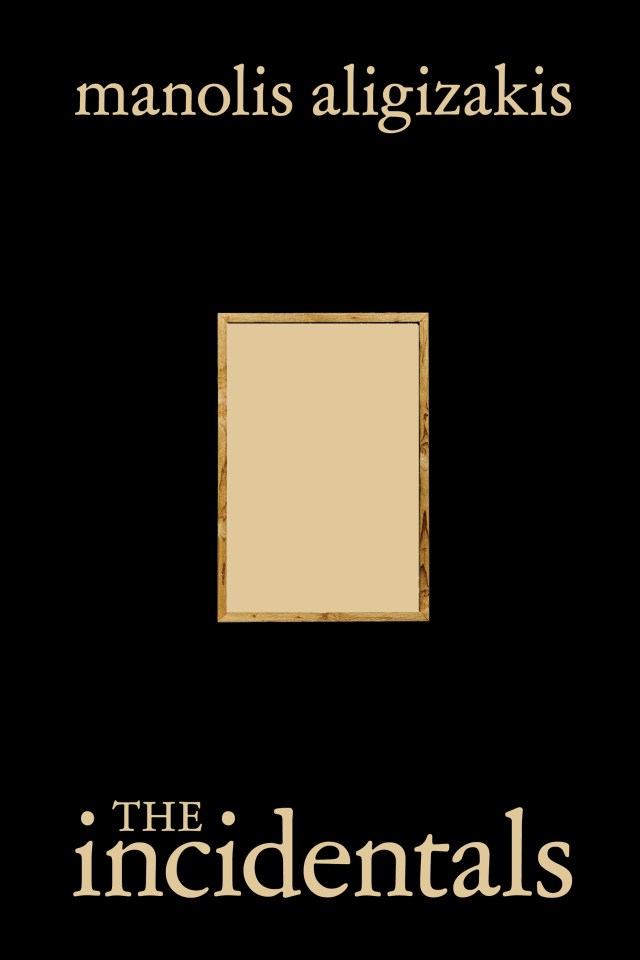
The Incidentals (review)

The Dignity of Lives Deemed Incidental

The postman in Mail moves from house to house carrying news of marriages, births, and children living far away. For everyone else, he is the bearer of messages, while tears run down his face because he too waits for a letter that never arrives.

Here lies one of Aligizakis’s strongest poetic gifts: his ability to create an entire human destiny from a few concrete gestures.

He does not write psychological portraits in the conventional sense. Of many of his characters we know almost nothing. We are given an occupation, a gesture, a memory, an object.

The rest is accomplished by metaphor. The net becomes a trap. The rope becomes a life.

Bookkeeping becomes an account with death.

The felling of a tree becomes an image of our own disappearance. The letter becomes a metaphor for absence. The shoe becomes the sign that, for a little while longer, we may still walk upon the earth.

This poetic world is at once archaic and contemporary. Hades and Thanatos move naturally through gas stations, diners, hospitals, stock-market screens, garages, and Canadian immigration offices. For Aligizakis, Greek mythology is not museum material but a still-living language through which human finitude can be expressed.

The immigrant is therefore a particularly significant figure. In Immigrant, the protagonist leaves his homeland to begin a new life on the other side of the planet. He promises his youth and productive years to the new country in exchange for security—but the poem’s ruthless conclusion suggests that in doing so he has, in a sense, sold himself “for a few dollars more.”

This experience carries particular resonance in the work of a poet whose own biography has been shaped by emigration. Yet Aligizakis does not write autobiographical complaint. Migration becomes another model of the human condition: we all make exchanges with the world. We give time for money, freedom for security, dreams for predictability. The only question is whether we are aware of the contract we have signed.

The Incidentals is not a comfortable book. Nor does it wish to be.

It is often rough, grotesque, ironic, sometimes sarcastic. It refuses to beautify the body, old age, labour, or death. Aligizakis occasionally uses brutal language to awaken the reader from precisely the complacency he wishes to attack.

Yet beneath this harshness lies an unusual humanism.

Because if these people were truly incidental, no poems would be written about them.

Poetry itself refutes the title.

The moment the poet writes about Gladys, Mathew, Stefan, Benjamin, Galanos, or the nameless postman, he abolishes their insignificance. He lifts them out of the anonymous mass of time. Society may have counted them as numbers, but poetry gives them names, faces, stories, and deaths.

This is perhaps the most beautiful ethical gesture of the volume. Poetry cannot defeat death.

But it can defeat oblivion—if only for the duration of a poem.

Manolis Aligizakis’s The Incidentals is therefore far more than a collection of poems about ordinary people. It is at once a modern dance of death, a social diagnosis, a sequence of philosophical parables, and an ironic catalogue of human existence. The volume asks how many people live out their lives without ever daring to move away from the stake to which an invisible rope has tied them.

And it asks an even more difficult question: how long is the rope on which we ourselves live?

The poet cannot answer that question for us.

Perhaps this is precisely the point at which the stories of the  „incidentals” cease to be the stories of others. And ours begins.

Balázs F. Attila

poet, writer, editor

https://draft2digital.com/book/3745812#print

https://www.amazon.com/dp/1926763637

Podcast Episode: Modern Greek Poetry And Fiction

Pip: Manolis Aligizakis has assembled a catalog that moves from ancient Greek anguish to Canadian prairie winters to stock market schemes — which is either a literary festival or a very ambitious reading list, depending on your weekend.

Mara: vequinox brings all of it together on this site — translations of modern Greek poetry, original verse on love and desire, and a run of novels spanning hardship across continents and generations. Let's start with the poetry coming out of Greece.

Voices From Modern Greece

Pip: The modern Greek poets gathered here are working a particular problem — how do you hold loss, resistance, and beauty in the same breath without one canceling the others out.

Mara: The Yannis Ritsos volume sets the tone early. The poem "The Inexpressible" builds toward this image: "the blind musician, tired, goes back up. He puts his violin case on the chair. He opens it; two of the three glasses are in it. They are shining and whole."

Pip: So the broken things you carried out in guilt come back intact — the poem turns on that reversal, the indestructibility of what you thought you'd lost for good.

Mara: Constantine Cavafy's "Che Fece … Il Gran Rifiuto" works a related tension — the great No that is right and still burdens its speaker for life. Nikos Engonopoulos in "Goalpost" pushes into civic dread, asking whether the Sunday bells will be followed by hymns or machine guns.

Pip: Engonopoulos lands the ambiguity without resolving it, which is its own kind of answer.

Mara: Tasos Livaditis in "Simple Talk" insists on plainness as survival — speaking, loving, dying "in a simple way." George Seferis in "The Shape of Fate" asks who orders destruction from behind, and Titos Patrikios watches a man of creative mind reduced to counting whether his wages last the month.

Mara: Antony Fostieris names "certain pain" that strikes the empty heart beyond all desire. The Neo-Hellene anthology and the Troglodytes collection round out the range, from birch-forest dawn to an invocation of the Goddess to purge the ego entirely.

Pip: Ten poets, one through-line: the thing that survives is rarely the thing you expected to keep.

Mara: The love poems take that survivorship somewhere more intimate — let's move there now.

Love At Both Edges

Pip: The love and desire poems here are not soft — they treat longing as a force with weight and consequence, something closer to weather than to sentiment.

Mara: "The Incidentals" opens the territory directly: "the seething angst of lust demands her body's contours and dark caves on the altar of Aphrodite deserving unemotional dedication, like any archon sitting up high, like any God jealous or self-absorbed and relaxed."

Pip: Desire framed as liturgy — the body as offering, the worshipper as functionary. That's a cold altar.

Mara: "Hear Me Out" pulls in the opposite direction emotionally but lands in the same isolation: two people on parallel paths going opposite directions, past the point where they first met, with only the roundness of the earth as any possible reunion.

Mara: "Wheat Ears" compresses the whole arc into image — "two bodies defining the shape of a monad," synthesis as astronomical and emotional at once. "Rendition" closes it with a line that strips possession entirely: "Of all you have amassed, none is yours."

Pip: Love, desire, and ultimately the inventory comes up empty. The novels take that emptiness and put it in a house with bad insulation — let's go there.

Novels Of Endurance And Reckoning

Pip: The fiction here keeps returning to people held in place by circumstance — weather, pregnancy, poverty, complicity — and asking what they do with the time they cannot escape.

Mara: "Fury of the Wind" makes that literal. Sarah, isolated on a prairie homestead through a brutal winter, moves house plants to the kitchen table each night to keep them from freezing, writes letters that take weeks to arrive, and waits. The passage reads: "she missed the companionship of others, especially Penny. What would she give to be able to sit down to a cup of tea in Penny's cheerful kitchen?"

Pip: A cup of tea as the full measure of what isolation costs. That's a precise kind of grief.

Mara: "The Unquiet Land" puts a different kind of waiting at its center — Mother Ross, who knows Caitlin is pregnant before the wedding, removes her own mother's ring from her finger and gives it to Michael for the ceremony. She hears Caitlin sobbing upstairs and swallows her own agony whole.

Pip: Respectability as ransom, as Mother Ross calls it — and she's already paid her installment.

Mara: "Water in the Wilderness" moves the tension into a seedy hotel corridor, Tyne's knees going weak as she waits for a deteriorated Corky Conrad to open his door. "Prairie Roots" grounds everything in the farming community's frank hierarchy — survival first, schooling second, and a father who insisted otherwise.

Mara: "Jazz with Ella" sends Jennifer onto a plane into a storm, retreating into questions about why she was chosen over Paul for a Soviet Union language tour, and what it cost her in salary to say yes. "Introspection" and "Hours of the Stars" work in verse — the first building toward "the final, greatest monad," the second catching grandparents' long faces at a christening where the names chosen feel like paganism to them.

Pip: Naming a child wrong, apparently, is its own form of hardship.

Mara: "In the Quiet After Slaughter" and "Poodie James" both circle institutions — policing and journalism respectively — where the people inside them are just competent enough to see the problem and just constrained enough to struggle with what to do about it. And "Swamped" drops into the financial world, where Eteo watches Platinum stock move and starts making his list of who gets rewarded.

Pip: Every novel here is about someone watching a system from just inside or just outside it, trying to figure out the angle of least damage.

Mara: Which is, when you step back, exactly what the Greek poets were doing too — just with fewer stock tickers.


Pip: The thread running through all of it is endurance — the blind musician climbing back upstairs, Sarah moving the geraniums, Cavafy's speaker living with the right No.

Mara: And the question underneath: what holds its shape when everything else breaks. More of that in the next episode.

Podcast Episode: Greek Poetry And Love Stories

Pip: Manolis Aligizakis runs a site where the ancient and the immediate share a table without much ceremony — gods in the grapevines, desire in the cinema balcony, and families arguing about whiskey.

Mara: vequinox has been busy across poetry, prose, and the complicated territory where love and loss overlap — that's the ground we're covering today. Let's start with Modern Greek Poetry.

The Voices of Modern Greek Poetry

Pip: This segment is about what it means to translate and champion a tradition — to bring poets like Engonopoulos, Seferis, and Ritsos into English and ask what survives the crossing.

Mara: The Nikos Engonopoulos post opens with a poem called "Difficulty," and the line that lands hardest is this: "the difficulty arises when no one of the just people accept the other just — what am I saying — they never appreciated each other."

Pip: That's the tragedy of righteousness in miniature — everyone correct, no one reconciled.

Mara: The anthology Neo-Hellene Poets reaches further back into myth, with Pan moving through the grapevines at night, his reed producing "discordant yet so sweet, hatred mixed with laughter." Titos Patrikios asks how long we carry faces that steadily shrink inside us. Katerina Anghelaki Rooke opens a voyage with the body itself as the departure point.

Pip: Seferis goes looking for a king who left nothing but his name carved in stone, and Yannis Ritsos turns an empty ice cream cone rolled by a blind man's cane into a small catastrophe of attention. Antony Fostieris frames the whole tradition as a noble funeral — poetry burying its dead with official music, waiting for resurrection.

Mara: That's a lot of weight for a reed instrument to carry — but desire carries its own weight too, and that's where the fiction and the lyric poems take us next.

Love, Desire, and the Distance Between

Pip: The question this segment keeps circling is what love actually costs — whether it's measured in longing, in loss, or in the gap between what we say and what we mean.

Mara: The novel excerpt from Redemption sets the stakes immediately. Hermes and the unnamed woman are in a cinema balcony, and the prose is direct: "She took his hand and placed it between her legs, a move he took even further by sliding his hand up and touching her pubic hair. That made her go wild."

Pip: Desire rendered without apology — the body as fact, not metaphor.

Mara: Swamped works the same territory from a different angle — Eteocles and Antonia circle each other at the sea, and the promise deferred to the party that evening hangs over everything. The collection Hear Me Out strips it down to geometry: "We walk on parallel paths going opposite directions."

Pip: Parallel paths going opposite directions — which is technically just two people walking away, but somehow that's the whole of heartbreak.

Mara: Kariotakis-Polydouri frames love as historical tragedy, the two poets remembered as figures who sent signs of fire from their loneliness. Cloe and Alexandra turns the polite exit line "I wish you the best" into an indictment — what the lover really means, the poem suggests, is what's best for himself.

Mara: Rendition finds love in the miniature: a ladybug crossing a palm, "an immense love springs from my river." Tasos Livaditis goes the other direction, into total devotion — "In the tiniest moment with you, I lived all my life." And Wheat Ears names the particular cruelty of someone who tends everything in the world except the lips waiting for them.

Pip: From longing that outlasts the body, the fiction moves into something messier — families, history, and what gets passed down whether anyone wanted it to be.

Fiction's Turbulent Families and Contested Histories

Pip: Across the fiction excerpts, the recurring pressure point is inheritance — what families hand down, what communities bury, and what surfaces anyway.

Mara: In Turbulent Times opens in a hotel gathering where the social scaffolding is doing all the work — introductions, drink orders, careful pleasantries — and underneath it, Nora's unease. The exchange lands here: "You're becoming cynical in your old age, Nora. You need cheering up."

Pip: The diagnosis delivered as a joke, which is how most family diagnoses travel.

Mara: Still Waters puts Tyne on a train, quietly reckoning with class — her fiancé's family is offering a car as an engagement gift, and she thinks, "Maybe I'm out of my league. We're just simple country people." The anxiety is precise and quiet.

Pip: Poodie James runs a different kind of reckoning — a former lawyer living as a hobo, a journalist who's traced him, and a negotiation over what story gets told and on whose terms.

Mara: The Unquiet Land goes further back, into an argument about hubris between Caitlin and Padraig — she defends her father's defiance of the gods to the end, and the exchange is fierce. Arrows moves into historical adventure, a bribed torturer and a leather bag of coins buying someone's freedom through a back exit.

Pip: Straits and Turns and Fury of the Wind both circle men shaped by what they can't say — one a dying man whose last word is desire, one a community holding a secret about what happened in Nimkus. Blood, Feathers and Holy Men reaches across cultures entirely, Norse brothers ransomed back by a First Nations village, negotiating loyalty and obedience in a new world.

Mara: Hours of the Stars and The Incidentals pull back — one a prayer at supper, the other a clown who reaches for the eternal and disappears behind a red curtain, still smiling.

Pip: The curtain closes. The clown never quite touched the stars. That feels like the right place to stop.


Mara: What holds all of this together is the question of what endures — in a language, in a family, in a body.

Pip: The just people never appreciated each other. The parallel paths keep diverging. Next time, we find out what else surfaces.

Podcast Episode: Greek Poetry And Rural Fiction

Pip: Manolis Aligizakis runs a site that could double as a library card catalog, if libraries had this much range — Greek exile poetry, Canadian prairie childhoods, Soviet-era blackmail, and a taxi ride you would not want to be on.

Mara: vequinox has been posting across all of that territory, and today we're moving through three areas: modern Greek poetry collections, literary and crime fiction, and the theme of identity, memory, and exile. Let's start with the poetry.

Greek Verse, Exile, and the Long Tradition

Pip: The question underneath all these poetry posts is what it means to translate and collect Greek verse — not just linguistically, but as an act of cultural preservation, pulling work from Ritsos, Seferis, and others into a form that travels.

Mara: The Yannis Ritsos volume sets the tone early. From "The Exile Diaries," dated the fourth of December: "Moon, take off your shoes / I can't sleep on my back / if I'll turn to my side I'll hurt. / The door is open / I can't leave."

Pip: That last line does a lot of work. The door is open and he still can't leave — which is exile's specific cruelty: the constraint isn't always a lock, it's something internal, something the body carries.

Mara: George Seferis's collected poems push into similar territory with "The Sentence to Oblivion," and Tasos Livaditis, whose volume was longlisted for the 2023 Griffin Poetry Prize, writes of being "completely dishonest like this world that it belongs to you only when you promise it to someone." Titos Patrikios in his selected poems warns readers to "protect yourselves from the poets who steal verses from graves of the unknown."

Pip: There are also original collections here — Entropy, Ugga, Medusa, Troglodytes, Hours of the Stars — each posting a single poem as a window into the full book. Hours of the Stars centers on Ionia, lost in 1922, where "man tried to create the face of god and at last he created his own thoughtful face." The Neo-Hellene anthology rounds out the range, gathering voices across the modern Greek tradition into one place.

Mara: That breadth — from Ritsos's internment diary to an anthology spanning the whole tradition — is the argument these posts make together. The fiction excerpts are making their own kind of argument, and it runs across a very different set of landscapes.

Novels at the Edge — Fiction and Crime Excerpts

Pip: What connects this stretch of fiction posts is that nearly every excerpt drops you into a moment of pressure — someone is hiding something, someone is about to find out, and the social fabric is visibly straining at the seam.

Mara: Wellspring of Love opens in a hospital corridor. Tyne has just entered her aunt Millie's room and the excerpt lands here: "Tyne was conscious of two disturbing thoughts, the first that Dr. Dunston had seldom greeted her in any other way than with his usual cheery, 'Hi, sis.' Her second thought was that the woman in the bed, frail and ashen-faced, was hardly recognizable as her beloved aunt."

Pip: Two small observations, and suddenly the reader knows the diagnosis is bad and the relationship is complicated. That's efficient fiction — the weight is in what goes unsaid.

Mara: Jazz with Ella works the pressure from a completely different angle. Pavel, Vera, and Shukshin have cornered a Soviet bureaucrat named Pyotr — they have photographs of him with the police chief's wife, and they need forged documents. Pyotr sputters through a tantrum, and then Vera simply asks, "May I pour you another drink?" The coercion is wrapped in perfect politeness.

Pip: Nothing says "you have no leverage here" quite like being offered a refreshment mid-extortion.

Mara: In the Quiet After Slaughter takes a coming-of-age angle — two teenage brothers drawn into a scheme involving a mysterious receiver on a hill called Pork Chop, with a cast of characters that includes a man with a wart that "looked like a ladybug" above one eye. The Qliphoth is denser, set in a flat littered with occult paperbacks and failed technology, a woman piecing together who her missing lodger has become. Savages and Beasts puts a boy named Anton in possession of a dead priest's diary, paralyzed by what he should do with it.

Pip: He Rode Tall goes quieter — a maritime engineer named Joel, decades of city noise behind him, sitting on a horse in a pasture and feeling his heart come back online. In Turbulent Times is a social novel, a dinner table of doctors and their partners trading sharp observations about a young woman Clifford delivered as an infant under difficult conditions. The Unquiet Land sets its pressure in Ireland, where Mother Ross tells Padraig that "forgiveness is a rare commodity in Ireland — Irishmen never forgive and never forget." Redemption and Straits and Turns close the set — one a quiet departure from a Cretan village, the other a Vancouver taxi ride with a passenger whose presence is described with the kind of sensory detail that makes you grateful for fresh air.

Mara: What holds these excerpts together is that each one catches a character at a threshold — a decision, a revelation, or a departure. That threshold question carries straight into the next set of posts.

Where You Come From, Who You Are

Pip: The identity and memory posts are asking a version of the same question across very different geographies: what does a person carry when the place they came from is gone, or far, or changed beyond recognition?

Mara: Twelve Narratives of the Gypsy opens at the largest possible scale: "before we existed the Earth lived, before it spread its plains it was alive with its knowledge and wisdom." It's a cosmological frame for belonging — rootedness as something older than any single person's story.

Pip: Which makes the smaller, more personal accounts feel like they're answering that opening from the ground level.

Mara: Prairie Roots does exactly that — a childhood memoir of Saskatchewan winters, threshing season, geese in formation, paths worn single-file through snowdrifts toward a school facing a rising sun with no warmth in it. Red in Black brings it into the present tense, a poem about wilted supermarket vegetables and rotten tomatoes that pivots sharply to a man shot by a police officer. And Introspection's poem "Delta" traces a speaker who walked to the far ends of the world arguing for elegance and freedom, and was called a lunatic for it.

Mara: The thread running through all of it is that identity under pressure — exile, displacement, the refusal to forget — keeps finding its way back into the work, whether the form is a Greek lyric or a prairie memoir.


Pip: Exile poetry, coercive Soviet bureaucrats, a boy with a priest's diary, and a cosmological origin story for belonging — it's a wide orbit.

Mara: The site keeps returning to what people carry across distance and time. There's more of that to come.

Podcast Episode: Modern Greek Poetry And Fiction

Pip: Manolis Aligizakis has been quietly building one of the more ambitious translation and publishing projects in contemporary poetry — and this week's posts from vequinox make that scope impossible to ignore.

Mara: We're covering two stretches of territory today: the Modern Greek poetry tradition, from Ritsos to Seferis to Patrikios, and the narrative fiction side of the site, with excerpts ranging from small-town drama to historical adventure.

Pip: Plus a short stop in the territory where longing and unrest do most of their best work — which, it turns out, overlaps with both.

Mara: Let's start with the poetry.

Greek Voices, From Guilt to Glory

Mara: This segment is about what Modern Greek poetry actually does — how it moves between the intimate and the historical, the personal guilt of a single speaker and the collective weight of a whole tradition.

Pip: The Yannis Ritsos post, from Poems Volume II, opens with a poem called "Suspicious Sleep," and it sets that tone immediately. The setup is a small, almost domestic guilt — a star announcing happiness, a fruit seller's voice — and then the speaker turns inward: "You felt guilty because you didn't have the urge to respond. If you at least hadn't seen, hadn't understood. Guilty, not counting the guilt of others. You, all alone, put all the responsibility on your shoulders and you understood all your innocence."

Mara: The consequence there is the paradox at the heart of a lot of this poetry — that full awareness of your own innocence arrives only after you've already accepted total responsibility. That's not a comfortable place to rest.

Pip: Ritsos Volume IV, "Maturity," goes the other direction — outward, chaotic, guards running, flags lowered, and a crowd that can't decide whether it's laughing or crying. The intimacy is gone; what's left is noise and doubt.

Mara: The Tasos Livaditis post, Selected Poems, is warmer — a spring morning, flour on lips, a name written on steamed windows. The Kariotakis-Polydouri piece, "The Tragic Love Story," pulls the other way: bells that spread evil, a prayer to beauty, an untimely death. George Seferis's collected poems land somewhere between — "a great sun greater than light," the garden between equinoxes, but arrived at only after staring into a black cloth.

Pip: Titos Patrikios writes a love made of "bones of our dead comrades" and "a black wind that spreads its fiery metal on words, in jails and exile camps." That's a tradition that has earned its darkness.

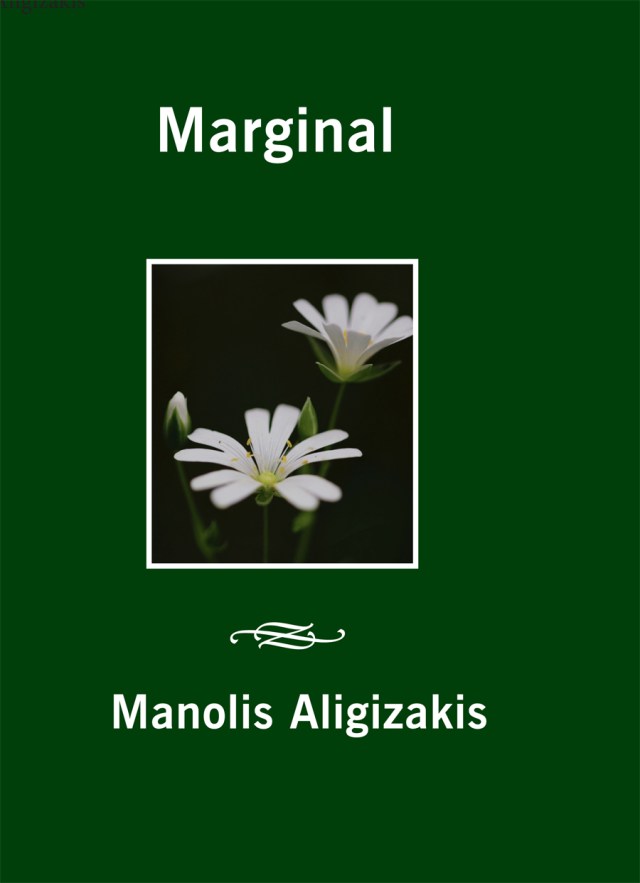
Mara: The anthology post, Neo-Hellene Poets, gives the broader frame — voices across generations asking the same question: "Why does our joy, our little joy, to sadness only lead us?" Antony Fostieris, Katerina Anghelaki Rooke, the collections Impulses, Marginal, and Wheat Ears all circle that same tension between sensation and loss.

Pip: And then the fiction asks it differently — through plot.

Stories Under Pressure

Mara: The fiction excerpts this week span centuries and continents, but they share a structural pressure: characters navigating power, prejudice, and survival in confined spaces — a chair across a mayor's desk, a ship in plague, a monk tied to a stake.

Pip: Fury of the Wind opens that territory with a scene that looks domestic and turns out to be a confrontation about social standing. Will Andrews has put a woman named Sarah Fielding to work alongside the town women, and his wife Molly is furious. The exchange lands here: "Then it would be their loss, not mine. Anyway, none of you even know Sarah. What've you got against her except that she married Ben Fielding?" And Molly's answer — "She married Ben Fielding, and only a coarse woman or a slut would have considered doing that" — is the whole town's prejudice compressed into one line.

Mara: What this means in practice is that Will is fighting a social order that has already decided the verdict. His mild needling doesn't move it; Molly slams the door, and he's left muttering at his papers. The power isn't in the argument — it's in the silence that follows.

Pip: Poodie James runs a similar dynamic at higher stakes. Engine Fred sits across from a mayor named Torgerson and tells him, quietly, that he knows what Torgerson did twenty-one years ago. Torgerson's defense is pure contempt: "He's a freak, an unclean little freak. He contaminates the town." The machinery of official cruelty, dressed as civic concern.

Mara: In Turbulent Times opens differently — a birthday drive through the Irish countryside in a new Bentley, stories of drumlins and dolmens, a hotel dinner. The ease of that scene is doing work; it establishes exactly the kind of world that turbulence will later disrupt.

Pip: Blood, Feathers and Holy Men puts Brother Rordan tied to a pole, a burning bough at his scalp, a painted warrior demanding he sing. He chooses the Salve Regina. That's not a metaphor — it's a man deciding what he is in the worst moment available.

Mara: The two Arrows excerpts — posted on different days but from the same novel — follow a narrator navigating the Spanish Inquisition, protecting a plague-stricken captain and outwitting an inquisitor with a well-placed mention of the king. The stakes in both are life and death, and the tool is language used precisely under pressure.

Pip: Small Change is quieter — a boy sent home from choir practice for looking at stained glass windows, explaining to his mother that the other kids are slow. The Circle is quieter still: a retired admiral visiting his sister's vegetable garden, at peace with himself for reasons he can't yet explain aloud.

Mara: Swamped and Straits and Turns round out the range — one a business negotiation over wine, warrants, and commissions; the other a solitary traveler burying a wolf with stones and walking away smiling. Hours of the Stars adds a poem in the mix, a Roman galley caught in the Euroclydon wind, cargo thrown overboard, salvation uncertain.

Pip: Cloe and Alexandra sits at the edge of both fiction and lyric — a poem that asks what "I wish you the best" actually means, and answers: probably not much. Which is its own kind of pressure.

Mara: That question — what words mean when feeling has already left the building — is exactly where the longing segment picks up.

When Longing Outlasts Its Object

Pip: This is the territory where the poems aren't about a tradition or a history — they're about the specific ache of wanting something that has already shifted into absence.

Mara: Cloe and Alexandra frames it as a linguistic problem: "Would have been better if he wrote: 'Sorry that I couldn't?'" The polite farewell as evasion — the nine-headed monster of circumstance doing the work the speaker won't do.

Pip: Marginal puts the same absence in physical terms: "night laments her dark role in the photosynthesis of your absence." That's longing metabolized into the body's own chemistry.

Mara: Katerina Anghelaki Rooke's selected poems move through environmental grief into something stranger — horror at the destruction of forests that "strangely mixes with elation" when the ego finally releases its grip. Tasos Livaditis, Poems Volume II, carries a grief that leaves no footprints. Titos Patrikios turns it political. The Neo-Hellene anthology, Antony Fostieris, George Seferis, and Kariotakis-Polydouri all ask the same question from different angles: what do we do with what we cannot stop feeling?

Pip: Impulses answers with a sculptor making everything too large — hands big enough to embrace the world, legs to straddle the universe. Overcorrection as grief's own logic.

Mara: The fiction excerpts were asking the same thing. The ideas don't stop at genre lines.


Pip: What stays with me is how much of this — the poetry, the fiction, the longing — is about the gap between what language can carry and what it can't.

Mara: The next episode will likely push further into that same territory. There's more to cover.

Podcast Episode: Love, Loss, And Reckoning

Pip: If you've ever wondered what it looks like when one publisher holds together Greek modernism, Irish wakes, cruise ship romances, and Kabbalistic horror in the same week — well, here we are.

Mara: This episode covers work curated by vequinox across three territories: poems of desire and grief, prose wrestling with spiritual and moral conflict, and fiction that moves through travel, loss, and homecoming.

Pip: Let's start with the poetry.

Desire, grief, and the alchemy of souls

Mara: The poems gathered here keep returning to the same question: what do we carry inside us, and what does it cost to carry it?

Pip: "Entropy" sets the stakes plainly. The poem reads: "motionless, we, the descendants of ignorance, move the voices, the names, the history of waves aren't coming from the outside they are the love of a heart that faces the miracle the alchemy of souls that turns the earth around as the anchor of hopelessness floats between the inexistence and infinity."

Mara: So the upshot is that movement and stillness coexist — we are paralyzed and yet carried forward by something internal, not external. The poem locates history and love inside the body, not in the world.

Pip: "Orange" distills that into two lines that hit harder for their brevity — wilted carnations, two empty bowls, two empty glasses, and then: "life full of desires. Thirst, so much thirst and not a single fountain." "HEAR ME OUT" answers with hunger of a different register, erotic and urgent, mapping a lover's body like uncharted territory.

Mara: "Wheat Ears" pushes back against the pessimism — pundits declare nothing can be done, and the poem's answer is to stand in the plaza holding hands. "Red in Black" frames love as structural, roots and wings at once. "Titos Patrikios" goes darker: a soul that gets used to being whipped and begins to ask for it.

Pip: The Cavafy piece — "Constantine Cavafy" — is the quietest and maybe the most devastating: a mirror that rejoices at having held a beautiful face for five minutes.

Mara: "Kariotakis-Polydouri" gives grief a voice that has gone voiceless: "No voice reaches here anymore from all the powerful things I had." The Ritsos volumes carry that forward — "The Victor" shows a man raised on shoulders in the sunshine while silently crying, and "After the Fire" asks whether surviving a battle is the same as winning it.

Pip: And "Introspection" closes the arc with a Nietzschean prophet who sees the new race of humanity before his eyes, even with his eyes closed — which is either visionary or a very convenient excuse for not looking.

Mara: From the interior life of the poem, we move to something more embattled — faith, institution, and the places where they fail each other.

When belief meets power and the wild

Pip: The posts here put spiritual authority under pressure — from mystical horror to the quiet collapse of a priest who cannot speak the love he is supposed to embody.

Mara: "The Qliphoth" opens in full disorientation. Lucas is strapped to something between a chair and a launch pad, voices layering over each other: "His inner ear is roaring with an echoplex of distant detuned voices, drowning in mutual overlap — Westway music room / dub reverb / his father roaring at the nurses / mother bawling out dumb classrooms in her sleep."

Pip: What that passage is doing is collapsing private trauma and collective noise into one body — the skull becomes, as the text puts it, a flickering moviedrome. Transcendence and violation arrive in the same image.

Mara: "Blood, Feathers and Holy Men" works the same tension from the opposite direction — not visionary excess but institutional silence. A Brother tells a priest directly: "I do not want your judgments and I do not need your approval. I want your trust and your love." The priest cannot answer. He walks into the forest for three days.

Pip: Three days in the wilderness to avoid a conversation about feelings. The Church has always had a gift for dramatic avoidance.

Mara: "Ugga" compresses the institutional question to its most extreme form — a figure called the Great Homo Digitalis consolidates all scientific discovery and convinces every religion to submit to one universal church, positioning himself as the Antichrist. It's a single dense paragraph, but it reframes everything around it.

Pip: And then "Ken Kirkby" steps entirely outside institution — into the Arctic tundra, where Inuksuit are described as a language of stone, and an eight-inch tree takes hundreds of years to grow.

Mara: The sacred there is horizontal and practical: a stone on a stone means the fishing is good here. No hierarchy, no doctrine — just accumulated knowledge readable by anyone who knows how to look.

Pip: From stones in the tundra to people in motion — arrivals, departures, and the ground between.

Journeys, thresholds, and the weight of return

Pip: The fiction here is preoccupied with thresholds — the moment before entering a room, the moment after a death, the crossing that changes what home means.

Mara: "The Unquiet Land" opens at a graveside. Clifford Hamilton steps forward to eulogize Finn MacLir: "I have the duty and the honour of saying a few words about the man lying in death before us." The grave already holds Finn's wife, Roisin, dead since 1892. Finn's name will be added later. The scene is precise about that gap.

Pip: A quiet, solemn wake for a man renowned for his parties — the gap between the life lived and the life being mourned is doing a lot of work in a single sentence.

Mara: "Small Change" moves to a younger threshold. Rico returns home to an empty house, finds a note, and sits alone in the dark rather than crossing the street to the party. When his aunt Marianna finds him, he holds up papers — something he's worked on — and "suddenly he feels very small, and scared and shy." The stakes are intimate but the weight is real.

Pip: "In the Quiet After Slaughter" puts a piano player named Buddy on a cruise ship, where falling for a passenger is called Man Overboard — so named, the text notes, because a despondent waiter once jumped after being rebuffed. Buddy writes on a coaster: "Her eyes look inside my head and see everything," and underlines the last word.

Mara: "Jazz with Ella" ends a journey rather than beginning one — Jennifer returns from a trip through Russia and Montreal, and when she finally passes through the arrivals gate she almost doesn't recognize her estranged husband waiting with flowers. "Despite herself, a full, warm feeling dispelled the black cloud, if only for a moment."

Pip: "Fury of the Wind" places Sarah at a rural fair in Nimkush, where no one speaks to her except a man named Pong struggling with a table, and a stranger at the bleachers. She is new to the district and it shows.

Mara: "Redemption" finds its threshold over a dinner table — Hermes, his father, and a quiet negotiation about guns and permits that turns into a pleasant evening. "Straits and Turns" gives us Mike, a Greek immigrant in Canada, writing in Hellenic on paper torn from a hand-wipe roll, on an old manual typewriter a friend gave him for free.

Pip: He writes: "Both of us were born close to different seas, mine was the blue Mediterranean and yours the grey Pacific Ocean, yet we bleed the same red blood." A novel about arriving, written on whatever's at hand.

Mara: "Wellspring of Love" closes the set at speed — Tyne is pulled over doing fifteen over the limit, rushing to a hospitalized aunt, and the officer lets her go with a look of compassion she almost misses.

Pip: Small mercies at the edge of crisis. That's most of what travel turns out to be.


Mara: What holds all of this together is the question of what we carry across thresholds — grief, desire, faith, language, the memory of a face in a mirror.

Pip: And whether the anchor of hopelessness floats or sinks. More of that, next time.

Podcast Episode: Love, Land, and Greek Verse

Pip: Manolis Aligizakis publishes the kind of site where you can move from a Cretan Renaissance epic to a teenager breaking his ankle during an accidental wrestling match with an older girl — and somehow both feel like they belong.

Mara: vequinox has been putting out a steady run of posts that touch on modern Greek poetry, the textures of desire and longing, rural and domestic life, and the weight of historical conflict. Let's start with the poetry.

Voices from the Greek Tradition

Pip: What this cluster of posts is doing is presenting modern Greek poetry as a living tradition — not a museum piece, but a body of work that moves between sensuality, political witness, and lyric restraint.

Mara: The post titled "Wheat Ears" anchors that range cleanly. The poem opens on a heat wave and builds toward pure physical longing: "come close to me, I beg you / let me touch your skin / the day is fiery / and unbearable like / the body's conflagration."

Pip: That last word — conflagration — does a lot of work. The body isn't just warm; it's an event. The poem earns that escalation.

Mara: The anthology post, "Neo-Hellene Poets," shows the other register entirely — a poem called "Kiss" that ends, "My soul that never learned to kiss / then knows immaculate ecstasy." Longing held at a distance, not consummated.

Pip: And then Yannis Ritsos, in "Poems Volume VI," goes somewhere stranger — a fox in a chicken pen, old men lying on yard tiles, a thin woman threading a ring of smoke as "the only one who believed him." Ritsos makes the surreal feel like documentary.

Mara: The Constantine Cavafy post gives you the political register — a poem about Alexander Jannaeus and Alexandra, Jewish monarchs who are "equal to the Seleucids in every way," the irony landing quietly in that final line.

Pip: Cavafy's irony is so dry it practically needs a humidity warning.

Mara: "Kariotakis-Polydouri, The Tragic Love Story" contributes a poem called "Modesty" — interior beauty as something fragile and untouchable, "a rose that balances on its own flame." Titos Patrikios, in his "Selected Poems," cuts even shorter: the speaker says experience earns him the right to go crazy, but he won't, because that would be a concession. And "Impulses" closes the range with imagistic compression — grief and erosion rendered through silver clouds and a carved heart.

Mara: All of it maps a tradition that moves fluidly between the erotic, the civic, and the elegiac — which is exactly the territory the next segment enters from a different angle.

The Body Remembers

Pip: Desire in this group of posts is rarely clean — it arrives tangled with anxiety, absence, and the particular ache of things that almost happened or already ended.

Mara: The excerpt from "Small Change" puts you directly inside a charged, disorienting encounter. The narrator, a boy, wrestles an older girl on a deserted street; they fall, and the prose captures the collision of arousal and confusion precisely: "her face looked shocked and she tried to twist away and we fell, and my ankle caught on the curb and she landed on top of me, both of us breathing hard, and I heard a dull crack, and a stab of pain like an electric current that shot up my left leg."

Pip: The body keeps score — and here the score is a broken ankle and a girl sprinting away down the street.

Mara: What the passage gets right is the simultaneity: wonder and pain and panic arriving in the same breath, no clean separation between them.

Pip: The poem "Message," from the "Medusa" post, is the compressed version of that same dynamic — someone sending a text three times, editing it, not knowing the person they're reaching for has already fallen asleep holding someone else's laughter.

Mara: "HEAR ME OUT" works in the same emotional space but from further along the timeline — a speaker alone in winter, pulling out fleece bed-sheets from a former shared life. The post reads: "Last night I went to bed in those fleece sheets after a long time I discovered something of our smell has remained in the fabric."

Pip: Scent as the last archive. That detail is doing real work.

Mara: "Blood, Feathers and Holy Men" takes a longer route to the same territory — Rordan and Ula, a medieval Irish monk and a Native woman, building toward love through shared song, each afraid to speak first. The restraint there mirrors the Kariotakis poems from the previous segment.

Mara: "Cloe and Alexandra" asks where poets go at night and answers in images — bloodied hands, a bandage over the heart, a swan writing its last verse. And "Wellspring of Love" grounds desire in the domestic and the anxious — a woman gardening before a prairie storm, worrying about the people she loves, trusting a child to be responsible.

Pip: From wrestling matches to fleece sheets to medieval monks — desire here keeps finding new containers. What the rural posts do is give those containers a landscape.

Land, Kin, and the Work of Staying

Pip: This segment is about what it costs and what it means to be rooted somewhere — a farm, a country hospital, a village, a horse arena — and what happens when those roots are tested or handed on.

Mara: The "Still Waters" excerpt sets the tone. A nurse named Tyne is being walked through an unfinished country hospital, and the exchange lands a quiet irony: when she questions the windows in the operating room, the doctor grins and says, "An air-conditioned operating room, of course." The passage ends on her honest uncertainty — "it would certainly take some getting used to."

Pip: A surgical suite with opening windows in a prairie winter. Rustic is one word for it.

Mara: "Fury of the Wind" gives you the farm side of that same world — a Scottish family's homestead passed through three generations, a daughter-in-law who has "become a regular country girl" with garden produce and homemade bread, planning for the fall fair months in advance. The continuity there is deliberate and warm.

Mara: "He Rode Tall" moves into the horse arena — a competition scene where a young rider named Tanya finishes Reserve World Champion, and the emotional peak is the older horseman Joel leaning over to whisper two words: "She's yours." The filly, the title, the whole arc handed forward.

Pip: That handoff is the whole story in two words.

Mara: "The Circle" widens the geography — phone calls coordinating airport pickups, a sick uncle in Iraq who can't speak freely over the phone, families dispersed but still pulling toward each other. The domestic instinct travels.

Mara: "Ken Kirkby, A Painter's Quest for Canada" takes rootedness into the Arctic — Kirkby describing the tundra as a place of simultaneous sensory deprivation and overload, where "the prairies by comparison are claustrophobic." "Straits and Turns" grounds things differently, in the very specific worry of a pet's health — a dog named Elvis, bladder stones, a second veterinary opinion. And "The Unquiet Land" puts a young Irish farmhand in front of a girl who hires him partly because his uncle is known to her family, the connection between land and kin made literal in a handshake over yellow-man candy.

Pip: Roots and conflict are harder to separate than the segment headings suggest — which is exactly where the next posts go.

History as Wound and Ceremony

Pip: The posts here are about conflict that has been institutionalized — turned into parade, into poem, into the long aftermath of war — and what it means to live inside that.

Mara: "In Turbulent Times" opens on the Twelfth of July in Belfast — the Orange parades, the bunting, the elaborate banners. The post quotes the poet Louis MacNeice on "the voodoo of the Orange bands / Drawing an iron net through darkest Ulster." A Protestant character named Robert Hanlon, married to a Catholic, simply leaves the city every year to escape it.

Pip: An iron net drawn through a province, and the most honest response is to go find a quiet field.

Mara: "In the Quiet After Slaughter" puts you in a different kind of threat — a Yukon bar, a one-eyed man with a machete, a protagonist who talks his way out by claiming to be someone useful. The violence is immediate and physical, not ceremonial.

Mara: "Hours of the Stars" pulls back to the lyric register — a poem that opens "After the death of authority / we waited for the king's celebrations / messengers of the lost war." The weight of collective defeat carried in the body, wrapped "like an ivy." "Erotokritos" reaches further back still — the scholarly post traces the Cretan Renaissance epic to refugees fleeing the Ottoman fall of Crete, a poem preserved and carried by people in flight. And "Wheat Ears" contributes a poem called "Visitor" — an unknown soldier who arrives in a small town, touches one woman's life, and is found dead in the street the next morning, his name never spoken.

Pip: History here keeps finding the same shape: ceremony over wounds that haven't closed.


Mara: What holds all of this together is the insistence that the personal and the historical are the same material — a broken ankle and a battle, a fleece sheet and a refugee poem.

Pip: Next time, presumably, more of the same — which is to say, more of everything.

2024 Books by Manolis Aligizakis

Κοιτάζοντας πίσω το 2024, διαπιστώνω ότι ήταν μια πολύ ενδιαφέρουσα χρονιά. Ασχολήθηκα με πολλά, συνεργάστηκα με πολλούς ανά τον κόσμο, και με τις μεταφράσεις εκδόθηκαν 11 βιβλία μου σε 4 χώρες και γλώσσες του κόσμου. Η εργασία μου αναγνωρίστηκε με το ειδικό βραβείο ποίησης του 2024 από τη Διεθνή Ακαδημία της Κραϊόβας, στη Ρουμανία κι επίσης κατέληξε στη βραχεία λίστα των βραβείων Zbigniew Herbert της Πολωνίας. Εύχομαι σε όλους ένα χρόνο γεμάτο φως κι απεριόριστη δημιουργικότητα /// Looking back at 2024 I realize it was an interesting year. I worked on many projects, I co-operated with many people around the globe, and including translations I had 11 books published in 2024. My work was recognized with the Special Poetry Award by the International Academy of Craiova, Romania, and was included in the short list of the Zbigniew Herbert International Literary Awards, in Poland. I wish all my friends a year full of light and endless creativity.
2024 books by Manolis Aligizakis
INCIDENTALS, poetry, Ekstasis Editions, 2024
SAVAGES AND BEASTS, novel, Libros Libertad, 2024
TWELVE NARRATIVES OF THE GYSPY, poetry by Kostis Palamas, translated by Manolis Aligizakis, Libros Libertad, 2024
SHADES AND COLORS, poetry by Ion Deaconescu, translated by Manolis Aligizakis, Libros Libertad, 2024
COURAGE OF THE MOMENT, poetry by Marian Rodica, translated by Manolis Aligizakis, Libros Libertad, 2024
LIFE IS A POEM, poetry by Coman Sova, translated by Manolis Aligizakis, Libros Libertad, 2024
WISDOM OF THE NUDE, poetry by Manolis Aligizakis, ENEKEN, Salonica, Hellas, 2024
CAMOUFLAGE, poetry by Manolis Aligizakis, translated INTO Romanian by Larisa Caramavrov, International Academy of Craiova, Romania, 2024
ALCA (CAMOUFLAGE), translated into Hungarian by Marta Gyerman Toth, ABART, Hungary, 2024
ANTONY FOSTIERIS-SELECTED POEMS, translated by Manolis Aligizakis, Libros Libertad, 2024
ENTROPY, poetry by Vasilis Faitas, translated by Manolis Aligizakis, Libros Libertad, 2024