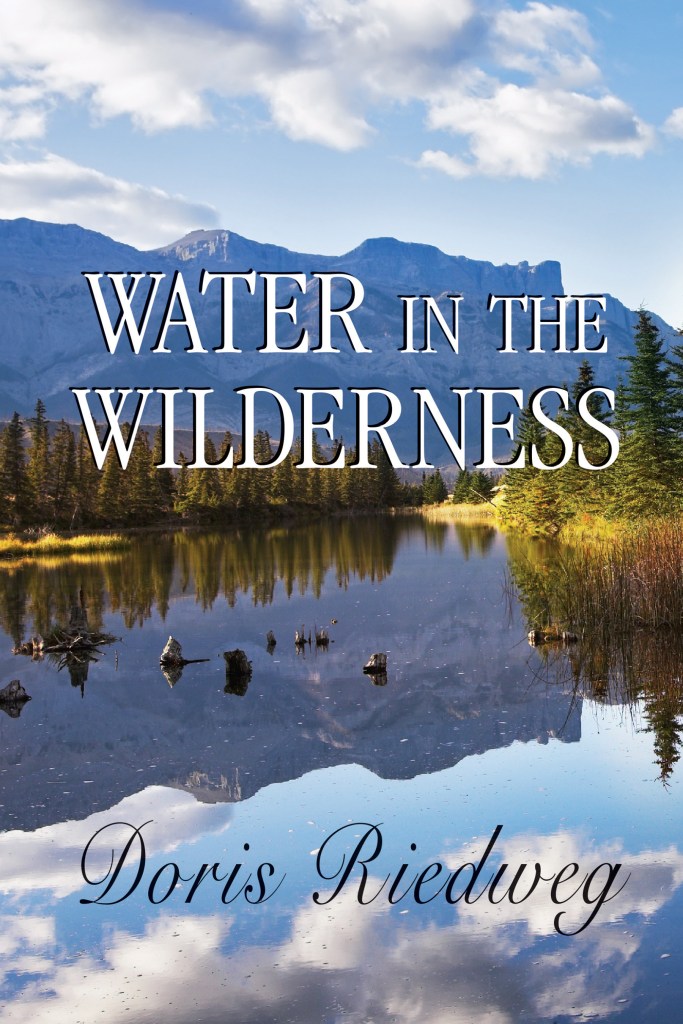
Water in the Wilderness

Excerpt

At first she could see only the tossing head of the Holstein cow that Morley had long ago named Jezebel for her nasty disposition. Sparky sat in the straw close to the pen, tail wagging, ears forward, almost begging to be let in to the pen to help. As Tyne walked closer to the rails she saw Morley, bare from the waist up, standing behind the cow with his right arm almost hidden inside of her.
Tyne gasped and Morley glanced up. His face crimson from the effort of the struggle, he said haltingly, “Tyne … you’re up. I … I didn’t get a chance to … check on you.”
Jezebel, tied by a rope to a post, tossed her head, bellowed and tried to land a kick on her perceived tormentor who deftly sidestepped to avoid the flinging hoof.
Tyne raised her voice to be heard above the cow’s deafening bawl. “What on earth are you doing?”
“I’m trying to … turn the calf. It … it was coming backend first.”
“Oh yeah,” Tyne said, “breach delivery. I didn’t know cows did that.” She raised her voice as the big animal lashed out with its right hind leg, missing Morley’s knee by inches. “Morley, can I help? What can I do?”
She started to open the pen gate, but he stopped her with a warning glance. “No, Tyne, don’t come in here, it’s too dangerous. She … she’s not the gentlest cow we have.”
An understatement, Tyne thought as she stepped back. But she felt helpless. She wished Morley had someone to help him because she feared for his safety. But what could she do? She knew of only one veterinarian in the area; most of the farmers were well practiced in taking care of emergencies. But when it came to animals like Jezebel, they needed all the help they could get. Morley had talked of selling the unruly beast, but she was one of his best milk cows and produced excellent offspring.
From her vantage point beside the gate, Tyne saw Morley’s face turn crimson and heard him grunt with one last effort. Then he stepped back and away from Jezebel who interpreted her sudden freedom as a signal to lie down.

https://www.amazon.com/dp/192676319X

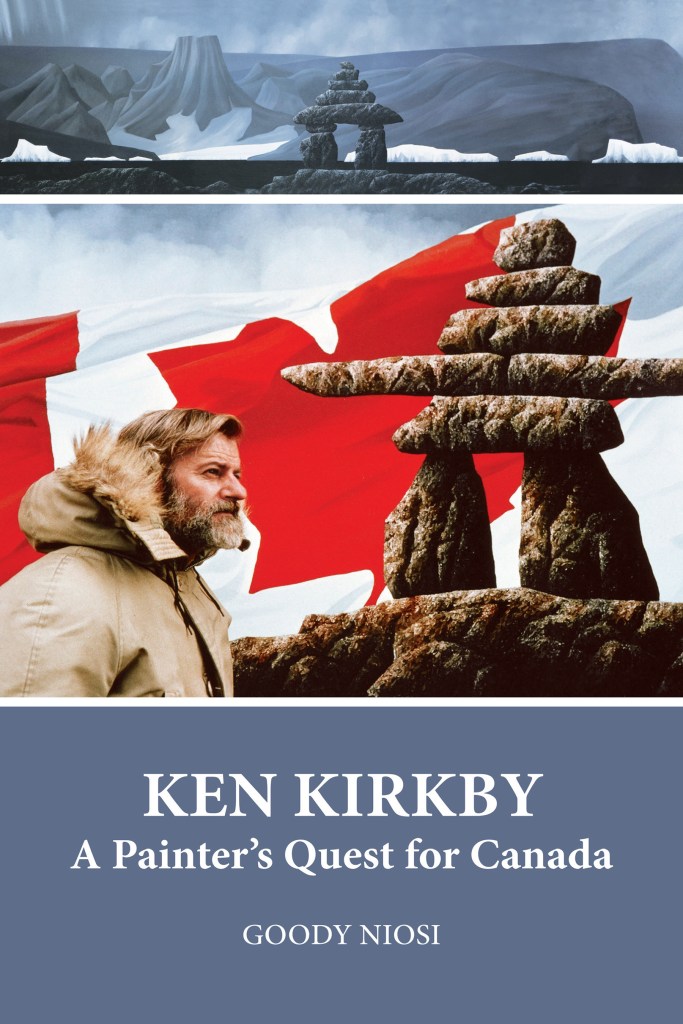
Ken Kirkby, A Painter’s Quest for Canada

Excerpt

“I’ll give it to you,” Ken said.
“No,” he said. “You have to learn about artwork. You don’t give it away.
If you do, it becomes worthless. Things that are given, such as works of
art, tend to sit on the shelf for a while and then they go into a bedroom
somewhere and before you know it they’re in the basement and they become
part of the flotsam and jetsam of people’s lives. But if you pay a
great sum of money for something it goes over the mantel and you hold
cocktail parties to boast about your acquisition. That is one side of the art
world you’re going to have to learn about. How do we attribute value to
something in a world that understands very little? Everything is quantified
in our world. Therefore, if it has a big number attached to it, it must
be of great value.”
Ken and Rui agreed on a sum of money that was not too great but that
seemed like a great deal to Ken. With great pride he told his father that he
had sold a drawing to Rui.
“Did you offer to give it to him?” His father asked.
“Yes, I did and he wouldn’t take it,” Ken said and repeated what Rui
had told him.
Ken Sr. smiled. “Yes, that’s probably quite wise,” he said.
One day, When Francisco and Ken came out of the shack to go fishing
they noticed a young woman walking on the beach. Ken had seen her
from time to time walking to or from the hospital where she worked, or
climbing down the cliffs to the ocean. On this day, as so often happened,
the beach was empty, save for themselves and the marine life that scurried
about the rocks. The young woman had not seen the old man and the boy
and thinking herself utterly alone, took off her clothes and walked into
the water. Ken was mesmerized; she was the most beautiful creature he
had ever seen. “Look at that,” he whispered to Francisco.
“Yes,” he said, as though reading his thoughts, “She is very beautiful.
She has a limp, you know.”
“What does a limp have to do with anything?”
“It’s a long and complicated story – and we should not be interfering
here. She thinks she’s alone so let’s let her be alone.”
From that day on she became Ken’s passion. He discovered that she
was a nursing student and that she had come from a village several miles
away. Her family were peasants but she had studied hard because she was
determined that she would not become a servant for rich people.
He also became friends with Dawn Coates, a girl who was being tutored
at the same small school he attended each day. Her parents were
divorced – her mother, American, and her father, English. She was one
of the first children he had ever admired. She was strong and direct and
seemed fearless.

https://www.amazon.com/dp/0981073573

Ken Kirkby, A Painter’s Quest for Canada

Excerpt

And are they brave enough? The most dangerous place in the world is the
centre of one’s self where all the secrets and all the fears lie. I’m prepared
to go there even if it shrivels me up like an autumn leaf. That’s what it’s
about to me.”
On the third day, Ken refused to do what the teacher asked of him.
“Show me how to use different materials.” Ken said.
“No. You have to follow the rules.”
Ken sighed. “Picasso broke all the bloody rules – don’t you understand?”
“Oh – and you’re going to break all the rules!”
“Absolutely – I’m going to shatter them and then pick up all the pieces
and see what happens when you put them back together again differently
– but not as ugly as Picasso.”
At the end of the class, Ken packed up his books and pencils and left.
His formal art education was finished.
Ken’s father made inquiries and found a tutor – John Traynor, an Irishman
– who gave lessons in his private school. Ken found the lessons, if
not exciting, at least enjoyable and interesting.
Shortly after Ken’s uncle’s visit, his grandfather, Don Hymie, and
grandmother, Victoria, came to stay for several weeks. Victoria was the
matriarch of the family and ruled it with the proverbial iron fist. She was
a tiny woman with a curved back, a stooped gait and hair that reached the
floor when she let it down.
Ken loved to brush his grandmother’s hair with her silver-backed tortoiseshell
brush. Victoria, in turn, enjoyed nothing more than having her
hair combed and the two became friends. Ken was the only one in the
family who she never tried to terrorize. She called him a clown. “Tu es un
Paeaso.” But the word had deeper textures than merely clown. It embodied
the village idiot, the King’s fool and the savant.
Ken also developed a strong relationship with his grandfather, whose
passion was his plants and his orchards. He derived enormous pleasure
from grafting fruit trees and he was an avid historian and linguist. When
he came to visit, he told Ken, “I am going to be your history teacher.”
Every day Ken and Don Hymie walked to the beach to have lunch with
Francisco. Class distinctions meant nothing to Don Hymie and that alone
was enough to command Ken’s love and respect.
At low tide, they would wade out and hunt for shrimps, which they
would quickly throw into a pot of boiling water and eat by the handful,
accompanied by large pitchers of beer. While they ate bread and shrimp
and drank beer, Don Hymie told stories of his family history dating back
for hundreds and hundreds of years.
As summer drew to a close that year, his father asked him one day – as
was his custom – what he wanted for his birthday.

https://www.amazon.com/dp/0981073573

Ken Kirkby, A Painter’s Quest for Canada

Excerpt

Near the end of the term, when Ken had counted 138 beatings, he once
more entered the office and this time, instead of standing in front of the
big desk, he sat down.
“Don’t sit down,” the headmaster growled. “I haven’t invited you to sit.”
“Well, I’m doing it anyway,” Ken said, placidly. “And I want to tell you
what I think of you. I think you’re a little man – a very, very tiny person.”
Ken held his thumb and forefinger about an inch apart to demonstrate.
“The people who have hired you and who have hired all the people here
have taken very tiny people who will obey their rules, no matter how ridiculous
or horrible those rules are. And you do it because you have no
other place in the world to go. This is your last refuge. This is the way you
have to be. I think you’re evil.”
A light flickered in the headmaster’s eyes. He sputtered incoherent
words as he reached for his cane.
“You cannot inflict pain on me,” Ken said. “Not physically. The pain
that I feel is in a different place.”
The headmaster came at him. Ken pulled down his trousers and lifted
his shirt. “Go on then,” Ken taunted him.
The man lost control and flailed Ken’s back and buttocks until his arm
could no longer lift the cane. He threw down his weapon, stormed out of
the room and slammed the door. Slowly Ken pulled his clothes back on,
feeling the blood soaking into his shirt. This was his moment.
He left the school and walked home. By the time he got there the blood
had begun to congeal and each movement caused pain. Ken Sr. had left
his office early that day and was at home to greet his son. His smile of
welcome faded. You don’t look well,” he said. “You’re white.”
“I’m not too well,” Ken said.
“What happened?”
Ken moved to take his jacket off, but when his father saw the pain it
was causing he put out his hands to help. “What is this?” he asked. The
shirt under the jacket was soaked in blood. His face grew white and his
lips compressed into a thin line. Gently he put his arms around his son,
“What on earth happened?”
Ken told him the story.
His father’s lips grew whiter and thinner until they formed a colourless
line. When Ken had finished his tale, he said, “We’re going to the doctor
right now and we’re also going to the police. He documented the evidence
of the beating with a camera and had charges laid against the headmaster.
The man was arrested and left the country within a month.

https://www.amazon.com/dp/0981073573

Ken Kirkby, A Painter’s Quest for Canada

Excerpt

“And I suppose you propose that you’re the one who is
going to find these marvellous new things.”
“Actually,” Ken said, “I am – many of them. I have already found some
but they’re mine and they’re secrets.”
“Well, you seem to have some feelings about this.”
“Yes, I do.”
“Go ahead then – express your understanding of this.”
“Yes sir.” Ken picked up the chalk and drew two birds. One bird was
flying along while the other one lay crumpled at the foot of a brick wall
that it had crashed into.
“What precisely does that mean?” the master asked.
“This bird is flying along without thinking about Pythagoras’ Theorem
and this bird was thinking about Pythagoras’ Theorem and flew into
a wall.”
“I suppose you think you’re very funny,” the teacher said.
“In my universe I think I’m funny,” Ken said. “And I enjoy being funny.”
“Is that so?” the teacher said. “And I suppose you think this is very
funny.”
“No sir, it isn’t very funny. It’s actually very, very sad.”
“Yes,” he said, walking to his desk. “Sadder than you think.” He wrote
something on a piece of paper, folded it and handed it to Ken. “Take that
to the headmaster,” he said.
Ken left the classroom to the sniggers of the other students and searched
for the headmaster’s office.
This behaviour about drawing the birds was spawned by the treatment
that I got when I walked in there. I was dealt with in a rather stupid way.
If there were twelve points in one’s life that were important, this incident
would be one of my key ones. I’ve always had somewhere deep inside me a
sense of knowing the moment when I am in the moment. To this day I can’t
explain how that happens but I do know when I’m in it. It had become apparent
to me that there were very specific rules for the “good” people – the
“nice” people – and those were the people who had lots of money. The poor
people lived in a different world. And the rich people were hiring minions
such as this teacher to do their bidding. The rich people didn’t want to look
after their own children – they just shunted them off to boarding schools.
Ken found the office and knocked on the door.
“Come in,” a voice called.
Ken walked in and handed the folded note to a woman sitting behind
a desk in the small anteroom. She unfolded it, scanned what was written
there and looked back up at Ken with a curious half-smile.

https://www.amazon.com/dp/0981073573

Water in the Wilderness

Excerpt

In spite of her heavy heart, Tyne grinned. Dr. Dunston could lift her spirits simply by being present.
“If you hadn’t been away fishing, or whatever you were doing, you’d know that I got back to work two months ago.”
It was the doctor’s turn to grin. “Yeah, I guess.” He slapped her lightly on the back as he walked by to pick up a patient’s chart. “How’s it going, girl? How’s married life?”
Tyne smiled openly now. “It’s great. With a husband as wonderful as Morley, how could it be otherwise?” She sobered suddenly and indicated the chart he was holding. “I wish it was as great for your patient.”
Grant Dunston tapped the cover of the book-like chart. “Yeah … Lydia. What kind of night did she have?”
For a moment Tyne forgot her distress over Barry in her concern for Lydia Conrad and her children.
“Not good, I’m afraid. It’s not only her surgery she’s concerned about, but she’s worried sick about the children.”
Grant Dunston shrugged, but Tyne knew he wasn’t unconcerned. “Yeah, I know. If it wasn’t for that useless husband of hers ….”
“Dr. Dunston, what can be done for them? I mean, even while Lydia’s convalescing they’ll need care – more than she can give – and obviously she can’t depend on Corky.” Tyne closed a chart and pushed it back into its slot. She turned to face the doctor. “Isn’t there anyone who can take them in for a while? It would help Lydia’s recovery, too, if she knew they were being cared for.”
She realized that Dr. Dunston had been staring at her for several moments with a quizzical look.
“What ..?” she began, but stopped when his puckish features broke into a grin.
“How about you, Tyne?”
Her mouth fell open. “Me? Are you serious?”
“Sure, why not? You’ve got all that land for them to run around, and all those animals to amuse them, and all those good homegrown vegetables. They’d love it.”

https://www.amazon.com/dp/192676319X

Yannis Ritsos – Poems, Volume I

Moonlight Sonata

Φορές-φορές, την ώρα που βραδιάζει, έχω την αίσθηση
πως έξω απ’ τα παράθυρα περνάει ο αρκουδιάρης με τη γριά
βαριά του αρκούδα
με το μαλλί της όλο αγκάθια και τριβόλια
σηκώνοντας σκόνη στο συνοικιακό δρόμο
ένα ερημικό σύννεφο σκόνη που θυμιάζει το σούρουπο
και τα παιδιά έχουν γυρίσει σπίτια τους για το δείπνο και δεν τ’
αφήνουν πια να βγουν έξω
μ’ όλο που πίσω απ’ τους τοίχους μαντεύουν το περπάτημα της 
γριάς αρκούδας –
κι η αρκούδα κουρασμένη πορεύεται μες στη σοφία της μοναξιάς 
της, μην ξέροντας για που και γιατί-
έχει βαρύνει, δεν μπορεί πια να χορεύει στα πισινά της πόδια
δεν μπορεί να φοράει τη δαντελένια σκουφίτσα της
να διασκεδάζει τα παιδιά, τους αργόσχολους, τους απαιτητικούς,
και το μόνο που θέλει είναι να πλαγιάσει στο χώμα
αφήνοντας να την πατάνε στην κοιλιά, παίζοντας έτσι το 
τελευταίο παιχνίδι της,
δείχνοντας την τρομερή της δύναμη για παραίτηση,
την ανυπακοή της στα συμφέροντα των άλλων, στους κρίκους 
των χειλιών της, στην ανάγκη των δοντιών της,
την ανυπακοή της στον πόνο και στη ζωή
με τη σίγουρη συμμαχία του θανάτου – έστω κι ενός αργού 
θανάτου  –
την τελική της ανυπακοή στο θάνατο με τη συνέχεια και τη 
γνώση της ζωής
που ανηφοράει με γνώση και με πράξη πάνω απ τη σκλαβιά της.

Sometimes as evening comes I have the emotion

that outside the windows the bear handler goes by with

his old heavy she-bear

her hair full of thorns and thistles

creating dust on the neighborhood road

a lonely cloud of dust that rises like incense in the sundown

and the children return to their homes for supper and

are not allowed out anymore

although behind the walls they guess the old

bear’s footsteps –

and the tired bear marches in the wisdom of her loneliness

not knowing where or why –

she has grown heavy and she can’t dance on her hind legs

anymore

she can’t put on her lacy bonnet to entertain the children

the loafers or the ones who are hard to please

and the only thing she wants is to lie down on the ground

letting them step on her belly thus playing her

last game

showing her formidable power for resignation

her disobedience to others’ interests the rings in her lips

the needs of her teeth

her disobedience to pain and life

with her certain alliance with death – even a slow death –

her final disobedience to death with the continuance

and knowledge of life

that ascends with wisdom and action above her slavery

https://www.amazon.com/dp/1926763076

Water in the Wilderness

Excerpt

more of her attention than she felt she could give.
Calls for bedpans from several of her elderly female patients were usually taken care of by the nurses’ aide, but Martha Schultz was needed on the Maternity wing tonight to help bathe and feed the newborns in the overflowing nursery. Shirley McQuire, the R.N. on that ward, had not even had time to pop round to the kitchen for a cup of coffee.
There’s no doubt about it, Tyne thought as she settled at the charting desk, there are nights when we need more help. But then, how did a person predict how busy the hospital was going to be on any shift? Director of Nurses, Inge Larson, could not bring people in to work on speculation only.
Tyne sighed, pushed a stray auburn curl under her nurses’ cap, and picked up her pen. At least Lydia appeared to have settled down following the back rub. But that thought brought another sigh. Tyne had not yet decided how she was going to keep her promise to Lydia to have the children cared for. In fact, until now, she had not found a minute to think about it. What could she tell Lydia before she went off duty at eight o’clock? The only thing clear to Tyne was that something had to be done, and soon.
She removed a chart from the rack in front of her and opened it to the page of nurses’ notes. She had time only to record, in red ink, the demerol she had administrated to the man who had undergone surgery for a ruptured appendix, when she heard the wail of a siren followed by the crunch of wheels on gravel at the emergency entrance. Tyne looked up. Lights from an approaching vehicle shone briefly through the windows of the double doors as the vehicle made a hurried turn, then backed up to the entrance.

https://www.amazon.com/dp/192676319X

Ithaca Series, Poem 705

a second

My hands are cold.

                                              I’ve gone out into the street,

I’ve settled the minor matter

and returned home to take again

my place at this table.

                                              I then discovered

the coldness of my hands,

                                              a sign

which disturbs me perhaps without justification,

it’s just a little thing to have cold hands.

This cold of November

is in my hands, nothing else.                

                                                              It’s me:

I see the simple Greek vase

and the usual evening around me.

But it’s very rare for me to have cold hands.

In a fleeting second, my thought has seen

the probable fog, the filled out gray leaf

where the name I have would be crossed out

with the frosty ink of the end.

ΔΕΥΤΕΡΟΛΕΠΤΟ

Τα χέρια μου είναι κρύα

                              βγήκα έξω στο δρόμο

να ταχτοποιήσω κάτι ασήμαντο

γύρισα σπίτι κι έκατσα στο τραπέζι

                               Τότε διαπίστωσα

πόσο κρύα είναι τα χέρια μου

                                σημάδι

που μ’ ανησυχεί ίσως δίχως λόγο

ασήμαντο να `χεις κρύα χέρια.

Το κρύο του Νοέμβρη

στα χέρια μου, τίποτε άλλο.

                                Εγώ είμαι:

Βλέπω το απλό Ελληνικό βάζο

και το συνήθες βράδυ ένα γύρο μου.

Μα σπάνια έχω κρύα χέρια.

Μια φευγαλέα μου σκέψη παρατηρεί,

μες στην ομίχλη, το γκρίζο φύλλο

με τ’ όνομα μου ξεγραμμένο

με την κρύο μελάνι του τέλους.


Μετάφραση Μανώλη Αλυγιζάκη//Translated by Manolis Aligizakis

Antonio Cabrera, Spain, (1958 – 2019)

2024 Books by Manolis Aligizakis

Κοιτάζοντας πίσω το 2024, διαπιστώνω ότι ήταν μια πολύ ενδιαφέρουσα χρονιά. Ασχολήθηκα με πολλά, συνεργάστηκα με πολλούς ανά τον κόσμο, και με τις μεταφράσεις εκδόθηκαν 11 βιβλία μου σε 4 χώρες και γλώσσες του κόσμου. Η εργασία μου αναγνωρίστηκε με το ειδικό βραβείο ποίησης του 2024 από τη Διεθνή Ακαδημία της Κραϊόβας, στη Ρουμανία κι επίσης κατέληξε στη βραχεία λίστα των βραβείων Zbigniew Herbert της Πολωνίας. Εύχομαι σε όλους ένα χρόνο γεμάτο φως κι απεριόριστη δημιουργικότητα /// Looking back at 2024 I realize it was an interesting year. I worked on many projects, I co-operated with many people around the globe, and including translations I had 11 books published in 2024. My work was recognized with the Special Poetry Award by the International Academy of Craiova, Romania, and was included in the short list of the Zbigniew Herbert International Literary Awards, in Poland. I wish all my friends a year full of light and endless creativity.
2024 books by Manolis Aligizakis
INCIDENTALS, poetry, Ekstasis Editions, 2024
SAVAGES AND BEASTS, novel, Libros Libertad, 2024
TWELVE NARRATIVES OF THE GYSPY, poetry by Kostis Palamas, translated by Manolis Aligizakis, Libros Libertad, 2024
SHADES AND COLORS, poetry by Ion Deaconescu, translated by Manolis Aligizakis, Libros Libertad, 2024
COURAGE OF THE MOMENT, poetry by Marian Rodica, translated by Manolis Aligizakis, Libros Libertad, 2024
LIFE IS A POEM, poetry by Coman Sova, translated by Manolis Aligizakis, Libros Libertad, 2024
WISDOM OF THE NUDE, poetry by Manolis Aligizakis, ENEKEN, Salonica, Hellas, 2024
CAMOUFLAGE, poetry by Manolis Aligizakis, translated INTO Romanian by Larisa Caramavrov, International Academy of Craiova, Romania, 2024
ALCA (CAMOUFLAGE), translated into Hungarian by Marta Gyerman Toth, ABART, Hungary, 2024
ANTONY FOSTIERIS-SELECTED POEMS, translated by Manolis Aligizakis, Libros Libertad, 2024
ENTROPY, poetry by Vasilis Faitas, translated by Manolis Aligizakis, Libros Libertad, 2024