Worm Green grass in brown soil moist in air, overburdening black clouds on brown leaves death in fall or spring rich dirt excreting a fat worm dressed in his nakedness like a general declaring war or a middle-aged man running to a feast naked worm on his destination to his daily walk along brown leaves and saddened atmosphere pink orphan worm with no arms, no eyes just his instinct to stay alive like tree roots leading to food worm at the edge of nuisance brainless, yet wise enough to crawl on his skin defining rules of destiny and declaring in a respected posture and with all expected fanfare rules of life on his way to the next page of history
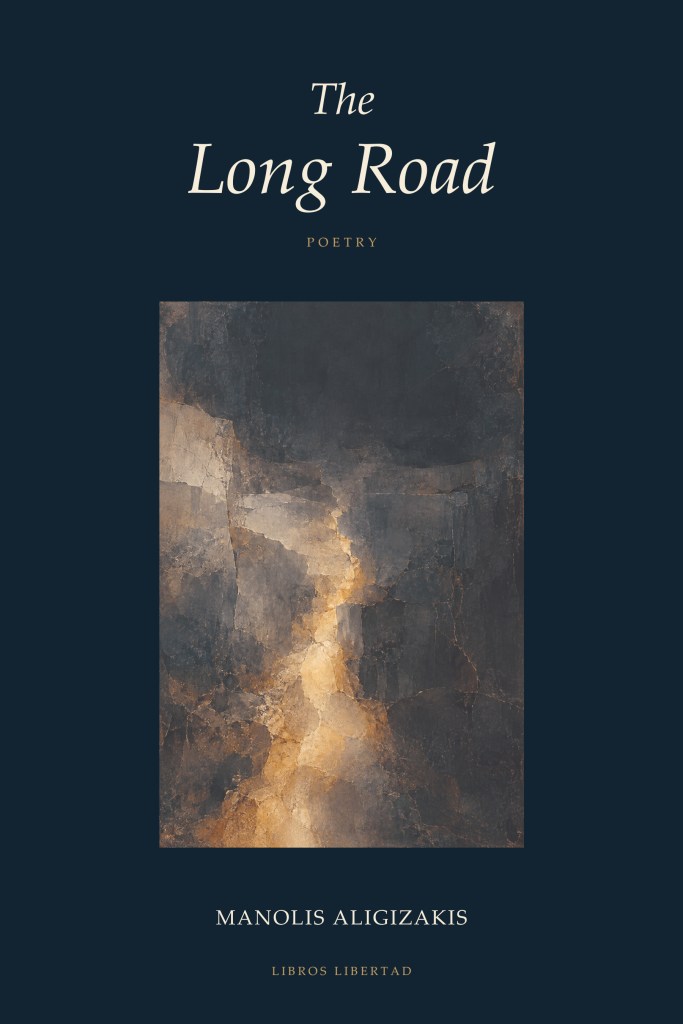
(If this poem touched you, you may find more about this poetry book in the following link)
“Nope, that’s not me,” I said with definite weight. “Have you seen the movie The Rain Man? The story of the brother who has to be looked after?” She nodded and I continued, “Well, same thing here. I have an identical twin—a talented guy, but one hell of an idiot and my job in life is to look after him while he tries to make this into a better world. Now, if you were in this position, you wouldn’t want a lot of attention, would you?” The women were properly sympathetic and I congratulated myself on my escape. I shared the story with the Harris’s and we had a good laugh. A little bit of humour was returning to my life, and it felt just fine. Each day Ken Harris would ask how the story was coming along and I’d reply that I thought my ruse might actually work. Some months passed, and he couldn’t stand it any longer so he went up to the little store to tease them about how I’d pulled their legs. And that was that. My cover was blown. As a result of jokes of this nature, there are many who consider him either a walking ego, or a complete asshole. That doesn’t bother him either, “Our assessment of ourselves and our place within the universe is flawed at square one. What is missing is a sense of humour. It keeps a person balanced.”
II (About Winds and Waters) Eternal memory to the master, the Kindest Ottoman Ali Hantzar, a servant of the Empire, the great world Benefactor, helped by the Italian Guglielmo Tzitzi. This was also the opinion of Madam Artemis, whose Confirmation consoles the wandering souls and greatly contributes to the efforts of the sixteenth-century French poets who tried to create the New School named the Pleiades. Besides, none of us forgets that the monk Schwartz discovered gunpowder. Thus, for the rest …
(If this poem spoke to you, you may find more about this translation book in the following links)
Emotions Emotions are the wire that reaches the heart of the void. So much blood, so many wounds so many dead. Each approaching winter is the last an iceberg rolls down the ocean and meets us a dark sun calls its name while it shines. So much bloodshed, so many emotions pulp all aimlessly kneel in the indecipherable whole. Armies pass along the heavenly spaces salvos echo in the narrow air. Emotions are the wire that reaches from our hearts to the sky brings the ice and fires our sun emotions are the telegraph we use to speak to the dead.
JUSTIFICATION With a stone I strike a stone to mould a spark a fire to become and add an inch onto the leg of the limping man who after he admires the ridiculous turn of this earth and after he immortalizes it on his canvas into a conflagration his fire will grow to burn the unequal world when from the bottom of the lake I pull mud and place it in the limping man’s palms he alone, who in deficiency exists will mould the perfect universe from the beginning people concerned and beasts he’ll create women who laugh with their loosened hair in the afternoon breeze unforgettable sunsets and when the limping man has graced all eyes with benevolence I shall give him summer wine onto the clouds I shall enthrone him pure and mature and loosened and after inebriation settles in revengeful and spiteful to justify the cry Good Lord, have mercy on us don’t drink again
(If this poem touched you, you may find more about this poetry book in the following link)
II This mountain is so close to me I extend my hand and uproot the trees and their shrubs the electrical company’s poles the hurting teeth of a desperately lonely life Crafty sheep run on it are sheep ever crafty? Yet these have hurt a lot and have learned inhumane bleats Here, the people became one with the stones they strike the stones and rip their viscera they surprise themselves; they don’t know how to cry Today look carefully at this mountain look carefully at this tear of the Lord because it will dry up by tomorrow Tomorrow you won’t be able to see anything.
The car, a 1953 Cadillac convertible, stood in front of the Tournquists’ house. Red and shiny, it had gleaming white wall tires. Tyne had not seen it there on any of her previous visits. As Cam drew his Buick alongside, she said, “Your parents must have visitors.” “I don’t think so, honey. There’s no car here except what belongs to the family.” “Oh, did they get a new ….” She stopped, realization dawning. “Oh no, Cam, it can’t be … not mine.” Stunned, she remained seated until he came around to open her door. “I’ll let them tell you.” Cam helped her out, and led her up the front steps. At the top, she put her hand on the wrought iron rail and turned to look back. “Oh, my goodness,” she murmured. The car was indeed hers, Arthur Tournquist informed her a few minutes later. “But, I can’t let you … really, it’s too much ….” “Tyne, will you please stop mumbling and accept our gift graciously?” Arthur smiled at her, but Tyne sensed his impatience. What did one do in a situation like this? She didn’t want to refuse a gift. On the other hand, this gift was much too extravagant, the most she had hoped for being a second-hand older model something. She had no idea what she had expected, because she knew little about cars. But this … even if she was to be their daughter-in-law, she could not accept a gift like this. And that’s just the point, she thought. If Cam and I were already married, it might be a different matter. They could have waited … they should have waited. She thought about Moe and the humble little television set from her future in-laws. She would give anything to be able to trade places with Moe right now, or at least be able to trade gifts. Since that was impossible, she craved the next best thing – to call Aunt Millie and ask her advice.
YOUR LETTERS I kept your letters, my first love, in the priceless box of my heart your letters smell of youth making my senior joy bloom your letters talk to me a lot with their crooked lines and mistakes they shiver, cry and laugh; they narrate games of jealousy and coldness you sprayed perfume and your letters won’t be erased by the passing time wish our first dreams weren’t erased by your heartlessness oh my only love, your letters white boats carry my thoughts down where the word of Death can’t be wiped out from your letters-graves.
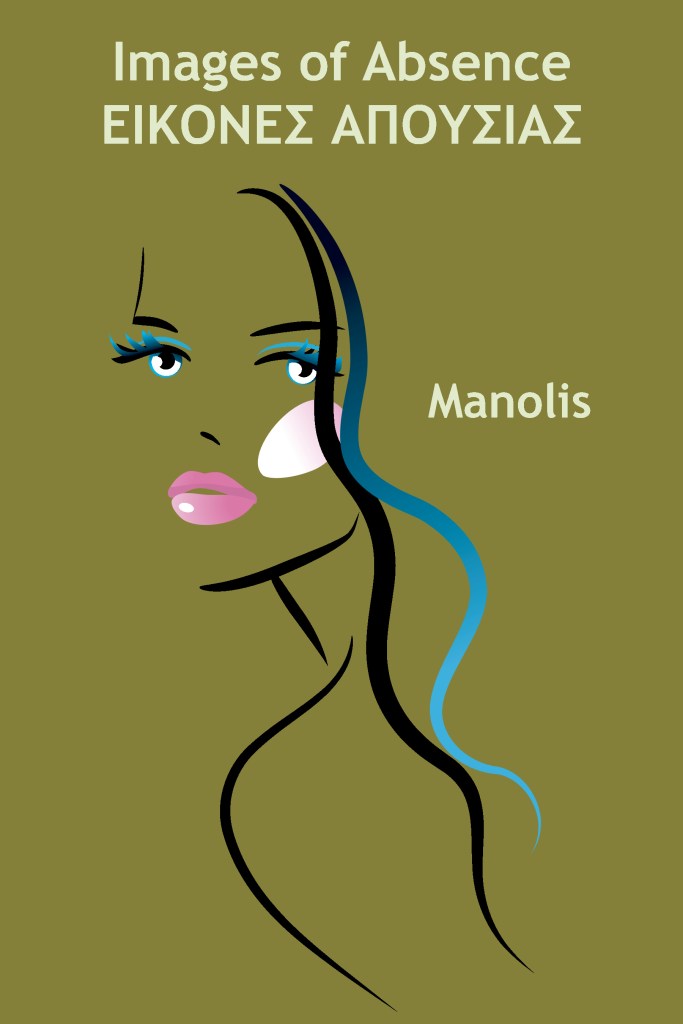
(If this poem spoke to you, you may find more about this translation volume in the following links)
Pip: Manolis Aligizakis has assembled a site where Greek modernism, prairie crime fiction, and erotic lyric poetry share the same address — which is either an act of radical curation or a very ambitious filing system.
Mara: vequinox is behind all of it — translations, original poems, fiction excerpts, and critical reviews — and today we're moving through Greek poetry and myth, literary fiction and crime, and the territory of love, loss, and desire. Let's start with the poetry.
Greek Poetry, Myth, and the Weight of Small Images
Pip: The question this cluster of work keeps pressing is what a short poem can actually hold — whether compression is a limitation or its own kind of argument.
Mara: The AI review of Yannis Ritsos, Poems, Volume I, sets this up directly. Looking at the poem "Doxology," it finds that "the compactness prevents the relation from settling into a straightforward moral. Praise may suggest endurance, dependence, helplessness, or an affirmation made despite injury."
Pip: So the short poem isn't a reduced version of something larger — it's a form that keeps meaning genuinely open rather than resolving it into comfort.
Mara: That's exactly the review's claim. The man resembling a dusty, leafless tree, the sun that has burned him remaining beyond burning — the review argues the restraint lets the asymmetry between human vulnerability and solar power stay visible rather than collapse into consolation. "Memory" and "Winter is Approaching" work the same way, using domestic objects — a father's silence, a repurposed hat, a stored collar — to carry psychological weight without fixing their meaning.
Pip: Objects that survive their original use and acquire something stranger. That's also what Yannis Ritsos, Poems, Volume VI does with "Transmutation" — chairs rearranged after a funeral, a lit match that suddenly reflects back at you.
Mara: The Katerina Anghelaki Rooke selection gives Penelope a voice that does something similar — holding absence as a discipline. The Kariotakis-Polydouri tragic love story frames escape as transformation into "golden dust in the air." Cavafy's "Ithaca" makes the journey itself the point, not the destination.
Pip: And George Seferis folds political urgency right into elegy — "Sensual Elpinor" cuts between a grieving woman and a radio bulletin about war, with cyclamens and pine needles running through both.
Mara: Miltos Sachtouris in the Collected Poems takes that further — beauty sprinkled over ugliness, a voice stolen, a severed head floating downstream with closed eyelids. Nikos Engonopoulos frames the poet-figure Belisarius as someone called upon in crisis and then forgotten. Nostos and Algos, Introspection, Second Advent of Zeus, Entropy, and Ugga all extend this — myth as a structure for thinking about origin, exile, and what gets inherited.
Pip: And then An Essay on the Structure of the Human Imaginative steps back to ask what the faculty behind all this image-making actually is — Aristotle couldn't define it, Kant got close but missed it.
Mara: The Nuances review ties it together: the collection's most persuasive poems are those where "a particular object or scene" carries the argument — a doll with a missing arm, a rusted bicycle, a coffee cup. The Qliphoth takes a different angle, using letters and occult ritual to approach the same threshold between perception and the inexplicable.
Pip: From poems about what objects remember, let's move to fiction about what people do when their world falls apart.
Literary Fiction and the Pressure of Ordinary Lives
Pip: The fiction here keeps returning to a specific kind of crisis — the moment when an ordered life suddenly has no floor under it.
Mara: Jazz with Ella sets up a different register first: a group of travelers on a cultural tour, conversation about Cold War exchanges, Russian language lessons, the texture of being young and curious in a politically charged world. One character explains, "Learning by talking is the best way. That's why I didn't pack my Ozhegov."
Pip: Easy and social on the surface — but the other fiction excerpts don't stay there.
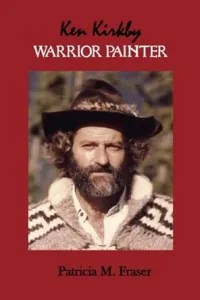
Mara: Straits and Turns goes somewhere much darker. A man's marriage ends in a single morning, and the excerpt traces exactly how a structured identity — a CIA agent's code, his protocol — becomes the mechanism of his destruction rather than his rescue. Poodie James works at a quieter pitch: a police lieutenant weighing whether to run for mayor after a death reshapes a small town's politics. Fury of the Wind grounds itself in the Canadian prairies, in schoolhouse registers and farming families and the slow inheritance of values across generations. The Unquiet Land puts economic pressure at the center — fishermen who can't sell their catch, fishmongers charging prices the catch can't justify. Ken Kirkby, Warrior Painter brings in a nonfiction register: a painter who discovers his missing work displayed in a stranger's home, sold by a gallery that never paid him.
Pip: Which is, in its way, the same structural collapse — an arrangement that was supposed to hold, and didn't. Now for the work that lives closest to the body.
Love, Loss, and What the Body Carries Forward
Mara: This segment's question is what desire and loss actually do to a person — whether they diminish or, strangely, clarify.
Pip: Straits and Turns makes the stakes immediate. The collapse of a marriage doesn't just unsettle a man — it dismantles the entire system of meaning he'd built around himself. Loss here isn't elegiac; it's structural failure.
Mara: Katerina Anghelaki Rooke's Penelope offers something harder to categorize. She says of forgetting: "my only reward is that I finally understand what's human presence what's absence or how the ego functions in such desolation." That's not consolation — it's knowledge purchased at cost.
Pip: And then Triptych and Second Advent of Zeus come at desire from the body outward — touch and arousal as their own form of location, a way of knowing where you are.
Mara: Kariotakis-Polydouri frames escape from grief as dissolution — becoming golden dust, entering an unfamiliar land where darkness doesn't exist. Miltos Sachtouris in the Collected Poems shows the cost of that dissolution: beauty sprinkled over ugliness, a voice stolen, silence where song used to be. George Seferis holds the elegiac and the erotic together — a woman who has lost her light, the blind man still singing.
Pip: What stays with me is how consistently the site treats compression as a form of honesty — the short poem, the telling object, the moment of collapse that says more than the explanation would.
Mara: And how the same pressure shows up across every register — lyric, fiction, elegy. Next time, we'll see what else is accumulating on the site.
“She is a real renaissance mistress.” Then the sirens blew for an air raid warning, bringing me back to monstrous cramps and headache. Can you explain this apparition? Is it a pure elemental? A form from naid or dryad realms? Am I alone in encountering such phenomena ? I feel exhausted and confused by experiences like these but I know I must persist. My growing sense of isolation is compounded by my social situation. As a Scholarship boy from a Cardiff grammar school I find it hard to fit into this genial squirearchy of rugby players and would-be lawyers, whose rituals revolve around sconces of beer and Bump Suppers. The few apologists for the Left have a totally sentimental notion of ‘working-class life’ in industrial areas. I have refused to be their mascot. My tutors change constantly. I am anxious to serve my country but I’m told my medical history (TB and a childhood head injury that sometimes affects my vision) may well have grounded my dreams of flying; although I expect call-up papers at any time. In the meantime, it seems more important to raise one’s whole Being to the Gods than to tinker away with essays about the Scottish Chaucerians or the influence of Trollope. Your Brazen Head society sounds most attractive and it would be a great privilege to attend the next meeting. I could volunteer a paper on the Enochian Magic of Dr. John Dee, but feel I am indeed ready to go beyond academic research into collective working of rites. I think you would find me an eager pupil. Yours most sincerely in the fellowship of The Gods, Richard Firestone. (There are gaps, lacunae, broken spaces, and now the God of the Gaps is laughing at me, and I forget how many letters there were at this stage. I have a confused vision of a huge alcoved reception room, black walls, indigo recesses, old women in ratty furs natter coldly, a spider crawls down the chandelier, but it’s going too fast, I can’t get it down, I keep missing it, have to go on, on, into the summer of ’43 . . . )