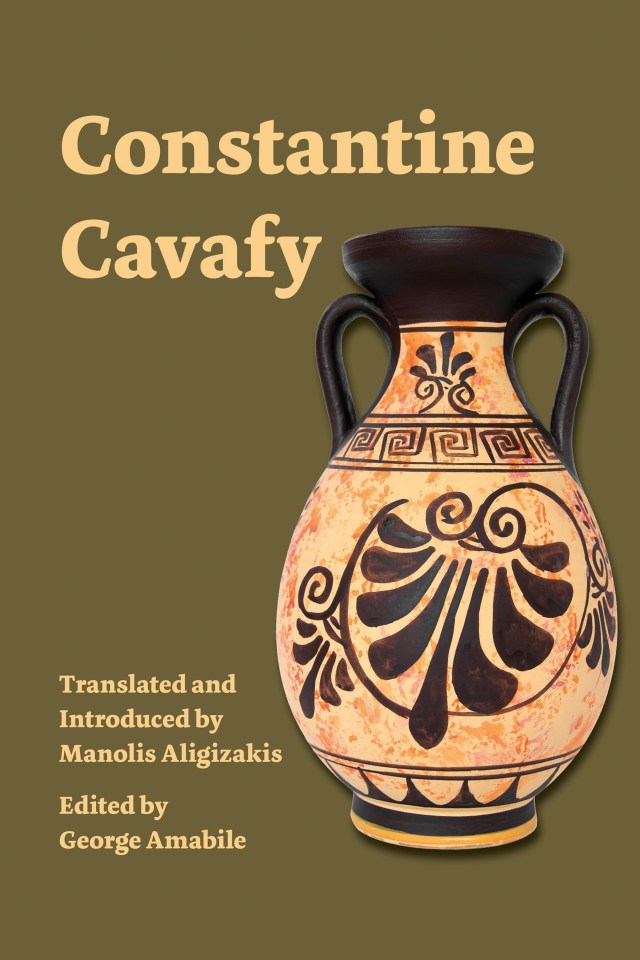
Ithaca When you start on your way to Ithaca, pray that your journey will be long, full of adventures, full of knowledge. Do not fear, The Lestrygonians, the Cyclopes, or the angry Poseidon, you will never run into things like that, if your thoughts are kept high, if a clear excitement moves your body and your spirit. You will never meet the Lestrygonians or the Cyclops or the angry Poseidon unless you carry them in your soul, unless your soul raises them before you. Pray that the way is long. Let the summer mornings be many when you will enter with such pleasure, such joy, harbours you have never seen before; may you stop at Phoenician markets, to buy their fine merchandise, mother-of-pearl and coral, amber and ebony, and pleasurable perfumes of every kind, as many as you can get. And may you visit a lot of Egyptian cities, to learn and go on learning from their scholars. Always maintain Ithaca in your mind. Arrival there is your destiny. But don’t hurry the trip at all. Let it last for many years and when you reach the island, and you are old, rich with all you have gained on the way, do not expect any further riches from Ithaca. Ithaca gave you the beautiful voyage. Without her, you would never have started your journey. She has nothing else to give you. And if you find Ithaca poor, Ithaca has not tricked you. You have become such a wise person, with much experience. You already understand what Ithaca means.
Here he was again. The start of another shitty day. As he lay in bed this morning, there was only one thing that could distract him from the pukey feeling rumbling deep in his stomach and the piercing pain in his head. If he had the story right, he had been fired the day before. Him. The consummate professional engineer. Once the senior engineer that everyone at Empire had come to count on over the years. And now? Now he had been “relieved of his responsibilities,” as the letter of dismissal so clearly stated. The letter. Yes, there it was on the floor. So then it must be true. For the first time in twenty-five years Joel was waking up without a job. And knowing how soiled his reputation would be after word got out about his dismissal, he probably wouldn’t want the kind of maritime engineering jobs that would be offered to him now, even the scraps that new grads wouldn’t accept. And maybe he wouldn’t even get those. Yesterday was pretty much a blur. He remembered being fired. He remembered walking back to his apartment through the crowds and the humidity. He remembered stopping at the street-level bar just around the corner from his place. He remembered the first rum and coke. He remembered the woman, or maybe she was a girl. But that is all he remembered. The rest was a blur. God only knows where he went and what he did from there. Somehow he had made it back to his apartment, alone and not mugged.
I am dragging… I am dragging inside me this picture, burnt upon my retina: the most horrible document of the Mariupol Maternity Department: the very last moments of a completely wounded mother’s self. The young woman, just here, on this ruin-and-smoke decorated photography, left the tortured earth. Five men tried to save – in vain – the life of the dying mother and the still in her womb dwelling child. First I hopefully tried to cling and cling into the ambiguous sight of the black polka-dotted, red and besides green-edged textile, blood-soaked lying on the sad stretcher; a bedcover, to a children’s room fitting. But it helped nothing, nothing.
…to maybe hunt proud bison on plains of your tribe still when you’ve gone home to your loved mother who cherished your upbringing dressed your first kills soaking the corn seeds smiling and your father counts them with care before hoeing them under earth you give thanks for her endless nourishment foreigners complement the dreams of nature infinite-seeming sacks of corn the giant company’s seed breeding out your own exiles rewrite maps offer corn whiskey for furs and reserves to hide the hungry
There was one more obstacle to overcome: O’Donnell couldn’t drive. Rule #5 stated membership would not be considered unless the applicant possessed a legal driving certificate. He took advantage of Dodge down time to familiarize himself with the machine. Whenever the car slumbered he sat behind its wheel practising the smooth shifting of gears, learner’s manual resting in his lap, the glossy, air-brushed wantonness of Ed Levine’s calendar girls an encouraging audience to his lofty aspirations. He approached Pete Dombrowski about his chances. The longtime club member had dropped by Ed’s garage to replace a gasket. O’Donnell held a light. – How long before I’m in? – Depends, kid, Dombrowski said. Maybe never. – What’s your guess? Gimmee a ballpark. Dombrowski slammed the hood and wiped his hands. – Members decide by secret ballot. That waiting list? It don’t mean nothin’. – I’m getting my licence soon, O’Donnell reminded him. Dombrowski slid in behind the wheel and fired up the car. The engine roared to life. – Don’t go celebratin’ yet, squirt. Soon O’Donnell had mastered the clutch. At every opportunity he stole runs around the block. After only a few weeks he was driving as far as the municipal line. Mr. Levine was frequently waiting for him when he returned to the garage. The two had an unspoken agreement. The senior Levine wouldn’t inform the membership of my friend’s unauthorized excursions if O’Donnell remained silent about Mr. Levine’s afternoon liaisons with a certain housewife. O’Donnell says that pressure to influence the outcome of the draw was especially vigorous the first Sunday in May, as Car and Driver magazine invited all interested associations to enter a vehicle in the Spring Festival gala. The winner that particular Sunday had the privilege of powering the Dodge along the flower and bunting-bedecked…
Defences If at some time one comes near you and lays his defences by your feet do not trust him. The true knights don’t yell nor do they wear armour they don’t joust noisily they just stand on the side they observe they feel your moist sorrow and very softly they caress your hair.
Escape He sat on the stool by the front yard; his hands, so clumsy, had already overtaken us. “Someday they will demolish the house,” he says to me “and they’ll discover it.” And every so often, at the far end of the room, someone wrapped a bed-sheet around himself; it was the time he escaped until the bed sheet fell empty on the floor, and we had a friend forever. In the stations, the immigrants were lined up and, hiding inside their their overcoats, they waited for the voyage like a dog on its deathbed. And uncle Elias, our rich relative, years after his death, still stood on the sidewalk, however, he didn’t turn to look at us. “Uncle,” I said, “Since you knew, why did you come back?” “I can’t fall asleep,” he says to me, “I still have to lose some more.” I tried to leave, but I met the deaf boy on the side street; he was leaning on the wall, and he was crying, and now there was a small lit chapel on the wall while snow fell outside, and passersby drowned in their words.
I The lucidity of rose petals suffuses as the wind ripples and caresses the dunes of praying sunlit trees dressed in their primeval innocence and abundant feeblemindedness as the creeks lovingly murmur songs to one another and Heaven whispers lullabies to virgins not yet kissed other than in dreams, when one buries his forefathers under the big oak at the forlorn edge of the village abiding with nature’s peace commanding the birth and death in one breath, all creatures crawl eastward, life lingers in light the greater the number of peaceful days the higher the oak of death irresistibly climbs and the first ode swings in transparency.
Pip: Manolis Aligizakis runs a site where exile, desire, and the weight of history all show up before breakfast — and somehow that's a normal Tuesday.
Mara: vequinox has been posting across a wide range of work lately — modern Greek poetry translations, fiction excerpts, and a philosophical essay on what imagination actually does. That's the territory we're covering today.
Pip: Let's start with the poetry, which is where most of the weight lives.
Voices Out of Exile and Time
Mara: The thread running through these poetry posts is displacement — from homes, from language, from time itself. The question is what survives when all of that is stripped away.
Pip: George Seferis opens the answer with something almost architectural. The setup is a poem called "A House Near the Sea," and it earns its length.
Mara: The poem earns it. Here is the spine of it: "Houses, you know, grow easily resentful, when you empty them."
Pip: That line does a lot of quiet work. The house isn't a metaphor for loss — it is the loss, with feelings of its own.
Mara: And the Yannis Ritsos volumes — both Volume IV and Volume VI — push that further into the political. Volume IV's "Without Counterweight" puts it plainly: "All the flags are torn to the whole length of time and there isn't one on a balcony to lower half mast."
Mara: Tasos Livaditis, in Poems Volume II — longlisted for the 2023 Griffin Poetry Prize — turns inward. The observation that cuts is this: "each person keeps the key to their prison in their pocket and pretends to have forgotten it."
Pip: So the exile isn't always political. Sometimes it's the one you've arranged for yourself.
Mara: Antony Fostieris, in Selected Poems, takes that further into paradox — "In my future time, I'm already dead, fresh and dead in my darkness." Alive and dead simultaneously, in glassy cities that sink into clouds.
Pip: Hours of the Stars and the Neo-Hellene Anthology pull in the other direction — toward light, toward a "solemn and beautiful stranger" welcomed until exhaustion, toward wild lilies and the nectar of April lips.
Mara: Entropy frames the whole range: "between the minimal and infinity." Second Advent of Zeus traces selfhood back to its cellular origin, and Titos Patrikios distills community into six lines — seed, acorn, oak, path, forest.
Pip: From houses that resent you to forests that remember you. That's quite a range for one tradition.
Mara: The fiction posts ask a different version of the same question — what does a self do under pressure? Let's go there.
Fiction at the Edge of Endurance
Pip: The fiction excerpts here aren't comfort reads. They're interested in what people do when the situation is genuinely impossible — and how quietly that can happen.
Mara: Straits and Turns opens with a CIA agent named Bradley arriving home after a long flight, his life running on institutional routine, two years from retirement. Then: "he smelled the strong alcohol odour all over the…" — and the excerpt cuts.
Pip: The ellipsis is doing real work there. Everything before it is procedural calm, and then the floor drops.
Mara: Water in the Wilderness takes a different register entirely — warmer, more fragile. A boy named Bobby with missing fingers, escorting an elderly woman through a hospital door with his shoulders erect and head held high. The damage is visible; the dignity is louder.
Pip: And then Redemption lands its immigrant quietly in a three-by-four-meter room with paint peeling off the walls, trying to order food from a menu he cannot read. The stakes are enormous and nobody is shouting.
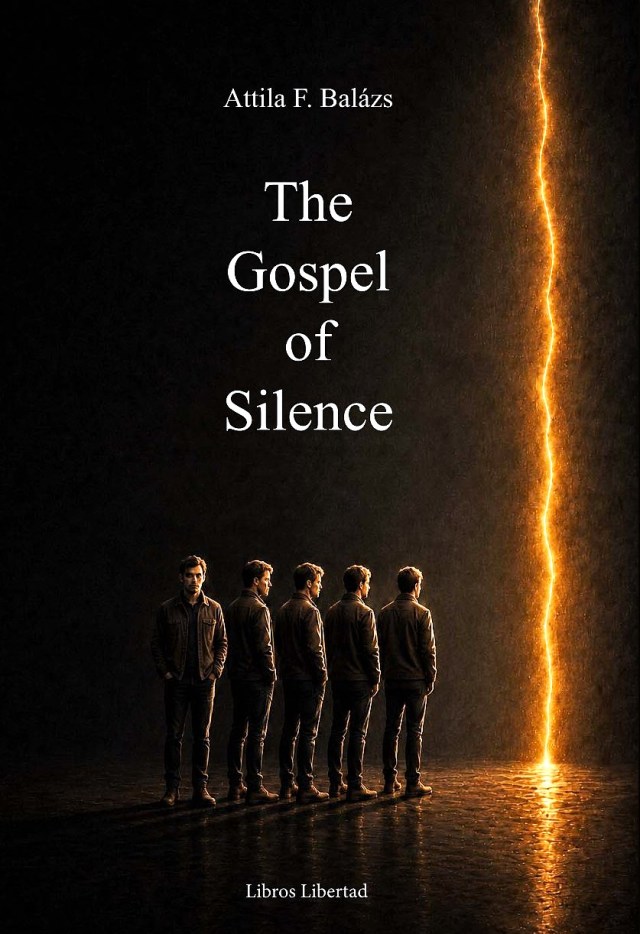
Mara: Gospel of Silence is the one that swings hardest. The narrator describes choosing "the rebellious Christ" over "the hermits' Christ who resigned himself to everything" — and then his father beats him with a wooden ruler until it shatters.
Pip: He endures it without a sound. That detail is the whole book in one sentence.
Mara: In Turbulent Times catches a family holiday collapsing in slow motion — a son counting down the minutes before he leaves, his mother's voice going "shrill, like the high-pitched squeal of scraped metal." The Qliphoth goes stranger, into an occult archive kept by a psychiatric patient who has memorized forbidden lore.
Pip: Poodie James brings a dead mayor, a woman who doesn't cry, and piano music that might be Chopin. Nostos and Algos asks the plainest question of all: if love is there and you won't give it, "why are you still breathing?"
Mara: Across all of it, the body under pressure — institutional, familial, historical, self-imposed — is the constant. The desire to escape, and the question of what you carry when you do, runs right into the next theme.
The Body That Desires and the Body That Endures
Pip: Red in Black is reviewed here, and the review makes a distinction that matters: the strongest poems are the ones where the beloved isn't just observed.
Mara: The review puts it directly: "The poem's lyric force comes from mutuality." When touch and transcendence are shared gestures rather than one person's projection, the erotic becomes something more durable.
Pip: What this means in practice is that desire without mutuality is just description — and description alone doesn't hold a poem up.
Mara: Red and black move through the collection as moral categories, not just colors — passion and industrial damage, the body that wants and the body that gets worn down. Wheat Ears lands the same collision differently: a phone call from someone already buried, their laughter roaring through the wire.
Pip: Hear Me Out takes it into the digital — "I started falling in love with you, without even knowing you." Same ache, different medium, same unanswerable questions about what's real.
Mara: Which is also, quietly, a question about imagination — what the mind constructs when the body isn't there. That's exactly where the essay goes next.
What the Imagination Actually Does
Pip: An Essay on the Structure of the Human Imaginative takes on a question that's been wrong since Aristotle — what truth means when you're talking about poetry.
Mara: The essay argues that Europeans have reduced truth to correspondence with empirical fact, and that this is a fundamental error. It goes back to the Greek word Aletheia, drawing on Heidegger: "Aletheia is understood as unconcealment, the state of being disclosed."
Pip: So the upshot is that a poem isn't lying when it doesn't match the facts — it's doing something the facts can't do, which is disclose what's otherwise hidden.
Mara: The essay is careful to say this isn't a call to revive ancient Greek philosophy wholesale. The point is that the dominant model of truth has narrowed what we allow imagination to count as real — and poetry pays the price.
Pip: Every poem in this episode is, in some sense, an argument for that claim.
Mara: Houses that grow resentful, bodies that endure, love that arrives by wire — and underneath all of it, a theory of what imagination is actually for.
Pip: Same questions, next episode. The site keeps publishing.
At first, the face of love for me was the humiliated, broken, rejected barefoot beggar. Later a quiet rebellion nested itself in my heart; by then I had grown irritated by helpless love that endured everything, by the sour stench of passivity, by the endless swallowing of humiliation. Instead of the hermits’ Christ who resigned himself to everything, I chose the rebellious Christ. When I arrived home on the day of the awards ceremony, I found my mother crying. My father was delivering one of his endless monologues in a pitch far higher than natural, intoxicated with himself, circling endlessly around his own words. “Where were you?” my mother asked. Silently I handed her the certificate. “What’s this?” my father tossed out indifferently. “Be first in your studies!” Then he threw it aside. That same day, when I was supposed to leave for the reward excursion, my father attacked me with the long wooden ruler for some reason — today I no longer remember why, perhaps there was no reason at all. He beat me until the ruler shattered into pieces. I had only one aim: to keep the blows from reaching my face. I endured it without a sound. I looked at him with cold hatred and with a cruel kind of pity, watching the shameful, helpless rage pouring out of him. That only enraged him further. He could not bear that I never humbled myself before him, never begged forgiveness the way my siblings did. I could not ask forgiveness for something I did not feel was a sin. It was around then that the desire to escape awakened within me. I stepped outside my body, and from then on observed the entire inner and outer chaos from a distance, the world struggling with its external and internal laws, and within it my own self, stripped of meaning. Instinctively I kept away from artificial intoxication — alcohol, drugs, anything of the sort — not out of virtue but out of self-defense: I was terrified of losing sight of myself even for a moment. Later I tried to direct both myself and my surroundings through carefully planned or improvised scenarios. At first it was a game;