Blood, Feathers and Holy Men

excerpt

to the tiny chapel and monks’ refectory above the monastery ruins. Finten, with
the girth but not the disposition of a jolly monk, puffed and panted to keep up
with the abbot.
Shortly after sunrise, Father Finten hurried down to the beach, his tan cassock of
sheep’s wool blowing above his knees. A shock of unruly reddish-yellow hair blew
from behind the stubble of his shaved St. John’s tonsure, and his scraggly beard
groped about his face like strands of frayed hemp.
Unless I can get these dawdling Brothers out to sea before ebb tide, we’ll spend
another day and night on this rock-strewn island. Father Finten cupped his mouth
to shout above the wind. “Brothers, Brothers. Hurry. We must be away.”
Brother Lorcan, a midget of a lad, stood high on the cliff as a lookout above the
harbour. Gazing out to sea, he seemed not to hear.
Come on, Brother Lorcan. Dear Lord, can he not hear me? … Ring the bell. Lord.
No. We must go silently. Father Finten mumbled under his breath. Finten was twenty-
six, much younger than many priests of the order, but older than the teenaged
Brothers he travelled with.
A shrieking pair of gulls swooped down to squabble over a dead crab at the water
line. More gulls arrived and soon there was a battle royal.
Finten covered his ears. Screams of terror from a terrible time seized his mind.
Twenty years earlier, his mother and three older sisters had been torn apart by Viking
monsters. He had crawled beneath a pile of kitchen rags, afraid to breathe. When he
peeked out at the blood spattered walls, his baby sister Ossia ‘Little Deer’ hung over
the shoulder of a Norseman. Finten’s elder brother Senan rushed in to tackle six
huge men. As Senan was brutally knocked out, a hairy hand seized Finten by the hair
and pulled him from his hiding place.
Brother Ailan, the cook, trying to carry too much at once, pulled Finten back to
the present. The bucket Ailan dropped splashed water onto the path as it rolled several
yards to crash against a large rock. Father Finten shook his head and muttered
through tears “Clumsy oaf”.
Finten still felt the whips, hunger, and pain. In his mind, he saw Senan, chained to
a bench and pulling on the big oar, while he, far too young to row, carried the water
bucket from slave to slave. The filled pail was heavy. Water slopped over the edge.
From somewhere above he felt a slap and a kick, then more slaps, kicks, and laughter,
as the pail slipped from his grasp and rattled, empty, down the sloping deck.
A young Brother hurried down the path carrying sleeping gear and a basket of
fresh-baked bread. He stopped and balanced his load to pick up the empty water
bucket, which he handed to the smiling Brother Ailan. “Are you not awake yet,
Brother? Did you not have a good night?”
“Thank you, Brother Rordan. I slept.”
Finten remembered the countless terrible nights when he learned to dread the
dark. Norsemen did unspeakable things to boy slaves in the dark.
Brother Rordan paused as he passed the troubled priest. “Are you all right, Father?”
“Thank you, Brother. Get on with you now.”
Finten’s rebellious brother, Senan, had been torn from him and sold to Danelaw
pig farmers.

https://www.amazon.com/dp/1926763106

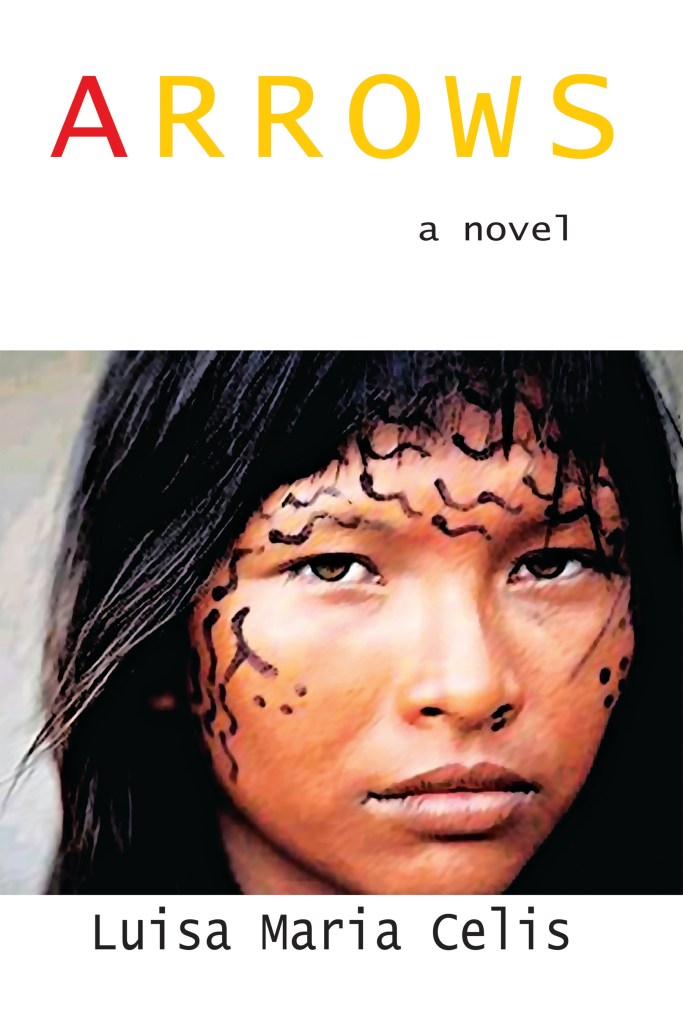
Arrows

excerpt

Tell him I promise his village won’t be damaged, nor his
fields touched. Tell him.”
Losada dismounted and the others followed suit, but he stopped
them with a gesture of his hand. “Infante, Ávila, Galeas,
Maldonado, Pedro and Rodrigo Ponce, Gregorio de la Parra, with
me. Ten harquebusiers and ten pikemen, come forward as well.
Carlos.”
He snapped his fingers, then turned to me. “Friar Salvador, if you
please, come with me. The rest of you, stay where you are, don’t let
your guard down. It wouldn’t be the first time they welcome and
then betray and kill. Keep an eye on your surroundings. At the first
sign of trouble, Juan Suárez, sound the charge. All of you! Diego de
Paradas will command in my absence. Camacho! You are second.
Good luck and may God be with us.”
“Harquebusiers, check your priming!” yelled Diego de Paradas.
Losada put a hand on the hilt of his sword at his hip, as if to
reassure himself. Behind him, the harquebusiers grabbed their
powder flasks and rammed the charges down the muzzles. A flock
of parrots cawed overhead.
“Take good account of everything, Friar Salvador,” said Losada.
“I have a mind to have you write a record of this expedition.”
Recording the expedition would be considered a great honour and a
great responsibility. I nodded. But I knew immediately it would be
impossible to record the truth.
I admired the orderly arrangement of the village. The streets were
smooth under my feet, the houses skilfully made. Earthen pots
steamed over the embers of fires; hammocks were neatly
distributed; baskets and heads of plantain hung from the wooden
structures. Strings of yarn were stretched over primitive looms. On
the sloping thatched roofs, dozens of round cassava cakes dried in
the sun. Human and animal skulls and bones hanging among the
baskets and plantains reminded me of macabre tales of cannibalism.
The Indians stepped aside as we entered the village. They stared
at my feet and then at the rest of me, for I was the only barefooted
Spaniard, let alone one wearing a frock.

https://www.amazon.com/dp/0981073522

The Circle

excerpt

and then when they retire, most often they collapse from the stress of the
years they spent at work and away from home, like Matthew. What have you
been doing all your life, sweet Emily? What have you been doing for Emily? You
said the other day that you would like to get into underwater photography. How
are you going to do that being married to a man who has no time for his wife, let
alone for what his wife likes to do?”
Emily looks at him, but is at a loss for words. She knows he’s right, although
she’s afraid to admit that even to herself. The world is a scary place without
money, she knows. She also knows Matthew and Emily hardly make it on his
salary.
“It’s scary to think of being out there without the means to survive, sweet
Talal,” she utters, as if to convince herself that that is the most important thing at
this time.
“Yes, I agree. But what will you do to survive is the question, my sweet Emily.
Do you sell out what counts for the security of having money? This is a call we all
have to make.”
“That’s right, my love, do you sell out what counts?” she asks, instead of
answering his question.
He smiles brightly at her as if trying to see into her very soul and says, “No, sweet
Emily, you never sell out, no matter what. Because if you do, how can you face
yourself in themirror and say you have been true to yourself; I have been true to my
integrity, I haven’t sold out. That is what counts in life and that’s the reason I would
never sell out.”
“Perhaps you are right. But it’s different for a man than for a woman.” She
points out.
“No, my love, there is no difference. It’s only a matter of personal belief, a
matter of effort, a matter of achievement, a matter of commitment, that’s all!”
She lays her head on his shoulder and says nothing more, as if listening to the
gap between two words or two breaths, or two of her heartbeats that sound like
the song of a woman in love with this Iraqi man with the sweet voice and the sad
eyes. He’s very pleased that he has made her aware of Matthew’s work, because
he knows that, later, all this will sink in and the result is going to be exactly what
he wants. Talal sits listening to the song of the wind through the small park
where they sit, a song that unfolds slowly and methodically like a majestic eagle
spreading its wings to the heights of the sky.
They begin walking once more, holding hands and observing nature all
around them. They see the bright colors of the trees and flowers, and the shining,
splashing water of the pond where the sun’s rays reflect like crystals. They come
to a smaller pond filled with ducks making all kinds of sounds

https://www.amazon.com/dp/0978186524

Arrows

Excerpt

Through the smoke I made out the hem of her dress some distance
away. She was kneeling beside an inert body, which was pierced by
an arrow through the thigh and another in the chest. It was her
husband.
Out of the corner of my eye, I saw a near-naked man running. The
smoke partially hid him, but I saw he was tall, with strands of black
hair pasted to his chest by sweat and speed and others floating over
his shoulders. Funny, I thought, I have not seen that kind of long
loincloth before.
Then I realized he was charging toward Josefa. He bore a
belligerent expression, and there was blood on his naked chest
under his quiver’s band. A pang of fear hit me like a bucket of cold
water. Surely he wouldn’t kill a woman, would he?
We were both closing in on Josefa and her dead husband but from
different directions. I was closer than he was. Josefa looked up at the
Indian, open-mouthed and white as the ghost she was in danger of
becoming. I sprinted toward her, heart throbbing, and tore the
buckler from her dead husband’s grasp. There was a serviceable
harquebus lying at his side and the sheathed dagger at his belt but I
didn’t want to use any potentially lethal weapon.
I squared my shoulders and braced myself for whatever might
come. It was God’s choice to see us through or not. I raised the small
shield on my forearm as I had seen others do. His bare feet landed
underneath the buckler, and he delivered a savage blow that
shocked its way up my arm, pushing me back, the clang resonating
in my ears.
He held his arm high, ready to deliver another blow. I was
crouching, peering over the buckler. Josefa yelped. I charged and
overthrew him, grunting like a beast. He fell but was on his feet
before I knew it, the hellish macana still in his grasp. His eyes leered
at me from his horribly painted face. I could feel his anger, his pride,
his hate, but there was a fortitude that sent a chill down my spine.
He turned and swung at my belly, but I leapt backwards as the
macana came within inches. “Run!” I shouted.

https://www.amazon.com/dp/0981073522

Arrows

Excerpt

Fresh tears filled her downcast eyes and rolled over her cheeks as
she blinked.
“How did you come to be here, Pepa?”
“I was one of five daughters. The last one,” she said softly.
I glanced at her husband, who had stirred in his sleep and
mumbled noisily before resuming his snoring. I knew exactly what
she meant. A daughter could mean the opportunity for a good
alliance or a financial burden on her father. In a household of five
daughters, the father would be happy to find anyone to take them.
Without a dowry, a girl would likely never be able to marry, or to be
choosy about it. Pepa told me her husband had agreed to marry her
without a dowry, despite her knowing how to read.
Gregorio awakened at the sound of her voice. He was listening. I
couldn’t help that. In her town, she said, everyone thought her
strange because she could read. It had been a relief to accompany her
husband in his quest for fortune in the Indies.Her mother had tried to
convince him to leave her in a convent, but he wouldn’t hear of it.
Gregorio kept watching her, sympathetically. He might have
consoled her himself had her husband not awakened at that instant.
Gregorio narrowed his eyes and shot him a loathsome look from
head to toe. “I’ll have something brought for you, señora,” Gregorio
said. “You’ll need your strength.”
“Gregorio is right, you should eat,” I said.
This unexpected attention seemed to perk her spirits. “I can read
something to you all, if you like,” she said, eyes lowered.
“Of course,” I said, breaking the silence. “What do you have
there?”
“It’s the Lazarillo de Tormes,” she said, taking a small book out
from under the folds of her skirt. The corners of her mouth trembled
as she tried to smile. She must have been protecting that book like an
amulet.
“This is a story about a rascal who is a blind man’s guide. Do you
know it? Here, listen: Fainting and dying of hunger, I staggered along the
street, and while passing by the Barley Square I found an old praying
woman with more tooth than a wild boar . . .”

https://www.amazon.com/dp/0981073522

Arrows

Excerpt

Sweat broke out on my nape and forehead. The woman watched
me closely, giving me the annoying feeling that she could read my
thoughts. Perhaps she was a witch.
When a gourd filled with a milky beverage of uncertain origin
arrived under my nose, I began to miss my countrymen. Tamanoa
held it while the rest awaited my reaction. The children giggled and
I smiled, raising one eyebrow at them. I took the gourd out of
Tamanoa’s grasp, noticing the quizzical expression in his eyes.
“It’s chicha,” he informed me.
I sat down on the ground and crossed my legs, minding the
Seraphic Rosary so that it rested on the cloth of my cassock stretched
between my knees. I raised my eyes to heaven, as much to bless the
chicha as to ask for help. Well, Salvador, if you want the dog, you’ll
have to accept the fleas, I told myself, and took a gulp.
It wasn’t completely unpalatable. Had I known that its
fermentation was aided by the spittle of the women who concocted
it, I might have been less inclined to drink it. I passed it along,
fighting the urge to retch, eyes watering. Mater Dei, please tell me
that gourd never covered anyone’s genitals, I prayed.
The sight of another male with his foreskin neatly strangled with
a cord that went about his hips, his balls—wrinkled and
saggy—hanging like a cockerel’s wattles, made me regurgitate the
devil-sent chicha. I kept swallowing it back until, able to escape
unnoticed, I hid behind a tree and vomited my guts out.

We neared Nueva Segovia de Barquisimeto, a city founded in 1552,
along a murky river the Caquetíos Indians had called Variquesemeto
long before the Spaniards began renaming everything.
Diego de Losada led the way on his magnificent black
Andalusian horse, which seemed to share its master’s dreams of
greatness. All horses except my Babieca were proud, elegant beasts
with thick necks, strong chests and powerful, arched croups. Bred
from the first horses to arrive from La Española,

https://www.amazon.com/dp/0981073522

Arrows

Excerpt

The day of our departure came too soon. Entire families gathered
at the plaza to bid farewell to their most respectable sons. After a
year of preparation, don Diego de Losada had managed to convince
one hundred and fifty men to take their chances with him. No small
achievement, considering their prospects for survival.
Our expedition was bound for the province of Caracas—where
the town of San Francisco had briefly existed—and we were
destined to rebuild it in the name of Our Lord Jesus Christ for our
most gracious king, His Sanctified Catholic Majesty, Don Felipe II.
Less than five men out of each of the previous two expeditions into
the area had been left alive to tell the tale.
I had heard stories about battles, about how I would be lucky to
be killed at once. Cannibals liked to tie a Christian to a tree while
they danced in circles, possessed by the devil, chopping pieces out of
him every time they came about, cooking his parts under his nose or
even eating them raw, shooting arrows at him until his blood had
drained, blood they would collect in little bowls and drink as they
danced, smearing it on their bodies, spitting it on the ground.
One chief in particular, Guacaipuro, who commanded the Indian
forces of the valley of Caracas, put the fear of God into Spanish and
tame Indians alike, for it was said he had no mercy for either. All of
the other chiefs pledged their allegiance to him. On the land of one of
these, the settlement of San Francisco had been established almost a
decade ago, but Guacaipuro had burned it to ashes. It was to that
place we were heading.
Dressed in their feathered morions, coats of mail and cloaks,
twenty men on horseback under don Francisco Ponce’s command
melted stoically like butter in the sun, to be accompanied by fifty
harquebusiers with their pouches heavy with stone munitions,
eighty men on foot, eight hundred servants, two hundred beasts of
burden, several thousand pigs, four thousand sheep—all intended
to secure the beginnings of a new city.

https://www.amazon.com/dp/0981073522

The Circle

Excerpt

with Hakim the next morning or early afternoon. The Admiral, who is also ready
to go, stands up. Matthew escorts them to their limo, which has been parked in
the street, and shakes hands with Ibrahim.
“Thank you very much for coming over. I hope everything turns out well
with your tests. I look forward to seeing you again soon.” Then turning to the
Admiral, he adds, “I’ll see you Monday, Bevan. Thank you for coming over.”
“See you on Monday, Matt. Thanks for everything.”
Night arrives with her dark colors to replace the light of day and to inspire
the poet’s stanzas once again. Helena wants to go; she has a few things to do
before going out on Saturday night, and she wants Talal to take her home.
Peter and Rose have already gone. Hakim would like to go as well; however,
Jennifer keeps him for a while as her mom starts cleaning up from the party.
Matthew is eager to talk to Emily again about Hakim and he can’t wait until
everyone is gone. Talal has enjoyed the commotion of the party and exchanges
looks with Emily, who is still in seventh heaven just having him around her all
afternoon and evening.
Talal sits next to Hakim for a while in the living room when Hakim says to him,
“You won’t believe what my uncle told me.”
“What?”
“You know the company I work for. A year and a half ago he put up the
money and we bought shares when the company did a small financing. The
shares trade these days at more than ten times the investment. When I
mentioned the value of the stock to him, he said I can do whatever I want with
the money. He says all the money is mine. He wants me to keep it for myself.”
Talal looks deep in Hakim’s eyes and says, “You don’t even know half of what
Uncle Ibrahim has for you. I have a small number of the same shares and
Ibrahim paid for them as well. How do you think I pay my bills without a job? I
sell shares here and there to get by.”
It’s not that Hakim has never thought of what would happen to Ibrahim’s
money when he dies. He has thought of it a number of times because he knows
Ibrahim and Auntie Mara have no children of their own. He knows his uncle is
worth a lot of money, and now he has confirmation even from his buddy, Talal.
But today’s news has still caught him by surprise, and suddenly he realizes he’s
not a poor man anymore, but a millionaire.
“What else does Ibrahim have; what do you mean?”
“What is important is that you take care of yourself here in the United States
and make sure you get ready to take over for him when the time comes. Never
forget where we come from and where our loyalty lies—to Ibrahim, to our
homeland, to our people, to our future. Everything will fall into place sooner or

https://www.amazon.com/dp/0978186524

ΥΠΕΡΑΝΘΡΩΠΟΣ–ΚΡΙΤΙΚΗ

1964407_815813081778415_1829066548_n

ΥΠΕΡΑΝΘΡΩΠΟΣ–κριτική

ΠΟΙΗΣΗ – EKSTASIS EDITIONS

Ο «Υπεράνθρωπος» του Μανώλη Αλυγιζάκη είναι από τα πιο δύσκολα και φιλοσοφημένα έργα που έχω συναντήσει. Και πώς να μην είναι άλλωστε, εφόσον ταυτίζεται με τον Υπεράνθρωπο του Νίτσε, τόσο σε πλοκή όσο και σε νοήματα. Ο ποιητής «παίζει» με τις συμβάσεις καθώς σχετίζει τον Υπεράνθρωπο, αφενός μεν με την πραγματική διάσταση που του δίνει ο Γερμανός φιλόσοφος, αφετέρου δε με την παρερμηνεία που του έδωσαν οι Γερμανοί εθνοσοσιαλιστές, με τα τραγικά αποτελέσματα που ακολούθησαν για όλη την ανθρωπότητα.

Πριν λοιπόν περιγράψουμε τον Υπεράνθρωπο του Μανώλη Αλυγιζάκη, ας δούμε εν συντομία τι προσδοκούσε ο Νίτσε με αυτό του το σύγγραμμα. Με πολύ απλά λόγια ο Νίτσε έθετε τον άνθρωπο αντιμέτωπο με τις ευθύνες του και τις δυνατότητές του, που αν τις χειριζόταν ορθά, θα μπορούσε να υπερπηδήσει κάδε εμπόδιο. Με κύριο μοχλό τη σωστή χρήση της λογικής και του ενστίκτου θα μπορέσει να ζήσει σε μια κοινωνία ισότητας και ελευθερίας, όπου ο καθένας θα είναι ο κύριος του εαυτού του. Βέβαια ο Νίτσε δεν περιέγραψε την ηθική διάσταση του Υπεράνθρωπου, καθώς ήρθε να αναπληρώσει (όπως ισχυρίζεται ο συγγραφέας) το κενό της εξουσίας και της Θεϊκής ανυπαρξίας. Ο Υπεράνθρωπος λοιπόν λυτρωτής, υπέρμαχος της ηθικής αλλά και λίγο ανεξέλεγκτος, όσον αφορά τα απώτερα σχέδιά του για τον κόσμο, που επίσης παραμένουν ασαφή…

Το δίγλωσσο αυτό βιβλίο (Ελληνικά-Αγγλικά) χωρίζεται σε τρεις ενότητες και είναι γραμμένο με ένα στυλ που θυμίζει περισσότερο πεζογράφημα, παρά ποίηση. Στο πρώτο μέρος, την Άλικη Αυγή, ο άνθρωπος ανεξαρτητοποιημένος από τις δεσμεύσεις της θρησκείας, αποφασίζει να βαδίσει βασισμένος στις δικές του δυνάμεις και να απαλλαγεί από τα σαγόνια του συστήματος. Μέσα σε μια καταρρέουσα κοινωνία και σε μια οικογένεια που χάνει την αρχέγονη σημασία της, το άτομο οφείλει να αποδεχτεί την ανθρώπινη ματαιότητα. Και αν καταφέρει να το επιτύχει αυτό, τότε θα αναγνωρίσει την αξία των απλών πραγμάτων, της φύσης και των αθώων στιγμών της παιδικής του ηλικίας. Την ιδιαίτερη βαρύτητα που μπορεί να έχει μια λέξη, μια φιλοφρόνηση, μια αξιέπαινη πράξη. Ο ανυπεράσπιστος, μπροστά στο θάνατο, άνθρωπος, νωχελικά περίμενε την «ανάστασή» του, χωρίς καμία προσπάθεια να αποβάλει το ναρκισσισμό και την ανευθυνότητα από το «είναι» του. Και έτσι, μακριά απ’ τον Θεό του και την πίστη του, οδηγήθηκε στον όλεθρο και την καταστροφή. Με ορμητήριο την άγνοια θεώρησε πως μπορούσε να διαπρέψει και να μεγαλουργήσει.

Πώς λοιπόν ο άνθρωπος θ’ αλλάξει προς το καλύτερο; Με αυτογνωσία, με σημασία στα απλά καθημερινά πράγματα, με σωστό υπολογισμό των θετικών και αρνητικών παραμέτρων, που επηρεάζουν τη ζωή του. Σ’ αυτό το σημείο προαναγγέλλεται και η άφιξη του Υπεράνθρωπου στους ανθρώπους, που η πίστη και η αφοσίωση στο πρόσωπό του, πάλι πήγαζε από την κούφια αυτοσυνειδησία τους. Προσπαθώντας να του δείξουν ότι είναι γνώστες και ανθεκτικοί στα δύσκολα, υποτάχθηκαν αμέσως στα κηρύγματά του. Και εκείνος, ο Υπεράνθρωπος – τύραννος (όπως τον αποκαλεί ο ποιητής) άρπαξε την ευκαιρία να ελέγξει πλήρως τις φοβισμένες συνειδήσεις τους. Έξυπνος, λαοπλάνος, ετοιμόλογος, ήταν ο μόνος που αντιλαμβανόταν τα ανθρώπινα λάθη και ο μόνος που μπορούσε να τα υποτάξει. Χωρίς να τιμωρεί και να ζητάει ανταλλάγματα, μαθημένος να συγχωρεί, δίδασκε την αρετή και την ισορροπία. Η πρώτη ενότητα κλείνει με τη δήλωση υποταγής από τους ανθρώπους στο πρόσωπό του, γεγονός που τον ικανοποιούσε απόλυτα…

Στο δεύτερο μέρος, το Πύρινο Μεσημέρι, ο Υπεράνθρωπος αρχίζει πλέον να εκφράζεται και να «κηρύττει» την ιδεολογία του. Αρχίζει δηλαδή να δείχνει το αληθινό του πρόσωπο. Ο ποιητής εναλλάσσει μια σειρά ανθρώπων μπροστά από το οπτικό πεδίο του Υπεράνθρωπου και των πιστών του, αφήνοντάς τον να ξεδιπλώσει τη φιλοσοφία του για τον κόσμο. Ανάμεσα σ’ αυτούς που συναντούν, ένας ζητιάνος, ένας τσιγκούνης γέρος, ένας γελωτοποιός, ένας ξεπεσμένος βασιλιάς…

Ο Υπεράνθρωπος, γνωρίζοντας καλά τα ανθρώπινα πάθη, κηρύττει τα πιστεύω του και εκφράζει τις προτιμήσεις του. Του αρέσουν, για παράδειγμα, όσοι ζουν χωρίς νόημα και στόχους, όσοι περιφρονούν τα πάντα, όσοι δεν θυσιάζονται για τίποτα, όσοι με τις πράξεις τους τον φέρνουν πιο κοντά στην κυριαρχία, όσοι συγκεντρώνουν γη και χρήμα, ώστε κάποτε να τα δρέψει εκείνος, όσοι προσποιούνται πως δεν φοβούνται, όσοι κυνηγούν μια ανέφικτη αρετή, όσοι κουβαλούν για πάντα τις πληγές μέσα τους, όσοι χρησιμοποιούν τη Θεϊκή οργή για να λύσουν τα προβλήματά τους, όσοι γενικά με τις αποφάσεις και τις πράξεις τους οδηγούνται στην καταστροφή. Και όλα αυτά που του «αρέσουν», ίπτανται πάνω από τα κεφάλια των πιστών του. Αυτών που, χωρίς θρησκεία πλέον, έρχονται αντιμέτωποι με το χάος που οι ίδιοι δημιούργησαν στον κόσμο. Αυτών που αφαίρεσαν τη σοφία από τη σκέψη τους και τον έβαλαν «επιπόλαια» στα σπίτια τους. Αυτών που ήταν ονειροπόλοι και αυτάρεσκοι, μοναχικοί και υπερόπτες. Αυτών που ξέχασαν από πού προήλθαν και αθώοι έπεσαν στα νύχια του νέου ηγέτη. Μα η αμέριστη χαρά τους για εκείνον, που θα άλλαζε τον κόσμο, καταχωνιάστηκε γρήγορα, όταν αντιλήφθηκαν πως όλα γύρω καταστρέφονταν και πως ξανά το ψέμα κυριαρχούσε. Τελικά αντιλήφθηκαν πως και πάλι εκείνοι πολεμούσαν τον ίδιο τους τον εαυτό συνεργώντας στη δημιουργία της κόλασης και στην ενδυνάμωση του Υπεράνθρωπου.

Στο τρίτο και τελευταίο μέρος, το Φλογερό Δείλι, γίνεται ο απολογισμός των πεπραγμένων από τη συμβίωση κοντά στον Υπεράνθρωπο. Οι άνθρωποι στράφηκαν να μισήσουν τους πάντες και έγιναν γεφύρι για περάσει εκείνος από πάνω τους και να πετύχει τους στόχους του. Έμειναν γυμνοί και είδαν τα πάντα να κυριεύονται από την απληστία και τη διάλυση. Είδαν ξανά έναν κόσμο να μην έχει σκοπό να αλλάξει και να ακολουθεί κίβδηλους ηγέτες που μοιράζουν ψεύτικες υποσχέσεις.

Η τελευταία περιήγηση με τον Υπεράνθρωπο πραγματοποιείται μπροστά από συγκεκριμένους ανθρώπους, που επιλέγονται κυρίως λόγω της ιδιότητάς τους. Ένας Έπαρχος, ένας νεκροθάφτης, ένας δάσκαλος, ένας ζωγράφος, ένας Στρατηγός, ένας ποιητής, ένα αγγειοπλάστης, ένας χορευτής. Κάποιοι πραγματικοί Υπεράνθρωποι γι’ αυτά που πετυχαίνουν με τα έργα και τις ικανότητές τους και κάποιοι ανίκανοι να γίνουν Υπεράνθρωποι λόγω των αδυναμιών τους.

Ο ποιητής Μανώλης Αλυγιζάκης “τεστάρει” ανθρώπινες αντοχές και όρια. Υποδεικνύει νοήματα, αφήνοντας τον αναγνώστη να προβληματιστεί και, γιατί όχι, να αφυπνιστεί. Ο καθένας μπορεί να γίνει Υπεράνθρωπος στον τομέα του αρκεί να πιστέψει στις δικές του δυνάμεις και δεξιότητες. Ακόμα και οι οπαδοί “του δικού του” Υπεράνθρωπου, στο τέλος, αναβαπτισμένοι από όσα βίωσαν και είδαν, αποφάσισαν να ξυπνήσουν και να μην ξαναγίνουν θύματα του συστήματος. Ο ποιητής τονίζει πως είναι πολύ μικρές οι αποστάσεις που χωρίζουν τα αντιθετικά δίπολα. Η αλήθεια από το ψέμα, η πίστη από την αθεΐα, η εμπιστοσύνη από την καχυποψία, η ζωή από τον θάνατο. “Όλα” είμαστε εμείς οι ίδιοι, αρκεί να κατανοήσουμε το δικό μας αληθινό “εγώ” και ανάλογα να το χρησιμοποιήσουμε. Άρα Υπεράνθρωπος μπορεί να είναι ο καθένας μας που παλεύει για το κάτι παραπάνω με όλες του τις δυνάμεις, αλλά και κάποιος που παίρνει (αδικαιολόγητα) δύναμη από την απραξία μας και μας οδηγεί σε λάθος μονοπάτια (παράδειγμα γερμανικού εθνικοσοσιαλισμού).

Κλείνοντας, θέλω να δηλώσω, πως απ’ τη στιγμή που έπιασα στα χέρια μου αυτό το βιβλίο, κατάλαβα πως ήρθα αντιμέτωπος με ένα πραγματικά μεγαλειώδες έργο. Και γι’ αυτό οφείλω να ευχαριστήσω μέσα από την καρδιά μου τον δημιουργό του για την εμπιστοσύνη του. Ο Μανώλης Αλυγιζάκης, Έλληνας κάτοικος του Καναδά, αποδεικνύει πως η ελληνική λογοτεχνική δημιουργία του εξωτερικού, βρίσκεται σε υψηλότατα επίπεδα…


Δείγμα γραφής:


Επωδός


Εμείς οι ηγέτες κι εμείς που ακολουθούμε

οι τυφλοί φονιάδες και τα τυφλά θύματα


Εγώ ο άθεος κι εγώ ο ευλαβής

ο πλούσιος και ο αποθαρρυμένος


Εμείς οι εγωϊστές κι εμείς οι ταπεινοί

οι σύμμαχοι και οι αντίπαλοι


Εγώ η γνώση κι εγώ η άγνοια

ο μεγαλοπρεπής κι ο άθλιος


Εμείς οι ονειροπόλοι εμείς κι οι ονειρομάντες

οι αιώνεια περιπλανώμενοι και οι οικόσιτοι


Εγώ το σπουδαίο σύμφωνο εγώ και το φωνήεν

ο αχανής ωκεανός και το κρυφό ακρογιάλι


Εμείς οι πρίγκιπες κι εμείς οι επαίτες

οι μισαλλόδοξοι κι οι αλτρουϊστές


Εγώ ο ήρωας κι εγώ ο προδότης

ο ερπόμενος κι ο αετός


Εμείς τα πρόβατα εμείς και τα λιοντάρια

οι κοινωνικοί κι οι ασκητές


Εγώ το ελεύθερο πνεύμα κι εγώ ο φανατικός

ο ορθοστατών κι ο σκούληκας


Εμείς οι ανθρωποκεντρικοί και τ’ ανθρωποειδή

οι αυταρχικοί κι οι μαριονέττες


Εγώ του Θεού παιδί και συγγενής διαβόλου

ο επίμοχθος εργάτης κι ο τεμπέλης


Εμείς οι μύστες κι εμείς οι μυημένοι

εμείς οι σχοινοβάτες κι εμείς οι Υπεράνθρωποι.