
In the Quiet After Slaughter

excerpt

I possessed neither the strength to stop the torment nor the courage
to try.
– I’m going for more wood.
When I return Larry is flicking lighted matches at Lenore. Her
cheeks are stained with tears.
– Burn, witch!
Larry exits for a pee. Lenore and I face each other across the campfire.
I wonder what it would take to make the poor girl smile, so I use
my roasting stick to scratch a happy face in the dirt. Lenore uses hers
to erase the upturned mouth and replace it with a frown.
– Fee-fi-fo-fum, we hear Larry carolling. Wisely, Lenore retires.
Larry and I decide to sleep outside. We arrange our sleeping bags
around the fire.
– I’m going to move to the States one day, Larry says.
– That would be neat.
– I’m going to join the Marines. Special Forces, probably.
– Wow!
A log tumbles into the flames; a glowing ash disappears into
the star-spangled Washington night. People disappear from our
lives all the time. They move away, promise to write, don’t. They
go wacko, drop dead, find God. You say something stupid and
you’re ostracized for life. It doesn’t take much for us to abandon
each other.
When we were young my mother enrolled Burt and me in free
swim lessons in Stanley Park. The bus ride took an hour each way;
the lessons lasted 20 minutes. Hundreds of kids from East Van sat
shivering on the seawall at Lumberman’s Arch waiting their turn to
blow bubbles in the frigid surf. My brother always pissed in the
water. Later Mom would buy us fish and chips.
– I dreamed about Marilyn Monroe last night, Larry says. His
hands are folded behind his head.
– She’s something, that’s for sure.
– She was bare naked, he said. Just standing there with a tube of
coconut butter, begging, Do my thighs, Larry.
The next day we saw Cindy and Corrine riding in a convertible with
some older guys. They were racing along one of the back roads.
Cindy was standing up in the front seat, arms outstretched,


https://draft2digital.com/book/3562874

https://www.amazon.com/dp/0980897971

Ken Kirkby – Warrior Painter

excerpt

For the first time since he’d been a kid, Ken had no deadlines or other
people’s needs to accommodate. He could sit, smoke and enjoy the flavours
of the sea air, the sound of the gulls, the calm mornings filled with a distant
hum of passing cars filtering down from the Old Island Highway. The
constant rhythm of waves on the pebble beach soothed him as he read late
into the night. The mental kinks slowly started to release.
The luxury of pursuing my thoughts in an academic fashion, waking
when I chose and stopping when I liked was heaven. Initially I was
spinning from Karen’s rejection and had to regiment my mind or the
pain would have driven me crazy. The pain was still there, but now I
was no longer hiding from my thoughts and I took pleasure in the way
one thought could morph into something else incredibly interesting,
but totally unrelated.
We humans fancy that we have evolved this elevated thing called
‘reason’ when compared to ‘sense’—that is, coming from the senses,
which has been developing over millions of years—reasoning is in the
kindergarten stages. When we talk of premonitions, or gut feel, that
also relates to our senses. We have survived from the beginning as
single cell organisms to this time and place, no thanks to reason, but
through our senses.
When Ken Kirkby moved to Bowser at the end of 2001, he was seeking
complete anonymity. His landlords, Ken and Jeanine Harris, were pleasant
and helpful but respectful of his desire for privacy. If Kirkby appeared in the
yard, they were quick to open a conversation, but other than that, they didn’t
intrude. Over the months, the three became friends as well as neighbours
and the Harris’s encouraged him as he established his programme to gain
back his health.
Ken Harris had retired from a high-pressure career in Vancouver. He
was a physically active person, who kept an eye on the community and
occupied his enquiring mind through study. He enjoyed engaging Kirkby
in conversations, which bordered on debates, and ranged far and wide. As
spring approached and the weather warmed, the two Kens would sit together
in the morning sipping their coffee, and sharing Kirkby’s cigarettes (Harris
claimed he had given up smoking) while discussing whatever surfaced …

https://draft2digital.com/book/3562902

https://www.amazon.com/dp/B00CB8W4CG

Water in the Wilderness

excerpt

… than it had been outside with the frigid wind whipping stinging snow into their faces. Her feet still felt wooden, though, and her fingers were stiff and beginning to hurt. She removed her mittens, then reached for Bobby’s hands and pulled his mittens off. If her fingers were freezing, what must his be like? He whimpered a little as she awkwardly tried to rub his icy fingers.
As she pulled his mittens back on his hands, he slumped over at her feet. “Wanna sleep, Rachael, wanna sleep.”
Ronnie stepped out of the darkness and picked the child up. “No, Bobby, you can’t sleep yet. You’ve gotta keep moving around. I know … let’s all play a game.”
“What game?” Rachael said. “W … we can’t even see. How c …can we play a game?”
Ronnie hesitated, murmuring to himself as if thinking hard. “I know, we can play pattycake. It’ll keep us close together, and keep our hands warm.”
Rachael laughed. “Pattycake? That’s a baby’s game.”
“Okay, Miss Smartypants, what do you suggest?”
“Oh, all right. Let’s do it. Here Bobby, pattycake, pattycake, baker’s man ….”
They pattycaked around the small circle until Bobby suddenly sat down on the board floor. Ronnie reached down for him, but Rachael said sharply, “No, let him be. I’m gonna sit down, too. I don’t wanna play anymore.” She flopped down beside her brother, and put her arms around him. “I just wanna to go to sleep, Ronnie. Please let us go to sleep.”
For several seconds he remained quiet, then he said casually, “Okay, you can sleep – if you don’t mind bein’ woke up by that rat when it runs over your face.”
Rachael screamed and bolted upright. “Where? W … where is it?” She peered around, her eyes trying desperately to penetrate the darkness.
“See, over there,” Ronnie said, “can’t you see its eyes?”
Rachael jumped to her feet, pulling a protesting Bobby with her. “No, no, where?”

https://draft2digital.com/book/3562884

https://www.amazon.com/dp/192676319X

Jazz with Ella

excerpt

“High school days, right? Bunch of guys all pull up at the stop light, jump out of the car, run around, jump back in again in different seats.” Jennifer continued to shake her head. She felt as if it was frozen in the position. Lona stared as if she were seeing Hank for the first time. “We do the same…” finished Hank, as if the point was obvious.
“The same what…?” Maria and Jennifer asked simultaneously.
“Get off the boat, mill around, come back in again, confusing the count. Chinese fire drill. Make crowds of people milling around, so that no one can take roll call.”
The ensuing silence was probably one of Jennifer’s lowest moments. So this was the adolescent prank on which two lives depended. Not only would it have to do the job, but she realized that she was grateful for any plan at all.
MORNING JULY 20, 1974
Sergey Ivanovich, the machinist from Novizavod, had sat in the Kazan airport all morning. You never knew how long you might wait for a flight, or even if there was any point in waiting, he thought. And even after you were allowed on the plane, they might bump you so that your seat could go to some senior bureaucrat who had only just wheeled up in a sleek black car.
He badly wanted to visit his sister in Moscow. That’s all. But they didn’t give much respect to people like him with their simple needs. In fact, he had already been told that the flight was fully booked, but he had not given up because, long ago, he had acquired those most valuable aids to survival in the modern Soviet Union: friends who did favours. This particular friend was part of the airport administration. That the friend had first listened to Sergey’s tale and then had produced an extensive shopping list for the Moscow stores was not unusual. Sergey had simply tucked the list away, along with the five other shopping lists from neighbours and family, and had promised to do his best. The friend had also slipped him some crumpled bills in a foreign currency, acquired from international visitors at Kazan Airport. This was fine, too. Sergey was not even sure what type of currency it was, but he had tucked it away in an inside pocket. If he could locate a buyer—a friendly tourist—to go to the deluxe Beriyozhka, the foreign currency store in Moscow, and purchase some of the rarer commodities, he would be a winner.

https://draft2digital.com/book/3562892

https://www.amazon.com/dp/1926763246

Poodie James

excerpt

“What are you going to do?”
“If the railroad says there was sabotage, I’ll have my people run a
full investigation.”
“If they don’t?”
“I’ll give the mayor my report.”
“And?”
Spanger grinned.
“Thanks for your help, Paul. See you in court. Or somewhere.”
As he passed the checkers players, the old cackler was eyeing his
partner across the board.
Piles of broken ties, twisted rails and fragments of the blasted tank
car bordered Gellardy’s orchard. A section gang was tamping new
ties into place. The smell of creosote was heavy in the air. Spanger
saw the locomotive upright on the track near the hobo jungle, a
section of its cab wall bowed out, a sheet of steel dangling from it.
The crane, engine roaring and cables screeching, was beginning to
ease the distorted chassis of the tank car out of the depression
alongside the track. Spanger walked toward a half dozen men who
stood watching. He recognized all but one. As two of them greeted
him and moved aside to make room, he saw Poodie James. Poodie
looked up and made glottal sounds of greeting. The chief looked
from Poodie’s eager face to the blackenedwreckage and back again.
“It’s good to see you safe and sound today, Mr. James,” he said.
The inspector introduced himself as Lawrence Hall. Spanger
made small talk with the group of railroaders, then took the man
from Spokane aside.
“What have you found so far, Mr. Hall?”
“I’ve found a mess, Chief. There are no orderly derailments. I’ll
tell you, though, the fire department here did everything right and
kept this from becoming a first class disaster. Worst thing, of
course, is that we lost a good man. First death in a wreck since I’ve
been with the company. The coroner did an autopsy this afternoon
at my request and found that Mo d’Aleppo’s heart gave out. Massive
failure. I guess the crash triggered it. He’d had a couple of mild …

https://draft2digital.com/book/3562868

https://www.amazon.com/dp/B08W7SHCMV

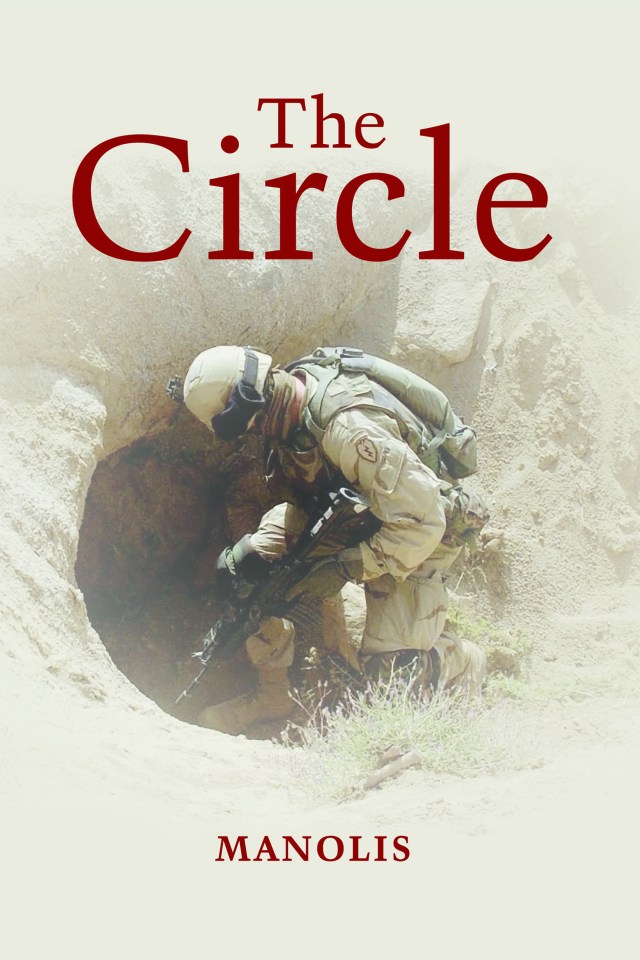
The Circle

excerpt

Rassan points as they pass an inspiring, colossal structure, “There is our new
parliament building; it’s only four years old.”
“It looks like quite a bit has been accomplished in the years I have been
away,” Talal comments.
“Yes, it has; the only place that still lags behind is the eastern part of the city.
That area will take the longest; that is where the poorest people live. It’s always
the same, Talal; they’re the ones who wait the longest. The rest of the city is not
too bad. One can say life is getting back to normal; after all, the war ended some
years ago.”
Emily listens, eager to hear as much about this fascinating place as she can.
They arrive at Ibrahim’s at 5:15 p.m. a servant opens the doors of the car after
Rassan drives through the big iron gates. They get out, and Talal signals to Emily
not to worry about her things, as the servants look after those. They enter the
foyer and Emily is left with her mouth half open at the size and grandeur of the
mansion.
Ibrahim with his wife Mara come to greet them.
“Welcome! Welcome to Baghdad,” Ibrahim says, after he kisses Emily’s
hand. “This is Mara, my wife. Mara, this is Emily Roberts from Los Angeles; her
daughter Jennifer is our son’s sweetheart.”
The two women hug and exchange pleasant words.
“Welcome to our humble home,” Mara says to Emily, who is in awe at the
magnificence surrounding her.
Ibrahim hugs Talal and they exchange kisses, as is customary.
“Welcome, my dear Talal; howwas your trip?How is my Hakim?”
“He’s fine, dear uncle. He sends you and Mara his greetings, hugs and lots of
kisses; he’s doing very well. He’s excited about the company he’s taking control
of.” Talal gives a brief summary.
Emily, who’s hearing for the first time about the control of Hakim’s company,
turns to Talal with questioning eyes; he signals her to let it be for now.
Mara wants to take them to their room to freshen up and rest for a while
before dinner; her servant has already taken their bags upstairs. Rassan says
goodbye for now and leaves. Talal stays with Ibrahim as he knows the old man
will want to ask more questions, things about Los Angeles and Hakim.
They go to the study and Talal relays the message from Bevan and all the
other news Hakim wants his uncle to hear. Talal asks, “How are you doing with
your health, my dear uncle?”
“I’m doing very well, my dear boy. The medication seems to work well, and I
haven’t sufferred from any adverse side-effects. Only time will tell how effective the
medication is. It’s in the hands of Allah; his wish will take care of me.”

https://draft2digital.com/book/3562817

https://www.amazon.com/dp/0978186524

Blood, Feathers and Holy Men

excerpt

the ship’s rail while Brother Berach bathed his fevered face. Hrafen climbed aboard
in a fury of curses. First, he picked up the bucket of water Berach had been using and
dumped the contents on the two monks. Then he grabbed the protesting Berach by
the back of his tunic, swung him around, and flung him against the rail. The old man
lay unmoving on the deck.
Brother Keallach had taken a few moments from the hot job of caulking to
come on deck to relieve himself over the side. On seeing what was happening between
Hrafen and the two elderly Brothers, he bounded to the prow to face the
bully. Though he shook with anger at such an unwarranted attack, he held himself
in check while the Norseman continued his tirade. When Hrafen bellowed that the
two old thralls must have been responsible for the ram’s escape in the first place,
Keallach, who had seen how the animal bolted the moment it was released from
its pen on board ship, could neither speak nor understand the Norse tongue. As it
was, the two men stood glaring at one another. The Norseman picked up the empty
bucket and flung it with all his might toward the open sea. Then he stomped off to
the far end of the knarr.
Finten, Rordan, Ailan and Lorcan came on deck, along with Atall their guard, to
see what was going on. But Kyrri was sufficiently deaf that he had not been disturbed
by the ruckus on deck. He just carried on caulking and did not come up until he
noticed his helpers were gone.
Father Finten knelt in a slowly forming puddle of blood to hold the old man, now
limp in his arms. Brother Berach’s neck hung at an odd angle, blood trickling from
his open mouth. Rordan and Ailan crossed themselves and dropped to their knees
in silent shock, tears streaming from their eyes. Keallach stood glaring at the bully,
holding his own anger.
Brother Lorcan did not kneel. He looked at Keallach, turned to follow his gaze toward
the killer and slowly, deliberately walked toward him. By the time they thought
to hold him back, it was too late. Hrafen picked him up with both hands around his
throat, shook him violently and heaved him over the side.

https://draft2digital.com/book/3562826

https://www.amazon.com/dp/1926763106

Savages and Beasts

excerpt

indeed happened a few years later when the teacher with her
epiphany passed into the sweet embrace of her Lord, only to leave
behind the unhealed scars of ridicule inflicted upon these Indian
girls; scars which they were meant to retain for the rest of their
lives.
Anton’s and Mary’s feelings strengthened as they days
went by and as they had their occasional intimacy when the circumstances
would allow it and when Mary’s psychological state
of mind would cooperate; they felt strongly about their future
which at times they discussed.
“I want us to leave and go someplace far away,” she would
say to Anton.
“I want that too, and I’m certain time will come for it, yet
for now we have a duty to do: what is best for these kids before
we bail out and leave,” Anton would say to her and to which she
never had any objecting word to say. It was enough for her that
she’d have a future with the man she loved and when it would
come together or in which part of the world they might decide to
move she was wholeheartedly willing to give it a chance.
Anton had devoted some of his time to fix his room. He
took all old things out, donated them to the local charity, one’s
leftovers are always someone else’s treasure, as the saying goes;
he also got a couple of gallons of paint and gave his office a fresh
look. He bought a new bed and beddings from the local Hudson’s
Bay store which he transported with his truck to the School and
put it together. He didn’t even ask Father Nicolas whether the
School would cover the expense, he just bought it and with the
new coat of paint the room it looked a lot better than before.
Anton had also developed a very strong friendship with
George the Cretan cook of the School and they often talked of
Anton’s plans which always included Mary and also the fate …

https://www.amazon.com/dp/1926763602

Ken Kirkby, A Painter’s Quest for Canada

excerpt

sexual gratification of a bunch of perverts. If this happened to your family,
wouldn’t you want someone to care? Wouldn’t you want someone to
raise a stink? Wouldn’t you want someone to help? That’s all I’m trying
to do. Apparently, to my surprise, it seems this painting was the two by
four needed to apply to the side of your head to get you to pay attention.
My job is to announce to you what has gone on and what continues to
go on. I’m robbing you of your innocence. I’m not going to give you the
chance to say, ‘If only I had known’. Now you know. What are you going
to do about it?”
The mood of the public changed. People began calling to agree with
him. Battle lines were drawn and half – or perhaps even the magic fiftyone
percent – agreed with him.
Ken spent an hour or more each day, at the Columbus Centre, talking
to people who lined up to see the painting and talk to the artist. Thousands
of people came – far more than had attended his opening night.
Ken finished each of his stories with a plea for help. He urged people
not to simply believe his stories, but to investigate and make up their own
minds. And if they discovered that what he said was true, let the government
know how they felt. This was what democracy was about – and he
was appalled at how lightly most people took the democracy they lived in.
“No one that is born here really takes it seriously,” he told them. “Do you
know how many rivers of blood were spilled to have what we have here?
How can we pretend to be this thing that we say we are when you can’t
bother to inform yourselves about what goes on in your own country?
How can you be a nation without knowing what goes on in your own
backyard?”
Ken received a phone call from Wayne Morrison, the executive director
of the Friends of Canadian Broadcasting and the stepson of Northrop
Frye. Could they meet, he asked? Ken invited him to the studio.
Wayne was a dapper and polished gentleman who expressed fascination
with the furor caused by the flag painting. The CBC was about to
suffer large financial cuts, which would seriously endanger its existence,
he said, and he wanted Ken’s help. He wanted to reproduce the flag painting
in full page magazine advertisements with Ken standing beside it
holding a paintbrush with the quote, “I haven’t been this mad in twenty
years.” Below that would be the story of the CBC cutbacks.
Ken said yes, but he was not prepared to use the painting. He would
create another similar one instead. When Diane asked why, he said, “I’m
going to give it to Canada and I don’t want it reproduced. It’s going to go
to the country pure.”
“You’re going to give it away? Good lord, we don’t have enough money to
do what we’re doing and you’re going to give paintings away! Why are you
going to give something to the government? They already take too much!”

https://draft2digital.com/book/3562830

https://www.amazon.com/dp/0981073573

The Qliphoth

excerpt

the shop poor Willy had replaced the pagan turmoil of Hrothgar’s Feast with
the blissed-out cooing of George Harrison. Larry grimaced at the music, took
a hit off the joint. As minutes passed he grew into an Easter Island statue, a pitted
mask smitten with sinister benevolence, relishing cosmic absurdities . . .
I wasn’t interested in more drugs. I was cultivating a new yearning—for
comforting fetishes like Turkish rugs or French etchings, or at least quality
post-war British stuff, the old Pye Black Box gramophones, Hornby Trains in
the original blue boxes, I was fed up with bankrupt stock and garage-sale
rejects. And I wanted something with class. Something safe, please. Nothing
too radical.
“It’s not weapons, is it, Larry?”
He passed the joint and began prising open the tea chest with a bent fork.
“Just weird shit. Specially for you.”
The chest contained thick folio-sized notebooks, bulging box files, a crumpled
set of plans or blueprints, and half a dozen books in uniform bindings,
ex-lib, half-calf and purple clo, gilt lttr, top edge gilt, gilt device on sp, approx 200 pp,
frnt brds sl warped and stained, torn frontis in Vol I, some neat inscr, otherwise v good,
ideal for a proper bookseller with a catalogue, not my Surprise Book Bins.
“They’ve been in storage for years . . .” Larry sniffed defensively. A yellowed
newspaper cutting fell out. ‘Fears of Red Atom Bombs’.
He told me he’d acquired this heap of forties memorabilia as payment for
some dope. I asked him which clients usually paid in waste paper.
Larry looked uneasy. He liked to keep the different strata of his life separate.
“A photographer that my gorgeous creature did some work for. A young
guy. But ugly, thank God. She says he snuffles while he’s setting up the poses.
Like a great rat . . .” He sucked the joint and giggled. “He’s heavily into cuisine
and wine. I guess he can’t perform vintage sex.”
Despite the dope I was getting impatient. I might raise something on tomes
with fancy bindings, but as for wartime diaries, old blueprints—I inquired as to
where the stuff originated.
“Some old attic, south of the river. Like Norwood, or Streatham Common.
ForGod’s sake, Nick, I only went there once. One of those high old houses with
stained glass in the porch window. A Victorian rose-window with cruciform
panels . . .” He exhaled slowly,seemingly bemused by the sudden emergence of
this elegant adjective.
“I suppose there aren’t any pieces from the windows in that trunk?” I was
seized with entrepreneurial glee at discovering yet another way of repackaging
splinters of the past, little sunset glints of nostalgia for an already uneasy seventies.
“Too late. His gaffer was tearing the place apart, converting it into a shop

https://draft2digital.com/book/3562839

https://www.amazon.com/dp/0978186508