The Unquiet Land

excerpt

Caitlin has repented. She has accepted God and Christ. She came to me of her own free will, Finn. Jesus Himself said that ‘there shall be joy in heaven upon one sinner that doth penance, more than upon ninety-nine just who need not penance.’”
“This house is no church, Padraig,” Finn said. “You needn’t preach a sermon. Joy there might be in your airy, fairy-story heaven, but your soul-saving here brings nothing but sorrow and sickness and ill-will.”
Padraig made as if to object, but Finn would not stop in his bull’s rush. “Caitlin has become a nervous and sickly wreck. Ask Jinnie there. She’ll tell you. A strong, healthy, independent, life-loving girl reduced to a headachy, lack-lustre prissy. Is that one of your miracles? Is that the kind of transformation that makes you proud and causes joy in heaven? Damn your miracles. Damn your pride and your heavenly joy. And damn you too, Padraig. Damn you for your treachery; your baseness; your snivelling, spineless, milk-and-water cowardice.”
Finn was shouting in a passionate rage. Anger had possessed him, and he did not pause to think of what he was saying. Mother Ross had not believed him capable of such anger, and with Padraig above all. She left lying on the kitchen table the bread she had buttered for the priest and slipped unnoticed into the scullery. She stood in front of the sink, holding tightly to the rim of it, unable to do anything, while Finn’s lashing tongue continued to scourge Padraig in the kitchen.
“You would not love Caitlin like a man. You would not take her as a man would when she offered herself to you. She was too much of a red-blooded woman for your puling sanctity. So now you are trying to water her down to your own thin gruel. You cannot marry her and so you want to make a mincing virgin out of her. A useless nun. A body of dry bones and shrivelled veins and a mind as free and lively as a clod of clay. Damn you, Padraig, I say again. Damn you, damn you, damn you.”
Finn’s loud shouting died to a hoarse whisper, but the fierce anger flashed from his eyes and glowered in the dark cloud of his haggard face. He seemed to be struggling to overcome a powerful desire to vent his anger physically on Padraig’s thin, milk-white body. He was obviously having difficulty in bringing himself under control. Then in a somewhat calmer voice he said, “You have destroyed Caitlin’s happiness with your missionary mumbo-jumbo. You and your type are not concerned about human happiness, but human ‘salvation’—whatever that unfortunate word might mean. Salvation from what? Salvation for what?”

https://draft2digital.com/book/3562888

https://www.amazon.com/dp/1926763203

Blood, Feathers and Holy Men

excerpt

Questions of Survival
“Why does Father Finten dislike me so?” Rordan held the post in place while Keallach
lifted the beam into position and secured it with two strands of vine.
“I’m sure you are mistaken, Brother. Father Finten cares for all of us. Hold that post
steady. I cannot tie it secure if you keep waving it around.” Keallach lashed the two
pieces together. Now he stood and faced Rordan. “I think Father Finten likes his Brothers
to be trusting, not always thinking the worst will happen as if abandoned by God.”
Rordan shook his head and spat a tiny mosquito onto the sand. “Do you really
believe that? Finten does his own share of complaining. Then he tells us to have
faith in Divine Providence.” He wished he could say what he really felt about Father
Finten without having to feel so guilty about it, like he was speaking against some
great saint.
“Be happy; we’re free of those Viking slavers.”
“That big wrestler could kill us all in our sleep.” Rordan did not really believe that,
but he hated to be put in his place.
“If Blonde Bear slits anyone’s throat, I am sure it will be yours. Now let’s get
this other end up and perhaps we’ll have a place to sleep tonight.” Keallach lifted
the other end of the beam into position and secured it, while Rordan held the
post almost steady.
White Eagle greeted the young brave, Broken Wing, with calm patience.
He himself would investigate. Mountain Lion, levelheaded in times of emergency,
would accompany him. This time, they’d approach the camp with great
care. These hairy strangers were unpredictable. This much they had already
learned.
“Vikings have been raping and killing innocent people since I can remember.
Why should Illska and Hrafen be any different?” Finten spoke as he took the lance
Bjorn had cut for him from a straight sapling. He felt the sharp barbed tip with his
thumb, having never before held such a weapon in his hand.
Bjorn was cutting another sapling to form a lance for himself. “In the old days, it
was different. Usually it was kill or be killed. Better to kill them first. Some fought
for land. Some fought for family. Of course, many raided for profit. And yes, many
were cruel and loved killing, raping and burning. But not all Norsemen are pirates.”
Having trimmed off the side branches, he now began to cut a point at the small
end. “My father and my father’s father were hunters. We lived on the land in peace.
My father treated his thralls with care and respect. They were allowed their language…

https://draft2digital.com/book/3562826

https://www.amazon.com/dp/1926763106

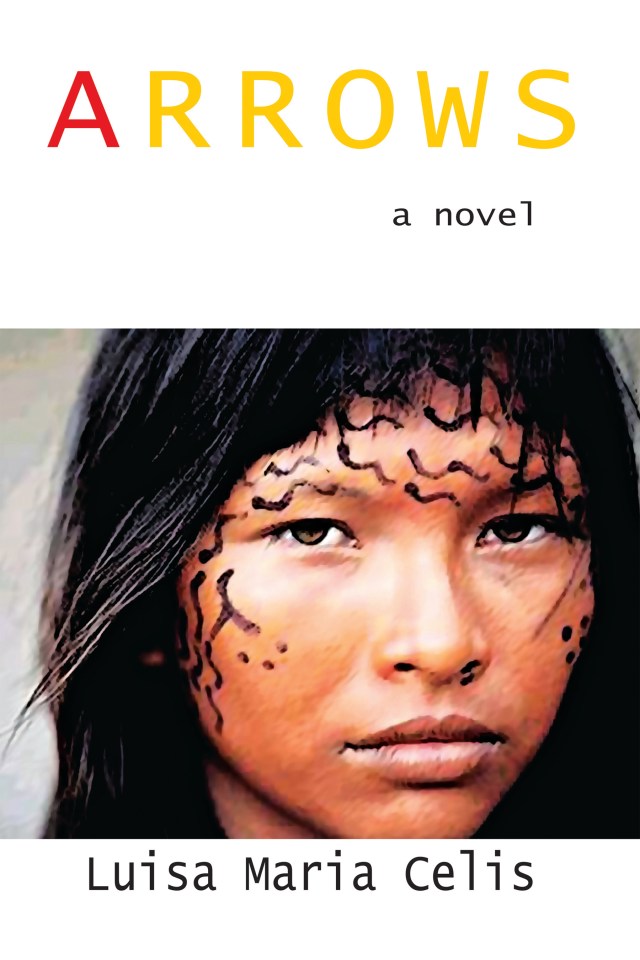
Arrows

excerpt

…how to use the strainer made of woven palm leaves. She took me to a
kind of oven that consisted of a circular structure with a large, flat
earthen plate on top and a fire burning underneath. I poured the
grated root and scattered it into a more or less round cake. I stood
there watching over it, lest it burn. I admired my first cassava cake,
an irregular spill, and fingered it so often that it cracked into pieces. I
ate it that night—it tasted like triumph.
From a tree beside the hut where I slept, I ate mamones by the
dozen, playing with the big, velvety seeds in my mouth until my
teeth felt as if they would fall out. The guavas, which had disgusted
me because of the little worms that sometimes infested them, I now
ate with delight—worms and all.
In time, I learned to differentiate the people of the Teque nation
from the others, who remained indistinguishable. Pure joy filled me
when, thanks to the boys who had taught me to use a bow, I
contributed a small, wild pig. After that, people spurned me less.
Tiaroa, Guacaipuro´s sister, came to me one day and offered me
an onoto—a red-dyed, sleeveless, hoodless tunic. My cassock was in
tatters, but it was the significance of the gift that left me speechless:
they had accepted me. I took the tunic and went to Tamanoa´s grave
to show it to him, so that he could rest assured that I was making
progress.

Weeks turned into months. I kept my distance from Apacuana. As
far as I could tell, she was not living with Baruta, and yet she was not
with other men either. Sometimes when I went to my cave to pray, I
would wonder to myself what might happen if she ever followed me
there, and I struggled to dismiss these thoughts, and often flayed
myself accordingly.
I preferred to make progress teaching my language to
Guacaipuro. If he could one day learn to read the New Testament,
he might be awakened to the ways of our Lord. I often ate at his
house and exchanged words with him. He was particularly puzzled…

https://draft2digital.com/book/3562848

https://www.amazon.com/dp/0981073522

The Qliphoth

excerpt

Kraskolkyn pulls delicately at the creases of an expensive grey mohair suit,
but his tie is loose, his smart shirt is open, the hairy fruit of his paunch sports a
chunky gold chain. He’s adorned with gold—wristwatch, rings, tieclip, fountain
pen. Fancy leather luggage bulges on the back seat. Pauline would have
been appalled at this display of conspicuous affluence. That dongle on the
chain has a phallic shape. This is not a correct person.
“Never mind, it don’t matter . . . I get everyone out of the shit, know what I
mean? I put ’em in deep. Oh yeah! But I get ’em out again . . .” The laughter
bellows on and on. Lucas can’t find the correct verbal register for dealing with
this big Kraskolkyn.
His fellow-traveller is delving into a pocket and pulling out cigars. Lucas is
queasy about smoking, he’s only tried timid experiments with Wicked
Trevor’s hash behind the gym at Westway, but now he feels obliged to take
part in another kind of machismo, its camaraderie, matches, blue smoke,
coughs, expectorations.
Kraskolkyn slaps him on the back. “Crazy damn kids. Always on the run.
Give bastards the runaround . . . Just have a nice cigar . . . then you be OK.
Enjoy the sights.”
Lucas isn’t OK. All he can hear is this bullying laughter.
“You gonna love those sights, I tell you. Better than any nutty house, you
know? I put loadsa money inna sights, believe me kid, crazy peoples gonna love
it all over the Seaside.”
Mr. K chuckles, chews purposefully on his cigar, as if waiting for a confession;
and Lucas realises that he should have the willpower to keep silent. The
slopes are becoming thickly wooded. He doesn’t know this edge of the Moor,
nor can he relate it to the location of distant Oakhill—or the coastal resorts.
His rescuer (abductor?) is asking him if he wants to learn any good jokes.
Lucas moves his head ambiguously. Too late, a fruity narration is already underway:
a Ukrainian, a Serb, an Englishman and a Croat went to the toilet. In
the toilet, see, there was this big telly—
The car lurches over potholes, compounding his difficulties in following
Mr. K’s polyglot diction, so he can only nod weakly at the gaseous explosions
of mirth. His head starts to throb with the noise and tedious obscurity of it all.
They’ve just roared past the darkened ruins of a station. He thinks the
crooked signboard said Abbots Oakham—for Oakhill Hospital. There, there’s
no way back, not now, it’s too late, best to close down that area, keep his eyes
open.

https://draft2digital.com/book/3562839

https://www.amazon.com/dp/0978186508

Savages and Beasts

excerpt

indeed Mr. Wilson was there with an Indian girl who
he violated sexually in front of their eyes. What could they do
with such a secret? Marcus shook his head.
“We could tell the teachers about this…you know,” Marcus
said to Lucas then he added, “no we’d better let know George;
yes, he’s the one we should let know, no one else. You promise?
No one else for now…” he added and Lucas nodded yes. With an
undoubted ache filling their hearts they took the piece of wood
they went to the wood working shop for and as silently as they
could they returned to their beds. Marcus hid the wood under
his mattress hoping to give it to a relative next time he might visit
his tribe and ask him to create a totem out of it.
Next day the clock struck seven thirty as if someone had
struck it with a strap when Marcus and Lucas got up. The Kamloops
sky was full of leaden clouds which spread moist over the
houses with their green yards and the slanting roofs and on the
hearts of the people. Marcus and Lucas and three other kids were
peeling potatoes for George when Marcus got his chance to
talk to the Cretan cook about the event they witnessed. George
freaked out when he heard the detail description of what Mr.
Wilson did the night before. So angry he was that he left the
kitchen and ran down to Anton’s domain where he related to him
what he learned from the boys.
Anton’s face darkened, his eyes turned fiery red, his lips
tightened as did his fists; he could strike anyone at this moment,
so angry he felt, though the guilty person wasn’t around to
take the punches. He looked at George and his voice sounded
as if coming from the darkness where his heart was now. He
gazed at the window facing east while the horizon at the far distance
told of the presence of forests, which stood opposite the
beastly human behaviour, and valleys with rivers…

https://www.amazon.com/dp/1926763602

In Turbulent Times

excerpt

…about his belief that there were two St Patricks. He has historical evidence that he says supports his theory. He won’t be home till tomorrow evening.’
Joe turned his head away from her in indecision and stared into the red-hot heart of the fire in the range.
‘Joe, I want to have your baby.’
His head jerked round, and he looked at her with confused incredulity in his eyes, unsure of himself. ‘Nora, think of Liam, your husband.’
‘Why must you be always so considerate of others, Joe?’ Nora asked. ‘Think of me now. I love you. I want to have your baby. I want something that is yours to hold on to and to cherish for the rest of my life, something that is part of you and part of me that will be a living memorial of our love. Please, Joe. I need this.’
He placed an open palm on each side of her face and looked into her deep, dark eyes where tears glimmered like raindrops on a leaf. He knew that what she was asking him to do was sinful, and part of him recoiled from it. But his moral reluctance was brushed aside by the strong, sexual urges of a twenty-nine- year-old male, more especially of a male who spent most of his time at sea. ‘All right, I’ll stay,’ he said quietly and kissed her on the forehead.
‘I’ll put Owen Joe in his cot and wet a pot of tea,’ Nora said. ‘You can sample the barmbrack I baked this afternoon. We even have home-churned butter to put on it. A gift from Janet’s mother.’
They sat quietly by the fire, Joe in the rocking chair, Nora at his feet, her back against his legs, a book open in her hands. Upstairs the baby slept in the cot at the foot of Nora and Liam’s bed. Outside, the sky was still bright, the setting of the sun delayed by the manipulation of the British war-time summer clock. The limpid blue of the daytime sky was gently suffused with a pale golden glow that spread from the west. A couple of early stars glittered in the east, and Venus shone with a steady gleam in the wake of the lowering sun.
‘You’re going to read me a bedtime story, are you?’ Joe gently stroked Nora’s soft black hair.
‘No,’ she said. ‘I want you to read to me.’
‘You do, do you?’ Joe said lightly. ‘What have you got there?’ He took the open book that Nora reached to him and flicked the cover over. ‘J.M. Synge.’
‘Yes. Poor Synge,’ Nora said sadly. ‘He was thirty-five when he fell in love with a girl of nineteen, an actress called Molly All good, the daughter of a “Dour Orangeman” who objected to his children’s being brought up…

https://draft2digital.com/book/3562904

https://www.amazon.com/dp/1926763270

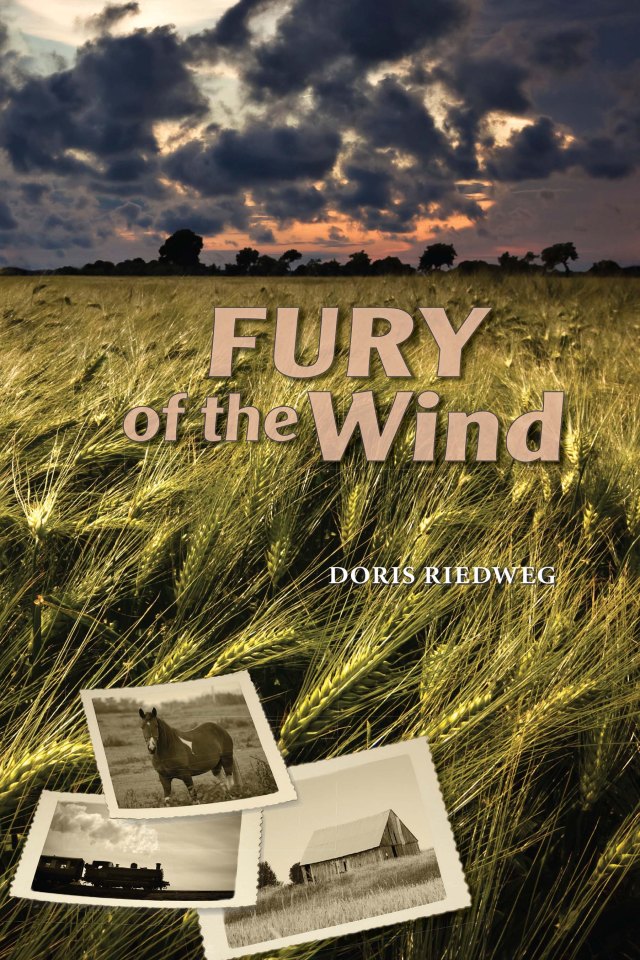
Fury of the Wind

excerpt

When she recovered from her grief over Danny, Sarah accepted a
teaching post at Corkum in the northern part of the province. But
her tenure there was short lived. In the spring of 1942, Mrs. Roberts
suffered a stroke. Sarah applied for a leave-of-absence to take care
of her mother during her convalescence. But Mrs. Roberts never
did convalesce satisfactorily, and Sarah was forced to admit that her
mother had won. For five years Sarah found herself tied to the neat
brick house in Tillsonburg – nursing, cooking, cleaning, gardening
and doing everything except that for which she had been trained.
Apart from trips to the store to purchase their meagre supplies,
Sarah went nowhere. She saw no one except Margaret and Elizabeth
and, since the former was preoccupied with wedding plans
and the latter was nursing in a hospital in Toronto, she didn’t even
see much of them. Visitors to the Roberts’ home were few because it
hadn’t taken Mrs. Roberts long after her husband’s death to alienate
almost all of their friends.
There was no hope of meeting a man. The veterans began to
drift back to town when the war ended, some with brides, some to
the sweethearts they had left behind. But even the unattached ones
seemed to have forgotten that Sarah existed, or maybe they still regarded
her as Danny’s girl. Soon, almost all of the young men had
married or had drifted off again to more promising venues.
When her mother died Sarah applied for teaching posts but the
school year had already started and a shortage of teachers was a
thing of the past. She had been out of the profession for more than
five years, as had most of the teachers who were now returning to
it. But ex-servicemen and women were, naturally, given preference
over someone who had been caring for a sick parent.
On a grey, cold day in October, three weeks after her mother’s
death, Sarah sat dumbfounded in the office of Roger Corbett, her
parents’ lawyer. She was trying to understand what he had just said
but she felt too numb to take it in.
“I’m sorry, Sarah,” Mr. Corbett continued, “I wish there was
something I could do. Twice during the past year I went to see her,
as you know. And I went specifically to suggest that she change her
will. But she acted as if she didn’t understand what I was talking
about.”

https://www.amazon.com/dp/0981073530

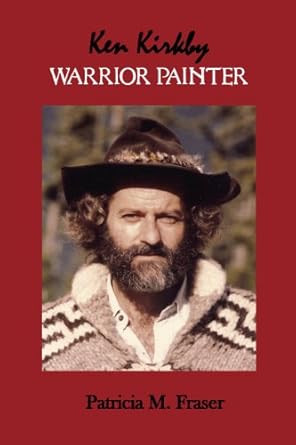
Ken Kirkby – Warrior Painter

excerpt

is this illusion…you and I can go for a walk wherever you choose and
I challenge you to show me where money grows. It is a man-made
convenience, but we have turned it into God and the almighty banks
into the churches.
Money in itself is a nonentity, a paper mirage. But if you understand
how it functions you realise currency can be artificially created—
MasterCard and Visa are good examples. It no longer needs to be
printed by the Mint. I wish people would realise it is only a tool, to be
used like any other implement, and no more mysterious.
As the two men worked, Harris proposed assorted schemes to make money.
These were discussed, dissected and for one reason or another, discarded
at the end of the workday. Perhaps, like crossword puzzles or Sudoku, they
served to keep the workers’ mental juices flowing.
~~
Ken Kirkby is a particularly fine cook and, having been raised in
Francisco’s kitchen, can turn the simplest ingredients into a dish to be
savoured and praised. As his circle of friends expanded, he resurrected his
long-dormant culinary skills.
Portuguese meals would not be complete without a bottle of fullbodied
red or crisp white on the table. When Ken left Portugal, he had been
selective as to what he took with him, but one of his prized possessions
then and now, is the family wine recipe dating back several centuries. He
continually has a batch on the go although he is a moderate drinker himself.
It was likely a day or so after a well-spiced supper of clams, shrimp and
prawns cooked in Kirkby’s special fish stock prepared from flounder, too
small in themselves to eat. While spreading topsoil for the eventual seeding
of the lawn, Harris says, “You know, Kenny, that’s a damn fine wine you
make. You could probably make a pile of money if you set yourself up to
produce and sell it.”
“Probably,” says Kirkby.
Harris does some mental calculations. “How much do you think you
could make?”
“Money, or wine?” Kirkby quips.
“You’ve got a few racks there—how much do you usually make?”

https://draft2digital.com/book/3562902

https://www.amazon.com/dp/B00CB8W4CG

Small Change

Excerpt

I started walking, away from the fence. After about fifty yards, I came to an apron of freshly cut grass that bordered a wide road and a neighbourhood of the largest, most beautiful houses I had ever seen. Brick and fieldstone, white clapboard and freshly oiled cedar, some of them three and four storeys high, with ample porches and verandas and sprawling lawns. I limped a bit, but managed to make some progress along the wide, grassy median in the centre of the street I immediately thought of as a thoroughfare. What is this place, I wondered, and who lives here?
They were oddly dressed. The boy wore a striped tee shirt, a white cap which I later learned was a Polo hat, and knickers that were tucked into black stockings just below the knees. Two of the girls wore summer dresses in soft pastels, yellow and sky blue, with puffed shoulders, matching socks, and matching bows in their hair. They had white shoes with ankle straps, not sandals, exactly, but something like, and the third, taller girl wore white court shoes, white shorts with a white leather belt, and a vee necked tee shirt. Her honey blond pony tail hung half way to her waist and was tied with a white band.
I was astonished, but drawn toward them as if by a huge magnet. They seemed like sky children, but were so recognizably earth-bound I wanted to talk with them, to know what their lives were like. Especially her, with the startling eyes.
I stood very still until they became aware that I was watching them. They stared back, then they looked at each other. They seemed puzzled. I crossed back to the sidewalk and started up the lawn that sloped down from their slate grey house. They seemed hypnotized, or stilled by bewilderment, alarmed, but unable to break the spell of my dirty, sweat streaked face, torn jeans and bloody shirt.
Except for her. She looked straight at me, so directly and with such an open stare it stopped me in my tracks. I felt something I’d never felt before. It seeped into my chest and throat from a place I never knew was in me. It was as if I had seen her before, or known her all my life. Her face – the smooth skin, deeply tanned like her arms and legs, the full mouth, high cheekbones, and green, green eyes – burned itself into my memory and what I read there was not fear, but curiosity, because I was strange to her, and concern, because it was clear that I was hurt. There was something else too, and it made my heart accelerate.

https://www.amazon.com/dp/1926763157

The Unquiet Land

excerpt

the good life of the gentry kept her there, an eccentric about whom stories would be told long after her name was forgotten. Her son Finn, her fifth of six children, inherited his mother’s love of the mountains and the sea. The sea, however, is faithless and fickle and given to unpredictable outbursts of savagely bad temper. One Friday in January 1854, a large fishing fleet set sail from Carraghlin harbour in fine, sunny conditions. But some hours later those benign conditions changed dramatically, the tranquil sea turned tempestuous, and the fleet was storm-tossed in gales and driving snow. Thirty-six Carraghlin fishermen perished. Among them were Finn MacLir’s twin brothers. The date was Friday, the thirteenth.
That same year, 1854, Finn himself was a sailor on board the tea clipper, Gypsy Lady. Having crossed the South China Sea from the ancient walled city of Fuzhou with a full load of the first tea of the season, the clipper ship caught fire on the thirtieth of May in the Sunda Strait, off the coast of Indonesia. Aware that his crew were unable to control the raging fire, the captain took the decision to sink the fast, sleek ship. Some of the crew, including Finn MacLir, scuttled her by cutting holes on the waterline, and she sank in seventy-three feet of water.
Finn swashed through a life of Conradian adventures till 1880. Then the Land League, a political organisation founded in County Mayo in 1878 with the aim of helping poor tenant farmers to win back “the land of Ireland for the people of Ireland,” embarked on a campaign of violence across the ravaged countryside. The principal aim of the Land League was to abolish landlordism in Ireland so as to enable tenant farmers to own the land they worked on. So began the so-called Land War. Tenants refused to pay their rents, resisted evictions, attacked land agents. English-owned farms were burned, animals killed or maimed, haystacks set ablaze, the English owners set on like curs. The land-owning MacLir family, close friends of the land-usurping Hamiltons, was targeted. In one bleak October night old Brigadier Richard Hamilton was brutally butchered in his bed, and Finn’s father and older brother were locked in the barn behind their large house, and the hay-filled barn was set on fire. Bullets from the hill above kept any would-be rescuers away until the blazing barn collapsed in on itself and on the two hapless men within.
When his father and brother were murdered during the Land War disturbances, and both his sisters had married and moved to England with their husbands, Finn MacLir returned to Corrymore and took over the farm. He stayed on in the village, out of defiance, according to some;

https://draft2digital.com/book/3562888

https://www.amazon.com/dp/1926763203