
Straits and Turns

Excerpt

And he did. He got up, took her hand and pulling her close, he hugged her. His lips locked with hers. She was happy that her girlfriend was wrong, he didn’t have any strange sexual preferences, she kissed him passionately, and his hands travelled over her body. Hungry hands searched between her legs and touched her anywhere he liked, anywhere she liked him to touch her, too, and their sexual desire was fired to the point of no return. She stood against the wall, her right leg open. He inserted his fingers inside of her, and soon enough, he had unzipped himself and, pulling her undergarment to the side, he pushed his erection as deep as he could, standing there against the wall. A few movements were enough for both to reach the exhilarating apex of an orgasm that completed their short interaction, and, both happy and smiling, they fixed their clothes. They went back to the place they were a few minutes earlier, where the other two came out from the class and joined them.
Some time passed, and Basil came from the pool hall to inform them that he had played an excellent game of billiards and beat Sakis, to the pleasure of the most pool hall regulars. Surely no one paid attention to him. They all had been absorbed in their thoughts. The two girls pulled a little away when Litsa said to Rena,
“You shouldn’t talk badly about him, he’s just great, believe me.”
“Oh, sorry, I didn’t mean to insult your boyfriend.”
“You know, though, I’m thinking of Basil…truly feel for him, he’s been alone all along…Sometimes I think I should be more caring towards him.”
At that moment, their supervising teacher appeared, and their conversations stopped as they all walked into the classroom for their exam. They sat in the seats they had already selected. Basil sat in the middle row, and the other two couples were in each of the other rows at the far end of the class.
“Why do you sit so far away?” Mr. Andreopoulos, their teacher, asked, though he didn’t care to continue, knowing that an answer at this time wouldn’t make any difference, so he called Litsa, who went over and took the exam papers, five copies, and passed them over…
https://draft2digital.com/book/4250839#print

https://www.amazon.com/dp/1926763866

The Gospel of Silence

Excerpt

Disgust sat openly on the officer’s face, though he himself was
hardly a heroic figure. The lieutenant was a strange man: the collar
of his shirt greasy, his tie and uniform stained and wrinkled, yet
his gait and posture carried a kind of royal, exalted air. No wonder
he overestimated himself. As we later learned, he had come to the
army from some tiny Moldavian village, exchanging a mud-brick
house for a city apartment. And beyond all that, he could command
others, indulge his malice and exercise that little limited power he
would never have known had he not chosen a military career.
Meanwhile, the dictator’s grand plans had come to include the
construction of the Transfăgărășan road, already well underway
by that year. Five years of agony, rocks blasted apart with six thousand
tons of dynamite, dozens of soldiers’ corpses sacrificed to the
project — and all of it presented in the news as though a monument
to the triumphant will of the people were being built, when
in truth it was only a monument to power and to human suffering.
Every month sealed metal coffins arrived, and we knew that no
one would ever see what lay inside them, because they were forbidden
to be opened.
Beneath every stone and every slab of concrete of the Transfăgărășan
pulsed the bone-breaking, soul-crushing reality of slave
labor. They built it over five years. At the funerals of fallen soldiers
we fired three shots into the air, then returned to the barracks as
though we had become participants in some endlessly repeating,
cold ritual practiced by the world only so we would never forget
how easily a human life can be replaced. The soldiers escorting
the coffins were forbidden to speak. The families were forbidden
to ask questions. And each coffin was another sign of this truth:
in that country even your death did not belong to you, but to the
state. The construction of the Transfăgărășan had already become
a legend while they were still only moving earth — not because of
its beauty or engineering brilliance, but because of the number of
dead, a number everyone knew and no one spoke aloud.

https://www.amazon.com/dp/1926763874

Jazz with Ella

Excerpt

Fortunately, the glacially slow bureaucratic process kicked in and before the authorities could find a more appropriate position for him, he decided that he would confess. Apologize. Make friends with Ivana. Demonstrate that he was as pure as the driven Siberian snow. Definitely no threat to anyone’s wife. A genuine good guy.
This slow process of ingratiation had taken a lot out of him, and that was why he needed the support of the trusty Gennadi who was always there to keep him honest. But deep down, Volodya realized that the entire farce designed to keep his miserable job was only a stop-gap measure. Truly, he would never be free to play his music until he left the Soviet Union. Forever.
★
Jennifer loved Leningrad from the moment she stepped off the plane. After the drabness of Moscow and the subsequent rocky flight in an antiquated Ilyushin, even the airport terminal felt cheerful and bright as the sunlight filtered through three huge domes and splashed over hanging baskets of greenery.
As their bus travelled to the Hotel Astoria, she stared with interest at the elegant buildings, now crumbling, many still painted in sunshine yellow as decreed in a pre-revolutionary time, the lacy ironwork on the bridges that crossed a network of canals, and the tall linden trees that crowded the wide streets.
Their tour halted briefly at St. Isaac’s Cathedral situated on the same expansive square as their hotel. Natasha ushered them through the darkness of the foyer to stare at the dimly lit, centuries-old frescoes under the church dome. She pointed. “Seven types of marble were used in the construction of this cathedral—the red and white from Italy and the grey, green and black from the Ural Mountains.” The cathedral’s foundation was thick and solid, its flagstones hollowed by thousands of visitors, its wall paint blackened and peeling.
“It’s real dark and creepy, isn’t it?” said Lona from the foyer’s shadows. Her words were caught up in the acoustics and amplified. Natasha turned to glare at her.

https://draft2digital.com/book/3562892

https://www.amazon.com/dp/1926763246

Blood, Feathers and Holy Men

Excerpt

A short distance below the cave, he found Ari and Ula strolling arm-in-arm by a
stream bank filled with spring beauties in bloom. Not wishing to disturb the couple,
Rordan stooped to admire a delicate pink trillium, blooming in the dappled shade
between the roots of a budding maple. He was absorbed in the flower’s beauty when
he heard a pleasant Mandan voice behind him.
“Spring blossoms are beautiful to look at but poisonous to eat. That is how they
are protected from being eaten by the four-legged creatures.”
He turned to face Yamka, radiant in morning sunshine. “When I was little, I believed
tiny fairies held their spring festivities in the hollows between the roots of
forest giants such as this.”
Yamka held out her hand. “Walk with me. Tell me more about your tiny fairies.”
Rordan took Yamka’s hand for an instant then self-consciously let go as they both
walked away from Ari and Ula who were having their own tête-à-tête. They strolled
slowly, with many pauses to look around tree trunks and under the edges of clumps
of brush. As they searched, they discovered a cluster of fragile blooms.
There was so much beauty in the forest, and as the sun disappeared behind unexpected
clouds, Rordan and Yamka realized they were lost. Both called out to Ari and
Ula but there was no reply. Rordan knew that moss grows on the north side of tree
trunks but that knowledge was of no use when neither knew which direction they
had walked away in.
As the forest grew dark and cold, the only sensible thing to do was to find shelter
in a rocky overhang and wait for morning. They both gathered branches and leaves
into a dry space in a small cave opening partially sheltered by a fallen tree and snuggled
in for the night.
The attraction and warmth they felt toward each other was now irresistible.
After Brother Keallach left the cave, Father Finten paced angrily. Then he sat by
his belongings and pulled out the white robe Corn Mother had mistakenly presented
to Rordan. He stroked the cotton fabric and rubbed his fingers over the beadwork
crosses on the hem.
When we arrive at Fire Maker’s camp, I shall wear this robe and my ministry will
begin anew, he thought. The Brothers will be strengthened in their faith and practice
once more and together we will bring these misguided heathen to the One True God.
By the time Keallach and Ailan returned with Fire Maker and Bjorn and a goodsized
deer buck, Finten was over his anger. Ari and Ula came in next with rosy cheeks
and a basket of fresh greens but Brother Rordan and Yamka did not return. When
darkness fell, the six finally sat down to supper. A search in the dark was inadvisable.
Besides, Rordan and Yamka knew how to take care of themselves; they’d turn up in
the morning or Ari and Ula would return to where they were last seen together.
Father Finten remained awake throughout the night, not so worried about the
young couple’s survival as about the Brother’s vow of celibacy. He prayed fervently
that Brother Rordan would have the fortitude and grace to resist the evil lurking
beneath the cover of darkness.

https://draft2digital.com/book/3562826

https://www.amazon.com/dp/1926763106

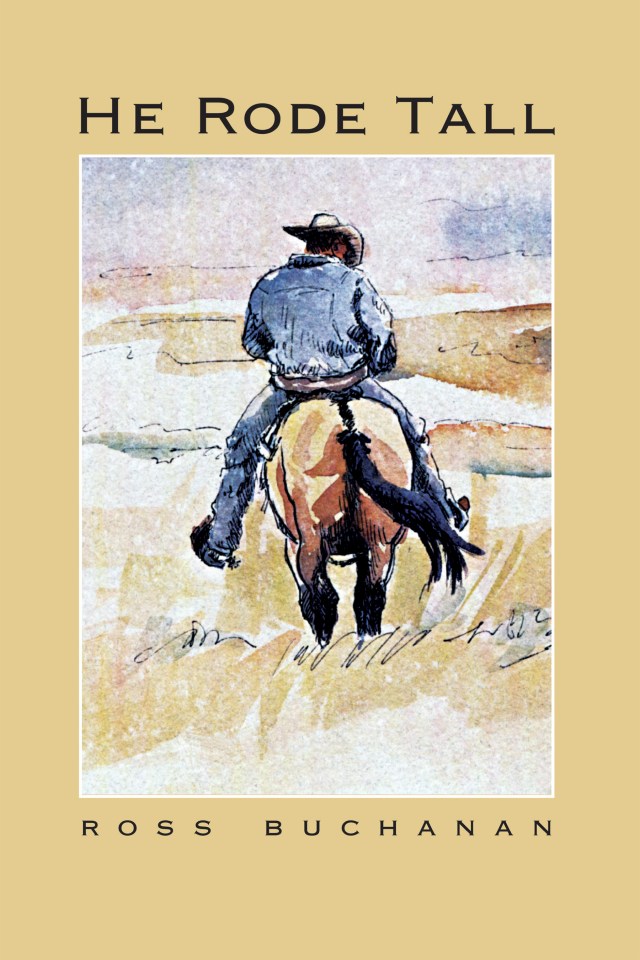
He Rode Tall

Excerpt

…topping up the water in the buckets, and distributing some oats,
and from the reaction of the horses, the oats were especially
appreciated.
Taking advantage of the momentary lull in conversation, Joel
knew he had to care for the gelding he had ridden that morning.
The horse had been patiently standing in the center of the alley.
First, Joel loosened the cinch strap and lifted the saddle and
blankets from the back of the horse; even after all of those years,
Joel could still recognize an Eamor saddle when he saw one. His
family never had much when he was a kid, but his dad always
made sure that they always rode Eamors. He placed the saddle
and the blankets on separate railings of what seemed to serve as
the official tack stall in the barn. Then he led the gelding into the
stall that Joel had found him in that morning and removed his
bridle. In his absence, Harry had cleaned out the gelding’s stall
and replaced the soiled bedding with fresh straw. Joel re-hung the
bridle on a nail high on a post, and he approached the gelding to
brush him down. As he groomed the sorrel gelding and waited to
see what the old hand had to say, he was reminded of two of his
favorite smells.
Sweaty horses and leather. It had been a lot of years since he
had smelled that unique combination of aromas, but there was
no doubt about the rich smell. He had smelled a lot of good
things in his life. The smell of the sea. The smell of pot. The
smell of peppermint. The smell of fresh fruit. The smell of a fine
cigar. The smell of a rich port. But none of these compared to that
of sweaty horses and leather.
It seemed as if the old hand was just about finished feeding the
horses when he muttered, “Too bad about your dad.”
“Sure is,” confirmed Joel. “I wish I was here for the funeral,
just got word the other day.”
“Don’t matter,” grunted the old native as he busied himself
about the barn. “Doesn’t make much difference once they are
gone, does it?” Joel was feeling good after hearing this.

https://draft2digital.com/book/3562862

https://www.amazon.com/dp/0980897955

Redemption

Excerpt

There were times when he sat silently, imagining that he had
finished his schooling, that he had received his diploma, and that he
would soon be on his way home. His dream carried him to the happiest
moments of seeing his family again at the airport after such a
long time. He clung to the dream as if his life depended on it.
During this period, he also found the time to gather the information
requested by the dean from the school back home. He put
together a small report about the ins and outs of the Vancouver Stock
Exchange for the dean and mailed it to him. The dean wrote back to
him and expressed his appreciation, and from then on, they kept in
regular contact. The dean didn’t hesitate to mention to him that his
job was waiting for him when he came back and that things were
slowly improving back home.
Time never stayed still, and his examination time finally came.
Hermes did his best to prepare for the battle. He felt like a soldier
marching off to war, just like those he saw in films, though he knew
he was more prepared than ever and was quite certain of his results.
He had tremendous decisiveness and optimism, just as he had shown
in all other exams up to now.
The first exam day came, and he got up early, bathed, shaved,
dressed, and went to his classroom as early as possible. He believed
that if the first day of exams went well, all others to follow would be
just as successful. Then the supervisors arrived and distributed the
exams. Hermes started to work with patience. The supervisors walked
around; one of them passed by Hermes and stood for a while to look
at the work he had finished so far. Then, without any comment, the
supervisor continued, but not before Hermes had distinguished, with
his observant eye, a faint smile of satisfaction on the man’s face.
When done, he handed his paper to the professor at the desk,
who said, “Thank you, Hermes. Have a good day.”
“Good day to you, too, Professor,” he said and walked outside.
The rest of Hermes’ exams passed in the same manner. All he
had to do now was to wait for the results. He knew how to judge his
work objectively, no different from the way his teachers did…

https://draft2digital.com/book/4172538#print

https://www.amazon.com/dp/1926763858

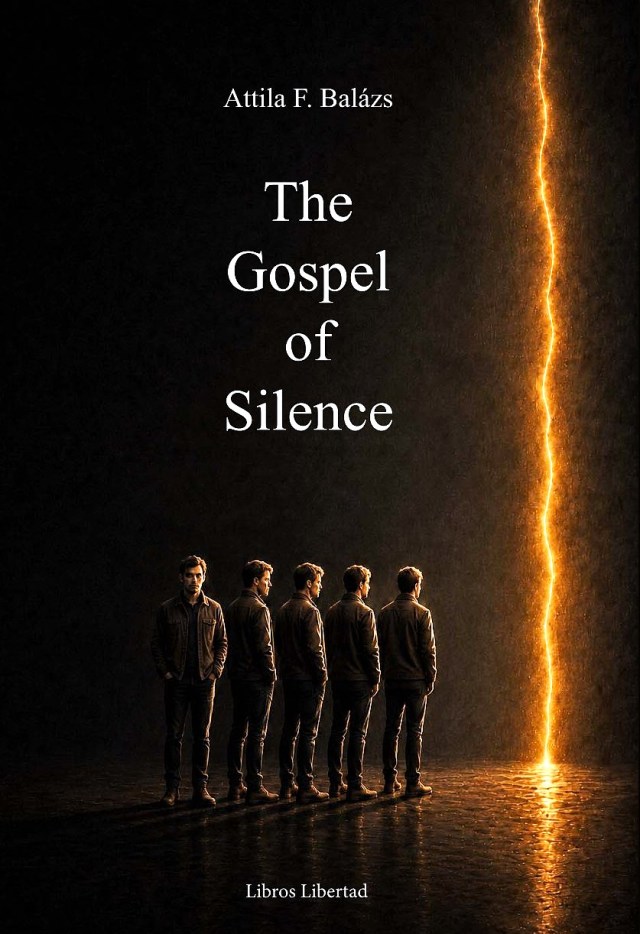
The Gospel of Silence

Excerpt

…unimaginable—slipped like a cold draft between the ancient walls,
disturbing the settled kingdom of silence scented with incense, centuries-
old furniture, glue and leather-bound books, and reached us,
first-year theology students, whom the authorities had ordered—for
the first time in the country’s history—to report for shortened military
service. Standing there, looking at one another in confusion,
with bitterness thickening inside us, we felt that a new will, a new
blind and impersonal force, was sliding into our lives.
We packed. Then each of us set out for home by bus, train, whatever
he could find, so that the next day he could report to the draft
board corresponding to his place of residence. There we underwent
the examinations. Naked, we had to stand before the officers seated
at a long table and the military doctor, who declared every recruit
fit for service. Afterwards, hundreds of young men lined up in the
courtyard, waiting for their names to be called and for the slip of paper
to be placed into their hands, before setting off toward the station
with their wooden suitcases under the supervision of a corporal.
I was sent to Sfântu Gheorghe. The barracks we entered resembled
nothing I had known before. There was no sense of home within
it, but neither was there outright cruelty—something even worse
filled the place: walls built out of a peculiar indifference, a world in
which suffering was not punishment, but a natural condition.
The company assembled from Orthodox, Catholic and Protestant
seminarians seemed like some grotesque metaphor, as though the
many stories, ideas and hopes hidden behind different religions had
all been stripped bare at once, only to freeze together into a single
common experience: subjugation.
Among the officers there were some who treated the whole thing
as an amusing game; for others it seemed almost a ceremonial duty
to show us—those who spoke about God, prayed to Him, followed
His commandments—what it was like when not heaven commanded,
but they did. And we, who until then had believed the suffering
of the body to be only temporary, now discovered that the suffering
of the soul was far slower, far more insidious and enduring.

https://www.amazon.com/dp/1926763874

Swamped

Excerpt

Eteocles’s pocket is full of stones and on his back he carries a
hunter’s bag with food for later. Anthony carries an empty hunter’s
bag for what they might get today. In ten minutes they are away from
the houses and under the protection of the olive trees. Here the
morning sounds are different: muffled echoes from the rustle of the
breeze in the tree branches and cries of the occasional startled bird
as it flies from the trees or the osier bushes they pass here and there.
The morning star is slowly fading and the first rays of sunlight are
not far off now.
Irma plunges into the thickets of osiers or bunches of cane fields
trying to spring a rabbit from these property dividers that make a
good hiding place for rabbits. Anthony loads his shotgun and nods
to Eteocles to be vigilant and to watch the dog closely. They both
know that, when Irma gets agitated and wags her tail, these are the
signs that a rabbit is close. Eteocles stops and Anthony moves forward
ten steps, enough to give him the openness of the field in case he has
to shoot.
A few minutes later Irma begins wagging her tail excitedly. Anthony
encourages her with a familiar call, “Eheheheheh…Irma…”
and the eager dog intensifies her search around an osier bush when,
suddenly, a rabbit is spooked and dashes out of the bush to Anthony’s
left. He follows the animal for a second or two with the barrel of the
gun and then fires. The rabbit seems to jump in the air before falling
on the ground dead. A delighted Irma runs and grabs the animal in
her jaws, then brings it back to her master and proudly stands in front
of him with the limp body in her teeth. Anthony takes the rabbit out
of the dog’s mouth and weighs it in his hand. It’s still small, a yearling,
but a good start to the day nevertheless.
They already have their first catch and it isn’t even full daylight
yet. Excited with this early success, they carry on walking among the
olive trees. the light rustle of the leaves and the chirping of the awakening
birds create a natural symphony conducted by an invisible
maestro. Eteocles tunes his ears to the avian arias, eager to identify
one close enough to try a shot.

https://draft2digital.com/book/3562976

https://www.amazon.com/dp/B08WP3LMPX

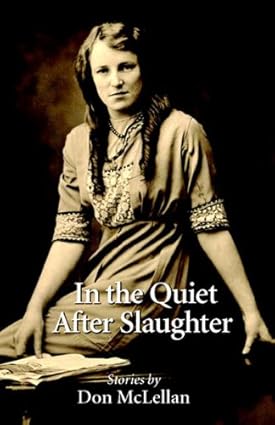
In the Quiet After Slaughter

Excerpt

– Ed wins again, someone hissed, he dies.
– Ladies and gentlemen, O’Donnell began, reaching inside the
oil can . . .
Members crossed fingers and nibbled hangnails. They squeezed
crosses, mouthed prayers, stroked lucky charms.
– The winner of the Spring Festival draw this year is . . .
My friend says it was so quiet inside Ed’s garage that night you
could hear air escaping a radial.
For the winner of the Dodge Car Club draw the experience was everything
the previous attendees had said it would be. Five leggy beauties
piled into the vehicle for the languorous cruise along the parade route.
Miss Brake & Muffler was instantly besotted with the club’s appreciative
representative. Later that same evening, the smoke from the barbecue
pits dissipating, the last notes from the bandstand fading, the
couple took a spin up Little Mountain. There, under a draping laurel
vine, the beauty queen shared with the lucky draw winner the qualities
that had earned her that esteemed title.
Alas, it was the club’s final involvement with the festival. Ed’s
garage, encouraged by the cumulative efforts of termites, flopped
over on its side one gusty afternoon. Adulthood beckoning, the
membership soon disbanded.
Because he didn’t know what else to do, Ed applied to the military.
Because its brass couldn’t convince anyone else to sign up, he
was accepted. As for the Dodge, the central character in this story, it
vanished as mysteriously as it had appeared. I didn’t see much of
O’Donnell afterwards.
Sgt. McManus retired to a place not unlike the lake of his imaginings.
On torpid summer afternoons, his rowboat drifting in the afternoon
breeze, he often wondered about that car and the ruffians who
deified it. McManus went on to an old folks’ home and then a grave
without learning more.
Years later a police museum was built at the rear of the
station house. A call went out for exhibits. McManus’s widow was
invited to submit items of interest. She donated her late husband’s
many citations, his oft-used hickory stick and, because he always
wrote everything down at the end of each shift, his logbooks. They
hadn’t been opened in decades.

https://draft2digital.com/book/3562874

https://www.amazon.com/dp/0980897971

Straits and Turns

THE BELL

…and Mike ran to change two switches and guide the engines to the
appropriate spot. The other two, Giovanni and Johnny, went to the area
of the fuel pumps and the pit, where they checked the underbelly of the
engines while Mike filled the tanks with fuel. Scotty checked all levers
and pressures as the others got busy doing their jobs. Mile noticed that
a light snow started falling and a light breeze perked up, spreading a
chill in the air. The bodies felt the cold, and the exposure to the frost
was getting into them.
Darkness had covered the yard like a shroud, and poetic images
came into Mike’s mind, which he promised himself that he’d write
some time later. Giovanni and Johnny finished their inspection, and
after Mike finished his job, the engines were driven back outside the
old shack for the rest of the work. Mike started washing the outside
of the engines, and the mechanic and his helper did their part of the
maintenance. All men worked for an hour and a half until the engines
were ready to be taken away. They all had an hour to relax and wait for
the new crew. They sat inside the shack when, from inside the cabin,
Scotty yelled,
“The darn bell isn’t working.”
Johnny, with his cigarette hanging off his mouth, climbed up to
the top of the engine to check the bell. Surely nothing looked different
than any other time, yet the bell was silent when Scotty turned the
proper switch on. The bell was needed each time the engines came to
a station and was part of the general function. However, tonight, the
chill in the air had frozen the air in the air pipe, which surely couldn’t
activate the bell. Giovanni also climbed up, and both men struck the
air pipe with their hammers, hoping that they would help the air flow,
but to no avail.
“The air pipe is frozen,” Giovanni diagnosed, and the boss said,
“Why don’t you try to warm it up with a couple of flares…” Surely Mike
ran to the shop and brought a bag with half a dozen flares. In the meantime,
Giovanni and Johnny climbed down and chatted with Scotty
inside the cabin.

https://draft2digital.com/book/4250839#print

https://www.amazon.com/dp/1926763866