The Circle

Excerpt

Could she be cheating on him? Matthew has been married for a long time; he’s a
fifty-five-year-old established bureaucrat. Why suddenly does he have all this
anxiety about his wife being unfaithful?
He turns on his other side and crawls under the sheets. He changes the TV
channel and slowly his eyes grow tired. He feels all the emptiness in his stomach
and in his heart. Then his worrisome mind slows down and he falls asleep.
“What did Dad have to say, Mom?” Jennifer asks.
“Nothing important, honey, the same old story.”
“Is he coming home on the weekend? I heard you telling him Hakim has
gone to New York. Did he say anything about that?”
“No honey, nothing. He says he’ll be home on the weekend.”
Jennifer goes upstairs to her room and Emily pours herself a drink.


Wednesday morning in New York and the sky is clear. A tired city awakens from
a last night of excitement and partying. New York is a city that never sleeps, like
Las Vegas. New York has the reputation as being the best entertainment city in
North America, although the big corporations running the Las Vegas casinos
like to think their city is the best in that department.
Hakim is up. He gazes at the view of the waterway. Far to his right he can see
the boats as well as cars in the streets. He has been up for a while when Ibrahim
comes into his room, prepared for the day.
“Good morning, my uncle.”
“Good morning, my dear son.”
Ibrahim calls Rassan to order their breakfast. While they wait Ibrahim calls
his lawyer, William Polson.
He speaks to the receptionist, “Good morning, this is Ibrahim Mahdi. I amin
New York and I would like to talk to William.”
It takes a few moments before a person answers.
“Good morning, Ibrahim, how are you? Welcome to New York. Where are
you staying?”
“Good morning, William. I am at the Manhattan Sheraton as always. I want
you to get Bill Wanton and Regis Hudson and come over for an hour, some time
after eleven. I need you all for an hour or so. Get Regis and Bill to bring along the
necessary forms for new accounts. You also need to prepare a power of attorney
and bring it along.”
“That sounds good, Ibrahim; I’ll put everything together. I’ll confirm our
timing within half an hour.”

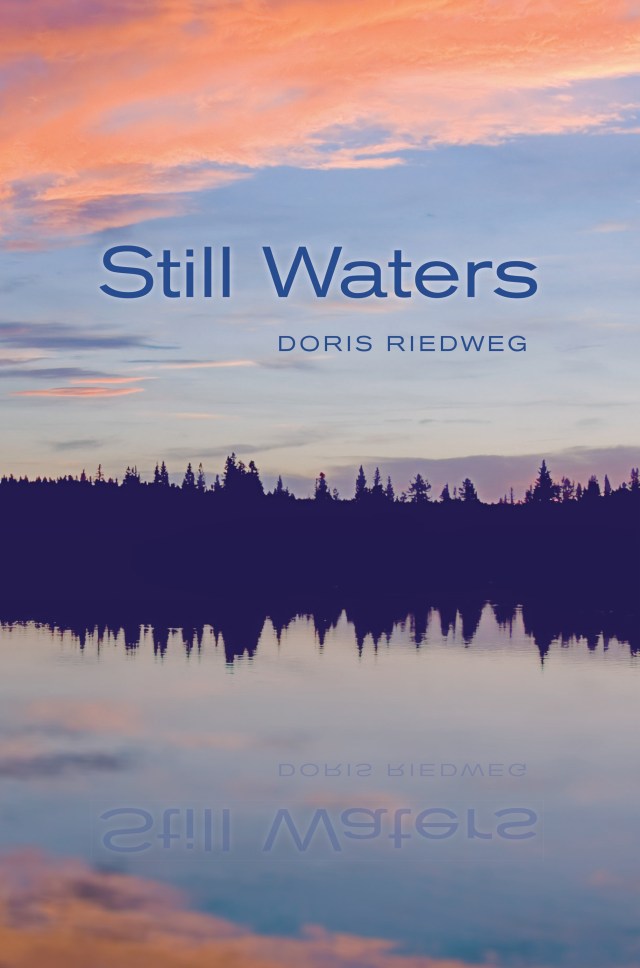
https://www.amazon.com/dp/0978186524

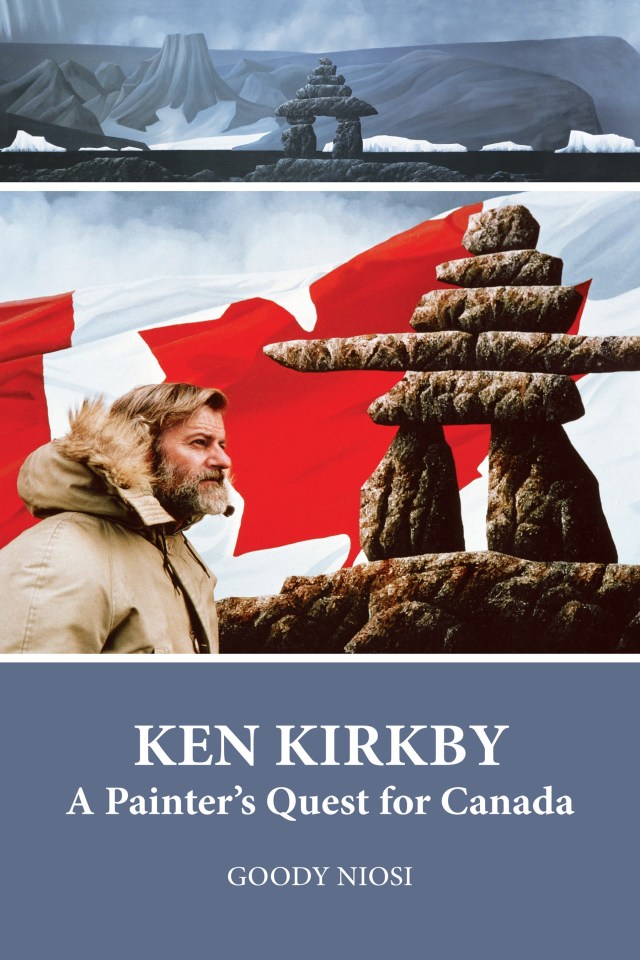
Ken Kirkby, A Painter’s Quest for Canada

Excerpt

Ken’s people were caribou people.
When the last of the caribou had passed, they dragged the fresh carcasses
to several large piles of rocks that they lifted to reveal deep pits
lined with more rocks. They lowered the meat into the pits and replaced
the rocks. The main danger to their food reserves was marauding wolverines.
By caching their meat under rocks too heavy for the wolverines to
move, they guaranteed a food supply for the season to come.
The days changed. The shiny green bearberry that covered the tundra
turned blood red and when Ken gazed across the land he saw a river of
crimson. One morning the snow geese flew across in the hundreds of
thousands. When they settled on the land a down blanket covered the
scarlet sea.
The days grew shorter and the temperature dipped dramatically. Ken
shivered in his sleeping bag and the old woman gave him two caribou
hides – one to put under his bag and one to cover it. He developed a new
understanding of the word “cold”. Cold was not simply a word here – it
was a palpable, physical thing, which assaulted every sense – it was the
god that controlled the land.
A few days after giving him the caribou hides, the old woman presented
him with a caribou parka lined with Arctic fox. Through her son,
she explained that this was to be worn without undergarments, next to
the skin. The parka was light, soft and astonishingly warm.
They continued to travel east until they came to a lake dotted with a
number of small islands, where they had left sleigh dogs that had whelped
in early summer. The animals were wild, ferocious, and pugnacious. They
took them back to the mainland where they pegged them to the ground,
placing the lead dog at the front of the pack. Once a day someone tossed
a frozen fish to each dog, which it consumed ravenously. The dogs were
born to pull sleighs and once in the traces would run across the ice until
they dropped from exhaustion.
With the dogs in tow, they continued trekking to the place the old
woman called home. She was a Netsielik, People of the Seal. Her husband,
who had died of TB, was People of the Caribou. TB had become epidemic
among the Inuit. Several people in the group had severe coughs and often
spit up bloody phlegm.
Snow began to stream across the land, blowing from the west in a million
little rivulets. The temperature, already chillingly cold, continued to
drop. The old woman gave Ken a pair of trousers made from caribou hide
and sewed a wolverine hide along the edge of the hood of Ken’s parka.
To the amusement of the Inuit, Ken sat on the frozen tundra in his new
clothes, watching the snow dance across the land. He felt fortunate. He
was living his childhood dreams. This was the Arctic he had envisioned –
the land of Francisco’s stories.

https://www.amazon.com/dp/0981073573

Jazz with Ella

Excerpt

“We didn’t order…oh what the hell,” said David. Jennifer reached for the refreshing water eagerly.
Paul chimed in. “A country that puts a man in space, yet you look at the filthy exhaust those busses are pushing out. That’s no rocket fuel. It coats everything, gets into your lungs.”
She agreed. “At least this city seems light and bright and modern”—everyone nodded—“whereas Moscow was so drab.”
“Boy, was it ugly.” David shook his head. “Though I have to say everything looks a tad more cheerful after a bottle of the local brew.” He helped himself to another glass.
The waiter finally showed up with some sickly sweet plum syrup. It didn’t cut the vodka, but by that time they were almost past caring. The lounge filled up with British and Americans, some of them in baseball caps, a few individuals who spoke Russian with a German accent and a party of serious, silent Asians.
“I think they’re North Vietnamese,” David whispered.
The Asians were seated at the table with the centrepiece, Jennifer noted. So the Soviets were not above spying on their Communist cousins. It fit with the current paranoia. Suspicion of Asian aggression was running high in the country and tension marked the border with China.
“We’re going to need another bottle here. I’ll get it,” said David suddenly.
“Do you think that’s wise?” put in Lona.
“What’s wise got to do with it? We’re in the Soviet Union, guys!”
The conversation continued, the waiter brought a tray of snacks, the level in the vodka bottle plummeted, and Jennifer couldn’t quite remember how they had acquired another guest at their table. He was a Soviet man, about 45, with curly hair, dressed in a fashionable lounge jacket. Apparently he had been listening to their conversation for some time. He shook hands all around and told them in fluent English that he was an editor of a prominent Soviet newspaper. None of them really believed him. What would an editor be doing sitting in the bar of a Soviet hotel that catered exclusively to tourists?
“I bet he’s a black marketeer,” whispered Ted loudly, leaning towards Maria. “He wants to buy our jeans—or get into your jeans.” She giggled. Lona looked puzzled.
“Is this a joke?” Paul asked.
“No, he’s a spy,” said David.

https://www.amazon.com/dp/1926763246

Ken Kirkby, A Painter’s Quest for Canada

Excerpt

distance away observing him. When they saw that he had noticed them,
they came to sit beside him. The man said, “My mother says you are a
very quiet Kabluna.”
“Maybe all Kablunat are quiet,” he said.
The man translated for his mother and said, “She says that all other
Kablunat that she has known are noisy. They talk a lot.”
“Maybe I don’t have much to say,” he replied. “Maybe I don’t know
very much.”
When Ken questioned the old woman about the Inuksuit she told him
a story that began a long, long time ago when there were very few human
beings. They travelled over the vast land in small family groups, following
the herds of caribou that were the source of their food, their tents,
their clothing, and their utensils. They could not afford to deplete their
energy by chasing the food. Instead, they made stone human beings and
called them Inukshuk, which means, like a person or acting in the place
of a person.
The people placed the Inuksuit in V-shaped formations. The caribou
with their poor eyesight, thought the Inuksuit were hunters and so it required
only a very few people to herd them into a trap. The closer they
came to the end of the V, the closer together the Inuksuit were placed.
At the point of the V, hunters hid behind boulders while women
and children lay on the ground beside the Inuksuit. As the caribou approached,
the women and children jumped up, waved their arms, and
danced about, to give the appearance of many, many hunters. The caribou
would then stampede to the end of the V, which was usually at the
junction of a lake and a river. When the caribou plunged into the lake,
the hunters hidden behind the boulders would jump into their kayaks
and paddle after them, spearing them in the water. Then they would haul
them back to shore where the entire family, even the children, would
clean and gut the animals.
Inuksuit also took on many other shapes, the old woman said. The one
on the river’s edge where they were sitting was a fishing Inukshuk. She
knew this because it was topped with a smooth stone taken from the riverbed.
It indicted that the fishing was good here. Other shapes had other
meanings and the configurations of Inuksuit had meaning also.
To my mind, what I was hearing sounded like language but they didn’t
write the language on a piece of paper – they wrote it directly on the land.
And I was beginning to get the picture of absolute practicality. Here you
could live with minimum technology if you knew how. To think that you
could direct an entire way of life by putting a few stones together just so,
so that other people coming would be able to read the significance of these
things. The degree of sophistication of this began to seep into me and I realized
there was much to learn here. And this way of life was like the people

https://www.amazon.com/dp/0981073573

Swamped

Excerpt

“Yeah.” Frankie smiled. “Movies. Look it up. It’s going places.”
“I shall.”
“Have a good day, Eteo,” Frankie said as his phone rang again
and he walked off to answer it.
Eteo had met Frankie when they both worked for Yorkshire Securities,
one of the solidest firms in Vancouver. He had known Henry,
Frankie’s brother, first, and through Henry he had met Frankie, who
had risen from a junior broker there to being one of the big wheels
in downtown Vancouver.
Frankie had important contacts all over, which meant he could
raise huge amounts of money for any deal he thought was good. Eteo
knew nothing about the film industry, but if Frankie said Lionsgate
Entertainment was going places, Eteo knew he should look into it.
He walked toward the 22nd Street dock. The water was beautiful
again, with small swells washing over the rocks on the shore and
making the sea weed and barnacles that covered them shimmer.
Countless sea gulls circled and swooped above calling out strange
messages that only gulls understood. Their screeching voices always
struck Eteo as almost out of this world. ey seemed to inhabit a
world of wonders and exaggerations. Did Frankie, who had le the
resource sector to get involved in the film industry, inhabit another
world of wonders now?
Eteo knew that a lot of brokers followed Frankie wherever he led.
They all wanted a piece of whatever action Frankie had. At one time
there had even been rumors that Frankie controlled Yorkshire Securities.
He had certainly seemed to have the biggest say in everything
the firm got into. Then the rumors were that he had left the firm to
develop something totally his, a company from scratch. Could this
Lionsgate Entertainment be the one? Eteo always admired people who
started from the bottom and became leaders in their field. Frankie
was such a man, and Eteo promised himself to look into Lionsgate as
soon as he could.
His eyes were drawn to a runabout coming under the Lions Gate
Bridge and speeding toward the outer area of English Bay. Runabouts
were used as water taxies to ferry harbour pilots, who by law were
assigned to command the vessels in and out of the harbour.

https://www.amazon.com/dp/B08WP3LMPX

Water in the Wilderness

Excerpt

Thank goodness for that.” She took a sip of coffee then put her cup down and sighed. “Working for Dr. Merkel has been good for him. He came home two days ago more animated than we’ve seen him since Barry died. He’d help deliver a calf that was coming backwards, he said.”
Tyne smiled. “We could have used him on the farm the other day.” And she related the details of Jezebel’s ordeal to her mother, not neglecting to mention her part in it, and how Morley had gotten after her for foolishly entering the pen.
“Well, I guess you deserved it. I’m glad someone is looking out for my headstrong daughter.”
Tyne wrinkled her nose, and they both laughed, but Tyne quickly sobered.
“How is Jeremy then? Do you think he’s getting better?”
Emily looked beyond Tyne to the living room, and took a deep breath. “I think so; that is, I hope so. The trouble is, your dad doesn’t have much patience with him. He thinks Jeremy should just snap out of it.”
Tyne toyed with the muffin on her plate. Oh yes, that was so like Jeffery Milligan – just buck up and get over it. But she wondered if it was simply her dad’s reluctance to show any weakness on his part – stiff upper lip, and all that. Lately, she had been inclined to allow him the benefit of the doubt.
She looked up. “Morley would like Jeremy to help him with the harvesting this weekend. Do you think he will?”
“Oh my yes, I think so. At least, he certainly enjoyed it last year, and it will give him a lift. Tell Morley thanks for thinking of him, dear.”
“I will. And Mom, I want you to know that Morley and I have been praying for Jeremy.”
Emily smiled and squeezed Tyne’s hand where it lay on the table. “Thank you, Tyne. I knew you would be.”

https://www.amazon.com/dp/192676319X

Savages and Beasts

Excerpt

Three months went by. July came with mischievousness and playfulness
from the hot afternoons that kept the city boys running
behind the ice cream truck to the stuffy nights that kept most
Kamloops residents awake and sweaty. And it was a stuffy place,
Kamloops, when the winds rejected every request for a blow
and the clouds refused to appear from the west where they came
most of the times; it was a stuffy place, Kamloops, with the nuns
and the priests waging their war against the savages while they
tried to teach them what they thought was necessary and useful
to them, alas they didn’t know that when you try to wash off the
black of a man trying to turn him into a white you only waste
your soap.
This was a celebratory Kamloops morning with the sun
half way up the invisible staff of nature’s flag when Anton imagined
it rising in tune with the joyous anthem of nature and all
the earth creatures stood in attention, from the tiny ants which
raised their antennae to the orcas in the pacific which raised their
dorsal fins straight up in the air as if slicing it in two pieces, from
the immense wings of the condors spread in salutation, to the
tiny wings of the hummingbirds balancing themselves in midair
as they gazed at the marvel of a fuchsia, and from the raised
tusks of the elephants in glorification of the rising flag to the
salutation of the injured soldiers in the muddy hutments of war,
such glorious was this morning in Kamloops when Anton drove
his GMC pickup towards the Indian Residential School before
seven o’clock.
He passed the quiet Thompson murmuring indecipherable
secrets to the shrubs and verdure standing on its two banks,
certainly in attention too, and soon he was parked at the School
parking lot. His glance went through the gap the big oaks were

https://www.amazon.com/dp/1926763602

Arrows

Excerpt

“We cultivate corn, roots and cacao,” he said. I remembered the
sweet, delicious aroma of a cup of hot chocolate. He must have read
my mind or heard my stomach rumble. “You must be famished!” he
said. “We ought to find you something to eat. Let us pay doña
Perpetua a visit in the kitchen.”
I followed him into the parish house. It looked like one of those
straw lofts we had in Spain. The inside was austere. Brother Carvajal
invited me to take a seat on a chair made of hide that smelled
strongly of its previous owner. A table, two chairs and a cabinet
completed the furnishings. The house was spacious, with a thatched
roof nine or ten feet high. It had a muggy, earthy smell to it. The
interwoven wattles protruding from the mud walls were
disconcerting.
He opened a trunk and produced a bottle of wine and two silver
cups.
“It’s wine from an outstanding harvest,” he said, “a present from
the new governor, don Ponce de León. Do you care for wine?”
I had little knowledge on the subject beyond colour and
sweetness and was going to say so, but he continued.
“It’s my only indulgence,” he said, chuckling at the double
meaning. I smiled, because we both knew an indulgence was a
pardon of sins granted—or sold—by the Church to the faithful. He
sniffed the open bottle. “These hazel-coloured wines are vigorous
enough to survive the crossing of the ocean without detriment to
their quality. The ones from La Mancha are the favorites in court.”
He filled the cups and handed me one. He waved his cup under
his big nostrils, then sunk his nose into it. “But, please, let us toast
the joyful arrival of another labourer to this field and the merits of
our allotted toils. May the Almighty bless them and give us drink
from the abundant flow of the fountain of his sacred heart.”
“How long have you been here?” I asked.
“Ten years, my son! Ten years of unremitting struggle to build
this.” His eyes scanned the wattle and daub walls,

https://www.amazon.com/dp/0981073522

Ken Kirkby, A Painter’s Quest for Canada

Excerpt

Ken circled around the stone people, which he later learned were called
Inuksuit. Around and around he walked, occasionally reaching out a hand
to touch them in a dazed kind of wonderment and awe. For the first time
in many weeks, his spirit began to lift.
I thought I was quite a well-informed person on a variety of subjects,
given that in my upbringing, acquiring general knowledge was considered
important. General knowledge led you to being a generalist and it’s the generalists
that run the world so you want to have vast amounts of knowledge
in a variety of areas. So, you learn about the pyramids and the sphinx and
Stonehenge and Easter Island and all of that. But here were these strange
human-like figures made of stone that I had never heard of – and at that
point, I started to come out of my stupor. These figures got a hold of me. This
was something that captured my attention in a major way.
He set up his tent some distance from them, thinking perhaps they
were sacred symbols and while he struggled with his tent, he kept glancing
at the stone men, reluctant to look away even for a moment lest he
lose the magic. With his little tent tamed, and his camp set up on the
windy plain, he dug out one of his rolls of paper – from the depths of
his backpack – and began drawing. He rolled the paper farther after each
drawing and began another. He couldn’t stop; he was infused with the
same energy he had felt when he first began drawing, in Portugal, as a
young boy.
When his stomach let him know he was hungry, he walked down to
the river and caught a fish. Cooking was a challenge because there was so
little wood of any kind to burn. He had learned to start a fire with dried
moss and then add bits of shrubbery to get an intense blaze that lasted
mere minutes. He usually managed to cook one side of the fish over the
flame. Then he had to start a fresh fire to cook the other side. In time, he
learned to eat and enjoy raw fish because it was so much simpler.
While camped near the Inuksuit for several days, making drawing after
drawing, he noticed a group of people setting up camp some distance
from him near the river. The people on the west side of the river didn’t
acknowledge these people on the east side, and they in turn did not speak
to the people on the west bank. Ken concluded that these were Eskimos,
the people he had been searching for.
The Eskimos paid no attention to Ken and he did not try to make
contact. Instead, he continued to draw, fish and cook his meals. He was
consciously becoming a silent person and the deeper he fell into the stillness,
the greater the solace he found.
One day a woman with a deeply lined and weathered face carried some
fish and bannock on a flat stone to Ken’s tent, placed it on the ground and
walked back to her camp. Ken ate gratefully. “How shall I respond?” he
wondered.

https://www.amazon.com/dp/0981073573

Swamped

Excerpt

Asians, every kind of European and Latin American, Africans, and
of course the original First Nations people, the victims as Eteo considered
them. The First Nations people whom the ruthless Europeans
of two centuries ago, with their rifles and guns and chicken pox and
diphtheria and polio and alcohol, almost exterminated, slowly and
methodically. The Europeans who came with their tall ships ready to
carry out whatever barbarisms suited their purposes, all while proselytizing,
yes, the Europeans who wanted to turn the First Nations
people into good Christians such as themselves only to exterminate
them tribe after tribe, only to ostracize them clan after clan, only to
enclose them at the peripheries, closely guarded by the always repressive
word or sword, whichever worked best.
Eteo kept walking, now with a fire in his chest. His steps led him
to the familiar dock at the end of 22nd Street. He reached the edge
of the dock and leaned against the framed barrier, letting his gaze
travel over the shiny water. It at least reflected a natural balance, unlike
the human world, its natural balance permeating everything, part
of the balance cosmos has invented and into which even the unbalance
of people blends and gets absorbed. His eyes encompassed the
gleam of the water and the green background on the far side of English
Bay in the university neighbourhood, where more rich Vancouverites
lived, where houses sold in the millions and one wondered
why. Who had induced such lunacy in the housing market while
thousands in East Vancouver were homeless or paying half their meagre
incomes on rent? Whose game was being played in the Lower
Mainland housing market to favor one area against the other?
Eteo let his attention dive into the shallow water under the dock
where small crabs went about their business on the sea floor and the
small perch fed on the barnacles of the dock’s piles. A few starfish
decorated the sandy floor while seaweed floated left and right like
orchestra that a conductor directed its myriad violins in this naturally
balanced world beyond human influence, a balance suddenly interrupted
by his mobile phone. Yannis was ringing him.
“Hello, John.”
“Hi, how are you?” Yannis asked

https://www.amazon.com/dp/B08WP3LMPX