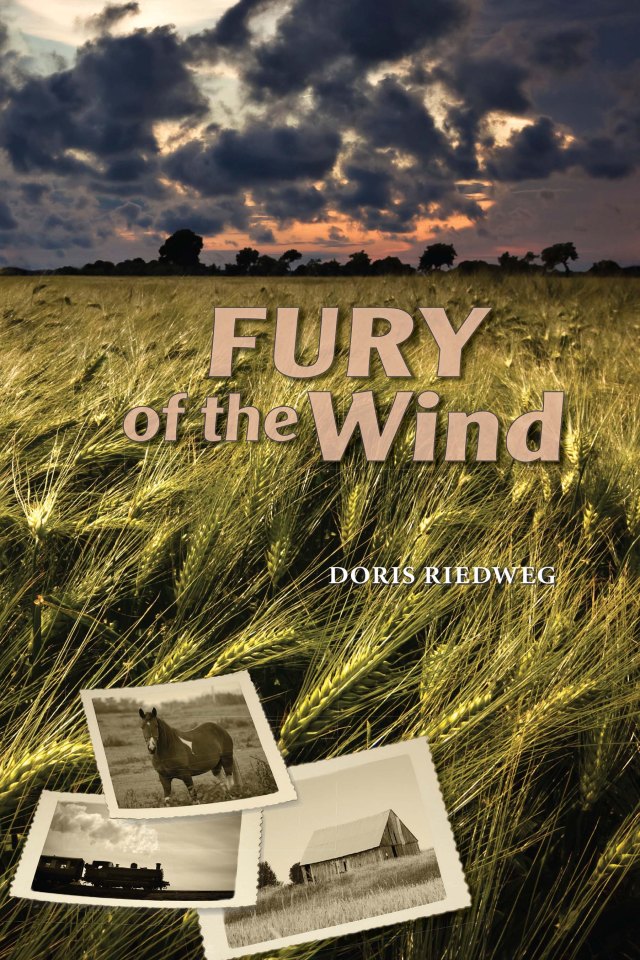
“She’d better not be Alan’s girlfriend,” said a raunchy male voice, “because she’s Ben Fielding’s broad.” The speaker began to laugh again but his mirth was cut short by an arm that reached out and thrust him roughly aside. “Here, what do you think you’re doing?” the speaker demanded, glaring down at the short man with the furrowed forehead elbowing his way, none too gently, through the crowd. “Mind your tongue, Gus, and your own business,” Will snarled through clenched teeth, “and everybody get the blazes out of my way, or I’ll call the Constable over.” The gawkers quieted and moved aside, their mouths agape. Some of them raised their eyebrows and looked at each other as if to say, What’s eating the station agent? Will felt both relief and alarm when he saw Sarah – relief because she was sitting up and did not appear to be badly hurt, but alarm because of her obvious distress. All concerns about the Agricultural Association’s involvement were forgotten, Sarah’s welfare uppermost in his mind. On reaching her side he took her hand. “I don’t think there’s a doctor here, Sarah, but I’ll get you to the Bradshaw hospital right away.” He thrust his clip board at Charlie Draper. “Here, Charlie, find Arnold Johnson will you, and tell him he’ll have to take over. And tell him he’d better damn well do something about these bleachers or I’ll know the reason why not.” Alan put a hand on Will’s arm. “No need for you to leave, Will, I’ll take Sarah in Dave’s car.” Will hesitated while he considered Alan’s offer. “Well, all right then,” he said at last. “But you’d better go and find Penny and take her with you.” Sarah looked up at Will with eyes full of gratitude. Not only had he ensured there would be no cause for gossip, but he was getting her out of this crowd who seemed to be enjoying the spectacle of Ben Fielding’s wife’s misfortune more than they were enjoying the ball game. “Just wait ’til Ben gets her home,” said a woman in the stands, “he’ll kill her.” “More likely he’ll kill Will Andrews for not seeing to the bleachers afore they got in this condition,” a man answered her.
Today Eteo was walking alone because Ariana had spent a little more time than usual with her mother. This gave him a chance to be alone with his thoughts after the eventful afternoon with Rebecca the day before. As always, his attention was attracted by the movements of the sea swells as they broke against the rocks and turned them into shining marbles. A faint smile appeared on his face, but his thoughts soon ran in other directions. He thought about Richard’s problematic drilling project, Mario’s new company, Nostra Ventures, Rebecca’s beautiful body, and far on the other side of the globe his parents in his beloved Crete. They had finally moved back there soon after Eteo emigrated to Canada, selling their house in Athens where Eteo had lived for more than ten years and building a new house in the village, a small, functional house where the two of them could live the relaxed life of retirees. His father had also bought a small boat, which he used for fishing and to ferry tourists from place to place along the Spatha Peninsula to earn extra money. They also took part in the gathering of the olives and in that way earned all the oil they needed. Eteo’s mother kept herself busy with traditional embroidery on a loom, making beautiful articles for her grandchildren. And when busy with her embroidery, Eteo imagined, she often thought about the foreign land where her son lived and her eyes would fill with tears and her heart with a tightness that could only be relieved by gazing at the dark blue sea opposite her balcony and anticipating the day when her son would come back home from that sea. Imagining this, Eteo’s eyes got teary as he walked with the serene waters of English Bay on his left, passing gently across the sand where a few fishers worked their nets. He could see that they were probably Vietnamese, new immigrants enjoying the warmth of the afternoon and the smell of the sea while fishing for smelts, which were coming near the shore to spawn. Eteo remembered how he used to do the same back in his early days in Canada with his friend Zachary. Where was Zachary now, he wondered. On impulse he sat on a log and watched the fishers and their nets. Suddenly he noticed that one net was shaking violently from one side to the other as if a larger fish was caught in it.
Pip: If you've ever wondered what it looks like when one publisher holds together Greek modernism, Irish wakes, cruise ship romances, and Kabbalistic horror in the same week — well, here we are.
Mara: This episode covers work curated by vequinox across three territories: poems of desire and grief, prose wrestling with spiritual and moral conflict, and fiction that moves through travel, loss, and homecoming.
Pip: Let's start with the poetry.
Desire, grief, and the alchemy of souls
Mara: The poems gathered here keep returning to the same question: what do we carry inside us, and what does it cost to carry it?
Pip: "Entropy" sets the stakes plainly. The poem reads: "motionless, we, the descendants of ignorance, move the voices, the names, the history of waves aren't coming from the outside they are the love of a heart that faces the miracle the alchemy of souls that turns the earth around as the anchor of hopelessness floats between the inexistence and infinity."
Mara: So the upshot is that movement and stillness coexist — we are paralyzed and yet carried forward by something internal, not external. The poem locates history and love inside the body, not in the world.
Pip: "Orange" distills that into two lines that hit harder for their brevity — wilted carnations, two empty bowls, two empty glasses, and then: "life full of desires. Thirst, so much thirst and not a single fountain." "HEAR ME OUT" answers with hunger of a different register, erotic and urgent, mapping a lover's body like uncharted territory.
Mara: "Wheat Ears" pushes back against the pessimism — pundits declare nothing can be done, and the poem's answer is to stand in the plaza holding hands. "Red in Black" frames love as structural, roots and wings at once. "Titos Patrikios" goes darker: a soul that gets used to being whipped and begins to ask for it.
Pip: The Cavafy piece — "Constantine Cavafy" — is the quietest and maybe the most devastating: a mirror that rejoices at having held a beautiful face for five minutes.
Mara: "Kariotakis-Polydouri" gives grief a voice that has gone voiceless: "No voice reaches here anymore from all the powerful things I had." The Ritsos volumes carry that forward — "The Victor" shows a man raised on shoulders in the sunshine while silently crying, and "After the Fire" asks whether surviving a battle is the same as winning it.
Pip: And "Introspection" closes the arc with a Nietzschean prophet who sees the new race of humanity before his eyes, even with his eyes closed — which is either visionary or a very convenient excuse for not looking.
Mara: From the interior life of the poem, we move to something more embattled — faith, institution, and the places where they fail each other.
When belief meets power and the wild
Pip: The posts here put spiritual authority under pressure — from mystical horror to the quiet collapse of a priest who cannot speak the love he is supposed to embody.
Mara: "The Qliphoth" opens in full disorientation. Lucas is strapped to something between a chair and a launch pad, voices layering over each other: "His inner ear is roaring with an echoplex of distant detuned voices, drowning in mutual overlap — Westway music room / dub reverb / his father roaring at the nurses / mother bawling out dumb classrooms in her sleep."
Pip: What that passage is doing is collapsing private trauma and collective noise into one body — the skull becomes, as the text puts it, a flickering moviedrome. Transcendence and violation arrive in the same image.
Mara: "Blood, Feathers and Holy Men" works the same tension from the opposite direction — not visionary excess but institutional silence. A Brother tells a priest directly: "I do not want your judgments and I do not need your approval. I want your trust and your love." The priest cannot answer. He walks into the forest for three days.
Pip: Three days in the wilderness to avoid a conversation about feelings. The Church has always had a gift for dramatic avoidance.
Mara: "Ugga" compresses the institutional question to its most extreme form — a figure called the Great Homo Digitalis consolidates all scientific discovery and convinces every religion to submit to one universal church, positioning himself as the Antichrist. It's a single dense paragraph, but it reframes everything around it.
Pip: And then "Ken Kirkby" steps entirely outside institution — into the Arctic tundra, where Inuksuit are described as a language of stone, and an eight-inch tree takes hundreds of years to grow.
Mara: The sacred there is horizontal and practical: a stone on a stone means the fishing is good here. No hierarchy, no doctrine — just accumulated knowledge readable by anyone who knows how to look.
Pip: From stones in the tundra to people in motion — arrivals, departures, and the ground between.
Journeys, thresholds, and the weight of return
Pip: The fiction here is preoccupied with thresholds — the moment before entering a room, the moment after a death, the crossing that changes what home means.
Mara: "The Unquiet Land" opens at a graveside. Clifford Hamilton steps forward to eulogize Finn MacLir: "I have the duty and the honour of saying a few words about the man lying in death before us." The grave already holds Finn's wife, Roisin, dead since 1892. Finn's name will be added later. The scene is precise about that gap.
Pip: A quiet, solemn wake for a man renowned for his parties — the gap between the life lived and the life being mourned is doing a lot of work in a single sentence.
Mara: "Small Change" moves to a younger threshold. Rico returns home to an empty house, finds a note, and sits alone in the dark rather than crossing the street to the party. When his aunt Marianna finds him, he holds up papers — something he's worked on — and "suddenly he feels very small, and scared and shy." The stakes are intimate but the weight is real.
Pip: "In the Quiet After Slaughter" puts a piano player named Buddy on a cruise ship, where falling for a passenger is called Man Overboard — so named, the text notes, because a despondent waiter once jumped after being rebuffed. Buddy writes on a coaster: "Her eyes look inside my head and see everything," and underlines the last word.
Mara: "Jazz with Ella" ends a journey rather than beginning one — Jennifer returns from a trip through Russia and Montreal, and when she finally passes through the arrivals gate she almost doesn't recognize her estranged husband waiting with flowers. "Despite herself, a full, warm feeling dispelled the black cloud, if only for a moment."
Pip: "Fury of the Wind" places Sarah at a rural fair in Nimkush, where no one speaks to her except a man named Pong struggling with a table, and a stranger at the bleachers. She is new to the district and it shows.
Mara: "Redemption" finds its threshold over a dinner table — Hermes, his father, and a quiet negotiation about guns and permits that turns into a pleasant evening. "Straits and Turns" gives us Mike, a Greek immigrant in Canada, writing in Hellenic on paper torn from a hand-wipe roll, on an old manual typewriter a friend gave him for free.
Pip: He writes: "Both of us were born close to different seas, mine was the blue Mediterranean and yours the grey Pacific Ocean, yet we bleed the same red blood." A novel about arriving, written on whatever's at hand.
Mara: "Wellspring of Love" closes the set at speed — Tyne is pulled over doing fifteen over the limit, rushing to a hospitalized aunt, and the officer lets her go with a look of compassion she almost misses.
Pip: Small mercies at the edge of crisis. That's most of what travel turns out to be.
Mara: What holds all of this together is the question of what we carry across thresholds — grief, desire, faith, language, the memory of a face in a mirror.
Pip: And whether the anchor of hopelessness floats or sinks. More of that, next time.
As he comes up off the beach road and turns into Andrews Street, he is surprised by voices. To his right, the spacious yard of the Simone place is crowded with people. Strings of lights from the trees to the outdoor kitchen swing in the light breeze. He feels a twinge of discomfort. If they should see him they will insist that he come in, and the moment he has timed his return for will be lost… But no, they are surrounded by lights, food, music; they are having a good time; they will not notice his brief shape in the night. As soon as he enters the house he knows it is empty. There is a note on the kitchen table. Dearest Rico, We are all at the Simone’s across the street. Please come. Your loving mother, Andrea He returns to the darkened living room and sits in the big, soft chair. Should he go over and ask Marianna to come back with him? They will want to know why. They will smile and wonder and tease and he will have to admit… he will have to say… and they will make fun of him, they will think he is a crazy kid. He remembers that his aunt always practises her piano just after dark and as he consoles himself with that thought he hears footsteps on the gravel walk outside. The door opens and Marianna stands for a moment looking puzzled. “Rico!” she says, “What are you doing sitting here in the dark. Didn’t you see the note? Oh, I’m so sorry. You must have thought we all abandoned you.” He gets down out of the chair. She comes to where he is standing and gives him a hug. Without meaning to, he stiffens. She backs away and looks down at him, her head tilted to one side. “What’s wrong, caro? Are you all right?” He doesn’t know what to say at first, then he goes to the piano bench and opens it. He takes out the papers he has worked on and holds them up to her. Suddenly he feels very small, and scared and shy. She reaches down and smoothes his hair.
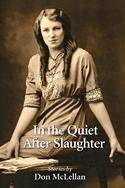
She was waiting for a table in a Nassau restaurant, a frumpy, frazzled woman with a peeling snout, saying to him, Haven’t I seen you on the Sunrise? They’d returned from the shore excursion together, he lugging her shopping bags while she propelled her wheel-chaired mother along the island’s potted beach road. Later that night she turned up at the piano bar, drained a Mint Julep, then exited. Buddy sought her out the following day. She invited him along to a lecture on seabirds. – Remember what the boss say, Sam cautioned. The cruise line had always been ambiguous about the help fraternizing with guests. Inappropriate friendships, as such romances were called, could be cause for dismissal. But if shipboard dalliances resulted in the booking of additional holidays— if a passenger went home with a smile on her face—who’d complain? This woman wore unfashionable clothes, sensible shoes and little makeup. While others took elaborate measures to conceal their weight, she flaunted hers. Had he passed her on the street Buddy wouldn’t have afforded her a second look. Yet in her presence, that sunburned nose, the nectar breath, she wielded the power of a sorceress. For the first time in his life the piano player was beguiled. – This one, he confided in Sam, is different. One morning over coffee he was doodling on a coaster. As though in a trance, he wrote, Her eyes look inside my head and see everything. He underlined the last word. At the card table behind the engine room they had a diagnosis for Buddy’s affliction: Man Overboard. It’s what they called it when a player fell for a passenger. So named since a despondent Filipino waiter, having been rebuked by a flirtatious diner, jumped from …
The early morning sun shone into Tyne’s eyes as she steered her Chevrolet at unlawful speed through the town of Emblem, and headed east up the hospital hill. The cloudless sky foretold a spectacular June day, but Tyne paid no heed. Impatiently, she yanked the visor down to shield her eyes, and through her rearview mirror, caught sight of a police cruiser bearing down on her, its lights flashing. “Oh no,” she moaned aloud, “I’ve no time for this.” She pulled to the curb and stopped, and the police car pulled up behind her. With both hands grasping the steering wheel, she lay her head on it in resignation. In moments, there was a tap on her window. She looked up and cranked it open to face the young police officer. “Could I see your license and registration, please, ma’am?” Tyne produced both with shaking hands and waited while he examined them. Without looking up he said, “Do you know why I stopped you?” She sighed. “Yes, I was speeding.” “Fifteen miles over the speed limit, ma’am. Not good.” “I know that, Officer, but I’m on my way to the hospital. My aunt has just been admitted and I don’t know what’s wrong, and I’m very worried, and ….” Tyne stopped when she realized she sounded silly, as if begging for mercy, when all she really wanted was for him to give her the inevitable ticket and let her go. “I’m sorry to hear that, Mrs. Cresswell,” he said as he handed the documents back to her. “I’ll let you be on your way, but please be more attentive to your driving. It isn’t going to do your aunt any good if you end up in the bed next to her.” Tyne saw a fleeting look of compassion on his face, and she smiled in gratitude. “Thank you,” she murmured as he backed away from …
So, Mike went to the little shack, his kingdom for the next hour, his isolation for the next hour, and after he fired up the burner and shovelled some good shovelfuls of sand into the cylinder to let it dry, a process that would take about ten minutes or so. While waiting for the ten-minute process, Mike sat on his stool and tried to compose his thoughts about what he could write for the next ten minutes, a paragraph perhaps of his novel, which he had been trying to write since his arrival in this huge country called Canada. Endless subject, his book, which referred to his experiences in the new lands, what he has lived up to now and other things that he imagined, images he usually wrote on a piece of paper out of the roll they used to wipe their hands, yet that didn’t stop him, since he usually re-writes everything daily, using an old typewriter a friend of his gave him for free. An old manual machine, yet good enough for the use he had for it, after all, a free typewriter was always a good thing since it didn’t cost Mike any money, which was very small and counted twice before being spent. He started writing, in Hellenic, of course, still the only language he could master in this country. “Both of us were born close to different seas, mine was the blue Mediterranean and yours the grey Pacific Ocean, yet we bleed the same red blood; we feel the same inexplicable brotherhood, and we also feel the same grief in front of sickness and disease. We haven’t walked the same paths, and we have never worn the same shoes, yet we both follow the same ascent to the mountain top. I, searching for the land with the asphodels where the blessed ones exist while you search for your tear and its meaning before the orphan and the destitute, Yes, we create the same footprints through the dark passages searching for the song of the wind and for the shaking off the eagle’s wings before he commences his soaring up in the sky, Yes, the same heartbeat guides us both when we hug the old man and we love the same torch that lights the dark pathway before the wind extinguishes it and we both feel the same nostalgia for beloved persons…
While the unlikely duo of Hank and Lona had been parting company, Jennifer and Volodya had also stood in the shadow of the exit sign once again making their goodbyes. “Lona offered to take me to New York with her,” Volodya told her, “but I refused…” “Of course,” Jennifer replied stiffly. “It would mean yet another border crossing and you don’t want that, now do you?” Volodya’s face creased in a huge grin. “That’s not the reason I refused, my amazing woman,” he said. He was teasing her, she realized. He doesn’t know what thin ice he’s skating on. “She said she will contact me when my painting is sold. Ech, but I don’t think she will—if the painting sells for more than she paid me, then why would she let me know? She’s a business woman, right?” He took Jennifer’s hands in his, kissed them, hoisted his backpack onto his shoulders and walked backwards through the automatic doors still holding her gaze. Then he vanished into the humid Montreal evening. In Vancouver, it was obvious that some of the baggage had been inspected yet again. Jennifer saw almost a full roll of sticky tape covering the top of Chopyk’s suitcase as if the bag had not closed properly after the Customs had poked through it. She couldn’t help but feel sorry for him. One student missing and three artworks smuggled. Whatever happened, it had been the trip of a lifetime—though just not a lifetime she would care to repeat. “Whoever goes through first should look for our bus,” called Chopyk. “Probably the driver will hold up a sign.” It seemed like yesterday when she had been the first one through the gate at Sheremetev and the adventure had begun. This time, she lagged behind, reluctant to face the world. Carefully, she propped her things up on a baggage cart. When she finally passed through the sliding doors right behind Linda, she noticed someone waving, someone with black bristly eyebrows and an armful of flowers. The man was not waving at Linda. It had been so long since they had been together, and so much had happened to her in the last three weeks, that she almost did not recognize her estranged husband. “Michael, what are you doing here?” Despite herself, a full, warm feeling dispelled the black cloud, if only for a moment.
“Habeas corpus . . .” The bulk of Buttivant is behind him somewhere, praying in Latin. Which becomes other tongues, thick and throaty. The sonorities go droning on and on, right through his heart, his thorax. The chair starts sliding into a horizontal position and at the edge of his vision he can glimpse Mister K. wearing a microphone headset. His voice is oddly flat, his fists are clenched. Lucas can only look up, into the black hole overhead. His inner ear is roaring with an echoplex of distant detuned voices, drowning in mutual overlap— Westway music room / dub reverb / his father roaring at the nurses / mother bawling out dumb classrooms in her sleep / dry voicings in damp cottage kitchen / the swirl of tidal chatter / digit digit / the quibbly nowhere men / let us pray /nuke the luke, boys… Images flicker through the air, but he can’t quite shoot them down with his eyes, they’re too fast. The black aperture overhead is trembling, enlarging slowly. His skull has become a flickering moviedrome. The room was a cardboard theatre of stiff crude figures, those people were all fat puppets, several worlds are on collision course. His yellowing voice makes an annunciation for the benefaction of hot virgins: “I’m a projectile vomited at random stars.” Foggy light fills that dark aperture. Is that a pair of human heads silhouetted against the rim of the circle? Luminous mist swirls into the chamber, he glimpses Pauline and Nick, siamese twins chained into their cannibal kissing act . . . Why won’t they wave, wave him up on beams of approval, but there they go gorging each other, he’s trembling, bumping around down here, trying to rise above himself, he can’t help it. But another face is up there on the rim, beckoning through snowflakes, ashflakes, extending a slender arm, loosening her veils, releasing her golden torrents of hair for him to ascend. He’s tied to this launch pad, which is burning him with its icy latticework, to watch Katie’s eyes glowing as her hand lingers around her breasts, between her thighs . . . The essential Lucas, released from the drab fluff of his clothes, will become an illumined being, a flood of liquid light, fluxing to the nearest transfiguration of the flesh, to that female object, but the smoke, the smog thickens, fattens its odour as he begins to rise into it on this massive unsteady jet of power. The smoke clears . . . A nazi valkyrie has overcome his girl, has become his mutant wolf-girl, half-hiding her fat cock with a dented helmet, he’ll have to levitate right through herm, through sweetish larvae and the swollen muddy polymorphs and their flicker of limbs . . .
NINE Finn MacLir lay in a plain wooden box in the dark, still winter of death. He wore his navy-blue fisherman’s jersey and trousers and his best black boots. Harry and Ted Robinson, the undertakers from Lisnaglass, had laid out the body and, with Michael’s help, had carried the heavy coffin down the stairs. It stood for three days on trestles in the sitting room where the sofas and chairs had been pushed aside to make room for it. Mother Ross and Finn’s twin daughters had held vigil over the corpse, with Finn’s closest friends in attendance. It was a quiet, solemn wake for one renowned—and excoriated—for his regular parties. Now the coffin lay on two ropes beside the open grave where the two Robinsons and two of their assistants stood silently, heads bowed respectfully, hands clasped in front of them. Around the grave men stood in sombre suits and black ties, hats in their hands, their tanned faces clean and almost shining, like those of boys going to Sunday school. Some spoke to neighbours in hushed, reverent tones. A cool breeze blew in from the sea, shivering the short grass of the old graveyard behind the ruins of Killyshannagh church where sheep grazed unconcerned at a distance from the men assembled around the grave. A polished granite headstone bore the graved inscription, Roisin MacLir, neé Corrigan, 1858-1892. Finn’s name would be added later. Dressed in a black suit with a knotted black tie, Clifford Hamilton stepped forward. “I have the duty and the honour of saying a few words about the man lying in death before us.” He glanced around at the faces of the forty or fifty men standing in front of him. He felt that the unfortunate Padraig, Finn’s adopted son, should have been here, making this farewell speech to his earthly father. Or Seamus Slattery or Ignatius Sweeney who had known Finn for so many years. Or the more experienced, respected Dr Starkey. “I say ‘honour’,” he continued reluctantly, “without hesitation or qualification. Because Finn MacLir was one of the greatest men it has been my honour to have known. He was a close friend of my father and my father’s family, but he was a friend of rich and poor. Whether a man was a lawyer, a banker, a farmer, or a fisherman made no difference to Finn.