The strengths of Nuances lie in its imaginative range, its ethical seriousness, and its refusal to divorce lyric beauty from social reality. Aligizakis writes with a notably visual imagination. His poems are saturated with colour—red, white, azure, pewter, gold, black—and with tactile materials such as stone, flesh, wind, water, cloth, metal, and wood. His diction frequently reaches toward the elevated, incorporating mythological, religious, philosophical, and erotic vocabularies. This can create a heightened, ceremonial tone well suited to the collection’s central concerns.
At times, however, the density of the language can work against precision. Some poems accumulate images so quickly that their syntactic or emotional centre becomes difficult to locate. Certain abstractions—“meaning,” “glory,” “freedom,” “opulence,” “greatness,” “void,” “dream”—recur frequently, and their force is strongest when grounded by the concrete material world that the book handles so well. The collection’s most effective poems are often those that allow a particular object or scene to carry the argument: a doll with a missing arm, a rusted bicycle, a flowerpot, a park bench, a syringe, a tank, a food court, or a coffee cup.
This is not a weakness so much as a productive tension within the poet’s poetics. Nuances want to make large claims, but it is most persuasive when those claims emerge from a small, exact image. Its best work reveals how philosophical inquiry can remain rooted in the body and in ordinary experience. The collection’s frequent shifts between sublime imagery and everyday detail are not accidental. They express a central conviction: human beings do not encounter death, love, violence, religion, or freedom in abstract space. They encounter them in rooms, streets, kitchens, workplaces, hospitals, public squares, and landscapes.
Nuances, therefore, are best understood as a collection of ethical lyricism. It asks readers to attend to the shades of feeling and responsibility that are often lost in public language, ideological certainty, or personal habit. Its poems are willing to be sensuous, rhetorical, mournful, comic, politically alert, and metaphysically restless. At its strongest, the book demonstrates that nuance is not a retreat from moral seriousness. It is a way of seeing more clearly: of recognizing that every claim to beauty contains a history, every gesture of love includes vulnerability, and every act of violence leaves behind a world which language must struggle to describe.
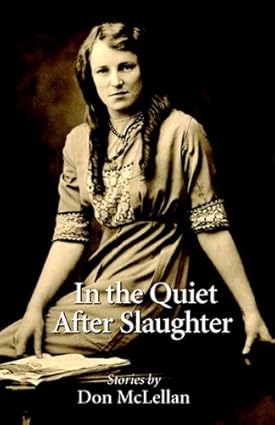
There was one more obstacle to overcome: O’Donnell couldn’t drive. Rule #5 stated membership would not be considered unless the applicant possessed a legal driving certificate. He took advantage of Dodge down time to familiarize himself with the machine. Whenever the car slumbered he sat behind its wheel practising the smooth shifting of gears, learner’s manual resting in his lap, the glossy, air-brushed wantonness of Ed Levine’s calendar girls an encouraging audience to his lofty aspirations. He approached Pete Dombrowski about his chances. The longtime club member had dropped by Ed’s garage to replace a gasket. O’Donnell held a light. – How long before I’m in? – Depends, kid, Dombrowski said. Maybe never. – What’s your guess? Gimmee a ballpark. Dombrowski slammed the hood and wiped his hands. – Members decide by secret ballot. That waiting list? It don’t mean nothin’. – I’m getting my licence soon, O’Donnell reminded him. Dombrowski slid in behind the wheel and fired up the car. The engine roared to life. – Don’t go celebratin’ yet, squirt. Soon O’Donnell had mastered the clutch. At every opportunity he stole runs around the block. After only a few weeks he was driving as far as the municipal line. Mr. Levine was frequently waiting for him when he returned to the garage. The two had an unspoken agreement. The senior Levine wouldn’t inform the membership of my friend’s unauthorized excursions if O’Donnell remained silent about Mr. Levine’s afternoon liaisons with a certain housewife. O’Donnell says that pressure to influence the outcome of the draw was especially vigorous the first Sunday in May, as Car and Driver magazine invited all interested associations to enter a vehicle in the Spring Festival gala. The winner that particular Sunday had the privilege of powering the Dodge along the flower and bunting-bedecked…
Pip: Manolis Aligizakis runs a site where exile, desire, and the weight of history all show up before breakfast — and somehow that's a normal Tuesday.
Mara: vequinox has been posting across a wide range of work lately — modern Greek poetry translations, fiction excerpts, and a philosophical essay on what imagination actually does. That's the territory we're covering today.
Pip: Let's start with the poetry, which is where most of the weight lives.
Voices Out of Exile and Time
Mara: The thread running through these poetry posts is displacement — from homes, from language, from time itself. The question is what survives when all of that is stripped away.
Pip: George Seferis opens the answer with something almost architectural. The setup is a poem called "A House Near the Sea," and it earns its length.
Mara: The poem earns it. Here is the spine of it: "Houses, you know, grow easily resentful, when you empty them."
Pip: That line does a lot of quiet work. The house isn't a metaphor for loss — it is the loss, with feelings of its own.
Mara: And the Yannis Ritsos volumes — both Volume IV and Volume VI — push that further into the political. Volume IV's "Without Counterweight" puts it plainly: "All the flags are torn to the whole length of time and there isn't one on a balcony to lower half mast."
Mara: Tasos Livaditis, in Poems Volume II — longlisted for the 2023 Griffin Poetry Prize — turns inward. The observation that cuts is this: "each person keeps the key to their prison in their pocket and pretends to have forgotten it."
Pip: So the exile isn't always political. Sometimes it's the one you've arranged for yourself.
Mara: Antony Fostieris, in Selected Poems, takes that further into paradox — "In my future time, I'm already dead, fresh and dead in my darkness." Alive and dead simultaneously, in glassy cities that sink into clouds.
Pip: Hours of the Stars and the Neo-Hellene Anthology pull in the other direction — toward light, toward a "solemn and beautiful stranger" welcomed until exhaustion, toward wild lilies and the nectar of April lips.
Mara: Entropy frames the whole range: "between the minimal and infinity." Second Advent of Zeus traces selfhood back to its cellular origin, and Titos Patrikios distills community into six lines — seed, acorn, oak, path, forest.
Pip: From houses that resent you to forests that remember you. That's quite a range for one tradition.
Mara: The fiction posts ask a different version of the same question — what does a self do under pressure? Let's go there.
Fiction at the Edge of Endurance
Pip: The fiction excerpts here aren't comfort reads. They're interested in what people do when the situation is genuinely impossible — and how quietly that can happen.
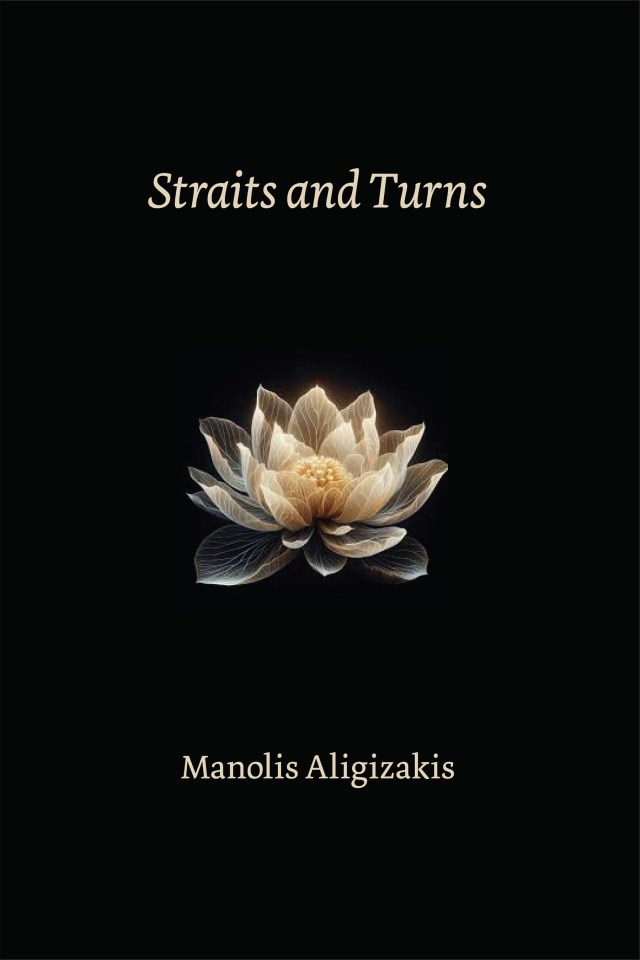
Mara: Straits and Turns opens with a CIA agent named Bradley arriving home after a long flight, his life running on institutional routine, two years from retirement. Then: "he smelled the strong alcohol odour all over the…" — and the excerpt cuts.
Pip: The ellipsis is doing real work there. Everything before it is procedural calm, and then the floor drops.
Mara: Water in the Wilderness takes a different register entirely — warmer, more fragile. A boy named Bobby with missing fingers, escorting an elderly woman through a hospital door with his shoulders erect and head held high. The damage is visible; the dignity is louder.
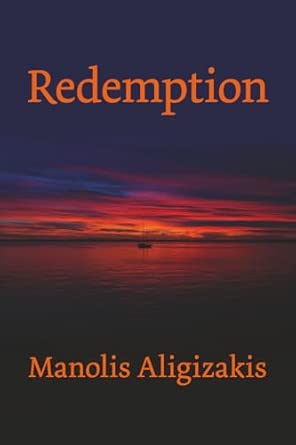
Pip: And then Redemption lands its immigrant quietly in a three-by-four-meter room with paint peeling off the walls, trying to order food from a menu he cannot read. The stakes are enormous and nobody is shouting.
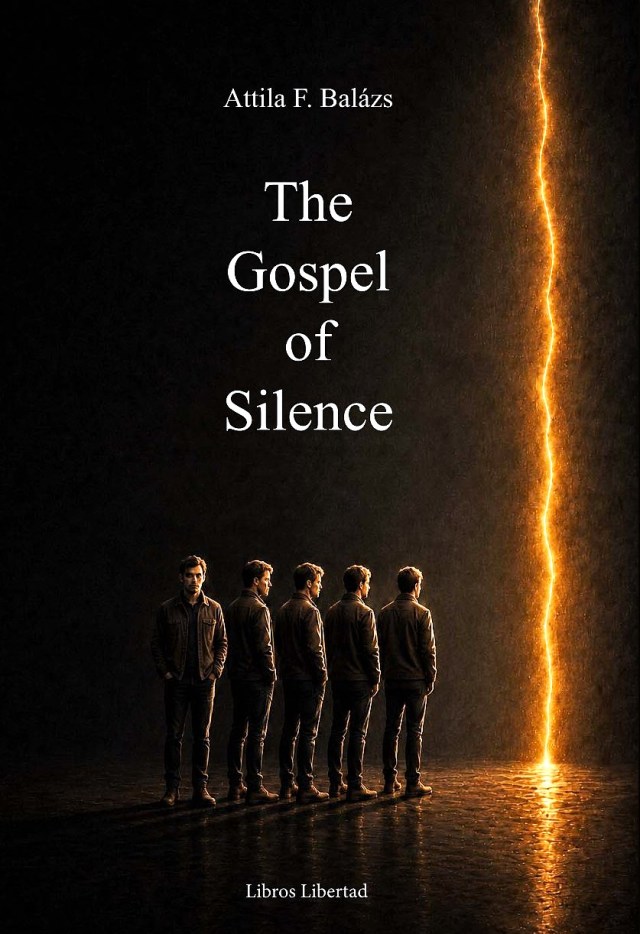
Mara: Gospel of Silence is the one that swings hardest. The narrator describes choosing "the rebellious Christ" over "the hermits' Christ who resigned himself to everything" — and then his father beats him with a wooden ruler until it shatters.
Pip: He endures it without a sound. That detail is the whole book in one sentence.
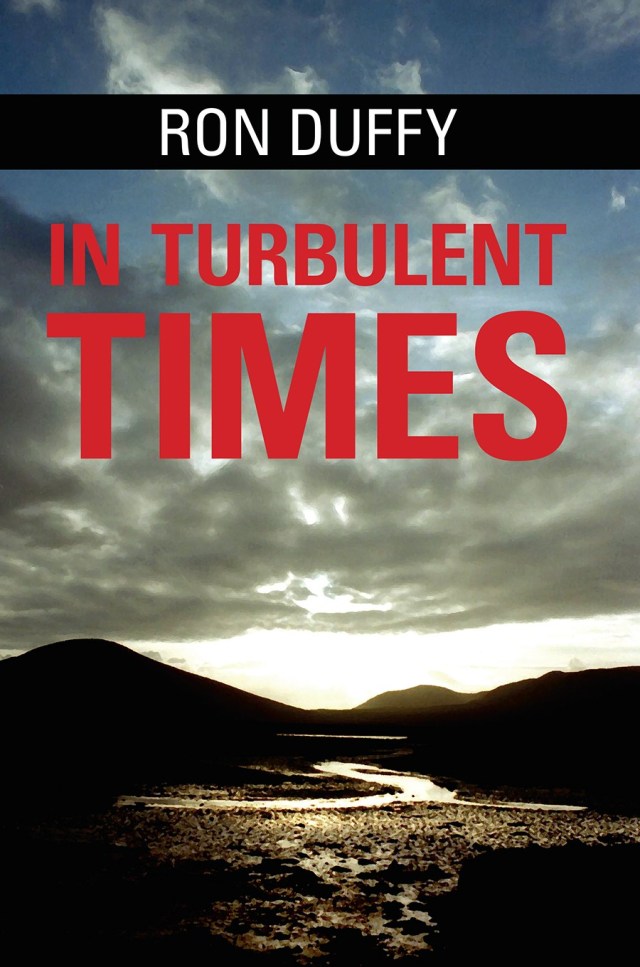
Mara: In Turbulent Times catches a family holiday collapsing in slow motion — a son counting down the minutes before he leaves, his mother's voice going "shrill, like the high-pitched squeal of scraped metal." The Qliphoth goes stranger, into an occult archive kept by a psychiatric patient who has memorized forbidden lore.
Pip: Poodie James brings a dead mayor, a woman who doesn't cry, and piano music that might be Chopin. Nostos and Algos asks the plainest question of all: if love is there and you won't give it, "why are you still breathing?"
Mara: Across all of it, the body under pressure — institutional, familial, historical, self-imposed — is the constant. The desire to escape, and the question of what you carry when you do, runs right into the next theme.
The Body That Desires and the Body That Endures
Pip: Red in Black is reviewed here, and the review makes a distinction that matters: the strongest poems are the ones where the beloved isn't just observed.
Mara: The review puts it directly: "The poem's lyric force comes from mutuality." When touch and transcendence are shared gestures rather than one person's projection, the erotic becomes something more durable.
Pip: What this means in practice is that desire without mutuality is just description — and description alone doesn't hold a poem up.
Mara: Red and black move through the collection as moral categories, not just colors — passion and industrial damage, the body that wants and the body that gets worn down. Wheat Ears lands the same collision differently: a phone call from someone already buried, their laughter roaring through the wire.
Pip: Hear Me Out takes it into the digital — "I started falling in love with you, without even knowing you." Same ache, different medium, same unanswerable questions about what's real.
Mara: Which is also, quietly, a question about imagination — what the mind constructs when the body isn't there. That's exactly where the essay goes next.
What the Imagination Actually Does
Pip: An Essay on the Structure of the Human Imaginative takes on a question that's been wrong since Aristotle — what truth means when you're talking about poetry.
Mara: The essay argues that Europeans have reduced truth to correspondence with empirical fact, and that this is a fundamental error. It goes back to the Greek word Aletheia, drawing on Heidegger: "Aletheia is understood as unconcealment, the state of being disclosed."
Pip: So the upshot is that a poem isn't lying when it doesn't match the facts — it's doing something the facts can't do, which is disclose what's otherwise hidden.
Mara: The essay is careful to say this isn't a call to revive ancient Greek philosophy wholesale. The point is that the dominant model of truth has narrowed what we allow imagination to count as real — and poetry pays the price.
Pip: Every poem in this episode is, in some sense, an argument for that claim.
Mara: Houses that grow resentful, bodies that endure, love that arrives by wire — and underneath all of it, a theory of what imagination is actually for.
Pip: Same questions, next episode. The site keeps publishing.
At first, the face of love for me was the humiliated, broken, rejected barefoot beggar. Later a quiet rebellion nested itself in my heart; by then I had grown irritated by helpless love that endured everything, by the sour stench of passivity, by the endless swallowing of humiliation. Instead of the hermits’ Christ who resigned himself to everything, I chose the rebellious Christ. When I arrived home on the day of the awards ceremony, I found my mother crying. My father was delivering one of his endless monologues in a pitch far higher than natural, intoxicated with himself, circling endlessly around his own words. “Where were you?” my mother asked. Silently I handed her the certificate. “What’s this?” my father tossed out indifferently. “Be first in your studies!” Then he threw it aside. That same day, when I was supposed to leave for the reward excursion, my father attacked me with the long wooden ruler for some reason — today I no longer remember why, perhaps there was no reason at all. He beat me until the ruler shattered into pieces. I had only one aim: to keep the blows from reaching my face. I endured it without a sound. I looked at him with cold hatred and with a cruel kind of pity, watching the shameful, helpless rage pouring out of him. That only enraged him further. He could not bear that I never humbled myself before him, never begged forgiveness the way my siblings did. I could not ask forgiveness for something I did not feel was a sin. It was around then that the desire to escape awakened within me. I stepped outside my body, and from then on observed the entire inner and outer chaos from a distance, the world struggling with its external and internal laws, and within it my own self, stripped of meaning. Instinctively I kept away from artificial intoxication — alcohol, drugs, anything of the sort — not out of virtue but out of self-defense: I was terrified of losing sight of myself even for a moment. Later I tried to direct both myself and my surroundings through carefully planned or improvised scenarios. At first it was a game;
…ently held out his hands to her. His missing fingers did not seem to faze him; he appeared to be learning to compensate for the loss. “An’ you know what, too, Auntie Tyne?” He gazed up at her when she stood, his eyes like saucers now. “Rachael says we’re goin’ home on the really biggest old bus she’s ever seen, with a long dog on the side.” Tyne chuckled. “You sure are, Bobby. And when Uncle Morley and I come home you’ll be able to tell us all about it. Okay?” Solemnly, he nodded his head then offered his hand to Tyne’s mother. Shoulders erect and head held high, he escorted her through the door. A few days later Emily Milligan brought the children back to the Holy Cross, to say goodbye before starting their trip home to Emblem. Tyne took them to see Morley. Following Sister Carol Ann’s gentle instructions, they approached the bed quietly, and stared in wonder at the man they scarcely recognized as the jovial person whom they called Uncle Morley. His hair had grown a little so that he didn’t appear bald anymore, and the bruises around his eyes and cheeks had faded to a pale yellow, tinged with blue. But Tyne knew that he must look strange to the children who were seeing him for the first time since the beating. She had been of two minds about bringing them to his room, but Morley had asked to see them. And when he opened his eyes and smiled at them, she knew she had made the right decision. There was something she and Morley wanted to do together before the kids left for home. “Do you … have the gifts, hon?” Morley asked haltingly. Tyne removed a large bag from the bottom of the bedside table. Opening it, she drew out a brightly painted dump truck followed by a Shirley Temple doll. The looks on the faces of Rachael and Bobby brought tears to her eyes. When they had gone, Tyne took Ronald to a quiet waiting room. He had tried, without success, to hold back the tears. She wanted to hug him, but knew he already felt embarrassed because of loss of control over his emotions, so she sat quietly by his side and let him talk. “I wish I could go with them, Mrs. Cresswell. Do you think the doctors will let me go soon?”
Necrophilia Bradley reached home late at night after a long flight, during which they experienced their fair share of turbulence. He knew this flight so well after twenty years of taking it, since he started working on the East Coast, and his house was in Los Angeles. He also knew most of the American Airlines personnel; he had an account set up by the Bureau and always flew this airline. And tonight, Georgia, the flight attendant, offered him a second glass of wine and a good plateful of food, which he relished to the last crumb. Being with the Bureau for so long, he almost did everything as part of a routine, a repetitive action, from the time he’d call to arrange his reservation to the arrival at the airport and to the airline counter where most of the girls recognized him and always served him the best way. The agency took care of all the bills, it was part of his contract with the CIA and no one ever raised an eyebrow at what he submitted; it was times when he thought of having something extra, something the bureau wouldn’t even bother to look into, however, Bradley was a common sense man and always did his side the best and fairest way possible to make sure he wouldn’t disturb any waters a couple of years away from his retirement. When he got inside the house, he noticed there was no sound, other than the ventilation system humming its rhythmical music. Brad was so tired that he took off his shoes and went upstairs to their bedroom, only to find his wife, Beth, asleep, even though he had informed her he was on his way home. Undressed, he slipped under the bedcovers when he smelled the strong alcohol odour all over the…
He walked back to the rented room and settled in his new home. It was a small room with a table, a chair, a closet for his clothes, and a single bed. The size of the room was no more than three by four meters, with paint cracks all over; some paint had peeled right off the walls. He didn’t really care about its condition. It was a very cheap room. A small window with shutters opened to the street, and Hermes saw a small garden. He took out his clothes from the suitcase and hung them with care in the closet. He, then, sat down on the bed and thought it would be a good idea to write home and let them know he had arrived and was okay, three letters to three different addresses. Realizing he had no paper, he walked out to the closest corner store, where he bought some paper, a small jar of coffee and a small rectangular box of sugar cubes, which he encountered for the first time in his life. He went back to his room and sat at the desk to write his first letter to his uncle and untie. He described in detail that his trip was very good, the city was beautiful, and he felt enthusiastic about the university. He wrote with intense feelings, particularly in the second letter, addressed to Magdalene. He signed the letters and sealed the envelopes. He would post them first thing tomorrow morning. Hunger took over him. He got up, knocked at the door of his landlady and asked where he could find a restaurant to eat something. She informed him that “Black Cat” was the closest restaurant to the house and told him how to get there. Hermes got out and walked the few blocks to the restaurant. The server brought his coffee. Hermes understood that coffee was served each time, even before an order was given to the servers. He looked at the menu, but he couldn’t understand the words; therefore, he didn’t know what to order. He had his coffee and a cigarette. The girl refilled his cup and looked at him with questioning eyes. He pointed to the menu and said, “I don’t know what these are…” his finger travelling down the list of food items. The young server asked him, “What language does he speak…” He said, “Greek,” she called him to follow her. He got up and followed the girl through a hallway to an opening that connected the restaurant to the kitchen.
Last year at Brodick was a disaster. It should have literally been the last. But back they came. ‘This year will be even better than last,’ his mother had written. ‘Morag is her old self again after that awful experience in August and Rowena is just such a sweet little doll. We are going to be so happy showing her off to all the other guests and visitors. She will be the Little Belle of Brodick this year. If only your dear father could be there in flesh instead of in spirit. But how proud he must be in any case, as I am. Hamish has continual headaches these days and Alec is pale and liverish from working so hard. They both need the holiday at Brodick, as you must too. Could you not take the earlier week off and be with us the whole time? After all, you are the boss of that firm of yours. And Morag never sees you through the year. She misses you. She says you are becoming more a stranger than a brother.’ This year the changes of last year were twelve months worse. Mrs Anderson’s whole body was turning to steel, like her tiny, ball-bearing eyes. Morag was no longer pregnant. She was anaemic and tired and bitchier than ever. Rowena ran away every time Ian approached and screamed that he was going to beat her. This invariably brought Morag or her mother or both of them running to the child’s side, yelling at Ian to leave the little dote alone, to act his age and stop bullying a mere infant. Hamish and Alec sat all day every day in the stuffy sitting room, playing cribbage almost interminably. There were no walks, no golf, no drinks. Only the boat-trips were continued, apparently for Rowena’s sake, but Ian had missed those during the first week of the holiday. ‘Never mind, Ian; we’ll all enjoy the return trip to Gourock at the end of the week,’ his mother said. ‘It’ll be so lovely to have us all together again, the whole family, sailing up the Clyde towards home. I bet your dear father is sighing so contentedly if only we could hear him.’ ‘I won’t be going back with you at the end of the week.’ ‘What do you mean, Ian; you won’t be going back with us at the end of the week? Of course you will.’ His mother’s voice grew shrill, like the high-pitched squeal of scraped metal. ‘I won’t be. I’m leaving this morning. I’m catching the boat back to Belfast tonight.’ ‘But Ian, it’s only Tuesday,’ Morag pointed out. ‘I’ve hardly seen you.’ ‘Look your fill,’ said Ian, glancing at his watch. ‘You’ve got one hour and thirty-five minutes.’ ‘Oh you insufferable, inhuman monster,’ Morag yelled. ‘You’re making a mockery out of family feelings and affections.’
The picnic brought out most of the people who lived in the vicinity of the school or whose children attended the school. As well, because it was a Sunday, people from other school districts as well as relatives and friends of the parents came to gossip and to munch on a few goodies. It was usually a relaxing day for the adults and their only concern was to avoid sunburn and prevent their children from consuming so much food that their little stomachs would rebel and reject the contents. Which frequently happened. They came on foot or in wagons and some even in cars. Those who arrived by wagon would unhitch their horses, lead them into the barn for the day and join their friends and neighbours beside the school and the confectionery stalls. They stood around in circles or brought out chairs or sat on the grass in the shade to smoke and talk. Thewomen watched their children, compared notes and exchanged information on various women things. We found out in the evening whether any of our school indiscretions had been leaked from the loose lips of our friends, then through their mothers to our mother, and were relieved when no accusations were made or suspicious questions posed to us. The children did what children always do; they began by spending some of their money on the various goodies before gathering on the sports field to play games, as they waited for the official program to begin. On a nice warm day, the merchants would be very busy selling pop and ice cream, not to mention a variety of candies, suckers and chocolate bars as well as items such as oranges and hundreds of hot dogs. Even though the prizes awarded to the winners were chits for food items, the children could not resist the temptation of the smells and sights and just had to have some of the good things before the races started. At approximately 1:00 PM the main organizer, usually the principal, would get his teachers and other helpers together and they would walk out to the sports field to begin the various races.
…At the same time, the collection’s erotic gaze can become rhetorically intense, even overwhelming. “Nonchalance,” “Labyrinth,” “At the Restaurant,” “At the Metro,” “Shopping,” “Heatwave,” and “Conches” frequently place the beloved body at the centre of the speaker’s imaginative world. This is consistent with the poet’s lyric practice, in which Eros is a cosmic and metaphysical force. However, the strongest poems are those that preserve the beloved as an active participant rather than only an object of description. “Music,” for example, works because touch, kiss, and the word “transcendence” are shared gestures. The poem’s lyric force comes from mutuality.
Greek mythology is another important source of the collection’s vocabulary. Eros, Hades, Elysium, Chronos, Thanatos, and ancient figures of fate or divinity appear beside phones, buses, supermarkets, restaurants, news broadcasts, and military technology. This collision between mythic and contemporary registers is central to the book’s aesthetic. Myth allows the speaker to enlarge ordinary experience, while contemporary details prevent the mythological language from becoming merely ornamental. In “Hunters,” two men with rifles become participants in a fatal, almost mythic encounter with Thanatos. In “Hummingbird,” the speaker imagines rebirth through the primordial womb before being recalled to the immediate task of watching a bird feed.
The book’s use of imagery is consistently painterly. Red, black, white, blue, gold, and purple recur with symbolic intensity. Red is particularly mobile: it is blood, carnation, wine, erotic heat, political violence, and the colour of the book’s title. Black appears in mourning clothes, coal dust, weaponry, night, industrial extraction, and the fear of death. Their interaction is never stable. The book’s world is not divided cleanly into passion and darkness; each colour enters the territory of the other.
“Retired Collier” and “Bitumen” provide a powerful late pairing. The former portrays a former miner whose body and memory remain marked by coal: black lungs, tunnels, quotas, labour, old age, and the residual darkness of industrial work. “Bitumen” expands this blackness into a critique of resource extraction, multinational profit, atherosclerosis, ecological damage, and financial abstraction. The poems suggest that black is not merely a colour of death but an economic and environmental condition. It accumulates in the body, the landscape, and the language of corporate value.
Formally, Red in Black is composed primarily of short free-verse poems, often one per page. This presentation gives each lyric a visual autonomy and allows for sharp tonal shifts. The book’s structure is associative rather than narrative. Eros gives way to war, war to domestic observation, domestic observation to philosophical meditation, and then back again. This movement can be disorienting, but it is also meaningful. The collection insists that no experience can be safely compartmentalized. A supermarket can contain both erotic reverie and economic decay; a bus can contain marital loss and public violence; a restaurant can contain paradise while war persists elsewhere.
At times, the collection’s density of imagery and abstraction works against precision. Words such as “eternity,” “transcendence,” “totality,” “freedom,” “meaning,” and “perfection” recur often. They are most effective when rooted in a concrete situation: Fatima’s lentils, Paul’s missing leg, the old man’s maple leaf, the driver’s glass partition, or the bread crumbs offered to sparrows. The poems gain particular force when the philosophical claim emerges from a material scene rather than preceding it.
This tension is nevertheless integral to the poet’s work. Red in Black is ambitious because it wants lyric poetry to address both the intimate and the geopolitical, both sensual experience and public systems of violence. It refuses the false choice between erotic beauty and ethical responsibility. Its most compelling poems reveal that these domains are already connected: the body that desires is also the body that can be wounded, displaced, aged, exploited, or mourned.
Ultimately, Red in Black is a collection of ethical contrasts. It contrasts private pleasure with public catastrophe, political rhetoric with bodily injury, industrial profit with environmental and human damage, and death with the small acts of care that keep life meaningful. Its governing colours therefore become moral as well as aesthetic categories. Red is not only passion, and black is not only despair. Both are elements of a world that must be seen clearly if poetry is to remain a language of witness.