She took the elevator down one floor, intending to ask the dezhurnaya the location of Chopyk’s room but for some reason, that floor was unguarded. It took another 20 minutes of getting lost in a maze of hallways, returning to the lobby, inquiring and returning to Chopyk’s floor, only to find that he was not in his room. She rode the elevator back to her own floor, and the doors opened on a pleasant domestic scene. The dezhurnaya no longer sat alone. On two straight-backed chairs sat a young man and a woman with her arms around a gangly child of about ten who pointed her toes, first right, then left, pressing her sandals into the worn carpet. The man looked up eagerly when the elevator doors opened. She caught his eye for a second, took in the freckle-faced child and petite mother who sat in the shadows, then sped on up the hall. But she could feel the young eyes boring into the back of her head. “Attention! devushka, woman,” shouted the dezhurnaya. “You have guests.” Even before Jennifer turned to face the family, it was a moment of knowing, a sense that already on this first night in Moscow profound changes would take place, and this was only the first of them. She stared. Yes, the man did look familiar in a comfortable way. The woman—his wife?—was a stranger. The child was awkward and cute at the same time. The man walked toward her, smiling, his arms outstretched in greeting. He struggled with her name in thickly accented speech. “Do I know …?” she began and stopped. “Mikhail Alexandrovich Abram,” he said, grasping her hand. The woman tossed a mane of glossy black hair and approached smiling. “And this is my wife, Marta, and my daughter Nadya.” The child stood knock-kneed, bowed slightly and touched the red Young Pioneer scarf tied around her neck. “We are your family.” Jennifer was thunderstruck. “But I have no family here…” she finally responded. She didn’t want to appear rude but she was quite sure that her mother…but then there was a lot she didn’t know about her mother’s background. “Yes, you do. You are shocked,” Mikhail continued. “I beg your forgiveness for our sudden arrival. May we enter?” He indicated the hotel room. “Certainly. Go in.”
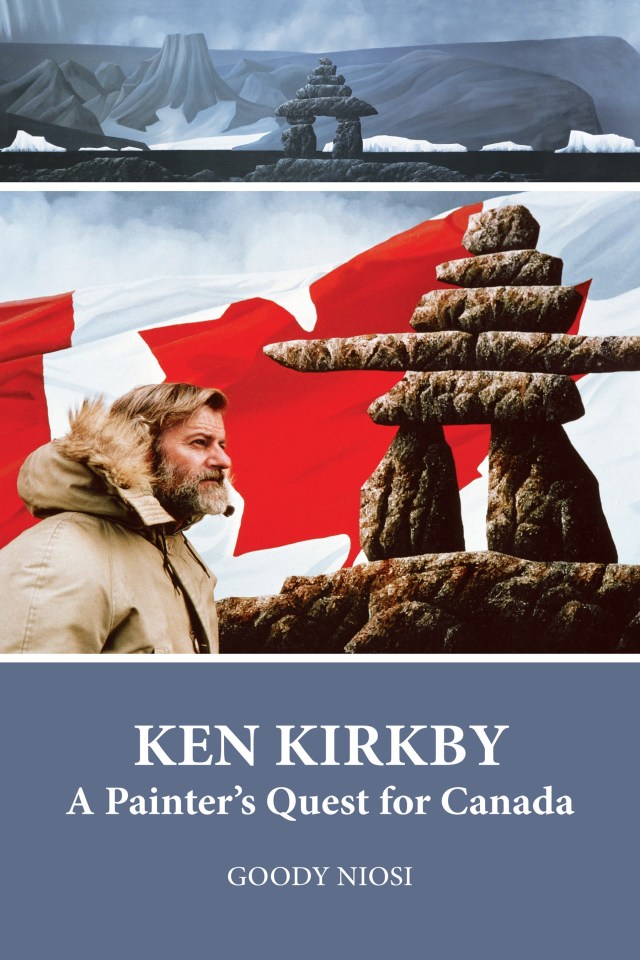
…the hall where Karen and the crew were putting the finishing touches on the exhibit. He was led to the Speaker’s office where Michael was sitting on a desk, his feet dangling, telling stories to the staff of his adventures in the Arctic. John led Ken into his office and a photographer arrived to immortalize the occasion. He posed Ken and John in front of the Karsh portrait of Winston Churchill and for the next hour shot Ken with various members of Parliament. Jean Chrétien, leader of the opposition, offered his congratulations, as did Joe Clark, who was standing in for Brian Mulroney who was otherwise engaged. In the hall at the foot of the stairs people stood or sat shoulder to shoulder. Not an inch of space remained. I had the most amazing feeling. It was a feeling I have never had before or since. It was a feeling that I was standing at a point in the universe where for some minutes and seconds reality was different. This was the magical moment I had been seeking my whole life. Usually, I had foreseen important moments in great detail. But this one – this was different. This one had somehow manufactured itself. It was not the vision I had had in my head. John Fraser stood on the podium and spoke. “Almost fifty years ago a young boy sat at the feet of his tutor – an old Portuguese fisherman – and heard tales of whaling in the Canadian North. These tales were so wonderful that the boy vowed some day to see Canada for himself and to clarify his mental pictures of the land.” “In his late teens, circumstance found the boy and his family living on Canada’s West Coast and several years later he set out on his boyhood dream to see the great Canadian North. For five years, he walked from one end of this great land to the other, travelling with families of Inuit as they pursued their nomadic lifestyle. Often he was alone, walking endlessly – experiencing first-hand Canada’s Arctic North, all the while sketching thousands of miniature drawings of what he saw.” “Toward the end of his journey, like a great mirage in the desert, he saw a giant of a man standing on the distant horizon. It was a stone Inukshuk, an Inuit guide to hunting and fishing grounds. Try as he might for the next twenty years, his efforts to portray the splendour of this vast and spectacular landscape resulted in dissatisfaction and personal frustration. Finally, he realized that only a painting which was larger than any ever painted could properly depict the unseen spectacle which he felt compelled to bring to the rest of the world.” “The result of five years of trekking and twenty years of painting was completed on June 21, 1991, the longest day of the year. It is the largest original oil on canvas portrait in the world, measuring one hundred and fifty-two feet long by twelve feet high.”
Rick looked disconsolately through the second-storey classroom window at sheets of freezing rain, the weathered fence of the Pennsylvania Railroad coal yard and the blackened struts of the steel bridge that shuddered ever so slightly when a train passed over it, then back at Sister Assunta who was preaching, again, about The Immortal Soul as she paced back and forth in front of the blackboard behind her desk, slapping the pointer against her palm like a riding crop. “Pagans!” she was saying, “You were all born pagans and you must be taught to fear (her pointer hissed and snapped loudly against the desk blotter) the power of Almighty God.” Silence. Some of them lowered their heads to avoid her stare. But Rick was puzzled. That kind old man who lived forever in the sky was merciful and just. He was love itself. Why should anyone be afraid of him? He raised his hand. Forty-two pairs of eyes swung toward the front of the room, afraid for him, but excited by the drama that might be about to unfold. Sister Assunta merely glared and went on pacing, her voice hoarse with a nearly demonic fierceness. Rick took his arm carefully out of the air. “Daily, you neglect your immortal souls. They may already be lost to eternal damnation.” She stopped precisely behind her desk chair, her florid minutely wrinkled skin drawn into a tight smile. Rick tried to look inside himself. There wasn’t much light. After a while he became concerned. Where was his immortal soul, anyway, why couldn’t he find it? Then something round and flat like a communion wafer came into focus. It was tilted, like the head of a snare drum, and it was so clean it glowed. He began to understand. When you did bad stuff, soot fell on it out of the dark, then, if you confessed and said five Hail Marys,
five our fathers, and an act of contrition, an invisible power swept it clean again. And immediately, almost automatically, his pubescent mind reached for what he knew to be forbidden. The kids called her The Beauty Queen. Her dad owned the bar and grill at the corner of Monmouth and Fifth. She spent a lot of time with her followers in the extra lot next to her house her grandparents had made into a large garden surrounded by hedges, and dotted with trees. When she came out for a walk, all the guys stopped what they were doing and watched her tight pedal pushers, her graceful careless moves…
“Yes, Mother, but I’m only going away for a while; do not forget that.” Maria smiled and added, “Of course, my boy, you will return. But remember, you must write home frequently, so we can find out how your studies are going.” “You guys think as if I am going to forget completely where I come from. Don’t worry yourselves with that.” His father cut in, “Son, you are an adult, but I want you to be very careful in the foreign country you are headed; we, your mother and father, uncle and auntie, or friends, will not be there. There are a lot of dangers over there, and you might get into a lot of trouble. Have your eyes and ears open, be careful in a foreign place. You are responsible for yourself.” The old man’s voice became hoarse. Hermes looked at his dad with surprise in his eyes: tears flowed freely down the old man’s cheeks. Yet this time, George Dragakis didn’t even care to hide his feelings from the rest of the family. Hermes went to his father and gave him a big hug. “Do not worry. I know where I’m going, and I know what I’m there for. My only concern is to finish my schooling and return home to find you all. Do not worry. Nothing will distract me from my goal.” Hermes’s voice had so much certainty as it was heard that all those present felt positively about his voyage. “What about Magda, my boy?” his aunt asked. “Magdalene and I are going to be in touch, and I hope to see her when I come back. She told me she might even come and visit me in Vancouver next summer. I look forward to that, really. I like this girl a lot.” His mother and father heard these words and felt a bit relieved, although they’d prefer if he didn’t go away at all. George got up to go to the bathroom, and Hermes could hear the old man blowing his nose. Then Hermes went to the bar and poured a drink for himself. He asked if anybody would like to have one, but they all declined.
Pip: Manolis Aligizakis has spent a career writing about people the world files under "miscellaneous" — and vequinox has been keeping up.
Mara: That's the thread running through this episode: Greek poetry and its modern resonances, love and faith tested in quiet rooms, conflict and exile, and a critical look at what it means to write about ordinary lives with extraordinary attention.
Pip: Let's start with the poetry itself — ancient voices, contemporary weight.
Greek Voices, Modern Weight
Mara: The question here is what Greek poetry actually does when it moves through the modern world — whether it stays monument or becomes something you can touch.
Pip: George Seferis, translated and presented here, sets the coordinates early. The poem positions us collectively: "We are all like the Dead Sea, many fathoms lower than the surface of the Aegean."
Mara: That image does real work. The Dead Sea passage isn't elegy for a place — it's a diagnosis of emotional deadness, where "heart and thought congeal in salt." Seferis is naming a condition, not a geography.
Pip: Yannis Ritsos in Romiosini measures anguish against a wild mallow's knot and courage in the eyes of a shoeless child holding a flag — that's not metaphor reaching for effect, it's metaphor doing the only honest work available. Titos Patrikios in Selected Poems and Antony Fostieris in Selected Poems carry the same weight: fathers known too late, moons that swell and shatter. Constantine Cavafy's satrapy asks what you trade when you stop reaching for the laurels.
Mara: Nikos Engonopoulos and Wheat Ears round out the range — from cosmopolitan irony to daffodils insisting on blooming through leaden, death-filled days. And Ugga lands the quietest claim of all: "for the light to change, we must feel the loss of darkness in transactions." Entropy and Triptych both circle that same idea — transformation costs something, and the cost is felt in the body, in the chapel, in the shared candle.
Pip: From the weight of history to the weight of a single room — the next territory is love and what it asks of people.
Love, Faith, And What They Ask
Mara: The posts here sit with intimacy in its most pressured forms — a wedding interrupted by illness, a love that cannot quite complete itself, desire that circles back to anxiety.
Pip: The Unquiet Land anchors the segment. A priest steadies a congregation while a man named Padraig recovers in the sacristy, and when he's asked if Mass was said for him, he says: "I did, Padraig. And the wedding? It went very well. Ah, that's good." Then he lowers his eyes and says he never could have done it.
Mara: What that exchange captures is faith as practical care — the priest stepping in, the doctor promising to apologize to the family, Padraig asking not about himself but about the couple. Dignity held together by people covering for each other.
Pip: Hear Me Out turns the register entirely. It's a meditation on that missing one percent — the fraction that stops the words "I love you" from completing themselves. "You'll remain like Sisyphus to go up and down the mountain with the weight of love on your back, forever searching to unload it." That's not self-pity; it's a structural description of a particular kind of loneliness.
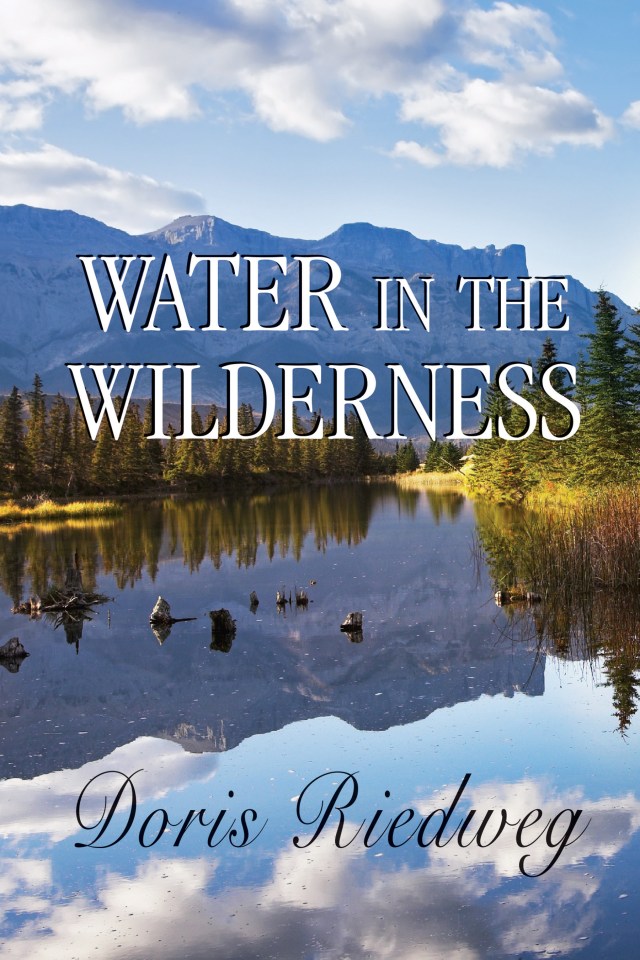
Mara: Water in the Wilderness moves through a different kind of relief — someone waking, someone running for her coat, a child on her first bus ride being told to watch for deer. Small mercies assembling into something that holds. Cloe and Alexandra brings a fairy-tale sharpness: a hunter shoots an arrow at a princess because he feared she would pierce his heart first — obedience and self-protection dressed as accident.
Pip: And then The Qliphoth arrives, which is a different temperature entirely — raw physical intimacy followed immediately by the anxiety that trails it, the replay of warnings she tries to suppress. Control claimed and then quietly questioned.
Mara: Redemption sits underneath all of these — two characters debating whether inherited belief can ever be honestly evaluated, whether tradition is a gift or a constraint. The same question the other posts are living out in different registers.
Pip: From what we inherit to what we survive — conflict and exile are next.
Conflict, Exile, And What Remains
Mara: This segment asks what displacement actually looks like from inside — not as history but as the specific texture of a life interrupted.
Pip: The Circle opens it with a phone call from Los Angeles to Baghdad. Hakim learns his uncle has two tumors — liver, pancreas — and the novel renders the weight of that news through a detail: he walks to the balcony and looks at the clouds covering Los Angeles, "in the same way that they cover his heart."
Mara: Distance is the condition. Straits and Turns gives us Mike, humiliated by a small workplace error, walking home with his head down — and then laughing at himself with his family. Marginal's caricature figure arrives "hiding the packaged freedom silently in his pockets," and the speaker finds redemption not in confronting him but in bending to smell a jasmine flower on a dusty sidewalk.
Pip: Twelve Narratives of the Gypsy and Rendition press further into rootlessness — the gypsy standing "like a fresh branch of a not pruned, ageless, fruitless tree," alone on a black mule, trying to discover who he is. Rendition puts innocent blood and irony on the same menu board.
Mara: Which brings us to the question of what poetry does with all of this — and one critic has a precise answer.
Writing The Incidental Into Permanence
Mara: The Incidentals gets a full critical reading here, and the central claim is ethical as much as literary.
Pip: The reviewer, Balázs F. Attila, puts it plainly: "The moment the poet writes about Gladys, Mathew, Stefan, Benjamin, Galanos, or the nameless postman, he abolishes their insignificance."
Mara: The upshot is that poetry here functions as counter-archive. The postman who carries everyone else's news while waiting for a letter that never comes — that figure is rescued from anonymity by the act of being named in a poem. The net, the rope, the shoe: objects that become the whole shape of a life.
Pip: The review also notes that Hades and Thanatos move through gas stations and Canadian immigration offices — mythology as living language, not museum display. That's the formal argument for why the Greek poetry segment and this one belong in the same episode.
Mara: And the question the review leaves open is the one that makes it stick: how long is the rope on which we ourselves live?
Pip: Dead Seas, jasmine flowers on dusty sidewalks, a postman waiting for a letter — the scale keeps shifting but the question stays the same.
Mara: Whether the rope is long enough, and whether we've noticed we're on one.
“I’m not sure who’s fucked who,” says Larry sleepily, cupping her bottom with firm hands. “And I’m losing track of the exact number of times. But it’s been fair exchange. Above and below.” Pauline is astride him now, first stretching back, then leaning forward, letting his eyes linger on her breasts, let him kiss and lick and tease her hard nipples as they brush his face. She reaches down, right down there,to sheathe his prick, his penis, his cock, his rod, his willy, all such silly names, yet an exciting catalogue to recite under her breath when he’s already so hard again, a natural material phenomenon like a stone or a tree or a jolt of lightning right up the rippling crevice of her; but she’s in control now, poised for take-off, almost at the point of no return, as long as the ride’s easy, gently does it, the triangle of her sex is perfectly balanced on him, so he disappears in his dark murmurs and while she’s astride this cunning old Adam, she’ll give him his golden apples all right, just a quick/slow/quick/slow squeeze around and about the hairy zone, he just can’t stop going into her, but they keep going . . . She can see his tanned chest below her, his scarred arms, tiny curved crescents like cigarette burns on the shoulder. His belly is noticeably curved also, thickened by the prison stodge, but what the hell, he is a great stone giant lying on his back, heavy weathered curved lips, pitted slabs of cheek, a hell of a heavy stand on him, standing steady for centuries, for her steady pleasuring, her repeated steady roll. She will never relent. She is sitting on top of the world. In control. She is at the apex of earthly power. She is reclaiming this male organ, (all hers, hot and engorged), she has just discovered it and this time she won’t let go without a delicious fight. He’s going to, going to—he’s moaning, bucking wildly, stroking the cheeks of her arse together. She lets everything go. Much later, as she swallows his harsh black coffee, and listens to distant domestic bellowings in the bedsits upstairs, she isn’t sure about anything, despite the languour in her aching body. Already there are anxieties—were they too perfunctory with the condoms? and a replay of Graham’s counsel keeps surfacing, however much she tries to force it down—suppose those marks on his arms were tracks from injecting, inside men, shared needles, all that nightmare stuff . .
“You shouldn’t have bothered, Moe. I could get a bite at the hospital, you know.” “It’s no bother. And you need something home cooked after that hospital food you’ve been surviving on. The meals aren’t any better than they were when we were students.” It was only after Tyne had eaten that Moe, sitting at the table with her, said lightly, “Aunt Millie called a little while ago. No, it’s all right. And I didn’t tell you earlier because I knew you’d go rushing off without breakfast if I did.” Tyne sat forward, her heart in her throat, ready to bolt from her chair. “What is it? Why did Auntie call?” Moe smiled. “Morley is awake and asking for you.” Tyne let her breath out on a deep sigh, sat back and covered her face with her hands. “Thank you, God, thank you,” she whispered, then shot out of her chair and ran to get her coat. Moe was right behind her, car keys in hand. Rachael didn’t think she would like riding in a bus. Not a bus this big, anyway. As the huge vehicle, with the long skinny greyhound painted on its side, drew to a stop in the bay behind the Emblem bus depot, she shuddered and moved closer to Mrs. Milligan. A man in a sort of uniform was standing beside the open door, taking tickets from people, punching holes in them, then handing them back. When it came their turn in line, he did the same with the tickets Mrs. Milligan handed him. The man looked down at Rachael. “Hello there, little lady. Where are you going today?” Rachael thought he must already know that, but he was trying to be nice to her so she said quietly, “We’re going to Calgary.” “It’s her first bus ride,” Mrs. Milligan informed him. “Is it? Well, I’m sure you’ll enjoy it. Be sure to sit beside a window so you can see everything. And look for the herd of deer on the right hand side; they’re usually grazing in the field there.” He held out his hand to the person behind them as Mrs. Milligan guided Rachael up the steps, and led the way along the aisle to seats half way back.
HAKIM IS UP VERY EARLY this Wednesday morning, and following his half hour of meditation, sits at his workstation to communicate with his uncle. It’s about seven in the evening in Baghdad, and someone must be at home; he hasn’t heard from them in the last couple of days and is concerned. They must have some news by now; the tests were to be done a few days ago. “Hello there, my uncle, how are you?” “Hello Hakim.” Rassan answers. “Hi, Rassan; where is everybody?” “Mara is at the hospital with Ibrahim; she stays overnight to keep him company. They had tests done yesterday and today; it doesn’t look good.” “Tell me, what were the test results?” “They did a couple of scans and detected two small tumors—a tiny one in his liver and a bigger one in his pancreas. They are to do biopsies tomorrow and then we’ll have answers.” “How is he? Is he in pain?” “Well, in the hospital he is not in pain as they have him on painkillers; I don’t know how he will feel when he gets home, if they allow him to come home.” “Is he that bad that you think he may not come home soon?” “I don’t know Hakim, I’m not the doctor. We’ll see; what I know is when he was here the last few days he was in pain constantly.” “Thanks Rassan, I’ll reach you again tomorrow about the same time. Make sure you are around to give me an update of how things are. If need be, I may come over for a few days to keep Mara company.” “She’s going to be very happy to see you, I’m sure.” “Say hello to both of them, and pass on a message to my uncle from his friend Bevan, who sends his regards.” He turns the computer off and puts on a robe; Jennifer is still asleep in the bedroom.He walks to the balcony and looks at the weather in Los Angeles; clouds cover the sky, in the same way that they cover his heart with this latest news. The temperature is around 15 degrees; a pleasant temperature for the time of the year. He has to go to the office and check on things; the business has been going a bit better the last couple of weeks and Peter Bradshaw is very excited about a new…
The Lost 1% Finally you turned me into yourself, my love! Or perhaps I’ve been this way all along unable to answer the same way when they tell me “I love you”. Unable to say, “me too…”, or “I also love you.” The phrase almost reaches my lips but is not stated. To observe other men with that sad and full of agony glance, the one I noticed in your eyes for a long time, and not being able to answer. Now I can understand what you felt. I feel the same way. Now, I know what it means for the other person to expect something from your lips and you unable to utter a word. And it is not that you don’t love the person, it’s not that you don’t care for them. The opposite, you care and you hurt more so. But that 1 % that is missing, that you miss and without it the word isn’t said. That 1 % you know you won’t ever find. That, as if you came faulty out of the factory and you miss something, what you’ll never acquire and as a result you’ll never be able to give it to anyone. And you’ll remain like Sisyphus to go up and down the mountain with the weight of love on your back, forever searching to unload it and to offer it somewhere. 70 But there will never be anyone to lighten up your load no one will ever walk along with you up the mountain and no one will ever give you a hand just to stop you from slipping down the slope. Because simply you can’t grasp onto anybody’s hand you can’t grasp onto anything.
eating itself—has proved too much for him.” “The poor man. What a horrible thing to happen at a time like this.” Father Costello then remembered the congregation in the church. “Dr Starkey, if you go back out there and try to restore a measure of calm, I shall prepare to celebrate Mass and marry the young couple. They especially will need some encouragement, poor children. I myself must try to make up to them this unfortunate delay in their happy ceremony.” At the end of the ceremony, as the guests moved out of the church to make their way to the house of Michael and Caitlin Carrick, Father Costello and Dr Starkey both returned to the sacristy. Padraig was sitting on the bench, his head in his hands, staring at the floor between his feet. “Are you all right, Padraig?” Dr Starkey asked. Padraig looked up. His face was like a skeleton’s. “So I had another seizure?” he said. “Yes,” Dr Starkey replied. “A bad one. How do you feel?” “Tired. Very, very tired. And my head is throbbing.” Padraig looked up at the old priest who stood tall as a maypole. “Did you say Mass for me, Father Costello?” “I did, Padraig.” “And the wedding?” “It went very well. “Ah, that’s good.” Padraig lowered his black eye-sockets from the tall priest’s face and stared at his own moist, clasped hands. “I never could have done it, you know. I’m glad I asked you to come in my place.” His almost fleshless head jerked round towards Dr Starkey. “I’m so tired, Dr Starkey. I don’t think I’ll go up to the house. Will you apologise for me to Caitlin? And to Michael and the others?” “I will, Padraig,” Dr Starkey promised. “Now you had better get to your room in the rectory. And I’ll stop by later to see you.” “Thank you, Dr Starkey.” Padraig stood unsteadily. “All I want to do now is sleep.” The three men left the church together. A few parishioners who remained in the church, talking in subdued voices, watched them go. Padraig entered the rectory with Father Costello and climbed the stairs to his room. There he rolled over on to his side on the bed and fell into a deep sleep.