When Saturday finally arrives, it is a beautiful, hot summer day, so hot Eteocles goes to the sea twice, early in the morning and again in afternoon. He meets Antonia on his morning visit to the sea, and she tells him she is planning to go to the party with her girlfriend Koula. Eteocles sends her a kiss with a movement of his lips, and Antonia responds in kind, then they dive into the water together and swim well out from the shore. Eteocles swims close to her and puts his arm around her waist, but Antonia isn’t a good swimmer. She is uncomfortable in deep water, and his touch makes her nervous. She asks him to let her swim in peace, then says, “Tonight … tonight at the party.” It is a promise. Hesperus, the lone evening star, bright as ever, gazes down at the earth later that day, watching the little ants that scurry about searching for a common goal, a common word, a common future without perils or famine or devastation. Bright as ever, the evening star gazes at the land below and wonders how long it will take before its inhabitants figure things out and settle on the concept of people helping people rather than bombing and obliterating each other. Under its gaze Eteocles and George walk together down the road along the hillside toward the shore where the house of the party girl is located. When they reach there, they find a crowd of boys and girls already gathered in the backyard that faces out toward the sea no more than about thirty meters away where the elevation dips sharply down to the seashore with its sand dunes and lapping waves. All the partygoers gather around the boys who have brought the music from Athens, waiting for Eteocles to put a disc on so they can dance, and as soon as this is done, all the boys and girls suddenly become couples. George quickly pairs off with Maria, his favorite girl in the village, and pulls her tight while the music, the latest hit by a popular Italian singer, tuneful and modern, excites everyone and mixes with the heady smell of the sea to create an exhilarating atmosphere. At that moment Antonia enters the yard with Koula, a girl with black eyes and black hair tied in a bun on top of her head.
The taste of her mouth aroused all his instincts, and he wanted to touch this girl all over. However, they heard the clearing of the proprietor’s throat and stopped. Hermes pulled back, and she gave him her best smile, showing a straight line of teeth and a hungry tongue. They stayed there for another half an hour, and then she wanted to go. “What would you like to do now? See a movie?” He looked at his watch; it was eight o’clock. “Where do you like to go?” She suggested they go to see the latest movie in a cinema close by, and he agreed. They walked to the cinema, and Hermes offered her his arm. She took the chance and leaned toward him a bit more, which Hermes loved. They got to the theatre and realized the place was almost full, so they made their way to the balcony, where they noticed that it was almost empty. They found two seats. He turned to look at her, and she took the courage and offered him a long and passionate kiss. His hunger for her body became evident. She took his hand and placed it between her legs, a move he took even further by sliding his hand up and touching her pubic hair. That made her go wild. He didn’t let go, and the rubbing of his hand inside her made her move her body left and right with such intensity that she had an orgasm in a matter of seconds. She then found his erection and played with him for a minute or two, but he wanted a lot more than that. “You like to go?” she asked. “Where could we go?” “I know a place.” He wondered where this place might be, surely not her parents’ house. “A friend of mine, she whispered, is out of town; I have the key to her place.”
“I’m glad to see you’re not hiding, Mr. Clarkson,” Pease said. Fred hoisted himself up on an elbow and regarded the young man. “Not hiding and still not talking about myself,” he said. “I thought perhaps you’d be willing to confirm what I found out about your background before we go with the story. It was fairly simple to trace you through the state bar association. You had an impressive career in the law.” “Now, why would anyone care about that, Mr. Pease? It’s ancient history.” “I suppose no one would care if you hadn’t made yourself a hero in the train rescue and come so eloquently to the defense of Poodie James at the council hearing.” Engine Fred indicated the captain’s chair. “Have a seat. I’ve been thinking of something that might interest your readers far more than anything you could write about this old hobo. Want to hear about it?” “Do I sense the offer of a deal?” Pease said. Fred’s eyebrows went up. “Does that offend your journalistic sensibilities?” “It depends on the nature of the deal and the quality of the information,” Pease said. Fred fell silent while he studied Pease’s schoolboy face, its earnestness, its shock of hair over the forehead, the glasses losing their struggle to stay in place. Pease returned his gaze without moving his eyes, without a flicker of expression. “Do you know the story of Poodie James being attacked and beaten shortly after he moved to this valley?” Fred said. “As of two days ago, I do,” Pease told him. “Winifred Stone told me about it shortly before the council hearing. She directed me to the clipping in our morgue. Sketchy story. Not much to go on. It’s interesting that someone was attacking hobos around the same time. 1927, a long time ago.” “Matter of perspective,” Engine Fred said. “Seems like yesterday. Still, it’s been sketchy for me, too, until recently.” Pease looked at Fred, saying nothing, waiting.
…made and she could not take a chance on hurting them by refusing their generous offer. It was kind of them to even think of an engagement gift, but she wished they had decided on something less ostentatious. Oh well, maybe if it was a small, inexpensive car she wouldn’t feel so bad about accepting it. She had not told her parents. She did not want them to feel they had to give the newly engaged couple a gift. Such a thing had never entered her mind, and she hoped Cam did not expect it either. And anyway, her parents certainly could not afford anything as lavish as a car. Maybe I’m out of my league, Tyne thought. We’re just simple country people. I shouldn’t be marrying someone like Cam. This new revelation made her uneasy, taking the edge off the excitement she felt about returning to the city. She turned to look out the window onto the bleak winter landscape, but a little girl in the seat beside her suddenly caught her attention and offered a welcome diversion for her thoughts. The blond-haired child held up a story book and asked her a word. “That says hospital,” Tyne replied, smiling into the innocent face. Noting the pictures in the book, she asked, “Is your story about a nurse?” The child beamed. “Yeth. When I grow up, I’m going to be a nurth.” “Are you? That’s lovely. I’m a nurse, and I work in a hospital like that one in your picture book.” The little face turned up, the blue eyes wide and incredulous. “Oh … oh, you’re a nurth … oh.” Tyne laughed softly, and could not resist the urge to put her arm around the little one and hug her. Looking up, she saw the warm smile of a young woman sitting across from them. “You’ve made her day, thank you,” the woman said, smiling. “Are you her mother? Oh then, I’ll trade places with you so that you can sit with her.” “No, no,” the mother waved her hand. “She wouldn’t thank me for that.” Tyne laughed and turned back to the admiring child. Someday, would she and Cam have a little girl like this dear one? A girl who wanted, more than anything, to be a nurth?
…lavishing her body, erotic and desirous, promising and promiscuous; Mona, the nurse who came to replace his gauzes. Mona, a woman, came to the help of a man desiring nothing more than what nature has allotted to him: lust, even with his half-severed penis, a man desires to ride on top of a woman’s body, this woman’s, Mona’s. In this war zone, man never stopped longing for that exquisite moment of coupling, nature’s first and most powerful expression: a man, an injured man, coupling an eloquent, musical, poetic, female body. His eyes still closed, he saw himself on a bed where he was battling his last, three days and three nights, with his stressed breath in irregular spasms of a living-dead man, skinny, leftover of stamina recluse in his austere village bed. Shadow of a man left to perish as nature commanded, yet, his last breath was delayed as for three long days and three long nights, he kept on gasping for air unable to release his soul to his creator while from time to time he would whisper in his so ever weak voice one word, “pussy” to the amazement of his relatives, especially to his two sons who didn’t know how to play out their father’s last wish. And the night arrived again for the fourth time, and the owls sang their lonely songs in the nearby barn while the moon kept on playing hide and seek behind the clouds, while the unrested soul of the old man repeated the same double syllable word, “pussy”. Indeed, it was tragic and comical for the three relatives who stayed for the vigil: one of his sons, the old man’s niece, and the servant girl who attended to the wishes of the almost-dead man. Not any special wishes did the moribund man have other than perhaps stir him from time to time to check whether he was still on the upper stratum, although his occasional whisper, “pussy” was witness to the fact. At the desperate moment of ambivalence when no one of the three knew what to do to help the old man relax and let his soul be released to the elements, Mona, the twenty-four year old maid with her flaming eyes and promiscuously half-open lips and her voluptuous breasts, an angel of mercy nonetheless, neared the bed of the old man, raised her skirt, took his fragile hand and placed it behind her light undergarment and between her legs upon which time and upon feeling the touch of his…
‘Yes, Nora. Yes, I honestly do.’ ‘I wish I could share your optimism.’ ‘You’re becoming cynical in your old age, Nora. You need cheering up.’ Nora looked behind her towards the door. ‘I don’t know what’s keeping Janet.’ ‘I wouldn’t even like to hazard a guess,’ Clifford said with a smile. ‘Would you like me to order drinks for you now? What were you and Janet … ? Ah, here she comes.’ He stood up as Janet rushed in. ‘Sorry I was so long, Nora,’ Janet said, ‘but I kept meeting people. Robert Purdy’s here with his fiancée. And the whole Morgan family from Clondarragh.’ ‘Janet, you know Dr Hamilton, don’t you?’ ‘But of course I do. How are you, Dr Hamilton? We haven’t seen you down in our part of the world for ages.’ ‘I’m fine, thank you, Janet. It’s a pleasure to see you again. I hope your mother and father are well.’ ‘Hale and hearty, Dr Hamilton. I’ll tell them you were asking after them.’ ‘Yes, please do,’ said Clifford. ‘I actually came to invite you and Nora to join us at our table. My wife, my son, his girlfriend, and some friends of ours are there.’ ‘That would be very nice,’ said Janet. ‘We usually have more company with us, but they all had other things to do this evening.’ Clifford led the way to his own table and made the necessary introductions. Nora and Janet sat down on two extra chairs that John had already added to the group. Nora sat between John and Ian, Janet between Ian and Clifford. ‘Now, what is everyone drinking?’ Clifford asked. Fiona and Susan had had enough, they said. Janet and Catriona asked for lemonade. Julian a Macallan single-malt Scotch—‘If they have any.’ Nora ordered gin and orange. ‘Mother’s ruin, Nora,’ said John. ‘Make mine a John Powers, Clifford.’ ‘Julian’s choice of Scotch for me too,’ said Ian. ‘Do you ever drink anything else, Ian?’ ‘Only Drambuie, but not now.’ Clifford smiled. ‘You’ll have Coca Cola in your whiskey, I suppose.’ ‘Get away with you, man,’ Ian scolded. ‘Even though I know you’re joking, you should still be horse-whipped for a crack like that. In Scotland we don’t joke about our Scotch.’
“Those who left you on this shore caused you the pain you have had to suffer. I am sorry. The raiders were Pequat. By their law and our own law, we had to leave and let them take you or they could have destroyed our village and taken our children as well. A Pequat mother lost a daughter just as Brown Bear lost his Namid.” Bjorn stood up in anger, “How? Where?” Ari also rose, painfully. “Who did this murder?“ White Eagle raised his hand for silence. “Word has spread from further toward the warm lands that the serpent ship brought death among our neighbours. The Pequat travelled far to where they camped last night. They lost warriors and have the right to take the bravest from among you to replace lost sons and daughters. Your brave singing saved your lives. Now our people have bought you back so you belong to us.” Ari looked around to his companions, then he replied for all, “Thank you for our lives. We will be your people. Your people will be our people.” “Now,” said White Eagle, “you must eat and rest. You have done well.” He turned to Rordan and placed a hand on his shoulder. “You have honoured us with your bravery and with your music. We gave many gifts to have you back. The Pequat warriors have named you Hototo Nikamu, Warrior Spirit Who Sings. Now you are our Mountain Thrush, Hototo Nikamu, and you are free to fly as you will.” When White Eagle left to go to his lodge, Brother Keallach spoke to Rordan, “If we are to stay here forever, shouldn’t we talk to Father Finten, first?” “Not on your bloody life.” Ula was angry. “He wasn’t ransomed. Shit! He wasn’t even with us. He can go when he bloody well wishes. This is our decision. Rordan has spoken for all and his word stands.” Brother Ailan used his right hand to get to his feet. His left hand was heavily wrapped in moss and balsam fir sap. Brother Rordan had learned of the healing properties of balsam from Corn Mother and, having paused to gather sap and cones on the return journey, had already applied resin to everyone’s burns and to Ailan’s finger stump. Now Ailan stood to address his Brothers. “No matter what happens, do not forget we are tied to Father Finten by our vow of obedience.” “Maybe you are, if you choose to be. At least three of us are free to make our own decisions.” Ula stomped out of the lodge and Bjorn and Ari followed after her. Rordan looked at both Keallach and Ailan. “What do we do about Finten? Has anyone seen him?” For days, Finten roamed the headland, looking out to sea, afraid of what might appear on that vast expanse, afraid and ashamed of what White Eagle and the First Light People would think of him now. Why, when he knew he could be so brave, did his knees buckle whenever he was faced with danger? He regretted that he had not died with his Brothers. He was certain none of the companions had survived. He’d heard the bloodcurdling shrieks as he cowered in the lodge. He’d seen blood splattered on the ground outside the lodge. He’d seen the trails of blood where the savages had dragged bodies into the woods, probably to be eaten at a gruesome victory feast. When the villagers returned and he saw that none had been wounded, much less killed, he knew immediately he had been betrayed. The attack was not against the village but only to capture and kill him and his Brothers and the other three.
Pip: Manolis Aligizakis runs a site that could double as a library card catalog, if libraries had this much range — Greek exile poetry, Canadian prairie childhoods, Soviet-era blackmail, and a taxi ride you would not want to be on.
Mara: vequinox has been posting across all of that territory, and today we're moving through three areas: modern Greek poetry collections, literary and crime fiction, and the theme of identity, memory, and exile. Let's start with the poetry.
Greek Verse, Exile, and the Long Tradition
Pip: The question underneath all these poetry posts is what it means to translate and collect Greek verse — not just linguistically, but as an act of cultural preservation, pulling work from Ritsos, Seferis, and others into a form that travels.
Mara: The Yannis Ritsos volume sets the tone early. From "The Exile Diaries," dated the fourth of December: "Moon, take off your shoes / I can't sleep on my back / if I'll turn to my side I'll hurt. / The door is open / I can't leave."
Pip: That last line does a lot of work. The door is open and he still can't leave — which is exile's specific cruelty: the constraint isn't always a lock, it's something internal, something the body carries.
Mara: George Seferis's collected poems push into similar territory with "The Sentence to Oblivion," and Tasos Livaditis, whose volume was longlisted for the 2023 Griffin Poetry Prize, writes of being "completely dishonest like this world that it belongs to you only when you promise it to someone." Titos Patrikios in his selected poems warns readers to "protect yourselves from the poets who steal verses from graves of the unknown."
Pip: There are also original collections here — Entropy, Ugga, Medusa, Troglodytes, Hours of the Stars — each posting a single poem as a window into the full book. Hours of the Stars centers on Ionia, lost in 1922, where "man tried to create the face of god and at last he created his own thoughtful face." The Neo-Hellene anthology rounds out the range, gathering voices across the modern Greek tradition into one place.
Mara: That breadth — from Ritsos's internment diary to an anthology spanning the whole tradition — is the argument these posts make together. The fiction excerpts are making their own kind of argument, and it runs across a very different set of landscapes.
Novels at the Edge — Fiction and Crime Excerpts
Pip: What connects this stretch of fiction posts is that nearly every excerpt drops you into a moment of pressure — someone is hiding something, someone is about to find out, and the social fabric is visibly straining at the seam.
Mara: Wellspring of Love opens in a hospital corridor. Tyne has just entered her aunt Millie's room and the excerpt lands here: "Tyne was conscious of two disturbing thoughts, the first that Dr. Dunston had seldom greeted her in any other way than with his usual cheery, 'Hi, sis.' Her second thought was that the woman in the bed, frail and ashen-faced, was hardly recognizable as her beloved aunt."
Pip: Two small observations, and suddenly the reader knows the diagnosis is bad and the relationship is complicated. That's efficient fiction — the weight is in what goes unsaid.
Mara: Jazz with Ella works the pressure from a completely different angle. Pavel, Vera, and Shukshin have cornered a Soviet bureaucrat named Pyotr — they have photographs of him with the police chief's wife, and they need forged documents. Pyotr sputters through a tantrum, and then Vera simply asks, "May I pour you another drink?" The coercion is wrapped in perfect politeness.
Pip: Nothing says "you have no leverage here" quite like being offered a refreshment mid-extortion.
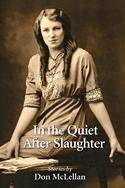
Mara: In the Quiet After Slaughter takes a coming-of-age angle — two teenage brothers drawn into a scheme involving a mysterious receiver on a hill called Pork Chop, with a cast of characters that includes a man with a wart that "looked like a ladybug" above one eye. The Qliphoth is denser, set in a flat littered with occult paperbacks and failed technology, a woman piecing together who her missing lodger has become. Savages and Beasts puts a boy named Anton in possession of a dead priest's diary, paralyzed by what he should do with it.
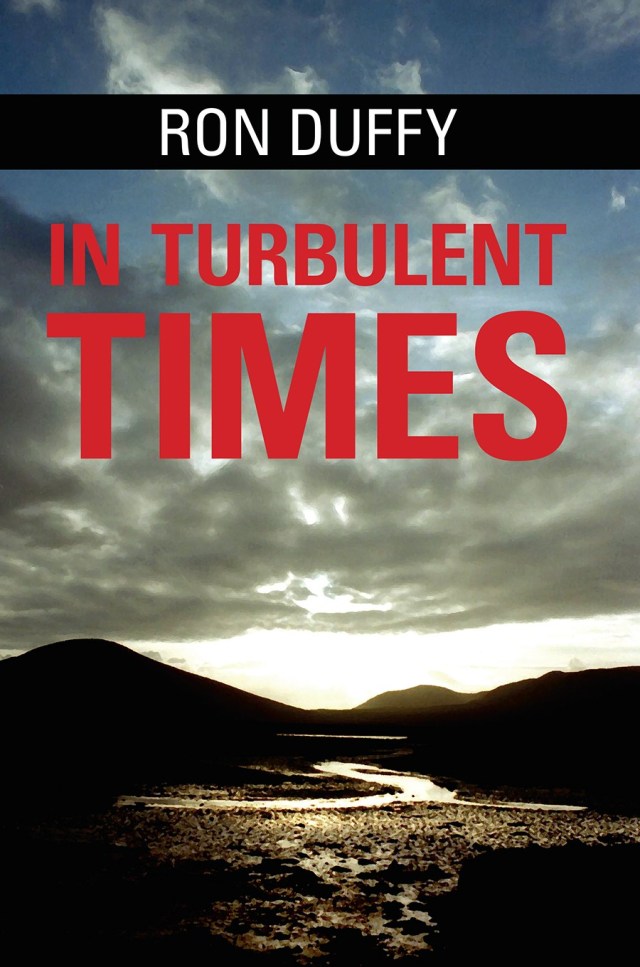
Pip: He Rode Tall goes quieter — a maritime engineer named Joel, decades of city noise behind him, sitting on a horse in a pasture and feeling his heart come back online. In Turbulent Times is a social novel, a dinner table of doctors and their partners trading sharp observations about a young woman Clifford delivered as an infant under difficult conditions. The Unquiet Land sets its pressure in Ireland, where Mother Ross tells Padraig that "forgiveness is a rare commodity in Ireland — Irishmen never forgive and never forget." Redemption and Straits and Turns close the set — one a quiet departure from a Cretan village, the other a Vancouver taxi ride with a passenger whose presence is described with the kind of sensory detail that makes you grateful for fresh air.
Mara: What holds these excerpts together is that each one catches a character at a threshold — a decision, a revelation, or a departure. That threshold question carries straight into the next set of posts.
Where You Come From, Who You Are
Pip: The identity and memory posts are asking a version of the same question across very different geographies: what does a person carry when the place they came from is gone, or far, or changed beyond recognition?
Mara: Twelve Narratives of the Gypsy opens at the largest possible scale: "before we existed the Earth lived, before it spread its plains it was alive with its knowledge and wisdom." It's a cosmological frame for belonging — rootedness as something older than any single person's story.
Pip: Which makes the smaller, more personal accounts feel like they're answering that opening from the ground level.
Mara: Prairie Roots does exactly that — a childhood memoir of Saskatchewan winters, threshing season, geese in formation, paths worn single-file through snowdrifts toward a school facing a rising sun with no warmth in it. Red in Black brings it into the present tense, a poem about wilted supermarket vegetables and rotten tomatoes that pivots sharply to a man shot by a police officer. And Introspection's poem "Delta" traces a speaker who walked to the far ends of the world arguing for elegance and freedom, and was called a lunatic for it.
Mara: The thread running through all of it is that identity under pressure — exile, displacement, the refusal to forget — keeps finding its way back into the work, whether the form is a Greek lyric or a prairie memoir.
Pip: Exile poetry, coercive Soviet bureaucrats, a boy with a priest's diary, and a cosmological origin story for belonging — it's a wide orbit.
Mara: The site keeps returning to what people carry across distance and time. There's more of that to come.
Every couple of days Swanson visited Aunt Peggy’s. He and Bud held court at the kitchen table. They fell silent if any of us came too close. Most evenings Burt retreated to a spot on the river and helped Mark with his knots. A fear of cougars prevented me from joining them. One night Swanson and Bud asked to talk with us. They waited until our cousin was asleep. – We’re gonna hook up the receiver on Sunday, Bud said. – What of it? Burt said. We’ve got a TV back home. – We’ll need assistants. – Paying top dollar, Bud said. Up to it? – Why tell us? Burt sparred. We’re students. On vacation. –We’ve had dozens of applications, Swanson said.He removed his cowboy hat. There was a wart above one eye looked like a ladybug. – We don’t know nothing about receivers, I said. We don’t even know what one looks like. – You boys ever heard of the Sherpas? Swanson asked. They help climbers in the Himalayas. – Think it over, boys, Bud said. It’s a great opportunity. After Swanson had left, our aunt scouring dishes, Bud leaned into Burt and said, Jails are full of punks like you. He slid a fresh toothpick into his cheek, then quickly removed it again. – One night changes their whole outlook. Get my meaning? – I was 14. I didn’t. Burt wedged one of Bud’s toothpicks between his lips. – That the reason, Uncle Bud, you walk like a girl? Pork Chop Hill seemed considerably steeper standing in a pasture at its base than it did from downtown Coppermine. Its flanks were dressed in dense old growth, the highest point smothered in cloud. A hundred people must have turned up to see us off. A photographer from the Gazette snapped photos; the school band did its best. Flatulent cows grazed lazily amongst the muddy pickups. Swanson reiterated our tasks. He and Bud, carrying sensitive…
“Because you don’t want to face the consequences of not helping.” Shukshin glowered at the public official. “What do you mean?” Pyotr became agitated. “Are you threatening me? If this is a joke it’s gone too far!” “It’s no joke.” Pavel spoke again. “I need all of the documents: permits, propiska, passport, whatever is necessary, and I need them soon. As to why you should help me then I’m afraid it’s like Shukshin says. You don’t want others to know what we can tell them about you.” Pyotr froze to his chair. It was not a joke. To his surprise, Vera chimed in. They were all in it together. “You were seen…at the boathouse. You understand me?” He remained silent so she continued. “With the police chief’s wife—what’s her name, Tanya?—and we all know that the police chief would not like your activities with his wife, would he?” Pyotr was stunned. It was all collapsing in front of him—the careful secrecy, the hidden assignations. “We…simply meet to talk. There’s nothing harmful….” He stopped. Vera was shaking her head. “We have photos,” and she pointed to a large American-style camera on the bed. “We took photos of you and Tanya together. Believe me, you were not just talking.” “What! Devil take it! Give me those photos. You have no right…” He stood up, prepared to invoke some bureaucratic rule that would force them to comply—or what? Report them to the police? They sat politely while he worked through his tantrum, sputtered another oath or two and smacked the table with his fist. Finally he sat again and slumped in the chair. “May I pour you another drink?” Vera inquired with a sweet smile as if he were a friendly visiting uncle. “I think it would be best to find the passport first, don’t you? That way we can make the other documents match whatever the name on the passport.” “Yes, I suppose so,” Pyotr agreed at last. “I know of just such a widow who would probably give up a passport for a sum of money. I hope you people have some cash to pay her.” “We’ll find the money,” said Pavel. “You find the goods.” “And some cash for me, for my trouble in locating the passport,” the official continued. But Shukshin had only to glance at him quizzically and indicate the camera once more for Pyotr to understand that any cash benefit to him would not be forthcoming.