Joel was not a spiritual person. Never had been. For almost thirty years as a maritime engineer, Joel had spent most if not all of his time in his head. His brain had earned him some degree of respect in his profession and helped him to survive disaster after disaster on the bumpy journey of life. But at this very moment, sitting astride the orange horse on the crest of a hill, admiring the grazing mares and foals, Joel felt for a moment the power of his heart. It had been a long time since he had this kind of feeling, but Joel knew that he was feeling rather than thinking. He could feel his heart coming to life. With the exception of the sounds of nature, the silence was so powerful that the only way he could think to describe it was that it was very huge. Or so it seemed to Joel who had spent most of his mornings for the last thirty-two years nursing a hangover in one urban ghetto or another as horns blasted and fumes rose from the heart of the city outside his hotel room or apartment. Compared to the city this was looking like a pretty good way to start a day. Sure, it didn’t have a Starbucks. But you know what. This was better. And with this realization Joel made amental note to himself that yes, it surely was a wonderful day to be alive. It must have been an hour since he had let himself through the swinging ranch gate that led to the pasture of abundance. Abundant with the kind of grass that only a true son of the prairie could appreciate. Sure, it had been a lot of years since his childhood days on the ranch, but he still knew the value of good pasture when he saw it. And this pasture was very good, having a thick mat of hearty wild grasses standing a foot high in some places. This was the kind of grass that cattlemen yearned for, and if they got excited about the grass, you can only imagine the kind of impact it had on the livestock. Beyond the natural abundance of the grass, this pasture was special for another reason. Unlike the farmland on the plains below, these hills had never been cultivated to grow a single crop of grain. He was riding on the real thing.
…she died of consumption, God rest her soul. Flynn was well up in his teens by then and already working in McGuigan’s quarry. But he grew up with a chip on his shoulder as big as a boulder and a fierce hatred of the English that he’s nurtured for years.” “He needs to learn the lesson of forgiveness,” Padraig remarked. “Forgiveness is a rare commodity in Ireland, Padraig,” Mother Ross said. “Irishmen never forgive and never forget. That’s their nature.” She paused, staring into the hearth. Then she asked, “What about Caitlin?” “What about Caitlin?” Padraig repeated with more feeling than he meant to show. Mother Ross looked suspiciously at Padraig, but gave him no inkling of the thoughts that rushed through her mind. “Is Caitlin ready to be married in church?” “She is now, yes,” Padraig replied with a touch of petulance. “Finn didn’t know, did he?” Padraig walked across to the door and leaned against the wall beside it. His shoulder and his broken ribs were painful. “Oh Finn knew all right,” he said, but his face had an uncomfortable, guilty look. Mother Ross made no comment. She felt that Padraig and Caitlin together had indecently betrayed the man who had been closest to both of them. And yet she could not see how anyone but Finn MacLir himself could live outside the Church. She was happy for Caitlin, but disappointed at the same time. “Then they won’t have to wait long before they can be married.” “They have only to name the day.” Neither Mother Ross nor Padraig spoke, and they were still silent when voices and footsteps were heard outside, and doors opened both in the front and the back of the house. “I still think we should have buried his wine alongside of him,” someone said. “Yes, think how happy he’d be if he woke up one night and found it there beside him.” “He wouldn’t want to get out.” “Not till the bottle was empty at any rate.” “Bottle be damned; he drank it by the barrelful.” “What an old sot he was.” “Ay, but you don’t find his likes below every hedge.” “I’ve heard many a woman between Iceland and the Isle of Wight say the same thing about him.”
In any case, she suspects that in recent months he became bored with the whole techno consumerist thing, because she no longer heard the all-night jingle of marathon game-play with Doom Wizards of Gorm, he abandoned his painful experiments with sampling and sequencing old guitar riffs, he now longer nagged her for a loan to buy a faster modem or a bigger hard drive. And he’d play the drawling media philosopher over breakfast, displaying a growing impatience with the digitised world-picture. “The trouble, you see, with Virtual Reality, Pauline, is that it will all be designed in Tokyo. You’re going to walk around in a Japanese executive’s dream helmet . . .” She’d ignored such performances—typical of his late night TV manner, which she’d found so irritating when she was trying to cope first thing in the morning with lesson plans and job applications, an overdraft and and mental overdrive. But discs and cartridges are littered all over the table, the floor, the bed, as if he’d tossed them away in disdain, packages of memory that had somehow failed him. His books are stacked on the sagging shelves behind the bed. Many were actually hers, donated to help him with A levels, like all those Pelicans on sociology and history. Of course, he never opened them. And he’d only done half the literature coursework properly, and then perversely he’d concentrated on a few obscure corners, like symbolism in Yeats, while flippantly trashing George Eliot or Jane Austen in random bursts of invective, not for any clearcut ideological reason. Lucas wouldn’t read systematically, he’d rather drift around CND jumble sales trawling for dog-eared things like Colin Wilson’s The Outsider or those poems of mad skinny Patti Smith, or coffee-table books on Salvador Dali.. Here’s Labyrinths by Jorge Luis Borges. ‘These metaphysical detective stories take the reader through the forking gardens of Time and Space!’ Forking hell . . . She sprawls across the bed for a closer look, across crumpled paper tissues, yellowing vests, that horrible black shirt with eagles on the buttons, his broken sunglasses . . . She never bought an ex-library copy of The Rosicrucian Mysteries. Or The Ufo Encyclopedia. And what’s this disintegrating edition of Morning of the Magicians doing in her flat? A signed copy. ‘Nick Beardsley, London, 1966’. She can hardly bear to touch it. ‘The black tide of occultism.’ That’s what old Daddy Freud called this yuck stuff. This is a residu, a glistening slug-trail excreted by Nick, and it looks as if it’s sticking to Lucas. She’d thought she’d got rid of all Nick’s ticky-tacky rubbish. And here she goes again, hurling it across the room, any moment now she’ll find some more lurid trash. They’re all the same, stupid schoolboy men.
…farmer’s crops in preparation for a lean winter. We would spot coyotes loping across fields or chasing down field mice. The magpies became even noisier and the crows would start bunching as they began their preparations for the long flight south. But most impressive was the sight of waterfowl as they flew overhead, the geese in their perfect formations, noisily announcing their over-flights, and the ducks, less organized but in even greater numbers than the geese. They came by the thousands, and when low, we clearly heard the flutter of their wings. School classes lasted forever and it was difficult to get serious about homework when there was serious activity waiting for us outdoors. We would hurry home to see if threshing had started and to head out to the threshing site and watch the activity. After the harvest, the days quickly shortened and the fall season intensified, with the cold rains of mid-autumn inexorably turning into the snows that would blanket the earth for the next six months. The first morning after a major snowfall was an exciting time, with new winter clothes donned and new pathways made to school. We would be careful about these first paths, taking shortcuts but also keeping to areas sheltered from cold north winds. These paths were followed all winter and we would walk single file, occasionally backwards if strong head winds were blowing. The school was directly east of our home and we often walked facing a rising sun which, pleasant as it was, had no warmth radiating from it and frequently had a pair of sundogs, the harbinger of even colder and stormier weather to come. We noted all such phenomena and asked our parents about them after school. After major storms the winds cleared the softer snow away, leaving the packed snow of the paths exposed and raised in the open fields and pastures. Elsewhere, through woodlots, the new snows covered the paths and we made new trails to follow. After major storms the banks of hard packed snow at the edges of woodlots, where the wind swirled and piled the snow, would tempt us to climb and explore before moving on towards school.
‘Susan, that’s unkind.’ Clifford considered Susan rather trying at times. ‘It’s also unkind of you two to get on to shop-talk when we’re out enjoying ourselves,’ Susan countered. ‘Ask her to join us. Let’s give her a good time.’ ‘Maybe I will in a moment.’ Clifford took a thoughtful sip of his brandy. ‘I suppose Liam’s looking after the children,’ said Fiona. ‘Or Nora’s mother is,’ Clifford suggested. ‘You mean that pretty girl has children already?’ John could not conceal his surprise. ‘Two of them,’ Fiona answered. ‘A boy and a girl.’ ‘She didn’t waste any time,’ Ian remarked. ‘They’re young, of course,’ said Fiona. ‘Four years and two and a half, I believe.’ ‘Don’t look now, Ian Anderson,’ said John, ‘but Clifford has just gone to get you a woman: a dark beauty of black, remorseless tragedy.’ ‘You’re drunk, John Simpson,’ Susan said. ‘How many sneakies did you have at the bar?’ ‘Listen to her, Ian,’ John said. ‘Not a month married and she’s nagging the hell out of me already. Are you sure you really want a wife?’ ‘Very sure,’ Ian replied firmly. ‘I don’t imagine that you would be nagging Julian, Catriona,’ John said, ‘when you are only a month into your marriage.’ ‘I’d wait for two months,’ said Catriona. Like Ian’s, her voice too was richly seasoned with Fiona’s lost ‘oats and haggis.’ ‘You’d better watch that one, Julian,’ John warned light-heartedly. ‘What Clifford didn’t tell you,’ Fiona began, leaning forward to speak in confidence, ‘is that he delivered that young lady—at her birth, I mean—when he was barely two months into his internship. It was a very difficult placenta previa delivery that required a C-section under the most primitive conditions. He almost lost the mother and the baby too.’ ‘Good old Clifford,’ said John. ‘A born surgeon and one of the best we have in the country.’ ‘But the sad result of Clifford’s first major surgery,’ Fiona said, ‘is that the mother was left unable to bear children. Clifford blames himself for that. Unfairly, I think. Given his age and inexperience at the time, he did well to save the lives of both the mother and her baby. But he rarely talks about it. He has received both high commendation and strong condemnation from the local doctors in the area.’
Jeff straightened up and took a deep breath. “Maybe you’d better go in now,” he said hoarsely. “She was asking for you earlier. She’s in room one.” Tyne patted his hand and got to her feet. “I’ll let you know what Dr. Dunston says, Dad.” A brief nod was the only sign that he heard her. She turned away and headed for the corridor leading to the two private rooms in the building. She was not surprised her aunt had been put into a private ward; after all, no one deserved it more. Millie Harper had been a tireless advocate and worker for the hospital since before it had been on the drawing board. Tyne remembered her own brief stint on her aunt’s committee during the building year. She had come home from Calgary to nurse her dad back to health following his stroke, and Millie had recruited her for the Building & Furnishing committee. Since then Millie had been a fixture on the board of the Emblem hospital, at times serving under Morley’s chairmanship. Tyne stopped before the door which bore the room number and a plaque with the name of the donor who had furnished it. She could hear low voices which stopped when she tapped lightly. The door opened to reveal her mother, an anxious look on her pale face. “Oh, Tyne, come in. Dr. Dunston is here.” She stood aside to let Tyne enter. Grant Dunston raised his head. “Hello, Tyne.” Then he turned his attention back to Millie Harper who lay quietly in the bed, her eyes closed. Tyne was conscious of two disturbing thoughts, the first that Dr. Dunston had seldom greeted her in any other way than with his usual cheery, “Hi, sis.” Her second thought was that the woman in the bed, frail and ashen-faced, was hardly recognizable as her beloved aunt. Her heart in her throat, Tyne made her way to the bedside and gently took hold of the cool hand that lay motionless on top of the covers. Millie opened her eyes and a flicker of a smile made her lips twitch.
As they walked around the ramshackle town, whose only buildings of note were the grand churches of competing denominations, he described his first sight of the place and how he had come to buy food for the people who were to become his family. An Inuk man, named Amy Ahangona, asked them to have tea at his home. As they walked toward his house, people smiled and nodded. Amy explained that the people in the Arctic knew about Isumataq and about the spotlight of attention Ken had been focussing on the story of the Inuit. “What can we do to help?” he asked. Ken made one request. Could Amy take them out on the Coppermine River? They spent a day on Amy’s boat, motoring up the river to Copper Mountain where the natives had mined the yellow mineral and beaten it into knives, and had thus become known as the Yellow Knives. They went to Bloody Falls where Ken stood on the same boulder he had straddled when he first crossed from the western into the eastern Arctic. He saw again the boulder where Samuel Hearne had carved his name in the sixteen hundreds and felt the emotional rush of history overwhelm him. From Coppermine, they flew to Rankin Inlet where they discovered that Keith had asked Michael to spend the summer at his camp, working as a guide. They flew across Hudson’s Bay, east to Iqaluit (Frobisher Bay), another ramshackle settlement, except for the new high school in the shape of a giant igloo. They continued on to Pangirtung, an ancient settlement at the far end of Cumberland Sound on Baffin Island, where the Inuit had made camps for many centuries. But, it was also an old European whaling station and remains of the industry and skeletons of giant blue whales were still scattered on the shore. They visited the local high school, where Ken gave a talk. When one young student asked him what he would do with Isumataq when it was finished, he said he wanted not one opening as was common with works of art – he wanted many openings, all of them to take place across the Arctic. Yes, the student persisted, but where would he show it first. “Well, first I have to take it to Parliament,” he said. Afterwards, Karen said. “I’ve never heard you say that before. What’s this idea of going to Parliament?” “It was just a joke,” he said. “It just came off the top of my head.” “Some joke! It’s perfect.” “Maybe.” “Seriously – it’s perfect. That’s it!” “First I want to bring it here.” “Fine, but I tell you I love it – I love it a lot more than your crazy idea of going to Rome and unveiling it in the Colosseum with a pair of lions.
Pip: Manolis Aligizakis has been quietly building one of the more ambitious translation and publishing projects in contemporary poetry — and this week's posts from vequinox make that scope impossible to ignore.
Mara: We're covering two stretches of territory today: the Modern Greek poetry tradition, from Ritsos to Seferis to Patrikios, and the narrative fiction side of the site, with excerpts ranging from small-town drama to historical adventure.
Pip: Plus a short stop in the territory where longing and unrest do most of their best work — which, it turns out, overlaps with both.
Mara: Let's start with the poetry.
Greek Voices, From Guilt to Glory
Mara: This segment is about what Modern Greek poetry actually does — how it moves between the intimate and the historical, the personal guilt of a single speaker and the collective weight of a whole tradition.
Pip: The Yannis Ritsos post, from Poems Volume II, opens with a poem called "Suspicious Sleep," and it sets that tone immediately. The setup is a small, almost domestic guilt — a star announcing happiness, a fruit seller's voice — and then the speaker turns inward: "You felt guilty because you didn't have the urge to respond. If you at least hadn't seen, hadn't understood. Guilty, not counting the guilt of others. You, all alone, put all the responsibility on your shoulders and you understood all your innocence."
Mara: The consequence there is the paradox at the heart of a lot of this poetry — that full awareness of your own innocence arrives only after you've already accepted total responsibility. That's not a comfortable place to rest.
Pip: Ritsos Volume IV, "Maturity," goes the other direction — outward, chaotic, guards running, flags lowered, and a crowd that can't decide whether it's laughing or crying. The intimacy is gone; what's left is noise and doubt.
Mara: The Tasos Livaditis post, Selected Poems, is warmer — a spring morning, flour on lips, a name written on steamed windows. The Kariotakis-Polydouri piece, "The Tragic Love Story," pulls the other way: bells that spread evil, a prayer to beauty, an untimely death. George Seferis's collected poems land somewhere between — "a great sun greater than light," the garden between equinoxes, but arrived at only after staring into a black cloth.
Pip: Titos Patrikios writes a love made of "bones of our dead comrades" and "a black wind that spreads its fiery metal on words, in jails and exile camps." That's a tradition that has earned its darkness.
Mara: The anthology post, Neo-Hellene Poets, gives the broader frame — voices across generations asking the same question: "Why does our joy, our little joy, to sadness only lead us?" Antony Fostieris, Katerina Anghelaki Rooke, the collections Impulses, Marginal, and Wheat Ears all circle that same tension between sensation and loss.
Pip: And then the fiction asks it differently — through plot.
Stories Under Pressure
Mara: The fiction excerpts this week span centuries and continents, but they share a structural pressure: characters navigating power, prejudice, and survival in confined spaces — a chair across a mayor's desk, a ship in plague, a monk tied to a stake.
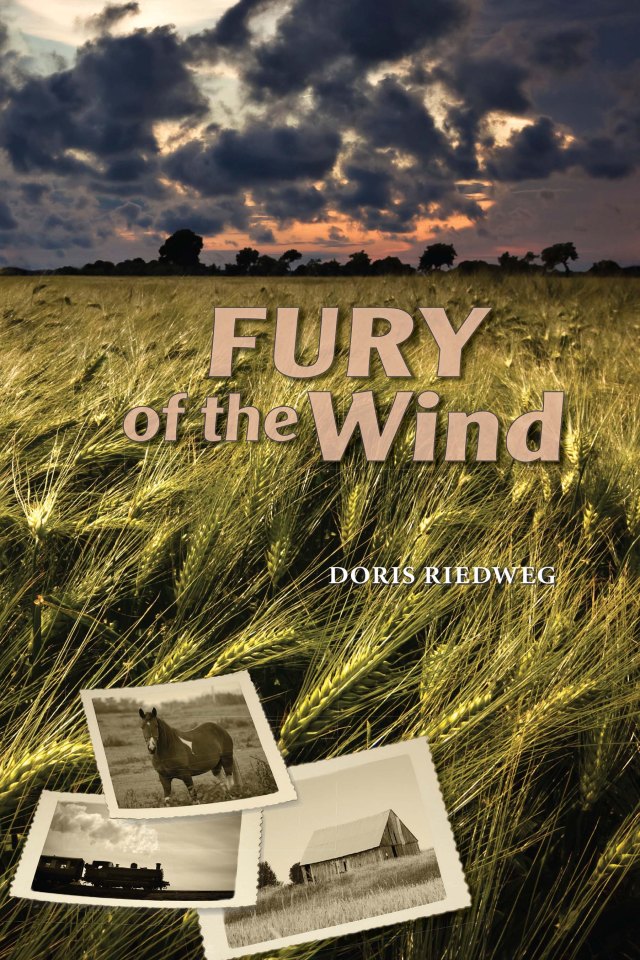
Pip: Fury of the Wind opens that territory with a scene that looks domestic and turns out to be a confrontation about social standing. Will Andrews has put a woman named Sarah Fielding to work alongside the town women, and his wife Molly is furious. The exchange lands here: "Then it would be their loss, not mine. Anyway, none of you even know Sarah. What've you got against her except that she married Ben Fielding?" And Molly's answer — "She married Ben Fielding, and only a coarse woman or a slut would have considered doing that" — is the whole town's prejudice compressed into one line.
Mara: What this means in practice is that Will is fighting a social order that has already decided the verdict. His mild needling doesn't move it; Molly slams the door, and he's left muttering at his papers. The power isn't in the argument — it's in the silence that follows.
Pip: Poodie James runs a similar dynamic at higher stakes. Engine Fred sits across from a mayor named Torgerson and tells him, quietly, that he knows what Torgerson did twenty-one years ago. Torgerson's defense is pure contempt: "He's a freak, an unclean little freak. He contaminates the town." The machinery of official cruelty, dressed as civic concern.
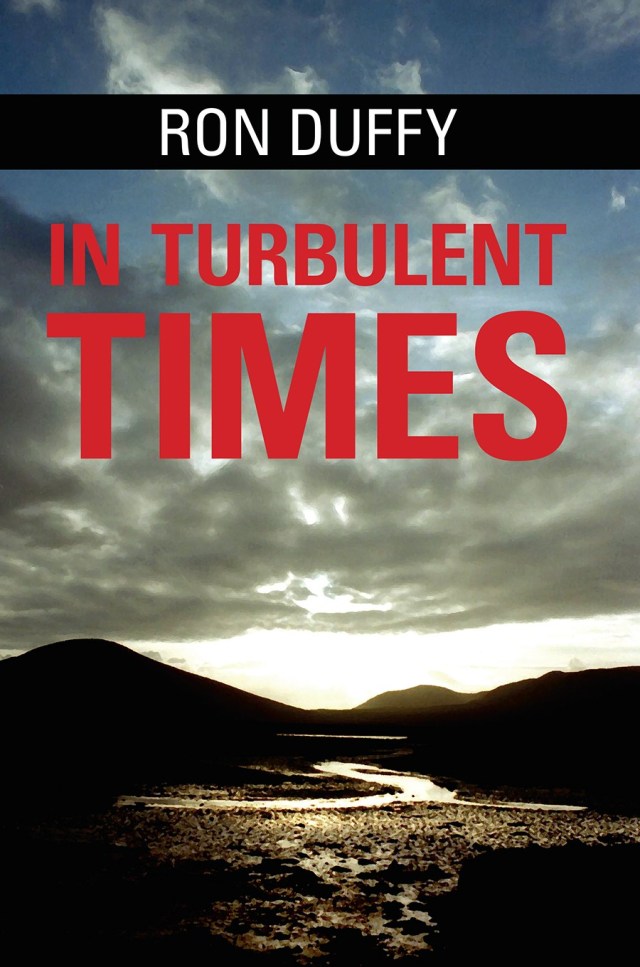
Mara: In Turbulent Times opens differently — a birthday drive through the Irish countryside in a new Bentley, stories of drumlins and dolmens, a hotel dinner. The ease of that scene is doing work; it establishes exactly the kind of world that turbulence will later disrupt.
Pip: Blood, Feathers and Holy Men puts Brother Rordan tied to a pole, a burning bough at his scalp, a painted warrior demanding he sing. He chooses the Salve Regina. That's not a metaphor — it's a man deciding what he is in the worst moment available.
Mara: The two Arrows excerpts — posted on different days but from the same novel — follow a narrator navigating the Spanish Inquisition, protecting a plague-stricken captain and outwitting an inquisitor with a well-placed mention of the king. The stakes in both are life and death, and the tool is language used precisely under pressure.
Pip: Small Change is quieter — a boy sent home from choir practice for looking at stained glass windows, explaining to his mother that the other kids are slow. The Circle is quieter still: a retired admiral visiting his sister's vegetable garden, at peace with himself for reasons he can't yet explain aloud.
Mara: Swamped and Straits and Turns round out the range — one a business negotiation over wine, warrants, and commissions; the other a solitary traveler burying a wolf with stones and walking away smiling. Hours of the Stars adds a poem in the mix, a Roman galley caught in the Euroclydon wind, cargo thrown overboard, salvation uncertain.
Pip: Cloe and Alexandra sits at the edge of both fiction and lyric — a poem that asks what "I wish you the best" actually means, and answers: probably not much. Which is its own kind of pressure.
Mara: That question — what words mean when feeling has already left the building — is exactly where the longing segment picks up.
When Longing Outlasts Its Object
Pip: This is the territory where the poems aren't about a tradition or a history — they're about the specific ache of wanting something that has already shifted into absence.
Mara: Cloe and Alexandra frames it as a linguistic problem: "Would have been better if he wrote: 'Sorry that I couldn't?'" The polite farewell as evasion — the nine-headed monster of circumstance doing the work the speaker won't do.
Pip: Marginal puts the same absence in physical terms: "night laments her dark role in the photosynthesis of your absence." That's longing metabolized into the body's own chemistry.
Mara: Katerina Anghelaki Rooke's selected poems move through environmental grief into something stranger — horror at the destruction of forests that "strangely mixes with elation" when the ego finally releases its grip. Tasos Livaditis, Poems Volume II, carries a grief that leaves no footprints. Titos Patrikios turns it political. The Neo-Hellene anthology, Antony Fostieris, George Seferis, and Kariotakis-Polydouri all ask the same question from different angles: what do we do with what we cannot stop feeling?
Pip: Impulses answers with a sculptor making everything too large — hands big enough to embrace the world, legs to straddle the universe. Overcorrection as grief's own logic.
Mara: The fiction excerpts were asking the same thing. The ideas don't stop at genre lines.
Pip: What stays with me is how much of this — the poetry, the fiction, the longing — is about the gap between what language can carry and what it can't.
Mara: The next episode will likely push further into that same territory. There's more to cover.
usual from the heat and being on them all day, were propped on an ottoman. “I really am vexed with you, Will.” “Oh?” Will did not look up from the prize list in his hand. “Yes, you certainly were not using your head when you put that Fielding woman to work in the same booth as Jean McKinnon.” Will leaned over and switched on the lamp beside his chair. “Damn it, Molly, I’m not in the mood to argue.” “I don’t intend to argue,” Molly said in a tone Will recognized as being sarcastically sweet, “because you must have realized by now that you were in the wrong.” Will looked at her over the top of his eyeglasses. “If giving the girl a chance to get to know the town women was wrong, then I plead guilty. As a matter of fact, now that you’ve mentioned Sarah, I’ll tell you I’ve been thinking of asking her to join the Agricultural Association.” His eyes twinkled mischievously. “With her background she’ll make a great secretary.” Molly’s mouth fell open then clamped shut with a click of her dentures. “Will Andrews,” she gasped, “you wouldn’t dare.” “Why wouldn’t I?’ “You know perfectly well why. Not one of the town women would ever have anything to do with the Association again, and you know it.” “Then it would be their loss, not mine.” He felt his bile rising. “Anyway, none of you even know Sarah. What’ve you got against her except that she married Ben Fielding?” “Well, that’s it, isn’t it? She married Ben Fielding, and only a coarse woman or a slut would have considered doing that.” “Then,” said Will mildly, “there must have been sluts in Nimkus long before Sarah arrived.” Molly sprang to her feet, her lower lip trembling. Turning her back to him she strode, with all the dignity she possessed, to the bedroom and slammed the door behind her. Will watched her over the top of his gold rims. Oh drat, why wouldn’t she talk about it, even after all these years? “Oh, you’re an old fool, Andrews,” he muttered under his breath. He should know by now that needling her never got him anywhere. He sighed and looked down at his papers.
‘This has been a splendid day.’ Clifford Hamilton pronounced each word separately, distinctly and with obvious satisfaction. ‘I’ll drink to that,’ said John Simpson, a prematurely balding colleague of Clifford’s at the Royal Victoria Hospital in Belfast. He was an English-trained heart specialist who had come to Belfast from the Royal Army Medical Corps after the war. ‘I think we can all drink to that.’ Clifford’s wife Fiona displayed her prominent teeth. ‘And to your fiftieth birthday, darling. What a wonderful way to celebrate.’ A chorus of ‘Hear, hear’; ‘Happy five-o, Clifford’; ‘Great day altogether’ responded to Fiona’s remarks. The five members of the jovial party had spent the day in Clifford’s new Bentley—a birthday present to himself—driving around the countryside of the Drumard hills and visiting places that Clifford had known as a boy. He had amused his passengers like an Irish jarvey with stories and histories and half-remembered ballads about drumlins and dolmens, outlaws and rebels, murders and massacres, big houses and castles, and their restless ghosts. The sun had shone all day from an unblemished sky; the road had shimmered in front of them; the sea glimmered and sparkled; and the mountains languished in a lavender haze, like a herd of huge animals sprawling in the sun at noon. The journey had ended at the Drumard Strand Hotel, a large red sandstone building on the green foreshore at Carraghlin, where Clifford and Fiona’s twenty-year-old son Julian and his girlfriend Catriona had joined them. ‘I admit it’s not my favourite bit of architecture,’ Clifford had said of the hotel. ‘But here we can dine in a manner befitting the mood of the day—splendidly. A grotty little cafe on the main street just wouldn’t have been right.’ ‘And what can you tell us about this place, Clifford?’ asked John Simpson’s recently married wife, Susan, a short, slim, sharp-featured young woman from a wealthy, landowning politician’s family in Oxfordshire.