Helena On the first day of spring, I call you ‘Come, let us spread colours to the edge of the plain to the far end of the cosmos a cyclamen deep in the rock fissure of empathy, ‘Come, let us unfold the whitewash of hyacinths unto the hoarfrost of last night perhaps the impulse of blood will turn its icy mirror into the freshest cicada song a new illumination that becomes a fireball like the virgin sun ray that opens a smile on the gardenia white petals exploring the laughter of your emotions and the crystal star blushes in the embrace of the serene firmament
Memory Sandwich The Monroes migrated from nobody-knows-where just as the swallows were turning up famished at our backyard feeder. A van with lilting shocks and unfamiliar licence plates deposited their belongings on the lawn of a neglected two-bedroom. By the time the leaves on the poplars in Falaise Park had begun to coil, just as the wings of the leatherjackets started to sag, the family up and moved away, a memory. Afterwards a succession of temporary tenants occupied the bungalow. There were couples with children and couples without. There were lessees, owners, renters and loners, none of whom were able to do anything about the air of despondency permeating that sullen cedar structure. Fresh paint, a garden — nothing worked. For years it sat empty, victim to vandals, rodents and mould, roof shingles scattered, windows lost to target practice. The day it was bulldozed that house looked much as it did the day the Monroes moved in: unloved. Besides the adults, Nelson and Connie, there were three kids: Gus, the eldest at 16, had a purple birthmark splashed across one eye; Lana, a year younger, was a quiet girl whose attempts to conceal sprouting mammary glands were unsuccessful. Shortly after their arrival the youngest crossed the street to where I was fanning my collection of baseball cards. I had been aware of Freddy observing me from a bedroom window. He introduced himself with the assurance of someone accustomed to the role of stranger. There seemed a precocious savvy in those squinting eyes. – Wanna be friends? he asked. To facilitate camaraderie Freddy faked an interest in baseball. He misused terms like line drives and pop fouls, cannily eschewing…
Unobserved The unobserved specks blow by stay anonymous while drinking coffee in the morning not fathom its meaning like some innocence in your kiss remains unnoticed like hand touching pencil shaft while you write reverently but when you idle mesmerized by a moonlight, distraught sensation arousing stops you on your tracks or refreshes delight of crafting poem
. . . Stathis, Stathis, however did you manage it? Everything is going superbly, just as your fine lad said. It is almost as if all this never . . . A bolt of energy struck through him. Exercise. But at this intersection of hour and mood? To him, morning and exercise are related. Exercise collided with now. The commitment of discipline must not loosen, derange, or unfasten him. As if on command, he rose and stood at attention. His body commanded his mind to command it: a few knee-bends, jumping jacks, and he extended his hands almost to the walls. Inhaled deep, exhaled slow, his breath became cuprous, tarnished, an obese air; but he continued, and his lungs butterflied and collapsed, perhaps in rehearsal for a ritual in which he might never take part. There has been no extraordinary exertion, yet the burden of boredom diminished him to the figure of a junkman’s nag tolling uphill before the overload of relic erudition. Half of a man knew it was war; half of a man insisted it wasn’t. In the confusion, it was difficult to discern which entered the theatre of war with a plowshare. The blunder into the hunt, to discover oneself, was a quarry that dogs followed in all directions of the cosmos, dogs which ran and followed his steps as if ready to bite, to dig deep in his flesh with their teeth. He stopped as abruptly as he started and sat on his bed. His mind flew back to the island.
A sad story, Lona thought. She wondered how many other homes had buried treasure—perhaps the owners didn’t even know it. Back in New York the buyers would be interested in stories like this one. When she got home should she find a buyer for the icon, too? No, she wanted the icon for herself. She would not be turning it over to the businessmen on her return, but somehow, she would have to account for the cash—it had cost $50 U.S. dollars—that she had been given to purchase these items. She would cross that bridge when she came to it. She considered its size, weighing it in her hand like tomatoes at the grocery store. She checked once more that the door was locked, then she carefully unwrapped the distinctive Beryozka wrapping paper from a newly purchased balalaika, a musical instrument with a long narrow neck and a triangular body. There was no mistaking its shape even in wrapping paper. Once the paper was removed from the balalaika she wrapped the icon in her kerchief, then squeezed it into the space between the strings and the body of the instrument. It just fit. She re-wrapped the Beryozka paper around the balalaika, being careful to tape it in exactly the same spots as before, then held it up for inspection. You could hardly tell a thing—just the merest suspicion of something rectangular. She placed the wrapped balalaika into a mesh shopping bag such as the Soviets seemed to carry everywhere. This one she would be taking on the plane with her and stowing in the overhead baggage compartment. That done, she pulled out a kit from her suitcase that contained some acrylic paint such as children use and bottles of powder and Vaseline. The jewellery, a pendant of solid gold and very old, was easy to doctor up; it was not of religious significance, although Krov had tried to tell her otherwise. It would find a buyer who was simply looking for something pretty and special. She considered if she had time to invent a provenance for it—a story about some czar giving it to his mistress, perhaps? The consortium had rapped her knuckles once before for inventing but she couldn’t resist. Who’s to say that it was not true? What Russian peasant before the revolution would own such a rich thing? She removed the elaborate gold chain and put it with her own modern jewellery, then re-hung the locket on a leather strip. She put the locket into a tiny, leather, filigreed sack. She would wear it around her neck. The prayer scrolls were also easy. They would be placed among the pencil sketches of St. Isaac’s Cathedral that she had completed…
The Day Before The Circle H Ranch Willow Springs, Montana It was Saturday. The day before the sale at the Circle H. Joel had toyed with the idea of driving over to the Ramage place, but a part of him was saying that wasn’t right. He knew from his conversations with Roy that the Ramages saw him as competition. This had been the weekend of their production sale for years. For Joel, he had set up a competitive situation by piggybacking on the Ramages’ clients. Joel didn’t like that at all. He had run into Jack Ramage once in town only a week or so earlier and had tried to make pleasant conversation with him. He could tell that Jack was carrying a lot of anger and resentment toward him. At first, he thought that it was all about how Ramage felt about him, but later in the day when he was telling Cindy about the chance meeting, she added another angle to the conversation: the Ramages were advertising that their sale was also a herd reduction sale as a result of the drought. The Ramages had traditionally sold their horse crop as saddle-broke two-year-olds, but this year, in addition to the fifty two-year-olds for sale, they were also selling thirty mares and thirty yearlings. They were really cutting back. The good news for Joel was that the sale of the quality mares and younger horses should draw even more folks into the country for the sale. The bad news was that, with that kind of horseflesh available on the day before his sale, he wondered how many people would have any money left on the Sunday to invest in any…
There are, truly, thousands of ways for one to regain his life and only one to waste it. The tenants complained for my oily hair that had covered half of the roof, they didn’t know how many forgotten people still existed yet, to be truthful, they weren’t shooting; what’s the purpose of getting involved with death trances, better sit by the window and knit a sock. This often happened to unfortunate Rachel as she’d step up on the chair to dust the window she’d suddenly see her true life; then she’d step down a bit cold on her shoulders and she’d put her overcoat which still seemed as empty. The villagers finished hastily as if in fear and they discovered a choked person there between the potatoes where they were digging. Thus, after we lost everything, mother used to leave the door open and Hagia Anna got pregnant although very old, until at the end you could find most of the dead among the survivors, old stories to narrate sitting by the fireplace after a good supper and the trap of certainty under the carpet.
Inebriation He too fought side by side with Thanatos he too longed for peace and prosperity for a wife and two kids, he longed for values his parents taught him, he longed for the little life of the citizen who spends his days at the factory, cursing for no reason shouting just to be heard over the endless buzz of the machines. He too had a good time at home, he raised two kids one became a policeman, with a steady job, wages, a pension, the other took up studies to be a teacher, he said he wanted to mould the new generation of pacifists, anarchists, and disobedient citizens, reactionaries, the ones who always complain about anything and everything like those who think they know everything though unable to play with their penises properly and the old legionnaire sitting alone in the dimmed lights of their Legion sips his beer, all problems solved, he thinks. The rest of the details are for the thinkers of this country, let them untie the Gordian Knot, the rope he was tied to was only five meters long and like a donkey tied with a rope to a stick in the ground, the poor legionnaire had only this far to reach, enough, enough of this philosophy, he too adhered to set rules, he too begged for his share of the Heavenly Prize and grabbing his beer once more he dissolves himself in his inebriation after all he too fought for the motherland’s freedom, for their values, for peace one achieves by fighting a war, and which the legionnaire realized is but a euphemism, an idea once held, a pipe dream for which he fought only to be left alone and miserable drinking his beer and waiting for Thanatos to come and make his day by taking him away for good.
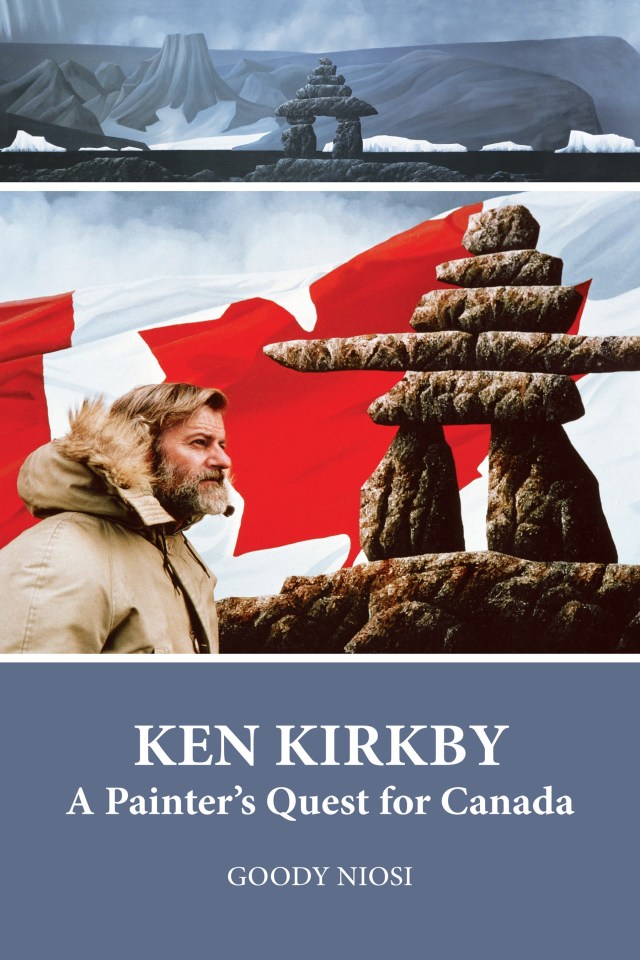
“I mean no disrespect, whatsoever,” Ken said. “I know the symbol well. But that is the wall.” Albert exchanged a few words with Leon and then nodded. The painting would go on that wall. Then Ken and Leon tackled the problem of hanging the massive painting on a marble wall. The maintenance staff concluded they would have to drill into the ceiling beams and suspend the painting from thin stainless steel wires. They hung the painting after business hours. Ken invited the media. He had the panels delivered to the lobby where he bolted them together. Salvador and his staff came along to help. Many members of the young professionals group also arrived on the scene. The media asked how much the painting had sold for. “No comment,” Ken said. “Was it a lot of money?” “No comment.” “How did you contact Mr. Reichmann?” “No comment.” “You’re an artist,” one of them said. “How do you know how to do all these other things? Artists don’t know how to be entrepreneurs. Who helps you?” “That’s a big question,” Ken said. “It’s a spiritual matter. I don’t wish to discuss it.” “What do you mean it’s a spiritual matter?” “Just that. I get my knowledge, inspiration, and advice from a higher authority and beyond that, I don’t want to discuss it. But, I will say one thing – my advisor is Mr. Albert Reichmann.” “Yes,” Albert said, when a reporter asked. “I am honoured to be Mr. Kirkby’s advisor. He is doing wonderful work.” Those few words gave Ken the credibility he’d been looking for. He had achieved what his father had always had – the power to command respect and attention wherever he went. Later that night, when he was one of the last to leave, he paused to look at the painting that he had envisioned hanging in that space so many times. It looked exactly as he had imagined. It was in perfect proportion to the immense lobby. It wasn’t until one walked closer to it that one felt the full impact of its size. His greatest debt was to Salvador, who had arranged the meeting, but when he told him that he wanted to give him several paintings, he refused. Ken painted several canvases regardless and delivered them to his home. Before getting back to the task of Isumataq, Ken returned to the Arctic. Keith Sharp, the burly Englishman, had moved to a parcel of land near Rankin Inlet and extended an invitation. Ken included Michael as well as Avril the photographer, and Roberto and Egidio, the filmmakers, in his entourage; in mid-July, the somewhat motley crew – loaded down with…






 Manolis Aligizakis