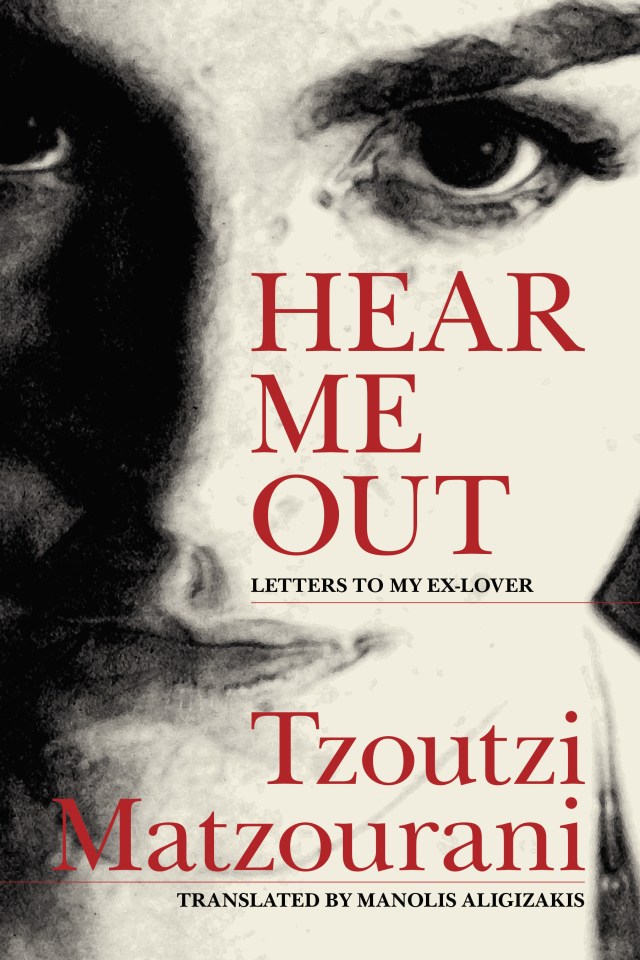
Avoidance Comfortable, cozy you are in the safety of four walls pasted in lavish satin soft hues, golden threads and exquisite embroidery far away from risk of battle hammering just outside your front step, always calculating ifs and whys falling or losing fear controlling, mind abusing your logic, yet when love beckons you you don’t embrace it and when affection dwells in your heart you don’t bestow it unto the dry petals of your life why are you still breathing?
Last year at Brodick was a disaster. It should have literally been the last. But back they came. ‘This year will be even better than last,’ his mother had written. ‘Morag is her old self again after that awful experience in August and Rowena is just such a sweet little doll. We are going to be so happy showing her off to all the other guests and visitors. She will be the Little Belle of Brodick this year. If only your dear father could be there in flesh instead of in spirit. But how proud he must be in any case, as I am. Hamish has continual headaches these days and Alec is pale and liverish from working so hard. They both need the holiday at Brodick, as you must too. Could you not take the earlier week off and be with us the whole time? After all, you are the boss of that firm of yours. And Morag never sees you through the year. She misses you. She says you are becoming more a stranger than a brother.’ This year the changes of last year were twelve months worse. Mrs Anderson’s whole body was turning to steel, like her tiny, ball-bearing eyes. Morag was no longer pregnant. She was anaemic and tired and bitchier than ever. Rowena ran away every time Ian approached and screamed that he was going to beat her. This invariably brought Morag or her mother or both of them running to the child’s side, yelling at Ian to leave the little dote alone, to act his age and stop bullying a mere infant. Hamish and Alec sat all day every day in the stuffy sitting room, playing cribbage almost interminably. There were no walks, no golf, no drinks. Only the boat-trips were continued, apparently for Rowena’s sake, but Ian had missed those during the first week of the holiday. ‘Never mind, Ian; we’ll all enjoy the return trip to Gourock at the end of the week,’ his mother said. ‘It’ll be so lovely to have us all together again, the whole family, sailing up the Clyde towards home. I bet your dear father is sighing so contentedly if only we could hear him.’ ‘I won’t be going back with you at the end of the week.’ ‘What do you mean, Ian; you won’t be going back with us at the end of the week? Of course you will.’ His mother’s voice grew shrill, like the high-pitched squeal of scraped metal. ‘I won’t be. I’m leaving this morning. I’m catching the boat back to Belfast tonight.’ ‘But Ian, it’s only Tuesday,’ Morag pointed out. ‘I’ve hardly seen you.’ ‘Look your fill,’ said Ian, glancing at his watch. ‘You’ve got one hour and thirty-five minutes.’ ‘Oh you insufferable, inhuman monster,’ Morag yelled. ‘You’re making a mockery out of family feelings and affections.’
And so is this one who has aged and whose sin and regret don’t keep her awake beyond herself and who doesn’t care for gossip and such These are today’s women, one of them says, their husband is never enough and how can he be enough when he’s old? The other said, and compassion, standing erect, shines like a shield in the sundown with Justice hanging onto it like a thousand-year-old toothless mast, still shivering in its anger. The third maid, the wisest, kept her mouth shut and her eyes were blind and floating in dreams. Truly strange: people talk about everything foreign and distant to them while they experience all other burning things which keep them awake during the night in their silence and when they die they take them to their grave; for this reason the dead are silent since they live their true life in the grave. In fact the clerk was ready to read the daily police reports in the tomorrow news. Indeed he was on time: certainly five years in jail. He didn’t know, perhaps because he always hated the keys, that each person keeps the key to their prison in their pocket and pretends to have forgotten it, and this is their prison.
JOY Hope the flower opposite the bulrush smiles like my love for the verdure cypress plays tenderly with the rays graves become fragrant wedding chambers pulse of the forest, gallop of a doe next to where we two were laid wild lilies dripped their souls a bloody rose, my joy blooms. I see the breeze playing with your hair your eyes are deep as I find the path of my life this April I no longer fear for the anemone which wilts in the love of life and I charge to drink the nectar of your lips.
Hera The moment came when Hera ordered to throw me into the darkness of the uterus, moist, protecting, cell by cell molecule by molecule the concept of division to define concepts, images yet undecipherable I wasn’t bad in my crudeness many-faceted multi-layered manifold the expressionist the hedonist the self-absorbed the life’s laughter that I was meant to become when the cosmic compromise started taking control of my life
Between Minimal and Infinite No one is born in his homeland some souls welcome us to life others say goodbye departing in between we float at the mercy of a foreign language rusted words empty shells meaningful urns beings focused on the foolishness of love sailors of heavenly seeds, unwritten music scores sailboats unload light and colourful allegories mythology memory of light and darkness I would trade my days to regain a new birth in the loss this Edem is not in our time it is a fiber of the heart blind music shadow of the mind searches for a world habituated different light overflowing but doesn’t change wedged in the flow of ecstasy between the minimal and infinity
Cyber Love What strange games our minds play with us, my love! I started falling in love with you, without even knowing you. I have never heard your voice yet I dream of you and I find myself worrying about you. I “feel” you sad, tired and stressed. I expect your messages, you vanish for a day and I miss you so much. Slowly I fall in love with you. You come into my mind and in my soul deviously you coil yourself around me like a spider its web, it becomes my sweet routine. How are you in reality? Is your smile the way I imagine it? Is your hug the way I close my eyes and imagine it? Your arms? And that sadness and melancholy that goes through the words and reaches my soul? Is it true as I feel it?
The picnic brought out most of the people who lived in the vicinity of the school or whose children attended the school. As well, because it was a Sunday, people from other school districts as well as relatives and friends of the parents came to gossip and to munch on a few goodies. It was usually a relaxing day for the adults and their only concern was to avoid sunburn and prevent their children from consuming so much food that their little stomachs would rebel and reject the contents. Which frequently happened. They came on foot or in wagons and some even in cars. Those who arrived by wagon would unhitch their horses, lead them into the barn for the day and join their friends and neighbours beside the school and the confectionery stalls. They stood around in circles or brought out chairs or sat on the grass in the shade to smoke and talk. Thewomen watched their children, compared notes and exchanged information on various women things. We found out in the evening whether any of our school indiscretions had been leaked from the loose lips of our friends, then through their mothers to our mother, and were relieved when no accusations were made or suspicious questions posed to us. The children did what children always do; they began by spending some of their money on the various goodies before gathering on the sports field to play games, as they waited for the official program to begin. On a nice warm day, the merchants would be very busy selling pop and ice cream, not to mention a variety of candies, suckers and chocolate bars as well as items such as oranges and hundreds of hot dogs. Even though the prizes awarded to the winners were chits for food items, the children could not resist the temptation of the smells and sights and just had to have some of the good things before the races started. At approximately 1:00 PM the main organizer, usually the principal, would get his teachers and other helpers together and they would walk out to the sports field to begin the various races.
…At the same time, the collection’s erotic gaze can become rhetorically intense, even overwhelming. “Nonchalance,” “Labyrinth,” “At the Restaurant,” “At the Metro,” “Shopping,” “Heatwave,” and “Conches” frequently place the beloved body at the centre of the speaker’s imaginative world. This is consistent with the poet’s lyric practice, in which Eros is a cosmic and metaphysical force. However, the strongest poems are those that preserve the beloved as an active participant rather than only an object of description. “Music,” for example, works because touch, kiss, and the word “transcendence” are shared gestures. The poem’s lyric force comes from mutuality.
Greek mythology is another important source of the collection’s vocabulary. Eros, Hades, Elysium, Chronos, Thanatos, and ancient figures of fate or divinity appear beside phones, buses, supermarkets, restaurants, news broadcasts, and military technology. This collision between mythic and contemporary registers is central to the book’s aesthetic. Myth allows the speaker to enlarge ordinary experience, while contemporary details prevent the mythological language from becoming merely ornamental. In “Hunters,” two men with rifles become participants in a fatal, almost mythic encounter with Thanatos. In “Hummingbird,” the speaker imagines rebirth through the primordial womb before being recalled to the immediate task of watching a bird feed.
The book’s use of imagery is consistently painterly. Red, black, white, blue, gold, and purple recur with symbolic intensity. Red is particularly mobile: it is blood, carnation, wine, erotic heat, political violence, and the colour of the book’s title. Black appears in mourning clothes, coal dust, weaponry, night, industrial extraction, and the fear of death. Their interaction is never stable. The book’s world is not divided cleanly into passion and darkness; each colour enters the territory of the other.
“Retired Collier” and “Bitumen” provide a powerful late pairing. The former portrays a former miner whose body and memory remain marked by coal: black lungs, tunnels, quotas, labour, old age, and the residual darkness of industrial work. “Bitumen” expands this blackness into a critique of resource extraction, multinational profit, atherosclerosis, ecological damage, and financial abstraction. The poems suggest that black is not merely a colour of death but an economic and environmental condition. It accumulates in the body, the landscape, and the language of corporate value.
Formally, Red in Black is composed primarily of short free-verse poems, often one per page. This presentation gives each lyric a visual autonomy and allows for sharp tonal shifts. The book’s structure is associative rather than narrative. Eros gives way to war, war to domestic observation, domestic observation to philosophical meditation, and then back again. This movement can be disorienting, but it is also meaningful. The collection insists that no experience can be safely compartmentalized. A supermarket can contain both erotic reverie and economic decay; a bus can contain marital loss and public violence; a restaurant can contain paradise while war persists elsewhere.
At times, the collection’s density of imagery and abstraction works against precision. Words such as “eternity,” “transcendence,” “totality,” “freedom,” “meaning,” and “perfection” recur often. They are most effective when rooted in a concrete situation: Fatima’s lentils, Paul’s missing leg, the old man’s maple leaf, the driver’s glass partition, or the bread crumbs offered to sparrows. The poems gain particular force when the philosophical claim emerges from a material scene rather than preceding it.
This tension is nevertheless integral to the poet’s work. Red in Black is ambitious because it wants lyric poetry to address both the intimate and the geopolitical, both sensual experience and public systems of violence. It refuses the false choice between erotic beauty and ethical responsibility. Its most compelling poems reveal that these domains are already connected: the body that desires is also the body that can be wounded, displaced, aged, exploited, or mourned.
Ultimately, Red in Black is a collection of ethical contrasts. It contrasts private pleasure with public catastrophe, political rhetoric with bodily injury, industrial profit with environmental and human damage, and death with the small acts of care that keep life meaningful. Its governing colours therefore become moral as well as aesthetic categories. Red is not only passion, and black is not only despair. Both are elements of a world that must be seen clearly if poetry is to remain a language of witness.
She kicked the crotch of the guy who always calls me Fuckbeard when Jago’s back is turned, but they managed to hustle her out,along with tearful Cedric who’d turned his back on the whole scenario. Now that all is quiet in the dorm, with Wolfbane locked away in solitary and his supporting cast tranked down safely in their pits, I can safely itemise matters relating to the Order of the Brazen Head. I’ve gobbed out today’s input of sleepy-time, thanks to Simba throwing a shrill tantrum that distracted Jago at a crucial moment of the dosage ritual. So now, around midnight, in the little cone of bedside light, I am the only sentient being in the Creation, an archivist of the Akashic scrolls. Pol Pot’s revolution may have destroyed my artifacts but not the cellular structure of my memory. Of course she ransacked our home, looting, pillaging, laying waste . . . But I have the Lore by heart. I’ve copied it out laboriously over the years, filling a whole series of these black books. Jago pretends to humour me in this, but I still won’t reveal my stash as his own humours are far from consistent. For example, only last month he had a sudden pre-breakfast purge of our “traumatic memorabilia”, our “hoard of faecal souvenirs” as he called the contents of our bedside lockers. “This is the dark body of the Madonna you must destroy!” he shouted at Eamonn and Cedric, sweeping away their framed photos with his fat hand, grinding the pics underfoot, those saintly mothers and martyred wives, whoever, it’s all the same to Jago whenever the neo-Freudian fit hits him. Yet he was only inches away from a lost knowledge more subversive than any of his primal infantile soap-operas. I declare this is the Gnosis of the Brazen head and these are the lost letters of its Lore: 73 Harsnett Road, London SE 27 March 8, 1943 Dear Firestone, What a pleasure to receive your letter! It displays a grasp of occult scholarship which is impressive for someone still in their first year of undergraduate studies, albeit in the shadow of the Bodleian Library, near the banks of Isis. I myself took my first degree at Cambridge before my brief scholastic period at the seminary in Rome and my later researches in Vienna. But the cloisters of Oxford must still be charged with ancient potency, even in these dismal times.