She’s not a bad person. The kids from church call her fast, whatever that means, but she’s not what they make it sound like.” “If you say so. Anyway, you were at her graduation ceremony yesterday. Isn’t that enough?” “It’s not the same thing, Ronnie, and you know it. The party tonight is at her place and it’s just for special friends.” “Well, you’d just better forget it.” Ronnie picked up his mug and got to his feet. “I’ve got to get to work. Morley’ll be ready to start the cutting. And listen, Rachael, give your mom a break and don’t make things harder for her. She has enough to worry about with Aunt Millie being sick.” Rachael’s look changed from one of self-pity to a worried frown. She stood up. “Ronnie, do you think … that is … is Aunt Millie going to make it?” A cloud passed over his face. “I hope so, I really hope so. But only God knows that, and all we can do is pray for her.” He put his mug in the sink, retrieved his cap and went out. Rachael stood for a minute longer staring at the closed door, then she went to the phone to call Lyssa. ͣMorley and Ronald were sitting at the kitchen table when Tyne walked in a little before nine o’clock that evening. Both men turned quickly to look at her. The aroma of coffee drew her eyes to the stove where a pot hissed and bubbled an invitation. Responding to their greeting, she bent to kiss Morley’s cheek. Sensing his intention as he started to rise, she murmured, “Don’t get up, honey. I’ll help myself to the coffee.” “But you look worn out, Sweetheart.” “And you have been working all day in the fields.” She filled a mug with coffee and sat down at the table. Both men spoke at once. “How’s Aunt Millie?”
Poetry as a Return to Origins and a Form of Resistance
By Attila Balazs
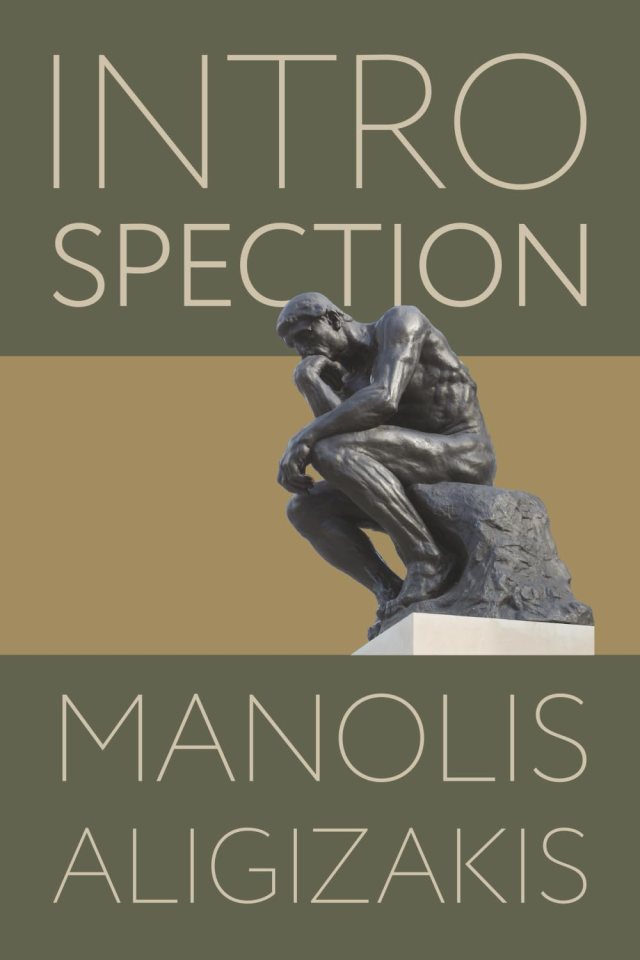
…One of the volume’s significant achievements lies in its capacity to unite seemingly incompatible registers. Mythology, philosophy, eroticism, biography, personal history, and social criticism coexist in expansive, discursive poetry that at times approaches the prose poem. The language moves from solemnity to sarcasm, from prayer to invective, and from contemplation to revolt.
Images often accumulate with torrential force. The poet does not always seek classical clarity, but rather intensity. He constructs through associations, returns, repetitions, and contrasts. Light and darkness, flesh and pneuma, humility and pride, logic and madness, life and death define one another.
Madness occupies a privileged place within this poetic system. It may represent suffering and psychological rupture, but also freedom from the logic of a diseased world. The madman possesses the right to speak the truth that rational people avoid. The poet and the philosopher stand at the margins of society precisely because they see what others refuse to see.
From here arises the ambivalence of the title Introspection. The inward gaze does not lead to withdrawal or passivity. On the contrary, the inner depths become the place from which the confrontation with the world begins. The self descends into its own viscera, into memory, desire, and the abyss, only to return to the surface with images and truths it offers to others.
Introspection thus becomes a form of responsibility. To know oneself means to know one’s roots, wounds, desires, and contradictions. It also means understanding that individual experience is not isolated, but belongs to a shared history and a common humanity.
The poetry of Manolis Aligizakis is a poetry of deliberate excess. It does not fear great words: destiny, eternity, truth, freedom, immortality, beauty. In an age in which such notions are often viewed with suspicion, the poet recovers them and restores their gravity. He still believes in art’s capacity to change the human being, defend dignity, and save something from death.
At the centre of the volume lies a paradox: the human being is mortal, yet consciousness aspires to immortality; man is fragile, yet dreams of the Overman; he is alone, yet speaks in the name of all humanity. From this contradiction arises the energy of the poems.
Introspection may be read as a symbolic autobiography, a modern epic, a philosophical meditation, or a testimony to the condition of the creator. All these readings are possible because the volume refuses to remain within a single genre or a single era.
Aligizakis constructs his own mythology from fragments of the Greek world, family memory, the experience of exile, and the great questions of European philosophy. Within this mythology, the poet is simultaneously child, lover, fighter, recluse, prophet, and martyr.
At the end of the book, the feeling remains that poetry is his true homeland. It is the place where the past may be revived, where the dead may be summoned back, where love may suspend time, and where the human being may transcend his limits for a moment.
Through creation, the poet does not definitively defeat death, but he refuses to grant it the final word. His traces remain imprinted in language, like the footsteps of his ancestors in the native soil. And the journey from Alpha to Omega does not end, but is transformed into a new beginning.
This is perhaps the true meaning of introspection for Manolis Aligizakis: not an enclosure within the self, but a descent into the depths of being to discover a light that may be brought to the surface and shared with others. A fragile and dangerous light, capable of burning, but also of guiding. A light that bears the name of poetry.
…what beautiful mound hidden under that skimpy bathing suit she wore, the Muse of my day with her flowing brunette hair, her balanced curves, her excellent sized breasts, her exquisite buttocks which she moved in an erotic way unparalleled to any I had ever seen and trust me I’ve seen many, far too many to know the beauty from the average and even more so from the unworthy of my glance and this ethereal beauty walked as if floating over the smooth sand just as my dream of touching those exquisite curves brought me to heavens. Indeed, the ancient Muses were there interacting and playing with her, and I couldn’t see any difference between today’s earthly Muse and the Ancient ones, and here she was turned towards me when, suddenly, our glances met. She sensed that, behind my sunglasses, my eyes were fixated on her ethereal saunter, and she remained focused on me for more than ten seconds: the first acknowledgement. Yes, I was looking at her, and she knew it, and that was enough for the game of love to be played when she went back to her chair and, turning it to the sunshine, she lay her calligraphic body onto the multicoloured towel and gazed at the open water of the quiet and serene cove. I let myself travel along with her glance. I marvelled at the natural beauty of the cove with lapping waves and its whooshing breeze, while I didn’t hesitate to imagine this day’s wonder in the body of the tourist. In her early thirties she represented the female queen of the beach, yes, there were others too, some very pretty as well, yet this one was the special one of who one with exquisite taste, like myself, could easily get himself loose in the imaginary game two people play when the chance arises and this were my thoughts when suddenly the Ammoudara Aphrodite turned her body to her stomach letting the bright sunshine play with her back, from the top of her head to the very lustful buttocks and legs of hers, indeed it was that moment that she stared towards where I was sitting and realizing I was still with her she fixated her glance towards me. I raised my hand and lowered my sunglasses a bit, and seeing her from the top of my glasses, I smiled a full smile at her, to which, to my utter surprise, she also lowered her sunglasses and stared at me from the top of hers.
Pip: Manolis Aligizakis has assembled a catalog that moves from ancient Greek anguish to Canadian prairie winters to stock market schemes — which is either a literary festival or a very ambitious reading list, depending on your weekend.
Mara: vequinox brings all of it together on this site — translations of modern Greek poetry, original verse on love and desire, and a run of novels spanning hardship across continents and generations. Let's start with the poetry coming out of Greece.
Voices From Modern Greece
Pip: The modern Greek poets gathered here are working a particular problem — how do you hold loss, resistance, and beauty in the same breath without one canceling the others out.
Mara: The Yannis Ritsos volume sets the tone early. The poem "The Inexpressible" builds toward this image: "the blind musician, tired, goes back up. He puts his violin case on the chair. He opens it; two of the three glasses are in it. They are shining and whole."
Pip: So the broken things you carried out in guilt come back intact — the poem turns on that reversal, the indestructibility of what you thought you'd lost for good.
Mara: Constantine Cavafy's "Che Fece … Il Gran Rifiuto" works a related tension — the great No that is right and still burdens its speaker for life. Nikos Engonopoulos in "Goalpost" pushes into civic dread, asking whether the Sunday bells will be followed by hymns or machine guns.
Pip: Engonopoulos lands the ambiguity without resolving it, which is its own kind of answer.
Mara: Tasos Livaditis in "Simple Talk" insists on plainness as survival — speaking, loving, dying "in a simple way." George Seferis in "The Shape of Fate" asks who orders destruction from behind, and Titos Patrikios watches a man of creative mind reduced to counting whether his wages last the month.
Mara: Antony Fostieris names "certain pain" that strikes the empty heart beyond all desire. The Neo-Hellene anthology and the Troglodytes collection round out the range, from birch-forest dawn to an invocation of the Goddess to purge the ego entirely.
Pip: Ten poets, one through-line: the thing that survives is rarely the thing you expected to keep.
Mara: The love poems take that survivorship somewhere more intimate — let's move there now.
Love At Both Edges
Pip: The love and desire poems here are not soft — they treat longing as a force with weight and consequence, something closer to weather than to sentiment.
Mara: "The Incidentals" opens the territory directly: "the seething angst of lust demands her body's contours and dark caves on the altar of Aphrodite deserving unemotional dedication, like any archon sitting up high, like any God jealous or self-absorbed and relaxed."
Pip: Desire framed as liturgy — the body as offering, the worshipper as functionary. That's a cold altar.
Mara: "Hear Me Out" pulls in the opposite direction emotionally but lands in the same isolation: two people on parallel paths going opposite directions, past the point where they first met, with only the roundness of the earth as any possible reunion.
Mara: "Wheat Ears" compresses the whole arc into image — "two bodies defining the shape of a monad," synthesis as astronomical and emotional at once. "Rendition" closes it with a line that strips possession entirely: "Of all you have amassed, none is yours."
Pip: Love, desire, and ultimately the inventory comes up empty. The novels take that emptiness and put it in a house with bad insulation — let's go there.
Novels Of Endurance And Reckoning
Pip: The fiction here keeps returning to people held in place by circumstance — weather, pregnancy, poverty, complicity — and asking what they do with the time they cannot escape.
Mara: "Fury of the Wind" makes that literal. Sarah, isolated on a prairie homestead through a brutal winter, moves house plants to the kitchen table each night to keep them from freezing, writes letters that take weeks to arrive, and waits. The passage reads: "she missed the companionship of others, especially Penny. What would she give to be able to sit down to a cup of tea in Penny's cheerful kitchen?"
Pip: A cup of tea as the full measure of what isolation costs. That's a precise kind of grief.
Mara: "The Unquiet Land" puts a different kind of waiting at its center — Mother Ross, who knows Caitlin is pregnant before the wedding, removes her own mother's ring from her finger and gives it to Michael for the ceremony. She hears Caitlin sobbing upstairs and swallows her own agony whole.
Pip: Respectability as ransom, as Mother Ross calls it — and she's already paid her installment.
Mara: "Water in the Wilderness" moves the tension into a seedy hotel corridor, Tyne's knees going weak as she waits for a deteriorated Corky Conrad to open his door. "Prairie Roots" grounds everything in the farming community's frank hierarchy — survival first, schooling second, and a father who insisted otherwise.
Mara: "Jazz with Ella" sends Jennifer onto a plane into a storm, retreating into questions about why she was chosen over Paul for a Soviet Union language tour, and what it cost her in salary to say yes. "Introspection" and "Hours of the Stars" work in verse — the first building toward "the final, greatest monad," the second catching grandparents' long faces at a christening where the names chosen feel like paganism to them.
Pip: Naming a child wrong, apparently, is its own form of hardship.
Mara: "In the Quiet After Slaughter" and "Poodie James" both circle institutions — policing and journalism respectively — where the people inside them are just competent enough to see the problem and just constrained enough to struggle with what to do about it. And "Swamped" drops into the financial world, where Eteo watches Platinum stock move and starts making his list of who gets rewarded.
Pip: Every novel here is about someone watching a system from just inside or just outside it, trying to figure out the angle of least damage.
Mara: Which is, when you step back, exactly what the Greek poets were doing too — just with fewer stock tickers.
Pip: The thread running through all of it is endurance — the blind musician climbing back upstairs, Sarah moving the geraniums, Cavafy's speaker living with the right No.
Mara: And the question underneath: what holds its shape when everything else breaks. More of that in the next episode.
This was bound to be about the Poodie James story. Sonny’s face was reddening. That meant they had a problem, but Sonny ran the newsroom. She would not jump in. She reached for the pile of budget sheets on her desk and got back to work, envying the editor and reporter wrestling with a story. My god, would the price of newsprint ever stabilize? She sank into the pages of figures, enjoying the whir and the rhythm as she cranked the handle of the adding machine. “Got a minute?” Winifred looked up at Sonny standing in her doorway, with Pease a step behind him. “Ned has something you ought to know about.” She pushed the budget aside. “Well, Ned,” she said after she had heard Pease’s story, “nice work, I must say. Poor George Pearson, carrying that around all these years. But we can’t go with it. Sonny is right, it’s hearsay. The hobo, Clarkson, thinks he saw Torgerson that night. You say Clarkson told you Torgerson denied it. This certainly could explain the mayor’s hatred of Poodie James, but we need the other man to confirm Pearson’s story. Even then, Torgerson may not confess. Have you gone back to Pearson to try to get the name?” “Yes. He’s terrified,” Pease said. He won’t tell me any more. I think he has visions of prison. He probably doesn’t know the statute of limitations on assault.“ “More likely he has visions of his reputation and his business going to hell,” Sonny said. “And he has a point.” “I don’t know any other way to find out who was with Torgerson and Pearson that night,” Pease said. Winifred straightened up and fixed her gaze on the middle distance. “I think I might,” she said after a few seconds. She pulled a scrap of paper from a desk drawer, reached for the telephone, propped the handset on her shoulder, started dialing and shooed the men out of her office. They watched from Sonny’s desk. After she hung up, she waved them back in. “Ned,” she said, “you’re about to meet your first madam.” She gave him a look of appraisal. “I hope she’s your first.”
“Have you heard anything?” Eteo asked him “No, nothing so far,” Richard admitted. “When did you call last?” “Yesterday afternoon. I guess they must still be working on it.” “I wouldn’t assume that. I don’t like this at all. Why don’t you take a quick flight down there and check things out for yourself?” “Go to Texas?” Richard’s voice sounded alarmed. “Why not? It’s your money they’re spending.” There was an uncomfortable silence at the other end of the line before Richard said, hesitantly, “I’m actually not that fond of airplanes and flying.” “Okay, send one of your directors.” “There must be another way,” Richard replied. “Let me call the finder, the man who brought me this deal. I’ll talk to him.” “All right, but let me know what you find out. Who is it anyway? Do I know him?” “It’s Walter Cooper.” “I know Walter. I could talk to him. Yes, it might be better that way. Leave it to me. I’ll call him and get back to you,” Eteo said and put the phone down. He noticed he was breathing fast. It upset him. Then he saw the big trades of Platinum stock, big chunks all bought by Nomura. He smiled and relaxed. The market looked clean even beyond the three-dollar mark. He had hit a good one, he knew, and if Mario’s Nostra is agreed on by this group, he had better keep as much stock as he could for his accounts and give lots of it to his key people, the ones who did most of his business. Eteo had a large number of accounts, but only about fifteen percent of them traded often. Those were the clients he needed to reward when a good issue came along. Mario’s Nostra Ventures was beginning to look like it could be one of them. Eteo started making a list of where the big chunks of Nostra shares should go, starting with Yannis, Angelo, Spiro and his brother Michael, Herbert, and then Eteo’s personal accounts, Ariana’s, Logan’s, and Mitch’s. George and Peter, whom Eteo had used as directors of his shell companies a couple of times, should also be there…
A widower, Dwayne Levine was the recipient of a disabled worker’s pension. Those who had observed him flinging heavy engine parts around his yard or stumbling home from the Kingsway Pub most nights viewed with suspicion his claim of an irreparable lower disc. Few car club members knew—as my pal O’Donnell did, living across the alley from Ed’s garage—that Mr. Levine routinely took the Dodge out after midnight. He also disappeared with it on those occasions when a member was ill and the car at rest. He was something of a philanthropist with the housewives, Mr. Levine was, often loitering in the Shop Eazy parking lot offering free deliveries. – Boys everywhere love two things, Dwayne Levine philosophized: girls and cars. His sobs had been reduced to a snivel with a second complimentary wedge of pie. – If we had what these young fellas have today, he said, the war never would have happened! Back on patrol, Mahoney aired another possibility. – I say the club’s a front for some kind of gangland activity. Maybe one of us should go undercover. Whaddya think? – Spit it all out, Mahoney! barked the senior policeman. The Huns are scaling the walls! – One of us — me, I guess — could pose as a potential buyer. I could ask to see the vehicle up close. Maybe get inside the garage without a search warrant. The sergeant feared for the future knowing the likes of Mahoney represented the next generation of law enforcement, although he agreed the need for a search warrant was the most damaging invention since the right to silence. – People in this part of town, McManus reminded his young partner, distrust strangers with crewcuts and the physique of a footballer. Besides, he added, perhaps you hadn’t noticed? The Dodge isn’t for sale! McManus allowed himself a moment to despair. – An Indian shaman said the Creator gave us two eyes, two ears and one mouth, Mahoney. He reminds you of this so that you might observe and listen twice as much as you talk.
Tyne held her breath, partly from anxiety, partly to avoid breathing in the stale, musty odour coupled with an even stronger smell of cigarette smoke than she had detected in the lobby. “Here it is,” Arthur said suddenly with a slight tug on her arm, “room 312.” He rapped lightly on the door and waited. When there was no response, he raised his hand and rapped louder and longer. They heard the creak of bed springs followed by a low groan. Arthur rapped again. A muffled voice from inside the room rasped, “Whatdaya want? Go away.” “Corky Conrad,” Arthur boomed, “is that you?” The answer was drowned out by several doors along the corridor opening simultaneously. Tyne swung around to see three grizzled heads peering out. A woman from the room across the hall pulled a threadbare dressing gown around her and whined, “Why don’t you shut up? It’s enough to wake the dead. Whatchadoin’ here, anyway? It’s the middle of the night, and you won’t get any response from old Corky for hours yet.” Arthur ignored her and banged on the door again. “Come on, Corky, open up. There’s someone here to see you.” From inside the room they heard a shuffling sound accompanied by angry muttering. “Can’t ya even wait till a man gets his pants on? All right, I’m comin’, I’m coming.” Tyne felt weak in the knees. She longed to lean against the wall for support, but one glance at the greasy, peeling paint changed her mind. She wanted to yell at Corky to hurry up; she could stand the suspense no longer. Finally, the door opened a crack, and Tyne saw an unshaven face with bloodshot eyes below rumpled graying hair. Corky Conrad had deteriorated even since she saw him in December. Holding tight to the door with one hand and the waist of his pants with the other, he glared at Arthur, then squinted hard at Tyne. “Wha … Tyne? What’re ya doing here?” Tyne started to answer but Arthur took her arm and propelled her through the door. “We’d like to come in if you don’t mind.”
“Just close your eyes and think of something else,” he told her. Paul’s a good buddy, she thought, and he stuck with me through all of the Michael years. She realized she was already thinking of Michael in the past tense and wondered if that was a sign of healing. The last time she had been on a plane she and Michael had flown to California for their first wedding anniversary. That had been just one year ago. As instructed, she shut out the sight of the storm clouds and retreated into her thoughts. She wondered for about the fifth time why Paul had not been selected to assist Chopyk in leading this Soviet Union trip. It meant prestige and academic advancement. Paul was at least as well educated as she was with all the same qualifications: experience as a teaching assistant and going for his Ph.D. Besides, he was a man and the department favoured men in positions of authority. The graduate women often got no farther up the tenure track than lecturer. Jennifer was a loose cannon; she knew that was her reputation around the department. She was not one to toe the party line—or to sleep with the chairman to improve her grades. Could it be, as her women’s lib friend had told her, it was because she would accept less money for the job? Just the cost of the trip and a small daily stipend—that was all she was receiving. Paul would have held out for a real salary, she thought uncomfortably. But she had to take this trip. It was ridiculous to think she could continue as a University of Vancouver graduate student in Russian Literature without actual exposure to the Russia of today—the Soviet Union. The department had been trying to organize this language immersion tour, a first for any Canadian university, for years. It was time to damn the expense and go. This plan had seemed pretty clear until a warm day in May when the departmental chairman, Dr. Hoefert, summoned her to a meeting at Professor Chopyk’s office, and he had hinted to her on the phone that he might have some good news regarding the language tour. It turned out that she had been summoned not so much to Chopyk’s office as to his adjacent waiting room. She spent three quarters of an hour glued to a sticky orange vinyl chair, feeling her hair frizzing wildly in the humidity of the overheated building, one foot bobbing in time to the tapping of the secretary’s typewriter. Occasionally, Chopyk and Hoefert had glanced through the glass panel as if to determine that she was still there. At first she mentally railed at professors who expected papers to be turned in on time but couldn’t be bothered being punctual for appointments…
The old woman knew that Caitlin and Michael had started sleeping together again sometime after the night that Caitlin had not come home, and Padraig had been beaten up in the church. Even if Caitlin had not told Mother Ross the full story of that night, the old woman would have known without any doubt everything that had happened. Poor Caitlin. There’ll be fingers counting soon and they won’t make it to nine. Respectability holds us all to ransom. And we have to pay something in the end. The dearer we regard respectability, the higher we have to pay. I got off lightly, I suppose. But I can recognise respectability for the blackguard it is. And yet I too paid a price in the end. Mother Ross sat down on the iron bed. One of the brass knobs shook, fell off with a thud on the floor and rolled under the bed. “You can stay there,” she said. She rubbed the finger of her left hand where her ring used to be. It had been her mother’s wedding ring, then her own, and yesterday she had taken it off and given it to Michael. Today Michael would use it to bond the two lives, the two bodies, the two souls, of Caitlin and himself. And Caitlin. Sick and straining with the baby already unfurling inside her like a sticky little bud in spring. Wearing her white gown like the thorn tree on the hillside. The white gown she had stitched herself in the evenings by the fireside. Mother Ross heard Caitlin climb slowly up the stairs and go into her room to prepare herself for the wedding. The motor-car would call in a couple of hours: Liam Devlin’s newest Ford. Michael had been proud to hire it for the afternoon to drive his bride to church. Liam was proud to drive it. Half the village would line the road, not just to admire Caitlin, but to marvel at the new miracle of the machine age: Liam Devlin’s Model T Ford. Soon every man in the village would want one, and Liam’s ambition was to open a garage on the Lisnaglass road to sell new motor cars, the petrol that made them go, and all the spare parts that likely would be needed after miles of bumpy travel on the rough and muddy roads of the country hereabouts. Caitlin left the door of her room open, and Mother Ross could hear her sobbing. So rarely did Caitlin weep that it moved Mother Ross all the more when she did. Like hearing a man cry. Mother Ross sighed a sigh that pulled her heart up with it into her throat. She swallowed it painfully and wanted to cry herself from the agony she felt.








 Manolis Aligizakis