…and Sarah did not complain. The old house had no insulation, and the wind found its way in through walls that, in other seasons, appeared sturdy enough. It was not unusual for them to awaken in the morning with the flannelette sheet and blankets, where their breath had dampened the material, frozen against their chins. Each night Sarah moved the house plants – geraniums and begonias that Ben said his mother had lovingly tended – to the centre of the kitchen table where she covered them with a light cloth. She did the same with the pitchers of milk and cream, carrying them from the pantry to the kitchen where the cookstove would provide enough warmth until the early morning hours to keep them from freezing. The weeks passed slowly. No one came to the house, and Sarah was unable to ride Flicka or drive the old pickup truck to the Mc- Neill farm. She spent the days sewing new curtains and knitting socks and mitts from the wool she had bought on her last trip to Nimkus in late October. She wrote endless letters to Margaret and Elizabeth in Ontario, and waited impatiently for the mail that Ben brought home from his infrequent trips to town with the team and sleigh. For the most part they lived by their own resources on the provisions they had in the house. But Sarah looked forward to the vegetable garden she planned to plant in the spring. She had searched out Mrs. Fielding’s canning jars so that she could preserve everything she could get her hands on through the summer months. These plans and activities helped to pass the long days and the even longer evenings. But she missed the companionship of others, especially Penny. What would she give to be able to sit down to a cup of tea in Penny’s cheerful kitchen? And how she longed to see little David who, when she had last seen him, was beginning to take a few faltering steps around the furniture. By now he would be running all over the house. She thought of David when she read Margaret’s latest letter. It was four pages of the delights of motherhood, along with every detail of her new daughter’s first two months of life. As she read, Sarah felt a familiar ache deep inside her where she had been sure that, by now, new life would be growing. Why wasn’t it? Could there be something wrong with her? Ben never spoke of a family and, although she had once casually mentioned that he needed a son to…
– I guess we better get going, I said. We don’t wanna miss our rendezvous. Burt didn’t budge. Finally he said, Ain’t gonna be no rendezvous. He loosened the flaps of his pack and spilled its contents. River rock. I dumped mine — the same. – What’s going on, Burt? – Ain’t no satellite receiver, little brother. Those two buggered off long ago. And look, he said, fingering the napkin map and peering over the edge into the ravine. They were hoping we’d have ourselves a little accident. – But this cable! And the TV store! Burt chuckled. The van was leased, he said. The TV store was rented by the month. I still wasn’t convinced. – I was checking on my stash one night when I overheard the two of them talking. It was all Swanson’s idea. He’s done this before. Bud’s his stooge. – And? – I told the cops everything. Those two are probably in cuffs by now. Burt removed a nylon bag from his pack. – Open it, he said. It was stuffed with paper money, and plenty of it. – Explain, Burt . . . – While Bud was trying to find mine, I was looking for his. A couple of times we almost bumped into each other. With a little help from a friend, I found his first. All the share money, his cut of the TV sales. My brother separated the money into three piles and pointed to the tallest. The bills were stacked like a column of Chinese characters. – I figure we’d turn this in, he said. It belongs to Aunt Peggy and the others. But this one—he stuffed the second pile into the pack— is ours. After all, folks have their TVs. – And the third? – That’s for cousin Mark. A reward. He’s the one found a couple of Bud’s chewed-up toothpicks down by the river and suggested we start digging.
Pip: Manolis Aligizakis has been quietly building one of the more ambitious translation and publishing projects in Canadian letters — and vequinox has been keeping pace with it post by post.
Mara: Today we're moving through three territories: the Greek poets Aligizakis has translated and championed, his own original collections where myth and lyric reflection do the heavy lifting, and the fiction and memoir excerpts that round out the catalog. Let's start with the translated poetry.
Greek Voices, Exile, and the Weight of the Word
Pip: The Greek poetry translations here span decades and temperaments — Ritsos, Cavafy, Livaditis, Engonopoulos, and more — and the question they collectively raise is what it costs to carry that tradition into English.
Mara: The Tasos Livaditis Selected Poems, longlisted for the 2023 Griffin Poetry Prize, gives you a sense of the stakes. The poem opens: "Tonight, we decided to write a letter for you, mother. Perhaps we may hear the rain dripping on your worn-out clogs."
Pip: That "we decided" is doing a lot of work — collective survival addressed to one exhausted woman. The grief is completely specific and completely transferable.
Mara: Ritsos shows up across multiple volumes here. In Volume III, the Exile Diaries entry for the thirteenth of December reads: "Ball forever between two kicks and I see myself played, the only spectator, punished not to be sad."
Pip: Ritsos in exile, watching himself from the outside. That's not self-pity — that's a man who has outlasted his own feelings and is just reporting the weather.
Mara: Volume I and Volume V extend that range considerably. Romiosini in Volume I is a long mythic address to a woman who embodies Greek endurance, while The Dead House in Volume V turns inward — a family scene held in suspension, the mother embroidering under an oil lamp while the father is away hunting.
Mara: The Katerina Anghelaki Rooke Selected Poems opens with a figure whose face extends "like the whitewashed rooms of the paternal home" — domestic scale carrying enormous emotional freight. The Kariotakis-Polydouri volume pairs two poets whose real-life tragic love story frames the work; the Cavafy collection gives us souls sitting in withered bodies, loving and fearing the miserable lives they lead.
Pip: Engonopoulos reaches for the Phoenix myth to explain why Greek cities keep burning down and rebuilding. The Neo-Hellene Anthology pulls the widest lens — a seasonal love poem that ends not with waiting but with going to find the beloved when autumn arrives. Titos Patrikios closes it out with words that never got said, slowly petrifying into silence.
Mara: What connects all of it is that translation here is not a neutral act — it is an argument that these voices belong in English.
Pip: Which makes the next territory feel like a natural extension — Aligizakis's own original work, where the myth-making is his.
Myth, Rebirth, and the Lyric Self
Pip: The original collections gathered here are doing something specific: they're using mythic structure — rebirth, dissolution, the cycle of loss and return — as a container for very immediate lyric feeling.
Mara: Mythography makes the argument plainly. The poem "Rebirth" reads: "lonely I now feel and in salinity I shall dissolve to dust I shall turn and as a vesper I shall return slowly digested breath by breath particle upon particle wave against wave I shall endure with hope over new hope."
Pip: Dissolution as a form of patience. That's a genuinely hard thing to write without tipping into sentiment, and it doesn't tip.
Mara: Entropy's "Archer of the Unfeasible" runs a similar arc — a speaker who is very late, hung between meaning and fate, spending the unfeasible. Troglodytes frames the poet himself as a force of nature entering "the heart of July's noon hour ruffling the petals of the jasmine." Wheat Ears catches an echo of a raindrop falling into a fountain and greets life directly: "splash."
Mara: Rendition, Impulses, Nuances, and UGGA each work at smaller scale — a bronze statue waiting for a shard of sun, heroes rising moistened by fish scales from old newspaper wrapping, a scarf dropped and snatched, a collective body refusing mass death. The register shifts but the underlying motion is the same: something dissolves, something returns.
Pip: From rebirth in lyric form to rebirth in narrative — the fiction excerpts are next.
Stories in Motion: Fiction and Memoir on the Page
Pip: The prose excerpts span genre and geography — a wartime thriller, a Vancouver taxi story, a painter's Arctic odyssey, a hospital corridor, a widow deciding to live — and what they share is a particular attention to physical detail carrying emotional weight.
Mara: In Turbulent Times sets the scene precisely: "Clifford cut the car's bright beams, plunging the passengers into pitch darkness. Then the interior lights came on as the Bentley doors opened. Ian took Nora's hand and helped her out." A cottage materializes around them — willow-patterned plates, a pendulum clock, a fire already set.
Pip: The physical world doing the work of welcome. You know everything about the people in that room from what they notice.
Mara: Straits and Turns goes somewhere rougher — a Vancouver cab driver named Costa, a fare that ends with a raised middle finger and eleven dollars sixty cents that nobody can produce. The scene earns its tension through accumulated small indignities before the confrontation lands.
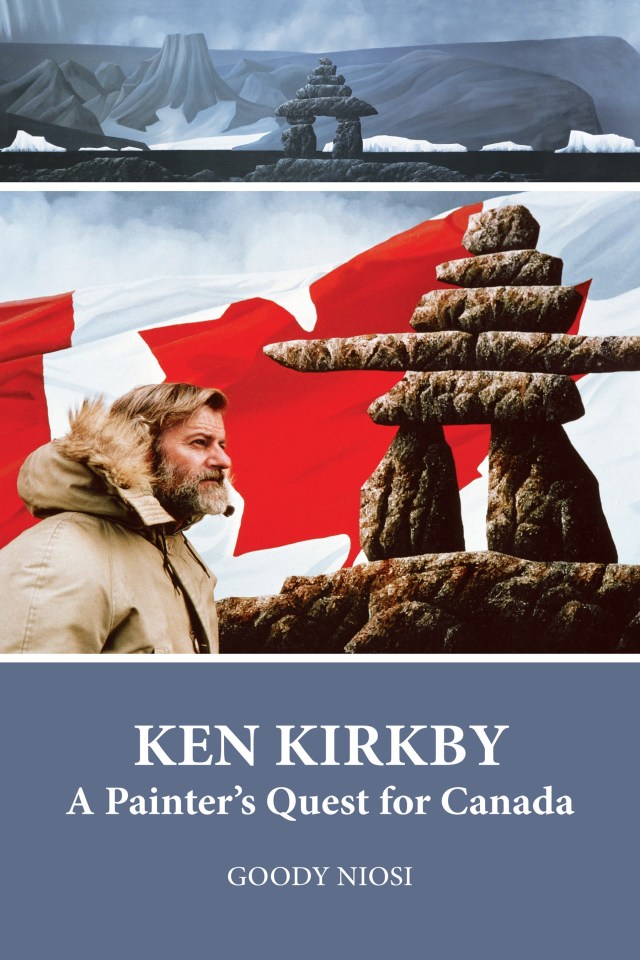
Pip: Ken Kirkby: A Painter's Quest for Canada is the one that swings the widest. A boulder, a ten-thousand-dollar stunt, a breakfast meeting with the Speaker of the House, and eventually a private conversation with a federal minister about letting Nunavut be a land of its own ideas.
Mara: Wellspring of Love turns on a hospital doorway — a surgeon walks in and Tyne realizes she knows him from a long time ago, both of them carrying more history than the room can hold. The Circle closes on the simplest of the bunch: Cathy telling Emily to go where her heart takes her and never look back with regret. Savages and Beasts holds the balance between violence and a moment of golden evening light in Kamloops, just before Anton explains where the missing children are.
Pip: Six different worlds, all of them asking what people do when the next move is genuinely uncertain.
Mara: Across all of it — the translations, the original poems, the fiction — the through line is that language is where you go when survival requires more than silence.
Pip: Which means the next episode has a lot to live up to. We'll see what Aligizakis brings next.
Six people crowded the car as it sleeked through the night, climbing into the mountains on winding, unlit roads. Nora sat in the back between Susan and Ian. Ian smelt her perfume, and it tantalised him. He pressed closer to her in the shadows. His left arm rested along the top of the seat. Nora, leaning her head back with a contented sigh, touched Ian’s arm and sat up straight again. ‘I’m sorry,’ she said. ‘That’s all right. Lie back if you want to.’ ‘No, I’m fine,’ she said disingenuously. Clifford slowed the car almost to a stop, then swung it to the left down a steep, stony, track not much wider than the car, its headlights illuminating the constricting dry-stone walls. He eased the car round a corner into a grassy yard in front of a small, two-storeyed, white-washed, slate-roofed cottage. ‘Home from home,’ he said. ‘Country style.’ Clifford cut the car’s bright beams, plunging the passengers into pitch darkness. Then the interior lights came on as the Bentley doors opened. Ian took Nora’s hand and helped her out. ‘Thank you, kind sir.’ She bobbed him a little curtsey. Even in the gloom Ian caught her captivating smile. The cottage was dark. Everyone stood in a huddle inside the door till Clifford located and lit an oil lamp. Then they moved into the room and looked around at the white-washed walls; the old, dark-toned, wooden table; the dresser; the chairs; the big, deep, well-used armchair beside the hearth. In the spacious fireplace a fire was already set. All it took was a dash of paraffin oil and a lighted match and the flames and sparks were leaping in a crackling frenzy into the large, blackened chimney. On the mantelpiece an old pendulum clock stood at rest between two creamy china dogs. On the dresser shelves an array of blue, willow-patterned plates and cups and large, stout mugs with blue rings gleamed in the light of the fire and the lamp. Fiona lit a second lamp. ‘This is just heavenly,’ Susan exclaimed in a high, excited voice. ‘John, wouldn’t you just love to live in a place like this?’
…worst of all had occurred when a passenger couldn’t hold his or her bowel and the cab would turn into a crapping space, which would take two good hours of disinfecting and cleaning before one would be allowed to take another fare. It happened to Costa once, when he not only lost most of his shift, but he also had to do the cleaning, to boot. The driver’s thoughts kept him busy as he travelled over the Granville Street Bridge, and upon reaching Broadway, he turned to the right, and after two miles of distance, he turned left on Blenheim Street, which would take them to the reservation. He noticed that his customers were half-asleep; yet the stench of their breathing forced him to open his window to get some fresh air. Night had fallen when they arrived at the Indian reservation community, although towards the west, there were some bright gleams of the sunset that no one paid attention to. Such romantic images weren’t important since his customers struggled as they searched their pockets for the money to pay the fare. “Where is your money?” the white man asked the Indian, who pretended he didn’t follow his buddy’s question, and he started getting out of the car. “Where are you going?” the driver asked angrily, “Who’s paying the fare? Eleven sixty…” he indicated to them, pointing at the meter. They stared at each other. No word was spoken. No fart or any other foul smell was detected. Then, the Indian showed his middle finger, as if to say, you know what a man means when he raises his middle finger to someone and now Costa was angry since the fare turned into something dramatic. Nonetheless, he had not the slightest inclination to forego his fare for these two assholes. Costa grabbed the white man by the sleeve and yelled, “Eleven dollars and sixty cents, or I call the cops.” They both started searching their pockets again. No money was found. “I don’t have a dime…” the Indian said. “I don’t…” the white guy said, “you knew I had nothing left, I bought the last round, don’t you remember?” he said in a questioning way, then he suggested, “Ask your wife for a twenty-dollar bill.”
Bruce Davidson assessed the spectacle and said, “You’re an agent’s dream. Usually we have to concoct all this crap and get the artist to go along with it. But here – man, it’s hard to keep up with you. It’s never going to be boring.” “No,” Ken said. “It’s never going to be boring.” When the fuss died down he had the boulder removed and put the ten thousand dollars back into his bank account. Summer turned to early fall and Nick’s symphony for Isumataq neared completion. The rock CD had been recorded. But they still had no site for the unveiling and the more they discussed it the more they came back to the idea of Parliament as the venue. But how do we get our foot in the door there? Bruce asked. Ken scheduled a breakfast meeting with the Honourable John Fraser, Speaker of the House and they met a few days later. Over bacon and eggs, Ken laid out his ideas for the unveiling of Isumataq. “I know it’s not done,” he said. “People don’t take over the Houses of Parliament for exhibitions or art openings.” “Well,” John said. “Let me think about it. I think it’s a wonderful idea. We’ll have to get approval from all the parties, because you have to have everyone on board when you do something like this. If you’re going to do something that hasn’t been done before you don’t want to just shove it down somebody’s throat. You want to get everybody on side, so the story has to be told very well. I know your story and it’s wonderful. You’re the one who should come and tell it, but then there are the logistics of getting all those people together. And then, depending on the particular day, they may be angry with each other – it gets so complicated. Let’s just work away at it.” The winter of 1990 settled in, and Ken received a call for help from Keith. As president of the Arctic Tourist Association, he was scheduled to make a presentation in a downtown Toronto convention centre to Tom Hawking, the Federal Minister of Arctic Affairs. The snag was that as he was driving his caterpillar over the ice to his island airstrip, the machine had crashed through and he had to get it out before it leaked diesel fuel into the river. Would Ken make the speech in his place, and would he present the Minister with one of his paintings? The comedian Dave Thomas emceed the event. Ken was the last to speak and he talked about the importance of tourism to the Arctic and how important it was to allow those who lived there to make the decisions about the infrastructure – let them build it in their own way. Let Nunavut be their land and a land of their ideas. Hawking requested a private talk and they met for a drink the next day. He asked to hear his story – the long version – all the details of his travels through the Arctic and the road that had led to the creation of Isumataq.
He still won’t talk about Nick, he won’t talk about Tanya, his own dear mini-model girl, his lost dream. He is fatter; and insists on wearing a regulation striped shirt and one of Her Majesty’s grey jackets. Pauline chides him for showing off. “They’re good, these porridge-jackets. Cult collectables, as soon as I get back in the business. ” But he won’t say what business, or discuss concluded business, except in general terms. He smiles wrily at the thin brown curtains, the broken Dansette record player, a chaos of books and one small picture, a last retrieved treasure, on the damp wall —an ancient engraving of a bearded man holding a complex structure, like triangulations of spherical retorts, radiating light. She asks him about it —an old alchemist, a cabbalist or whatever? She has to say something. He forces a hollow laugh and taps the dusty glass. “I’m told it’s by Paulus Ricius, Augsburg 1516. Beautiful, isn’t it? God knows what it means. All my alchemists turned to fool’s gold. At one point, I had a guy with a PhD. brewing pure acid for me, I had two guys specialising in THC oil, and they all turned rotten on me, turned Queen’s Evidence. You wouldn’t believe I had a gold Ford Thunderbird, and whole wardrobes of money . . . I could have given you enough bread to ransom Lucas three times over.” But in Larry’s professional opinion, Lucas hasn’t been kidnapped. The boy might be on a little caper, perhaps, he’s at an age when the nerves are good. But he’ll be back, give him a chance. Larry believes that Lucas is more stable than Nick. “It’s your civilising influence,” he says softly, with a slow smile that transforms his rough-cast mock-up of a face. She wonders if he’s remembering their distant dark-age act of hurried unbuttoning, A tiny moment swirling into non-being. She’s let go. But has he? “That’s the trouble with inside—no women. Just piles of demented men.” She hopes he’s going to say more about Nick and Lucas but he’s back to a re-run of prison life. It was a monastery with real mediaeval penances. This vicar was a nonce who spanked young choirboys, so they made him run around barking on all fours with a burning blue paper up his arse. Branded on the bum, as old Geoffrey Chaucer puts it. “Larry, I really need your help . . .” She goes into explicatory overload, the whole construct sounding more and more implausible as her words fill the dingy room and the clock ticks.
When Saturday finally arrives, it is a beautiful, hot summer day, so hot Eteocles goes to the sea twice, early in the morning and again in afternoon. He meets Antonia on his morning visit to the sea, and she tells him she is planning to go to the party with her girlfriend Koula. Eteocles sends her a kiss with a movement of his lips, and Antonia responds in kind, then they dive into the water together and swim well out from the shore. Eteocles swims close to her and puts his arm around her waist, but Antonia isn’t a good swimmer. She is uncomfortable in deep water, and his touch makes her nervous. She asks him to let her swim in peace, then says, “Tonight … tonight at the party.” It is a promise. Hesperus, the lone evening star, bright as ever, gazes down at the earth later that day, watching the little ants that scurry about searching for a common goal, a common word, a common future without perils or famine or devastation. Bright as ever, the evening star gazes at the land below and wonders how long it will take before its inhabitants figure things out and settle on the concept of people helping people rather than bombing and obliterating each other. Under its gaze Eteocles and George walk together down the road along the hillside toward the shore where the house of the party girl is located. When they reach there, they find a crowd of boys and girls already gathered in the backyard that faces out toward the sea no more than about thirty meters away where the elevation dips sharply down to the seashore with its sand dunes and lapping waves. All the partygoers gather around the boys who have brought the music from Athens, waiting for Eteocles to put a disc on so they can dance, and as soon as this is done, all the boys and girls suddenly become couples. George quickly pairs off with Maria, his favorite girl in the village, and pulls her tight while the music, the latest hit by a popular Italian singer, tuneful and modern, excites everyone and mixes with the heady smell of the sea to create an exhilarating atmosphere. At that moment Antonia enters the yard with Koula, a girl with black eyes and black hair tied in a bun on top of her head.
The taste of her mouth aroused all his instincts, and he wanted to touch this girl all over. However, they heard the clearing of the proprietor’s throat and stopped. Hermes pulled back, and she gave him her best smile, showing a straight line of teeth and a hungry tongue. They stayed there for another half an hour, and then she wanted to go. “What would you like to do now? See a movie?” He looked at his watch; it was eight o’clock. “Where do you like to go?” She suggested they go to see the latest movie in a cinema close by, and he agreed. They walked to the cinema, and Hermes offered her his arm. She took the chance and leaned toward him a bit more, which Hermes loved. They got to the theatre and realized the place was almost full, so they made their way to the balcony, where they noticed that it was almost empty. They found two seats. He turned to look at her, and she took the courage and offered him a long and passionate kiss. His hunger for her body became evident. She took his hand and placed it between her legs, a move he took even further by sliding his hand up and touching her pubic hair. That made her go wild. He didn’t let go, and the rubbing of his hand inside her made her move her body left and right with such intensity that she had an orgasm in a matter of seconds. She then found his erection and played with him for a minute or two, but he wanted a lot more than that. “You like to go?” she asked. “Where could we go?” “I know a place.” He wondered where this place might be, surely not her parents’ house. “A friend of mine, she whispered, is out of town; I have the key to her place.”
“I’m glad to see you’re not hiding, Mr. Clarkson,” Pease said. Fred hoisted himself up on an elbow and regarded the young man. “Not hiding and still not talking about myself,” he said. “I thought perhaps you’d be willing to confirm what I found out about your background before we go with the story. It was fairly simple to trace you through the state bar association. You had an impressive career in the law.” “Now, why would anyone care about that, Mr. Pease? It’s ancient history.” “I suppose no one would care if you hadn’t made yourself a hero in the train rescue and come so eloquently to the defense of Poodie James at the council hearing.” Engine Fred indicated the captain’s chair. “Have a seat. I’ve been thinking of something that might interest your readers far more than anything you could write about this old hobo. Want to hear about it?” “Do I sense the offer of a deal?” Pease said. Fred’s eyebrows went up. “Does that offend your journalistic sensibilities?” “It depends on the nature of the deal and the quality of the information,” Pease said. Fred fell silent while he studied Pease’s schoolboy face, its earnestness, its shock of hair over the forehead, the glasses losing their struggle to stay in place. Pease returned his gaze without moving his eyes, without a flicker of expression. “Do you know the story of Poodie James being attacked and beaten shortly after he moved to this valley?” Fred said. “As of two days ago, I do,” Pease told him. “Winifred Stone told me about it shortly before the council hearing. She directed me to the clipping in our morgue. Sketchy story. Not much to go on. It’s interesting that someone was attacking hobos around the same time. 1927, a long time ago.” “Matter of perspective,” Engine Fred said. “Seems like yesterday. Still, it’s been sketchy for me, too, until recently.” Pease looked at Fred, saying nothing, waiting.





 Manolis Aligizakis