As the companions travelled, Keallach, Bjorn and Ari hunted small game and sometimes they fished. Rordan, Ula and Yamka gathered edible mushrooms and dug for roots and, following a full day’s trek, prepared the evening meal. Rordan was quite happy to join the girls in a task normally left to women. Bjorn, Ari, and Fire Maker emerged from a forest of alder, maple and birch, between two mountain slopes, into a flat river valley partially shrouded in scatterings of early morning mist. In the foreground was a wide meadow rich with new grasses and spring flowers in yellows, purples and whites. Beyond the meadow, a reed-filled marsh partially surrounded a sparkling lake. The three had set out ahead of the others with lines and a net to catch trout for breakfast. In the distance, Finten rattled off morning prayers with Keallach and Ailan while Rordan, Ula and Yamka sent joyful laughter echoing through the boulders of the steep mountainsides. Fire Maker walked in silence and didn’t seem to mind that Bjorn and Ari conversed in the language of the Norse. “She is wonderful,” Ari said. “If I were to spend the rest of my life with one person … What I am trying to say is …” Bjorn didn’t wait for Ari to finish his sentence. “Maybe, when we arrive at Fire Maker’s homeland, you should ask Ula to marry you. Have you asked her if she feels the same?” “She is always with Rordan.” “Why would he mind? His kind do not marry; they have a vow.” “I know that, but I do not think Rordan is bound to that vow.” Fire Maker signalled a silent pause. A cow moose lifted its gigantic head from the morass of bulrushes, trailing a steamy clump of dripping swamp grass. Slowly chewing her mouthful, the animal was content to observe the interlopers. “If you really want to be with her,” Bjorn continued, “take her by the arm and lead her away from Rordan, then tell her how you feel about her.” The conversation was over as Fire Maker, who had walked a little way ahead, came to a stream wide enough for good fishing. Bjorn and Ari hurried over to join him with lines in the water. Whenever the sun crossed the hills and mountains to set in the west, Fire Maker and Finten became the campfire storytellers. With an apparent knack for language, Father Finten was already fluent in the Mandan tongue. He related his stories from the Old and New Testaments in ways both monks and laymen could relate to. He was determined to make many converts when they reached the Mandan Nation. It was his sacred mission. The best stories belonged to Fire Maker. Everyone listened carefully when the chief spread his hands to begin a story. In his deep, soft voice, he wove his tales with expressive hands that cast wild animal shadows in the flickering light of the campfire. “Long ago and long ago and long ago, the gods who made this land fought a mighty battle to see who was strongest. Spirit of the North covered the land with snow and ice. All the plant life went to sleep. The living creatures travelled many moons south along the edge of the great salt water.
…those comments, the meeting blew up. Joel could understand that all Mr. Johansson was trying to do was help, but if there were two things you wouldn’t want to be telling Edward Hooper, it would be suggesting government help and calling his child underprivileged. There was no doubt that the Hoopers could sure use some help to finance Joel’s education, but the last thing that was going to happen in the hills that night was for Edward to admit it to any fancy dressed school teacher. Later, the school year came to an end. Joel graduated from high school, and Mr. Johansson, after once again encouraging Joel to consider the possibility of going further with his education, left town for wherever he went every summer. Joel spent the next few weeks working for his father, riding the high ridges, checking the cattle, counting cows and calves, and making sure that all was well in the pasture. Back then, on July 20, 1969, as seventeen-year-old Joel rode along, he thought of the hurt that he had experienced at home, especially during the last few weeks of high school, the brutal treatment of his mother by his drunken father, and the hard way that his dad treated him. Back then, the Circle H was not a healthy place for this seventeen-year-old boy to be; and really, not a healthy place for anyone, and certainly not a place with a future. That hot summer day back in July of 1969, Joel found himself a long way from home at the end of the afternoon. Feeling mighty hungry and needing to water both himself and his horse, Joel dropped down out of the hills to the Ladners’ place. Larry Ladner and his wife Erica were a dirt-poor young couple trying to eek out a living for themselves and their four children on a small patch of rented land. Their dream was to one day be able to put a down-payment on a place of their own, but the way things were going it looked like it wouldn’t be long before the Ladners would be forced off of the land. Larry had been coming in from a day of fieldwork on the tractor when he welcomed Joel. He knew the Hoopers were good neighbors. As Joel sat with the Ladners and ate his evening meal, he heard some exciting news on the radio.
Pip: Manolis Aligizakis has assembled a catalog that moves from ancient Greek shores to Canadian prairie schools to a Moscow hotel hallway — and somehow it all holds together.
Mara: vequinox brings it together across poetry translations, novels, and short fiction — territory we'll cover through modern Greek verse, prose excerpts, and the themes of love, memory, and identity that run underneath all of it.
Pip: Let's start with the poetry.
Voices Across the Greek Tradition
Mara: This segment is about what it means to translate a literary tradition — to carry voices like Cavafy, Ritsos, Engonopoulos, and others across languages without losing what makes them cut.
Pip: And Cavafy cuts immediately. The setup in "The City" is a man planning his escape — new land, new sea, fresh start — and then the poem turns on him completely.
Mara: The turn is the whole poem. "New lands you will not find, you will not find other seas. The city will follow you. You will return to the same streets. You will age in the same neighbourhoods, and in these same houses, you will turn gray."
Pip: So the upshot is that geography is not the problem. The self is the problem — and it travels with you, luggage you cannot check.
Mara: Engonopoulos makes a different kind of claim in "Nikos Engonopoulos – Poems." His "Angry Poem About the Occupation" turns elegy into defiance — workers dropping their tools, fists raised, a martyred figure walking the earth pale-lipped but beloved.
Mara: Ritsos appears across multiple volumes here. "Yannis Ritsos – Poems, Volume II" gives us a boatman striding into a harbor at dawn, the sun rising like a woman's wet hair curled around cranes — sensory and grounded. "Volume V" and "Volume VI" are quieter, more unsettled.
Pip: "Kariotakis-Polydouri, The Tragic Love Story" brings the biographical weight — two poets whose lives ended badly, rendered here in verse about a woman at a piano, butterflies leaving through a window.
Mara: "Tasos Livaditis – Selected Poems," "Katerina Anghelaki Rooke – Selected Poems," "Hours of the Stars," and "Troglodytes" fill out the range — from Livaditis's compressed night imagery to Anghelaki Rooke's half-words and olive tree shapes. "Neo-Hellene Poets" and "Orange" and "Mythography" sit alongside them as further evidence of how wide this tradition runs.
Pip: From classical echoes to prairie roads — the fiction covers different ground entirely.
Prose Across Borders and Generations
Mara: The fiction here spans continents and registers — from a child's first bus ride in wartime Canada to a Moscow reunion to a painter's Arctic trek — and the question running through all of it is how people find their footing in unfamiliar places.
Pip: "Water in the Wilderness" opens that question gently. A woman named Tyne has been living on hospital food, and her friend Moe has kept a phone call from her on purpose.
Mara: The reason matters: "Moe smiled. 'Morley is awake and asking for you.' Tyne let her breath out on a deep sigh, sat back and covered her face with her hands. 'Thank you, God, thank you,' she whispered, then shot out of her chair and ran to get her coat."
Pip: Relief as a physical event — breath, hands, running. The excerpt earns it without explaining it.
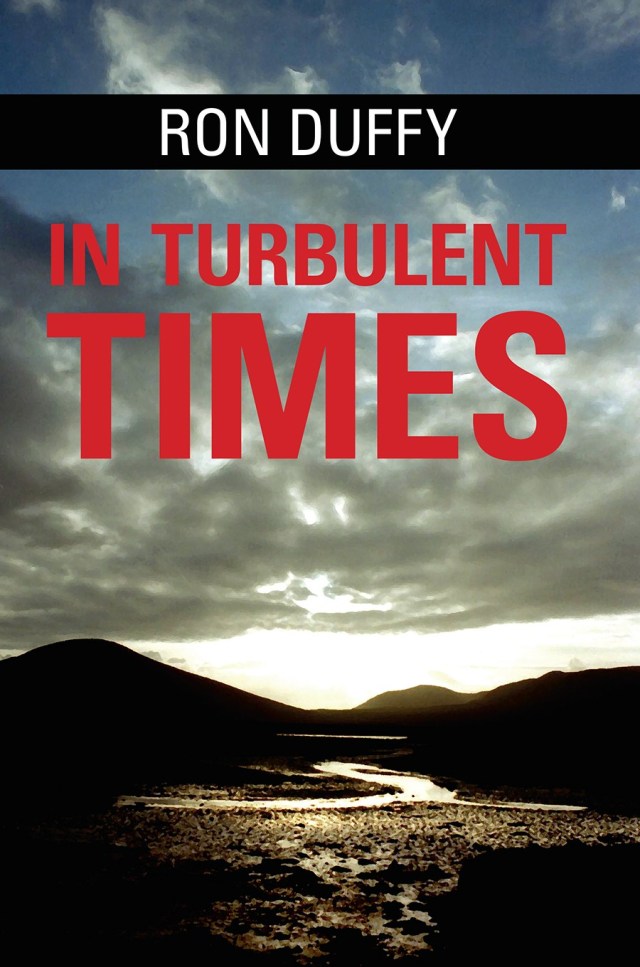
Mara: "The Qliphoth" operates in a completely different register — adult, raw, interior. "In Turbulent Times" follows Ian, a man trailing a woman named Nora through a coastal Irish hotel, his knees literally trembling at the bar. "Redemption" gives us a young man leaving home for Vancouver, his father crying openly at the table.
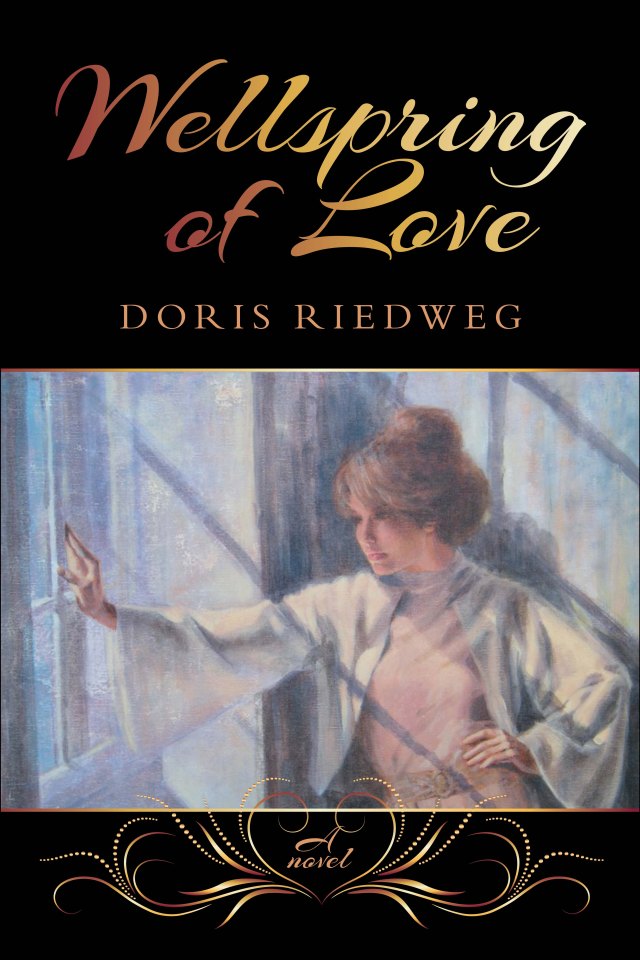
Pip: "Wellspring of Love" brings back Rachael, older now, stuck on a dusty highway while her cousin heads west — and "Water in the Wilderness" shows us Rachael younger, boarding that bus for the first time, shuddering at its size.
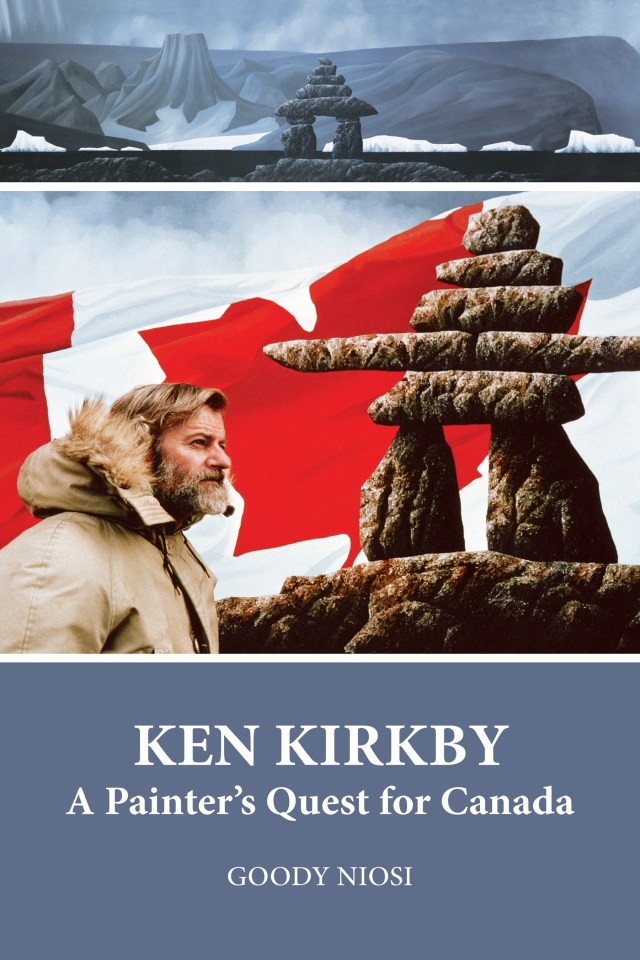
Mara: "Jazz with Ella" lands its protagonist in a Moscow hotel corridor and delivers the line "We are your family" to a woman who was certain she had no family there. "Ken Kirkby: A Painter's Quest for Canada" documents a real exhibition at Parliament — a painting one hundred and fifty-two feet long, twenty years in the making.
Pip: "Small Change" puts a boy in a Pennsylvania classroom trying to locate his immortal soul while Sister Assunta slaps a pointer against her palm. "Prairie Roots" is lunch-hour softball and girls comparing notes in the willows. "Wheat Ears" and "Cloe and Alexandra" round out the set — one a memory of Cretan youth, the other a poem built around a denial: it wasn't me in that yellow cab, it wasn't snowing, I have no hair.
Mara: What ties them together is the texture of ordinary life under pressure — the meals, the car keys, the Scotch ordered twice.
Pip: And underneath the prose, there's a question the poetry keeps asking too — about where you belong and what you carry.
The Self That Cannot Escape Itself
Mara: Love, memory, and identity keep circling the same problem across these works: the past is not behind you, it is inside you, and it shapes every attempt to move forward.
Pip: Cavafy says it flat out. "As you have wasted your life here, in this small corner, you wasted it in the whole world." There is no smaller indictment.
Mara: Ritsos in "Yannis Ritsos – Poems, Volume V" reaches for the same idea differently — a man who keeps a small mirror in his pocket because it's the one fixed point when everything else shifts without warning.
Mara: "Kariotakis-Polydouri" holds memory as tenderness — butterflies always flying out through the window. "Mythography" turns inward to still water and a fir tree asking the night for wisdom. "Introspection" names it directly: practicing a religion on the longing for the past.
Pip: "Orange" answers that longing with the wind's reply — your sunshine hides in your heart. "Hours of the Stars" writes love onto the mountain tops of memory. "Katerina Anghelaki Rooke" and "Troglodytes" close the circle — half-words left behind, and a young poet begging the Muses to free him from his own imposed fears.
Mara: The pattern holds: escape is not the remedy. The work is staying present to what you carry.
Pip: A city that follows you, a mirror in your pocket, a bus you board for the first time — it's all the same question dressed differently.
Mara: Where you are, and what you brought with you. More from this site next time.
…friends she made last year – two teenage girls and a younger boy who lived next door to Pa with their widowed mother. They’d grown very close over the summer, and Rachael had been excited at the prospect of seeing them again. What she hadn’t anticipated was that Pa would marry the widow lady and take on those two girls and boy as his own. Rachael kicked at a small rock and sent it flying into the ditch. She wouldn’t even have Lyssa here this summer because her cousin was leaving in a couple of weeks for Vancouver. Lyssa had told Aunt Ruby she was going for a holiday to see the West Coast but would come home in the fall. Rachael didn’t believe her. When Lyssa got to the big city, she probably wouldn’t ever come home. When she had learned that Rachael couldn’t go to Ontario, Lyssa had tried to talk her into going to the Coast with her on the bus. How she would love to do that, but her parents would never let her go even for a few weeks. Seemed they didn’t want her to have any fun at all anymore. Thoughts of Lyssa made Rachael remember the party at the Harrisons’ tonight. It would be in full swing, and where was she? Walking alone on a dusty highway on a beautiful evening at the end of the school year. Oh no, she wouldn’t be allowed to go to Vancouver – she wasn’t even allowed to go to her cousin’s grad party. She heard a car approaching from behind but paid little attention until it slowed and pulled up beside her. She looked up, expecting to see one of the district farmers or a hired hand on his way to town. But a thatch of red hair above a freckled face made her stop abruptly and stare. Kevin. She had not seen him since the disastrous night of the dance at Spirit Lake. “Well, hello, sweetheart.” He grinned at her from the open window. “Fancy meeting you here, and on a Saturday night. How come you’re not at Lyssa’s party? Or is that where you’re heading? Hop in, I’ll give you a lift.” “No thanks, I’m not going. I have too much to do to go to parties.” She started to walk on.
Ian buttoned his jacket, lit another cigarette and waited. His feet were sore and his calves ached. He shifted his position every couple of minutes. He thought: They can’t sit all this time on that concrete wall without their arses getting sore. He lit another cigarette. At his feet a litter of butts and grey ash messed the pavement. The sky was darkening to sea-blue. A few stars twinkled. At last they moved. While applause for the performance died to silence, and a low buzz of conversation replaced it, Nora and her friends slipped stiffly from the wall and stretched and put on cardigans. Ian saw Nora’s large bust below her blouse. She turned to the sallow man and said something. He replied and waved a long, skinny hand. The three girls walked away together along the path by the sea-wall and out on to the main road. They turned to the right in the direction of the Drumard Strand Hotel. Ian followed until they had sauntered past his car. When he himself reached the car he climbed in and drove to the hotel by a side road that passed a row of private houses with gardens extending to the beach. It led him by the railway station and the bus terminus to the driveway of the hotel. He parked the car, combed his hair in the rear-view mirror, straightened his jacket and then walked casually into the plushy ambience of the hotel. It struck him as being somewhat old-world and serious but comfortable. He entered the leathery den of the Slieve Corragh Room, where he had first met Nora and her friend. The bar was busy but not full. He stood in the doorway for a moment while the muted hubbub of voices and laughter and the warm smoky air drifted past him into the thickly carpeted lobby. He looked at the coffered, wooden ceiling, the white upper walls above dark, varnished wainscoting. A large painting of Slieve Corragh hung on the wall to his left. He felt at home here. This was his milieu. He strode across to the bar and sat on an empty stool beside a naval captain who had his back turned half towards him as he talked to a lady with a blue rinse in her hair. ‘Scotch and water, please. Glenfiddich.’ He waited. Out of the corner of his eye he could see the doorway. The anticipation and the Scotch and the aftermath of a mixed grill were teasing his stomach maliciously. He was acting like an adolescent, like a seventeen-year-old boy suffering his first unbearable love for the girl up the street, the skinny little girl in pigtails who had suddenly, without his noticing, grown into a woman. Ian’s knees were trembling. He gulped down the Scotch and ordered another.
She took the elevator down one floor, intending to ask the dezhurnaya the location of Chopyk’s room but for some reason, that floor was unguarded. It took another 20 minutes of getting lost in a maze of hallways, returning to the lobby, inquiring and returning to Chopyk’s floor, only to find that he was not in his room. She rode the elevator back to her own floor, and the doors opened on a pleasant domestic scene. The dezhurnaya no longer sat alone. On two straight-backed chairs sat a young man and a woman with her arms around a gangly child of about ten who pointed her toes, first right, then left, pressing her sandals into the worn carpet. The man looked up eagerly when the elevator doors opened. She caught his eye for a second, took in the freckle-faced child and petite mother who sat in the shadows, then sped on up the hall. But she could feel the young eyes boring into the back of her head. “Attention! devushka, woman,” shouted the dezhurnaya. “You have guests.” Even before Jennifer turned to face the family, it was a moment of knowing, a sense that already on this first night in Moscow profound changes would take place, and this was only the first of them. She stared. Yes, the man did look familiar in a comfortable way. The woman—his wife?—was a stranger. The child was awkward and cute at the same time. The man walked toward her, smiling, his arms outstretched in greeting. He struggled with her name in thickly accented speech. “Do I know …?” she began and stopped. “Mikhail Alexandrovich Abram,” he said, grasping her hand. The woman tossed a mane of glossy black hair and approached smiling. “And this is my wife, Marta, and my daughter Nadya.” The child stood knock-kneed, bowed slightly and touched the red Young Pioneer scarf tied around her neck. “We are your family.” Jennifer was thunderstruck. “But I have no family here…” she finally responded. She didn’t want to appear rude but she was quite sure that her mother…but then there was a lot she didn’t know about her mother’s background. “Yes, you do. You are shocked,” Mikhail continued. “I beg your forgiveness for our sudden arrival. May we enter?” He indicated the hotel room. “Certainly. Go in.”
…the hall where Karen and the crew were putting the finishing touches on the exhibit. He was led to the Speaker’s office where Michael was sitting on a desk, his feet dangling, telling stories to the staff of his adventures in the Arctic. John led Ken into his office and a photographer arrived to immortalize the occasion. He posed Ken and John in front of the Karsh portrait of Winston Churchill and for the next hour shot Ken with various members of Parliament. Jean Chrétien, leader of the opposition, offered his congratulations, as did Joe Clark, who was standing in for Brian Mulroney who was otherwise engaged. In the hall at the foot of the stairs people stood or sat shoulder to shoulder. Not an inch of space remained. I had the most amazing feeling. It was a feeling I have never had before or since. It was a feeling that I was standing at a point in the universe where for some minutes and seconds reality was different. This was the magical moment I had been seeking my whole life. Usually, I had foreseen important moments in great detail. But this one – this was different. This one had somehow manufactured itself. It was not the vision I had had in my head. John Fraser stood on the podium and spoke. “Almost fifty years ago a young boy sat at the feet of his tutor – an old Portuguese fisherman – and heard tales of whaling in the Canadian North. These tales were so wonderful that the boy vowed some day to see Canada for himself and to clarify his mental pictures of the land.” “In his late teens, circumstance found the boy and his family living on Canada’s West Coast and several years later he set out on his boyhood dream to see the great Canadian North. For five years, he walked from one end of this great land to the other, travelling with families of Inuit as they pursued their nomadic lifestyle. Often he was alone, walking endlessly – experiencing first-hand Canada’s Arctic North, all the while sketching thousands of miniature drawings of what he saw.” “Toward the end of his journey, like a great mirage in the desert, he saw a giant of a man standing on the distant horizon. It was a stone Inukshuk, an Inuit guide to hunting and fishing grounds. Try as he might for the next twenty years, his efforts to portray the splendour of this vast and spectacular landscape resulted in dissatisfaction and personal frustration. Finally, he realized that only a painting which was larger than any ever painted could properly depict the unseen spectacle which he felt compelled to bring to the rest of the world.” “The result of five years of trekking and twenty years of painting was completed on June 21, 1991, the longest day of the year. It is the largest original oil on canvas portrait in the world, measuring one hundred and fifty-two feet long by twelve feet high.”
Rick looked disconsolately through the second-storey classroom window at sheets of freezing rain, the weathered fence of the Pennsylvania Railroad coal yard and the blackened struts of the steel bridge that shuddered ever so slightly when a train passed over it, then back at Sister Assunta who was preaching, again, about The Immortal Soul as she paced back and forth in front of the blackboard behind her desk, slapping the pointer against her palm like a riding crop. “Pagans!” she was saying, “You were all born pagans and you must be taught to fear (her pointer hissed and snapped loudly against the desk blotter) the power of Almighty God.” Silence. Some of them lowered their heads to avoid her stare. But Rick was puzzled. That kind old man who lived forever in the sky was merciful and just. He was love itself. Why should anyone be afraid of him? He raised his hand. Forty-two pairs of eyes swung toward the front of the room, afraid for him, but excited by the drama that might be about to unfold. Sister Assunta merely glared and went on pacing, her voice hoarse with a nearly demonic fierceness. Rick took his arm carefully out of the air. “Daily, you neglect your immortal souls. They may already be lost to eternal damnation.” She stopped precisely behind her desk chair, her florid minutely wrinkled skin drawn into a tight smile. Rick tried to look inside himself. There wasn’t much light. After a while he became concerned. Where was his immortal soul, anyway, why couldn’t he find it? Then something round and flat like a communion wafer came into focus. It was tilted, like the head of a snare drum, and it was so clean it glowed. He began to understand. When you did bad stuff, soot fell on it out of the dark, then, if you confessed and said five Hail Marys,
five our fathers, and an act of contrition, an invisible power swept it clean again. And immediately, almost automatically, his pubescent mind reached for what he knew to be forbidden. The kids called her The Beauty Queen. Her dad owned the bar and grill at the corner of Monmouth and Fifth. She spent a lot of time with her followers in the extra lot next to her house her grandparents had made into a large garden surrounded by hedges, and dotted with trees. When she came out for a walk, all the guys stopped what they were doing and watched her tight pedal pushers, her graceful careless moves…
“Yes, Mother, but I’m only going away for a while; do not forget that.” Maria smiled and added, “Of course, my boy, you will return. But remember, you must write home frequently, so we can find out how your studies are going.” “You guys think as if I am going to forget completely where I come from. Don’t worry yourselves with that.” His father cut in, “Son, you are an adult, but I want you to be very careful in the foreign country you are headed; we, your mother and father, uncle and auntie, or friends, will not be there. There are a lot of dangers over there, and you might get into a lot of trouble. Have your eyes and ears open, be careful in a foreign place. You are responsible for yourself.” The old man’s voice became hoarse. Hermes looked at his dad with surprise in his eyes: tears flowed freely down the old man’s cheeks. Yet this time, George Dragakis didn’t even care to hide his feelings from the rest of the family. Hermes went to his father and gave him a big hug. “Do not worry. I know where I’m going, and I know what I’m there for. My only concern is to finish my schooling and return home to find you all. Do not worry. Nothing will distract me from my goal.” Hermes’s voice had so much certainty as it was heard that all those present felt positively about his voyage. “What about Magda, my boy?” his aunt asked. “Magdalene and I are going to be in touch, and I hope to see her when I come back. She told me she might even come and visit me in Vancouver next summer. I look forward to that, really. I like this girl a lot.” His mother and father heard these words and felt a bit relieved, although they’d prefer if he didn’t go away at all. George got up to go to the bathroom, and Hermes could hear the old man blowing his nose. Then Hermes went to the bar and poured a drink for himself. He asked if anybody would like to have one, but they all declined.
Pip: Manolis Aligizakis has spent a career writing about people the world files under "miscellaneous" — and vequinox has been keeping up.
Mara: That's the thread running through this episode: Greek poetry and its modern resonances, love and faith tested in quiet rooms, conflict and exile, and a critical look at what it means to write about ordinary lives with extraordinary attention.
Pip: Let's start with the poetry itself — ancient voices, contemporary weight.
Greek Voices, Modern Weight
Mara: The question here is what Greek poetry actually does when it moves through the modern world — whether it stays monument or becomes something you can touch.
Pip: George Seferis, translated and presented here, sets the coordinates early. The poem positions us collectively: "We are all like the Dead Sea, many fathoms lower than the surface of the Aegean."
Mara: That image does real work. The Dead Sea passage isn't elegy for a place — it's a diagnosis of emotional deadness, where "heart and thought congeal in salt." Seferis is naming a condition, not a geography.
Pip: Yannis Ritsos in Romiosini measures anguish against a wild mallow's knot and courage in the eyes of a shoeless child holding a flag — that's not metaphor reaching for effect, it's metaphor doing the only honest work available. Titos Patrikios in Selected Poems and Antony Fostieris in Selected Poems carry the same weight: fathers known too late, moons that swell and shatter. Constantine Cavafy's satrapy asks what you trade when you stop reaching for the laurels.
Mara: Nikos Engonopoulos and Wheat Ears round out the range — from cosmopolitan irony to daffodils insisting on blooming through leaden, death-filled days. And Ugga lands the quietest claim of all: "for the light to change, we must feel the loss of darkness in transactions." Entropy and Triptych both circle that same idea — transformation costs something, and the cost is felt in the body, in the chapel, in the shared candle.
Pip: From the weight of history to the weight of a single room — the next territory is love and what it asks of people.
Love, Faith, And What They Ask
Mara: The posts here sit with intimacy in its most pressured forms — a wedding interrupted by illness, a love that cannot quite complete itself, desire that circles back to anxiety.
Pip: The Unquiet Land anchors the segment. A priest steadies a congregation while a man named Padraig recovers in the sacristy, and when he's asked if Mass was said for him, he says: "I did, Padraig. And the wedding? It went very well. Ah, that's good." Then he lowers his eyes and says he never could have done it.
Mara: What that exchange captures is faith as practical care — the priest stepping in, the doctor promising to apologize to the family, Padraig asking not about himself but about the couple. Dignity held together by people covering for each other.
Pip: Hear Me Out turns the register entirely. It's a meditation on that missing one percent — the fraction that stops the words "I love you" from completing themselves. "You'll remain like Sisyphus to go up and down the mountain with the weight of love on your back, forever searching to unload it." That's not self-pity; it's a structural description of a particular kind of loneliness.
Mara: Water in the Wilderness moves through a different kind of relief — someone waking, someone running for her coat, a child on her first bus ride being told to watch for deer. Small mercies assembling into something that holds. Cloe and Alexandra brings a fairy-tale sharpness: a hunter shoots an arrow at a princess because he feared she would pierce his heart first — obedience and self-protection dressed as accident.
Pip: And then The Qliphoth arrives, which is a different temperature entirely — raw physical intimacy followed immediately by the anxiety that trails it, the replay of warnings she tries to suppress. Control claimed and then quietly questioned.
Mara: Redemption sits underneath all of these — two characters debating whether inherited belief can ever be honestly evaluated, whether tradition is a gift or a constraint. The same question the other posts are living out in different registers.
Pip: From what we inherit to what we survive — conflict and exile are next.
Conflict, Exile, And What Remains
Mara: This segment asks what displacement actually looks like from inside — not as history but as the specific texture of a life interrupted.
Pip: The Circle opens it with a phone call from Los Angeles to Baghdad. Hakim learns his uncle has two tumors — liver, pancreas — and the novel renders the weight of that news through a detail: he walks to the balcony and looks at the clouds covering Los Angeles, "in the same way that they cover his heart."
Mara: Distance is the condition. Straits and Turns gives us Mike, humiliated by a small workplace error, walking home with his head down — and then laughing at himself with his family. Marginal's caricature figure arrives "hiding the packaged freedom silently in his pockets," and the speaker finds redemption not in confronting him but in bending to smell a jasmine flower on a dusty sidewalk.
Pip: Twelve Narratives of the Gypsy and Rendition press further into rootlessness — the gypsy standing "like a fresh branch of a not pruned, ageless, fruitless tree," alone on a black mule, trying to discover who he is. Rendition puts innocent blood and irony on the same menu board.
Mara: Which brings us to the question of what poetry does with all of this — and one critic has a precise answer.
Writing The Incidental Into Permanence
Mara: The Incidentals gets a full critical reading here, and the central claim is ethical as much as literary.
Pip: The reviewer, Balázs F. Attila, puts it plainly: "The moment the poet writes about Gladys, Mathew, Stefan, Benjamin, Galanos, or the nameless postman, he abolishes their insignificance."
Mara: The upshot is that poetry here functions as counter-archive. The postman who carries everyone else's news while waiting for a letter that never comes — that figure is rescued from anonymity by the act of being named in a poem. The net, the rope, the shoe: objects that become the whole shape of a life.
Pip: The review also notes that Hades and Thanatos move through gas stations and Canadian immigration offices — mythology as living language, not museum display. That's the formal argument for why the Greek poetry segment and this one belong in the same episode.
Mara: And the question the review leaves open is the one that makes it stick: how long is the rope on which we ourselves live?
Pip: Dead Seas, jasmine flowers on dusty sidewalks, a postman waiting for a letter — the scale keeps shifting but the question stays the same.
Mara: Whether the rope is long enough, and whether we've noticed we're on one.