Aligizakis’s English translation makes the book available as an extensive, chronological encounter, and many images retain memorable force: the ant’s winter seeds, the black words suspended from a ceiling, the gear glimpsed at the edge of vision. The translation also preserves the poems’ shifts between colloquial speech, philosophical reflection, biblical language, and abrupt surrealism. At points, however, English syntax feels stiff or opaque, and some collocations sound unusual enough to distract from the image. That texture can make the reader pause productively, but it can also blur whether a phrase’s strangeness is deliberate or translational. Without comparing the Greek originals, one cannot confidently assign those effects to either poet or translator. The introduction’s account of Fostieris’s rhythmic and linguistic range is useful, though its sweeping critical language is less persuasive than the poems themselves. The interview is more illuminating: Fostieris describes translation and tradition as part of poetry’s shared language, and prefers chronological presentation because it shows motifs in their “metamorphoses.” The book’s sequence bears out that claim. For English-language readers, this volume offers more than an introduction to a contemporary Greek poet; it offers a sustained encounter with a poetic intelligence that distrusts easy oppositions. Fostieris’s poems are not transparent meditations: they invite rereading, and their occasional obscurity belongs partly to a project that questions how words and concepts mediate experience. Yet their questions travel. What does memory preserve? Can thought touch the world without remaking it? What does poetry do with the knowledge that bodies and words decay? Across five decades, Fostieris answers not with doctrine but with images that keep changing their terms. This selection’s strongest achievement is to make that change visible. Its long voyage moves toward no final shore, but teaches the reader to notice the seconds, bodies, voices, and vanishing meanings encountered along the way.
“A good friend at Yorkshire would like some of the primary shares. What should I tell him?” Eteo smiled and pulled her close. “This is a hot issue, Frances. I can’t send any shares to Yorkshire, but tell your buddy that anything he might be able to buy in the first two weeks he better go in the market and buy. Even better, tell him that I’m willing to cross a good size of stock to him on the first day, so he’ll be positioned before the stock moves higher.” “What do you expect after two weeks?” “A higher price” he said laconically. Frances gave him a quick kiss on the lips. “Hot man, my hot guy, we’ll see, yes, we’ll see,” she said as she turned to leave, moving her beautiful behind lasciviously as she walked out of the office. Robert O’Leary called Eteo a few minutes later to ask what had happened with the Golden Veins drilling. Eteo told him they had lost the well, which did not surprise Robert. The poor market had already announced as much. “You allocated some shares of Mario’s Nostra to my accounts?” “Of course. Ten thousand for each of your two accounts.” “I’d like some more, Are you tight with this one?” “Big demand for the shares, Rob. I didn’t expect this, honestly. Mario just sent twenty-five new accounts for the shareholder list, a thousand shares each.” “Okay … so cross me another twenty thousand out of your warrants. You’ll cross them out as soon as it lists?” “Yes, Mario wants them on the first trading session. I’ll give you twenty out of those, okay? “Good.” By now Eteo’s day was almost over. He called Ariana and caught her getting ready to visit her mother. “I’m just on my way out,” she explained. “Are you done for today?” “Soon,” he replied. “Want to go for our walk when you’re done? Call me, okay?” “Yes, my love, later on.” “Okay, love you.”
The English translation carries that same balance of intensity and difficulty. Aligizakis gives the poems a clear, open page: the short lines and ample white space encourage the reader to pause, and the recurrent images remain easy to follow. Some formulations, however, sound awkward or opaque in English. At times the syntax and word choice make it difficult to know whether a phrase’s strangeness is intentional or a result of translation. The book does not print the Greek originals alongside the English, so readers cannot compare the two versions. This matters in poetry, where sound, rhythm and shades of meaning are part of the work, not incidental features. Still, the translation’s occasional friction can also suit a poet concerned with language that fails, changes or cannot fully carry an experience.
The substantial introduction traces Faitas’s career and interprets each collection, providing helpful context for readers unfamiliar with the poet. It also quotes many poems and explains their philosophical implications in advance. Some readers will appreciate this guide; others may find that it narrows the space for discovery. The poems often work best when encountered directly, before their imagery is translated into a single explanatory argument. The praise section and biographical notes add further context, though the book’s strongest case for Faitas remains the poems themselves.
Entropy will appeal most to readers drawn to philosophical lyric poetry, Greek myth, and sustained reflection on mortality and the cosmos. It is not a collection built around narrative momentum or sharply individualized dramatic voices. Its movement is cyclical: an image or question returns altered, as if the book’s own form were mimicking the rhythms it describes. That repetition can be immersive, sometimes excessive, but it also gives the collection its identity. Faitas writes from the conviction that a person is brief, knowledge incomplete and the universe beyond comprehension. Yet the poems continue to ask, to remember, to love and to make images out of what cannot be mastered. Their deepest subject may be not entropy as dissolution, but the human urge to find connection within it.
“Twentieth Canto” develops this qualification through the reciprocal action of hands and clay: the hands work the material, while the material works upon the hands. Creation here involves being changed by what one touches. The image quietly opposes the juvenile God’s unilateral impositions. It also offers a persuasive account of poetic responsibility. The artist should discover something through the encounter, rather than merely force the world to illustrate a conviction. This modest image of making carries as much ethical weight as the sequence’s more thunderous denunciations.
The language largely proceeds through accumulation. Short lines, limited punctuation, and rapid shifts between bodily, botanical, theological, and political vocabularies create a restless current. A metaphor rarely remains isolated; it attracts another before its implications have settled. The result can be exhilarating, particularly when an unexpected verb animates a familiar object or when a delicate creature abruptly interrupts an abstract claim. The page gives this crowded movement room through generous spacing, while the Cantos’ italic setting visually distinguishes their answering voices from the Hours.
The same abundance occasionally strains clarity. Successive abstractions and densely modified images can compete for attention, leaving the emotional direction clearer than the relationship between phrases. Similarly, the repeated denunciation of clerics and fanatics sometimes offers less dramatic discovery than the ambivalent treatment of Death. These limitations arise from the work’s chosen pressure: it wants to be chorus, accusation, love song, and cosmic argument at once. Its finest passages allow a concrete action to organize that energy, giving the reader somewhere to stand amid the verbal tempest.
The concluding movements deepen the book by bringing loss closer to the speaking voice. In “Twenty-Third Canto,” a photograph taken from a wallet releases tears, and the speaker loses his desire for a favourite wine. The shift matters because grief is registered as an alteration of appetite and habit. The public vocabulary of outrage yields to the difficulty of continuing a private life. A model train then delivers the familiar promise of doing better, placing the refrain in an object whose smallness contrasts sharply with the cosmic machinery surrounding it.
The final Canto makes the personal cost unmistakable. While the speaker persists in household chores, news arrives of his son’s death in a zealot’s war. This is a revelation within the poem, not a warrant for assuming autobiography. Its force comes from the collision between ordinary maintenance and irreversible loss. Watering flowers becomes almost unbearably inadequate, yet it remains an act addressed to living things. The surrounding animals continue to know their paths and habits until bullets and nets interrupt them. Human bereavement and ecological destruction become neighbouring instances of life needlessly cut short.
At this point the refrain changes. The question becomes whether He could have done better, and the sea answers that He could. The shift moves from an undertaking to a judgment. It withdraws the excuse that the existing order must be accepted as the best or only possible one. The concluding passage attributed to Elytis leaves ethical existence poised upon a precarious point, preserving the difficulty of choice after the accusation has been delivered. There is no easy reconciliation between the poem’s anger and its love of the world.
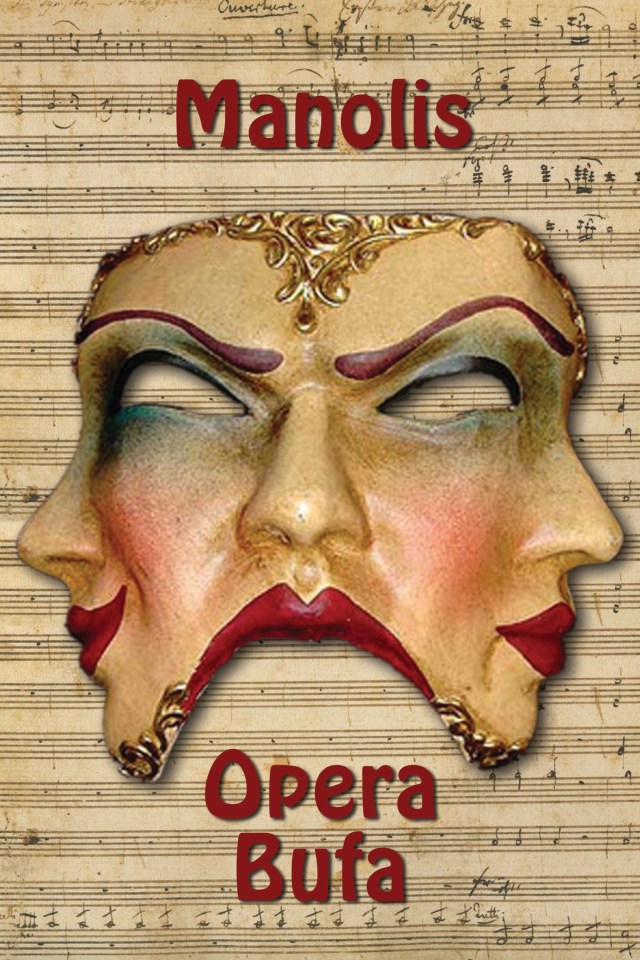
Opera Bufa succeeds most fully as a work of impassioned refusal, sustained by the pleasures that make refusal necessary. Its theatrical God, philosophical Death, wounded creatures, lovers, and grieving speaker occupy a stage where authority is continually tested against vulnerable life. Although its rhetorical abundance sometimes obscures distinctions, the sequence’s formal persistence gives its indignation cumulative force. The final grief also changes the resonance of everything preceding it. What initially sounds like defiant confidence becomes a more demanding promise: to do better means continuing to care when neither cosmic justice nor personal consolation can be guaranteed.
Pip: Manolis Aligizakis runs a site where the archive reads like a library that survived something — poetry, prose, myth, and survival narratives stacked shelf by shelf.
Mara: vequinox has been posting across a wide stretch of territory this week — modern Greek poetry in translation, mythic and symbolic verse, and prose fiction rooted in exile and displacement.
Pip: Let's start with the poetry.
Voices from the Greek Tradition
Mara: The posts gathered here share a preoccupation with what endures when attention fails — statues, mirrors, people, memory — and what happens when the witness disappears.
Pip: The Yannis Ritsos volume sets the frame precisely. The poem "At Least" opens with a claim that stops you cold: "The statues, he said, die if you don't look at them."
Mara: And the poem follows that logic all the way through the city. Mirrors fill every shop window — bakery chimneys, loquat trees, women, flower carts — all held in glass. Then the stores close, each person takes a mirror home, and the streets go empty and watchful.
Pip: So the mirror isn't vanity — it's a life-support system for things that need to be seen.
Mara: The Tasos Livaditis selection pushes that further into grief. "Return" brings back a childhood friend who died young and comes back, the poem says, to sob through the night because "he had died very young and he had returned to cry so his purpose on earth could be fulfilled."
Pip: Ritsos gives us statues waiting to be witnessed. Livaditis gives us the dead waiting to finish what they started. That's a consistent obsession across this tradition.
Mara: It runs through the Yannis Ritsos Volume IV post as well — "Double Condemnation" ends on those cardboard shoes, "red and imperial, with small mirrors all around." The mirror image returns, this time attached to failed authority.
Pip: Katerina Anghelaki-Rooke's "Writing" in her Selected Poems takes the act of creation itself as the erotic and physical center — the poem ends with "Creation is in full blast," which is either transcendence or the best deadline energy I've ever read.
Mara: Titos Patrikios in his Selected Poems asks a quieter question: "Do we become smaller in our daily life or do we assume our natural dimensions?" The poem is about the brotherhood that can't survive ordinary hours.
Pip: Milos Sachtouris, Nikos Engonopoulos, the Neo-Hellene anthology, Hours of the Stars, Nuances, Second Advent of Zeus, Ugga, and the Yannis Ritsos Volume III posts all circle similar ground — identity dissolving into crowd, myth pressing up through lyric, the body as landscape.
Mara: Nuances puts it most brutally: the individual in the agora becomes "salami at the master's lunch," the goal of creating a new world reduced to "his burp at the end of it all intensifying the fragrance of lilac blooms."
Pip: From statues dying unseen to the self digested by the crowd — the tradition holds that witness is not optional.
Mara: Which makes the mythic and symbolic registers these poets reach for feel less decorative and more structural. That's the next layer worth looking at.
Myth, Symbol, and the Threshold
Mara: The posts here work with myth not as backdrop but as the actual grammar of meaning — the way a poem reaches for something larger than its occasion.
Pip: Triptych opens that space quietly: "I pass my finger over your tear wiping sorrow from your sigh, hold on to me and care for buttercups wild crocuses and mustard yellows." Tenderness as its own cosmology.
Mara: Mythography goes darker and stiller — a thicket that declares "Thick shade I shall become," offering cover to a toad, a bass, every creature retreating into evening. The benediction of darkness rather than its threat.
Pip: Wheat Ears lands the loneliness of that threshold: autumn arrives, the vacant chair smiles, and you stand "alone by your shadow, a hint of hope lingering in your mind yet not a single person to share this heaven with." Myth without a congregation.
Mara: That isolation — beautiful landscape, no one to witness it with — connects directly to the survival narratives in the prose fiction.
Surviving the Unquiet Road
Pip: The prose fiction here puts bodies in motion through hostile territory — political, physical, moral — and asks what it costs to keep moving.
Mara: The Unquiet Land anchors the segment in Irish sectarian tension. Jim Patterson's internal monologue lays it out plainly: "We Protestants are not going to live in an Ireland ruled by the Roman Catholic Church. Never." The novel maps how that certainty calcifies into something dangerous.
Pip: Fear of the other's governance — that's the engine of displacement in a lot of these narratives, and it runs across centuries and continents.
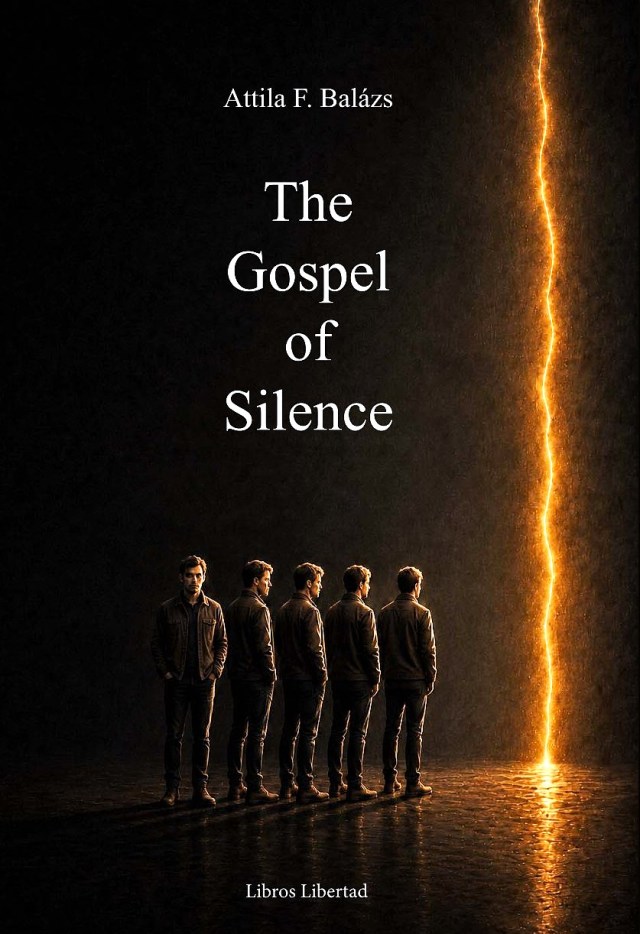
Mara: The Gospel of Silence moves that into a military conscript's interior life under surveillance. The narrator describes nodding to survive: "Not because I understood, but because in those days every nod was a form of survival." Silence becomes, as the excerpt puts it, "the permanent environment in which I could exist."
Pip: That's the most precise description of institutional endurance I've encountered in a while — performing normalcy so thoroughly that the performance becomes the self.
Mara: Blood, Feathers and Holy Men puts a traveling group under different pressure — a wilderness route, a missing member, Fire Maker's rule that the group cannot wait for stragglers. The survival logic is immediate and physical rather than political.
Pip: And Redemption and The Long Road round out the theme — one following a character named Hermes through a moment of crisis and ordinary intimacy, the other mapping the erotic and the cosmic onto the same body: "a snowdrift, a galaxy and a nipple, harmony in the arms of life."
Mara: Across all of it, displacement is never just geographic. It's the gap between what a person knows and what they're permitted to say.
Pip: Statues dying unseen, the self digested by the crowd, silence as survival — this is a site that takes witness seriously as a moral act.
Mara: The poetry and the prose keep asking the same question from different angles: what remains when no one is looking, and what does it cost to look?
And I nodded. Not because I understood, but because in those days every nod was a form of survival. I did not mean to express agreement; I only wished to avoid worse consequences. And back in the barracks, nobody asked me anything. Silence became the permanent environment in which I could exist, had to exist. My days passed alike: morning drills, roll call, marches, lunch in the popota, pebbles in the bean stew, half-washed aluminum plates and spoons, lights out, officers shouting, the exhausted gazes of the others, the musty air of the cazarmă. Military life became one endlessly repeating monotony. Yet inside that monotony something almost imperceptible but unstoppable kept growing: expectation. Because I knew — or believed I knew — that it was only a matter of time before they came for me. That one night, in the middle of darkness, the order would arrive, and they would take me to prison, to some cold, windowless place I no longer even dared to imagine, for I feared that if I imagined it, it would become real. Thus my days passed. In waiting. Tuesdays and Wednesdays, whole weeks slid soundlessly into one another, yet the hours did not pass; they only receded farther away. Walking among the soldiers, it sometimes seemed as though no one had noticed anything, as though I had truly succeeded in obeying the order: pretending everything was normal. As though the words nothing, no trouble, all is well truly meant exactly that. I lived through — and within — a poem I had not even yet read. And yet anxiety inhabited every movement I made. When the captain crossed the courtyard and let his eyes drift across the assembled ranks, it felt as though he were searching for me specifically, or watching to see how long I could endure this existence built upon silence. Time passed in a crushing uncertainty. In a vulnerability that seemed endless. And there was the thought which no longer existed as an abstract possibility but spread through my chest like physical pain: Life imprisonment. I went on performing the role of my own…
Pip: Manolis Aligizakis runs a site where the archive is essentially a library — except the library is on fire, in the best possible way.
Mara: vequinox has been publishing across a wide range of work here: modern Greek poetry in translation, philosophical prose on myth and imagination, and narrative fiction set against some of history's uglier political backdrops. Let's start with the poetry.
Voices Across the Greek Tradition
Pip: The through-line across these poetry collections is that they're not decorative — they're doing something urgent, whether that's Tasos Livaditis processing alienation and survival, or the broader Greek canon being made available in English translation.
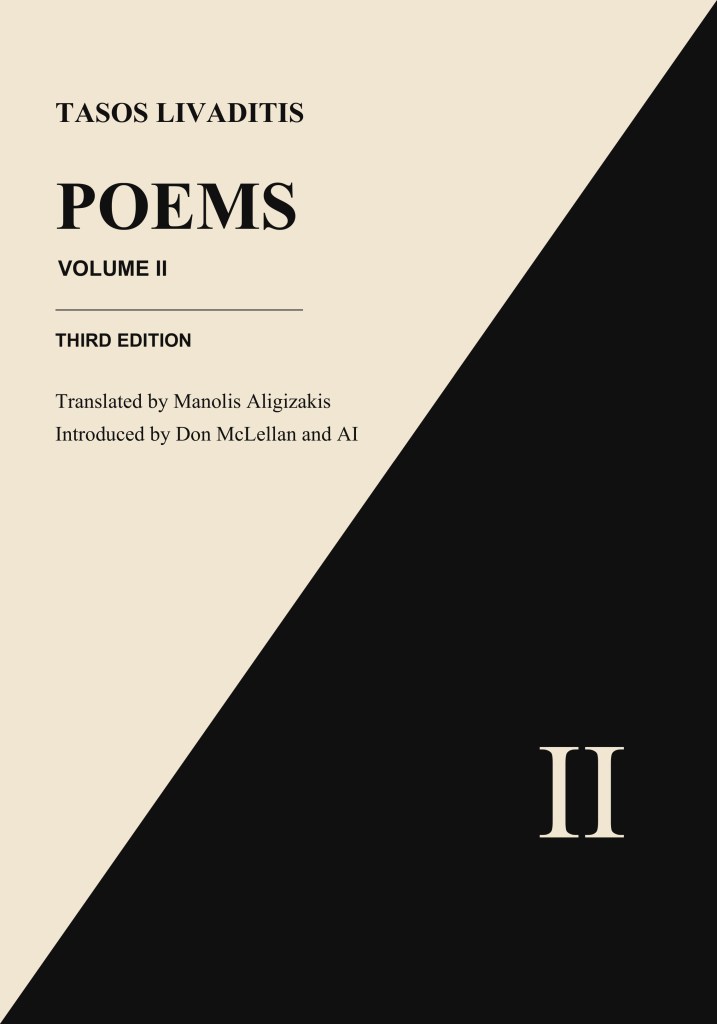
Mara: Livaditis sets the tone immediately. The post for Tasos Livaditis – Poems, Volume II was long-listed for the 2023 Griffin Poetry Prize, and the excerpt earns that recognition. Here is the poem speaking for itself: "the deadliest sin is not to love oneself, and one day, I couldn't take it anymore, 'Do you know me?' I asked them, 'No,' they told me; thus, I took my revenge, and I was never deprived of the distant sounds."
Pip: So the revenge isn't violence — it's continued existence. Staying present, staying strange, staying in earshot of the world that rejected him. That's a quietly devastating pivot.
Mara: And the poem sustains it. Later it lands on: "I prefer to hang a watch on my vest than to hang myself; it would be as if I were trying to explain too many things." Survival as understatement.
Pip: The Tasos Livaditis – Selected Poems post shows a different register — grief observed through objects and bystanders, a child bloodied by a car, curtains standing at attention. Livaditis keeps finding the peripheral witness.
Mara: Titos Patrikios – Selected Poems takes a more stoic angle. The poem "Change of Times" counsels neither self-justification nor self-condemnation — "You'll come out of this a little wiser, if you only learn to face all human things a bit more serenely." It reads almost like a letter to someone mid-crisis.
Pip: Miltos Sachtouris – Collected Poems goes somewhere darker. The "Night of the Forgotten" is a fragmented, incantatory thing — someone being called back by a voice while they lose pieces of themselves, arm, breast, eyes, until the poem turns on a single word: dawn.
Mara: Yannis Ritsos – Poems, Volume III pulls from the exile diaries — brief, dated entries, a swollen moon like a drowned body, broken arms in flashlight, two people sharing a broken leg under a wall. Compression as witness.
Pip: Several of the collections move between myth and the personal. Second Advent of Zeus brings Aphrodite into something almost confessional, while Neo-Hellene Poets: An Anthology of Modern Greek Poetry reaches further back — an orphic hymn climbing toward Apollonian light while darkness still holds the valley below.
Mara: Kariotakis-Polydouri: The Tragic Love Story is the outlier in tone — elegiac, addressed to a brother, full of scattered dreams and the image of a sun-flooded city from childhood. Antony Fostieris – Selected Poems is leaner: a tree that could be a man, or the devil, shaking branches over wild bodies at night.
Pip: Übermensch, Hours of the Stars, Vespers, The Long Road, Nostos and Algos, and Entropy round out the range — from the compressed image of a colt and dolphin parading in a field of blue flags, to a morning commute where the economic index drops and the beggar count rises and you start wondering if progress is real or if we're just coasting downhill without brakes.
Mara: Entropy puts it plainly: "The river has many homelands / it flows, it doesn't think / it flows loaded with seasons and people." Movement without destination — that's the collection's argument in three lines.
Pip: Which is also, quietly, a decent description of a translation project this large.
Mara: The philosophical work here asks a related question — not where we're going, but what makes existence possible in the first place.
Myth, Being, and the Structure of Imagination
Pip: The Essay on the Structure of the Human Imaginative is doing something different from the poetry — it's prose philosophy working through Greek cosmogony to ask what imagination actually is and where it comes from.
Mara: It opens with ontology and moves fast into myth. The excerpt reads: "That which makes it possible for something to be is Being (ta oũsia). Thus, from the various possibilities of Being, through a process of union, the universe comes into existence, together with the natural phenomena and the elemental forces of nature embodied in the image of the Cyclopes — terrifying beings outside the ordinary order of existence."
Pip: So the Cyclopes aren't monsters in a story — they're a way of thinking about what lies outside normal categories of existence. The framework uses myth as philosophical vocabulary.
Mara: Exactly. Cronus, Nyx, Nemesis, Thanatos — each deity in the succession myth maps onto a force: Discord, Deceit, Destruction. The essay notes that "the first part of this myth makes no mention whatsoever of a creation of an anthropomorphic kind," which is its hinge — imagination precedes the human.
Pip: That's the kind of argument that makes the poetry collections feel less like a separate shelf and more like the same inquiry running in a different register. Speaking of registers — the fiction here is working in a much grittier one.
Conflict, Desire, and the Weight of History
Pip: The narrative excerpts span Irish political violence, wartime Romania, and a Greek coming-of-age story — all of them placing ordinary people inside systems that are either collapsing or crushing them.
Mara: The Unquiet Land anchors the segment. A letter read aloud describes Ireland in the early 1920s, and it doesn't soften anything: "people going about their business as if living in a bad dream and not knowing if it's going to get worse or better before they wake up. All they seem to be able to talk about is Sinn Fein, Eamon de Valera and the possibility of civil war, together with the latest outrage."
Pip: And then a man named O'Rourke leaves a party and is found shot on the road. No explanation. The letter writer just says she couldn't get over it the next day. That's the texture of political violence — it happens next to dinner parties.
Mara: In Turbulent Times is set in Belfast and Glasgow, following characters negotiating business, family pressure, and escape — someone who fled his overbearing family for Belfast, which says something about how bad Glasgow felt. The Gospel of Silence is the most harrowing: soldiers forbidden to speak at funerals, families forbidden to ask questions, coffins sealed shut.
Pip: The essay on the Transfăgărășan road — built over five years, six thousand tons of dynamite, dozens of soldiers' deaths — lands on this: "in that country even your death did not belong to you, but to the state."
Mara: Straits and Turns and Red in Black close the range — one a Greek youth story with a quick, charged encounter and the social geometry of a classroom exam, the other a poem about two triggers pulled simultaneously, a poacher and a buck, Thanatos delivered to two hearts at once.
Pip: History and desire, both arriving faster than anyone planned.
Mara: What holds all of this together is a persistent question about what survives — a poem, a myth, a letter, a sealed coffin.
Pip: Or a watch on a vest instead of a noose. Livaditis had a point. Next time, more from this archive.
8 Therefore, when I kneeled so innocently, they all thought I was imploring, although I kneeled because it was autumn or how else can I say it: the deadliest sin is not to love oneself, and one day, I couldn’t take it anymore, “Do you know me?” I asked them, “No,” they told me; thus, I took my revenge, and I was never deprived of the distant sounds but don’t ask me what may be happening to the crazy people: what else but that they entertain a child who didn’t want to grow up and since the dream books are old-fashioned, I emigrate to the other edge of my umbrella, being an alcoholic, and since it started raining back in the long-ago days the smell of cypresses started coming in through the windows like music that you guess its end while the old woman was explaining the Resurrection to me “He was afraid they could otherwise forget him,” she said, though for me, I prefer to hang a watch on my vest than to hang myself; it would be as if I were trying to explain too many things exactly like a man could perhaps play a violin with one hand, when he must save his life with the other one and I was so exhausted that when I observed myself, passing in front of mirrors, I could only see the unspoken word and having nothing better to do, I sat and grew rich (In their absence, of course, since they had all turned their backs on me) However, I don’t spend much, and I feel content hearing the distant whistle of the train that makes the dog rise like a man who places something in the tray of the beggar and yes, I know I waste my time and energy and the pages I write get fogged up from room to room and they’ll have a different meaning under the lamp at night and in the morning, you will have to get dressed again, only to feel pain again. Goodbye, then, my good fortitude, I’m going to get busy with my crazy men or talking about their shoes, so uncared as if a hand that knew a lot more put them on to them and perhaps if I started whistling, everything would turn out better or if I wasn’t so prone to these things like the stupid station master who’s paid not to let me travel or like the poet who becomes innocent again after a little sleep.
Disgust sat openly on the officer’s face, though he himself was hardly a heroic figure. The lieutenant was a strange man: the collar of his shirt greasy, his tie and uniform stained and wrinkled, yet his gait and posture carried a kind of royal, exalted air. No wonder he overestimated himself. As we later learned, he had come to the army from some tiny Moldavian village, exchanging a mud-brick house for a city apartment. And beyond all that, he could command others, indulge his malice and exercise that little limited power he would never have known had he not chosen a military career. Meanwhile, the dictator’s grand plans had come to include the construction of the Transfăgărășan road, already well underway by that year. Five years of agony, rocks blasted apart with six thousand tons of dynamite, dozens of soldiers’ corpses sacrificed to the project — and all of it presented in the news as though a monument to the triumphant will of the people were being built, when in truth it was only a monument to power and to human suffering. Every month sealed metal coffins arrived, and we knew that no one would ever see what lay inside them, because they were forbidden to be opened. Beneath every stone and every slab of concrete of the Transfăgărășan pulsed the bone-breaking, soul-crushing reality of slave labor. They built it over five years. At the funerals of fallen soldiers we fired three shots into the air, then returned to the barracks as though we had become participants in some endlessly repeating, cold ritual practiced by the world only so we would never forget how easily a human life can be replaced. The soldiers escorting the coffins were forbidden to speak. The families were forbidden to ask questions. And each coffin was another sign of this truth: in that country even your death did not belong to you, but to the state. The construction of the Transfăgărășan had already become a legend while they were still only moving earth — not because of its beauty or engineering brilliance, but because of the number of dead, a number everyone knew and no one spoke aloud.
Pip: Manolis Aligizakis has built a catalog that stretches from Nobel laureates to Soviet jazz clubs to a monk worrying about a vow of celibacy in the Canadian wilderness — so, a fairly focused literary project.
Mara: vequinox covers all of that here: modern Greek poetry collections, critical reviews of those collections, and a wide range of memoir, fiction, and travel writing. Let's start with the poetry itself.
Modern Greek Poetry Collections
Pip: The collections gathered here share a preoccupation with grief that refuses to stay still — it moves, it waits, it names itself after mythological figures. The question running through all of them is what form feeling takes when language is the only container left.
Mara: The anthology Neo-Hellene Poets opens that question directly. One poem sets the tone: "I shall wait for the star again to tell it, holding back a tear that has appeared in my eyes, that like a joy I held you in my embrace warm and gleaming, my complete grief."
Pip: Complete grief — not partial, not fading. The poem doesn't resolve the loss; it holds it like something precious. That's the emotional logic the whole anthology operates on.
Mara: The Seferis and Ritsos volumes push into stranger territory. The George Seferis Collected Poems moves through ritual and silence — oil on limbs, a crippled man in a courtyard, coins falling. The two Yannis Ritsos volumes, Volume VI and Volume VII, work in long associative sequences: eggshells creaking under a blind man's feet, a statue making peace with rain, a bus nearly empty by the seashore.
Pip: Ritsos in particular seems constitutionally opposed to the tidy image.
Mara: Katerina Anghelaki Rooke's Selected Poems names a stone Oedipus — irregular, gouged, tumbling — and licks it "to the end of my story until I understand what choice means." And Marginal closes the group with a more direct lyric longing, asking simply to sit close during cold winter nights and erase tears from eyelids.
Pip: From Nobel Prize territory to that — the range is the point. Which raises the question of how critics are actually reading this work.
Poetry Reviews And Anthologies
Mara: The reviews here do something useful: they slow down and describe what the poems are actually doing. The AI review of Yannis Ritsos Poems Volume VI focuses on how the collection handles moral witness. Here is the passage on one poem: "Whether we read them as payment, recognition, mockery, or some mixture of these, his earlier silence has acquired a social form. Ritsos needs little explanation to show how wrongdoing can make a place for itself within ordinary manners and a person's wish to avoid trouble."
Pip: So the political and the domestic are the same room. A glove on a kitchen table becomes a form of defiance; a neighbor's silence becomes complicity wearing a bouquet.
Mara: The review of Rendition takes a similar approach to Aligizakis's own poetry collection, tracing how war's damage continues long after impact — in the psyche, in intimacy, in the daily labor of staying alive. And the review of Tasos Livaditis Poems Volume II, which was long-listed for the 2023 Griffin Poetry Prize, emphasizes how Livaditis uses humor and religious imagery to keep sorrow from settling into a single solemn tone.
Pip: Grief seasoned with comedy, transcendence explained by having lost the way. That's a more interesting theology than most.
Mara: All three reviews share a method: they trust the poems to carry political and emotional weight simultaneously, without separating the two. That same refusal to separate things out runs through the fiction and memoir too.
Memoir Fiction And Travel
Pip: The prose writing spans Soviet Leningrad, the Canadian frontier, a Vancouver taxi at ten in the morning, and a Greek immigrant sitting exams — which is either a very broad canvas or proof that displacement is the one subject.
Mara: Jazz with Ella sets the tone early. A character named Volodya understands that his entire strategy for keeping his job is a stopgap: "Truly, he would never be free to play his music until he left the Soviet Union. Forever." Meanwhile, Jennifer arrives in Leningrad and sees sunshine yellow buildings and lacy ironwork on bridges — the city beautiful and crumbling at once.
Pip: The outside dazzles; the inside knows the score. That tension carries through most of these books.
Mara: Blood, Feathers and Holy Men moves it to the North American wilderness — Rordan and Yamka lost in a darkening forest, a priest awake all night praying not for their survival but for the Brother's vow of celibacy. Redemption follows Hermes through Vancouver, studying, dreaming of home, watching a supervisor's faint smile as he hands in his exam paper.
Pip: A faint smile of satisfaction — that's the whole immigrant experience compressed into one supervisor's face.
Mara: Straits and Turns takes a taxi driver's-eye view: customers sleeping off a drunk in the back seat while he calculates the fare and thinks about what his parents might be eating for supper back home. He Rode Tall works in a different register entirely — a Western, Joel grooming a sorrel gelding in a barn, the smell of sweaty horses and leather as a kind of homecoming.
Mara: The lyric writing collected in Vernal Equinox, The Long Road, Hear Me Out, Marginal, and Kariotakis-Polydouri: The Tragic Love Story runs alongside the prose — poems about a new moon at zero percent, a mirror ruminating on two diverging paths, Athens giving itself to April like a lover.
Pip: And then there is Mythography, which steps back entirely — a painter's brush stopping before it completes the body, visitors seeing peels of skin, strips of cinnamon bark. An Essay on the Structure of the Human Imaginative goes further still, tracing how the absence of sacred books and rigid dogma in ancient Greece gave rise to what it calls a distinctive and unique Imaginative — the birthplace, it argues, of the free spirit and critical thought.
Mara: Which is not a side note. It is the philosophical ground under everything else in the catalog — the reason a stone gets named Oedipus, the reason grief can be called complete.
Pip: So the throughline is attention — to a glove, a faint smile, a zero-percent moon, an eggshell underfoot.
Mara: And the argument that paying attention is never neutral. More of that next time.