Founded Love Th e two of us roots of the oak wings of the eagle until the next time we shall meet inexplicably joined at the base and in the sky calligraphic grace of chronos encompasses the meaning of the oneness that fills the net of life over the substratum and inside it glory to the dangerous voyage as is called by all who don’t dare fall in love
He stopped abruptly as a male voice from amongst a group of men near the door hailed him. Looking decidedly relieved, he excused himself to Sarah and hurried away. She stood in the middle of the room, unaware of the people moving around her. The day was not going at all as she expected. She wished she hadn’t come. Perhaps Ben had been smart, after all, to stay at home. Whatever he had done to alienate the people of Nimkus had obviously cut deeply. But she could not understand why they should take it out on her. She became aware of people staring at her so she walked away, and eventually made her way outside to the fair grounds. No one, except a little oriental-looking man, spoke to her. Struggling to manoeuvre a table through the door into the agricultural hall, he flashed Sarah a huge smile. “How do, missy.” Sarah vaguely remembered the sign on a shack at the end of the main street, declaring the presence of Pong’s Laundry. She felt the urge to run after the man whom she knew must be Pong, and offer to help him with the table. After all, apart from Will, no one else had shown any friendliness towards her this morning. With nothing better to do she decided to go back to the livestock area and watch Dave show his animals. Picking her way through the people gathered on the fairgrounds, she noticed a group at the grandstand near the ball diamond. She walked over to have a look. Young men, some in their late teens and others a little older, had already begun a game of baseball. They wore no uniforms, and the few baseball caps amongst them did not display any team logo so Sarah could not tell which districts they represented. A man leaning on the end of a bleacher seat smiled and moved aside to let her get a better look. Sarah, interpreting his move as a friendly gesture, dared to speak to him. “Can you tell me what teams are playing?” “Colson and Ryerson districts,” he said, turning to look at her. “You not from round here then?” “Yes, I live in the Colson district, but I haven’t been there long. I doubt if I’d know anyone on the team. Are they the ones at bat now?” “No, the ones in the field. They have a pretty fair team…
Mirror by the Entrance The wealthy house had in its entryway a huge, quite old mirror, bought at least eighty years ago. A very handsome young man, a tailor’s employee, (on Sundays an amateur athlete) stood there holding a parcel. He gave it to a member of the household, who went inside to get a receipt. The tailor’s employee was left alone and waited. He went close to the mirror and had a look at himself, and he adjusted his tie. Five minutes later, they brought him the receipt. He took it and left. But the old mirror that had seen and seen, during its long years of life, thousands of things and faces, the old mirror rejoiced now, and felt proud that it had received that gorgeous beauty for a few minutes.
The events that followed his revolutionary ardour and all the changes that took place, most importantly the decay of human values and the spread of consumerism, didn’t stop him from overcoming his personal trials and becoming the expression of his era. Thus, he opened a passage toward the future light using his past experiences, the lost vision and his infinite nostalgia, and he reached his apex in his latest books where he enclosed all he had planned to reveal in verse: And perhaps this is the unsaid: as if someone close to your cries, one you’ll never see, nor will he ever meet you. But at night, when you both come back together, you Open the door to the old room. I was so afraid that when they took something From me, I felt grateful They at least left me with their memory. Livaditis’ poetry is alive, as is the memory of him. It is poetry open to the populace, addressed to those who walk toward new eras, to those who at least can grasp his warning: Ah, life! A stranger’s hat we put on hastily in the panic of the bombing. ~ Spiros Katsimis
…thinking of going hunting tomorrow. Is there anything around here we may find?” “You are going hunting without a permit?” George asked. “That is right; we’ll arrange it. Do you have the guns?” Demetre insisted. “Yes, you can have mine, and my son has his, which his mother has kept hidden for a long time.” Hermes was surprised. “You know your mother; she wouldn’t let me touch her son’s stuff.” Despina, by now, had already set the table with her best linen. She served the food in her best dishes. They all ate with a good appetite and drank to Hermes’ success. After a few glasses of wine, his father began to speak more freely, and they had a very pleasant evening.
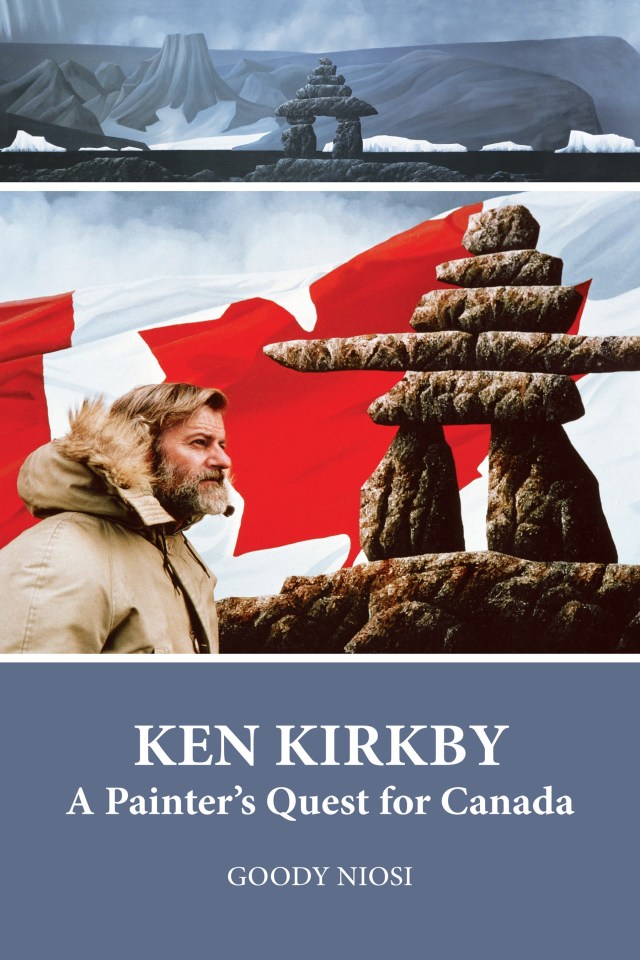
They were marvelling at the line of diminutive Inuksuit that curved along the water’s edge toward a far-off boulder that seemed to reach almost fifty feet into the sky. The Inuksuit told a story, Ken said, and after a lunch of fresh fried fish he led them toward the boulder. As they walked the boulder diminished in size until they stood beside it and found it was about three feet tall, pink, perfectly smooth, and resting on top of an immense gray rock that had been partially heaved out of the tundra. “This is a fishing Inukshuk,” he told them. “It tells you that this is a good place to go fishing. How does it say that? If the fishing is good, the Inuit take a stone out of the water and put it on top of another stone with little Inuksuit leading the way. A passerby who had never been in this land would know immediately that he could catch fish here. Other configurations of stone describe what kind of fish are here. Essentially, this is a language.” He explained that the permafrost lurks just under the surface of the tundra, and below that lay thousands of feet of ice. The ground above the permafrost where the ice melted consisted almost entirely of rich humus built up over eons by the tiny plants that grew and died there. An eightinch tree takes hundreds of years to grow to that height in the Arctic’s short season. The fibres of the humus stretched out along the surface and down to the permafrost, siphoning the water from the ice and sending it into the atmosphere. As the wind travelled across the surface of the land in buffeting gusts, it created rudimentary magnifying lenses of the millions of tiny water bubbles streaming into the air. The farther away you were from an object the more lenses you were looking through and the larger the distant object appeared. That night after supper he walked down to the dock with a fly-fishing rod. Arctic grayling congregated in the shallows here and after a few causal casts, he landed a fine three-pound fish. As he unhooked it and slipped it back into the water he noticed Karen sitting on an overturned bucket at the far end of the dock. “I’d like to try that,” she said. He handed her the rod and described the process but even after all these years he still had no idea how to explain that it was a line with no weight and it needed to fly guided by minimal strength and energy, and perfect timing. She cast a couple of times and smiled. “I like this,” she said and while the fly lay on the water, a large grayling took the bait. Ken disengaged it, gave the rod back to her and left her to sort out the tangles and continue casting. He sat on the overturned bucket at the far end of the dock and watched.
Futile Internal voiceless tears of grief have dried up on my pale cheeks and unwillingly I’ve searched for the meaning of my demise and I stood and asked all my beautiful adornments is this supposedly love? And is this same with life? And I stood and asked why in my youth filled with fragrance I heard the voice, the tedious voice that was leading my way and I stood there long enough for my question-laughter to freeze until the deep darkness slowly reflected in my eyes. No voice reaches here anymore from all the powerful things I had the wise people looked at me and left saying a ghost that I was.
Straight No excuses, he said, no regrets. Next, in the baths you could hear the skinny old woman washing after she placed her three rings on the moist glass shelf and her dentures on the cover of the bowl. Outside, the sun was buzzing between the trees. Three birds cawed higher up where they were flying, so we wouldn’t notice the three men drown in the well, those same men whose swollen bellies we pressed with our two fingers.
Flies Flies take charge of the wound decay creeps into his nostrils sorceress curses and in the corner the blood-filled bucket avenging bull wondered what was accomplished with a death the matador’s chest gored by right horn deep aspirating gash where breeze collapsed his eloquent movements fogged his poetic eyes while the brassy band cheered victory: of the bull the matador or the poet’s composing this eulogy?
THIS IS DEEP MEMORY. Childhood. The South Beach summer house on Staten Island. Late light fades from the sky, the window, the upstairs bedroom where Rick lies under a cool sheet, watching the stars come out, listening to silence. Slowly, as his mind opens, the heavy stillness after rain dissolves into small sounds. A breeze sweeps through the willow and sighs off over the glassy skritch of crickets, tree frogs like a troop of wet grace notes, the faint hiss of traffic on wet pavement from Hyland Boulevard, and beyond that, far away, but close, too, like the pulse of a double bass, the sea builds to a rush and subsides, again, and again, with a soft crash that makes him think of God and time without end. Then, below the open window, it begins. Tentative chords from his father’s guitar. Three clear notes. A fourth. A fifth. A melody takes shape, picked up by his uncle Vincenzo’s mandolin. It’s lazy at first, until his mother’s clear soprano joins the strings. A male voice comes under it, then another, and a song rises to full strength, steered off and back by the wind. He smiles to himself. It’s what he was waiting for. He rides that comfort into dreams. Rick sits at the oval table in the kitchen with his colouring book. He is trying to keep the slippery crayon tips inside the lines. At the other end, his father and his uncle Vincenzo are playing a game called briscola. They study their cards then slap them down hard enough to make them bounce off the coarse grain of the wood. Sometimes they shout at each other, but he knows it’s for fun and their raised voices pass over him without breaking his concentration. As he works, he can hear his grandfather, Arsenio, talking back to the radio in the front room where his wife, Theresa, argues good-naturedly